Category: Artificial intelligence

  • Perplexity Bids $34.5 Billion for Chrome as AI Firms Eye Browsers

    Perplexity Bids $34.5 Billion for Chrome as AI Firms Eye Browsers

    Key Takeaways

    1. Perplexity has made a $34.5 billion all-cash unsolicited bid to acquire Google’s Chrome browser, surpassing its own market valuation of $14 billion.
    2. Google faces a monopoly case concerning its search services and advertising, which may force it to consider selling Chrome.
    3. Perplexity plans to maintain the open-source Chromium browser and invest $3 billion over two years while keeping the default search engine unchanged.
    4. Legal pressures could create opportunities for acquisitions as Google may need to divest parts of its business to comply with antitrust laws.
    5. Chrome holds about 68% of the global browser market share, making it highly valuable for AI companies seeking search data for training models.


    Perplexity, an AI startup, has made a surprising all-cash unsolicited bid to take over Chrome, the web browser that belongs to Google, which is part of Alphabet. This isn’t the first time a company has shown interest in buying Chrome, as both OpenAI and Yahoo have previously hinted at wanting to acquire the popular browser.

    Monopoly Concerns

    Google is currently dealing with a monopoly case related to its search services and advertising. This situation could lead to significant adjustments in search agreements and how data is shared. Such legal pressures may force Google, a subsidiary of Alphabet, to consider selling Chrome. However, up to now, Google has not indicated any plans to sell the browser.

    Unexpected Offer

    The proposal is surprising for a few reasons, but the most notable is that the offer exceeds Perplexity’s market valuation, which is around $14 billion. Perplexity has put forth a bid of $34.5 billion in cash and claims that various funds are ready to help finance the purchase; however, they did not disclose the names of these funds, as noted in a term sheet reported by Reuters.

    This term sheet also mentions that Perplexity intends to maintain Chromium, the open-source browser, invest $3 billion over the next two years, and keep the default search engine unchanged.

    Legal Pressure and Market Share

    During the ongoing legal issues, Google may be compelled to divest part of its business to adhere to antitrust laws, which could create opportunities for acquisitions. A ruling from federal judge Amit Mehta is anticipated between August and September. Nevertheless, Google has announced its plans to appeal this decision.

    According to Global Browser Market Share 2025, Chrome holds approximately 68% of the browsing market. This represents a treasure trove of search data that can help decipher search queries and user behaviors, making it extremely valuable for training large language models and AI. This is likely the reason many AI companies are eager to acquire Chrome, as it would reduce their dependence on Google for this crucial data.

    Source:
    Link


  • China Social Media Criticizes Nvidia H20 AI Chips for Backdoor

    China Social Media Criticizes Nvidia H20 AI Chips for Backdoor

    Key Takeaways

    1. A Chinese state-linked social media account has criticized Nvidia’s H20 AI chips, calling them “not eco-friendly, not cutting-edge, and not secure,” and alleging hidden hardware backdoors.

    2. China’s cyberspace regulator has increased scrutiny on Nvidia, seeking “trustworthy security proofs” for the H20 chips amid concerns of potential security risks.

    3. The H20 chip’s development followed U.S. export restrictions on advanced AI GPUs to China, complicating supply for local clients and cloud services.

    4. Despite lower performance compared to Nvidia’s H200 model, the H20 has seen strong sales in China, contributing positively to Nvidia’s revenue amid fluctuating export restrictions.

    5. Ongoing disputes about the security of the H20 chips continue, with Nvidia denying the existence of backdoors, while state messaging may encourage consumers to consider domestic alternatives.


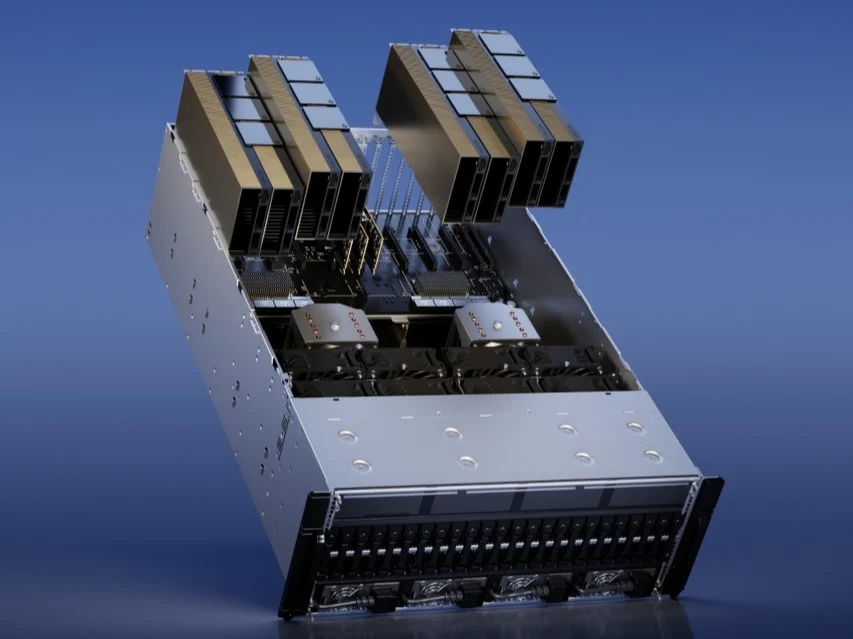
    A Chinese social media account linked to the state, known as Yuyuan Tantian, has ramped up its attacks on Nvidia’s H20 AI chips designed for China. They have labeled these chips as “not eco-friendly, not cutting-edge, and not secure,” suggesting that there may be hidden hardware “backdoors” that could allow for actions like shutting down devices remotely. Nvidia has denied these claims, asserting that their products do not have any backdoors.

    Regulatory Environment

    This backlash occurs in the context of heightened regulatory scrutiny. On July 31, China’s cyberspace regulator called Nvidia to discuss potential security risks associated with the H20 chips, which might include secret methods to bypass security measures. The People’s Daily also called on Nvidia to provide “trustworthy security proofs” to regain confidence. Nvidia did not have an immediate response to these developments.

    Export Curbs Impact

    The H20 chip was developed after the U.S. tightened restrictions on exports of advanced AI GPUs to China in late 2023, limiting what American chip manufacturers could send to the country. In April 2025, the Trump administration temporarily prohibited sales of these models bound for China but reversed its decision in July, complicating the supply situation for local clients and cloud service providers.

    Market Dynamics

    Although the performance of the H20 is not as high as that of Nvidia’s leading H200 model, it has reportedly seen strong sales in China, contributing positively to Nvidia’s revenue even as it fluctuated in and out of export restrictions from April to July 2025. Concurrently, Chinese officials have raised concerns regarding potential geolocation capabilities and unauthorized access; U.S. lawmakers have even proposed tracking requirements for high-end GPUs, with a bill introduced in mid-May and more discussions noted from the White House earlier this month.

    The statements from state-associated social media may be aimed at sending a message. China often employs these platforms to influence topics without making formal policy announcements, and the controversy surrounding the H20 could redirect interest toward domestic alternatives like Huawei’s Ascend series. This situation exists alongside an emerging gray market where estimates indicate about $1 billion worth of prohibited AI GPUs were sold in the last quarter. Furthermore, some vendors are already promoting Nvidia’s upcoming B300 model expected to launch later this year.

    Ongoing Disputes

    At this stage, the main allegations remain in dispute. Yuyuan Tantian’s message encourages consumers to refrain from purchasing based on security and environmental grounds. Meanwhile, Nvidia continues to assert that its GPUs do not include any kill switches, spyware, or means for remote access. The results of Beijing’s investigation and any subsequent technical information will be crucial in determining whether fears regarding backdoors lead to changes in procurement or further regulatory measures.

    Source:
    Link


  • GPT-5 Launch Issues Prompt Quick Comeback of GPT-4

    GPT-5 Launch Issues Prompt Quick Comeback of GPT-4

    Key Takeaways

    1. OpenAI launched GPT-5 as their most powerful model but faced issues with its rollout, leading to the reintroduction of GPT-4o for ChatGPT Plus users.
    2. GPT-5 uses a real-time routing system to select the best engine for prompts, but some technical problems caused user dissatisfaction with its performance.
    3. Users expressed concerns about GPT-5’s “personality,” preferring the warmer tone of GPT-4o and feeling that GPT-5 was more robotic.
    4. A significant error in benchmark data during the launch was acknowledged by CEO Sam Altman, leading to an update with corrected information.
    5. OpenAI plans to monitor user feedback and may allow Plus users to continue using GPT-4o while assessing the trade-offs between the two models.


    OpenAI has rolled out GPT-5, calling it their new leading model and claiming it’s “the most powerful model yet.” Just a day later, however, CEO Sam Altman admitted the launch didn’t go smoothly. He announced that GPT-4o would be available again for ChatGPT Plus users while they assess how the new model is being used. This swift change came after many users complained that the update took away a familiar experience without notice.

    Features of GPT-5

    GPT-5 merges previous models using a real-time routing system designed to select the best engine for different prompts. Sometimes it provides answers right away, but other times it takes longer to “think” for more complex questions. Altman mentioned that some outages affecting the autoswitching feature made users feel that GPT-5 wasn’t as capable, and he promised to tweak the decision-making process and offer more clarity on which model is responding to user requests.

    User Sentiments

    Aside from worries about performance, the launch stirred up discussions about AI “personality.” Many loyal users felt that GPT-4o had a warmer, friendlier tone, while they described GPT-5 as feeling more distant and robotic, even though it might be technically proficient. Various discussions on Reddit and posts on X displayed users’ frustrations over the lack of model choice, with some even threatening to cancel their subscriptions if GPT-4o didn’t come back. OpenAI indicated that the future availability of GPT-4o will hinge on actual user demand.

    Launch Issues

    The launch also faced a hiccup due to a charting mistake. A bar chart related to SWE-bench Verified seemed to inaccurately show benchmark results, with some bars appearing disproportionately tall for lower scores. Altman later referred to this as a “mega chart screwup.” OpenAI updated their blog with corrected data, and additional documentation from August 7, 2025, now reflects the accurate figures discussed.

    In a recent Reddit AMA, Altman answered numerous questions, reiterating that GPT-5 would “seem smarter” as the routing system improves and promising to “continue listening to feedback.” He also mentioned that the company is “considering allowing Plus users to stick with 4o” while they collect more data on the trade-offs between the models. For the time being, OpenAI intends to watch how users interact with the models before making decisions about how long to keep GPT-4o alongside GPT-5.

    Source:
    Link


  • OpenAI CEO: Elon Musk Manipulated X Rankings After Apple Threat

    OpenAI CEO: Elon Musk Manipulated X Rankings After Apple Threat

    Key Takeaways

    1. Elon Musk accused Apple of violating antitrust laws, claiming it favors OpenAI in the App Store.
    2. Sam Altman, CEO of OpenAI, responded to Musk’s claims, calling them “remarkable” given Musk’s own controversies.
    3. Altman cited a 2023 article suggesting Musk pressured X engineers to alter ranking algorithms in his favor.
    4. The changes reportedly made Musk’s tweets more visible in users’ timelines on X.
    5. The exchange highlights ongoing tensions between Musk, Apple, and OpenAI regarding competition and fairness in the tech industry.


    Elon Musk recently took to his X account around 1 AM UTC to accuse Apple of clearly breaching antitrust laws in its collaboration. He stated that Apple’s actions are making it nearly impossible for any AI firm other than OpenAI to achieve the top position on the App Store.

    Sam Altman’s Response

    About two hours after Musk’s post, Sam Altman, the CEO of OpenAI, responded by quoting the tweet and disputing Musk’s claims. He described the accusation as “remarkable,” especially considering Musk has faced similar accusations regarding changes to X’s ranking algorithms that supposedly benefit himself and his businesses.

    Claims of Manipulation

    Altman also referenced a 2023 article from Platformer, which suggested that Musk pressured X engineers to modify the ranking algorithms in a way that favored him. This adjustment reportedly caused Musk’s tweets to appear more prominently in users’ timelines on X.

    Source:
    Link


  • Apple’s Small Acquisitions Could Boost Private AI in Future Devices

    Apple’s Small Acquisitions Could Boost Private AI in Future Devices

    Key Takeaways

    1. Apple has acquired around seven small companies in 2025 to enhance its technology strategy.
    2. Increased spending on data centers and Apple’s Private Cloud Compute system aligns with the company’s focus on artificial intelligence.
    3. The Neural Engine, crucial for AI tasks on Apple devices, could be improved through technology from recent acquisitions.
    4. Past acquisitions, like PrimeSense and AuthenTec, have significantly contributed to Apple’s hardware innovations such as Face ID and Touch ID.
    5. The combination of strategic acquisitions and AI investment suggests Apple may soon introduce advanced on-device AI features in new hardware.


    During the earnings call for Q3 2025 held on August 4, CEO Tim Cook shared that Apple has bought approximately seven small companies this year. He explained that these acquisitions are focused on enhancing the company’s technology strategy. “We are very open to M&A that accelerates our roadmap… the ones that we have acquired thus far this year are small in nature,” he noted to analysts, according to a transcript from Six Colors.

    Investment in AI Infrastructure

    Although Apple has not revealed the names of the companies or the technologies they contribute, CFO Kevan Parekh mentioned during the Q3 2025 earnings call that spending on data centers and Apple’s Private Cloud Compute system is on the rise. Both of these investments align with the company’s artificial intelligence plans. Together with targeted acquisitions, this demonstrates a strong commitment to improving the Neural Engine that is fundamental to Apple Silicon.

    Enhancements to the Neural Engine

    The Neural Engine is already responsible for AI tasks on Apple devices, including image enhancement, live translation, and updates to Siri. Integrating specialized technology from smaller purchases could enhance processing speeds, lessen power use, and boost privacy by minimizing dependence on remote servers.

    Past Acquisition Strategies

    This isn’t the first time Apple has taken a similar path. The acquisition of PrimeSense in 2013 played a vital role in the development of Face ID, while the 2012 purchase of AuthenTec brought the fingerprint recognition technology for Touch ID. In both situations, the hardware updates were only noticeable when they appeared in new features. The mix of strategic acquisitions and a growing investment in AI infrastructure implies that Apple might be preparing to introduce more sophisticated on-device AI functionalities in upcoming hardware.

    Source:
    Link


  • MIT Researchers Suggest Eco-Driving to Reduce City Emissions 22%

    MIT Researchers Suggest Eco-Driving to Reduce City Emissions 22%

    Key Takeaways

    1. Eco-driving techniques can reduce annual carbon emissions from city intersections by 11–22% through real-time speed adjustments.
    2. Speed guidance features on smartphone apps can enable quick implementation of eco-driving in the short term.
    3. Even with only 10% of vehicles using eco-driving, cities could see a 25–50% reduction in CO2 emissions due to improved traffic flow.
    4. Focusing on 20% of the most critical intersections can lead to 70% of total emission reductions.
    5. The eco-driving approach is nearly cost-free and easy to implement, making it a practical solution for reducing emissions.


    A recent study by researchers at MIT has discovered that “eco-driving” techniques, which involve automatically managing vehicle speeds to minimize stops and idling at intersections, can greatly help reduce carbon emissions in big cities. This research, featured in the journal Transportation Research Part C: Emerging Technologies, utilized advanced AI to model traffic patterns at numerous intersections across three cities in the U.S.

    Significant Emission Reductions

    The findings indicated that adopting eco-driving fully could lead to a decrease in annual carbon emissions from city intersections by 11–22%. The system operates by adjusting vehicle speeds in real-time to ease traffic congestion, and the study demonstrated that this approach would not hinder overall traffic flow or compromise safety.

    Future Implementations

    The authors of the study propose that eco-driving could be rolled out quickly via speed guidance features on smartphone applications in the short term. In the long run, it may include sending intelligent speed commands directly to both semi-autonomous and fully autonomous vehicles.

    Impressive Benefits with Minimal Adoption

    Interestingly, the study also highlighted that benefits could still be achieved without widespread adoption. If merely 10% of vehicles utilize eco-driving, cities might experience a 25–50% of the total possible reduction in CO2 emissions. This occurs because cars not using the eco-driving system would naturally follow the more fluid traffic patterns established by the controlled vehicles. Additionally, the research uncovered that focusing on just 20% of the most critical intersections in a city could provide 70% of the total emission reductions.

    This approach is nearly cost-free. With smartphones already in use in vehicles and the rapid increase in cars featuring advanced automation, for a strategy to be effectively scaled, it needs to be easy to implement and ready for action. Eco-driving certainly meets those criteria. — Cathy Wu, senior author of the study.

    Source:
    Link


  • How GPT-5 Transforms Everyday Business Tasks with AI

    How GPT-5 Transforms Everyday Business Tasks with AI

    Key Takeaways

    1. Shift in Perception: Generative AI is moving from experimental use to essential integration in business workflows, significantly enhancing productivity.

    2. Task Automation: GPT-5 excels at handling repetitive tasks, allowing teams to focus on analysis and strategy, thus improving overall efficiency.

    3. Improved Customer Interaction: Enhanced AI capabilities lead to more natural and effective customer service through better memory and contextual understanding.

    4. Revolutionized Content Creation: GPT-5 enables marketing teams to produce high-quality content quickly, adapting to brand voice and reducing production timelines.

    5. Data Privacy Solutions: New features allow secure deployment of AI in regulated industries, promoting adoption while ensuring compliance and confidentiality.


    As of just two years ago, generative AI tools were mostly viewed as experimental… handy for writing emails or coming up with content ideas. However, with the quick advancements in generative AI models like GPT-4-turbo and the upcoming next-gen systems, perceptions are shifting fast. Companies are no longer seeing AI as something on the edge. Instead, they are weaving it into their main workflows, resulting in a transformation of business productivity.

    Offloading Routine Tasks

    The main advantage of GPT-5 is its ability to take over repetitive and time-consuming tasks. Businesses from various fields are utilizing it to produce initial drafts of reports, condense extensive datasets, and even generate basic scripts and code snippets.

    This change isn’t just about automating for the sake of it… it’s about redistributing time and talent. Teams can now concentrate on analysis and strategy instead of formatting documents or going through internal reports. The outcome is a boost in productivity, aligning better with business goals.

    Enhancing Customer Interaction

    For a long time, traditional chatbots have frustrated customers. They relied on decision trees and lacked the ability to grasp subtlety. GPT-5 alters this dynamic. With enhanced long-term memory and contextual understanding, virtual agents powered by this new model can recall previous customer interactions, reply in a more natural way, and solve problems without needing to escalate constantly.

    Companies are now customizing these assistants with internal protocols, product information, and policy data—leading to AI that embodies the brand’s tone and internal processes while delivering accurate answers in real time.

    Revolutionizing Content Creation

    One of the most noticeable areas where GPT-5 has made a mark is in content generation. Marketing teams are leveraging the model to create headlines, draft SEO-friendly blog posts, and adapt product messaging for different regions.

    Unlike previous versions, GPT-5 can adjust to the unique tone and voice of a brand, making it suitable for customer-facing content. It’s not uncommon for marketing timelines to be halved without losing quality or precision.

    Navigating Data Privacy Challenges

    A significant barrier to AI adoption in strictly regulated sectors has been data privacy. With GPT-5, OpenAI now permits on-premises fine-tuning and deployment, ensuring that sensitive corporate data remains within secure environments.

    This feature is encouraging adoption in industries like healthcare, banking, and law, where compliance is crucial. Businesses can now implement AI for automating document processing, case research, or client onboarding… without risking confidentiality.

    The advantages extend beyond operational teams. Executives and analysts can utilize GPT-5 to summarize extensive market reports, evaluate competitive actions, and simulate strategic outcomes. The capability to process large amounts of structured and unstructured data in real-time facilitates quicker decision-making—supported by evidence and customized analysis.

    AI and Leadership

    AI isn’t taking over leadership decision-making. Rather, it’s simplifying the preparation work and highlighting insights that would have required teams days or even weeks to gather manually.

    GPT-5 is no longer just a trial for a select few. It’s evolving into a key technology for contemporary enterprises. Organizations that are reaping the most rewards aren’t merely adding AI to outdated processes… they are rethinking their workflows to enable better collaboration between humans and machines.

    The transition is in progress. The current challenge is not whether to embrace AI, but how to implement it responsibly, safely, and in ways that uplift – rather than replace – human expertise.

    Source:
    Link


  • Unitree A2 Stellar Hunter: Robot Dog Dances, Jumps, and Carries

    Unitree A2 Stellar Hunter: Robot Dog Dances, Jumps, and Carries

    Key Takeaways

    1. The Unitree A2 Stellar Hunter is designed to move heavy items, with a weight capacity of 66 lbs, significantly increasing from the A1’s 15 lbs.
    2. It features enhanced LiDAR sensors for superior sensing abilities and can climb steps with angles of up to 45°.
    3. The A2 has improved speed, reaching up to 11.2 mph with wheels and a top speed of 8.3 mph without them.
    4. Battery life has doubled, allowing the A2 to operate for up to 5 hours on a single charge, even while carrying loads.
    5. The A2 Stellar Hunter is expected to have a high price tag, likely surpassing $15,400, potentially comparable to Boston Dynamics’ Spot robot priced at around $82,500.


    AI-driven robots that box, play soccer, do kung fu, or even help with laundry – we’ve seen all of this before. But having a robot take you for a walk seems kinda dull. Yet, unlike cheaper alternatives, Unitree’s robotic dog offers much more than just fun. Its main role is to move items. The A2 Stellar Hunter is not just quick, but it’s also designed to carry hefty loads.

    Improvements Over the A1

    When comparing it to the A1 launched in 2020, the A2 showcases several major enhancements. To start, Unitree has integrated LiDAR sensors, which give the robot dog superior sensing abilities. It can now ascend steps with angles up to 45°, and it’s noticeably more robust, able to carry 66 lbs rather than the previous limit of 15 lbs. But this upgrade does come with an increase in weight, going from 26 lbs to 82 lbs. While the Stellar Hunter is just a tad quicker at 8.3 mph compared to 7.4 mph, it can now have wheels attached, allowing it to reach speeds of 11.2 mph. Additionally, the battery life has improved: instead of just 2.5 hours, the A2 can now function for as long as 5 hours on a single charge (up to 3 hours when at its full load).

    Features Displayed in Presentation

    In the presentation video from August 5, the Unitree A2 Stellar Hunter demonstrates its abilities by performing flips, dancing, climbing, racing down stairs, and even hauling heavy medical backpacks up steep terrains.

    Unitree’s smaller Go2 robot dog is priced at $2,860, but the A2 Stellar Hunter is expected to come at a much higher cost. Its price will likely surpass that of the A1, which is currently around $15,400. While Unitree has not revealed the specific price – their website merely says “on request” – it seems the A2 is already on sale. A reasonable guess places its price similarly to Boston Dynamics’ Spot robot, which is priced at approximately $82,500.

    Source:
    Link


  • Moflin: Casio’s Popular AI Robot Pet Taking Japan by Storm

    Moflin: Casio’s Popular AI Robot Pet Taking Japan by Storm

    Key Takeaways

    1. Casio’s Moflin robot pet is designed to replicate the success of Hasbro’s Furby, achieving over 7,000 sales since its November 2024 launch.
    2. Moflin features AI-driven emotional responses, with the ability to develop around four million unique personality types based on user interaction.
    3. The robot pet offers gentle movements and soothing sounds, designed to create an emotional bond with users.
    4. Moflin is particularly popular among women aged 35 to 45, often seen as a source of emotional support and companionship.
    5. The price of Moflin is around 59,400 yen (about $380), with international customers potentially facing higher costs.


    In the late 1990s, Hasbro created a huge excitement with the introduction of the Furby (priced at $70 on Amazon), managing to sell over 40 million units in just three years. Now, Casio is looking to replicate this success with its product called the Moflin. This robot pet has a more neutral look and incorporates artificial intelligence, making it a potential hit. With its soft fur, delightful sounds, and impressively realistic emotional reactions, Moflin has already become surprisingly popular. As reported by Kyodo News, Casio has shifted more than 7,000 units since its launch in November 2024, exceeding their early forecasts.

    Unique Features of Moflin

    Moflin isn’t your average robot; it doesn’t walk, show information, or organize your schedule. Rather, it gently tilts its head, vibrates, and produces soft, soothing noises. It responds to touch, voices, and how close you are with an unexpected level of sensitivity. Loaded with various sensors—light, temperature, and motion—and powered by AI, each Moflin develops its own distinctive personality over time. While Furbies had only a few fixed personalities, Casio asserts that Moflin can evolve into approximately four million different personality types and behaviors. The connection seems so natural that The Guardian commented on the emotional bond formed, stating, “I was surprised how much I got emotionally attached to him.”

    Popularity Among Women

    The fluffy AI friend has found particular favor among women aged 35 to 45. Kyodo News reports that single working women in Japan often view Moflin as a source of emotional support. Some even take it out with them on trips—similar to having a real pet. However, this kind of companionship comes at a price. Japanese sources indicate the price to be around 59,400 yen (about $380), but international customers might face higher costs. For instance, the Japan Trend Shop offers imported models for $707, which includes shipping fees.

    Source:
    Link


  • AI Develops 4X Tougher Polymer to Reduce Plastic Pollution

    AI Develops 4X Tougher Polymer to Reduce Plastic Pollution

    Key Takeaways

    1. Scientists developed a new method to enhance plastic toughness using an AI model.
    2. Adding weak links to a polymer’s structure can increase its overall strength by dissipating energy during cracks.
    3. A machine learning model was trained on 400 ferrocenes to identify the best candidates for improving polymer toughness.
    4. The new plastic created is four times tougher than traditional materials using standard crosslinkers.
    5. Increased toughness can lead to longer-lasting materials and potentially reduced plastic production over time.


    A team of scientists has developed a new method for enhancing the toughness of plastic, utilizing an AI model. The group, which includes researchers from MIT and Duke University, discovered an additive that significantly improves a polymer’s resistance to tearing.

    New Findings Published

    On August 1, the findings were shared in ACS Central Science. The key to this breakthrough is based on an unexpected finding from a prior study, which showed that adding weak links to a polymer’s chemical makeup can actually increase its overall strength. This happens because when a crack forms, it has to break through many of these weak bonds rather than ripping through a solid material, leading to greater energy dissipation. However, the researchers faced a major obstacle: selecting the ideal ‘weak link’ from a vast array of potential options.

    Machine Learning Approach

    To tackle this challenge, the team turned to a machine learning model. They trained this model using computational data from approximately 400 iron-containing compounds known as ferrocenes. The model then efficiently predicted the properties of thousands of additional ferrocenes, successfully identifying the best candidates for their research.

    Enhanced Polymer Created

    Using one of the AI’s top selections, the researchers created a new type of plastic, resulting in a polymer that is four times tougher than those made with conventional crosslinkers.

    “By increasing the toughness of materials, it means they can last longer. This could lead to reduced plastic production over time,” said Ilia Kevlishvili, the lead author of the study.

    Source:
    Link