Tag: MIT

  • Injectable Mini Livers: A Promising Alternative for Transplants

    Injectable Mini Livers: A Promising Alternative for Transplants

    Key Takeaways

    1. Chronic liver failure often requires a donor organ, but there is a shortage of available donors and high surgical risks.
    2. MIT scientists developed an injectable system that grows functional “mini livers” inside the body using human liver cells and water-based gel spheres.
    3. The gel spheres can be injected easily and create a stable structure that supports the growth of new blood vessels, supplying oxygen and nutrients.
    4. Laboratory experiments on mice showed that these mini livers produced essential liver proteins and enzymes over a two-month period.
    5. This syringe-based technique could provide a vital alternative for patients awaiting organ transplants, although medications are still needed to prevent cell rejection.


    For individuals suffering from chronic liver failure, obtaining a donor organ often represent the sole solution. Yet, the lack of available donors, along with the significant risks of major surgery, leaves many patients with no acceptable alternatives. A less invasive option is to inject healthy replacement cells into the patient, but these cells usually disperse and perish due to the absence of a structure to keep them in place. To tackle this issue, scientists at the Massachusetts Institute of Technology have created an injectable system that manages to grow functional “mini livers” right inside the body.

    Innovative Mixture

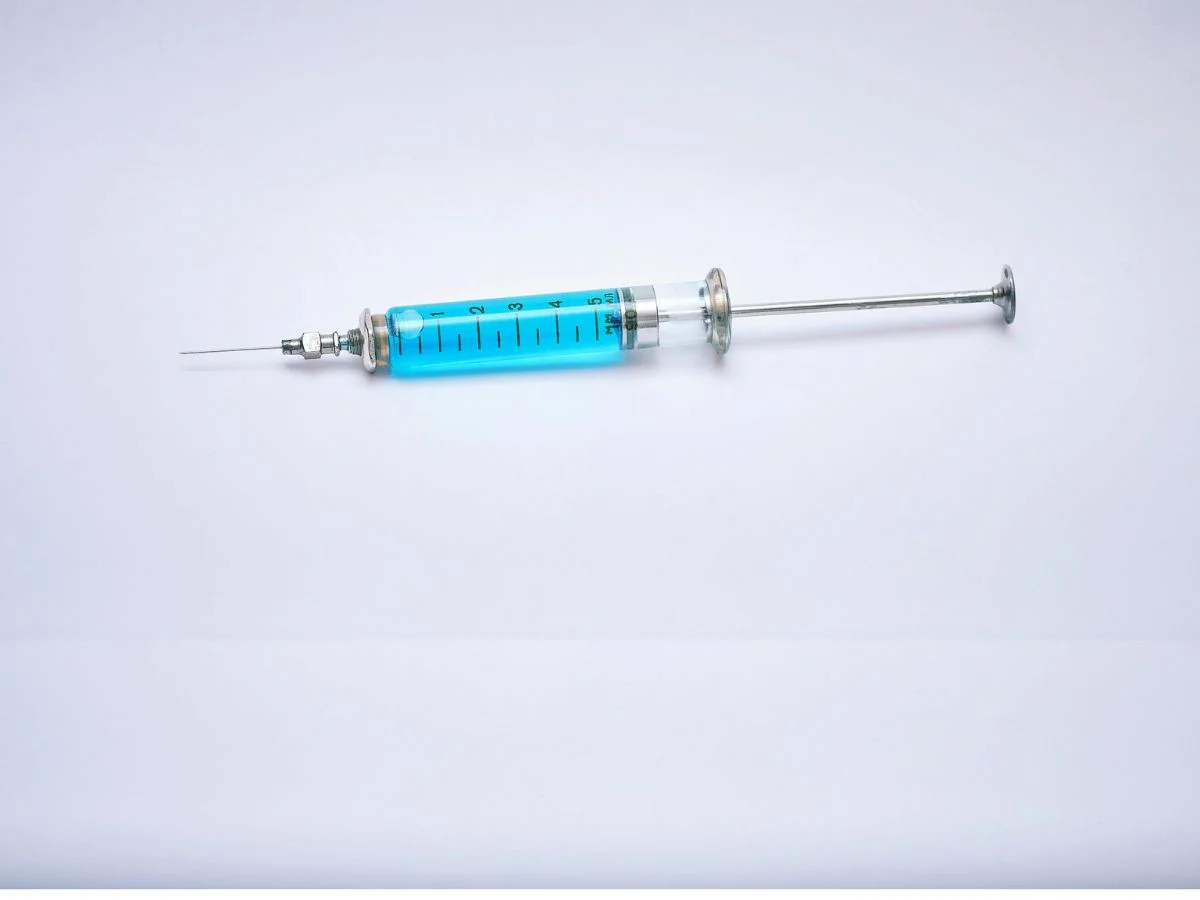
    The research team succeeded by combining crucial human liver cells with tiny, water-based gel spheres. This unique blend moves smoothly like a liquid through a regular syringe, but it quickly compacts into a stable structure once injected into the tissue. By utilizing standard ultrasound tools to guide the needle, physicians can carefully place this mixture in easily reachable spots, like abdominal fat, without harming the sick liver. After being injected, the gel spheres establish a nurturing internal environment that promotes the growth of surrounding blood vessels into the new cell cluster, supplying the necessary oxygen and nutrients for the liver cells to thrive.

    Promising Results

    In laboratory experiments involving mice, these newly created satellite livers flourished, effectively producing essential liver proteins and enzymes throughout the two-month study duration. Although the existing technology still needs medications to avert the body from rejecting the new cells, this straightforward, syringe-based technique could soon become a crucial option for patients awaiting a donor organ, potentially changing the way medicine addresses end-stage organ failure.

  • How the Brain Isolates Voices in Noisy Environments

    How the Brain Isolates Voices in Noisy Environments

    Key Takeaways

    1. The “cocktail party problem” explains how people focus on one voice amid background noise.
    2. MIT researchers developed an artificial neural network to simulate this human hearing ability using multiplicative feature gains.
    3. The model effectively highlighted target voices in noisy environments, achieving results similar to human listeners.
    4. It mimicked common human errors, such as difficulty distinguishing similar-sounding voices.
    5. The findings could lead to better cochlear implants, improving concentration in noisy settings.


    For many years, scientists who study the brain have been looking into the “cocktail party problem,” which describes how people can focus on one voice even when there is a lot of noise around them. Although it has been known that the brain can do this by enhancing the activity of certain neurons that respond to specific sounds, there was no effective computational model to show that this method worked in real-life situations.

    New Findings from MIT

    Recently, a group of researchers at the Massachusetts Institute of Technology created an artificial neural network that simulates this human hearing skill. In a paper published in Nature Human Behavior, the findings show that the brain employs a method called multiplicative feature gains. Simply put, the brain functions like a precise volume control. When listening to a specific voice, the brain increases the neural signals that correspond to that voice’s distinct features, like its tone, while lowering the volume of other sounds competing for attention.

    Testing the Model’s Effectiveness

    To check how well their model worked, the MIT researchers provided it with a brief audio snippet of a particular voice, followed by a noisy mix of many speakers. The model effectively highlighted the target voice, achieving results similar to human listeners in various situations. It even mimicked common errors that people make, such as difficulty in distinguishing between two similar-sounding voices.

    “None of our models have had the capability that humans possess, to be alerted to a specific object or sound and then base their reaction on that object or sound. That has been a real restriction.” — Josh H. McDermott, leading author of this research paper.

    Implications for Future Technology

    The model also enabled the researchers to quickly examine how the position of speakers influences listening. It predicted that it is much easier to tell voices apart when they are placed side by side horizontally rather than one above the other vertically — a finding that was later validated in tests with human participants. The researchers are optimistic that this model could lead to the development of improved cochlear implants that would assist people in concentrating better in noisy settings.

    Nature Human Behavior via MIT News

    Source:
    Link


  • MIT Engineers Convert Waste Heat to Computing Power with Silicon

    MIT Engineers Convert Waste Heat to Computing Power with Silicon

    Key Takeaways

    1. MIT engineers have developed tiny silicon structures that use waste heat for computing tasks instead of relying on electricity.
    2. The researchers utilized inverse design techniques to create intricate silicon shapes capable of performing mathematical calculations with over 99% accuracy.
    3. The project demonstrates that heat can be harnessed as a form of information, challenging the conventional view of heat as a waste product in electronics.
    4. The team divided matrices into positive and negative parts to manage heat flow effectively and modified silicon thickness for better heat conduction.
    5. While the technology shows promise in heat management, it faces challenges in bandwidth and scaling, with future efforts focused on creating programmable structures for more complex operations.


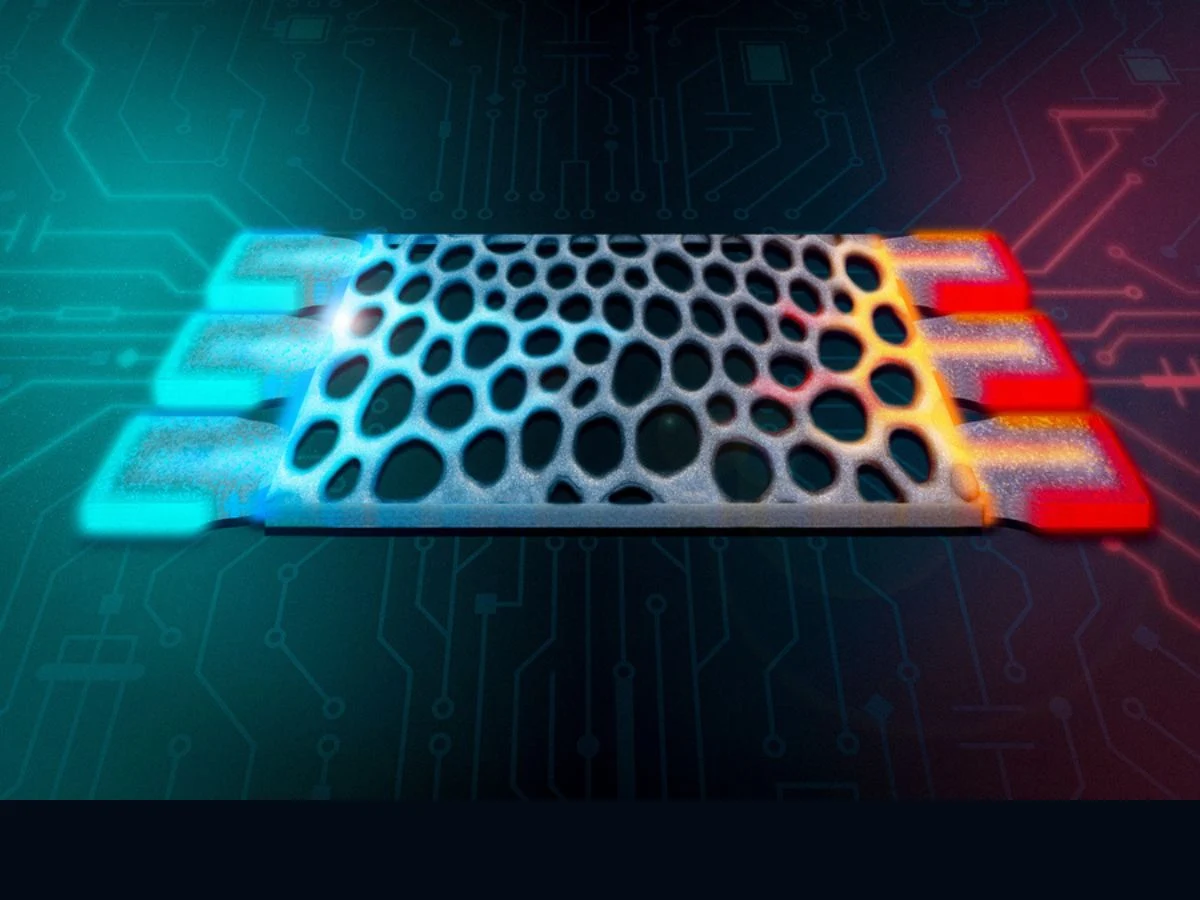
    MIT engineers have managed to turn a usual electronic problem — waste heat — into something useful for computing. In a recent article in the journal Physical Review Applied, the research team presented tiny silicon structures that can carry out mathematical tasks using heat rather than electricity.

    Innovative Design Techniques

    The group of researchers, which includes undergraduate Caio Silva and research scientist Giuseppe Romano, employed a method known as inverse design to create these structures. By inputting the desired functions into a software tool, algorithms were able to produce intricate silicon shapes, about the size of a speck of dust, filled with pores. These silicon structures control heat flow to perform matrix vector multiplication — a basic calculation underpinning machine-learning models like Large Language Models (LLMs) — achieving more than 99% accuracy in simulations.

    Turning Heat Into Computation

    Normally, when doing calculations on electronic devices, the heat generated is seen as a byproduct. People usually aim to eliminate as much heat as possible. However, in this case, we took a different route by utilizing heat as a form of information, demonstrating that it is indeed possible to compute with heat. — Caio Silva, the main author of the paper.

    To tackle the challenge that heat naturally flows from hotter areas to cooler ones, the team divided target matrices into positive and negative parts, processing them through distinct structures. They also modified the thickness of the silicon to more accurately control heat conduction.

    Future Potential and Challenges

    Although the technology still faces challenges regarding bandwidth and scaling for more complex deep-learning applications, it offers immediate benefits in managing heat. The silicon structures could automatically identify overheating or temperature differences in electronic devices without needing external power or digital sensors. The research team is now focused on creating programmable structures that can handle sequential operations.

    APS Journals via MIT News

    Source:
    Link


  • MIT’s New Tech Promises Longer-Lasting Devices and Smarter AI

    MIT’s New Tech Promises Longer-Lasting Devices and Smarter AI

    Key Takeaways

    1. Rising demand for AI and computing is increasing energy requirements, highlighting inefficiencies in conventional chip designs.

    2. MIT researchers propose a new chip design approach by integrating logic and memory components on the back end to enhance energy efficiency.

    3. The use of amorphous indium oxide allows for the creation of ultra-thin transistors at low temperatures, preventing damage to underlying circuits.

    4. The innovative stacking of transistors enables a compact vertical arrangement, facilitating versatile and energy-efficient electronics.

    5. The introduction of hafnium-zirconium-oxide for 20-nanometer transistors results in extremely fast switching speeds while consuming lower voltage compared to existing technologies.


    As the need for artificial intelligence and powerful computing rises, there’s another aspect that comes with it — the rise in energy demand. Conventional chip architectures add to this issue by keeping logic and memory parts apart, leading to inefficient data movement. A group of researchers from MIT has proposed a breakthrough that could greatly improve energy efficiency — by arranging these components together at the chip’s back end.

    New Approach to Chip Design

    In typical scenarios, fragile transistors are placed on one side of a silicon chip, while the other side is set aside for wiring. Increasing the number of components presents a challenge since the heat generated would damage the layers already in place. An MIT research team, led by Yanjie Shao, has addressed this issue by creating a process that works at low temperatures.

    Innovative Material Use

    By utilizing a special material known as amorphous indium oxide, the team successfully created ultra-thin layers of transistors at only 150 °C (302 °F) — a temperature low enough to safeguard the underlying circuits. This innovation enabled them to stack active transistors directly on the back end, effectively combining logic and memory into a compact vertical arrangement.

    “We can now construct a versatile electronics platform on the chip’s back end that allows us achieve high energy efficiency along with various functionalities in very small devices. We have a solid device architecture and material to utilize, but continuous innovation is essential to reach the utmost performance limits,” Yanjie Shao expressed.

    Breakthrough in Transistor Technology

    The researchers advanced the current design by employing a ferroelectric material called hafnium-zirconium-oxide to produce 20-nanometer transistors. In their evaluations, the devices showcased incredibly fast switching speeds of merely 10 nanoseconds, which is the maximum limit of the team’s measuring tools, while consuming much less voltage compared to similar technologies.

    Source:
    Link


  • Ultrasonic System Increases Atmospheric Water Harvesting by 45x

    Ultrasonic System Increases Atmospheric Water Harvesting by 45x

    Key Takeaways

    1. Atmospheric water harvesting has great potential to address global water shortages, but current methods are energy inefficient.
    2. MIT engineers have developed a new technique using ultrasonic waves instead of heat for water extraction, overcoming the energy inefficiency challenge.
    3. This new method is 45 times more energy-efficient than existing thermal systems and can extract water in minutes compared to hours.
    4. The ultrasonic water extraction system could be powered by small solar panels, enabling decentralized water generation in dry areas and emergencies.
    5. This innovation offers a quick and effective way to collect water from the air, particularly beneficial in arid regions.


    Atmospheric water harvesting shows a lot of potential to help with global water shortages, but there’s a big challenge — energy inefficiency. Current methods depend on heat to evaporate moisture, making it a slow process that uses a lot of energy. MIT engineers have now found a way to break through this “thermal limit” by using ultrasonic waves for water extraction.

    A New Approach to Water Extraction

    The technique, explained in the journal Nature Communications, swaps heat for mechanical vibrations. Led by Ikra Iftekhar Shuvo, the research team created a piezoelectric actuator that works at high frequencies. When a water-saturated hydrogel is placed on this device, ultrasonic waves disrupt the weak connections between water molecules and the hydrogel. This disturbance generates momentum that allows the water to be released in liquid form instead of vapor.

    Efficiency Gains in Water Harvesting

    The findings are groundbreaking for atmospheric water harvesting. The researchers claim that this vibrational method is 45 times more energy-efficient than the best thermal systems available today. In their tests, the device was able to extract water in just a few minutes, while traditional thermal desorption methods usually take hours.

    This innovation addresses the high energy expenses and slow speeds that have limited the use of atmospheric water harvesting. The team believes that these actuators could be powered by small solar panels, allowing for steady, decentralized water generation in dry areas and emergency situations.

    A Step Forward in Sustainable Water Solutions

    People have been searching for methods to collect water from the air, which could be a significant water source, especially in desert areas and regions without even saltwater to desalinate. Now, we have discovered a way to gather water both quickly and effectively, says Svetlana Boriskina, the lead author of the research paper.

    Nature via MIT News

    Source:
    Link


  • Concrete Battery Boosts Energy Storage Capacity Tenfold

    Concrete Battery Boosts Energy Storage Capacity Tenfold

    Key Takeaways

    1. Concrete batteries can store electrical energy while being strong enough for construction use.
    2. The innovative battery is made from cement, water, ultrafine carbon black, and electrolytes, creating a conductive structure.
    3. Optimized electrolytes can increase the energy storage capacity of concrete by ten times.
    4. Concrete batteries can be integrated into building elements, offering self-monitoring capabilities for structural integrity.
    5. This technology has the potential to enhance energy efficiency in various applications, promoting sustainable building practices.


    Concrete is a major building material used globally. In the future, it may not just be useful for construction but also function like a battery to store energy. Scientists at the Massachusetts Institute of Technology (MIT) have improved what they call a “concrete battery,” which can hold electrical energy while also being strong. Their findings are shared in the Proceedings of the National Academy of Sciences (PNAS).

    Composition of the Concrete Battery

    This innovative battery is made from cement, water, ultrafine carbon black, and electrolytes. Together, these components form a conductive nanocarbon structure within the concrete. Admir Masic, the main author of the research and co-director of the MIT EC³ Hub, states:

    Understanding how these materials ‘assemble’ themselves on the nanoscale is crucial for achieving these new functionalities.

    This structure helps electrolytes get into the concrete’s pores, enhancing the flow of current.

    Energy Storage Improvements

    Research has shown that when using optimized electrolytes, the energy storage capacity of concrete can increase by ten times. In 2023, a household needed about 45 cubic meters of concrete to meet its daily energy requirements. Today, that number has dropped to just about 5 cubic meters, which is similar to the amount used in a basement wall.

    Damian Stefaniuk, another key author of the study, mentions:

    A cubic meter of this ec3 version — roughly the size of a refrigerator — can hold over 2 kilowatt-hours of energy.

    This is nearly the same as what a refrigerator uses in one day.

    Applications in Construction

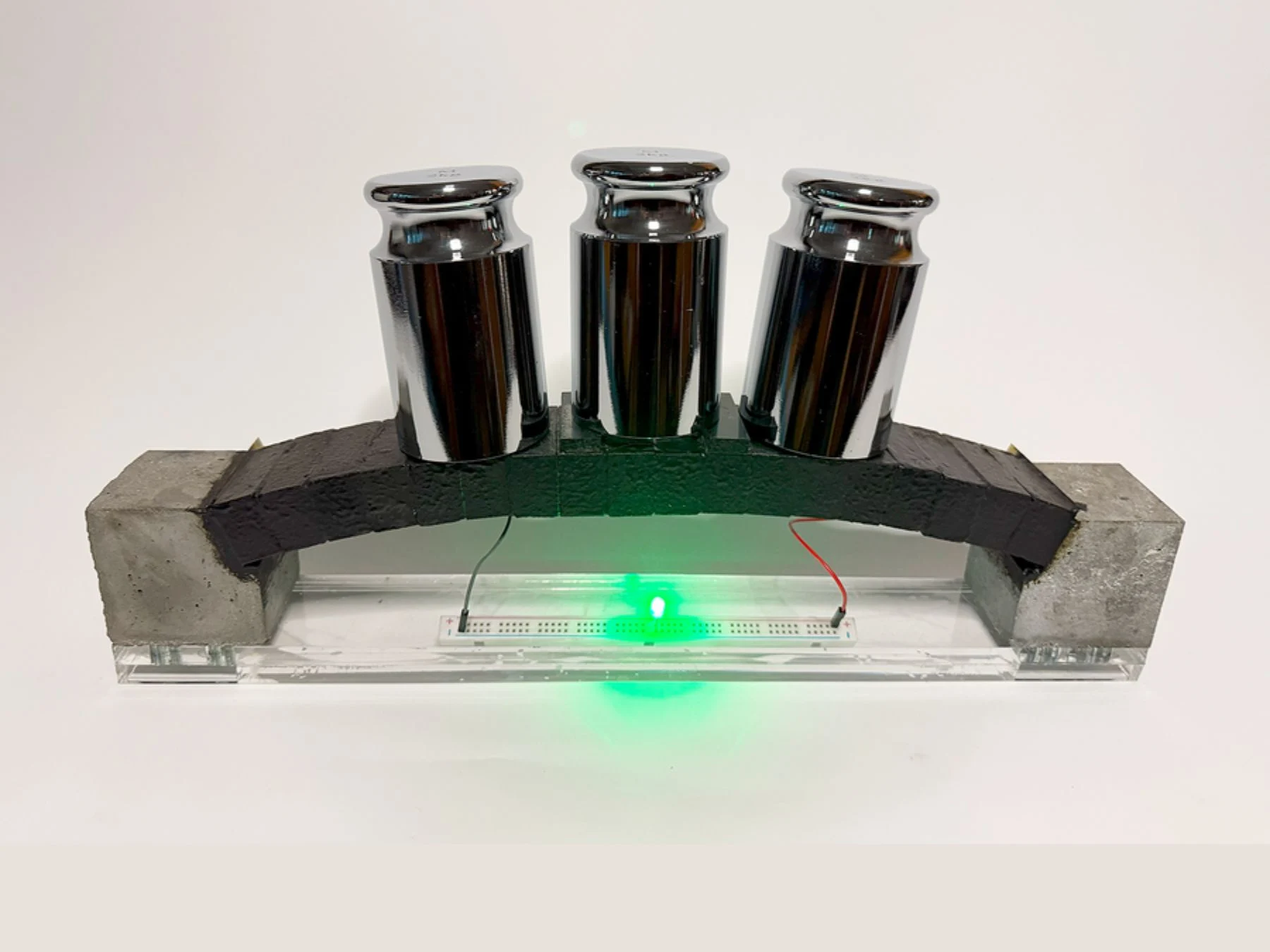
    Concrete batteries can be built directly into elements of a structure, like walls, floors, or domes. Drawing inspiration from Roman architecture, the researchers created a small arch that could support itself while also powering an LED light. Masic adds:

    There may be a kind of self-monitoring capacity here.

    The brightness of the light changes based on the load, which helps assess the structural integrity in real-time.

    Concrete batteries could be beneficial for parking lots, roads, and coastal structures. Stefaniuk explains:

    With these higher energy densities and the shown value across a wider range of applications, we now have a strong and versatile tool to tackle many ongoing energy issues.

    It merges load-bearing structures with energy storage, paving the way for sustainable and multifunctional building in the future.

    Source:
    Link


  • MIT’s New Concrete Battery Provides 10x More Power for Homes

    MIT’s New Concrete Battery Provides 10x More Power for Homes

    Key Takeaways

    1. The MIT research team enhanced ec3 (electron-conducting carbon concrete) to achieve a tenfold boost in energy capacity.
    2. A smaller volume of ec3 (5 cubic meters) is now needed to power a typical house for a day, compared to 45 cubic meters previously.
    3. New imaging techniques allowed visualization of the material’s internal structure, leading to improvements in its chemistry and production methods.
    4. Seawater can be used as an effective electrolyte for ec3, suggesting its potential for offshore construction applications.
    5. The material can also monitor structural health, as demonstrated by powering an LED with a 9-volt arch that indicates physical stress.


    An MIT research team has made a significant advancement in their ec3 (electron-conducting carbon concrete), a type of material capable of storing and releasing electrical energy. In a recent publication in the Proceedings of the National Academy of Sciences (PNAS), they revealed a remarkable tenfold boost in its energy capacity. This innovation could allow common structures like buildings and bridges to operate similarly to batteries.

    Reduced Energy Needs

    The enhancement is considerable. Previously, a typical house would necessitate a 45-cubic-meter block of ec3 to be powered for one day. Now, only a 5-cubic meter block is required, which is about the size of an ordinary basement wall.

    New Insights and Techniques

    This advancement arises from a more profound comprehension of the internal structure and chemistry of the material. For the first time, the team was able to visualize the inner configuration of the material using a high-resolution 3D imaging method. The fresh insights gained from this imaging helped them enhance the system with superior organic electrolytes and a “cast-in electrolyte” manufacturing approach, which made production easier. Additionally, they utilized a multicell stacking method, resulting in a 12-volt prototype that surpasses the low-voltage limitations present in earlier models.

    A Revolutionary Perspective

    What really excites us is that we’ve taken a material as old as concrete and shown that it can achieve something completely new. …we’re opening a path to infrastructure that not just supports our lives, but also energizes them. — James Weaver, a co-author of the paper.

    The researchers found that seawater can serve as an effective electrolyte, indicating possible use in offshore constructions. They also showed its potential for structural health monitoring by using a 9-volt arch made of the material to power an LED that flickered when the arch was stressed physically.

    Source:
    Link


  • Smartphones and Computers Set for Performance Boost from Discovery

    Smartphones and Computers Set for Performance Boost from Discovery

    Key Takeaways

    1. MIT researchers discovered a new method to improve computer chip performance while studying nuclear reactor safety and material deterioration.
    2. They used a focused X-ray beam to simulate high radiation levels and finely tune strain in the crystal structure of nickel, an alloy used in reactors.
    3. The discovery offers a new technique for strain engineering, which enhances the optical and electrical characteristics of materials in microelectronics.
    4. Engineers can now use X-rays during the manufacturing process to adjust strain in microelectronics, achieving dual benefits from the research.
    5. The study achieved its original goal of real-time 3D observation of material failure in simulated nuclear reactor settings, marking a significant advancement in material science.


    A team of researchers at MIT has been exploring ways to enhance the safety and longevity of nuclear reactors. In the process, they stumbled upon a new method that could significantly improve computer chip performance. Their initial research aimed to understand how materials deteriorate and develop cracks in the extreme conditions found inside nuclear reactors.

    Key Discoveries

    The findings were shared in the journal Scripta Materialia. The researchers employed a strong, focused X-ray beam to simulate the high levels of radiation that exist within a nuclear reactor. During experiments involving nickel, a widely used alloy in modern nuclear reactors, the team made an unexpected discovery. They realized they could use the X-ray beam to finely “tune” the strain within the material’s crystal structure.

    Implications for Microelectronics

    This breakthrough could greatly influence microelectronics development. Engineers in the semiconductor manufacturing field utilize strain engineering, a method that introduces and alters strain in materials to enhance their optical and electrical characteristics. This novel discovery offers a fresh technique for strain engineering.

    “Our technique allows engineers to use X-rays to adjust the strain in microelectronics during the manufacturing process. Although this was not our initial intention, it feels like achieving two results for the price of one,” said Ericmoore Jossou, the senior author of the study.

    Success in Original Research Goals

    Additionally, the research met its primary objective. The team successfully created a method for real-time 3D observation of material failure in a simulated nuclear reactor setting. They found that extended exposure to the X-ray relaxed the internal strain of the material, enabling precise 3D reconstruction of the crystal while experiencing stress. Jossou claims that this is a significant achievement that no one has accomplished before.

    Source:
    Link


  • MIT’s Robotic Bee: 400 Wing Flaps/Second for Mars Crop Pollination

    MIT’s Robotic Bee: 400 Wing Flaps/Second for Mars Crop Pollination

    Key Takeaways

    1. MIT scientists are developing a robotic bee that can flap its wings up to 400 times per second to mimic bumblebee flight maneuvers.
    2. The robotic bee may be used for artificial pollination in environments unsuitable for real bees, like indoor farms and potentially on other planets like Mars.
    3. Weighing less than a paperclip, the robot features soft muscles for efficient navigation and aims to be energy-efficient, with a hopping version using 60% less energy.
    4. The smaller hopping robot can carry up to ten times more weight than its flying counterpart, having already demonstrated the ability to transport twice its weight.
    5. Current prototypes are powered by wires, as miniaturizing batteries is a significant challenge; full development may take an estimated 20 to 30 years.


    A group of scientists at the Massachusetts Institute of Technology (MIT) is working on a robot that resembles a bee, capable of flapping its wings as fast as 400 times each second. The initiative, spearheaded by principal investigator Kevin Chen from the Soft and Micro Robotics Lab at MIT, seeks to replicate the incredible flight maneuvers seen in bumblebees.

    Future Uses of the Robotic Bee

    According to the research team, this robotic bee may one day be able to perform tasks such as artificial pollination. This technology could prove beneficial in places where real bees cannot thrive, like indoor warehouse farms illuminated by ultraviolet lights. The researchers also believe it could be useful for similar tasks on other planets.

    “If you aim to cultivate crops on Mars, you likely wouldn’t want to introduce many natural insects for pollination. That’s where our robot could potentially be useful,” explains Yi-Hsuan Hsiao, a PhD student involved in the project.

    Energy Efficiency and Design

    This miniature robot, which weighs less than a paperclip, navigates by utilizing soft muscles that swiftly contract and stretch. The research team is also focused on creating a more energy-efficient version of the robot that can both fly and hop. This hopping robot, which is smaller than a human thumb, uses about 60% less energy compared to its flying counterpart. Thanks to its improved energy efficiency, it can carry up to ten times more weight. The team has already shown that it can transport a load that is twice its weight, but the maximum capacity could be even greater than what they have tested.

    Currently, the robots are powered through a wire, as fitting batteries on such small devices is a monumental challenge. Chen estimates that these robots could take another 20 to 30 years to fully develop. Nonetheless, their research might lead to advancements in the next generation of micro-robots.

    Source:
    Link


  • MIT’s Recyclable Solid-State Batteries Could Clean Up EVs

    MIT’s Recyclable Solid-State Batteries Could Clean Up EVs

    Key Takeaways

    1. MIT researchers developed a self-assembling solid-state electrolyte that disintegrates in organic solvents, aiding battery recycling.
    2. The new electrolyte forms ion-conducting nanoribbons when exposed to water, improving battery performance.
    3. Batteries can be easily recycled by immersing them in solvents, allowing for quick disassembly of components.
    4. The research emphasizes designing batteries with recyclability in mind, contrasting with traditional methods focused solely on performance.
    5. The new technology aims to promote a circular economy for batteries, reducing the need for new material extraction.


    A group of researchers from MIT has come up with a groundbreaking self-assembling electrolyte for batteries, which could be a solution to the growing electronic waste issue caused by the rise of electric vehicles. They invented a unique type of solid-state electrolyte that rapidly disintegrates when placed in an “organic solvent.” This feature makes it easy to recycle valuable materials.

    A New Era in Battery Design

    This discovery, shared in the journal Nature Chemistry, might lead to significant changes in battery technology. The electrolyte is crafted from molecules that have a chemical structure akin to Kevlar. When these molecules come into contact with water, they spontaneously rearrange themselves, creating millions of robust, ion-conducting nanoribbons that can be hot-pressed into a solid form. This solid electrolyte acts as a bridge, connecting a battery’s positive and negative electrodes.

    Simplifying Battery Recycling

    When a battery reaches the end of its life, it can simply be immersed in an organic solvent. The electrolyte dissolves within minutes — a process likened by the lead author to cotton candy melting in water — leading to the disintegration of the battery and making it easy to recycle its parts.

    A Fresh Perspective on Battery Materials

    Historically, the battery industry has concentrated on creating high-performance materials and designs, often delaying considerations of how to recycle batteries built with intricate structures and difficult-to-recycle materials. Our strategy is to begin with materials that are easy to recycle and then determine how to make them suitable for batteries. This method of designing batteries with recyclability in mind from the start is a novel concept. — Yukio Cho, lead author of the study.

    The team has successfully created a functioning solid-state battery utilizing their new electrolyte, although its performance is lower than that of “gold-standard commercial batteries.” The researchers believe this could encourage the creation of a circular economy for batteries, which would lessen the need for ongoing extraction of new materials.

    Source:
    Link