
Key Takeaways
1. MIT scientists are developing a robotic bee that can flap its wings up to 400 times per second to mimic bumblebee flight maneuvers.
2. The robotic bee may be used for artificial pollination in environments unsuitable for real bees, like indoor farms and potentially on other planets like Mars.
3. Weighing less than a paperclip, the robot features soft muscles for efficient navigation and aims to be energy-efficient, with a hopping version using 60% less energy.
4. The smaller hopping robot can carry up to ten times more weight than its flying counterpart, having already demonstrated the ability to transport twice its weight.
5. Current prototypes are powered by wires, as miniaturizing batteries is a significant challenge; full development may take an estimated 20 to 30 years.
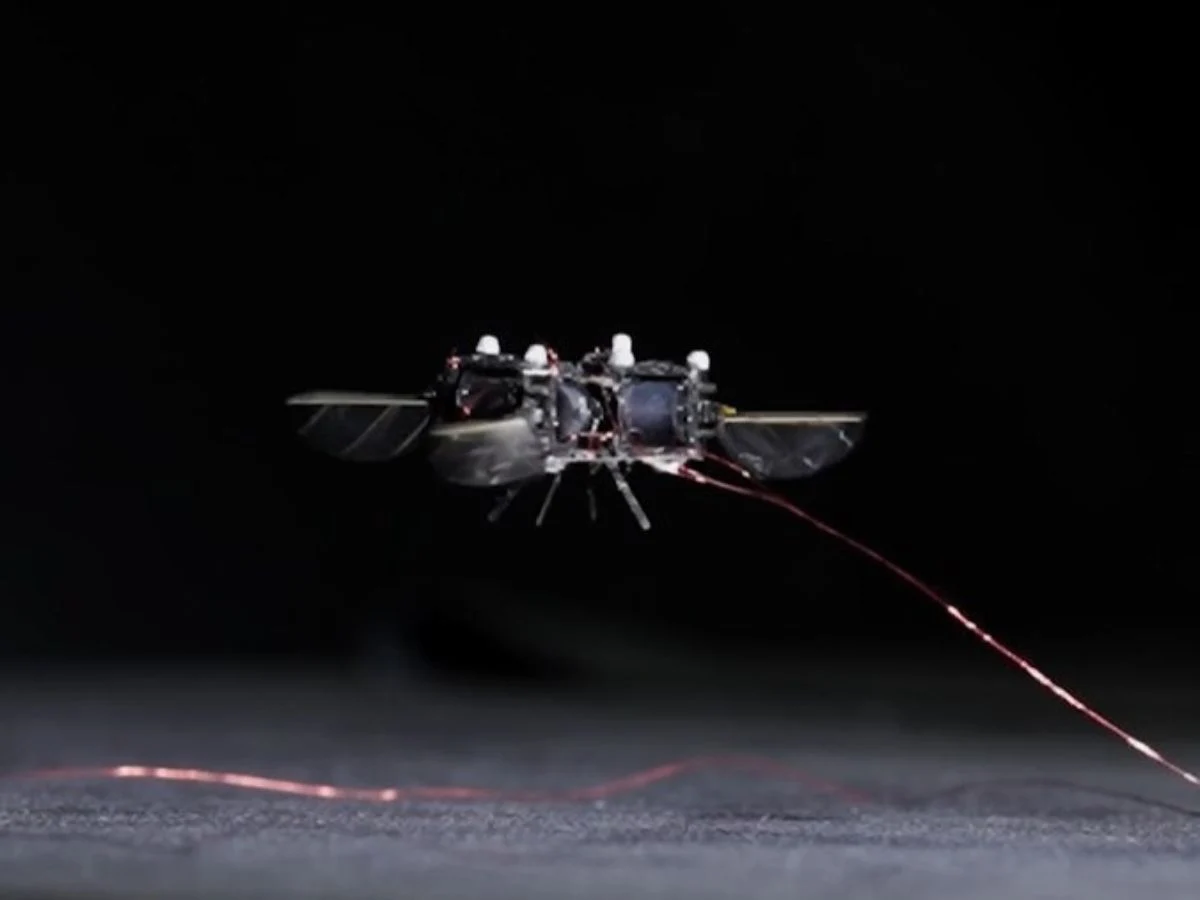
A group of scientists at the Massachusetts Institute of Technology (MIT) is working on a robot that resembles a bee, capable of flapping its wings as fast as 400 times each second. The initiative, spearheaded by principal investigator Kevin Chen from the Soft and Micro Robotics Lab at MIT, seeks to replicate the incredible flight maneuvers seen in bumblebees.
Future Uses of the Robotic Bee
According to the research team, this robotic bee may one day be able to perform tasks such as artificial pollination. This technology could prove beneficial in places where real bees cannot thrive, like indoor warehouse farms illuminated by ultraviolet lights. The researchers also believe it could be useful for similar tasks on other planets.
“If you aim to cultivate crops on Mars, you likely wouldn’t want to introduce many natural insects for pollination. That’s where our robot could potentially be useful,” explains Yi-Hsuan Hsiao, a PhD student involved in the project.
Energy Efficiency and Design
This miniature robot, which weighs less than a paperclip, navigates by utilizing soft muscles that swiftly contract and stretch. The research team is also focused on creating a more energy-efficient version of the robot that can both fly and hop. This hopping robot, which is smaller than a human thumb, uses about 60% less energy compared to its flying counterpart. Thanks to its improved energy efficiency, it can carry up to ten times more weight. The team has already shown that it can transport a load that is twice its weight, but the maximum capacity could be even greater than what they have tested.
Currently, the robots are powered through a wire, as fitting batteries on such small devices is a monumental challenge. Chen estimates that these robots could take another 20 to 30 years to fully develop. Nonetheless, their research might lead to advancements in the next generation of micro-robots.
Source:
Link
Leave a Reply