
Key Takeaways
1. The MIT research team enhanced ec3 (electron-conducting carbon concrete) to achieve a tenfold boost in energy capacity.
2. A smaller volume of ec3 (5 cubic meters) is now needed to power a typical house for a day, compared to 45 cubic meters previously.
3. New imaging techniques allowed visualization of the material’s internal structure, leading to improvements in its chemistry and production methods.
4. Seawater can be used as an effective electrolyte for ec3, suggesting its potential for offshore construction applications.
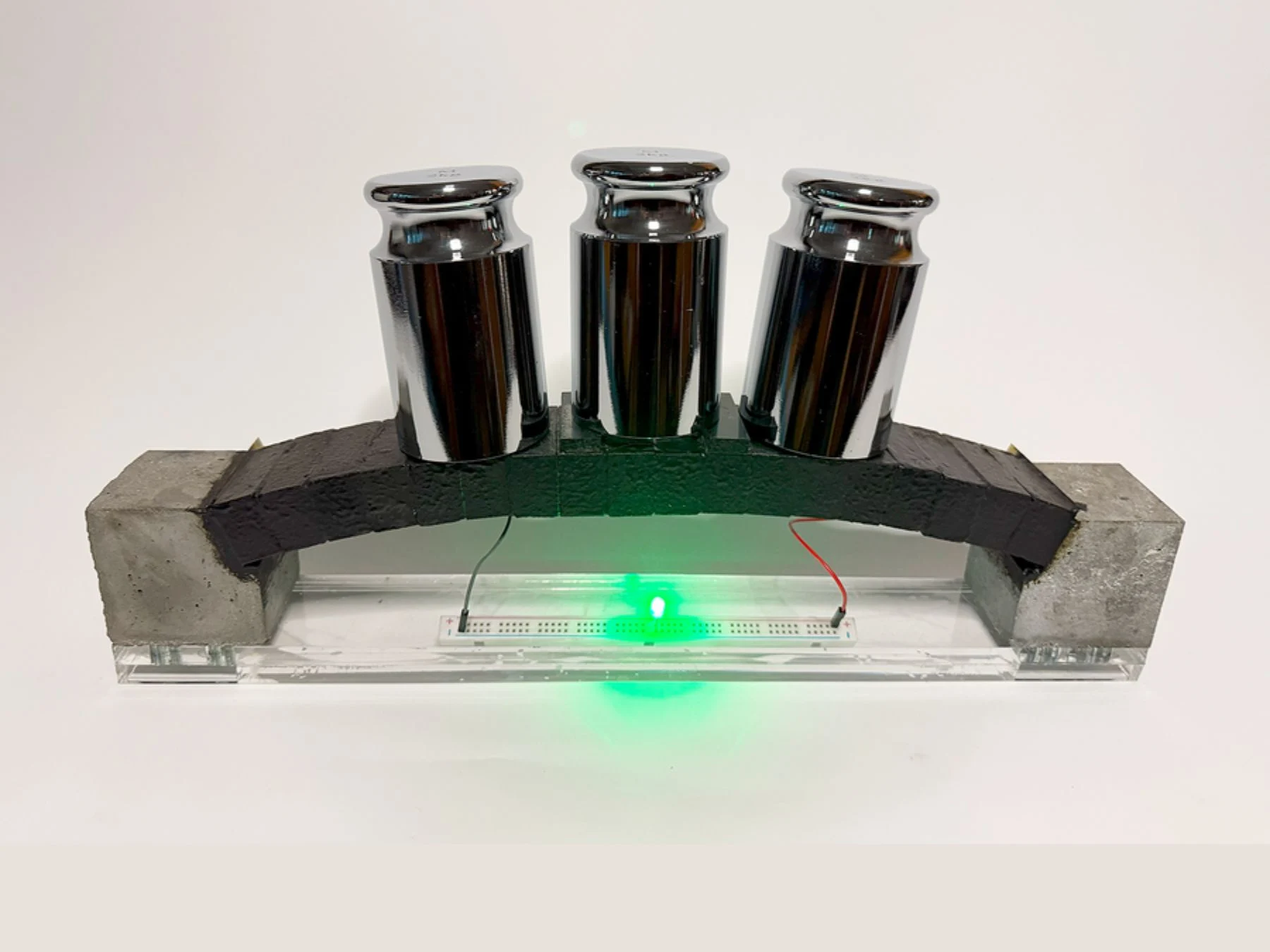
5. The material can also monitor structural health, as demonstrated by powering an LED with a 9-volt arch that indicates physical stress.
An MIT research team has made a significant advancement in their ec3 (electron-conducting carbon concrete), a type of material capable of storing and releasing electrical energy. In a recent publication in the Proceedings of the National Academy of Sciences (PNAS), they revealed a remarkable tenfold boost in its energy capacity. This innovation could allow common structures like buildings and bridges to operate similarly to batteries.
Reduced Energy Needs
The enhancement is considerable. Previously, a typical house would necessitate a 45-cubic-meter block of ec3 to be powered for one day. Now, only a 5-cubic meter block is required, which is about the size of an ordinary basement wall.
New Insights and Techniques
This advancement arises from a more profound comprehension of the internal structure and chemistry of the material. For the first time, the team was able to visualize the inner configuration of the material using a high-resolution 3D imaging method. The fresh insights gained from this imaging helped them enhance the system with superior organic electrolytes and a “cast-in electrolyte” manufacturing approach, which made production easier. Additionally, they utilized a multicell stacking method, resulting in a 12-volt prototype that surpasses the low-voltage limitations present in earlier models.
A Revolutionary Perspective
What really excites us is that we’ve taken a material as old as concrete and shown that it can achieve something completely new. …we’re opening a path to infrastructure that not just supports our lives, but also energizes them. — James Weaver, a co-author of the paper.
The researchers found that seawater can serve as an effective electrolyte, indicating possible use in offshore constructions. They also showed its potential for structural health monitoring by using a 9-volt arch made of the material to power an LED that flickered when the arch was stressed physically.
Source:
Link
Leave a Reply