Tag: energy storage

  • Mova Solar System Launches: €300 Discount & Free Smart Meter

    Mova Solar System Launches: €300 Discount & Free Smart Meter

    Key Takeaway

    – Limited-time pre-order price: €1,099 (instead of €1,399) with a free €99 smart meter; promotion ends June 8, 2024; shipping begins June 9.
    – 4 kWh base capacity expandable to 20 kWh using LumeGret B4000 4 kWh modules (pre-order at €999, RRP €1,099).
    – All-in-one package: micro-hybrid inverter, battery, and solar charge controller supporting up to 3.6 kW PV input and 800–2,500 W home feed, with meter-based feed-in control.
    – AI optimization with 600+ dynamic tariffs, standard app management, and integration with FluxCharge 3.6 kW EV charger.
    – Larger of Mova’s systems (above LumeGret A2000), designed to work as a plug-and-play solution with scalable storage.


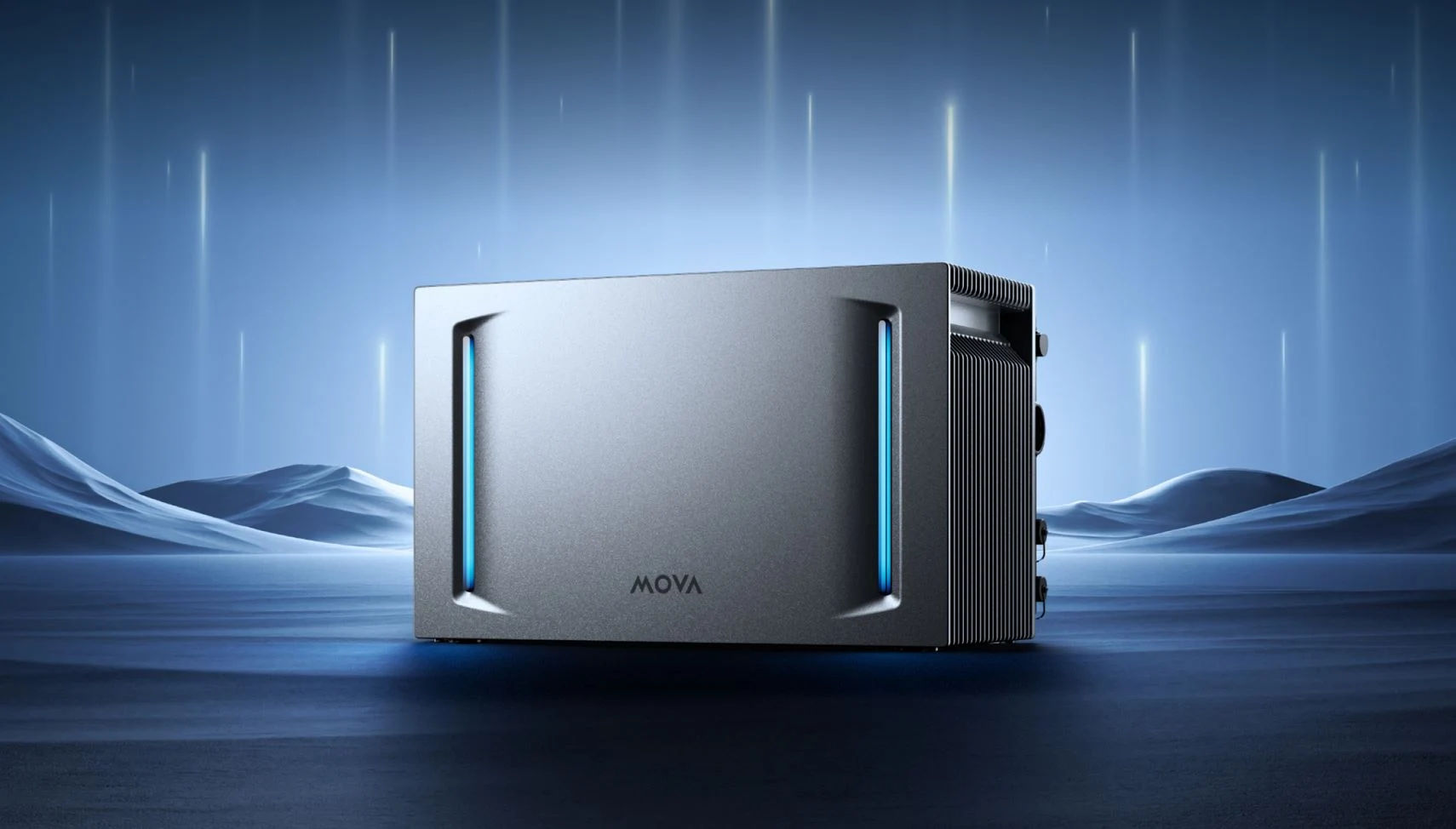
    Overview of the Mova LumeGret A4000 Launch

    The article discusses a recent introduction by Mova, highlighting the LumeGret A4000 as the larger option in their solar power lineup, positioned above the A2000. It notes the product’s market availability through pre-orders directly from Mova at a promotional price before June 8, and mentions shipping slated to begin on June 9. The tone shifts as it reports the event’s timing and initial market entry, keeping the reader informed about the sale window and delivery schedule.

    Pricing, Deals, and What’s Included

    Pricing details reveal a promotional price of 1,099 euros for the LumeGret A4000 before the June 8 deadline, reflecting a 300-euro discount from the recommended retail price of 1,399 euros. An added incentive is a free smart meter valued at 99 euros. The article preserves these figures verbatim, ensuring readers understand the financial incentives and what accompanies the purchase during the promo period, including shipping arrangements that begin on June 9.

    Technical Specs and Expansion Options

    The A4000 is described as the larger model with an initial base capacity of 4 kWh, expandable to 20 kWh using the LumeGret B4000 expansion battery. Each expansion adds 4 kWh and is offered for pre-order at 999 euros, down from its 1,099-euro RRP. The piece specifies an integrated all-in-one design that merges a micro-hybrid inverter, battery, and solar charge controller, and compares it to systems like the Anker Solix Solarbank, noting a maximum PV input of 3,600 W, achievable with eight 450 W panels. These numbers and comparisons are kept intact to preserve the original’s technical detail.

    Inverter Output, Metering, and Features

    In terms of power delivery, depending on setup and usage, the included inverter can feed either up to 800 W or 2,500 W into the home grid, with feed-in managed by the Mova LumeGret Smart Meter or other compatible meters. The article also lists features such as AI optimization that considers more than 600 dynamic electricity tariffs, standard app management, and integration with the 3.6 kW FluxCharge EV charging station. The write-up maintains these specifics to ensure readers grasp both performance and ecosystem compatibility, including how tariff data can influence efficiency.

    Sources

  • Zendure SolarFlow Mix: 50 kWh Storage & 4 kW PV System Expansion

    Zendure SolarFlow Mix: 50 kWh Storage & 4 kW PV System Expansion

    Key Takeaway

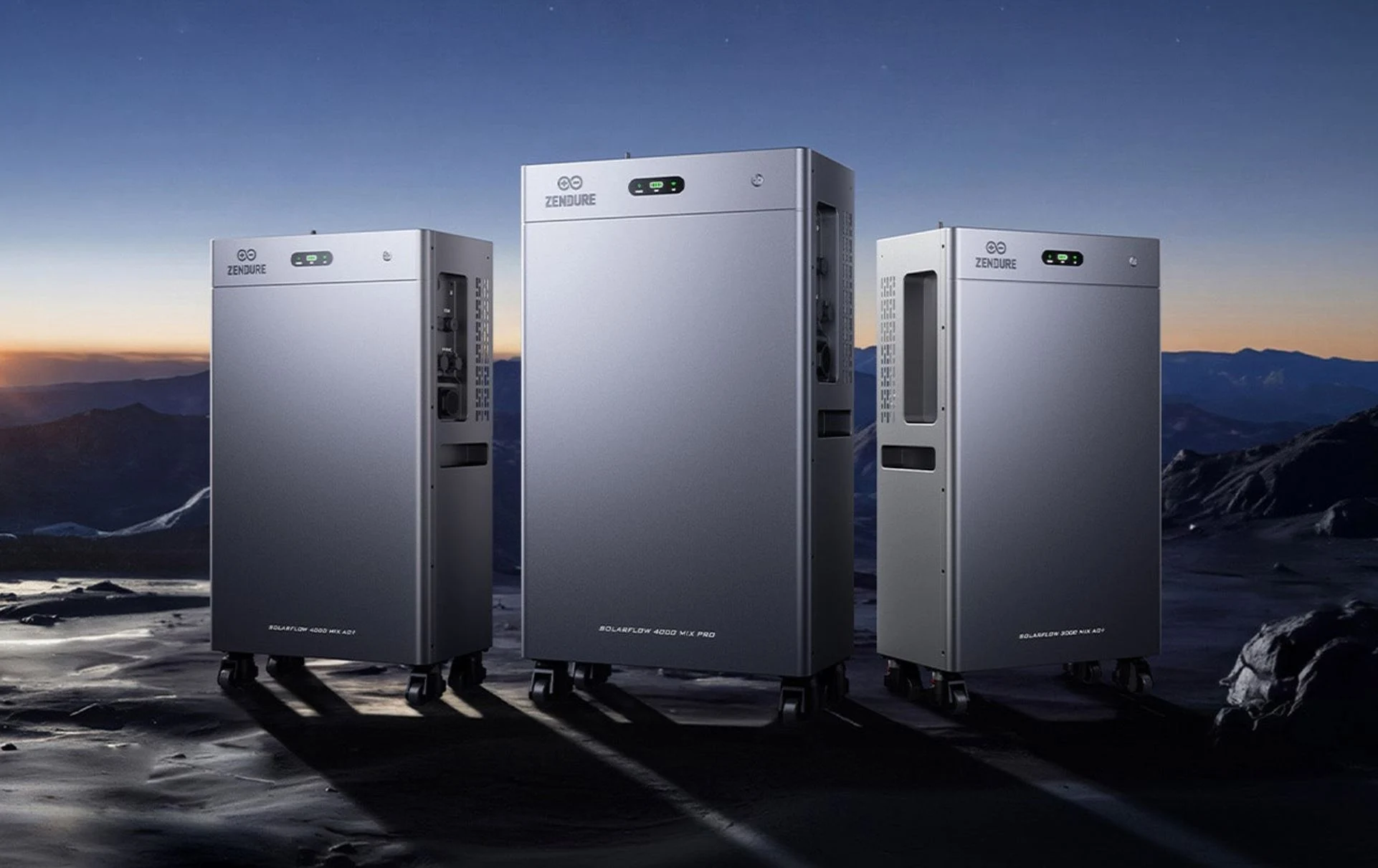
    1. The SolarFlow Mix series includes three models designed for different household energy needs, supporting advanced AI and energy management features.
    2. The SolarFlow 4000 Mix Pro offers high capacity (8 kWh, expandable to 50 kWh), robust PV input (up to 13 kW), and is suitable for larger households.
    3. The SolarFlow 4000 Mix AC+ and SolarFlow 3000 Mix AC+ are retrofit solutions for existing PV systems, with capacities of 8 kWh and 3,680 W off-grid, but only the 4000 Mix AC+ supports expansion.
    4. All models are built for outdoor use, operate quietly, and are available immediately from the manufacturer.

    Introducing Zendure’s New SolarFlow Mix Series

    Exciting news today from Zendure! They launch a new lineup called the SolarFlow Mix series, which brings three different models to the market for a range of energy needs. The models are the SolarFlow 4000 Mix Pro, SolarFlow 4000 Mix AC+, and SolarFlow 3000 Mix AC+—each tailored for different household sizes and energy demands.

    Core Features Shared Across All Models

    All these new systems got some common features such as the Zendure’s Home Energy Management System (HEMS 2.0). Like, they also include the Zenki AI mode, which makes smart decisions about charging and discharging by looking at electricity tariffs, weather, and household or PV (photovoltaic) forecast data. They even support dynamic rate plans like ZenWave, making them pretty advanced and adaptable for modern energy management.

    Powerful PV Storage with the SolarFlow 4000 Mix Pro

    This model is the top of the line really, designed for homes needing lots of power. It can deliver bidirectional AC power of 4 kW meaning it can both supply and take energy from the house without problem. In standalone or off-grid mode, it supplies up to 3,680 W. It’s flexible too, with two MPPTs (Maximum Power Point Trackers), supporting PV systems up to 8 kW, plus it can accept a maximum of 5 kW from an AC inverter. This means a total PV input of up to 13 kW, making it very suitable for big solar setups. The battery storage size is 8 kWh but can be increased all the way up to 50 kWh if you wish to scale up your energy storage.

    Upgrade Made Easy with the SolarFlow 4000 Mix AC+

    The SolarFlow 4000 Mix AC+ is more like a retrofit device, made to work with older PV installations. It features a 5 kW AC input port which is compatible with common inverters, and it allows 4 kW of continuously available charging and discharging power. Similar to the Pro version, it can be expanded up to 50 kWh in battery capacity, offering flexibility for upgrading older systems without replacing the entire setup.

    Designed for Smaller Homes – SolarFlow 3000 Mix AC+

    This model targets homes that require less energy storage and power output. It supplies 3,000 W of continuous power on the AC side and can operate off-grid at up to 3,680 W. Its storage capacity is fixed at 8 kWh, and unlike the other models, you cannot expand it further. Like its siblings, it is certified IP65 for outdoor environment durability, functions within a −20 °C to +55 °C temperature range, and is noted for operating very quietly at 25 dB. It is housed robustly in all-metal enclosures, perfect for various weather conditions.

    Availability and Pricing

    • The SolarFlow 4000 Mix Pro comes at a recommended retail price of 2,399 euros.
    • The SolarFlow 4000 Mix AC+ is priced at 1,999 euros.
    • The SolarFlow 3000 Mix AC+ has a retail price of 1,699 euros.

    All three models can be purchased directly from Zendure starting today, offering versatile solutions for residential solar energy needs.


    Sources

  • First Quantum Battery Prototype Promises Instant Charging for EVs

    First Quantum Battery Prototype Promises Instant Charging for EVs

    Key Takeaways

    1. Scientists have created the first working proof-of-concept quantum battery that uses advanced physics for energy storage and release.
    2. The quantum battery can be charged wirelessly with a targeted laser, converting light into electrical current.
    3. Its unique charging mechanism allows larger capacities to recharge faster by synchronizing internal components to absorb energy simultaneously.
    4. Current limitations include a small energy capacity and very brief charge retention, lasting only a few nanoseconds.
    5. Engineers need to enhance the battery’s size and improve energy retention to move from lab prototypes to commercial use.


    Scientists from the Commonwealth Scientific and Industrial Research Organisation have made a big step by creating the first working proof-of-concept quantum battery. Unlike regular batteries that depend on slow chemical reactions, this innovative tech uses advanced physics to both store and release energy. The prototype consists of special tiny layers that capture light, enabling the entire device to be charged wirelessly with a targeted laser, which is then changed into electrical current.

    The Unique Charging Mechanism

    What makes this technology really special is its surprising scaling ability. In standard power units, larger capacities usually take longer to recharge. However, the quantum battery takes advantage of a synchronized physical behavior among its internal parts. When these tiny units come together, they work as a team to absorb energy in a highly parallel manner. Since they share the charging load at the same time, adding more components actually speeds up the overall charging process. Scientists imagine a future where this mechanism could recharge electric cars quicker than filling up a regular vehicle with gas, or even charge a smartphone in an instant.

    Current Limitations

    Even with this impressive achievement, there are still significant barriers that stop the technology from reaching consumers. The current lab prototype has a very small energy capacity and can only keep its charge for a few nanoseconds before natural environmental factors make the stored energy fade away. The fragile, tightly synchronized states necessary for the battery to operate are easily disturbed by everyday conditions.

    To make the leap from lab tests to commercial use, engineers need to find ways to greatly enhance the system’s physical size and improve its energy retention duration. As the research team looks for collaborations with investors and car manufacturers, the main focus is still on stabilizing these tiny systems.

    Source:
    Link


  • Concrete Battery Boosts Energy Storage Capacity Tenfold

    Concrete Battery Boosts Energy Storage Capacity Tenfold

    Key Takeaways

    1. Concrete batteries can store electrical energy while being strong enough for construction use.
    2. The innovative battery is made from cement, water, ultrafine carbon black, and electrolytes, creating a conductive structure.
    3. Optimized electrolytes can increase the energy storage capacity of concrete by ten times.
    4. Concrete batteries can be integrated into building elements, offering self-monitoring capabilities for structural integrity.
    5. This technology has the potential to enhance energy efficiency in various applications, promoting sustainable building practices.


    Concrete is a major building material used globally. In the future, it may not just be useful for construction but also function like a battery to store energy. Scientists at the Massachusetts Institute of Technology (MIT) have improved what they call a “concrete battery,” which can hold electrical energy while also being strong. Their findings are shared in the Proceedings of the National Academy of Sciences (PNAS).

    Composition of the Concrete Battery

    This innovative battery is made from cement, water, ultrafine carbon black, and electrolytes. Together, these components form a conductive nanocarbon structure within the concrete. Admir Masic, the main author of the research and co-director of the MIT EC³ Hub, states:

    Understanding how these materials ‘assemble’ themselves on the nanoscale is crucial for achieving these new functionalities.

    This structure helps electrolytes get into the concrete’s pores, enhancing the flow of current.

    Energy Storage Improvements

    Research has shown that when using optimized electrolytes, the energy storage capacity of concrete can increase by ten times. In 2023, a household needed about 45 cubic meters of concrete to meet its daily energy requirements. Today, that number has dropped to just about 5 cubic meters, which is similar to the amount used in a basement wall.

    Damian Stefaniuk, another key author of the study, mentions:

    A cubic meter of this ec3 version — roughly the size of a refrigerator — can hold over 2 kilowatt-hours of energy.

    This is nearly the same as what a refrigerator uses in one day.

    Applications in Construction

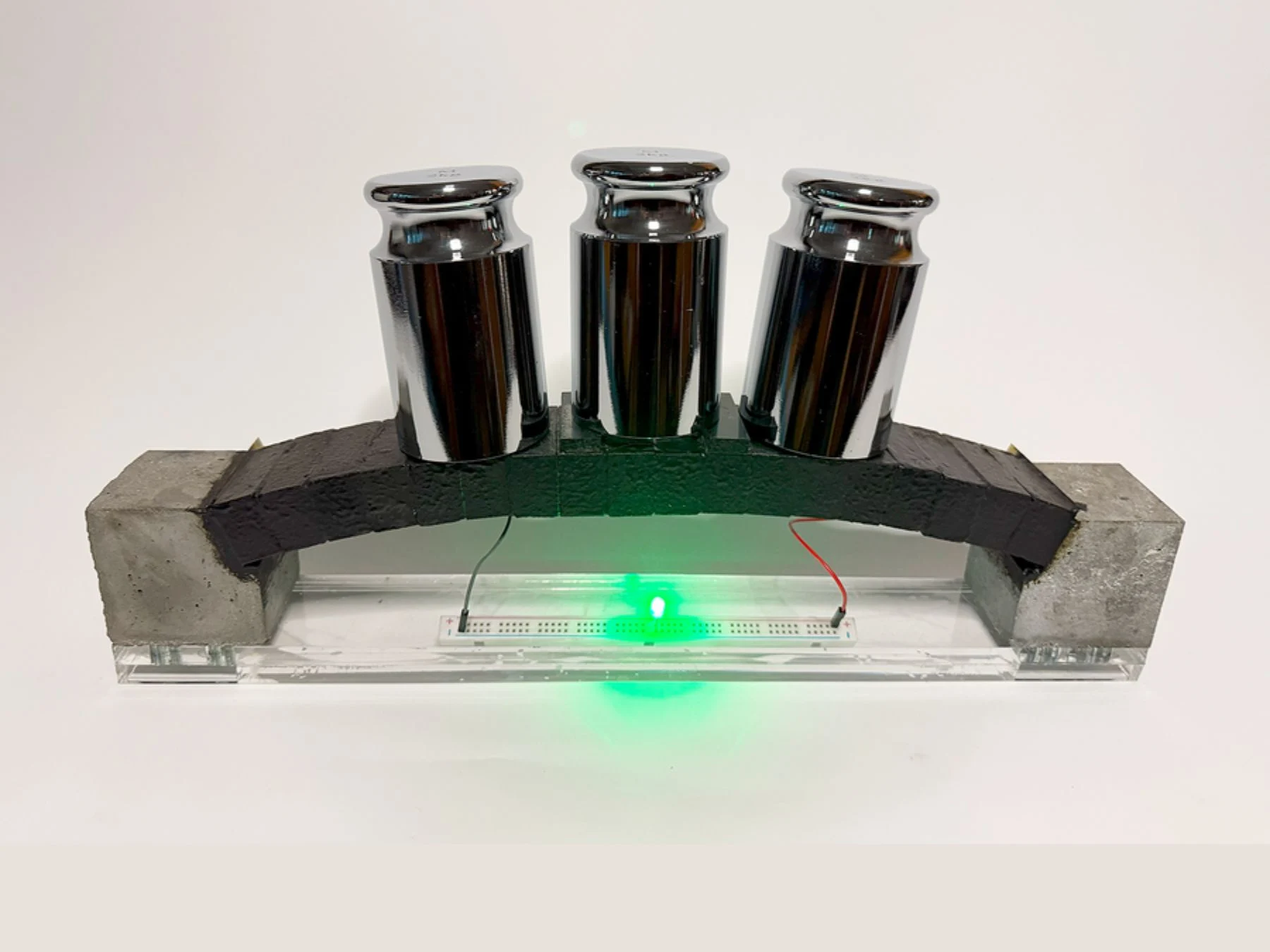
    Concrete batteries can be built directly into elements of a structure, like walls, floors, or domes. Drawing inspiration from Roman architecture, the researchers created a small arch that could support itself while also powering an LED light. Masic adds:

    There may be a kind of self-monitoring capacity here.

    The brightness of the light changes based on the load, which helps assess the structural integrity in real-time.

    Concrete batteries could be beneficial for parking lots, roads, and coastal structures. Stefaniuk explains:

    With these higher energy densities and the shown value across a wider range of applications, we now have a strong and versatile tool to tackle many ongoing energy issues.

    It merges load-bearing structures with energy storage, paving the way for sustainable and multifunctional building in the future.

    Source:
    Link


  • MIT’s New Concrete Battery Provides 10x More Power for Homes

    MIT’s New Concrete Battery Provides 10x More Power for Homes

    Key Takeaways

    1. The MIT research team enhanced ec3 (electron-conducting carbon concrete) to achieve a tenfold boost in energy capacity.
    2. A smaller volume of ec3 (5 cubic meters) is now needed to power a typical house for a day, compared to 45 cubic meters previously.
    3. New imaging techniques allowed visualization of the material’s internal structure, leading to improvements in its chemistry and production methods.
    4. Seawater can be used as an effective electrolyte for ec3, suggesting its potential for offshore construction applications.
    5. The material can also monitor structural health, as demonstrated by powering an LED with a 9-volt arch that indicates physical stress.


    An MIT research team has made a significant advancement in their ec3 (electron-conducting carbon concrete), a type of material capable of storing and releasing electrical energy. In a recent publication in the Proceedings of the National Academy of Sciences (PNAS), they revealed a remarkable tenfold boost in its energy capacity. This innovation could allow common structures like buildings and bridges to operate similarly to batteries.

    Reduced Energy Needs

    The enhancement is considerable. Previously, a typical house would necessitate a 45-cubic-meter block of ec3 to be powered for one day. Now, only a 5-cubic meter block is required, which is about the size of an ordinary basement wall.

    New Insights and Techniques

    This advancement arises from a more profound comprehension of the internal structure and chemistry of the material. For the first time, the team was able to visualize the inner configuration of the material using a high-resolution 3D imaging method. The fresh insights gained from this imaging helped them enhance the system with superior organic electrolytes and a “cast-in electrolyte” manufacturing approach, which made production easier. Additionally, they utilized a multicell stacking method, resulting in a 12-volt prototype that surpasses the low-voltage limitations present in earlier models.

    A Revolutionary Perspective

    What really excites us is that we’ve taken a material as old as concrete and shown that it can achieve something completely new. …we’re opening a path to infrastructure that not just supports our lives, but also energizes them. — James Weaver, a co-author of the paper.

    The researchers found that seawater can serve as an effective electrolyte, indicating possible use in offshore constructions. They also showed its potential for structural health monitoring by using a 9-volt arch made of the material to power an LED that flickered when the arch was stressed physically.

    Source:
    Link


  • BYD Doubles Tesla Megapack Capacity with Affordable ESS

    BYD Doubles Tesla Megapack Capacity with Affordable ESS

    Key Takeaways

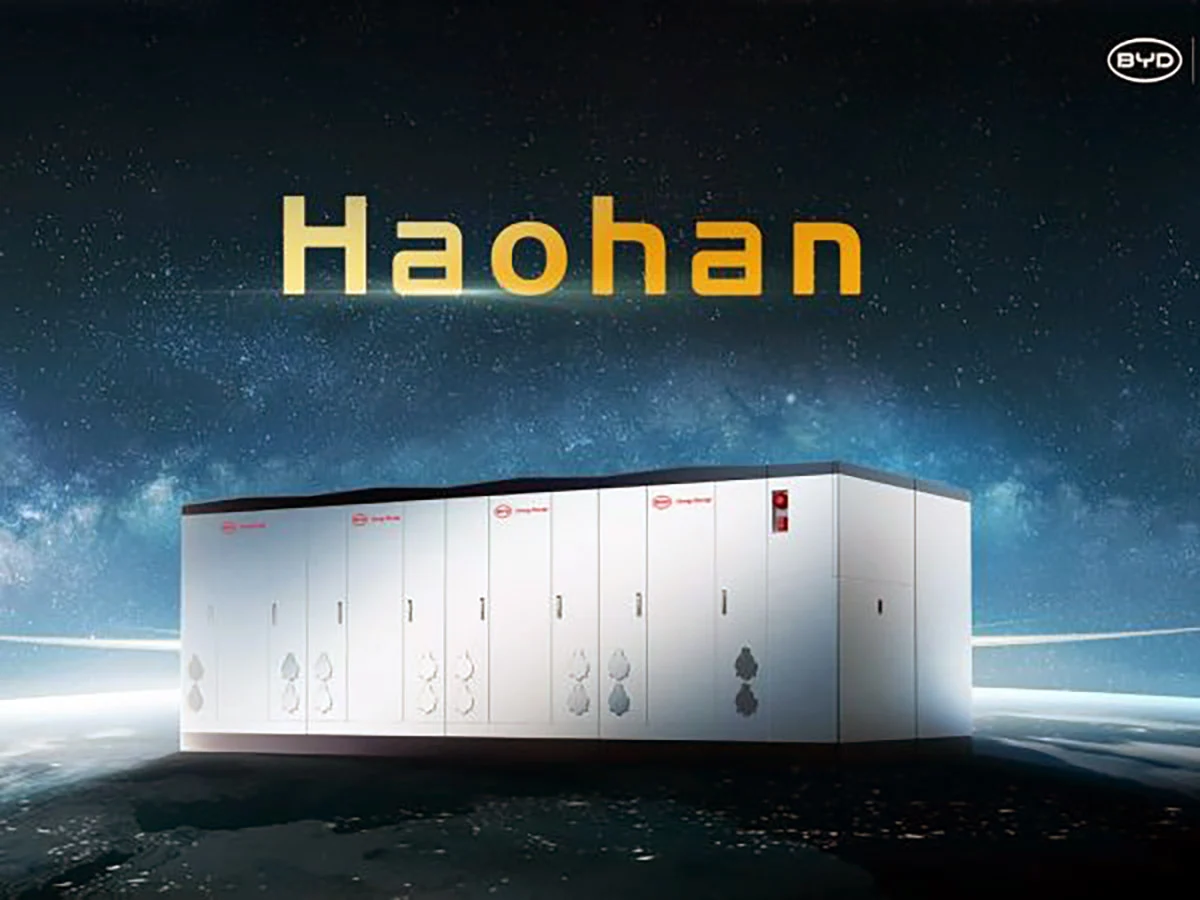
    1. BYD’s HaoHan energy storage system (ESS) has the largest battery pack capacity in the world at 14.5 MWh per unit.
    2. The HaoHan ESS can hold 10 MWh in a standard 20-foot container, reducing project costs by 22% compared to competitors like CATL and Tesla.
    3. BYD’s innovative blade battery design increases volumetric density to 233 kWh per cubic meter, over 50% higher than the industry average.
    4. A 1 GWh ESS using HaoHan units requires 76% fewer battery cells, leading to a land requirement that is a third smaller.
    5. The HaoHan system is key for managing renewable energy sources and will support a major 12.5 GWh grid-level energy storage project in Saudi Arabia.


    BYD has recently outdone CATL by claiming the title for the largest battery pack in the world. Their innovative BYD HaoHan energy storage system (ESS) boasts an impressive capacity of 14.5 MWh in a single unit, thanks to significant advancements in the energy and volumetric density of individual cells.

    Impressive Capacity and Cost Efficiency

    The HaoHan ESS can contain a staggering 10 MWh within a standard 20-foot container, surpassing CATL’s Tener system and enabling a 22% decrease in levelled project costs. For perspective, Tesla’s latest Megapack 3 can only accommodate 5 MWh in the same space.

    With a volumetric density of 233 kWh per cubic meter, BYD’s new offering exceeds the industry average by more than 50%. This is supported by their cutting-edge blade battery, which, at 2,710 Ah, is the largest energy storage cell globally.

    Reducing Space and Costs

    Thanks to this massive unit, a standard 1 GWh ESS will require only half as many HaoHan units, utilizing 76% fewer battery cells than conventional systems. This leads to a land requirement that is a third smaller. The cell-to-system volumetric efficiency has reached a record 52%, and with a lifespan surpassing 10,000 charge-discharge cycles, the cost per kWh comes to an astonishing $0.014, marking it as the lowest in the electricity storage market thus far.

    In addition to the high energy density achievable per 20-foot container, the low cost of energy storage is made possible by their internally designed blade structure, which reduces unnecessary components. BYD’s converter and software also allow for instantaneous adjustments to power output, making the HaoHan ESS ideal for balancing renewable energy at the grid level.

    Meeting Industry Needs

    This capability is crucial for the industry, especially considering the numerous blackouts utilities have faced when they fail to effectively manage intermittent energy sources such as solar and wind. The HaoHan system is set to play a pivotal role in constructing the world’s largest 12.5 GWh grid-level energy storage project in Saudi Arabia.

    Source:
    Link


  • Organic Solar Battery Stores Sunlight for 48 Hours Using Water

    Organic Solar Battery Stores Sunlight for 48 Hours Using Water

    Key Takeaways

    1. Researchers in Germany created a unique organic “solar battery” that captures sunlight and stores energy for over two days.
    2. The device uses a porous covalent organic framework (COF) made from naphthalenediimide, combining photovoltaic and electrochemical functions without metals.
    3. The COF acts as both a light absorber and a charge reservoir, stabilizing stored energy for at least 48 hours, surpassing similar materials in capacity.
    4. Water plays a key role in energy preservation by preventing charge recombination and stabilizing trapped electrons without metallic centers.
    5. The device maintains over 90% capacity after multiple charge-discharge cycles, showing potential for sustainable solar energy storage solutions.


    Researchers in Germany have developed a unique “solar battery” that is entirely organic. This innovative device can capture sunlight, store energy for more than two days, and then release it as electricity. It employs a porous, two-dimensional covalent organic framework (COF) made from naphthalenediimide, which merges photovoltaic and electrochemical functions into a lightweight material. This design, which is free of metals, presents a greener choice for off-grid energy solutions.

    Functionality of the COF

    The COF serves dual purposes as a light absorber and a charge reservoir. When it is exposed to light, it produces electron-hole pairs and captures the generated charges within its structured pores. Even in watery conditions, these charges stay stable for at least 48 hours—an impressive duration for materials of this kind—and can be released when needed to power an external device. The research team recorded a specific capacity of 38 milliampere-hours per gram, surpassing similar materials like carbon nitrides, polymer semiconductors, and metal-organic frameworks.

    Role of Water in Energy Preservation

    Water molecules play a crucial role in maintaining the stored energy. Instead of neutralizing the charges, water rearranges around the COF structure, creating an energy barrier that stops recombination. Research indicates that this interaction helps stabilize trapped electrons without the need for ions or metallic centers.

    Simulations and Testing Results

    Spectroscopists at the Technical University of Munich conducted simulations to analyze various scenarios for charge stabilization. They demonstrated how molecular design, the architecture of the framework, and the surrounding environment collaborate to secure charges. The straightforward nature of the mechanism—organic components combined with water—helps clarify the material’s durability during cycling.

    Practical tests confirmed this durability: the device managed to keep over 90 percent of its capacity even after numerous charge-discharge cycles. This performance suggests that the COF platform is a strong candidate for integrated solar energy storage, especially in situations where weight, sustainability, and the availability of materials are significant issues. Future research will aim to scale up the synthesis of the framework, enhance charge density, and incorporate the material into complete photovoltaic systems.

    Source:
    Link