Category: All News

  • Vivo X300 Ultra vs Pro: Surprising Dxomark Camera Test

    Vivo X300 Ultra vs Pro: Surprising Dxomark Camera Test

    Key Takeaway

    – Vivo X300 Pro ranks 2nd in DxOMark, ahead of the more expensive X300 Ultra by just one point.
    – X300 Ultra loses 10 points in main camera video rating, causing its lower overall score.
    – X300 Pro outperforms X300 Ultra in low-light performance.
    – X300 Ultra excels in ultra-wide, telephoto, bokeh, and zoom, but struggles with video and low-light consistency.
    – Overprocessing leads to unnatural photos and artifacts, especially in darkness.


    Vivo X300 Ultra Camera Test Results

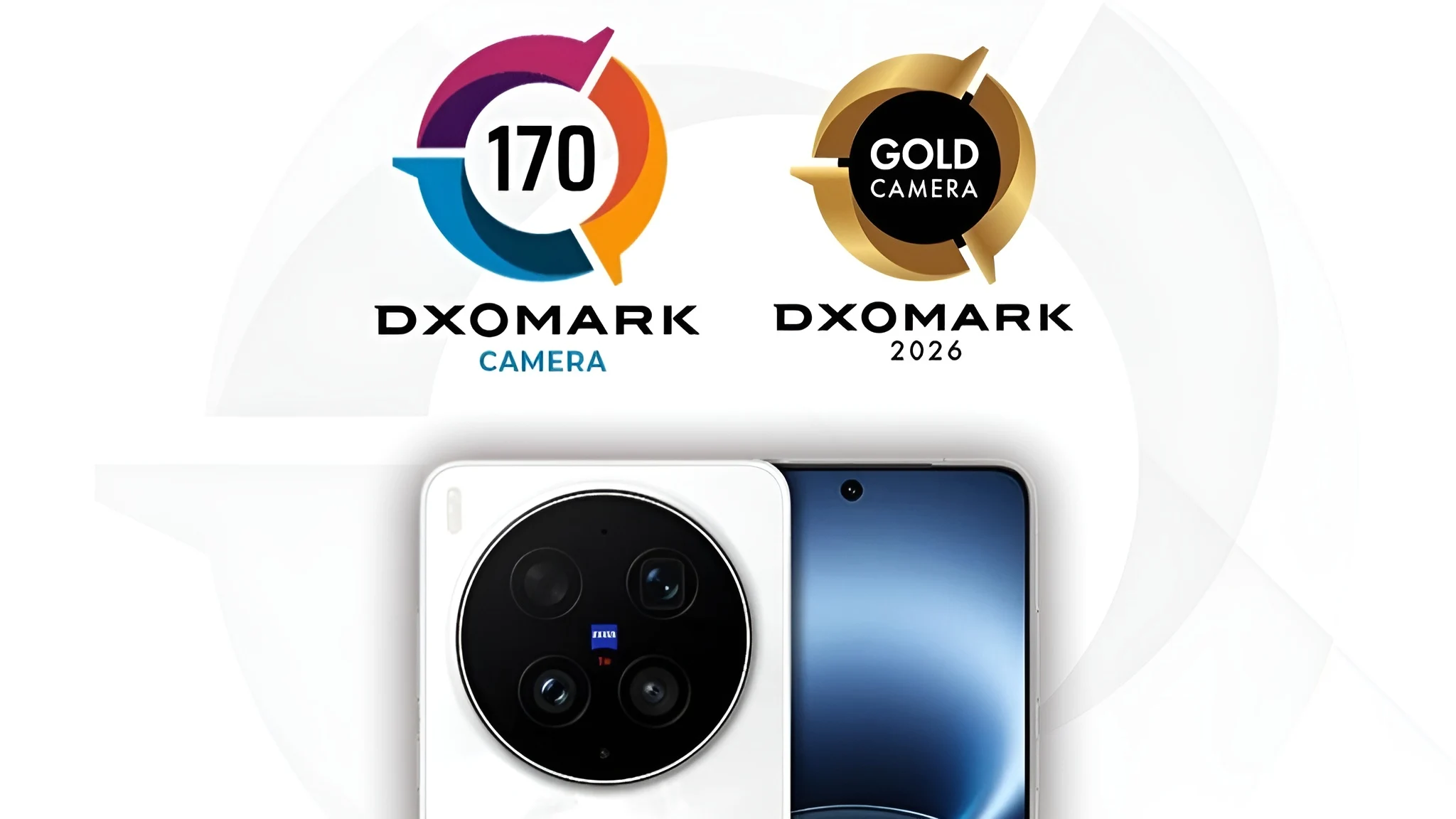
    The Vivo X300 Pro reached second place in in DxoMark camera test at the end of 2025, a position it still holds today, directly behind the Huawei Pura 80 Ultra, which has topped the ranking of the best smartphone cameras for months. There has been little movement among the top three until now: DxOMark has just published its Vivo X300 Ultra camera test, and it ends with a small surprise.

    Point Distribution and Surprising Rankings

    The current Zeiss camera flagship, which is around €600 more expensive than last year’s Pro model, lands in third place behind the Vivo X300 Pro in terms of points, which is somewhat surprising. So let’s take a look at where the Vivo X300 Ultra’s camera fell short in DxOMark’s eyes and why the more affordable Vivo flagship apparently received a slightly better rating overall.

    Video Performance and Low Light Issues

    By just a single point, the Vivo X300 Pro’s lead isn’t huge, but one could be forgiven for expecting a clear victory for the Ultra model. Looking at the point distribution between the two Vivo contenders, one outlier stands out in particular. While the X300 Ultra scores more or at least as many points as the Pro model in virtually all categories, the Vivo X300 Ultra falls short by a full 10 points in the main camera’s video rating, which apparently tipped the scales in favor of the overall score.

    In terms of usage scenarios, the Vivo X300 Pro still maintains its top position in low-light performance, ahead of the Vivo X300 Ultra. The rather negative assessment of video performance by DxoMark is likely to hurt Vivo, as the Vivo X300 Ultra was specifically developed and marketed for this area. After all, the Zeiss Ultra flagship still achieves top scores in ultra-wide-angle, telephoto, bokeh and zoom.

    Test Comments and Final Rankings

    In the test comments, the camera testers mention inconsistent performance in challenging situations, particularly during video recording and in low light. In darkness, the testers also apparently struggled with increased noise, artifacts and unnatural AI textures. In general, the testers note that the somewhat excessive overprocessing can result in unnatural photos. Nevertheless, the Vivo X300 Ultra currently dominates our list of the top camera phones, followed closely by the Vivo X300 Pro and the Oppo Find X9 Ultra in third place.

    • Vivo X300 Pro: 2nd place overall, strong low-light performance
    • Vivo X300 Ultra: 3rd place overall, 10 points lower in video rating
    • Huawei Pura 80 Ultra: 1st place, holds top ranking for months


  • ARM CEO gifts Nvidia’s Huang historic Windows-ARM device

    ARM CEO gifts Nvidia’s Huang historic Windows-ARM device

    Key Takeaway

    – ARM CEO Rene Haas gifted Nvidia CEO Jensen Huang a Surface RT, highlighting its historical significance.
    – The 2012 Surface RT featured an Nvidia Tegra 3 ARM chip, promising fanless design and 10-hour battery life.
    – Windows RT’s limited software ecosystem and poor app support made the Surface RT a commercial flop.
    – Despite failure, the Surface RT laid early groundwork for ARM’s eventual integration into Windows.
    – Nvidia’s new RTX Spark platform will continue to run on Windows, building on that foundation.


    At Arm’s Computex press conference, amidst a host of AI-related topics, the chip developer had a little surprise in store at the end. Arm CEO Rene Haas invited Nvidia CEO Jensen Huang onto the stage and presented him with a Surface RT. It was a real blast from the past, showing how far things have come.

    A gift from the past for Jensen Huang

    The Surface RT was something special at the time, as the Windows device featured an ARM chip developed by Nvidia (Tegra 3). It was unveiled by Rene Haas, who was then working for Nvidia. The promise in 2012: a fanless design and ten hours of battery life thanks to an energy-efficient platform. These were groundbreaking claims back then.

    How Microsoft redefined its Surface brand

    The Surface RT arrived at a time when Microsoft had largely abandoned the original Surface concept, a rather large table with a touchscreen and sensors for its surface. Instead, the brand name was established for tablets and notebooks. This pivot was quite drastic and changed the direction of the company.

    Back then, the device was something special. Much like the Windows Phone predecessors as MP3 players (Zune), it was extremely difficult to install apps or programs. At the time, the software infrastructure was nowhere near as advanced. In short, the Surface RT was an exciting device to give to relatives or acquaintances who weren’t very tech-savvy. After all, you couldn’t really go wrong with it, mess up the settings, or even catch malware. It was a locked down system.

    Why it was considered a commercial failure

    However, due to these limitations, the Surface RT and Windows RT were also a flop, especially since the devices weren’t particularly fast. Our review of the Surface RT from 2012 was also mixed. Microsoft’s first attempt failed, and it took several more attempts to help ARM gain some traction. After all, Windows was already working in the embedded systems sector, but that didn’t help much at the time.

    • Limited app avalibility hindered adoption.
    • Poor performance compared to Intel counterparts.
    • Confusing marketing for consumers.

    Ultimately, Microsoft, ARM and Nvidia laid the groundwork for establishing ARM in the Windows world. As Jensen Huang stated at the ARM keynote, the new RTX Spark platform will continue to run on Windows. This shows a full circle moment for the technology.

    Sources
    • Asus 3000W Power Supply: Circuit Breaker Required, Limited Use

      Key Takeaway

      – 3000W rated for 220-240V; limited to 1600W on standard 100-115V outlets.
      – Designed to power four RTX 5090 GPUs plus accessories.
      – Full 3000W requires a 240V outlet, which is rare in standard U.S. rooms.
      – In Europe, high-power use may require special 16A outlets (e.g., Swiss Type 23).
      – At near-max load, a dedicated circuit is needed; multiple such PCs would overwhelm a typical apartment.


      Celebrating 20 Years of Republic of Gamers

      To celebrate the 20th anniversary of its Republic of Gamers brand, Asus is launching the ROG Thor 3000W Titanium III Edition 20, a particularly powerful power supply. Its designed to power four GeForce RTX 5090 graphics cards plus various accessories inside the case. This unit goes way beyond what most consumers are use to seeing from a desktop PSU, making it a real statement piece for high-end builds.

      Dual Voltage and Power Limits

      The power supply can also operate in a lower voltage mode. Asus calls this “Dual Voltage Adaptive Design”, which can operate at both 220-240 volts and 100-115 volts. In the latter case, however, the maximum output is limited to 1,600 watts. This is particularly relevant for use in countries that use Type A connectors. The lower voltage at comparable amperage limits the wattage output. Its important to understand this if your planning to use it in a standard home environment.

      Real World Constraints in the US

      That doesn’t mean, however, that the power supply can be used at full power in the US. During Computex, Asus pointed out that this would require a 240-volt outlet. Such outlets do exist, but they are rarely found in standard rooms. The situation is quite complex, as Technology Connections explained in a well-researched video five years ago. So, if the necessary connection technology is lacking, the high-performance power supply effectively becomes a 1,600-watt power supply.

      European Plug Problems

      This can also happen in Europe. Switzerland is one example. Despite its three prongs, its plug is very compact. A typical Schuko socket can often accommodate three Type 13 sockets. However, these are only rated for a maximum of 10 amps. Type 23 sockets, which are protected by a 16-amp fuse, are then required. The Swiss have fewer distribution problems with this than Americans do. Nevertheless, Type 23 outlets are not found everywhere, so youll need to check your local wiring.

      Circuit Requirements and LAN Parties

      With its 3,000-watt power supply, Asus has clearly gone far beyond what is generally considered standard. And even if the power supply is operated at close to its maximum capacity from a properly fused wall socket, there’s not much headroom left for other devices. A computer and its accessories would then need their own dedicated circuit. A LAN party with several of these computers would likely be impossible for an apartment to power. This is a serious consideration for any enthusiast.

      Comparison with Other Manufacturers

      Of course, other manufacturers also face similar issues with similar products, which have so far been marketed as professional power supplies for the AI sector. The ROG Thor 3000W Titanium III Edition 20 seems to be bridging a gap between consumer and enterprise hardware, but the electrical infrastructure in most homes just isnt ready for it. You definately need to plan ahead if your thinking about buying one.


      Sources

      • Maverick Games Clutch: Racing, Customization & Heists

        Maverick Games Clutch: Racing, Customization & Heists

        Key Takeaway

        – Clutch is a narrative-driven open-world racing game from former Forza Horizon developers.
        – The story follows two “racing prodigies” uncovering an underworld beneath the R1K racing series.
        – Gameplay blends legal daytime racing with illegal nighttime street racing, including cop chases and gadgets.
        – Features deep vehicle customization for both interior and exterior.
        – Built on Unreal Engine 5; more details to be revealed at Summer Game Fest starting June 5.


        New Studio Reveals First Project

        Maverick Games, formed by a former Forza Horizon developer, has finally unveiled its debut title, named Clutch. This is a narrative-driven open-world racer, the team has been teazing the announcement for weeks now. They have shared some early details, with a bigger reveal planned for Summer Game Fest. The footage that’s been shown has some clips of the game, but its unclear if these represent actual gameplay moments or just pre-rendered cinematics, there is no label saying if its in-engine or real-time.

        Story and Dual Worlds

        Clutch centers on two siblings who are described as “racing prodigies”. They end up discovering a criminal underworld that lurks underneath the glitzy surface of the prestigious R1K racing series. The game appears to feature a day time legal racing environment, contrasted with a night time illegal street racing sceen. Players can expect police chases, various gadgets, car modifications, and many other features. This combination gives the game a vibe similar to Gran Turismo combined with classic Need for Speed titles like Underground and the Hot Pursuit series.

        Customization and Technical Details

        Maverick Games has also showed off the extensive customization that will be available to players, which includes both interior and exterior options for your vehicles. The game has been developed using Epic’s Unreal Engine 5. Currently, there is no release date or any platforms announced, but more information will be coming during the Summer Game Fest event starting on June 5th. The studio also posted a video on YouTube with more footage.

        Sources
      • New Asus Smartwatch Global Launch: AMOLED, Titanium, Health Monitor

        New Asus Smartwatch Global Launch: AMOLED, Titanium, Health Monitor

        Key Takeaway

        – Asus launched multiple devices at Computex 2026, including the XG Core graphics dock, NUC 16, ExpertBook B5 Flip G2, TUF Gaming 16, and new Zenbook 14 laptops.
        – The new VivoWatch 6 Plus combines titanium alloy and sapphire crystal glass with a 1.43-inch AMOLED display.
        – Health features include continuous monitoring, ECG, blood pressure, gait, and sleep breathing movement analyses.
        – Pricing and availability for the VivoWatch 6 Plus have not been announced.


        Asus Unveils a Bunch of New Stuff at Computex 2026

        Asus has brought countless devices to Computex 2026 this week in Taipei. For instance, it unveiled the XG Core graphics dock today, as well as the NUC 16 and the NUC 16 for Windows 365. On top of that, the company has introduced the ExpertBook B5 Flip G2, TUF Gaming 16, Ascent QN10 mini-PC and multiple Zenbook 14 laptops.

        Return to the VivoWatch Series

        Also, it has returned to its VivoWatch series with a new Plus model. To recap, Asus unveiled the VivoWatch 6 in June 2024 with blood pressure, ECG and body composition monitoring. Less than a year later, it complemented the VivoWatch 6 with the smaller VivoWatch 6 Aero. As we discussed at the time, the VivoWatch 6 Aero follows the elongated design of fitness trackers like the Smart Band 9, or the Smart Band 10 we reviewed in September 2025 (curr. $48 on Amazon).

        Two Variants and Build Materials

        Seemingly, the new VivoWatch 6 Plus combines both form factors across two variants. Pricing and availability remain unknown for now. However, Asus has confirmed that the Plus combines a titanium alloy case with a sapphire crystal glass display. Moreover, the latter is an AMOLED panel that spans 1.43-inches across. Asus has not revealed any other display parameters yet.

        Health Monitoring Features

        Instead, it claims that the VivoWatch 6 Plus offers continuous health monitoring. Also, the wearable features ECG and blood pressure capabilities too, as well as gait and sleep breathing movement analyses. Please see Asus’ press release for more details.


        Sources

      • Leica Cine Compact 1 Shrinks Laser Projector Size & Price

        Leica Cine Compact 1 Shrinks Laser Projector Size & Price

        Key Takeaway

        – 30% smaller, 2 kg lighter, and over 50% cheaper than the Cine Play 1
        – Maximum brightness of 1,700 lumens (vs. 3,000 in the Cine Play 1)
        – Triple RGB laser with 4K resolution, Dolby Vision, HDR10+, and full BT.2020 color space
        – 240 Hz gaming mode at 2K with 20 ms latency
        – Launching June 18, 2026 at €1,645 ($1,914)


        Brand New Projector From Leica

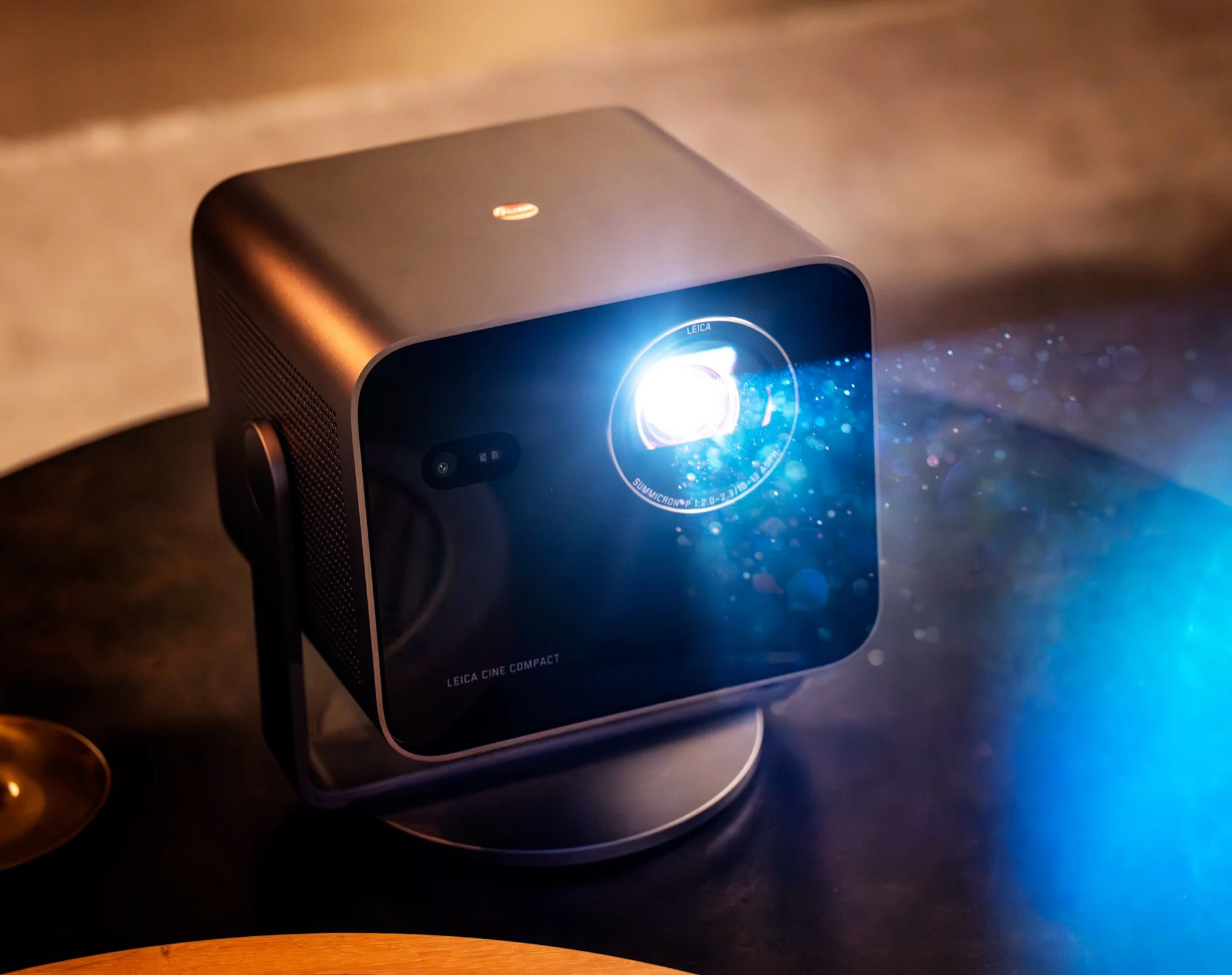
        At first glance, the brand new Leica Cine Compact 1 looks almost identical to the older Cine Play 1, but the new model is 30 percent smaller, 2 kilograms lighter and over 50 percent cheaper. With a stand that allows the projector to be rotated 360 degrees and integrated 2 x 10 watt stereo speakers, the Cine Compact 1 is said to be ideal for use on the move, provided a suitable power source is available.

        Brightness and Screen Size

        The 4.4 kilogram projector compromises on brightness, at least in comparison to the Cine Play 1, as the Cine Compact 1 achieves a maximum brightness of 1,700 lumens instead of 3,000 lumens. According to Leica, the image on a 100-inch screen is therefore just as bright as that of the Cine Play 1 on a 140-inch screen. With a zoom range of 1.0 to 1.3, the lens is not quite as flexible as the more expensive model, but at least it supports autofocus and automatic keystone correction. The projector supports screens from 60 inches to 220 inches.

        Technical Specs and Features

        The Leica Cine Compact 1 uses a triple RGB laser as a light source and combines this with a pico-PMD panel that enables a resolution of 3,840 x 2,160 pixels at a frame rate of 60 Hz. In gaming mode, a frame rate of 240 Hz at 2K resolution should be possible; Leica specifies a latency of 20 milliseconds. The projector supports Dolby Vision, HDR10+ and HLG HDR content and can fully display the BT.2020 color space. With Wi-Fi 6 and the VIDAA Smart TV user interface, content from Netflix and co. can be streamed directly.

        Pricing and Release Date

        The Leica Cine Compact 1 will be launched on June 18, 2026 for a recommended retail price of €1,645 ($1,914). By comparison, the larger Cine Play 1 currently costs $2995. More details about the new laser projector can be found at Leica’s website.

        • 30% smaller and 2kg lighter than Cine Play 1
        • 360 degree rotating stand
        • 2 x 10 watt stereo speakers
        • Maximum brightness: 1,700 lumens
        • Screen size support: 60 to 220 inches
        • Zoom range: 1.0 to 1.3
        • Supports autofocus and automatic keystone correction
        • Triple RGB laser light source with pico-PMD panel
        • Resolution: 3,840 x 2,160 pixels at 60 Hz
        • Gaming mode: 240 Hz at 2K, 20ms latency
        • Supports Dolby Vision, HDR10+, HLG, BT.2020 color space
        • Wi-Fi 6 and VIDAA Smart TV interface
        • Launch date: June 18, 2026
        • Price: €1,645 ($1,914)


      • Deal: Castle Strategy Classic Under $5 on Steam

        Key Takeaway

        – Stronghold: Definitive Edition is a polished remaster, not a remake, retaining classic gameplay with modernized 4K graphics.
        – Currently 70% off on Steam (~$4.50), matching its lowest-ever price.
        – Includes new campaign, siege scenarios, and quality-of-life UI improvements.
        – Criticized for aging engine issues (stiff troop movement, shallow new campaign story).
        – Highly rated (86% positive on Steam, 8.6 User Score on Metacritic).


        Stronghold is one of them true classics of the real-time strategy genre. The castle-building game from British developer Firefly Studios was originally released in 2001. More than two decades later – in November 2023, to be precise – the Definitive Edition brought the cult title up to modern standards. The remastered RTS is currently discounted by 70% on Steam, bringing the price down to around $4.50 instead of $15 – matching its lowest price to date, according to SteamDB. The strategy game is also playable on the Steam Deck and runs surprisingly well.

        Gameplay and Presentation

        Stronghold still plays much like it did 20 years ago. Players build a medieval fortress with castle walls, towers and granaries. Anyone who wants to hear the iconic “The people love you, Sire” has to make sure the castle’s inhabitants always have enough food and housing. At the same time, players must fend off enemy attacks or go to war themselves with knights, archers and siege towers. The Definitive Edition gives the classic a noticeable facelift, including revised graphics with 4K and ultrawide support, improved textures, new animations, modernized effects and an overhauled user interface. The new edition also adds a new 14-mission campaign, a 10-mission “Castle Trail” of siege scenarios and additional content.

        Criticism and Legacy Issues

        The bottom line is that the Definitive Edition is not a true remake, but a remaster – and that is also its biggest point of criticism. Fans get the classic in its most attractive and comprehensive form to date, but they also have to accept some legacy issues from the aging engine. Troops, for example, move rather stiffly and only turn in eight directions. Many players also found the story of the new campaign too shallow.

        Reception and Discount

        On Steam, Stronghold: Definitive Edition has an 86% approval rating from around 10,000 reviews. On Metacritic, the game has a Metascore of 80 and a User Score of 8.6. German gaming magazine PC Games awarded it 7 out of 10. The current offer should therefore be particularly appealing to fans of the original who have not yet played the remastered version. Fans of classic strategy and building games should also find plenty to enjoy despite these caveats.


        Sources

      • GTA 6 Second Trailer Error: Why Fans See It as a Good Sign

        Key Takeaway

        – Small graphics glitch spotted in GTA 6 trailer 2 (floating street lamp).
        – Fans previously found other minor errors (missing mirror reflection, lighting inconsistency).
        – Errors are not seen as negative; fans take them in stride.
        – Some interpret glitches as positive sign that trailer uses in-engine footage.
        – This fuels hopes final game will match trailer visuals.


        Minor Glitch Spotted in GTA 6 Trailer

        After them Best Buy leaks, the pre-order mishap and Take-Two’s earnings call, things has quieted down a little again around the successor to Grand Theft Auto 5 (currently around $25 on Amazon). The GTA 6 subreddit, however, is still anything but silent. Reddit user u/Bullshit99 has spotted a supposed error in the second trailer, more specifically it concerns the short chase scene at the 2:29 mark, in which Lucia is behind the wheel of a convertible while Jason jumps onto the vehicle from behind, in the background a street lamp can be seen that appears to be floating in mid-air.

        Fans React to the Floating Lamp

        Rockstar is facing hardly any criticism for the supposed error, it appears to be nothing more than a small graphics glitch that made it into the published footage despite the elaborate trailer production – and it is by no means the first error fans have spotted in the two GTA 6 trailers released so far. In the first trailer, for example, fans noticed a side mirror with no visible reflection, in the second trailer there is an inconsistent moment in which Jason’s gun briefly lights up the surroundings before the actual gunshot is visible.

        Positive Interpretation of Graphics Bug

        Fans are taking these small errors in the GTA trailers in stride, in this particular case some even interpret the supposed graphics bug as a positive sign. The scene could indicate that Rockstar is showing at least some in-engine material in the trailer rather than relying exclusively on heavily post-processed render sequences, such inconsistencies would be more plausible in in-engine footage than in fully polished CGI sequences. That, in turn, fuels hopes that the final game will actually come close to the trailers visually.


        Sources

      • Steam Deck: Will Valve’s Handheld Slowly Fade Away

        Key Takeaway

        – Steam Deck’s original appeal was strong value for money, now undermined by price increases.
        – Community opinions split: current owners still see a capable device; potential buyers face worse conditions.
        – OLED version now costs $789 instead of $549, with no cheaper new model available.
        – Loss of value perception could threaten long-term sales and justify future hardware development.
        – Steam Deck is not “dead,” but must re-prove itself after the price hike.


        Why the Steam Deck Debate is Heating Up

        Following the significant Steam Deck OLED price increase, the future of Valve’s handheld PC is being hotly debated in the gaming community. On Reddit, one user asked why so many gamers were suddenly acting as if the Steam Deck were “dead.” The question clearly struck a nerve. At the time of research, nearly 800 comments had been posted in less than 20 hours – with opinions sharply divided.

        A Shift in Perceived Value

        As the creator of the Reddit thread explains, the Steam Deck was long attractive above all because of its strong value for money. Buyers got an easy-to-use handheld with Steam integration, modding options and good repairability at a reasonable price. However, the Steam Deck has long since ceased to be the most powerful device in its class – and with the recent price increases, the mood in the community has noticeably shifted. According to the thread creator, comments under videos and posts increasingly describe the Steam Deck as outdated or even “dead.”

        Two Distinct Camps on Reddit

        Reddit is largely split into two camps. One consists of existing Steam Deck owners. For those who already own Valve’s handheld, it remains a capable device with a large game catalog and an active community – even if significantly more powerful handhelds such as the Asus ROG Ally X or Lenovo Legion Go are now available.

        New Buyers Face Higher Costs

        The other camp consists of potential buyers. Anyone looking to buy a new handheld today has to evaluate the Steam Deck under very different conditions – at least the OLED version, which has cost $789 instead of $549 since the price increase. Since the standard Steam Deck is no longer regularly sold as a new device, Valve currently has no cheaper model on offer.

        The Core Question of Survival

        Reddit users largely agree on one point: due to the price increase, the Steam Deck is losing much of its original appeal – namely its strong value for money. Against this backdrop, the question is whether Valve can continue to sell enough units in the long term to justify new models or further hardware projects. The Steam Deck is therefore not “dead” right now, but after the price increase, it has to prove itself all over again.


        Sources
      • New Steam Machine Leak Hints at Imminent Launch

        Key Takeaway

        – Valve’s backend reveals a “Welcome to Steam Machine” onboarding process, suggesting final preparations.
        – Multilingual Steam Machine content on GitHub fuels speculation of a near-term global launch.
        – Reddit community is highly optimistic, with some predicting a release within days to weeks.
        – Valve’s official silence tempers excitement; all details remain unconfirmed speculation.
        – Recent Steam Deck OLED price hike raises concerns that the Steam Machine may be pricier than expected.


        New Steam Machine Hints Spark Excitement

        After entries related to the “Welcome to Steam Machine” introduction were discovered in Valve’s backend at the end of May, many in the community began speculating about a June launch. The excitement is not based solely on the fact that the onboarding process looks like a final stage of preparation. As previously reported, similar leaks appeared shortly before the Steam Controller’s release. A new discovery has now added further fuel to the speculation: the Steam Machine Welcome Tour has surfaced on GitHub in multiple languages. This suggests Valve might be finalising there work.

        Community Reacts With Optimism on Reddit

        The reaction on Reddit has been highly optimistic. Thread creator u/SnooDoughnuts8734 summed up the mood with the words: “Everything is ready, let’s go.” For many users, the fact that the Steam Machine introduction is now available in several languages suggests that Valve has entered the final preparation phase and is getting ready for a worldwide launch. Users also seem confident that a release is imminent, with some speculating about a launch “tomorrow” or “within the next two weeks” – either way, very soon. Its a exciting time for fans.

        Valve’s Silence and Price Concerns

        What tempers the excitement is Valve’s continued silence on official Steam Machine details. For now, everything remains pure speculation. That said, only a few days separated the official Steam Controller announcement from its market launch, so a similarly short timeline cannot be ruled out. The biggest source of skepticism at the moment is the price. Following the recent Steam Deck OLED price increase (available on Amazon for $1,420), many users now believe that the Steam Machine could be significantly more expensive than originally expected. People are wondering if it will be worth the high cost.

        Sources