Author: GizNews

  • Asus ROG Ally X20 & Xreal R1 Glasses Bundle Announced

    Asus ROG Ally X20 & Xreal R1 Glasses Bundle Announced

    Key Takeaway

    – 7.4-inch OLED display with 1400 nits, 120Hz VRR, and Dolby Vision
    – Ryzen Z2 Extreme processor with 24GB RAM and 80Wh battery
    – MicroSD card slot upgraded to microSD Express
    – Redesigned D-pad can switch between 4-way and 8-way modes
    – Translucent shell with new TPS rubber grips and enhanced RGB features


    ROG Ally X20 Announced at Computex 2026

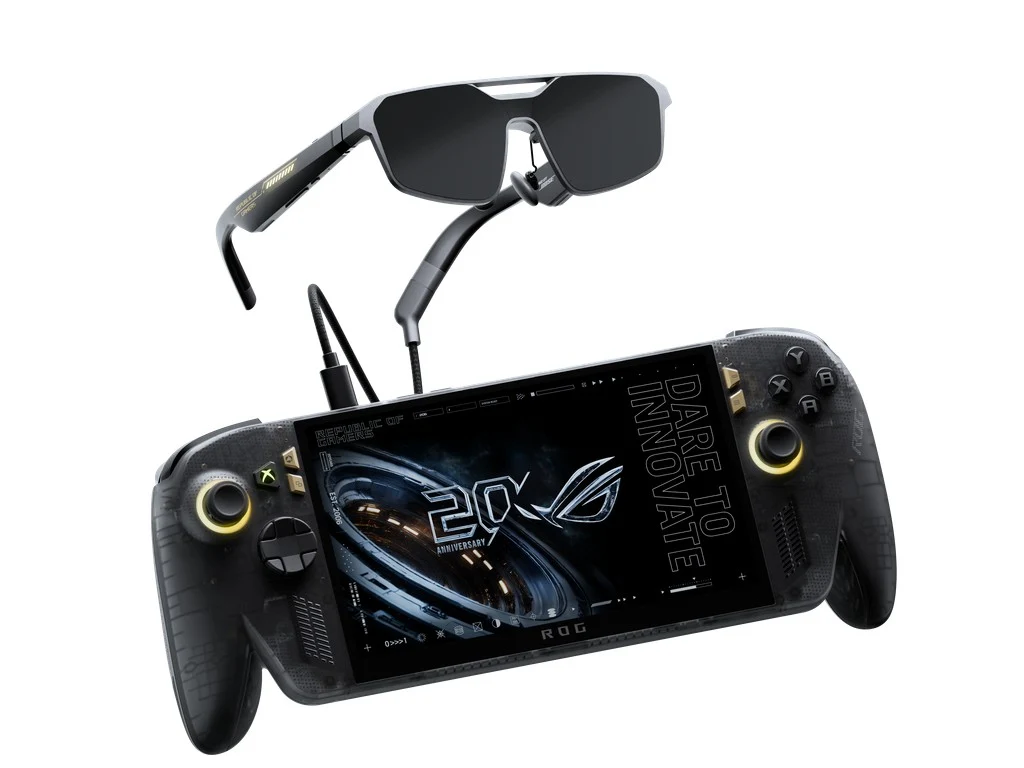
    Asus has officially announced the ROG Ally X20 handheld at Computex 2026. The handheld arrives as one of the numerous products unveiled to celebrate the 20th anniversary of the ROG brand. However, the ROG Ally X20 isn’t a special edition of Asus’s previous handhelds, but a separate device.

    Display and Screen Specifications

    The ROG Ally X20 has a 7.4-inch OLED display with a FHD+ resolution and a 16:9 aspect ratio. The panel has a peak brightness of 1400 nits, 120Hz variable refresh rate (30Hz to 120Hz), and support for Dolby Vision and ROG Nebula HDR. It also has a VESA DisplayHDR True Black 1000 certification and a 100% DCI-P3 color gamut. Like the ROG Xbox Ally X, the screen has an anti-reflective coating and Corning XC glass protection.

    Internal Hardware and Storage

    Under the hood is a Ryzen Z2 Extreme processor paired with 24GB of LPPDR5X RAM and 1TB of PCIe 4.0 NVME storage. It also has an 80Wh battery. There’s still a microSD card slot for adding more storage, but it has now been upgraded to microSD Express just like that of the Nintendo Switch 2.

    Controller and Input Features

    Asus has equipped the ROG Ally X20 with TMR thumbsticks and has increased the LEDs in the RGB rings from 2 to 4. There are also new RGB features such as real-time reaction to your movement and visual feedback in compatible games such as when an enemy is approaching from either side.

    Asus has also redesigned the ABXY buttons and the D-pad. The former is reported to be closer to those on the Xbox wireless controller while the latter is a combination of dome switches and a rubber membrane. Another neat feature of the D-Pad is that it can transform from a regular 4-way D-pad to an 8-way D-pad by lifting and rotating it. The latter is great for fighting games.

    Chassis, Bundle, and Release Info

    In addition, the ROG Ally X20 uses a new type of rubber called TPS for the grips. This new material is harder and will last longer. The case itself has a translucent shell and some of the buttons are gold. The ROG Ally X20 will be sold as a bundle with a 20th anniversary edition of the ROG Xreal R1 glasses that was announced recently. It will be released this holiday, but Asus has not revealed the price.

    Asus, Retro Game Corps on YouTube
    Sources
  • Bleak Future for Snapdragon 8 Elite Gen 6 Phones

    Key Takeaway

    – The Oppo Find X9 Ultra overheats and throttles severely under load, halving its performance in 3DMark stress tests.
    – Its predecessor, the Find X8 Ultra, handled heat better and sometimes outperformed the new model in sustained benchmarks.
    – The Snapdragon 8 Elite Gen 5 chip’s high clock speeds (up to 4.6 GHz) generate excessive waste heat that passive cooling cannot manage.
    – Passive cooling in thin flagship phones is reaching its limits, raising concerns for future chips like the Snapdragon 8 Elite Gen 6 (expected >5 GHz).
    – In everyday use the throttling may not be noticeable, but it shows that raw SoC gains are negated by thermal constraints.


    First Impressions of the Find X9 Ultra

    Our assessment of the Find X9 Ultra offers little to critisize about of the current flagship smartphone, as Oppo has put together a complete package that is hard to beat (prices start at around $1,300 as an import). However, compared with our last year’s review, it becomes clear that even the Find X9 Ultra, with its built-in Snapdragon 8 Elite Gen 5, has its problems with thermal output.

    Thermal Throttling Becomes a Problem

    In our review, the Oppo phone sometimes throttled massively due to the high waste heat resulting from the Qualcomm SoC’s high clock speed of up to 4.6 GHz. In the 3DMark stress tests, the performance of the Find X9 Ultra was halved. This means that the final big hope in the smartphone market for taming the Snapdragon 8 Elite Gen 5 has fizzled out.

    Comparing Heat Management With Last Year

    Last year, with the Find X8 Ultra, Oppo was one of the few manufacturers, if not the only one, to get the heat problem of modern Qualcomm SoCs well under control. This level of cooling performance is unfortunately no longer available in the current generation. This even means that the Find X9 Ultra can deliver less performance in the 3DMark stress tests than its predecessor. Due to the significant drop in performance after a short time, the increase in SoC power of the Snapdragon 8 Elite Gen 5 compared to the previous year’s Snapdragon 8 Elite has evaporated. In some cases, the Find X8 Ultra achieved 20 percent higher values in the Wild Life stress test than its successor.

    The Gap With Samsung Flagships

    The discrepancy with a Samsung Galaxy S26 Ultra is even more serious. Is this a problem in everyday use? Probably not, but it highlights the increasingly severe challenges smartphone manufacturers face when relying on passive cooling systems to dissipate the substantial heat generated, in this case by the Oryon CPU cores, within such thin chassis of flagship phones.

    What This Means for Future Chips

    Since the cooling performance of the successor to the Find X8 Ultra is now also reaching its limits, this does not bode well for the Snapdragon 8 Elite Gen 6, which is expected to clock well above 5 GHz. At the latest with our review of the Find X9 Ultra, it becomes clear that hopes for passively cooled smartphones are fading – they simply cannot cope with the massive heat output, let alone make the additional performance usable in everyday scenarios


  • HP unveils thinnest RTX Spark laptop: 128GB RAM, all-day battery

    HP unveils thinnest RTX Spark laptop: 128GB RAM, all-day battery

    Key Takeaway

    – HP launches “world’s first AI mini PC” (OmniDesk) and first laptops with Nvidia’s RTX Spark platform.
    – RTX Spark integrates a Blackwell-based GPU and a 20-core Arm-based Grace CPU for data-center-grade AI.
    – These laptops are designed as “personal AI computers” for running complex local AI agents autonomously.
    – They handle secure data analysis, multi-step tasks, and workflow management beyond basic apps.
    – OmniBook Ultra 16 and OmniBook X 14 arriving later this year; pricing and specs still undisclosed.


    HP’s New Laptops with Nvidia RTX Spark

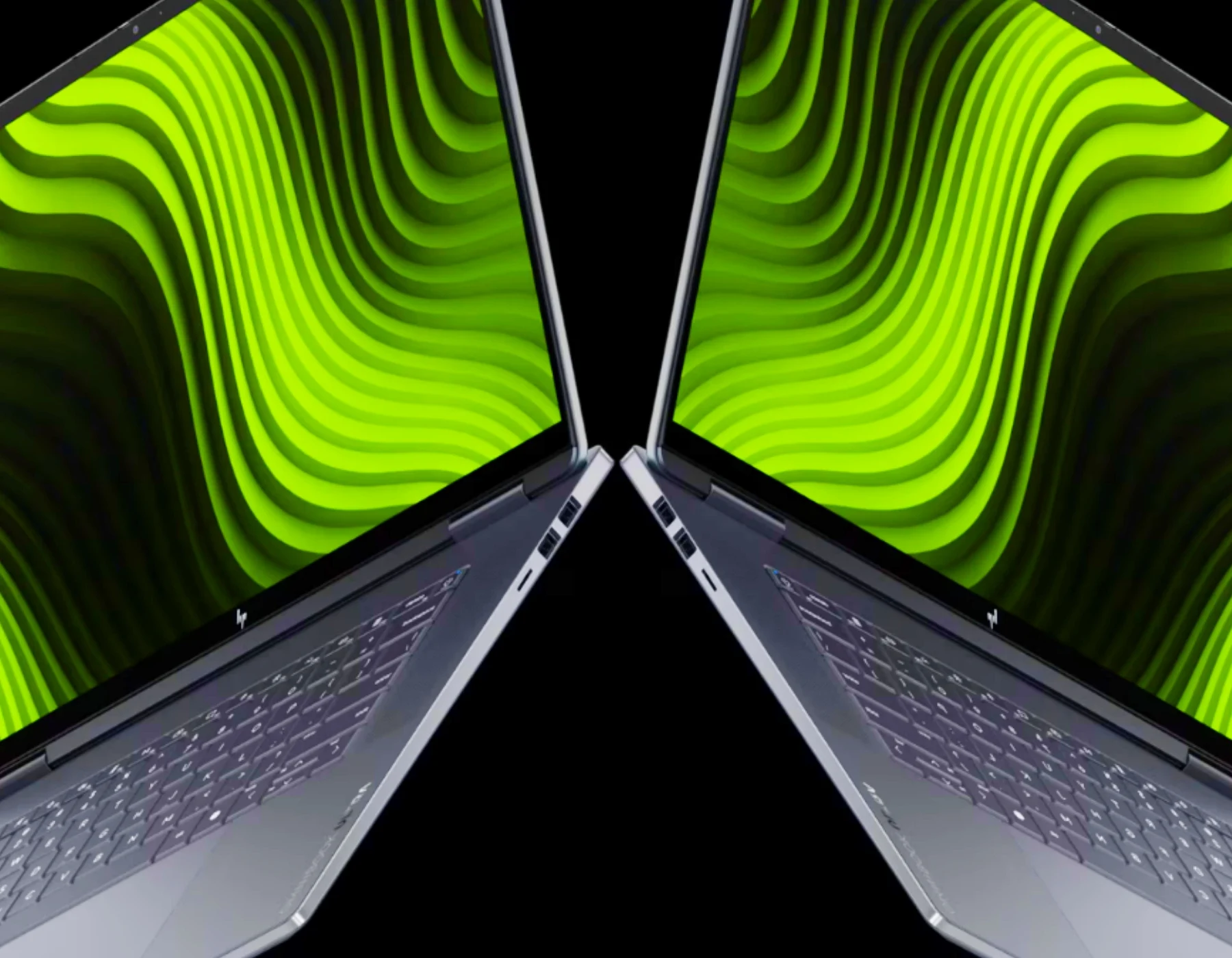
    In addition to the new OmniDesk Mini Desktop PC, known as the “world’s first AI mini PC”, HP wants to redefine the thin-and-light laptop catagory by announcing the new OmniBook Ultra 16 and OmniBook X 14, the first HP laptops to feature Nvidia’s new RTX Spark platform. These machines are not just iterative updates, they represent a fundamental shift in what a laptop can do, bringing supercomputer-like capabilities to a portable form factor for the first time.

    Nvidia’s Superchip Inside

    By integrating Nvidia’s “superchip” architecture, which combines a high-performance Blackwell-based GPU with a 20-core Arm-based Grace CPU, HP aims to bring data-center-grade AI power to portable devices. This combination is a big deal, it means the laptop can handle massive AI workloads without needing a constant internet connection or cloud server. The chip’s design is specifically tuned for efficiency and raw processing, making it suitable for professionals on the go.

    More than a Productivity Tool

    The RTX Spark platform transforms these laptops from traditional productivity tools into “personal AI computers”, says HP. Engineered to move beyond simple app launching, these systems are purpose-built to run complex local AI agents that can manage workflows, handle secure data analysis, and execute multi-step tasks autonomously. This capability is a huge leap forward, allowing users to delegate complicated tasks to their device and get results much faster than before.

    Launch and Availibility

    Both the HP OmniBook Ultra 16 and OmniBook X 14 are expected to arrive later this year. While exact configurations and pricing are still under wraps, the series represents a major shift toward local AI supercomputing for creators, developers, and gamers alike. The lack of specific pricing details is disapointing but the promise of these machines is exciting, we will have to wait and see what HP charges for this next-gen technology.

    Sources
  • Minecraft Switch 2 Release Confirmed by ESRB Rating

    Minecraft Switch 2 Release Confirmed by ESRB Rating

    Key Takeaway

    – Minecraft for Nintendo Switch 2 has been rated by the ESRB, strongly indicating a dedicated version is in development.
    – No official announcement or release date has been made by Mojang Studios yet.
    – An announcement could arrive soon, possibly at the Nintendo Direct: Partner Showcase on June 5.


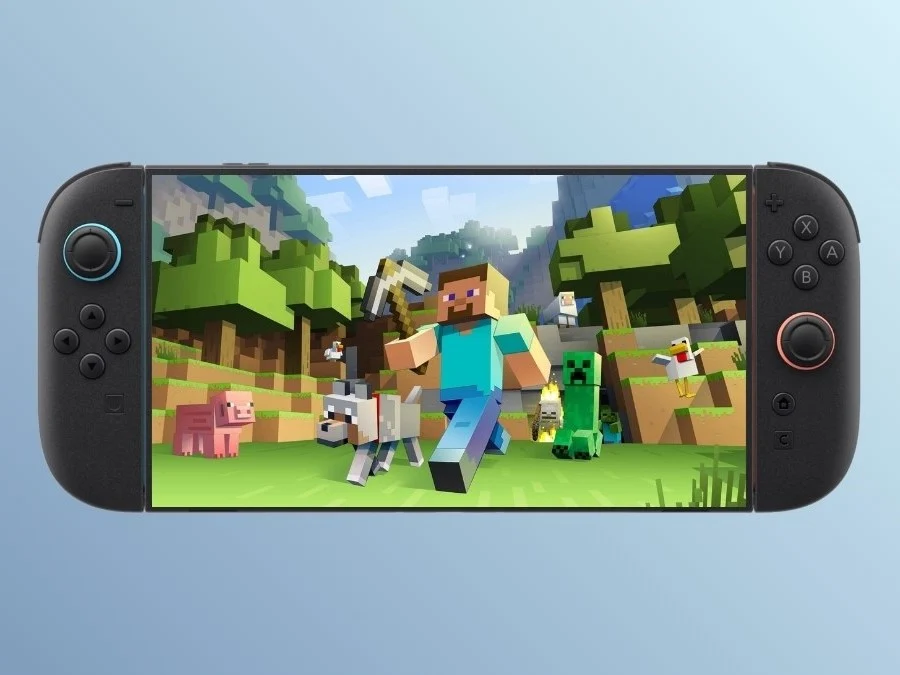
    Many Nintendo Switch 2 users have been eagerly waiting for Minecraft to arrive on the platform

    While the game is already playable on the Switch 2 thanks to backward compatibility, there isn’t a dedicated version for the console. However, it looks like that could change in the near future. Although Mojang Studios has not officially announced a Nintendo Switch 2 version of Minecraft yet, a new rating for the game has now been spotted on the ESRB website. Ratings are often a strong indication that a release is being prepared, and while they do not always lead to an immediate launch, they usually appear when development is nearing completion.

    The listing does not reveal any details about potential improvements or new features

    However, it does confirm that a Switch 2 version is on the way. At the time of writing, there is no official release date for Minecraft on Nintendo Switch 2. However, ESRB ratings are typically assigned late in a game’s development cycle, which means an official announcement could arrive soon. There is also a good opportunity for Mojang and Nintendo to reveal the game in the coming days. The Nintendo Direct: Partner Showcase is scheduled for June 5, and Minecraft would be one of the biggest third-party announcements that could appear during the presentation.

    ESRB rating details

    The ESRB rating does not specify any pricing or specification details for the Switch 2 version. It simply indicates the game has been categorized for the platform, which is a standard step before release. Typically, Minecraft on other consoles offers features like cross-play, multiplayer, and access to the Marketplace, but whether these will carry over or be enhanced for the Switch 2 is not mentioned. Fans should keep an eye on official channels for more information, as the lack of specifics in the rating suggests Mojang is holding back details until a formal reveal.


    Sources

  • HP OmniDesk Mini: World’s First AI Mini PC with Intel Core Ultra

    HP OmniDesk Mini: World’s First AI Mini PC with Intel Core Ultra

    Key Takeaway

    – HP expands AI PC portfolio with the OmniDesk Mini Desktop PC, billed as the world’s first “Mini AI PC” with Thunderbolt Share.
    – Device features compact design replacing bulky towers, targeting high performance in a small footprint.
    – Launch is part of broader HP strategy integrating Nvidia RTX Spark platform across notebooks and desktops.
    – OmniDesk Mini expected for August 2026 release; pricing TBA, and no images shared yet.


    HP’s Big AI Push with a Tiny Desktop

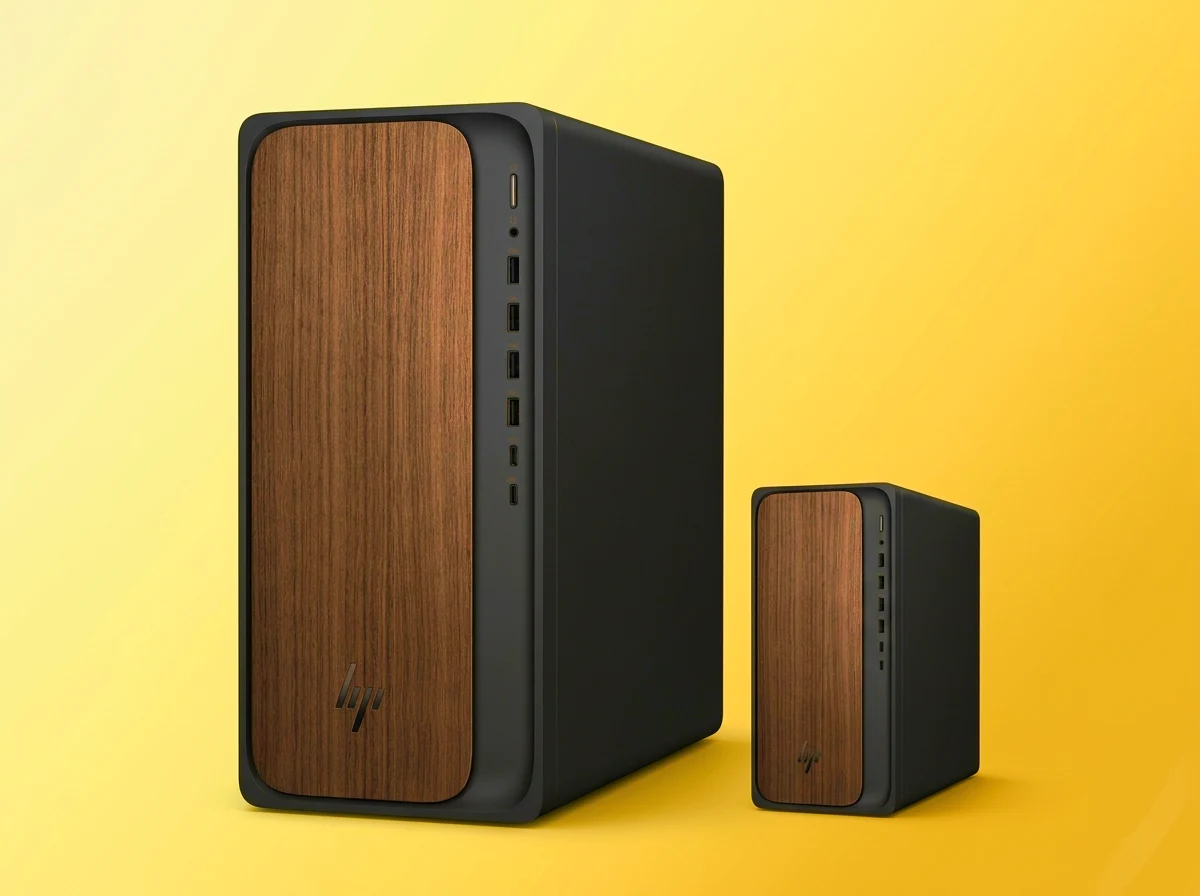
    HP has just anounced a major expansion of they’re AI-focused PC lineup, and the star of the show is the brand new HP OmniDesk Mini Desktop PC. This here device is being called the worlds first “Mini AI PC” that includes Thunderbolt Share, and they reckon it’s meant to take the place of them bulky old towers with a much smaller but still powerful shape.

    Key Specs and Features for the OmniDesk Mini

    The launch is part of a broader HP strategy to integrate the new Nvidia RTX Spark platform across its lineup, including upcoming notebooks and more desktop options. There’s a lot of focus on making this thing compact yet capable, which should appeal to folks who don’t want a massive case sitting under they’re desk taking up all the room.

    • They’re calling it the first Mini AI PC with Thunderbolt Share
    • It uses the new Nvidia RTX Spark platform
    • Compact footprint designed to replace traditional towers
    • Part of a larger expansion across notebooks and desktops

    Pricing and Availability Details

    The HP OmniDesk Mini Desktop PC is expected to hit the market in August 2026. Official pricing details will be announced closer to the retail launch date. What’s interesting is that HP hasn’t shared any images of the OmniDesk Mini Desktop PC yet, which is a bit odd since most companies show off the hardware right away when they make a big announcement like this.

    Sources
  • Nvidia DLSS 4.5 Ray Reconstruction: Full Game List

    Nvidia DLSS 4.5 Ray Reconstruction: Full Game List

    Key Takeaway

    – DLSS 4.5 Ray Reconstruction uses a new second-generation transformer model with 35% more compute and 20% more parameters.
    – It functions as both a denoiser and image reconstruction system, improving lighting accuracy, temporal stability, and reducing ghosting.
    – The update benefits from a larger training dataset and gives developers finer control over temporal accumulation.
    – It will launch in August via the Nvidia app and supports all GeForce RTX GPUs.
    – Beyond gaming, Blender 5.3 will integrate it as a viewport denoiser later this year.


    Nvidia Announces DLSS 4.5 Ray Reconstruction

    Nvidia has announced DLSS 4.5 Ray Reconstruction, a major upgrade to its AI-powered ray tracing pipeline that promises noticeably better image quality accross all GeForce RTX GPUs. Building on the DLSS 4.5 suite introduced earlier this year, the update adds a second-generation transformer model designed to improve how ray-traced and path-traced scenes are reconstructed.

    How it Differs From Traditional Denoisers

    Unlike traditional denoisers that rely on hand-tuned algorithms, DLSS Ray Reconstruction uses an AI model trained on Nvidia supercomputers to generate cleaner, more accurate pixels in areas where rays werent sampled.

    Transformer Model Upgrades and Benefits

    The biggest change comes from a new transformer model that acts as both a denoiser and image reconstruction system. Nvidia says the updated model delivers 35 per cent more compute capability and processes 20 per cent more parameters while maintaining performance levels similar to its predecessor. The company claims this translates into improved lighting accuracy, better temporal stability, reduced ghosting, and clearer motion in demanding ray-traced workloads. Upscaling routines have supposably received an improvement as well.

    Supported Games and Enhanced Training Data

    DLSS 4.5 Ray Reconstruction also benefits from a significantly expanded training dataset. According to Nvidia, the larger dataset allows the model to better identify and utilise the most accurate game-engine data, helping reconstruct scenes closer to their intended appearance. Developers will also gain finer control over temporal accumulation, enabling more precise tuning for specific visual effects and rendering scenarios. However, it is interesting that Nvidia made no mention of DLSS 5, which was expected to hit the show floor at Computex. Has its development been called off or is Nvidia cooking something else? Only time will tell.

    Showcase in Specific Titles

    Moving on, Nvidia showcased the improvements in several titles. In Indiana Jones and the Great Circle, the new model reportedly reduces snow ghosting while producing cleaner particle effects. Pragmata benefits from more responsive lighting effects and fewer visual artefacts, while Alan Wake 2 shows improved stability and clarity in scenes featuring CRT static.

    August Launch and GPU Support

    The feature will launch in August through the Nvidia app and will support all GeForce RTX GPUs.

    Beyond Gaming: Blender Integration

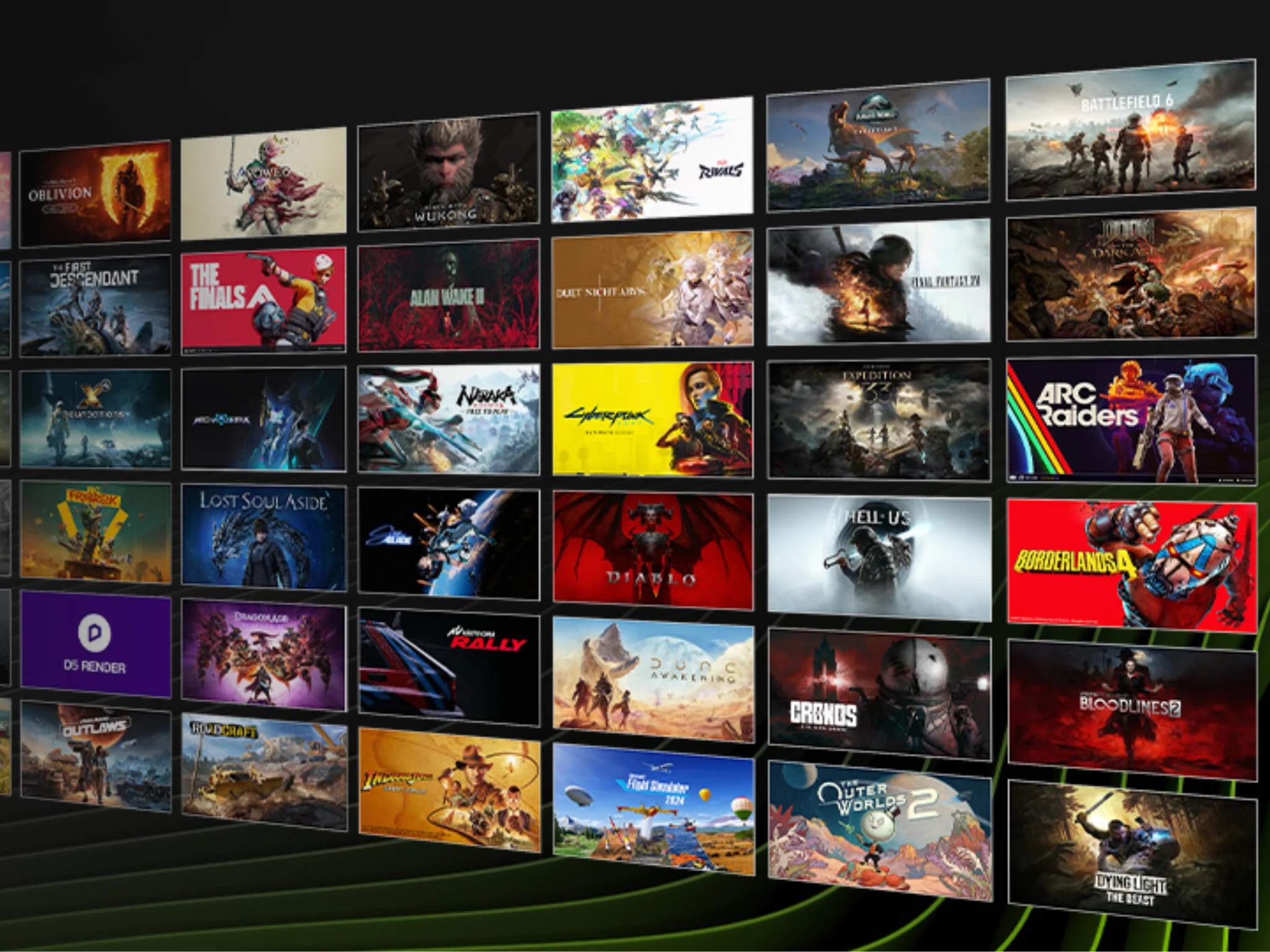
    Beyond gaming, Blender 5.3 will integrate DLSS 4.5 Ray Reconstruction as a viewport denoiser later this year. Nvidia also confirmed that multiple games are recieving broader DLSS 4.5 support, including Marvel Rivals, Phantom Blade Zero, Squad, Gothic 1 Remake, Cinder City, Duet Night Abyss and Where Winds Meet.

    Nvidia.com/news

    Sources
  • The True Cost of Folding Smartphones Over €800

    Key Takeaway

    – Motorola Razr 70 costs ~$800, with significant weaknesses in performance and software support.
    – Samsung Galaxy Z Flip7 offers better performance and longer updates for a slightly higher price.
    – Good display quality and style factor, but short-term support is a key drawback.
    – Already dropping in price; predecessor available for ~$560.
    – Best for users seeking a compact foldable for everyday use, not for performance or longevity.


    Motorola Razr 70 Price and Features

    The Motorola Razr 70 is available for around US$ 800 (e.g. at amazon.com). A hefty price for a smartphone, you can expect a lot for that, right? Well, it is a clamshell foldable, i.e. a folding smartphone that folds up at the short end. This design requires complex engineering, including a secondary display on the outside for viewing notifications when the device is closed.

    Compromises in Performance and Display

    Of course, this requires quite complex technology and an additional display on the outside to be able to see notifications even when closed. You have to make compromises somewhere and so you get a foldable with good display quality, but significant weaknesses in performance and software support. The display is bright and offers accurate colors, which is a highlight for many users.

    Price Drops and Market Competition

    The price for the Razr 70 has already fallen significantly in some markets and the predecessor is available for around US$ 560. If you wait a little longer, you will soon be able to get the foldable for even less. A Samsung Galaxy Z Flip7 is only slightly more expensive, but offers longer updates and better performance. Samsung’s device also has a more restrained design, while the Motorola stands out stylistically.

    Target Audience and Weaknesses

    Of course, the style factor is not quite as high as with the Motorola Razr 70: Samsung’s smartphone has a rather restrained design. A user who is primarily looking for a compact foldable for everyday use will find the Razr 70 a good option. Those who require performance and long-term support should perhaps opt for a different model. This is where the Razr 70 clearly has its weaknesses.

    Overall Assessment and Final Thoughts

    The Razr 70 is a very attractive clamshell foldable that will satisfy lovers of bright and true-color displays. However, performance weaknesses and short support remain critical points for the overall impression. The device excels in portability and style, but falters in processing power and update commitment. You can find a more detailed analysis of the clamshell phone in our detailed review of the Motorola Razr 70.

    Sources
    • Xbox Elite Series 2 Core: 3 New Colors at Best Buy

      Xbox Elite Series 2 Core: 3 New Colors at Best Buy

      Key Takeaway

      – Three new color variants of the Xbox Elite Wireless Controller Series 2 – Core (Red/Blue, Red/White, Green/Red) launch on June 8, 2026.
      – The new controllers are priced at $149.99 and are already listed on Best Buy.
      – The “Core” version is a cheaper alternative ($149.99 vs. $199.99) that omits the charging dock, paddle set, extra thumbsticks, extra D-pad, and carrying case.
      – Custom designs are also available via Xbox Design Lab, but at a higher price than the standard colors.


      New Color Options for Xbox Elite Controller Series 2 – Core

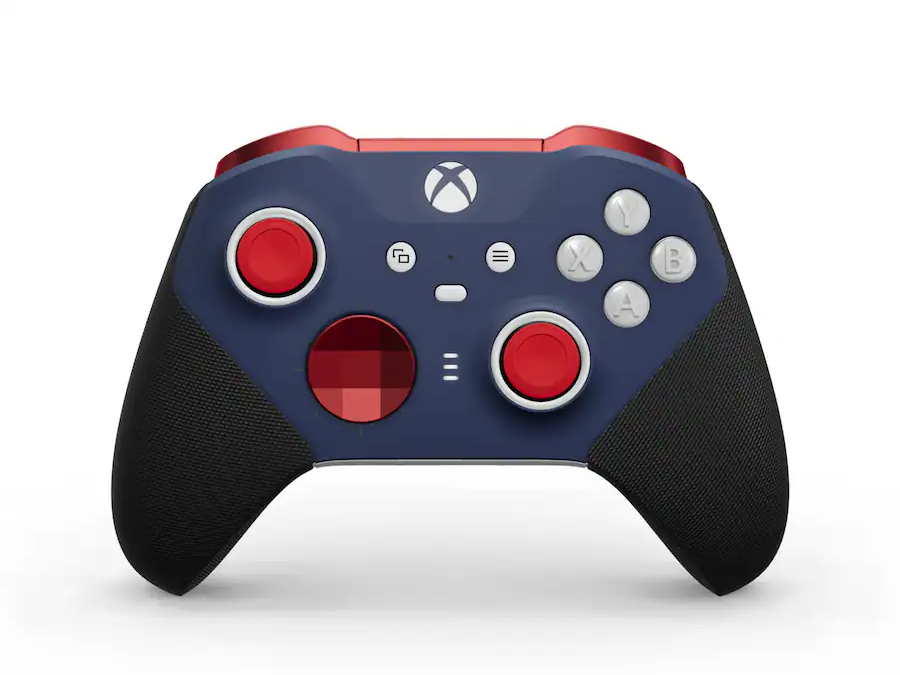
      Xbox Elite Wireless Controller Series 2 – Core is available to buy in three colors — Blue, Red, and White. Buyers can also create their own design using Xbox Design Lab, albeit for a higher price. Now, three new colors will be available to buy later this month. These fresh options include Red and Blue, Red and White, and Green and Red combos.

      Pricing and Availabilty at Best Buy

      All three colors are already listed on Best Buy and carry a $149.99 price tag. Best Buy also says the controllers will be available to buy starting on the 8th of June 2026. This is the same price as the standard Core edition, so no extra cost for the new colorways. They will be sold exclusively through Best Buy at launch.

      Core Version vs. Full Elite Series 2

      The Xbox Elite Wireless Controller Series 2 – Core is a cheaper version of the Xbox Elite Wireless Controller Series 2. The only difference is that the Core version doesn’t come with a charging dock, paddle set, additional thumbsticks, an additional D-pad, and a carrying case. If you want all of these accessories along with the Elite Wireless Controller Series 2, then you will have to shell out $199.99. This makes the Core a good entry point for players wanting pro features on a budget.

      Why Choose the Core Model?

      For gamers who already own accessories like thumbsticks and a case, the Core edition saves you $50. You still get the same adjustable-tension thumbsticks, wrap-around rubberized grip, and shorter hair trigger locks. The only downside is youll need to buy extra parts seperately if you want the full experience. But for many, the Core setup is enough for competitive play.

      • Colors: Red & Blue, Red & White, Green & Red
      • Price: $149.99 at Best Buy
      • Release date: June 8, 2026
      • Core lacks: charging dock, paddles, extra sticks, D-pad, case
      • Full Elite Series 2 costs $199.99

      Final Thoughts on the New Colors

      These new combos add some much-needed variety to the Core lineup. The red and blue scheme is pretty striking, while the green and red gives a seasonal feel. Players who want a unique look might prefer the Design Lab option, but for $149.99 these pre-made designs are a solid choice. Just remember to order early if you want one on June 8th.

      Sources
    • Google Pixel Watch 5 Prototype Found Deep in Ocean

      Key Takeaway

      – Pixel Watch 5 prototype allegedly found by a diver on the ocean floor near Saint Martin.
      – The watch design appears nearly identical to the Pixel Watch 4.
      – Expected upgrades include a new Snapdragon Wear chip and Wear OS 7 for better efficiency.
      – The battery was reportedly nearly dead, only powering the time display.
      – The story is considered highly unusual, with skepticism about the device’s pristine condition after being underwater.


      Unexpected Ocean Discovery Sparks Pixel Watch 5 Speculation

      The Pixel Watch 4’s sucessor (starting at around $310 on Amazon) is expected to launch in August 2026 alongside the new Pixel 11 phones. But a early prototype might have already been discovered, under very strange circumstances that could even outshine the well-known iPhone 4 bar incident from 2010, assuming the whole thing isn’t some kind of hoax. We’ll get more into that later.

      How a Diver Stumbled Upon the Device

      According to a X user called Randy Pitchford, an acquaintance of his discovered a smartwatch whilst diving near Saint Martin island, in the Caribbean. After a closer look, they realized the device was actually a Pixel Watch 5, atleast based off the text written on the rear casing, like you see in the photos. What makes this entire leak so peculiar is not just the fact that a pre-release prototype is being used in the wild, but instead its the location where it was allegedly located, on the ocean floor itself.

      Device Condition and Tracking Down the Owner

      The images that Randy Pitchford posted don’t display anything unusuall, and you can actually see the phototakers face reflected on the blank screen of the watch. In a subsequent tweet, the X user mentioned they were able to find and track down the watches original owner. Still, this situation leaves many questions unanswered. For example, why does the watch still look so clean and scratch-free after spending time under water? Of course we dont know exactly how long its been submerged, but one would expect some amount of scuff marks or other damage from such a experience.

      Expected Hardware and Software Upgrades

      Looking at the design, the Pixel Watch 5 seems to mimic its forerunner in many ways. However, the device will likely be equiped with a brand new Snapdragon Wear processor for improved energy efficency, and it should run the Wear OS 7 operating system. The person who leaked this says that the prototype’s battery was almost completly dead when it was found, only having enough power left to display the time function. This apparently is the reason why none of the shared pictures show any active screen or interface.


    • Poco X8 Pro Yellow Edition: Racing Design, High Tech

      Key Takeaway

      – Striking motorsport-inspired design with racing stripes and RGB lighting
      – Powerful MediaTek Dimensity 8500 Ultra chip for strong gaming and daily performance
      – Excellent 6.59-inch AMOLED display with 120 Hz refresh rate and over 3,400 cd/m² peak brightness
      – Large 6,500 mAh silicon-carbon battery with impressive life and fast charging
      – Solid 50 MP main camera with OIS, but USB 2.0 limits data transfer and video output


      The Poco X8 Pro is being released in a new yellow variant that draws heavily on motorsport aesthetics for its visual design. Its defining features include racing stripes on the back panel, integrated RGB lighting within the camera module, and a premium build quality featuring a metal frame and a glass back. At the same time, the smartphone remains firmly focused on high performance and gaming capabilities.

      Performance and Processing Core

      In our review, the Poco X8 Pro positions itself as a powerful mid-range smartphone with a strong emphasis on performance, display quality, and efficiency. At its core lies the modern MediaTek Dimensity 8500 Ultra SoC, built on a 4nm process. This chip ensures brisk everyday speeds, short loading times, and robust gaming performance, all while maintaining moderate power consumption. Although slight thermal throttling occurs under sustained heavy load, overall performance remains consistently high.

      Display and Visuals

      The 6.59-inch AMOLED display is a particular standout feature. With a 120 Hz refresh rate, high resolution, and peak brightness levels exceeding 3,400 cd/m², it delivers excellent visuals – even outdoors. Its high PWM dimming frequency of 3,840 Hz minimizes visible flickering and enhances viewing comfort.

      Hardware Specifications and Connectivity

      In terms of hardware specifications, the device utilizes fast LPDDR5x RAM and UFS 4.1 storage. It supports Wi-Fi 6, Bluetooth 6.0, NFC, and 5G dual-SIM functionality. However, there are limitations regarding the USB 2.0 port, which supports neither high-speed data transfer nor video output. The 50 MPix main camera, featuring optical image stabilization, captures good photos in daylight and records solid 4K video. The ultra-wide-angle and front-facing cameras, however, perform at a more average level. The 6,500 mAh battery employs modern silicon-carbon technology, delivering impressive battery life alongside fast charging capabilities. The Poco X8 Pro in the yellow variant is available in 8/256 GB, 8/512 GB, and 12/512 GB storage configurations, starting at $369.