Author: GizNews

  • MSI Claw 8 Unveiled: Intel Arc G3 Panther Lake Handheld

    MSI Claw 8 Unveiled: Intel Arc G3 Panther Lake Handheld

    Key Takeaway

    – Intel introduces Arc G3 and Arc G3 Extreme handheld chips, directly competing with AMD’s Ryzen Z series.
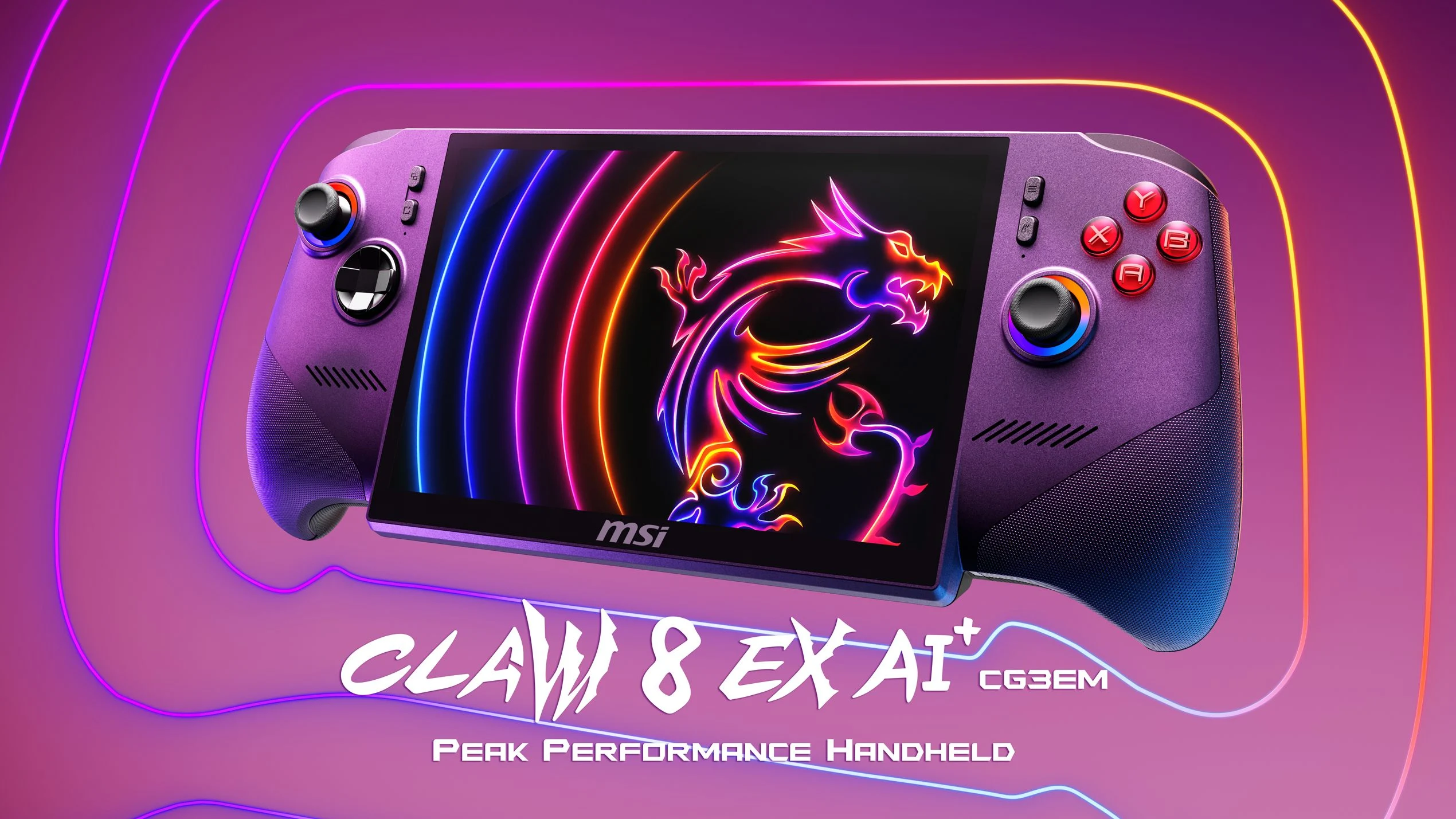
    – MSI Claw 8 AI+ CG3EM features Arc G3 Extreme with 14-core CPU and 12-core Arc B390 iGPU on Xe3 architecture.
    – Key specs: 8-inch 120Hz VRR display, 80 Wh battery, 32 GB RAM, Wi-Fi 7, Bluetooth 6.0, and two Thunderbolt 4 ports.
    – Supports multi-frame generation for improved gaming performance, unlike older Intel handheld chips.
    – Estimated MSRP around $1,500, with MSI joining Acer and OneXPlayer as early Arc G3 adopters.


    Intel’s New Handheld Chip Unveiled

    Intel finally showed of its handheld-focused Arc G3 and Arc G3 Extreme chips yesterday (May 31). Team Blue positions it as a direct competitor to AMD’s Ryzen Z lineup which has historically been the only offering in the space. While Meteor Lake and Panther Lake did find themselves in handhelds, particuarly ones from MSI, the off-the-shelf chips often had trouble keeping up. Now, the new MSI Claw 8 AI+ CG3EM has finally arrived with Intel’s newest top-shelf handheld silicon.

    Performance and Display Specifications

    It is powered by the Arc G3 Extreme with a 14-core (2P + 8E + 4 LPE) CPU and a 12-core Arc B390 iGPU. The new Xe3 architecture supports features like multi-frame generation, something that wasn’t possible in older variants. The new MSI Claw 8 AI+ CG3EM comes with an 8-inch (1,920 x 1,200) screen with a refresh rate of 30-120 Hz thanks to variable refresh rate technology. An 80 Wh battery powers the handheld. Ideally, that should be enough for less demanding titles, but some newer ones could demand all the processing power offered by the Arc G3 Extreme.

    Memory, Storage, and Connectivity

    Other MSI Claw 8 AI+ CG3EM include 32 GB of RAM and an unspecified amount of storage. It has space for one M.2 2280 PCIe Gen4 NVMe SSD, so capacity will likely cap out at 4 TB. For wireless connectivity, the handheld comes with a Wi-Fi 7 and Bluetooth 6.0 radio. Two Thunderbolt 4.0 ports can handle all wired connections, including charging and data transfer. A micro SD card is also included for good measure, as is a 3.5 mm combo audio jack. All of this weighs 785 grams, which is not bad for something this powerful.

    Pricing and Market Positioning

    MSI hasn’t specified how much the new Claw 8 will cost, but earlier estimates pegged its MSRP at around the $1,500 mark. In simpler times, that would be exorbitant, but now, it is totally understandable given market conditions. MSI joins the likes of Acer and OneXPlayer as one of the first OEMs to release a handheld powered by the Arc G3 platform.

    Sources
    • Sony ANC Headphones Deal Beats Amazon’s Lowest Price

      Sony ANC Headphones Deal Beats Amazon’s Lowest Price

      Key Takeaway

      – Exceptional noise cancellation with 12 microphones for blocking distractions
      – Greentoe deal at $303, nearly $100 below Amazon’s historical low
      – Balanced 30mm drivers with clear vocals, less bass than predecessor
      – Supports LDAC codec for high-quality audio, but limited on Apple devices
      – Folding, lightweight 254g design with wider headband, mixed for glasses wearers


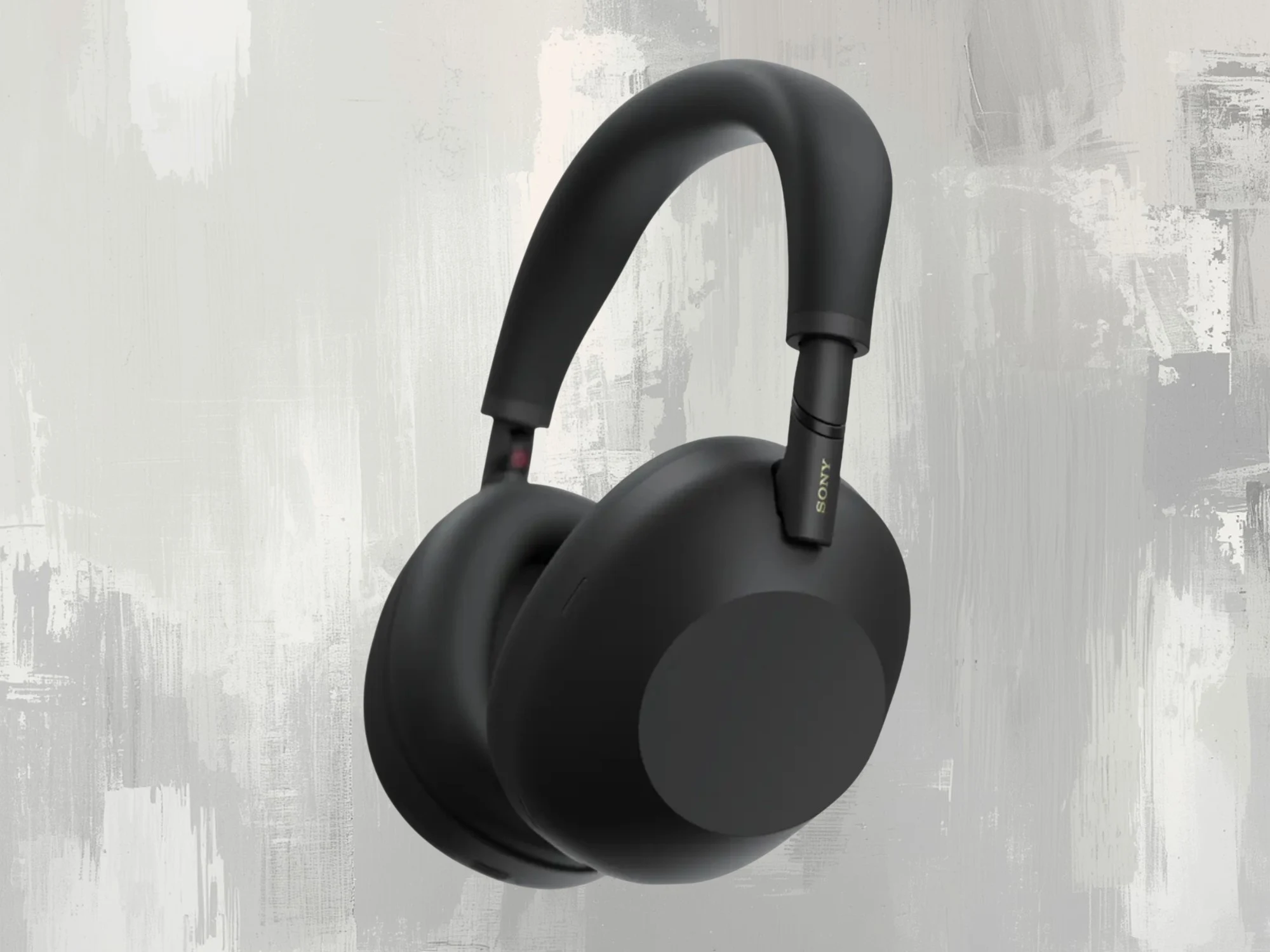
      Many reviews hail the Sony WH-1000XM6 as the best active noise cancelling headphones. Their sound-blocking abilities, high-resolution Bluetooth audio, and durability usually demand a premium. Fortunately, a Greentoe deal offers the wireless over-ear option at $303, discounted nearly $100 below the historically low Amazon price.

      Sony’s Microphone Array Quiets Disturbances

      Using 12 microphones to monitor for background distractions, the Sony wireless headphones make long journeys peaceful. The Rtings review found that the WH-1000XM6 neutralizes both rumblings and higher pitches. Its ANC capabilities also extend to phone calls, isolating the speaker.

      Compact Redesign Improves Travel Comfort

      The manufacturer revised the WH-1000XM5, resulting in a more portable wireless design. Owners will appreciate the now-folding 254-gram travel companion and compact case. A wider headband is generally well received by listeners, but glass-wearers have mixed impressions. An off-fit can affect noise-canceling performance.

      30mm drivers produce a balanced soundscape without requiring software tweaks. Bass is less pronounced than on its predecessor, with vocals coming through clearly. Excelling at music playback, it becomes easier to identify individual instruments in an orchestra.

      Codec Comptability Determines Audio Quality

      Sound quality partly depends on how owners connect to sources. The Sony headphones featured in the current deal support a range of Bluetooth codecs. AAC and SBC are options, but LDAC with higher bandwidth provides the best listening experience. Since Apple smartphones lack native compatibility for the format, there are fewer advantages over AirPods Max.

      Latency and Battery Life Considerations

      Even with high-fidelity audio, the added latency is a concern for gamers. Otherwise, the wireless headphones deliver reliable connectivity to phones, tablets, and media players. A maximum 30-hour battery life won’t rival newer ANC gaming headsets, but it’s sufficient for extended trips. While an analog jack is available, the bigger drawback is the lack of wired USB-C playback.

      Some buyers may discover that the Bose QuietComfort Ultra are more pleasant to wear noise cancelling headphones. Regardless, at Greentoe’s discounted $303 price that obliterates the Amazon low, the Sony WH-1000XM6 becomes an appealing choice.

      • Price: $303 at Greentoe
      • Microphones: 12 for ANC and calls
      • Drivers: 30mm
      • Weight: 254 grams
      • Battery: 30 hours maximum
      • Bluetooth codecs: AAC, SBC, LDAC
      • Connectivity: Bluetooth, analog jack (no USB-C playback)


    • Foldable iPhone Ultra Leaks in Factory Hands-On Video

      Foldable iPhone Ultra Leaks in Factory Hands-On Video

      Key Takeaway

      – Leaked video shows a foldable iPhone dummy unit with ultra-thin design (reportedly 4.5mm when opened).
      – Volume buttons appear to be placed on top, matching earlier rumors.
      – The unit is a low-quality design model, so conclusions should be tentative.
      – High-quality iPhone 18 Pro leaks suggest better iPhone Ultra design models may follow soon.


      After seeing a leaked image of a white iPhone Ultra replica

      We now have the full video of the same design model. Although this is (clearly) far from the final product Apple will announce at the rumored September launch event, the video does a better job at showing all the sides and angles of the foldable iPhone or at least the dummy. Theirs a sense of excitment but we gotta be carful with these early renderings.

      Previous rumors said Apple’s foldable is going to be as thin as 4.5mm when opened

      And the design unit in the video does indeed look very thin. We also see the volume buttons, which were long rumored to be placed on top, as awkward as this might sound (no pun intended). It’s quite amazing how they managed to pack everything into such a sleek profile, although there is always some compromises.

      Once again, this seems to be a particularly low-quality design unit

      So we can’t draw too many conclusions based on it. That said, high-quality design models of the iPhone 18 Pro were leaked very recently, showing us the colors Apple has reportedly chosen this year. If the foldable iPhone is indeed launching together with the iPhone 18 Pro, it’s quite possible that we might get more leaks of better iPhone Ultra design models very soon.

      Conclusion and future expectations

      The device appears to have a seamless hinge mechanism and the display looks extremly clear even in the video. We can only wait and see if future leaks confirm these design choices or if Apple changes the entire form factor before the launch. Keep in mind that nothing is official until the company makes an announcement at the event.

      Sources
    • China Sets 3 World Records with 33,615-Drone Light Show

      China Sets 3 World Records with 33,615-Drone Light Show

      – 33,615 drones launched simultaneously in Dujiangyan, China.
      – Display featured pandas, floating landscapes, slogans, and constellations.
      – Set three Guinness World Records, including largest mid-air LED screen (148,561 sq m).
      – Custom low-latency LAN (<20ms) ensured real-time synchronization and wind stability.[/key]


      A spectacular drone show recently unfolded over Dujiangyan City in the Sichuan province of Southwest China. Tech company Yufengzhe Technology launched an unprecedented 33,615 airborne units simultaneously. The performance merged cutting-edge engineering with cultural storytelling, treating onlookers to a massive light show.

      Visuals and Cultural Imagery

      The drones took off in perfect coordination, shifting positions to paint vibrant illustrations across the dark sky. The display featured pandas, floating mystical landmasses, positive slogans, and the Eastern star constellations.

      Guinness World Records Achieved

      The drone show secured three Guinness World Records. The team claimed titles for the highest number of drones ever used in a single performance and the most drones ever used to create a single image. Additionally, the grid of lights created a floating display spanning 148,561 square meters, breaking the record for the largest mid-air LED mesh screen.

      Technical Infrastructure and Synchronization

      Safely coordinating tens of thousands of independent aircraft in close proximity required specialized networking infrastructure. The system relied on a custom-designed local area network that kept latency below 20 milliseconds, ensuring individual units did not jam each other’s signals. This high-speed connection kept the entire fleet perfectly synchronized in real time, allowing the delicate formations to withstand heavy wind gusts without losing alignment.

      Sources
    • New Samsung Flagship AI Leak: Liquid or Air Cooling to Prevent Overheating

      New Samsung Flagship AI Leak: Liquid or Air Cooling to Prevent Overheating

      Key Takeaway

      – Samsung is developing active cooling (liquid and fan-based) to combat thermal throttling from intensive AI workloads.
      – Liquid cooling is favored over air cooling due to concerns about fan noise and increased device weight.
      – Current flagship SoCs use passive “Heat Pass Block” (HPB) technology, but future AI/high-performance chips will need active systems.
      – This approach mirrors gaming phones from Nubia that already use hybrid liquid and air cooling.
      – Active cooling could debut in the Galaxy S27 Ultra (reportedly launching July 22) or the Galaxy S28 Ultra to maintain peak performance.


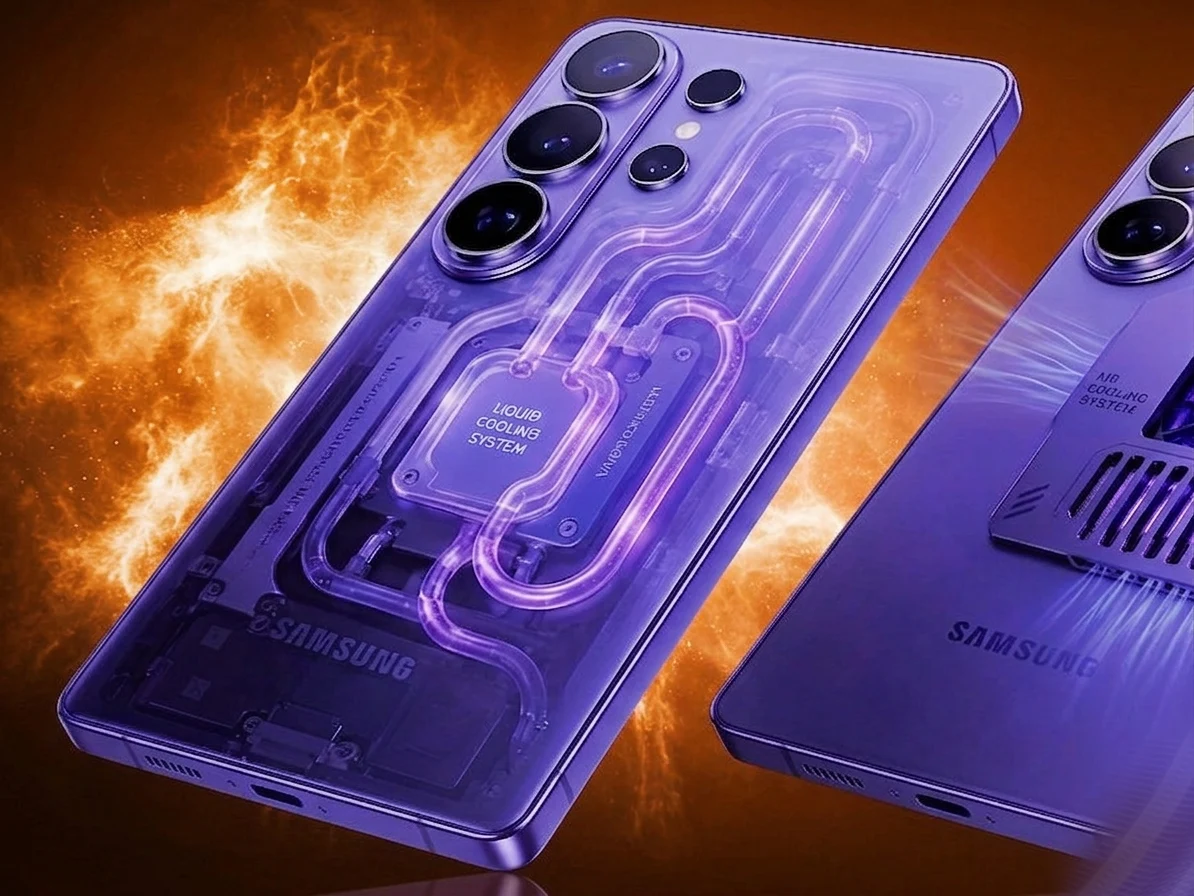
      Samsung is reportedly developing advanced active cooling solutions to combat thermal throttling, a persistent bottleneck for flagship phones, particularly those running intensive AI workloads. It’s unclear whether the technology will be ready for the Galaxy S27 series, including the premium Galaxy S27 Ultra flagship.

      The Research Teams Focus

      A dedicated research team at Samsung’s Production Technology Research Institute is currently evaluating active liquid cooling and fan-based air cooling. According to lab director Park Min, the team is prioritizing a liquid-based system that uses a sealed, circulating loop connected directly to the chipset. While air cooling is being tested, Samsung notes that concerns regarding fan noise and increased device weight make liquid solutions more attractive.

      Exynos 2600 and Current Tech

      While Samsung’s latest flagship SoC, the Exynos 2600 utilizes (Galaxy S26, Galaxy S26+) innovative “Heat Pass Block” (HPB) technology, a copper heatsink placed directly on the chip die that has shown remarkable thermal stability in testing, the company recognizes that future on-device AI and high-performance silicon will require more robust active systems.

      Learning from Gaming Phones

      Samsung’s pivot mirrors methods already popularized by gaming-focused phones from Nubia, which utilizes hybrid liquid and air cooling. By moving toward active, internal cooling, Samsung could ensure its future flagships, like the Galaxy S27 Ultra (reportedly launching July 22) and/or Galaxy S28 Ultra, can maintain peak performance without relying on passive solutions. Sisajournal-e.com

      Sources
    • AMD Launches Ryzen 7 7700X3D and 5800X3D Gaming CPUs

      Key Takeaway

      – AMD re-released the Ryzen 7 5800X3D (10th Anniversary Edition) for $349, targeting AM4 users who want to upgrade without buying a new motherboard or expensive DDR5 memory.
      – The new Ryzen 7 7700X3D (Zen 4, $329) offers near-top gaming performance, slightly undercutting the Ryzen 7 7800X3D in clock speed and price.
      – The Ryzen 7 5800X3D matches the gaming performance of a modern Zen 5 Ryzen 5 9600X, but its $349 price is high compared to cheaper alternatives with better productivity performance.


      AMD’s Computex 2026 CPU Announcements

      Computex 2026 is in full swing and AMD has announced two CPUs, a brand new Ryzen 7 7700X3D and a re-release of the Ryzen 7 5800X3D. Both CPUs carry AMD’s 3D V-Cache die and are ment for people whom want the best gaming performance.

      Celebrating a Decade of AM4

      AMD is celebrating 10 years of AM4 platform by re-releasing the Ryzen 7 5800X3D, which was the first-ever CPU with 3D V-Cache. It is impressive how long AMD has managed to keep the AM4 platform alive. Taking into account the current market conditions where DDR5 memory has gotten super expensive, its a good move on the part of AMD to introduce the Ryzen 7 5800X3D once again.

      Specs of the Re-Released 5800X3D

      With its 8x Zen 3 cores, 16 threads, 100 MB of L2 + L3 cache, and a boost clock of 4.5 GHz, the Ryzen 7 5800X3D is still a pretty capable gaming CPU. It essentialy matches the gaming performance of the Ryzen 5 9600X, a modern 6-core processor based on the latest Zen 5 architecture.

      Pricing and Thermal Solution

      However, the Ryzen 7 5800X3D 10th Anniversary Edition will cost $349 at full retail when it launches on June 25, 2026. AMD will also throw in a free Carbice Ice Pad thermal interface with every CPU.

      In a vaccum, this price quite high when you can get an 18-core Core Ultra 5 250K Plus with the same gaming but massively better productivity performance for less than $230. But, the Ryzen 7 5800X3D starts to make sense when we consider that AM4 users can slot the Ryzen 7 5800X3D without having to buy a new motherboard and DDR5 memory.

      The New Ryzen 7 7700X3D Details

      Alongside the $349 Ryzen 7 5800X3D, AMD has released a brand-new Zen 4 CPU, the Ryzen 7 7700X3D. The CPU looks like a lower-clocked Ryzen 7 7800X3D with 8x Zen 4 cores, 104 MB of total cache, and a boost clock of 4.5 GHz. The Ryzen 7 7800X3D has the same core count and cache size but can boost much higher to 5 GHz.

      Expected Performance and Availability

      So, based on the performance of the Ryzen 7 7800X3D, it is reasonable to expect the Ryzen 7 7700X3D to be a top-notch gaming CPU. For instance, it will be much faster than the Ryzen 7 5800X3D.

      Finally, AMD has priced the Ryzen 7 7700X3D at $329 and the CPU will be available starting July 16. For reference, you can currently get the Ryzen 7 7800X3D on Amazon for $370.


      Sources

      • Acer Unveils Secondary Display for Flight Sim, Racing & Productivity

        Key Takeaway

        – Ultra-wide 1920×720 secondary display ideal for sim racing and flight sim instruments
        – Lower pixel count reduces frame rate impact compared to standard monitors
        – Touchscreen supports direct interaction; can be used in portrait mode
        – Includes USB-C and HDMI connectivity with IPS technology
        – Priced around $230, launching toward the end of the year


        Dual-Screen Dreams Start With Acer’s Weird New Monitor

        Ahead of Computex, Acer showed the PM131QT secondary display in a showroom in Taipei. Unlike conventional PC monitors, the PM131QT has a very wide aspect ratio. It measures 1920 pixels across but only 720 pixels vertically, with a display diagonal of 12.3 inches.

        Gaming and Simulators

        That makes this display ideal for smaller tools but also for games with multi-monitor support where instruments, for example, need to be moved elsewhere. A conventional second monitor is not always ideal for this, as it may simply be too large. In Microsoft Flight Simulator, smaller instruments could easily be moved to the PM131QT, which could then serve as a third or fourth monitor depending on the setup.

        Frame Rate and Performance Concerns

        This should also work with X-Plane, see the video at the end of the article for a similar situation. However, this has a significant impact on the frame rate there. Since Acer’s monitor has far fewer pixels than a typical second monitor, that should have a positive effect. Racing sims should also be a good candidate for this. Here, too, some instruments are not important enough to remain on the main screen.

        Professional Applications and Touchscreen

        Acer itself is naturally focusing more on professional applications. Tools could be placed there instead. Thanks to the touchscreen, direct operation is also possible. The monitor can also be used in portrait mode, allowing it to be positioned on the side, for example. A tripod thread on the back provides additional flexibility if the integrated stand is not sufficient.

        Launch Date, Price and Connectivity

        Anyone interested will still have to be patient for quite a while. As Acer told us in Taipei, the display will not launch until toward the end of the year. The price is expected to be around $230. In terms of connectivity, Acer offers both USB Type-C and HDMI. The panel itself uses IPS technology and looked quite good during the demonstration.

        Acer / Computex

        Sources
        • piBrick Pocket-CM5: Raspberry Pi Handheld with AMOLED & Keyboard

          Key Takeaway

          – DIY handheld PC kit based on Raspberry Pi CM5, available under GPL 3.0 license
          – Features a BBQ20 keyboard with trackpad and a 3.92-inch AMOLED touch display (1080 x 1240)
          – Includes 5,000mAh battery, stereo speakers, microphone, headphone jack, and SSD/microSD support
          – Offers GPIO connectivity for sensors/actuators, plus a rotary control and five buttons
          – Estimated parts cost around $172, depending on the specific Raspberry Pi CM5 model


          The piBrick Pocket-CM5 is a new DIY handheld PC based on the Raspberry Pi CM5 that users can build themselves and that is available under the GPL 3.0 license. In addition to the Raspberry Pi CM5, suitably adapted PCBs are also required which is provided as templates and can then be manufactured by a suitable supplier.

          Keyboard and Display Specifications

          A BBQ20 keyboard is used that is intended to allow relatively fast text input, this keyboard also includes a trackpad. A 3.92-inch AMOLED display is installed which can process up to five touch inputs at the same time and is connected via MIPI-DSI, the resolution is relatively high at 1080 x 1240 pixels that could have a positive effect on interface usability.

          Physical Controls and Battery

          Even so, the 560-nit display is still significantly smaller than that of a smartphone. There is also a rotary control on the side, along with five buttons. A 5,000mAh battery is used, meaning the system can also be used on the go.

          Audio, Storage and IO

          Stereo speakers and a microphone are included, and there is also a headphone jack. An SSD can be installed, while a microSD card can also be used depending on the Raspberry Pi CM5 model version. Sensors and actuators can be connected via GPIO, the parts are listed at around $172 although this is likely to depend heavily on the specific Raspberry Pi version used.


          Sources

        • Xiaomi Mijia Ultra 3HP: Powerful Stand-Up AC Revealed

          Key Takeaway

          – Model offers high cooling capacity (37,500 BTU/h) and heating capacity (54,600 BTU/h) with a 3 HP rating.
          – Annual Performance Factor (APF) of 4.90, meaning 1 kWh of electricity can produce 4.9 kWh of heating/cooling output.
          – Operates in extreme temperatures from -31°F to 149°F, suitable for harsh winters and hot summers.
          – Floor-standing design provides high airflow (63,600 cu ft/h) with a 52-foot range and 115° outlet angle for efficient room coverage.
          – Supports smart home features like app control and voice command integration.


          Xiaomi’s Latest Air Conditioner Hits the Chinese Market

          We have reported on Xiaomi air conditioners several times before. This product category appears to have become fairly important for the manufacturer, at least in its home market of China. At least some models have also made it to Europe. However, it remains unclear whether the Mijia Powerful Wind Floor-Standing Air Conditioner Ultra 3HP will do the same. In China, the model is offered for the equivalent of around $900. Its output is listed at 3 HP, while Xiaomi states a maximum cooling capacity of 37,500 BTU/h and a maximum heating capacity of 54,600 BTU/h. However, this does not correspond to electrical power consumption.

          Performance Metrics and Climate Adaptability

          Xiaomi lists an Annual Performance Factor of 4.90. In Germany, this value is referred to as the annual performance factor, although it is unclear whether it is determined under the same conditions. In theory, calculated over a full year, 1 kWh of electrical energy can generate 4.9 kWh of heating and cooling output. However, the actually achievable value also depends on factors including the absolute target temperature, the outside temperature, and the difference between the two. The model is said to be usable at outdoor temperatures between -31°F and 149°F, meaning even in very harsh winter conditions.

          Design and Airflow Capabilities

          The indoor unit is designed as a floor-standing appliance and is said to offer an airflow rate of 63,600 cubic feet per hour, with a range of up to 52 feet. This should allow even larger rooms to be brought to the desired temperature quickly with one indoor unit. The outlet angle is listed at 115°, which means the indoor unit can be positioned sensibly in a room corner, for example. The smart functions are not particularly surprising. Control via an app is supported, as is smart home integration. For example, the target temperature can be adjusted using voice commands.


          Sources
        • Dell XPS 13 Gets Panther Lake: Thin, Long Battery Life

          Dell XPS 13 Gets Panther Lake: Thin, Long Battery Life

          Key Takeaway

          – Upcoming Dell XPS 13 accidentally revealed early, featuring Panther Lake and Wildcat Lake CPU options.
          – Display is a 13.4-inch 2.5K screen with 120 Hz VRR and 100% DCI-P3 coverage.
          – Battery rated for up to 17 hours, thanks to Panther Lake efficiency, with 65W USB-C charging.
          – Ultra-portable design: 12.7 mm thick, weighs just 1 kg, with Wi-Fi 7 and Bluetooth 6.0.
          – Entry-level price hinted at starting from $599.


          Oops! Dell jumped the gun on the XPS 13

          Dell acidentally showed off its new XPS 13 way earlier than they should have. The specifications aren’t really that shocking—the compact workhorse needed a Panther Lake update after the XPS 14 and XPS 16 already got there upgrades. Thanks to Dell’s slip-up, there is virtually nothing left to wonder about. They’ve even hinted at the price, with Dell mentioning the entry-level model would start from $599.

          Panther Lake and Wildcat Lake meeting inside

          Recaping the specs, the Dell XPS 13 comes with Intel’s Core 5 320 or Core Ultra 7 355 processors, putting it among the few laptops that combine Panther Lake and Wildcat Lake SKUs. Memory tops out at 32 GB LPDDR5x-7467 MT/s, while storage maxes at 1 TB using PCIe Gen4. Because of the laptops thin profile, you wont find any dedicated graphics option here.

          Dell put a 13.4-inch 2.5K (2,560 x 1,400) monitor on there XPS 13. It offers a maximum brightness of 500 nits, refresh rates up to 120 Hz with VRR, and full DCI-P3 colour coverage. The device runs on a 52 Wh battery, charging at 65 Watts over USB-C. Dell claimes it can run for as long as 17 hours per charge, and the XPS 13 might just achieve that given Panther Lake’s power efficiency.

          Connectivity and chassis details

          You get Wi-Fi 7, Bluetooth 6.0, and two USB-C ports to work with. For the Core Ultra 7 model, those USB-C ports support Thunderbolt 4 speeds. Dell provides the XPS 13 in two different color options: Sky and Storm. With a thickness of just 12.7 mm and weight of only 1 kg, it stands out as one of Dell’s most portable laptops to date.

          • Processors: Intel Core 5 320 or Core Ultra 7 355
          • Memory: Up to 32 GB LPDDR5x-7467 MT/s
          • Storage: Up to 1 TB PCIe Gen4
          • Display: 13.4-inch 2.5K, 500 nits, 120 Hz, 100% DCI-P3
          • Battery: 52 Wh, 65W charging, 17 hours claimed
          • Connectivity: Wi-Fi 7, Bluetooth 6.0, 2x USB-C (Thunderbolt 4 on Core Ultra 7)
          • Dimensions: 12.7 mm thick, 1 kg weight
          • Colors: Sky, Storm
          • Starting price: $599
          Sources