Author: GizNews

  • Razer Blade 16 battery life: Intel lasts hours longer than AMD

    Razer Blade 16 battery life: Intel lasts hours longer than AMD

    Key Takeaway

    – 2025 Razer Blade 16 battery life (~8 hours) is strong for a gaming laptop, beating rivals like the Legion Pro 7i.
    – 2026 Intel Panther Lake upgrade boosts WLAN battery life to nearly 12 hours, 4 hours longer than the AMD version.
    – Key efficiency gain: Intel idles at 4W vs. AMD’s 11W, improving low-load tasks like web browsing.
    – Razer’s advertised battery claims are only 1–2 hours longer than independent test results.
    – Panther Lake also offers faster gaming, cooler temps, Thunderbolt 5, and faster memory over AMD.


    Razer Blade 16 Battery Life: A Deep Dive

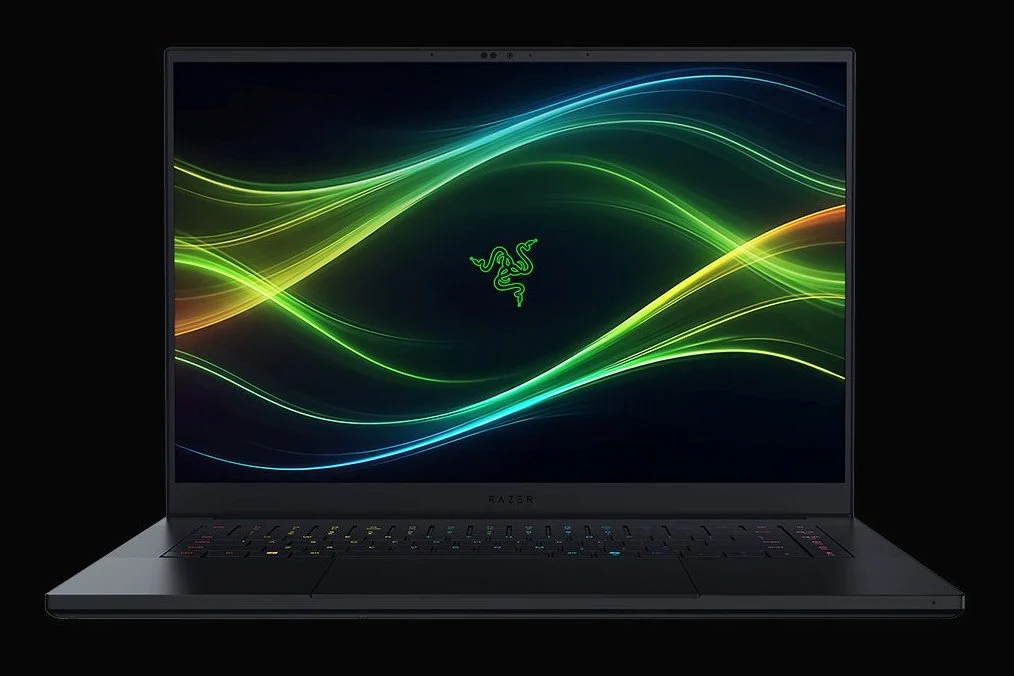
    Battery life for the 2025 Razer Blade 16 is pretty good especially for a gaming laptop. We are able to record a WLAN runtime of almost 8 hours when set to 150 nits, Balanced mode, and Automatic Graphics or iGPU mode. In comparison, most other 16-inch gaming laptops have a tough time cracking the 6-hour mark including the Lenovo Legion Pro 7i or HP Omen Max 16 when under similar conditions. For 2026, Razer has updated the Blade 16 from AMD Zen 5 to Intel Panther Lake for even longer battery life results.

    Intel vs AMD: The Battery Life War

    As detailed in our review of the unit, the Intel-powered Blade 16 can last for almost 12 hours of constant WLAN browsing to be almost 4 hours longer than the AMD-powered Blade 16. The improvement is mostly attributed to the Intel CPU as power consumption when idling on desktop can be as low as 4 W compared to 11 W on the AMD Blade 16. Thus, the new 2026 Blade 16 tends to be more efficient when running lower workloads like web browsing or word processing.

    Manufacturer Claims vs Real World

    Our independent battery life measurements are also surprisingly close to Razer’s advertised claims. The manufacturer states a “Modern Office” runtime of up to 13 hours and 8 hours for the 2026 Intel Blade 16 and 2025 AMD Blade 16, respectively, which is only 1 to 2 hours longer than our recorded results.

    Beyond Battery: Extra Panther Lake Benefits

    Panther Lake comes with several other benefits over AMD as well including faster gaming performance, cooler core temperatures, official Thunderbolt 5 support, and faster memory. We recommend checking out our full review on the 2026 Blade 16 to learn more about this year’s upgrades.
    Sources
    • Lenovo ThinkPad 14-inch: 64GB RAM, 120Hz OLED, AMD

      Lenovo ThinkPad 14-inch: 64GB RAM, 120Hz OLED, AMD

      Key Takeaway

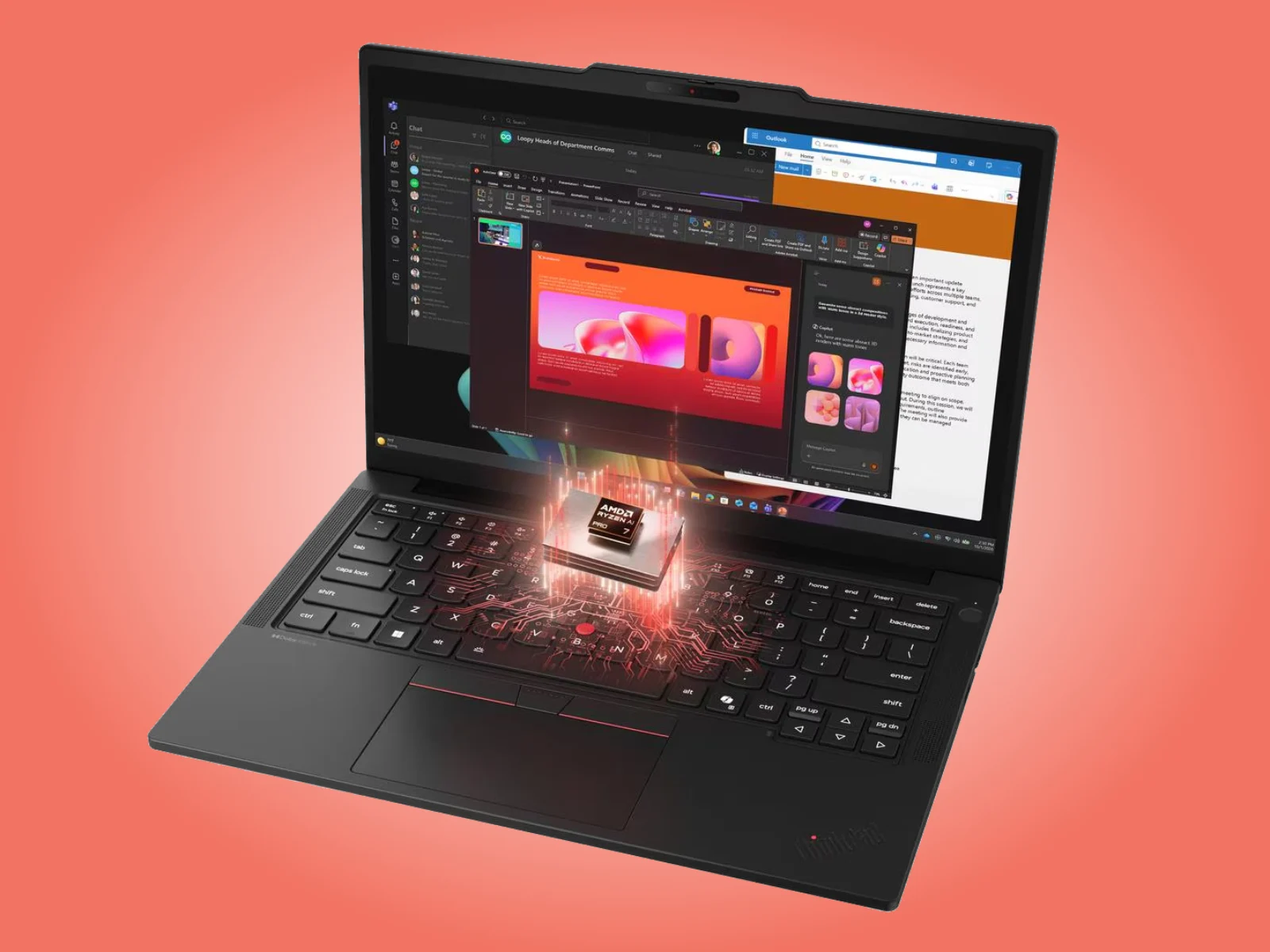
      – AMD ThinkPad T14 Gen 7 now available in Australia, Canada, Hong Kong, and US; not yet in Europe.
      – Two processor options: Hawk Point (Zen 4) and Gorgon Point (Zen 5); not a direct replacement for Gen 6.
      – Only Gorgon Point models support up to 1800p OLED with VRR; Hawk Point models max at 1200p 60Hz IPS.
      – All configurations offer Snapdragon X12 4G modem, up to 64GB DDR5 RAM, and 60Wh or 75Wh battery.
      – US pricing starts at $1,324 (Hawk Point, Ryzen 5 Pro 215) and $1,759 (Gorgon Point, Ryzen AI 7 Pro 450).


      ThinkPad T14 Gen 7 with AMD finally appears

      Lenovo has finaly released AMD versions of the ThinkPad T14 Gen 7. To recap, these varients debuted in early March 2026 alongside Intel alternatives. Since then, Lenovo has released the ThinkPad T14 Gen 7 with Intel processors globally and seperately in North America. Additionally, we have now reviewed the laptop with a Core Ultra 5 325 processor and 16 GB of RAM.

      Global release and European absence

      Now, AMD models have landed in countries like Australia, Canada, Hong Kong and the US. At the time of publication, Lenovo is yet to start selling the ThinkPad T14 Gen 7 with AMD processors in Europe. Setting that aside, the ThinkPad T14 Gen 7 (AMD) is not a straightforward replacement for the older ThinkPad T14 Gen 6, which we recently reviewed with the Krackan Point-based Ryzen AI 7 Pro 350.

      Processor choices and display differences

      By contrast, Lenovo sells the ThinkPad T14 Gen 7 (AMD) with Hawk Point and Gorgon Point processors. Hence, the laptop will arrive with Zen 4 or Zen 5 CPU cores, depending on which version you choose. Also, only Gorgon Point (Zen 5) models can be configured with up to an 1800p OLED display with 500 nits SDR peak brightness and a 30-120 Hz VRR refresh rate. In comparason, Hawk Point (Zen 4) models top out at 1200p, 500-nit and 60 Hz IPS panels.

      Common configs and pricing details

      Conversely, all versions of the ThinkPad T14 Gen 7 can be configured with a Snapdragon X12 4G modem, 64 GB of DDR5 RAM and a 60 Wh or 75 Wh battery. Pricing starts at $1,324 in the US for Hawk Point varients with the Ryzen 5 Pro 215, 16 GB of RAM and a 256 GB SSD. Meanwhile, Gorgon Point alternatives retail for $1,759 featuring a Ryzen AI 7 Pro 450, 16 GB of RAM and a 512 GB SSD. Lenovo offers both varients at comparable prices in Australia, Canada and Hong Kong.

    • Moondrop Flagship Armature Art 24 Earphones New Driver Count War

      Key Takeaway

      – 24 balanced armature drivers per earbud (16 bass, 4 mid, 4 treble)
      – Uses BA drivers instead of dynamic drivers for better frequency response and precision
      – Designed for high-resolution audio with fast response, rich sound, and punchy bass
      – Housed in 3D-printed acoustic channels with metal cover and ice flower crystal design
      – MSRP of $1499; available worldwide soon


      New Flagship IEMs from Moondrop

      Moondrop has unveiled its latest entry in the driver-count wars—the Armature Art 24 in-ear monitors. These flagship earphones are designed to reproduce high-resolution music across a wide frequency range while retaining fast response, rich sound, and punchy bass by utilizing balanced armature drivers rather than conventional dynamic drivers.

      Dynamic Driver Limitations

      Round dynamic drivers have been in use for decades, but they have difficulty reproducing all frequencies of music from low bass to high treble accurately while vibrating a single cone diaphragm. Larger ones can reproduce low bass better, but then high frequencies suffer unless unique materials and countermeasures are utilised.

      Balanced Armature Advantages

      Balanced armature drivers use a tiny piece of metal wrapped in electrical wire suspended between permanent magnets. When an electrical signal is sent through the wire, the armature rocks back and forth like a see-saw to create sound through a connected diaphragm. The BA drivers can be made much smaller than dynamic drivers and optimized for specific frequency ranges.

      24 Driver Configuration

      The Armature Art 24 utilizes 24 BA drivers per earbud to achieve coverage of the highest to lowest frequencies while delivering on its promise of high-quality music reproduction. They are grouped into 16 bass drivers, 4 mid-range drivers, and 4 treble drivers fitted into 3D-printed acoustic channels, all hidden behind a metal cover adorned with an ice flower crystal pattern.

      Pricing and Availability

      The Moondrop Armature Art 24 has an MSRP of $1499 and will arrive soon at authorized sales agents worldwide. In the meantime, readers can browse Moondrop’s other audio products in its Amazon shop. Moondrop, Moondrop on X


      Sources

    • Corporations Curb AI Use Over High Token Costs

      Key Takeaway

      – Encouraging unlimited AI usage (“tokenmaxxing”) is proving to be an expensive failure, with companies like Microsoft and Uber now actively limiting it.
      – Major tech firms like Meta and Amazon have removed internal AI usage leaderboards, signalling a shift away from incentivizing maximum AI consumption.
      – Unchecked AI spending can lead to catastrophic costs, such as a single client accidentally spending $500 million in one month.
      – Corporate AI adoption often fails to turn a profit or improve productivity, with 95% of public deployments failing to meet performance or financial goals.


      Not long ago, headlines were abound concerning a move from executives to encourage that AI used as much as possible to improve productivity, often while also cutting employees. The most infamous example of that mentality at work was from Nvidia CEO Jensen Huang, who stated that he’d be deeply alarmed if Nvidia engineers were not burning half their $500K salary in AI tokens to get the job done. He even went so far as to compare it to a chip designer using paper and pencil instead of CAD.

      The Costly Reality of Tokenmaxxing

      Here in reality, it turns out that’s an egregiously expensive way to run a business even when you fire employees to pay for it, and megacorporations like Microsoft, Uber, Meta, and Amazon are reining in the excess of “tokenmaxxing.” While the first two are more directly limiting AI usage (with Microsoft canceling most of its Claude Code licenses and Uber operations chief Andrew Macdonald stating it’s “getting harder to justify” AI spending,) the latter two haven’t outright stated AI is too expensive or that they’re reining it in. What we have seen in response to leaks of internal AI token usage leaderboard leaks is that those leaderboards have been taken down, meaning tokenmaxxing is no longer being encouraged at those companies.

      Accidental Spending and Mixed Results

      It’s more than just Big Tech, as well. Per Gizmodo, an anonymous AI consultant informed Axios that one of its clients had accidentally spent half a billion USD in a single month by failing to limit Claude usage for its employees. We’ve also seen at best mixed reports of AI usage actually improving productivity: a report from OpenAI only indicates productivity improvements by “an hour a day” and an MIT study of 350 public deployments indicates that 95% of them fail to turn a profit or achieve performance goals.

      A Turn in the Corporate Conversation

      It’s an interesting turn for the conversation regarding AI in the enterprise, and indeed one that heavily contradicts the words of zealots who profit from its adoption at the expense of existing workers. Especially at the corporate level, AI is not free.

      Sources
    • Lenovo launches 14-inch ultraportable laptop with OLED and dual SSD

      Lenovo launches 14-inch ultraportable laptop with OLED and dual SSD

      Key Takeaway

      – Lenovo launched ThinkBook 14x, weighing only 990g (lighter than IdeaPad Slim 5 Ultra’s 1.06 kg).
      – Powered by Intel Core Ultra 200V processors (up to Core Ultra 7 258V) with up to 32 GB LPDDR5X-8533 RAM.
      – Features dual storage slots (M.2 2242 and M.2 2280) despite slim 12.9-15.6 mm profile.
      – Configurable with 1800p OLED display (120 Hz VRR, 100% DCI-P3, 500/1,100 nits) and 65 Wh battery with 65W charging.
      – Expected US launch price around $1,460 for base model (Core Ultra 5 226V, 16 GB RAM, 1800p OLED).


      Lenovo’s Latest Lightweight Laptop

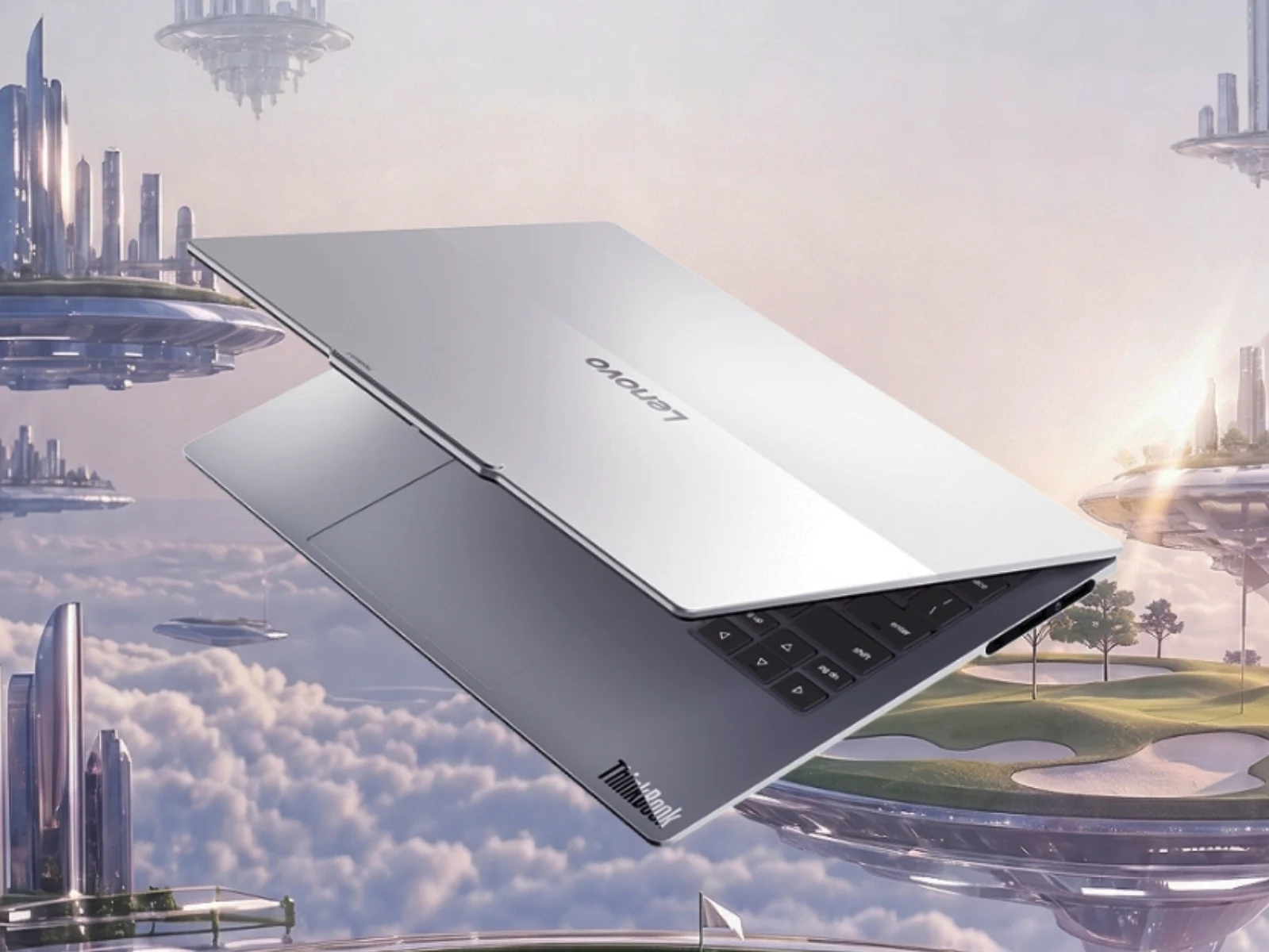
      The company has globally launched a new 14-inch notebook. Recall, they just presented the IdeaPad Slim 5 Ultra, another 14-inch machine weighting 1.06 kg. However this new ThinkBook 14x is even lighter at only 990 g.

      Specs and Pricing Details

      Additionally this 14-inch laptop will be sold with the Core Ultra 5 226V, Core Ultra 5 228V, Core Ultra 7 266V, Core Ultra 7 256V and Core Ultra 7 258V, plus 16 GB or 32 GB of LPDDR5X-8533 RAM. Unusually the ThinkBook 14x contains M.2 2242 and M.2 2280 slots despite its 312 x 217 x 12.9-15.6 mm dimensions, although only the former will be populated from the factory. Setting that aside the ThinkBook 14x contains the following ports:

      • USB-C with Thunderbolt support
      • USB-A ports
      • HDMI output
      • Headphone jack

      Battery and Display Options

      Moreover Lenovo has also included 54.7 Wh or 65 Wh batteries supported by 65 W charging. On top of that the ThinkBook 14x will be configurable with up to an 1800p OLED display featuring a 120 Hz VRR refresh rate, 100% DCI-P3 colour space coverage and 500 nits SDR/1,100 nits HDR peak brightness values. Overall the ThinkBook 14x sounds like it could be a more lightweight alternative to the ThinkPad X9 14 Aura Edition we reviewed in March 2025.

      Global Version and Pricing

      For the time being the company has not revealed what the ThinkBook 14x looks like. Multiple sources suggests that the ThinkBook 14x is the global version of the ThinkBook X AI 2026 that Lenovo has just released in China. To that end the ThinkBook X AI 2026 is said to weigh about 1 kg with up to a Core Ultra 7 258V while being 12.9 mm thick at its thinnest point. Based on early retailer listings the ThinkBook 14X may launch for around $1,460 in the US with a Core Ultra 5 226V, 16 GB RAM and a 1800p OLED display.

      Lenovo, Ascent New Zealand & Acquire New Zealand.

    • Mijia GentleAir AC: Smart Custom Cooling & Heating

      Mijia GentleAir AC: Smart Custom Cooling & Heating

      Key Takeaway

      – 24.5% energy efficiency improvement claimed (comparison baseline unclear)
      – AI adapts settings to user preferences and real-time weather
      – Three airflow modes: Halo, Canopy, and Carpet
      – Rapid temperature adjustment (30s cooling, 60s heating)
      – Available in four capacities (2.6–7.0 kW); pricing and global availability pending


      Xiaomi has just unveiled a range of new smart devices, including the Mijia Air Conditioner GentleAir. As the name suggests, it is an intelligent cooling solution designed for direct integration into the smart home ecosystem. Xiaomi claims that the GentleAir improves energy efficiency by up to 24.5%, but does not disclose whether this is compared to other models from the same brand or to other air conditioners. Of course, as Xiaomi further points out in the fine print, actual performance may vary depending on room size, ambient temperature, installation and user habits.

      AI-Powered Adaption and Controls

      By utilizing AI, the GentleAir adapts to user’s preferences and adjusts settings in real time based on the weather, thus reducing the need for constant manual configuration. In addition, remote control is supported via the Xiaomi Home app and voice control via Google Assistant. Dit doesnt get much simpler. Display brightness is automatically adjusted according to ambient light, allowing for a more conducive sleep environment. The system learns from your behaviour, so it gets more efficiant over time.

      Airflow Modes and Rapid Temperature Adjustment

      Three types of airflow are advertised: Halo Flow, which cools in a circular manner, avoiding direct air currents; Canopy Flow, which cools from top-down for wider coverage; and Carpet Flow, which allows warm air to rise from the floor. Rapid temperature adjustment is supported, meaning that cool temperatures are supposedly reached in 30 seconds and full heating in just 60. Last but not least, the Mijia Air Conditioner GentleAir comes in capacities of 2.6 kW, 3.5 kW, 5.2 kW and 7.0 kW for living spaces of different sizes.

      Pricing and Availability

      Further information on pricing and global availability is still pending. Their is no word yet on when this might launch outside of China, or how much it will cost in other markets. The company has not provided a timeline for international sales, so interested customers will have to wait for updates from Xiaomi.

      Sources
      • Deal: 12 Steam Deck-Ready Games for Under $1 Each

        Deal: 12 Steam Deck-Ready Games for Under $1 Each

        Key Takeaway

        – 12 indie games for $10 (less than $1 each)
        – Highlights include Super Meat Boy, Beat Cop, and Anomaly Agent
        – Most games are Steam Deck verified
        – Total retail value over $220
        – Deal expires June 20, 2026


        Gamers get a new bundle on Humble Bundle called “12 for $10” and it’s got some really cool indie games like Super Meat Boy, Beat Cop, and Anomaly Agent. You can snag these hits along with others by paying just $10 minimum, so each game ends up costing less than a single dollar. I think this is pretty sweet if you like platformers or action games!

        Pricing and Steam Deck Support

        Almost all of the games in this collection have official Steam Deck compatibility ratings wich is great for portable play. The total retail value for all these titles is more than $220, making this deal a huge save you won’t find often. Another thing is that the offer wont last forever because it expires on June 20, 2026, so you should act fast if you want it.

        Player Ratings and Game Details

        Every single game in this bundle has at least a 78% positive player rating on Steam, which means they’re all well liked by the community. The selection includes a variety of genres so there’s something for everyone here. You can check out the attached picture to see the full list of games and their specific player scores, it’s really helpful for making a choice.

        • All games cost less than $1 each with the $10 payment
        • Steam Deck support is available for most titles
        • Expiration date is set for June 20, 2026

        Just a heads up, the retailer might change the price at any time so the deal you see now could be different later. The price and offer was accurate when we wrote this but it can be subject to time limits or limited stock availibility.


        Sources

      • Windows 11 Build 26300.8553: Customize Start Menu Now

        Windows 11 Build 26300.8553: Customize Start Menu Now

        Key Takeaway

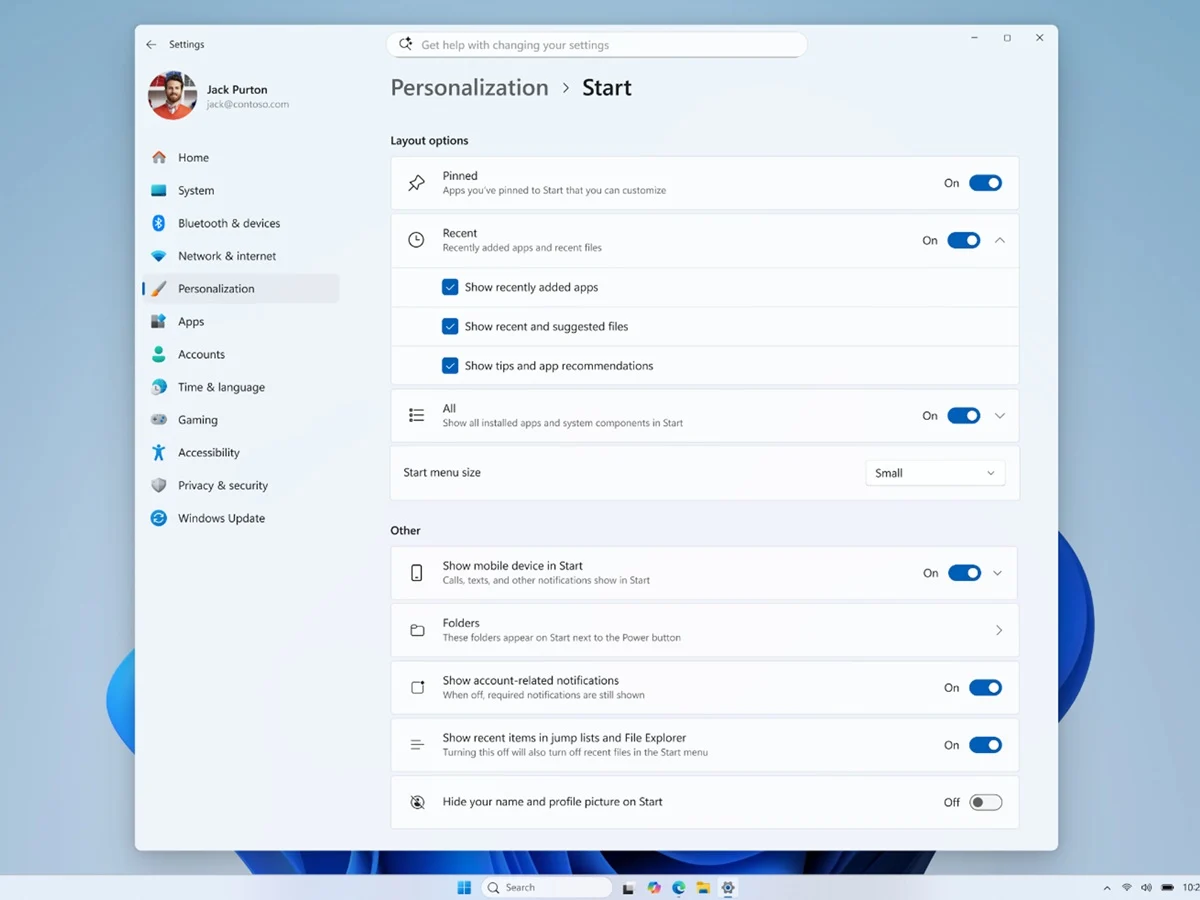
        – Windows 11 Start menu now has size presets (Small, Large, Automatic) for the first time.
        – Users can independently toggle visibility of Pinned, Recent, and All apps sections.
        – Account name and profile image can be hidden for privacy on shared machines.
        – Windows Search adds substring matching for partial file name searches.
        – Modern loading spinners replace legacy animations across boot and shutdown states.


        Start Menu Finally Gets User Controls After Five Years

        Microsoft has released Windows 11 Insider Preview Build 26300.8553 to the Experimental channel, and after nearly five years of treating the Start menu as a fixed design statement, the company is finally opening it up to user control. The build, published May 29, 2026, delivers a modular Start menu with size controls, section-level visibility toggles, and privacy options for hiding account identity. These are changes Windows users have requested since Windows 11 launched in 2021 with a layout that stripped out Live Tiles, fixed the taskbar to the centre, and removed most of the spatial flexibility from its predecessor.

        New Size and Layout Presets for Customization

        The headline addition is a Size and Layout submenu with three presets: Small, Large, and Automatic. Automatic acts as the default and adjusts the menu proportionally based on display configuration. Previously, the Start menu had a single fixed size with no user-adjustable controls. This is a huge step forward for people who prefer a more compact or spacious interface, and it finally address a complaint thats been around since day one of Windows 11.

        • Small preset compresses the grid
        • Large preset expands for more pins
        • Automatic adapts to screen resolution

        Section Toggles and Privacy Improvements Arrive

        Section-level visibility is the other major change. Right-clicking anywhere on the Start menu now reveals a Customize sections option, with checkboxes to independently toggle Pinned apps, the newly renamed Recent section, and All apps. Microsoft has officially renamed the former Recommended section to Recent across both the Start menu and the Settings app. Users who have never used it can remove it entirely. The account name and profile image are also now hideable, addressing a long-standing privacy concern for shared and enterprise machines. This is a big deal for folks who share there computer with others.

        Different Build for Beta Channel Without Start Changes

        Build 26220.8544, released simultaneously to the Beta channel, does not include the Start menu changes. Its additions are focused on system polish and search improvements. Modern loading spinners replace legacy animations across Boot, Logon, Restart, and Shutdown states with consistent solid donut-style indicators. Windows Search gains substring matching, allowing users to find files using partial words from within compound file names — searching “april” will now surface files named MeetingNotesApril. A new Windows Ready Print toggle in Settings lets users control whether newly added printers default to the Internet Printing Protocol rather than legacy drivers.

        Known Issue Affecting AMD Machines

        Microsoft flagged a known issue affecting AMD machines with System Guard support. Devices in the Windows Insider Program with that configuration will not be offered the Experimental Future Platforms build this week. The 26300.8553 Experimental build itself is not affected, but AMD Insiders should verify their channel before updating. This is a typical hiccup for early builds, but it could cause confusion for users who automaticly expect the latest version.

        Timeline for Broader Release and Insider Choices

        These Start menu controls are Experimental channel only for now. Features that receive positive feedback in this channel typically reach Beta within two to three months, with general availability likely in the 26H2 release later in 2026. Insiders on the 26H1 branch have until June 5, 2026, to decide whether to stay on that branch, as returning to 25H2 requires a clean install. So if you want these features sooner, you might want to switch channels, but be careful about the rollback restrictions.

        Sources
      • iOS 28 & MacOS 28 Codename Leak, Major Redesign Expected

        iOS 28 & MacOS 28 Codename Leak, Major Redesign Expected

        Key Takeaway

        – Apple has started early development on major 2028 OS updates for the iPhone’s 20th anniversary.
        – The 2028 updates are internally codenamed “Boppy,” focusing on deep integration between platforms.
        – Current iOS 27, iPadOS 27, and macOS 27 are codenamed “Rizz.”
        – Development is in early stages, targeting new features, app architectures, and design enhancements.


        Development begins for Apples 2028 OS updates ahead of schedule

        With the official release of iOS 27 and macOS 27 still on the horizon, Apple has already started the development on its major 2028 operating system updates, says a top tipster. According to the leaked info, the company is treating these upcoming versions as a significant evolution, as they are being designed to support the hardware slated for the rumored 20th anniversary of the iPhone. The development process is currently in its early stages, with teams focused on individual features, new application architectures, and design enhancements.

        Project “Boppy” signifying deep integration between platforms

        While the company has not yet integrated these elements into the final versions of the operating systems, the project is already gaining momentum: Apple employees refer to this entire slate of 2028 software updates as “Boppy”, which suggests the integration between the two might be the main focus. By comparison, the current development cycle, made of iOS 27, iPadOS 27, and macOS 27, is referred to internally as “Rizz,” following the “Rave” and “Fizz” internal codenames assigned to the mobile and desktop platforms, respectively.

        Sources
      • Powerful Apple TV with new remote and chip, HomePod mini 2026 launch imminent, reveals leak

        Powerful Apple TV with new remote and chip, HomePod mini 2026 launch imminent, reveals leak

        Key Takeaway

        – Apple TV and HomePod mini hardware refreshes are finished but delayed by postponed AI-powered Siri rollout.
        – The updates are driven by need for compute power to run next-generation “Apple Intelligence.”
        – Launch is strategically timed to coincide with major software overhaul (iOS 27, tvOS, HomePod updates).
        – Apple delayed releases to avoid launching home devices that couldn’t fully utilize the new AI assistant.
        – Hardware is expected to debut in fall 2026, following a preview at WWDC 2026.


        Future Updates for Apple TV and HomePod mini Leaked

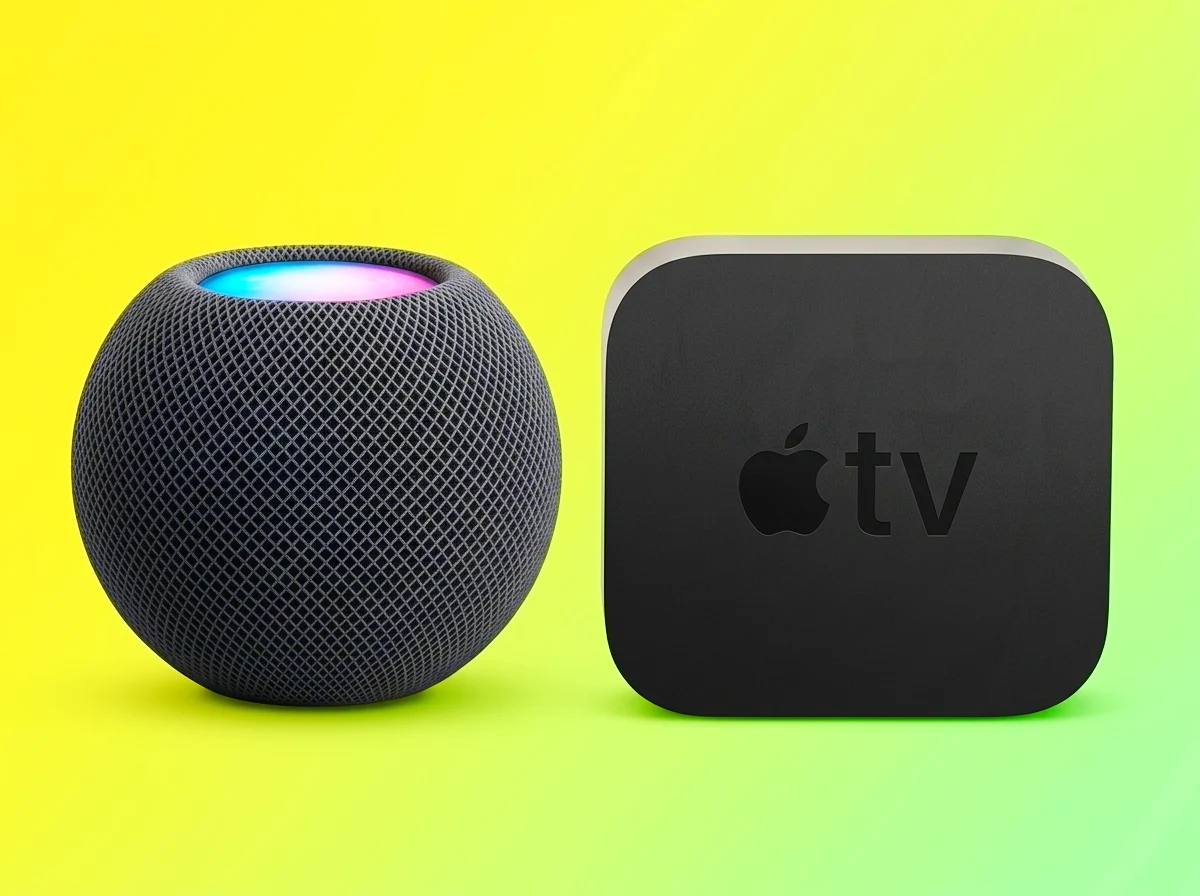
        In a lengthy report dominated by future plans for the first Apple smart glasses, the company’s home entertainment lineup is also due for a long-awaited update, says one of the top tipsters. The leaked info assures Apple users that hardware refreshes for both the Apple TV and HomePod mini have been finished and ready for production for months, but were delayed by the postponed rollout of Apple’s revamped AI-powered Siri. This was apparently a big set back for the home lineup, leaving fans waiting for news.

        AI Compute Power is the Core Motivation

        In line with Apple’s broader AI strategy, the primary motivation for these hardware updates is to provide the necessary compute power to run the next generation of “Apple Intelligence.” Once again, according to the leaked info, the reason these devices have not yet hit the shelves is a strategic decision by Apple to ensure they launch in tandem with its major software overhaul. Both products was designed specifically to leverage the advanced AI capabilities debuting in iOS 27 and its corresponding tvOS and HomePod software updates.

        Delayed Launch to Coincide With Software

        Apple has essentially been holding back these hardware releases to avoid launching “smart” home devices that couldn’t fully utilize the company’s new, highly anticipated AI assistant. With the software now scheduled for a release this fall (though we should get a preview at WWDC 2026), these hardware refreshes are expected to finally make their debut, marking a long-overdue update for Apple’s home ecosystem. Bloomberg reported that the devices have been ready for months but where held up by Siri’s rework.

        Sources