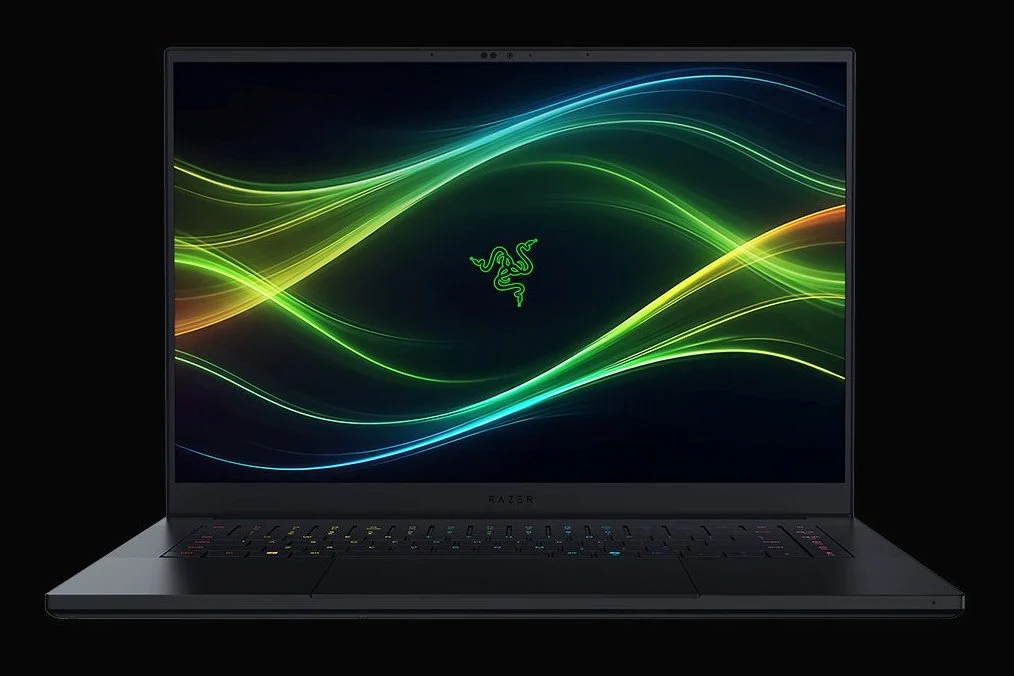
Tag: Razer Blade 16

  • Razer Blade 16 battery life: Intel lasts hours longer than AMD

    Razer Blade 16 battery life: Intel lasts hours longer than AMD

    Key Takeaway

    – 2025 Razer Blade 16 battery life (~8 hours) is strong for a gaming laptop, beating rivals like the Legion Pro 7i.
    – 2026 Intel Panther Lake upgrade boosts WLAN battery life to nearly 12 hours, 4 hours longer than the AMD version.
    – Key efficiency gain: Intel idles at 4W vs. AMD’s 11W, improving low-load tasks like web browsing.
    – Razer’s advertised battery claims are only 1–2 hours longer than independent test results.
    – Panther Lake also offers faster gaming, cooler temps, Thunderbolt 5, and faster memory over AMD.


    Razer Blade 16 Battery Life: A Deep Dive

    Battery life for the 2025 Razer Blade 16 is pretty good especially for a gaming laptop. We are able to record a WLAN runtime of almost 8 hours when set to 150 nits, Balanced mode, and Automatic Graphics or iGPU mode. In comparison, most other 16-inch gaming laptops have a tough time cracking the 6-hour mark including the Lenovo Legion Pro 7i or HP Omen Max 16 when under similar conditions. For 2026, Razer has updated the Blade 16 from AMD Zen 5 to Intel Panther Lake for even longer battery life results.

    Intel vs AMD: The Battery Life War

    As detailed in our review of the unit, the Intel-powered Blade 16 can last for almost 12 hours of constant WLAN browsing to be almost 4 hours longer than the AMD-powered Blade 16. The improvement is mostly attributed to the Intel CPU as power consumption when idling on desktop can be as low as 4 W compared to 11 W on the AMD Blade 16. Thus, the new 2026 Blade 16 tends to be more efficient when running lower workloads like web browsing or word processing.

    Manufacturer Claims vs Real World

    Our independent battery life measurements are also surprisingly close to Razer’s advertised claims. The manufacturer states a “Modern Office” runtime of up to 13 hours and 8 hours for the 2026 Intel Blade 16 and 2025 AMD Blade 16, respectively, which is only 1 to 2 hours longer than our recorded results.

    Beyond Battery: Extra Panther Lake Benefits

    Panther Lake comes with several other benefits over AMD as well including faster gaming performance, cooler core temperatures, official Thunderbolt 5 support, and faster memory. We recommend checking out our full review on the 2026 Blade 16 to learn more about this year’s upgrades.
    Sources
    • Razer Blade 16: Quiet Low-Performance Gaming Worth It

      Razer Blade 16: Quiet Low-Performance Gaming Worth It

      Key Takeaway

      – Performance mode delivers highest GPU/TGP (around 140 W) with the loudest fans; Balanced drops only ~4% in GPU performance vs Performance, with noticeable but smaller fan noise reduction; Quiet further reduces both CPU/GPU performance by ~15% but maintains much quieter operation.
      – The fan noise reduction from Balanced to Quiet is substantial (about 4 dB(A) from 53.6 to 49.7, and to 45 dB(A) in Quiet), despite only modest gains in performance difference.
      – Quiet mode remains capable for 1600p gaming with DLSS on Balanced, delivering around 64 FPS in Cyberpunk 2077 RT Ultra at 1600p, making the trade-off between performance and noise favorable for a more tolerable experience.


      Overview of the Razer Blade 16 Performance Modes

      The Razer Blade 16 offers three main modes of performance accessible via the built-in Synapse software: Performance, Balanced, and Quiet. The software provides no additional information about what these modes entail and so we decided to do a little digging into these modes ourselves. This paragraph maintains a casual tone and shows how the modes are introduced, with a focus on user curiosity and hands-on testing to supplement missing official details.

      Mode Comparisons and Fire Strike

      The table below compares the Fire Strike scores of the three different modes. In this section, a simple comparison layout is used, keeping things straightforward while still presenting the numeric results that matter for quick assessment. The emphasis is on how each mode stacks up in a controlled benchmarking snapshot to guide user expectations.

      Power Use with Cyberpunk 2077

      When running Cyberpunk 2077, TGP would average 142 W, 115 W, and 95 W when set to Performance, Balanced, and Quiet modes, respectively. Razer advertises a sustained TGP of 140 W which is only attainable when set to Performance mode. This paragraph reproduces the power figures exactly as reported, preserving the original numeric details for accuracy and reproducibility in discussions about efficiency and thermal behavior.

      Minor GPU Gap in Balanced Mode

      The most noteworthy find is the very minor GPU performance deficit of only 4 percent when set to Balanced mode relative to the much more noticeable fan noise change. Dropping from 53.6 dB(A) to 49.7 dB(A) is still quite loud for a laptop, but the difference is nonetheless significant given the logarithmic dB scale. Here we keep the focus on how a small performance delta can come with a perceptible noise shift, illustrating the trade-off users often experience.

      Quiet Mode Performance and Noise

      Dropping down to Quiet mode makes things even more interesting. Both CPU and GPU performance would drop by roughly 15 percent when compared to Performance mode, but fan noise would top out at only 45 dB(A) to be much more tolerable. Given the 1600p native resolution of the Blade 16 display, we find performance on Quiet mode to be more than sufficient even when factoring in the ~15 performance deficit. For example, Cyberpunk 2077 averages an impressive 64 FPS on RT Ultra 1600p settings even when set to Quiet mode with DLSS on Balanced and no frame generation. This paragraph keeps the narrative concrete with real-world gaming implications, while noting the balancing act of frame rate versus thermal and acoustic comfort in Quiet mode.

      Wrap-up and Additional Resources

      More details and benchmarks can be found on our review of the 2026 Blade 16. This concluding note points readers toward broader testing context, while the current piece preserves the core figures and qualitative insights without introducing external links or source notes in this section as requested.

      Sources
      • Razer Launches 16-Inch Gaming Laptop with Intel Panther Lake and 64GB RAM

        Razer Launches 16-Inch Gaming Laptop with Intel Panther Lake and 64GB RAM

        Key Takeaway

        1. The Razer Blade 16 2026 now features an Intel Core Ultra 9 386H processor, which is more powerful than last year’s Ryzen AI 9 365, but less even than the larger Blade 18’s Core Ultra 9 275HX.
        2. The laptop is available with up to Nvidia GeForce RTX 5090 GPU, with prices varying based on configuration, notably increasing for higher RAM and GPU upgrades.
        3. Pricing in the US has increased by 14%, with the base SKU now costing $3,999, and higher configurations reaching up to $5,599; European prices also reflect significant increases.

        Introduction of the New Blade 16 Gaming Laptop

        Just around a month ago, Razer wowed the gaming world with the launch of its latest Blade 16 model. The reveal was made during the Game Developers Conference 2026, showcasing the shift from AMD to a new Intel core in this iteration. The focus on the latest hardware highlights Razer’s commitment to keeping up with technological advancements.

        Processor Specifications and Performance

        This year’s Blade 16 is powered exclusively by the Core Ultra 9 386H, a robust 16-core processor from Intel’s Panther Lake family. Its performance is notable, being roughly 10% faster than last year’s Ryzen AI 9 365, based on our benchmarks, which makes it a significant upgrade. Although it doesn’t quite match the Core Ultra 9 275HX found in the larger Blade 18, it still offers impressive computational power, making it an attractive choice for serious gamers. Both models can be configured with high-end Nvidia GeForce RTX 5090 laptop GPU options for top-tier gaming performance.

        Pricing Details and Variants

        Initially, the Blade 16 with a GeForce RTX 5080, 32 GB RAM, and a 1 TB SSD was priced at about $3,500. However, this particular configuration is currently not available for order in the US, where the price has increased by approximately 14% to $3,999. In the UK, the same SKU is priced at £3,599, while in the Eurozone, it costs €4,399. It’s also worth noting that this specific version is only obtainable for purchase in the UK at present.

        Upgraded GPU and Memory Options

        Opting for a GeForce RTX 5090 significantly raises the laptop’s price, now costing $4,899 in the US, £4,399 in the UK, and €5,499 in the Eurozone, all with 32 GB of RAM and a 2 TB SSD. Doubling the memory to 64 GB increases the cost further, hitting $5,599 in the US, £4,999 in the UK, and €6,299 in the Eurozone. Currently, Razer US stocks both of these high-end GPU configurations, with shipments of the 64 GB RAM versions expected to begin around May 15, while the 32 GB models are expected sooner, about a week earlier.


        Sources

      • Alienware 16 RTX 5080 vs Razer Blade 16 RTX 5090: Performance Showdown

        Alienware 16 RTX 5080 vs Razer Blade 16 RTX 5090: Performance Showdown

        Key Takeaways

        1. The Alienware Area-51 is significantly larger and heavier than the Razer Blade 16, allowing it to run GeForce RTX 50 GPUs at higher power levels for better performance.

        2. In certain gaming scenarios, the Area-51 with the RTX 5080 can outperform the Blade 16 with the RTX 5090, despite having a lower power output.

        3. Benchmark results show that while synthetic tests favor the Razer Blade 16, actual gaming performance can favor the Alienware in specific titles.

        4. The extra 8 GB of VRAM on the RTX 5090 does not significantly enhance performance in most gaming situations compared to the RTX 5080.

        5. Running the Alienware in “Overdrive” mode can further increase its performance advantage over the Blade 16 by 5 to 10 percent in gaming.


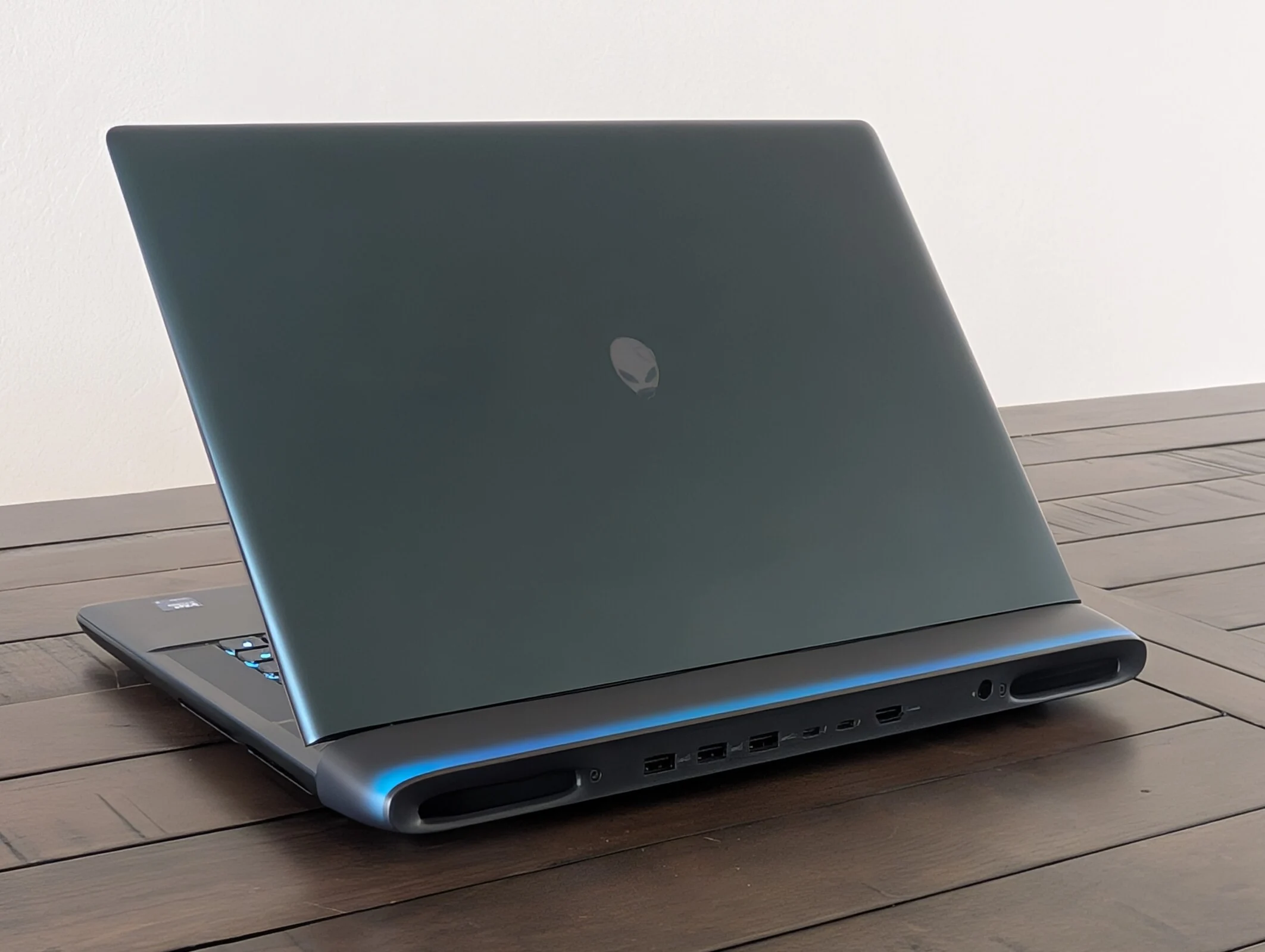
        The Alienware Area-51 is significantly heavier and larger than the Razer Blade 16, weighing nearly 60 percent more and being twice its size. This size advantage enables the Dell laptop to utilize GeForce RTX 50 GPUs at higher power levels, providing improved performance compared to the Razer. In certain situations, the Area-51, with the RTX 5080, can outperform the Blade 16, which has the RTX 5090, during gaming sessions, even when the Alienware’s GPU operates at a lower power of just 150 W TGP instead of the maximum 175 W.

        Benchmark Comparisons

        For instance, our benchmarks below show the Area-51 with the RTX 5080 in Balanced mode versus the Blade 16 with the RTX 5090 in Performance mode. While synthetic benchmarks, like 3DMark, suggest that the Razer outperforms, the reality is more complicated when we look at real gaming. Games such as Monster Hunter Wilds and Assassin’s Creed Shadows often favor the Alienware, while titles like Cyberpunk 2077 and Indiana Jones are closely matched, with only small percentage differences. Thus, the extra 8 GB of VRAM on the mobile RTX 5090 doesn’t significantly impact most gaming situations.

        Overdrive Mode Benefits

        If you run the Alienware in “Overdrive” mode instead of Balanced, the performance gap against the Blade 16 could increase by an additional 5 to 10 percent during gaming.

        This trend isn’t something new; similar patterns were noticed in the previous generation of gaming laptops that used older GeForce RTX 40 graphics. The size of the laptop remains a crucial factor, just as much as the GPU models, for users aiming to extract maximum performance from their devices.

      • Razer Blade 16 Launches with New GPU Options Available Now

        Razer Blade 16 Launches with New GPU Options Available Now

        Key Takeaways

        1. Razer Blade 16 now offers budget-friendly GPU options: RTX 5070 and RTX 5060.
        2. Starting price for the new configurations is $2,399, featuring a Ryzen AI 9 365 processor and 16 GB RAM.
        3. RTX 5060 specs include 8 GB of VRAM and a Total Graphics Power of 115 Watts.
        4. The top-tier Ryzen AI 9 HX 370 CPU is only available with the RTX 5090, priced at $4,499.
        5. Other specs remain unchanged, including a 16-inch QHD+ OLED display and various connectivity options.


        Originally unveiled at CES 2025, the Razer Blade 16 was initially available only with the GeForce RTX 5070 Ti, RTX 5080, and RTX 5090. However, these graphics cards came with high price points that were often not justifiable, as the performance improvements were not always proportional to the costs. Razer has now introduced more budget-friendly GPU choices for its 16-inch gaming laptop.

        New GPU Options

        You can now equip the Razer Blade 16 with either an RTX 5070 or RTX 5060. These can be combined with a Ryzen AI 9 365 processor, 16 GB of LPDDR5x-8000 (soldered) RAM, and a 1 TB SSD, starting at a price of $2,399. The RTX 5060 features 8 GB of VRAM and a Total Graphics Power (TGP) of 115 Watts (100 base plus 15 boost). Unfortunately, if you want the top-of-the-line Ryzen AI 9 HX 370 CPU, it can only be paired with an RTX 5090, which will cost you $4,499.

        Consistent Specs

        The other specifications of the laptop have not changed, including a 16-inch QHD+ (2,560 x 1,600) 240 Hz OLED display, Wi-Fi 7, Bluetooth 5.4, two Thunderbolt ports, three USB 3.2 Gen 2 Type-A ports, an HDMI 2.1 port, a micro SD card reader, a 1080p Windows Hello webcam, and a 90 Wh battery that can charge at up to 200 Watts.

        Source:
        Link

      • Razer Blade 16 Gaming Laptops with RTX 5090 Now Available

        Razer Blade 16 Gaming Laptops with RTX 5090 Now Available

        Key Takeaways

        1. Razer Blade 16 Availability: All versions of the Razer Blade 16 gaming laptop are now available for purchase after initial pre-order concerns due to tariffs.

        2. Thinner Design: The Blade 16 features a thinner design at just .59 inches, improved from the bulkier 2024 model, with enhanced cooling systems.

        3. Impressive Gaming Experience: The laptop offers a desktop-like gaming experience with high build quality and a vibrant QHD+ 240Hz OLED display.

        4. Upgrade Limitations: The laptop has soldered memory options (32 GB or 64 GB) that cannot be upgraded, which may limit customization for some buyers.

        5. Quick Shipping: The Razer Blade 16 is expected to ship quickly, potentially arriving by the end of April, but many Blade 14 and Blade 18 models remain out of stock.


        Buyers were worried when many Razer laptops vanished from the company’s US store. This included the Blade 16, as tariffs complicated pre-orders. Luckily, Razer has revealed that all versions of the 16-inch gaming laptop are now available. Models featuring AMD Ryzen AI 9 300 CPUs start at $2999.99, while an option with an RTX 5090 can go up to $4899.99.

        A Thinner Design

        When it was unveiled at CES 2025, the most noticeable change in the Blade 16 was its thickness. After feedback about the bulkiness of the 2024 model, Razer managed to slim down the latest version to just .59 inches at its thinnest area. To keep the temperature in check, the laptop employs a new vapor chamber cooling system and super-slim exhaust fins. Razer has also upgraded to Ryzen AI 9 300 processors to provide a more efficient performance.

        Impressive Gaming Experience

        Notebookcheck’s review of the Razer Blade 16 praised the device for offering a desktop-like gaming experience. Even with a sleeker profile, Razer maintained its high build quality. Additionally, its QHD+ 240Hz OLED display is impressive, showcasing vibrant and precise colors.

        Upgrade Limitations

        One downside is the laptop’s soldered memory options of 32 GB or 64 GB LPDDR5X 8000 MHz. The inability to upgrade the RAM may pose a challenge for customers wishing to customize their system at checkout. Buyers can choose from Nvidia RTX 5070 Ti, RTX 5080, and RTX 5090 graphics cards along with two Ryzen AI 9 CPUs. However, some configurations might restrict memory and storage selections.

        The good news is that the pre-order worries seem to be resolved for US buyers. No matter the version, the Razer Blade 16 is expected to ship quickly, potentially arriving by the end of April. Currently, the gaming laptop is available only on Razer’s website and in physical retail locations. Unfortunately, most models of the Blade 14 and Blade 18 are still out of stock.

        Press release from Razer PR

        WHAT: Razer™, the top global lifestyle brand for gamers, today announced that the highly praised Razer Blade 16 with the newest NVIDIA® GeForce RTX™ 50 Series Laptop GPUs and AMD® Ryzen AI 9 300 series processors is now ready for purchase exclusively at Razer.com and RazerStores throughout the United States.


      • Razer Blade Laptops Unavailable in US After Trump Tariff Announcement

        Razer Blade Laptops Unavailable in US After Trump Tariff Announcement

        Key Takeaways

        1. Trump’s new tariffs are impacting the laptop industry, affecting brands like Razer that rely on production in Asian countries.
        2. The Razer Blade gaming laptops are currently out of stock in the US, with no updates from Razer on restocking plans.
        3. Framework has been more transparent about their response to tariffs, pausing sales of certain models while keeping others available.
        4. Manufacturers face tough choices due to tariff impacts, with many pausing sales instead of raising prices.
        5. Razer laptops remain available on the Canadian site without price increases, but this situation may change as tariffs continue to affect the global market.


        The recent announcement about additional tariffs from Trump is starting to impact the laptop industry more and more. Several brands, including Razer, depend heavily on production in countries like China, Taiwan, or Vietnam. Currently, the popular Razer Blade gaming laptops are out of stock at the US online store. Razer has not commented on the situation, leaving customers curious about their plans regarding tariffs.

        Changes Noticed

        The Verge was among the first to spot these updates on Razer’s site. Just before the Trump tariffs made news on April 2nd, the Razer Blade 16 was available for purchase. Now, buyers can’t customize it anymore, and other laptop models only show a “Notify Me” option without any information on when they might be back in stock.

        Transparent Responses

        Framework, another laptop manufacturer, has been more open about how they are dealing with the tariffs. On April 7th, the company from California posted on X that they were stopping sales of several 13-inch models. Nevertheless, some of the more expensive models are still available.

        Dilemma for Manufacturers

        Even though companies like Framework and Razer have bases in the US, they still depend on manufacturing and parts from Asian countries. Since the Trump tariffs target imports from these regions, these manufacturers are faced with a tough choice. At this moment, many brands are opting to pause sales, hoping that negotiations will help lower the extra costs. The last option would be to increase prices, but most companies are hesitant to take that step.

        Interestingly, Razer laptops can still be found on the brand’s Canadian site without increased prices. However, this may change soon. With factories located in China and Vietnam, Nintendo made headlines by delaying the pre-orders for the Switch 2 in the US. Shortly after, they announced the same decision for Canada. Nintendo stated that it was part of a plan to better coordinate the console release. Regardless, the impact of Trump’s tariffs is affecting the global market, putting consumers everywhere at risk.

        Source:
        Link


      • LG Gram Pro 16 and Lenovo IdeaPad Pro 5i with Nvidia RTX 5050/5060

        LG Gram Pro 16 and Lenovo IdeaPad Pro 5i with Nvidia RTX 5050/5060

        Key Takeaways

        1. Nvidia’s new budget GeForce RTX 5050 GPU will launch in 2025 for desktops and laptops, with leaks mainly about the laptop version.
        2. Major brands like LG, Lenovo, and Razer have unintentionally revealed details about their upcoming laptops featuring the RTX 5050 and RTX 5060.
        3. LG’s leak confirms the RTX 5050 will have a maximum of 8 GB of VRAM in the upcoming LG Gram 16 Pro.
        4. Lenovo’s IdeaPad Pro 5 16 will include the RTX 5050, while Razer’s Blade 16 will feature the RTX 5060 with 8 GB of GDDR7 VRAM, priced around $1,999.99.
        5. The RTX 5050 is expected to be released in Q2 2025, with the RTX 5060 anticipated around May 2025.


        Nvidia is making a comeback in 2025 with its new budget GeForce RTX 5050 GPU, which will be available for both desktops and laptops. Information about the desktop version is still quite limited, but there have been numerous leaks regarding the RTX 5050 Laptop from various sources, including what seems to be information leaked by laptop manufacturers themselves.

        Accidental Reveals from Major Brands

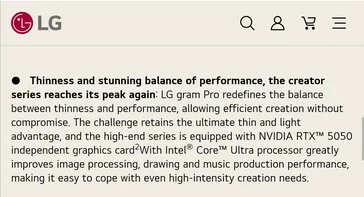
        According to Videocardz, companies such as LG, Lenovo, and Razer have unintentionally shared details about their upcoming laptops featuring the RTX 5050 and RTX 5060. For the entry-level segment, LG has reportedly leaked on its Chinese website that the next-generation LG Gram 16 Pro will come with an RTX 5050 GPU option. While further details about the specs of this new productivity laptop are scarce, LG’s leak has at least confirmed that the RTX 5050 will come with a maximum of 8 GB of VRAM.

        Insights on Additional Models

        Lenovo has also confirmed the inclusion of the Nvidia GeForce RTX 5050 in its IdeaPad Pro 5 16 model. Additionally, Razer has announced the upcoming RTX 5060, set to launch later in 2025 with the Razer Blade 16. Based on another leak that we previously discussed, the specifications for the Blade 16 show that the RTX 5060 will have 8 GB of GDDR7 VRAM and will offer an extra 15 Watts of GPU power through Dynamic Boost. The anticipated price for the RTX 5060 Blade 16 is $1,999.99, though this figure might fluctuate due to potential tariff-related increases.

        Current Offerings and Future Expectations

        The Lenovo Legion Pro 7i is already on the market, equipped with an Nvidia GeForce RTX 5070 Ti GPU, currently priced at $3,099.99 at Best Buy.

        From these leaks concerning the RTX 5050 and 5060 laptops, the most noteworthy detail is the projected timeline for their release, with LG suggesting Q2 2025 for the RTX 5050. While Lenovo and Razer have not provided specific dates for their devices, prior leaks suggest that the RTX 5060 should be available around May.

        Source:
        Link


      • GeForce RTX 5090 vs Razer Blade 16: Minor Performance Gains

        GeForce RTX 5090 vs Razer Blade 16: Minor Performance Gains

        Key Takeaways

        1. The mobile GeForce RTX 5090 shows about 15% better performance at a peak TGP of 175 W compared to the 160 W version in the Razer Blade 16.
        2. Performance gaps in gaming are larger at lower resolutions (30-50% faster at 1080p) but narrow at higher resolutions (10-5% faster at 4K).
        3. The Schenker Neo 16 A25 outperforms the Razer Blade 16 in lower resolutions, suggesting potential CPU limitations in the Razer system.
        4. Most users prefer higher resolutions, which may lead to disappointment with the small performance gains of the 175 W RTX 5090.
        5. The mobile RTX 5090 is only half as capable as its desktop version, with limited performance enhancements for the mobile RTX 50 series.


        As we keep testing the mobile GeForce RTX 5090, we’re starting to get a clearer idea of what this GPU can do at various TGP levels. The Schenker Neo 16 A25, which runs the GPU at a peak TGP of 175 W, shows about 15 percent better performance compared to the 160 W version in the Razer Blade 16, according to our 3DMark results below.

        Performance in Gaming

        However, when we look at actual gameplay, the performance gap seems larger at lower resolutions but narrows at higher resolutions without any upscaling techniques. For instance, our Schenker runs Monster Hunter Wilds and Cyberpunk 2077 at max 4K settings only about 10 percent and 5 percent faster, respectively, compared to the Razer system. On the flip side, at 1080p, those same games can run 30 to 50 percent faster on the Schenker, suggesting possible CPU limitations with the Razer. Most RTX 5090 users will likely prefer higher resolutions rather than lower ones, so the small performance gains with the 175 W RTX 5090 might leave some feeling a bit let down.

        Comparison with Desktop GPUs

        We’ve previously indicated that the mobile RTX 5090 in the Blade 16 is only half as capable as its desktop counterpart. Sadly, even the top-tier 175 W mobile GPU doesn’t significantly enhance the performance for the mobile RTX 50 series.

      • GeForce RTX 5090 Laptops 50% Slower Than Desktop Version

        GeForce RTX 5090 Laptops 50% Slower Than Desktop Version

        Key Takeaways

        1. The first laptops with GeForce RTX 5090 graphics are expected by the end of March, including models like the Razer Blade 16 and Asus Strix Scar 18 G835LX.
        2. The mobile RTX 5090 shows a 15 to 30 percent performance increase over the mobile RTX 4080 without DLSS; this gap widens with DLSS features.
        3. The relatively small performance boost raises concerns, suggesting Nvidia relies heavily on DLSS and new technologies to differentiate the RTX 50 series.
        4. The mobile RTX 5090 can be up to 50 percent slower than its desktop counterpart, indicating a significant performance disparity.
        5. Power limitations in laptops, capped around 150 W, hinder the performance of mobile GPUs compared to their desktop versions.


        The first laptops featuring GeForce RTX 5090 graphics are expected to be delivered by the end of March, and as of now, we have tested two models: the 2025 Razer Blade 16 and the Asus Strix Scar 18 G835LX, both boasting graphics with a TGP greater than 150 W. The performance results can vary widely based on what you might expect.

        Positive Outlook

        Looking at the bright side, the mobile RTX 5090 shows a performance increase of about 15 to 30 percent over the mobile RTX 4080 when DLSS features are not considered. Once DLSS is in play, the performance gap widens even more, as multi-frame generation is only officially available on the RTX 50 series.

        Cautious Considerations

        On the flip side, this 15 to 30 percent performance boost might seem quite small for a GPU generation that has taken three years to develop. This indicates that Nvidia is strongly depending on DLSS features and the new transformer model to distinguish the new mobile RTX 50 series from the previous mobile RTX 40 series. Additionally, gamers using laptops should adjust their expectations, as our benchmarks reveal that the mobile RTX 5090 can be up to 50 percent slower than its desktop version.

        The Power Limitation

        The significant difference in performance between the mobile RTX 5090 and the desktop RTX 5090, along with the somewhat underwhelming improvement over the outgoing mobile RTX 4080, can mainly be linked to TGP. While desktop GPUs have been increasingly demanding more power, laptop GPUs have remained relatively stable at around 150 W maximum, even after all these years. The restrictive power limits in laptops are arguably becoming a notable barrier for gaming enthusiasts.