
Tag: AI upscaling

  • LG 32GX870B 32″ 4K OLED: 480Hz, AI Upscaling

    LG 32GX870B 32″ 4K OLED: 480Hz, AI Upscaling

    Key Takeaway

    – Global preorders now live in UK (£1,099.99) and Japan; US availability unconfirmed.
    – World’s first 32-inch 4K OLED 240Hz gaming monitor with AI upscaling.
    – Features 4th Gen Primary RGB Tandem OLED panel for improved color, brightness, and text clarity.
    – Peak HDR brightness of 1,500 nits, 99.5% DCI-P3 coverage, and DisplayHDR True Black 500.
    – Ports include DisplayPort 2.1 (UHBR20), HDMI 2.1, and USB-C with 90W Power Delivery.


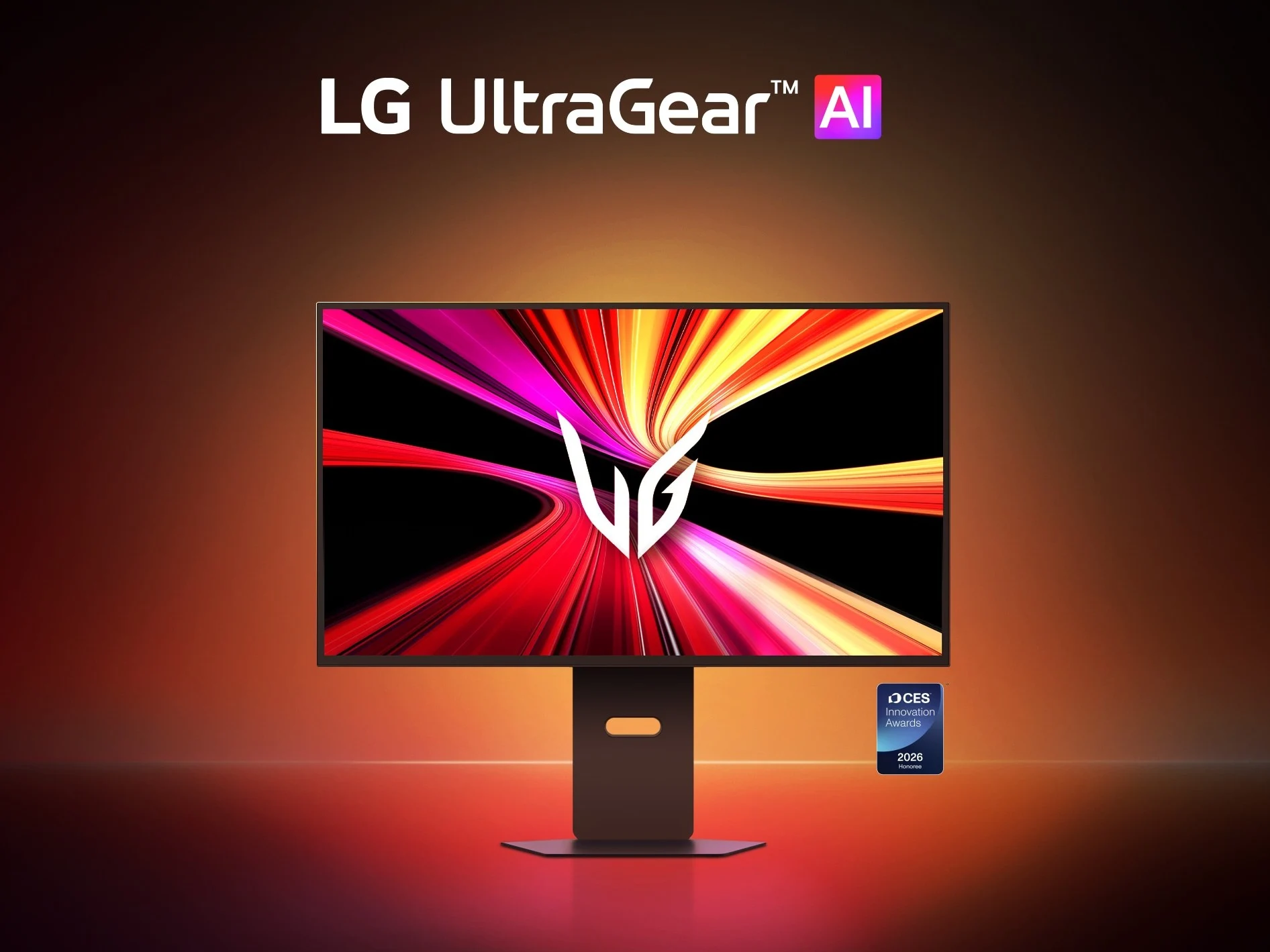
    The LG UltraGear 32GX870B-B could be released globally soon. After preorders went live in Japan last month, LG has now listed the monitor for preorder in the UK. Priced at £1,099.99 on Amazon, it’s scheduled to ship on June 26, 2026.

    Specs and Panel Details

    The 32GX870B-B was announced at CES 2026 as part of LG’s 2026 UltraGear AI monitors. LG markets it as the “world’s first AI Upscaling 32-inch 4K OLED 240Hz gaming monitor,” although its biggest draw is the underlying 4th Gen Primary RGB Tandem OLED panel. This new panel brings distinct upgrades in color, brightness, and text clarity compared to previous 3rd Gen WOLED monitors. That said, the 32GX870B-B is the first 32-inch 4K monitor with the new Tandem WOLED panel, as previous models were based on 27-inch 1440p panels.

    Refresh Rate and Brightness Metrics

    As we previously reported, the 32GX870B is a 32-inch 4K gaming monitor with a 240Hz refresh rate and a faster 480Hz mode in 1080p. Similar to other Tandem WOLED monitors, it has a peak brightness of 1,500 nits in HDR and 335 nits in SDR, a 99.5% DCI-P3 coverage, and DisplayHDR True Black 500 certification. However, this model also adds AI-powered features, including the ability to upscale lower-resolution content to near-4K quality.

    Port Configuration and Competition

    For the ports, it has a DisplayPort 2.1 (UHBR20), HDMI 2.1, and USB-C with 90W Power Delivery. Similar 32-inch 4K monitors using the 4th Gen Primary RGB Tandem OLED panel include the recently announced Asus ROG Swift OLED PG32UCWM.

    The LG UltraGear 32GX870B-B is now available to preorder in the UK and Japan, but there is still no word about US availability.
    Sources
  • Nvidia DLSS 4.5 Ray Reconstruction: Full Game List

    Nvidia DLSS 4.5 Ray Reconstruction: Full Game List

    Key Takeaway

    – DLSS 4.5 Ray Reconstruction uses a new second-generation transformer model with 35% more compute and 20% more parameters.
    – It functions as both a denoiser and image reconstruction system, improving lighting accuracy, temporal stability, and reducing ghosting.
    – The update benefits from a larger training dataset and gives developers finer control over temporal accumulation.
    – It will launch in August via the Nvidia app and supports all GeForce RTX GPUs.
    – Beyond gaming, Blender 5.3 will integrate it as a viewport denoiser later this year.


    Nvidia Announces DLSS 4.5 Ray Reconstruction

    Nvidia has announced DLSS 4.5 Ray Reconstruction, a major upgrade to its AI-powered ray tracing pipeline that promises noticeably better image quality accross all GeForce RTX GPUs. Building on the DLSS 4.5 suite introduced earlier this year, the update adds a second-generation transformer model designed to improve how ray-traced and path-traced scenes are reconstructed.

    How it Differs From Traditional Denoisers

    Unlike traditional denoisers that rely on hand-tuned algorithms, DLSS Ray Reconstruction uses an AI model trained on Nvidia supercomputers to generate cleaner, more accurate pixels in areas where rays werent sampled.

    Transformer Model Upgrades and Benefits

    The biggest change comes from a new transformer model that acts as both a denoiser and image reconstruction system. Nvidia says the updated model delivers 35 per cent more compute capability and processes 20 per cent more parameters while maintaining performance levels similar to its predecessor. The company claims this translates into improved lighting accuracy, better temporal stability, reduced ghosting, and clearer motion in demanding ray-traced workloads. Upscaling routines have supposably received an improvement as well.

    Supported Games and Enhanced Training Data

    DLSS 4.5 Ray Reconstruction also benefits from a significantly expanded training dataset. According to Nvidia, the larger dataset allows the model to better identify and utilise the most accurate game-engine data, helping reconstruct scenes closer to their intended appearance. Developers will also gain finer control over temporal accumulation, enabling more precise tuning for specific visual effects and rendering scenarios. However, it is interesting that Nvidia made no mention of DLSS 5, which was expected to hit the show floor at Computex. Has its development been called off or is Nvidia cooking something else? Only time will tell.

    Showcase in Specific Titles

    Moving on, Nvidia showcased the improvements in several titles. In Indiana Jones and the Great Circle, the new model reportedly reduces snow ghosting while producing cleaner particle effects. Pragmata benefits from more responsive lighting effects and fewer visual artefacts, while Alan Wake 2 shows improved stability and clarity in scenes featuring CRT static.

    August Launch and GPU Support

    The feature will launch in August through the Nvidia app and will support all GeForce RTX GPUs.

    Beyond Gaming: Blender Integration

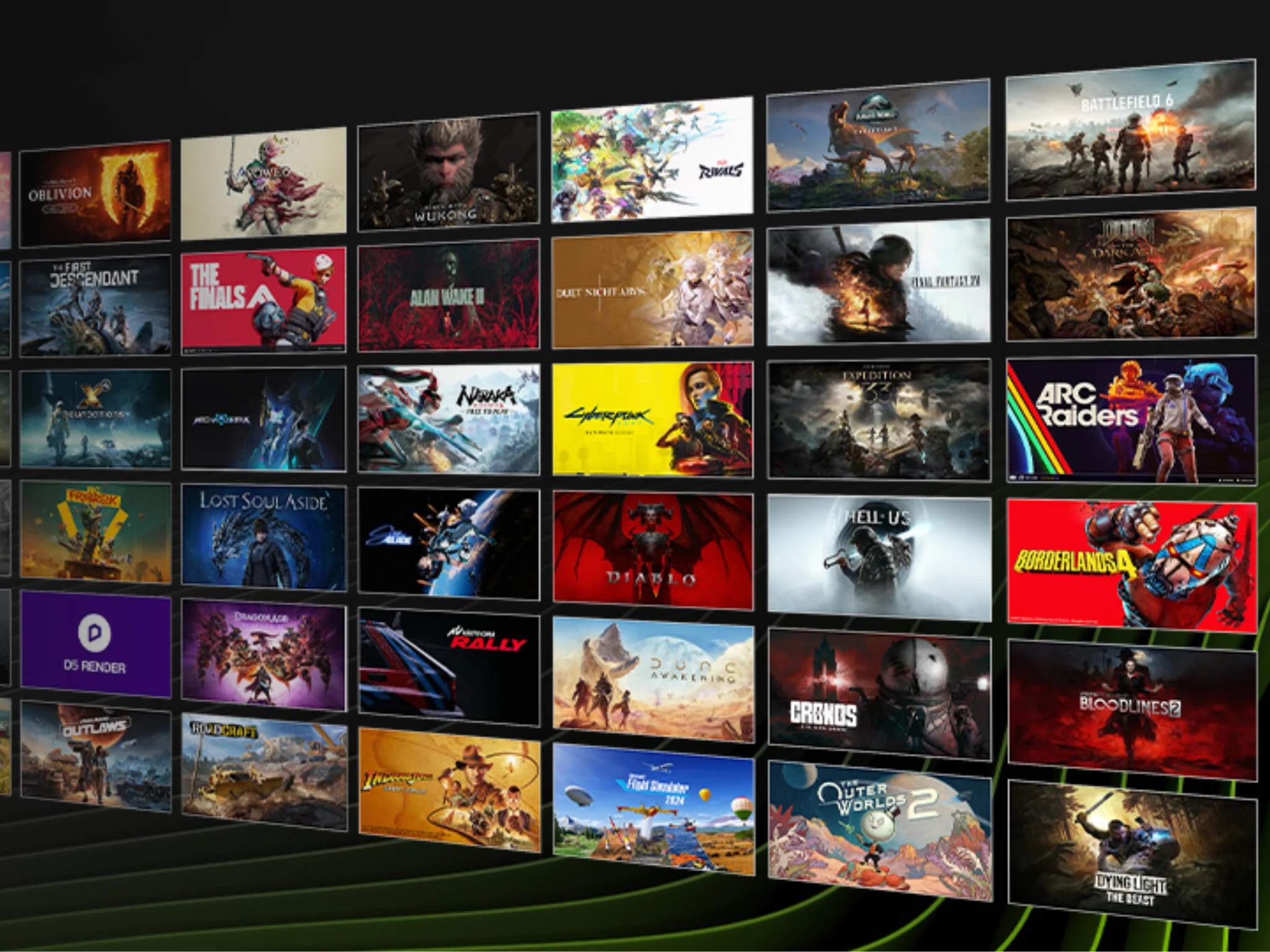
    Beyond gaming, Blender 5.3 will integrate DLSS 4.5 Ray Reconstruction as a viewport denoiser later this year. Nvidia also confirmed that multiple games are recieving broader DLSS 4.5 support, including Marvel Rivals, Phantom Blade Zero, Squad, Gothic 1 Remake, Cinder City, Duet Night Abyss and Where Winds Meet.

    Nvidia.com/news

    Sources
  • Gamers Claim Front Mission 3 Remake Uses AI for Odd Visuals

    Gamers Claim Front Mission 3 Remake Uses AI for Odd Visuals

    Key Takeaways

    1. The Front Mission 3 remake utilizes generative AI, creating images that significantly differ from the original 1999 version.
    2. Some changes in the remake include new elements not present in the original, such as altered vehicles and character designs.
    3. While AI upscaling is generally accepted, generative AI can drastically change a game’s visual style if not used carefully.
    4. Fans express concern about the developers not limiting AI to enhancing original assets, questioning the artistic integrity of the remake.
    5. The use of AI in gaming is a contentious topic, leading platforms like Steam to label games with AI-generated content.


    Many game creators, graphics processing units (GPUs), and gaming consoles use AI upscaling to enhance the visuals of older games. However, the Front Mission 3 remake seems to push the boundaries by utilizing generative AI. Instead of simply improving resolution, players are encountering images that are hard to recognize. RPG Site compared the remake on Nintendo Switch to the original PlayStation version from 1999 and found some astonishing differences.

    A Classic Reimagined

    Front Mission 3, developed by what is now Square Enix, is often considered the top game in the tactical RPG franchise. When players are not engaged in battles with mecha-like wanzers, they can explore the “Network.” This feature resembles an internet browser that adds depth to the game’s narratives and characters. RPG Site discovered many drastically altered images within this part of the game.

    Unexpected Changes

    Some of the most surprising alterations in the Front Mission 3 remake include aspects that were not present in the original version. A city scene that used to show a pixelated wanzer crash now features a strangely shaped helicopter and police tape. In another instance, the team opted to transform an orange wanzer into a red one with an unusual design. These modifications appear to go past mere upscaling, indicating that generative AI has produced new elements.

    While many reviewers are not against AI upscaling, generative AI, if used carelessly, can completely alter the visual style of a game. This advancing technology learns by analyzing vast amounts of data, including images. Over time, it gathers enough information to create new visuals based on requests. Fans are now questioning why MegaPixel Studio didn’t restrict the machine learning in the Front Mission 3 remake to merely enhancing the original 1999 assets.

    Ongoing Debate

    The integration of AI in gaming has sparked a heated discussion that is unlikely to settle down soon. Steam has started to label games that feature AI-generated content, with Everybody’s Golf Hot Shots being the most recent example. In cases like Front Mission 3, gamers claim that the developers have mishandled the original artistic intent.

    Source:
    Link

  • PlayStation Handheld: AI Upscaling, 16GB RAM, and More Leaks

    PlayStation Handheld: AI Upscaling, 16GB RAM, and More Leaks

    Key Takeaways

    1. Xbox has confirmed its development of a handheld device, while PlayStation’s plans remain unclear but have leaked details.
    2. The PlayStation handheld is expected to feature 16 GB of LPDDR5X RAM, with improved cache compared to the PS5.
    3. It will include AI upscaling, aiming to run PS5 games natively at reduced resolution and visual quality.
    4. Mass production for the PlayStation handheld, codenamed ‘Jupiter’, is not expected until 2028, potentially launching alongside the PS6.
    5. Xbox’s upcoming handheld consoles, the ROG Xbox Ally and ROG Xbox Ally X, are set to launch by the end of this year.


    Both Xbox and PlayStation have been said to be developing their own handheld devices. While Xbox has confirmed its efforts, PlayStation’s plans remain unclear. Recent leaks and speculations have provided some insights into what the PlayStation handheld might offer, with new details emerging from the same source. According to the leaker, this device is expected to feature 16 GB of RAM, AI upscaling, and a greater memory cache compared to the PS5.

    Specifications Revealed

    A member named KeplerL2 on the NeoGAF forum has claimed that the PlayStation handheld will utilize 16 GB of LPDDR5X RAM since LPDDR6 is still a few years away from being available. The device will have only a third of the PS5’s memory bandwidth, but it will include more cache and better memory compression. Reportedly, the handheld will sport 4MB of L2 cache and 16 MB of MALL cache, which is not found in either the PS5 or the PS5 Pro. This addition aims to compensate for the handheld’s lower bandwidth.

    AI Upscaling Feature

    The leaker further mentions that the PlayStation handheld will be the first AMD-powered handheld to incorporate AI upscaling, at least for the immediate future. This feature is expected to support the device’s earlier promises of being able to natively run PS5 games, though it may do so at reduced resolution and visual quality.

    Production Timeline Uncertain

    In May, there were rumors that the PlayStation handheld would operate on a 2 nm chip produced by Samsung. It has been suggested that the internal codename for the handheld is ‘Jupiter’, with mass production not expected to begin until 2028. This schedule appears to be inconsistent with other reports and Sony’s usual seven-year console cycle, which indicates a potential PS6 release in 2027. Moreover, it’s believed that the handheld will launch alongside the PS6.

    Meanwhile, the ROG Xbox Ally and ROG Xbox Ally X have been officially revealed as Xbox’s upcoming handheld consoles, powered by the AMD Ryzen Z2A and Ryzen Z2 AI Extreme respectively. These devices are set to be launched by the end of this year.

    Source:
    Link