Author: GizNews

  • DJI Teases New Device: Global Launch Rumors Heat Up

    DJI Teases New Device: Global Launch Rumors Heat Up

    Key Takeaways

    1. DJI has shifted to launching new products in China first due to U.S. drone bans.
    2. Recent products, like the RS 5 camera stabilizer and Osmo Action 6, debuted in China weeks before international release.
    3. DJI now shares product teasers globally at the same time, unlike before.
    4. Their latest teaser video is mysterious and highlights drone footage, suggesting a new product is coming.
    5. The teaser hints at exploring “an all-new dimension,” possibly indicating a new device, with the Avata 360 spotted for sale.


    DJI has recently changed its approach to product releases. In the past few years, the company typically launched new items both in China and worldwide at the same time. However, this strategy shifted after the United States began to enforce its ban on drones made overseas.

    Focus on China First

    Since that time, DJI has prioritized launching products in China first. For instance, the RS 5 camera stabilizer and Osmo Action 6 (currently $369 on Amazon) were available in its home country about two weeks to a month before they were released internationally. Consequently, the company began sharing teasers on Chinese social media several weeks ahead of those for other regions.

    A New Teaser Approach

    Now, DJI has reverted to releasing teasers at the same time globally. Interestingly, their latest video is more mysterious than previous ones. The 41-second clip does not specify what the company is planning or when new products will come out. Still, the visuals unmistakably showcase drone footage, which DJI confirmed in a tweet.

    The main content of the video is filmed from a first-person view (FPV), and DJI also features 360-degree shots, hinting that fans will soon explore “an all-new dimension.” This suggests that the teaser may be for a brand new device rather than an existing one. Additionally, the Avata 360 has recently been spotted for sale on Facebook Marketplace, indicating that its launch may be imminent.

    Source:
    Link



  • Highguard Shutting Down March 12 Due to Low Player Base

    Highguard Shutting Down March 12 Due to Low Player Base

    Key Takeaways

    1. Highguard initially attracted around 97,000 players on Steam but quickly experienced a sharp decline in active users.
    2. The game reached a new low of only 122 players online, leading to the decision to permanently close the servers.
    3. The official shutdown date is set for March 12, with developers encouraging players to return for final matches.
    4. A final update will introduce new content, including a new Warden character, a new weapon, account level progression, and skill trees.
    5. Signs of trouble included the rapid drop in player count post-launch and significant layoffs within the development team.


    Highguard had an impressive beginning upon its release, hitting approximately 97,000 players at the same time on Steam. However, this initial success was short-lived. Within just a day, the game saw a significant decline in its player community, and the downward trend continued over the following weeks.

    Declining Numbers

    Since then, the situation has only worsened. The number of active players kept decreasing, ultimately reaching very low figures. Just yesterday, the game hit a new low, with merely 122 players online. With such diminishing numbers, it became hard for the developers to keep the game operational. Now, the team has announced that the servers will be permanently closed.

    Official Announcement

    In a message posted on X, the official account for Highguard revealed that the game will go offline on March 12. The developers shared that despite their efforts on the project, they could not maintain a sufficiently large player base to sustain the game long term.

    Even though the shutdown has been confirmed, the servers will be running until March 12. The developers are inviting players to return during these final days and enjoy a few last matches before the game shuts down. Additionally, the team is working on a final update before the closure, which will introduce a new Warden character, a new weapon, account level progression, and skill trees.

    Signs of Trouble

    Ever since Highguard was released, there have been various signs that hinted at the possibility of the game shutting down one day. The first significant indicator was the sharp drop in player count right after the launch. Just a few weeks later, the studio laid off most of its employees, leading many to speculate about the game’s uncertain future. At one point, a former developer even pointed fingers at content creators for the game’s failure, claiming it was labeled a flop before it had a real chance to succeed.

    Highguard via X

    Source:
    Link


  • DJI Osmo Pocket 4 Pro Leak: Dual Cameras Unveiled

    DJI Osmo Pocket 4 Pro Leak: Dual Cameras Unveiled

    Key Takeaways

    1. DJI plans to release the Osmo Pocket 4 later this month, initially only in China.
    2. The Osmo Pocket 3 will remain available in other regions for a few more weeks, priced at $420.
    3. The Osmo Pocket 4 Pro has been certified by the FCC and features a sturdier gimbal for an extra camera lens.
    4. The design of the Osmo Pocket 4 and Osmo Pocket 4 Pro is similar, but the Pro model may include a telephoto lens.
    5. More information about the Osmo Pocket 4 Pro is expected to be released in late March or April.


    DJI is said to be planning to release the Osmo Pocket 4 later this month, but for now, it looks like this launch will only happen in China. The Osmo Pocket 3, on the other hand, is set to stay in stores in other regions for a few more weeks, currently priced at $420 on Amazon.

    Upcoming Features

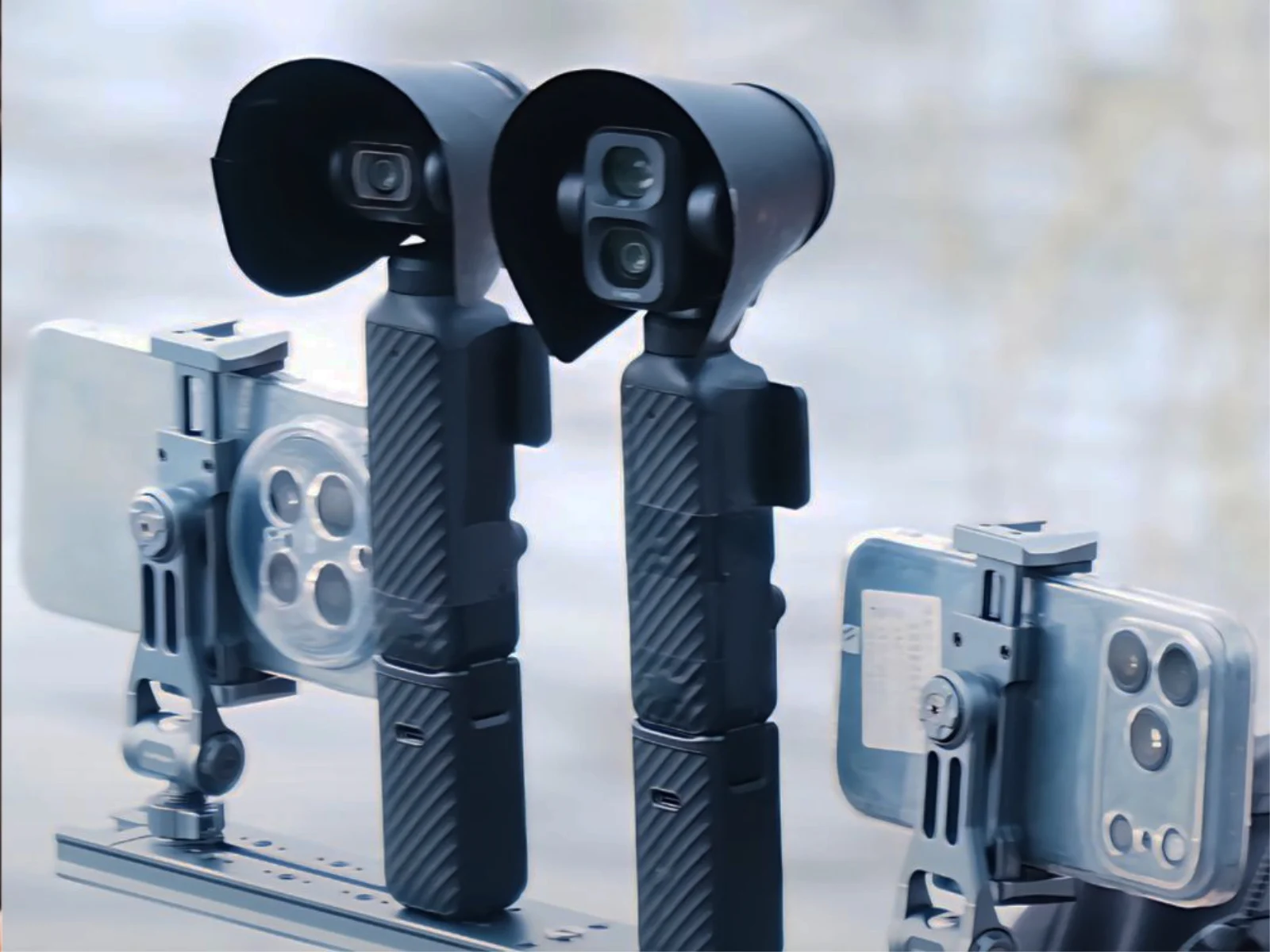
    Recently, images have surfaced showing the Osmo Pocket 4 alongside DJI’s other anticipated vlogging camera that is expected to come out in 2026. It’s already known that DJI is also working on the Osmo Pocket 4 Pro. Just recently, the company got this model certified by the Federal Communications Commission (FCC) in the United States. In the image below, you can see a closer view of how the Osmo Pocket 4 Pro will stand out from the Osmo Pocket 4.

    Design Differences

    From what can be seen, both devices appear to be about the same height and width. What sets them apart is that the Osmo Pocket 4 Pro has a sturdier gimbal designed to support an extra camera lens. It seems that this lens might include a telephoto option. However, details are still unclear at this time.

    Future Information

    Considering the recent leaks and rumours surrounding the Osmo Pocket 4 and Avata 360, it’s unlikely that we’ll hear more about the Osmo Pocket 4 Pro until late March at the very earliest. April seems to be a more likely time frame for new information to be released, as sources may be more focused on other unreleased DJI products that are rumored to be arriving on the market soon rather than on the Osmo Pocket 4 Pro.

    Igor Bogdanov’

    Source:
    Link


  • SpaceX Dragon Returns to Earth with Scientific Samples Successfully

    SpaceX Dragon Returns to Earth with Scientific Samples Successfully

    Key Takeaways

    1. SpaceX Dragon cargo successfully returned to Earth, bringing back frozen research samples and temperature-sensitive biological specimens.
    2. JAXA’s HTV-X1 spacecraft will launch in early March to test new technologies and deploy CubeSats before safely reentering the atmosphere.
    3. Northrop Grumman’s Cygnus XL launched to dispose of trash from the ISS, also planned to burn up over the South Pacific.
    4. Ongoing research on the ISS includes human physiology and materials science studies, with a focus on cardiac monitoring and microgravity experiments.
    5. Fitness assessments are conducted on the ISS to prevent muscle atrophy in astronauts due to microgravity conditions.


    The SpaceX Dragon cargo, which is part of NASA’s Commercial Resupply Services program, has made a successful landing back on Earth. It carried frozen research samples from the Destiny lab module that were kept in onboard science freezers. This spacecraft is unique as it is the only one capable of returning significant quantities of scientific materials and temperature-sensitive biological specimens.

    Upcoming Spacecraft Launches

    After the Dragon’s return, two additional spacecraft are set to launch. One of them is JAXA’s (Japan Aerospace Exploration Agency) HTV-X1. This spacecraft is scheduled to be detached from Harmony’s Earth-facing port using the Canadarm2 robotic arm in early March and will be released into Earth orbit the following day. It will stay in orbit for several weeks to test new antenna technologies, advanced solar cells, and to deploy CubeSats. Eventually, it will reenter the atmosphere over the South Pacific and safely burn up, effectively disposing of station waste.

    Northrop Grumman’s Cygnus XL

    The other spacecraft is Northrop Grumman’s Cygnus XL, which is filled with trash. It was launched on September 14, reached its destination on September 18, and was installed in the Unity module. Like the HTV-X1, it will also reenter the Earth’s atmosphere and burn up over the South Pacific, functioning as a managed orbital waste disposal system.

    Research on the ISS continues without interruption. A variety of human physiology and materials science studies, including cardiac monitoring and microgravity experiments, are ongoing. Fitness assessments on the station’s treadmill are conducted to prevent muscle atrophy caused by microgravity. All these efforts contribute to the ongoing progress in space research.

    Source:
    Link


  • INR556: Compact Single-Board Computer Alternative to Raspberry Pi

    INR556: Compact Single-Board Computer Alternative to Raspberry Pi

    Key Takeaways

    1. The DFI INR556 is a new single-board computer featuring various Intel processors, including Atom and Core series options.
    2. It supports DDR5 RAM with a capacity of up to 16 GB and clock speeds of 4,800 MHz, surpassing the Raspberry Pi’s 8 GB limit.
    3. The board has multiple M.2 slots for expansion, including ports for PCIe and SATA connections, and a nano-SIM card slot for mobile networks.
    4. It offers HDMI and LVDS video output capabilities, along with dual Gigabit Ethernet ports and USB 3.2 for connectivity.
    5. The device can run Windows or various Linux distributions and does not have a standard 40-pin header, but includes RS232/422/485 interfaces and GPIO connectors.


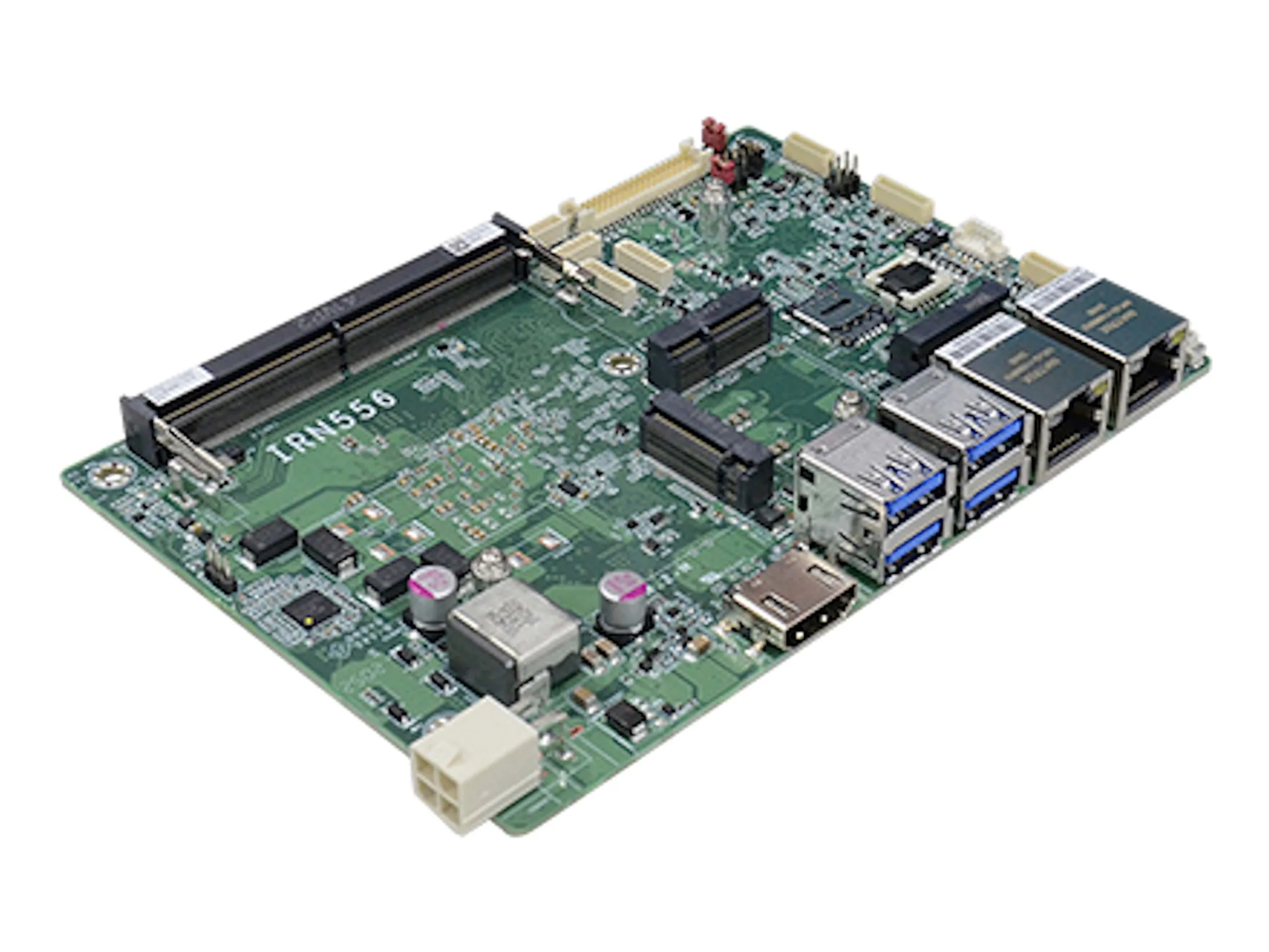
    The DFI INR556 is a fresh single-board computer that comes with a range of Intel processors or APUs. Among these options are the Intel Atom x7211RE, x7433RE, x7835RE, Intel N150, and the Intel Core 3 N355. It has a DDR5 RAM capability, supporting up to 16 GB and clock speeds reaching 4,800 MHz, which is more than the Raspberry Pi’s 8 GB limit.

    Board Specifications

    Measuring 146 × 102 millimeters, the board is equipped with multiple M.2 slots. It features an M.2 2242 port that connects through two PCIe 3.0 lanes and SATA 3.0, alongside an M.2 3052 slot accessed via one PCIe lane. Additionally, an M.2 2230 slot supports Key E format cards, USB 2.0, and one PCIe lane. For mobile network connections, it also includes a nano-SIM card slot.

    Connectivity Options

    The HDMI port on the board supports video output at a resolution of 4096 × 2160 and 24 Hz. There’s also LVDS capability for images up to 1920 × 1200 at 60 Hz. For network connectivity, the device has two Gigabit Ethernet ports. It includes USB 3.2 for external storage devices. Unlike the Raspberry Pi, this board lacks a standard 40-pin header but provides RS232/422/485 interfaces along with GPIO connectors for linking external sensors and actuators. Since it uses standard processors, users can run Windows or various Linux distributions.

    Source:
    Link


  • Samsung Galaxy Z TriFold Upgrade: Honor Silicon Carbon Batteries

    Samsung Galaxy Z TriFold Upgrade: Honor Silicon Carbon Batteries

    Key Takeaways

    1. Samsung’s Galaxy Z TriFold features a 10-inch display, Snapdragon 8 Elite SoC, and a 5,600 mAh battery.
    2. A YouTuber from the channel ‘Strange Parts’ enhanced the Galaxy Z TriFold’s battery using Honor’s silicon carbon cells, potentially increasing the capacity by 71%.
    3. The project involved overcoming compatibility challenges and modifying the device, including CNC milling and replacing the battery management system.
    4. The modified Galaxy Z TriFold reached a battery capacity of 9,600 mAh but experienced display issues, with no tests conducted on capacity or durability.
    5. Samsung may soon release a device with silicon carbon battery technology, possibly the Galaxy S26 Edge, as they continue to explore advancements in battery technology.


    Samsung introduced its Galaxy Z TriFold in December of the previous year, and it’s been quite popular. This device features an impressive 10-inch display when opened, powered by the Snapdragon 8 Elite SoC, along with a triple rear camera setup. It is supported by a modest 5,600 mAh Li-Ion battery. Meanwhile, as Chinese brands shift towards silicon carbon technology, foldable models like the Honor Magic V6 offer a much larger 6,660 mAh battery. While Samsung is still in the process of incorporating silicon carbon batteries into their products, a YouTuber has outpaced the Korean company, with assistance from Honor.

    YouTuber’s Creative Challenge

    The YouTube channel ‘Strange Parts’ is well-known for its inventive and intricate projects, such as ‘constructing a functional Apple Watch in a week’ or ‘3D printing an iPhone’. In their most recent adventure (linked below), the host Scotty Allen succeeded in enhancing the Galaxy Z TriFold’s battery using Honor’s silicon carbon cells, which theoretically boosts the capacity by 71%. However, the journey was challenging and not completely successful.

    The Process of Upgrading

    For this project, the YouTuber teamed up with Honor and began with one Galaxy Z TriFold acquired in China. He then worked on identifying compatibility issues and created mock-ups to assess the project’s feasibility before dismantling the actual device. The Honor silicon carbon batteries were slightly wider than the battery slots in the Galaxy Z TriFold, so he had to CNC mill space for them. Additionally, he needed to grind down a portion of the hinge mechanism and remove the bottom speaker. To make sure the phone would recognize the new batteries, he replaced the Honor Battery Management System (BMS) with Samsung’s BMS.

    Final Results and Future Prospects

    Eventually, he went through four Galaxy Z TriFolds to find the correct combination of parts to create the silicon carbon-enhanced Galaxy Z TriFold. The battery capacity reached a claimed 9,600 mAh, which is a 71% increase, but the display developed a white line across it. Unfortunately, there were no tests to verify the actual capacity, charging speeds, or durability of the new setup. Nevertheless, this project highlights the advantages of using silicon carbon instead of conventional Li-Ion batteries, particularly in foldable devices.

    We might not have to wait too long for Samsung to unveil a phone featuring a silicon carbon battery, as a recent report hinted that such a device could be coming soon. It might be the Galaxy S26 Edge, or whatever name it ends up with, that will serve as the test model for this new battery technology.


  • Hubble Telescope Discovers Galaxy with 99% Dark Matter and Few Stars

    Hubble Telescope Discovers Galaxy with 99% Dark Matter and Few Stars

    Key Takeaways

    1. CDG-2 is a dark galaxy with very little visible light and few stars, primarily composed of dark matter.
    2. About 99% of CDG-2’s mass is believed to be dark matter, making it difficult to detect using traditional methods.
    3. CDG-2 is located in the Perseus Cluster, which strips away gases and inhibits star formation due to its harsh environment.
    4. The galaxy was confirmed through observations from three telescopes: Hubble Space Telescope, Euclid, and Subaru Telescope.
    5. The discovery of CDG-2 contributes to the understanding of dark matter and its role in galaxy formation and structure.


    Galaxies are typically seen by their light, gas emissions, and structure. Yet, CDG-2 stands apart as a dark galaxy that emits very little visible light and has hardly any stars, making it tough to spot. Its composition consists mainly of dark matter, which is undetectable by traditional means as it doesn’t absorb, reflect, or emit light. The only way to observe it is through its gravitational influences. Remarkably, about 99% of CDG-2’s mass is thought to be dark matter, and it falls into the category of low-surface-brightness galaxies due to its dim light. It was recognized exclusively because of the close formation of its globular clusters, which adds to its scientific importance.

    Location and Environmental Factors

    CDG-2 resides in the Perseus Cluster, a massive galaxy cluster roughly 300 million light-years from Earth. This cluster is known for its powerful gravitational interactions that strip away gases like hydrogen. Ram-pressure stripping plays a role here too, disrupting smaller galaxies and hindering star formation. Hydrogen plays a critical role in the birth of stars, and this hostile environment may explain why CDG-2 has so few stars.

    Astronomical Observations

    In the process of confirming CDG-2’s existence, astronomers called upon three observatories. The first one was the Hubble Space Telescope, which offered clear identification of four globular clusters through high-resolution images. The second, Euclid, is particularly adept at spotting low-surface-brightness galaxies and confirmed the existence of faint diffuse light through wide-field imaging. Lastly, the Subaru Telescope provided additional confirmation with ground-based deep imaging.

    These observatories collectively validated that the globular clusters were situated within a faint diffuse glow, serving as evidence of a hidden galaxy. Dark matter remains one of the most puzzling enigmas in physics, and this finding marks a significant advancement in unraveling and comprehending the mysteries that lie beyond our perception.

    Source:
    Link


  • Samsung Galaxy A37 and A57 Pricing Leak Shows Higher MSRPs

    Samsung Galaxy A37 and A57 Pricing Leak Shows Higher MSRPs

    Key Takeaways

    1. The Galaxy A37 and A57 are expected to launch globally soon, possibly this month.
    2. The Galaxy A37 will have two models priced at €439 (6 GB RAM/128 GB storage) and €539 (8 GB RAM/256 GB storage).
    3. The A37’s pricing shows an increase from the previous Galaxy A36, which was €379 for similar specifications.
    4. The Galaxy A57 will also see a price rise, with models priced at €539 (8 GB RAM/128 GB storage) and €609 (8 GB RAM/256 GB storage).
    5. The information about pricing and models comes from leaker Sudhanshu Ambhore, indicating a trend of rising costs for new models.


    The Galaxy A37 and A57 are rumored to be launching globally very soon, possibly even this month. Before their official introduction, pricing details for these two models have emerged online for the Eurozone market.

    Pricing Details

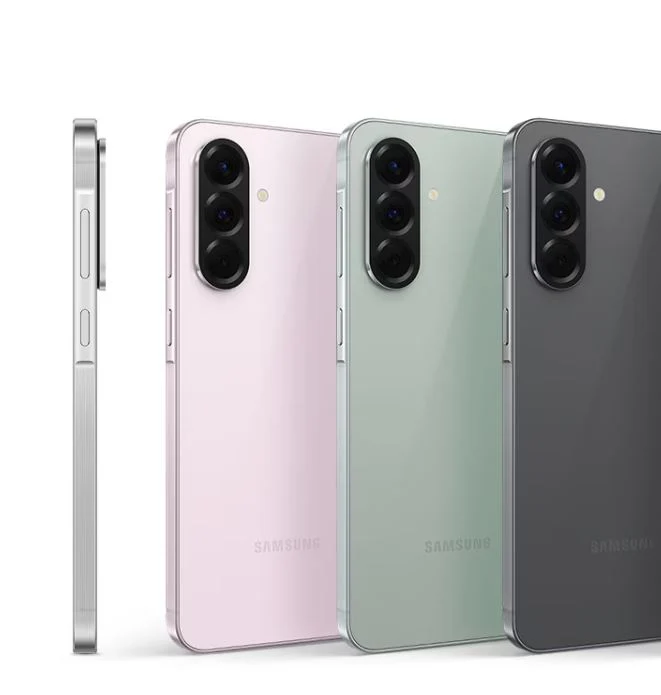
    According to leaker Sudhanshu Ambhore, who appears to have information from an unidentified retailer, the Galaxy A37 will come in two versions: one with 6 GB of RAM and 128 GB of storage, and another with 8 GB of RAM and 256 GB of storage. The 6/128 GB model is expected to be priced at €439, while the 8/256 GB version will likely cost €539. This indicates a price increase since the Galaxy A36, which featured 8 GB RAM and 128 GB storage, was launched last year in Europe with a price tag of €379.

    Similar Launch for A57

    The Galaxy A57 is anticipated to follow a similar pricing pattern. It will include 8 GB of RAM, with options for either 128 GB or 256 GB storage. The 128 GB version is said to be priced at €539, while the 256 GB variant will be available for €609. Just like the A37, this reflects a €60 rise in cost, as the previous model, the Galaxy A56, was launched at €479.

    Purchase Information

    You can find the Samsung Galaxy S26 on Amazon US.

    Sudhanshu Ambhore’s insights have been key to uncovering these details ahead of the expected launch.

    Source:
    Link


  • Vivo Launches Premium Android Tablet in Europe

    Vivo Launches Premium Android Tablet in Europe

    Key Takeaways

    1. Vivo’s high-end Android tablet, the Pad6 Pro, is nearing its release, with a European launch expected later this year.
    2. The Pad6 Pro features the Snapdragon 8 Elite Gen 5 chipset, also used in other flagship devices.
    3. The tablet has an increased battery capacity of 13,000 mAh, up from 12,050 mAh in the Pad5 Pro.
    4. It will offer a minimum of 12 GB of RAM and 256 GB of storage, with hints of a 4K display.
    5. The Pad6 Pro will include a single rear camera, a folio keyboard cover, and a stylus that attaches magnetically.


    It appears that Vivo’s upcoming high-end Android tablet is nearing its release. Over the weekend, Xiaomi launched the Pad 8 and Pad 8 Pro globally. The following day, Honor introduced the MagicPad 4.

    Vivo’s Presentation

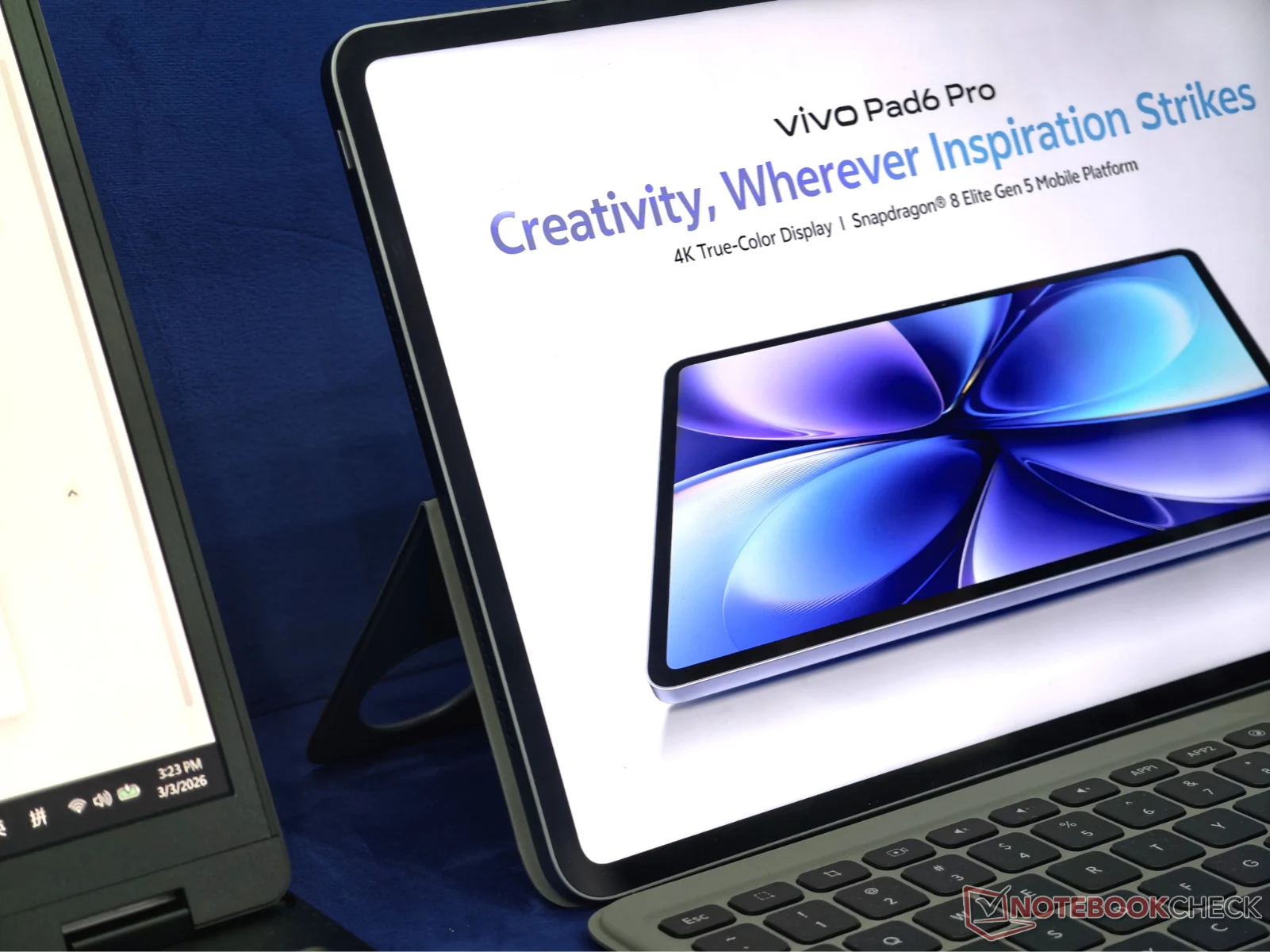
    Interestingly, Vivo has been presenting the Pad6 Pro at the same event. It’s important to note that the version displayed is the Chinese model. The Pad6 Pro is set to launch in Europe later this year, at least.

    Impressive Specifications

    We can confirm that the Pad6 Pro is powered by the Snapdragon 8 Elite Gen 5 chipset, which is also found in the new Legion Tab Gen 5 and flagship models like the OnePlus 15 (currently $899 on Amazon). Furthermore, Vivo has increased the battery capacity from 12,050 mAh in the Pad5 Pro to an impressive 13,000 mAh in the Pad6 Pro.

    Storage and Display Details

    The tablet will come with a minimum of 12 GB of RAM and 256 GB of storage. However, full display specifications are still not revealed. Vivo has only hinted at a 4K resolution, while Digital Chat Station suggests that the device features a 13.2-inch display. There is also a single camera located on the back, along with a folio keyboard cover and a stylus that attaches magnetically to the top edge of the tablet.

    Source:
    Link


  • Samsung Misled Media on Galaxy S26 Ultra AMOLED Color Depth

    Samsung Misled Media on Galaxy S26 Ultra AMOLED Color Depth

    Key Takeaways

    1. The Galaxy S26 Ultra has been revealed to use an 8-bit AMOLED display instead of the advertised 10-bit panel.
    2. Samsung may be utilizing Frame Rate Control (FRC) to simulate 10-bit color on the 8-bit screen.
    3. The display issue raises concerns about transparency, as Samsung did not clarify the display specs to journalists.
    4. The decision to use an 8-bit panel is part of Samsung’s cost-cutting measures to keep prices affordable for the Galaxy S26 series.
    5. There are potential implications for customer loyalty as Samsung’s financial strategies may disappoint some users expecting higher quality features.


    Less than a fortnight after its debut, the Galaxy S26 Ultra is caught up in yet another display issue. Following complaints about supposed quality problems with the new Privacy Display, it’s now been revealed that Samsung may have misled journalists about the actual color depth of the AMOLED display on the Galaxy S26 Ultra.

    Reports of Display Specs

    At the time of its launch, many outlets claimed that the Galaxy S26 Ultra featured a 6.9-inch Dynamic AMOLED display that was a 10-bit panel, marking an improvement over the 8-bit display on the Galaxy S25 Ultra. However, recent findings from SamMobile indicate that, contrary to initial media claims, the Galaxy S26 Ultra actually sports an 8-bit panel. Some have suggested that Samsung might be employing Frame Rate Control (FRC) to simulate 10-bit color on this 8-bit screen.

    FRC and Its Implications

    Even though FRC does enhance an 8-bit panel by minimizing color banding and expanding the color range, it is somewhat disappointing that Samsung did not clarify this to the press. Arun Maini, who is also known as Mrwhosetheboss, has now shared that Samsung has acknowledged the Galaxy S26 Ultra indeed uses an 8-bit AMOLED display. While this doesn’t necessarily downgrade the quality of the AMOLED panel, it does imply that the latest Galaxy flagship falls short compared to the iPhone 17 Pro Max, as Apple is utilizing 10-bit OLED panels for its iPhone 17 series.

    Cost-Cutting Measures

    This is significant because it suggests Samsung is providing a superior panel to Apple while opting for a lower quality display in the Galaxy S26 Ultra. There seems to be a logical reason for this choice, though. Prior to the launch of the Galaxy S26 series, it was widely discussed that Samsung was making budget cuts wherever possible to keep the prices of the Galaxy S26 devices affordable. Consequently, the Galaxy S26 series largely mirrors the Galaxy S25 models with few hardware updates this year.

    For example, the Galaxy S26 Ultra still comes with the same 5,000 mAh battery as its predecessor, the Galaxy S25 Ultra. Nonetheless, Samsung has managed to optimize the performance. The decision to use an 8-bit panel in the Galaxy S26 Ultra instead of a pricier 10-bit alternative aligns with Samsung’s reported efforts to cut costs.

    In conclusion, we should hold off on making any final opinions until we have the chance to test the Galaxy S26 Ultra and see how its Dynamic AMOLED display compares with the latest iPhones. However, one thing is certain: Samsung’s financial strategies could risk alienating some of its loyal customers.

    Source:
    Link