Author: GizNews

  • Apple Claims MacBook Neo Features No Design Compromises

    Apple Claims MacBook Neo Features No Design Compromises

    Key Takeaways

    1. Apple claims the MacBook Neo is a true MacBook with no design compromises, featuring an all-aluminum structure.
    2. The device includes a Retina display with 500 nits peak brightness, suggesting acceptable quality for most users.
    3. The Apple A18 Pro processor shows competitive performance against mid-range processors, despite some initial disappointment.
    4. The MacBook Neo has limitations, such as only 8 GB of non-upgradable memory and a USB-C port lacking USB 3 support.
    5. The absence of a backlit keyboard may deter some students, while its pricing may challenge its classification as a budget-friendly option.


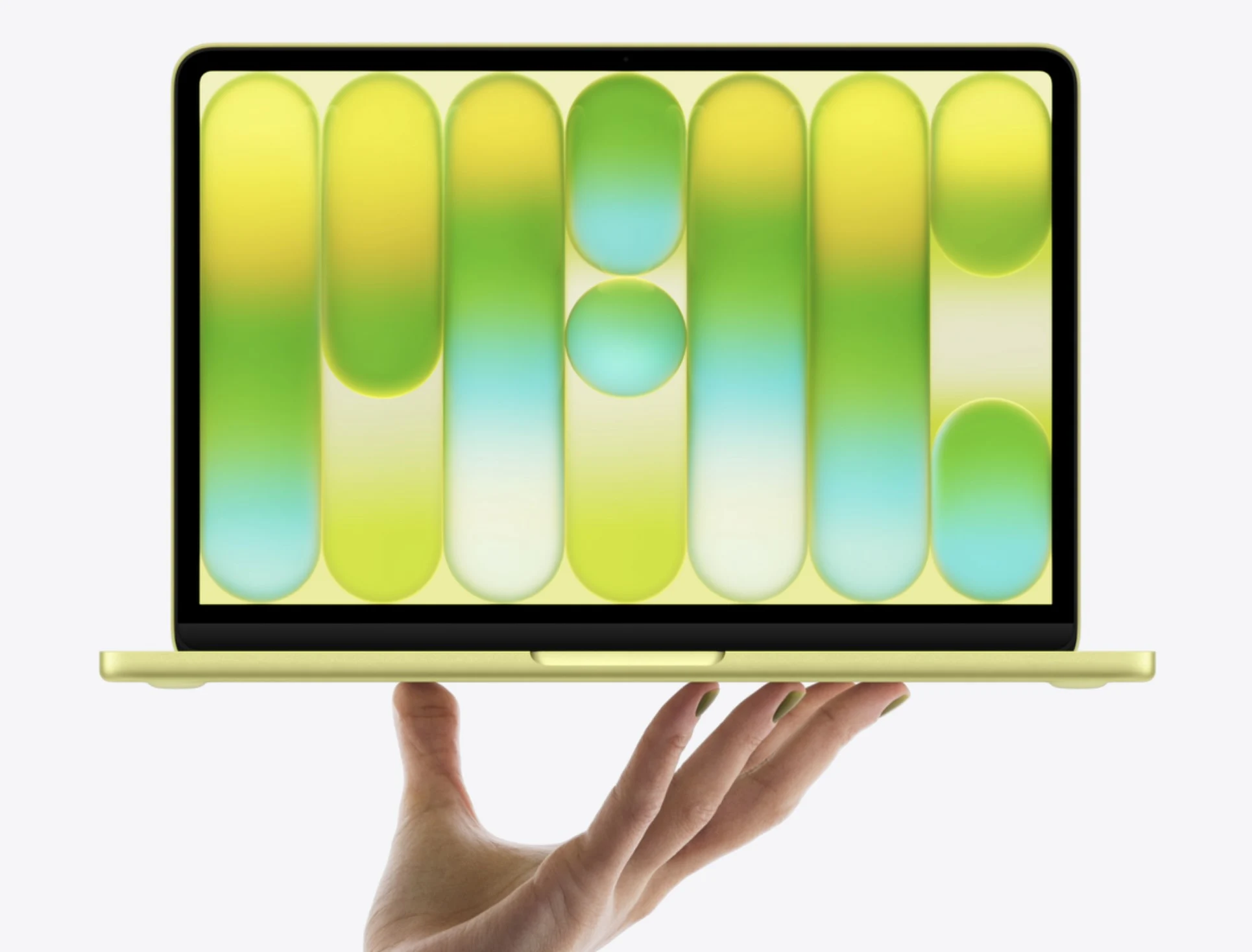
    If one had to summarize the MacBook Neo in a single word, it would probably be “compromise.” On the other hand, Apple leaders view the device quite differently, firmly asserting that their newest budget-friendly model is a true MacBook without any compromises.

    Design Choices

    Molly Anderson, who is the VP of Industrial Design at Apple, shared her thoughts during a chat with Dezeen.

    She emphasized that “It’s undeniably a MacBook, and we’re definitely not compromising on the design, which is super important.” It’s worth noting that the executive specifically pointed out no compromises were made regarding design elements. Contrary to earlier speculations, Apple chose an all-aluminum structure instead of a less expensive plastic shell, which could have reduced expenses.

    Display and Performance

    Interestingly, the $599 MacBook Neo also includes a Retina display with an impressive peak brightness of 500 nits, which was unexpected given earlier rumors. While we still lack specific details about its color accuracy or coverage, Apple’s history suggests these metrics should be acceptable for most users.

    While the Apple A18 Pro might seem like a letdown for some, early benchmark results show that it performs quite well against current and future mid-range laptop processors, like the Intel Core Ultra 5 325 “Panther Lake” chip.

    Memory and Usability

    However, the MacBook Neo does have some clear drawbacks. Priced at $599 for pre-order on Amazon, it comes with only 8 GB of unified memory, which cannot be upgraded. Additionally, one of its USB-C ports does not support USB 3 speeds. Targeted mainly at students, the absence of a backlit keyboard may also be something many potential buyers can overlook.

    From an external perspective, it’s not easy to categorize the MacBook Neo as an affordable choice for those watching their wallets. Amusingly, users who desire vibrant color options will find their only choice is the MacBook Neo.

    Source:
    Link


  • Apple M5 Max and M5 Pro Boost Performance by 20% on Geekbench

    Apple M5 Max and M5 Pro Boost Performance by 20% on Geekbench

    Key Takeaways

    1. The M5 Pro and Max chips show significant enhancements in CPU performance, with the 18-core CPU outperforming most consumer-grade x86 chips.
    2. GPU performance is lacking, with the M5 Max competing closely with the RTX 5070 and the M5 Pro struggling against the RTX 5060 due to OpenCL optimization issues on macOS.
    3. The M5 Max GPU shows a 20% improvement in single-precision AI tasks over the M4 Max, while the M5 Pro shows a similar 20% improvement over the M4 Pro.
    4. CPU scores remain mostly unchanged, and the 16-core Neural Engine has decreased in single-precision scores, though improvements are noted in half-precision and quantized tests.
    5. Current benchmarks may not fully reflect the M5 generation’s AI capabilities, and true performance will be better evaluated through independent reviews with practical workloads.


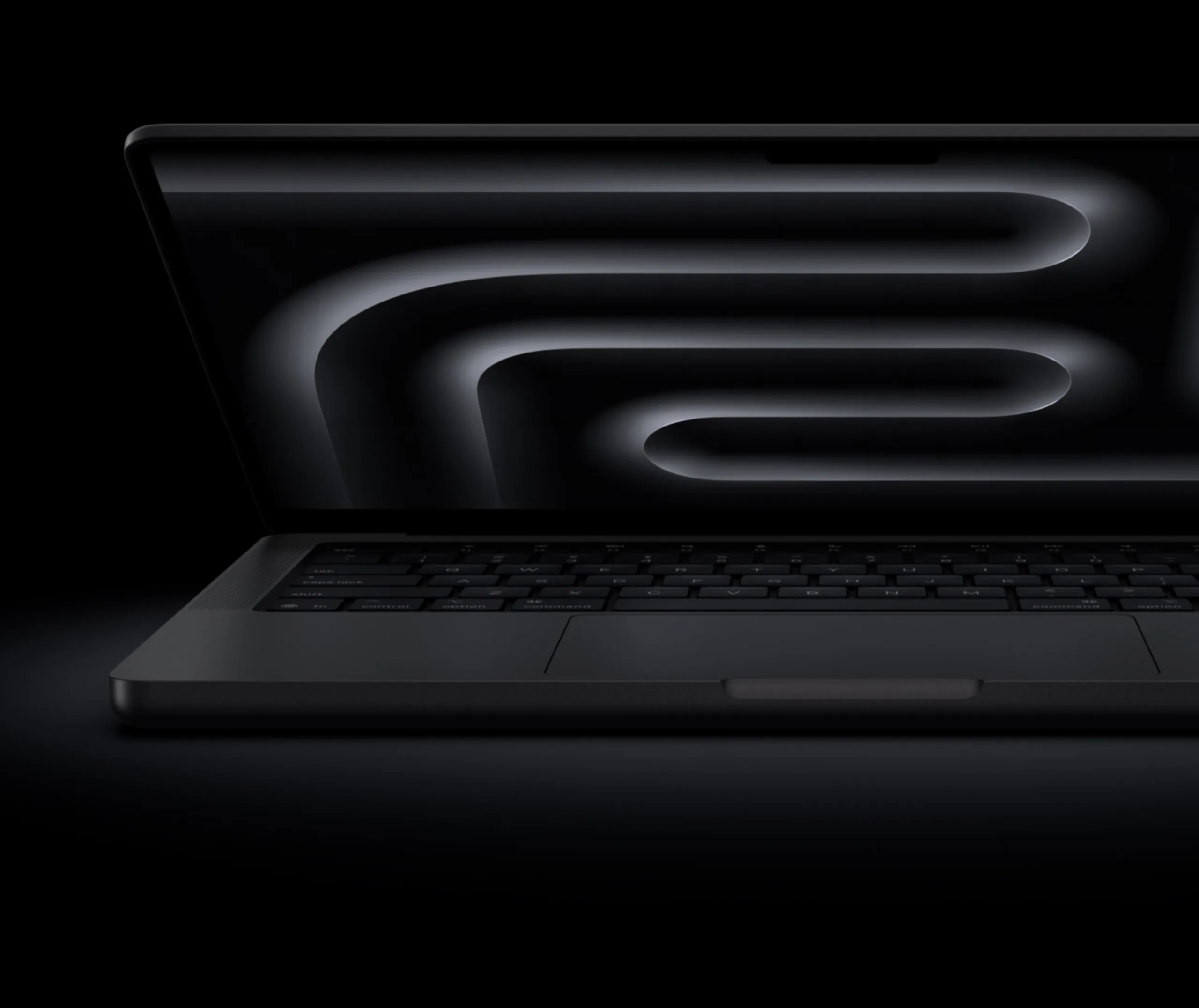
    Apple’s M5 Pro and Max were introduced just a few days ago, and initial benchmarks have started to emerge. These chips show clear enhancements in GPU and CPU performance compared to their predecessors, with the 18-core CPU in the M5 Max and Pro outperforming nearly all consumer-grade x86 chips available today.

    GPU Performance Insights

    However, the GPU performance is somewhat lacking, as the M5 Max competes closely with the RTX 5070 Laptop GPU in Geekbench OpenCL, while the M5 Pro struggles to keep pace with a mid-range RTX 5060 Laptop GPU in the same benchmark. It’s important to note that OpenCL is no longer optimized for macOS, which likely contributes to these less-than-stellar results.

    AI Performance Comparison

    Beyond just CPU and GPU numbers, Geekbench also evaluates on-device AI performance. Due to the differences in APIs between macOS and other platforms, cross-platform comparisons might not be entirely accurate. Nonetheless, we can assess the M5 Pro and Max against their earlier versions to understand how Apple has advanced in this area.

    When we look at the Geekbench AI test results for the M5 Max SoC, the findings are as follows:

    In comparison to the M4 Max, the M5 Max GPU appears to have about a 20% advantage in single-precision tasks. Similarly, the M5 Pro GPU shows an improvement of around 20% over the M4 Pro.

    Neural Engine Performance

    Curiously, the CPU scores have remained largely unchanged, and the 16-core neural engine’s scores have actually decreased in single-precision, which seems illogical. However, results in half-precision and quantized tests have improved by approximately 15% and 10%, respectively.

    It’s also worth noting that the earlier models also had a 16-core Neural Engine. While Apple asserts that the new Neural Engine is quicker, they haven’t specified by how much. The base model M5 (14″ MacBook Pro currently priced at $1,450 on Amazon), alongside the M5 Pro and M5 Max SoCs, all come equipped with the same 16-core Neural Engine.

    These initial figures should be taken with caution, as it’s possible that Geekbench AI hasn’t fully leveraged the neural accelerators in the M5 generation’s GPU cores yet. Apple claims that performance in AI tasks can be up to 4x faster, but current benchmarks paint a different picture.

    Given that a single benchmark doesn’t accurately reflect real-world performance, the true AI capabilities of the M5 Pro and M5 Max SoCs will only be determined through independent reviews using practical workloads.


  • Intel Core 5 Ultra 250K Plus Beats AMD Ryzen 5 9600X in Benchmarks

    Intel Core 5 Ultra 250K Plus Beats AMD Ryzen 5 9600X in Benchmarks

    Key Takeaways

    1. The Core Ultra 5 250K Plus features an 18-core configuration with 12 E-cores and 6 P-cores, replacing the 14-core Core Ultra 5 245K.
    2. Passmark results show a 2.1% increase in single-thread performance and a 16.3% increase in multicore performance for the 250K Plus.
    3. The Core Ultra 5 250K Plus is over 66% faster than the AMD Ryzen 5 9600X in multithreaded tasks, and 4% faster in single-core performance.
    4. The Arrow Lake Refresh series also includes the Core Ultra 7 270K Plus, which has additional E-cores and improved turbo clocks; the Core Ultra 9 290K Plus has been canceled.
    5. The Intel Core Ultra 5 245K was already outperforming the Ryzen 5 9600X, but the latter may still be better for gaming performance.


    We have discussed various leaks regarding “Arrow Lake Refresh” before, and now we got some new info about the Core Ultra 250K Plus appearing on Passmark, showing some really impressive performance gains.

    Specifications Overview

    The Core Ultra 5 250K Plus is set to take the place of the 14-core Core Ultra 5 245K. This new chip is anticipated to feature an 18-core configuration, consisting of 12 E-cores and 6 P-cores. An earlier Geekbench listing suggested that the performance for single-core was almost the same, but the multicore performance was significantly lower. This was likely due to it being an early sample that couldn’t perform at its best yet.

    Performance Insights

    However, the results from Passmark tell a different tale. The single-thread score shows an increase of merely about 2.1%, while the multicore score has surged by an impressive 16.3%. It’s clear that the extra four E-cores are making a difference, complemented by a boost of 100 MHz in the P-core and E-core clocks.

    When you compare this to the AMD Ryzen 5 9600X, which is currently priced at $190 on Amazon, the Core Ultra 5 250K Plus is now over 66% faster in multithreaded tasks. In single-core performance, the 250K Plus takes the lead by a more modest 4%. This result isn’t surprising, given that the 245K was already outperforming the 9600X in benchmarks. Yet, it’s worth noting that the 9600X has been recognized as the better choice for gaming performance, and it may maintain that edge even after the arrival of the 250K Plus.

    Additional Models in the Lineup

    In addition to the Intel Core Ultra 5 250K Plus, the Arrow Lake Refresh series will also include the Core Ultra 7 270K Plus, which will have four more E-cores and enhanced turbo clocks. However, the Core Ultra 9 290K Plus has been scrapped due to product overlap that Intel found unacceptable.

    This information was uncovered by TechPowerUp on Passmark.

    Source:
    Link


  • Intel Panther Lake Mini PC with OCuLink and Thunderbolt Ports Revealed

    Intel Panther Lake Mini PC with OCuLink and Thunderbolt Ports Revealed

    Key Takeaways

    1. FEVM is developing a new mini PC powered by Panther Lake, resembling Khadas Mind PCs.
    2. The mini PC features an ultra-thin chassis and a variety of ports, including OCuLink for eGPU support.
    3. It is expected to handle most modern games at 1080p with the Intel Arc B390 integrated GPU.
    4. The device includes three M.2 slots for storage expansion, supports 100W power delivery, and has a dual-fan cooling system.
    5. FEVM’s products have limited global availability, primarily sold in China, and the release date is currently unconfirmed.


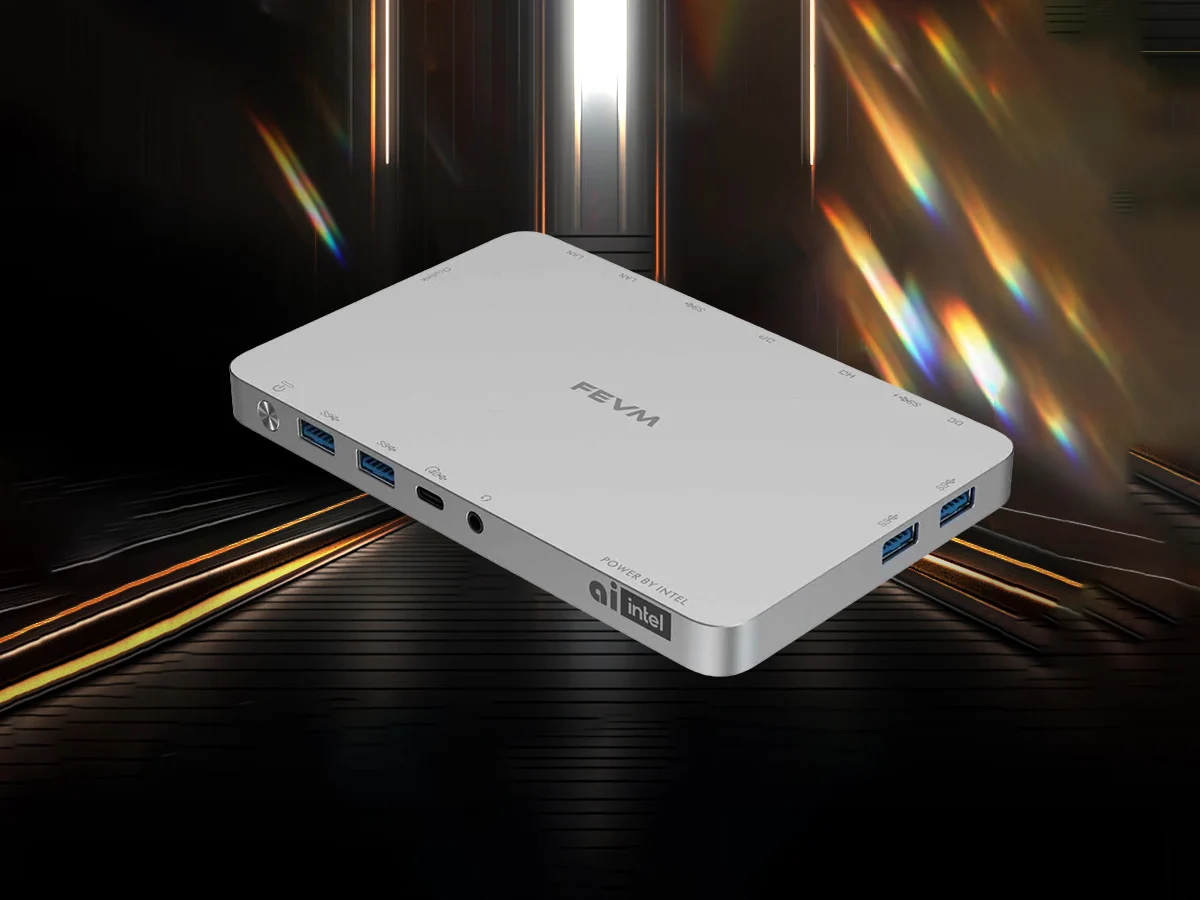
    FEVM is reportedly developing a new mini PC powered by Panther Lake. A recent leak from a well-known source, Huang514613, has revealed some early details about this device. The images shared indicate that the design closely resembles that of the Khadas Mind PCs.

    Design and Features

    The pictures depict an ultra-thin chassis, which seems to be only slightly thicker than a LAN port. Despite its small size, the FEVM mini PC boasts a good variety of ports, offering users flexibility in connectivity.

    Among these ports is the OCuLink, which is beneficial for anyone interested in setting up an eGPU with a compact mini PC like this one (Aoostar AG02 dock curr. $219 on Amazon). If the Panther Lake CPU is paired with the Intel Arc B390 integrated GPU, this system should handle most contemporary games at 1080p smoothly, even without an external graphics card.

    Storage and Performance

    According to Huang514613, the mini PC is equipped with three M.2 slots, ensuring that users can easily expand their storage. Additional key features from the leak include support for 100W power delivery, a dual-fan cooling system, and a performance mode with a thermal design power of up to 55W. While there is no confirmation on when it will be released, it’s important to note that FEVM’s global reach is limited, with many of its products being available only in China.

    Huang514613 on X

    Source:
    Link


  • Nintendo Sues US Government Over Trade Tariffs Impacting Switch 2 Pre-Orders

    Nintendo Sues US Government Over Trade Tariffs Impacting Switch 2 Pre-Orders

    Key Takeaways

    1. Nintendo of America is suing the U.S. Government over tariffs deemed “illegal” after a Supreme Court ruling invalidated these tariffs.
    2. The lawsuit aims to recover over $200 billion in tariffs collected from imports, which were enforced without proper authority.
    3. The case involves multiple key parties, including the U.S. Department of the Treasury and U.S. Customs and Border Protection.
    4. Judge Richard Eaton acknowledged the companies’ right to refunds, but Customs and Border Protection stated that processing these requests would take about six weeks.
    5. Nintendo claims the tariffs delayed the launch of the Switch 2 and increased costs, making them eligible for a full refund plus interest.


    Nintendo of America has joined a variety of states and many businesses in taking legal action against the United States Government over tariffs they describe as “illegal.” This move comes after a ruling from the US Supreme Court that invalidated these tariffs. Nintendo is the latest among a large group of over 1000 companies, which includes FedEx and Costco, alongside about two dozen states, all suing the government over previously set tariffs that were viewed as indiscriminate and harmful to multiple sectors.

    Lawsuit Details

    According to reports from Aftermath, Nintendo’s legal action mainly aims to recover funds for tariffs that were previously enforced, which the Supreme Court deemed unlawful. It was determined that President Trump did not have the authority to apply the International Emergency Economic Powers Act of 1977 for the purpose of enforcing this tariff system. The lawyers representing Nintendo stated, “This action concerns Defendants’ initiation and administration of unlawful trade measures that have, to date, resulted in the collection of more than $200 billion in tariffs on imports from nearly all countries.”

    Who’s Involved?

    The lawsuit identifies several key parties, including the U.S. Department of the Treasury, with Secretary of the Treasury Scott Bessent; the U.S. Department of Homeland Security, represented by former Secretary Kristi Noem; the Office of the United States Trade Representative and U.S. Trade Representative Jamieson Greer; U.S. Customs and Border Protection and Protection Commissioner Rodney Scott; and finally, the U.S. Department of Commerce, with Secretary Howard Lutnick.

    The U.S. Court of International Trade is the jurisdiction for these lawsuits, where Customs and Border Protection has informed a judge that it had gathered $166 billion in tariffs as of Wednesday, according to CNBC. Later during the week, Judge Richard Eaton sided with the companies, acknowledging their right to refunds; however, Customs and Border Protection stated in a filing that they could not immediately fulfill the refund requests. The Wall Street Journal reported that setting up a system to execute the judge’s decision would take about 6 weeks.

    Nintendo’s Claims

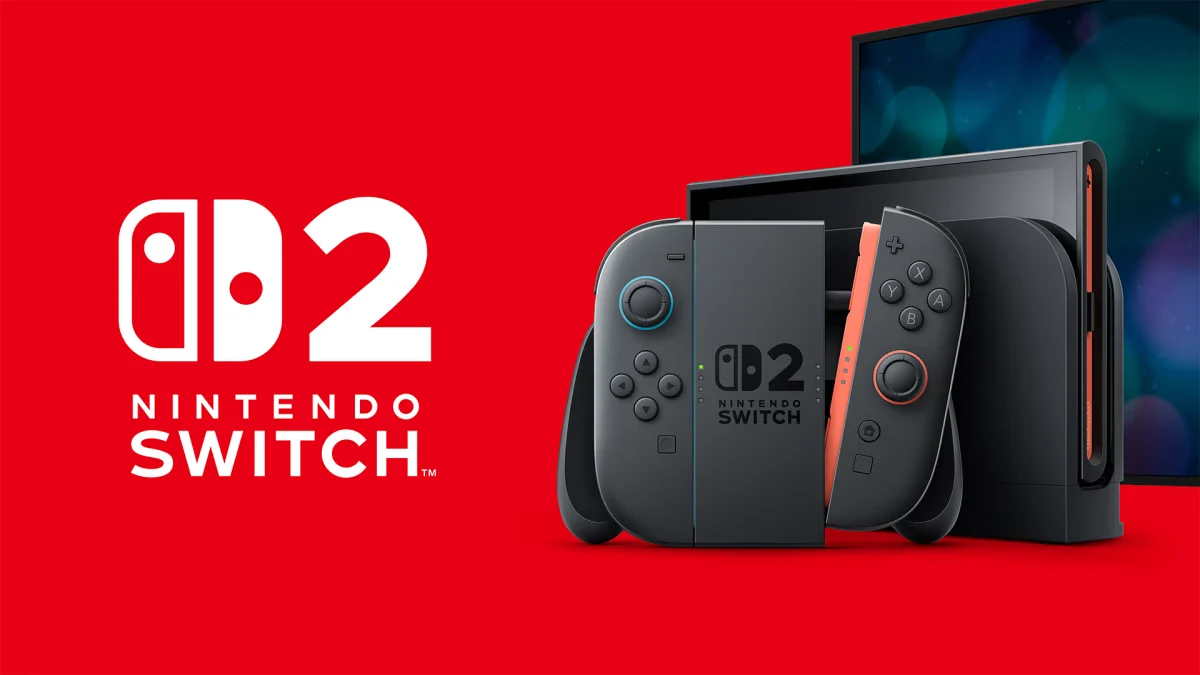
    Nintendo’s legal team argues that the “illegal” tariff system was “imposing tariffs on imports from a vast swath of countries.” They are demanding a full refund, plus interest, for the tariffs that the company has paid. The lawyers contend, “[Nintendo of America] has standing to sue because it is the importer of record for goods that were subject to IEEPA Duties.” The gaming giant pointed out that its products are manufactured abroad, and the timing of the tariff implementation unfortunately coincided with the launch preparations for the Switch 2. The tariffs not only delayed the release but also increased the costs associated with launching the handheld hybrid console, leading Nintendo to believe it deserves a refund and additional compensation.


    Source:
    Link


  • Samsung’s New Laptop: A Strong Competitor to Apple MacBook Pro 16

    Samsung’s New Laptop: A Strong Competitor to Apple MacBook Pro 16

    Key Takeaways

    1. Design Changes: The Galaxy Book6 Ultra features a new design inspired by the Apple MacBook Pro 16, with rounded corners and a large haptic trackpad, moving away from the traditional wedge shape.

    2. Build Quality: The aluminum body is high-quality, but the hinges could be sturdier, and the keyboard has shallow key travel, affecting the typing experience.

    3. Performance Specs: The laptop includes soldered RAM options up to 64 GB, supports two M.2-2280 SSDs, and features an impressive GeForce RTX 5070 with an Intel Panther Lake processor.

    4. Display and Battery: The OLED display is not as bright as the MacBook Pro’s Mini-LED screen, but it offers a touchscreen. Battery life is competitive, despite having a smaller battery than Apple’s model.

    5. Sound Quality: The sound system on the Galaxy Book6 Ultra is notably good, enhancing the multimedia experience.


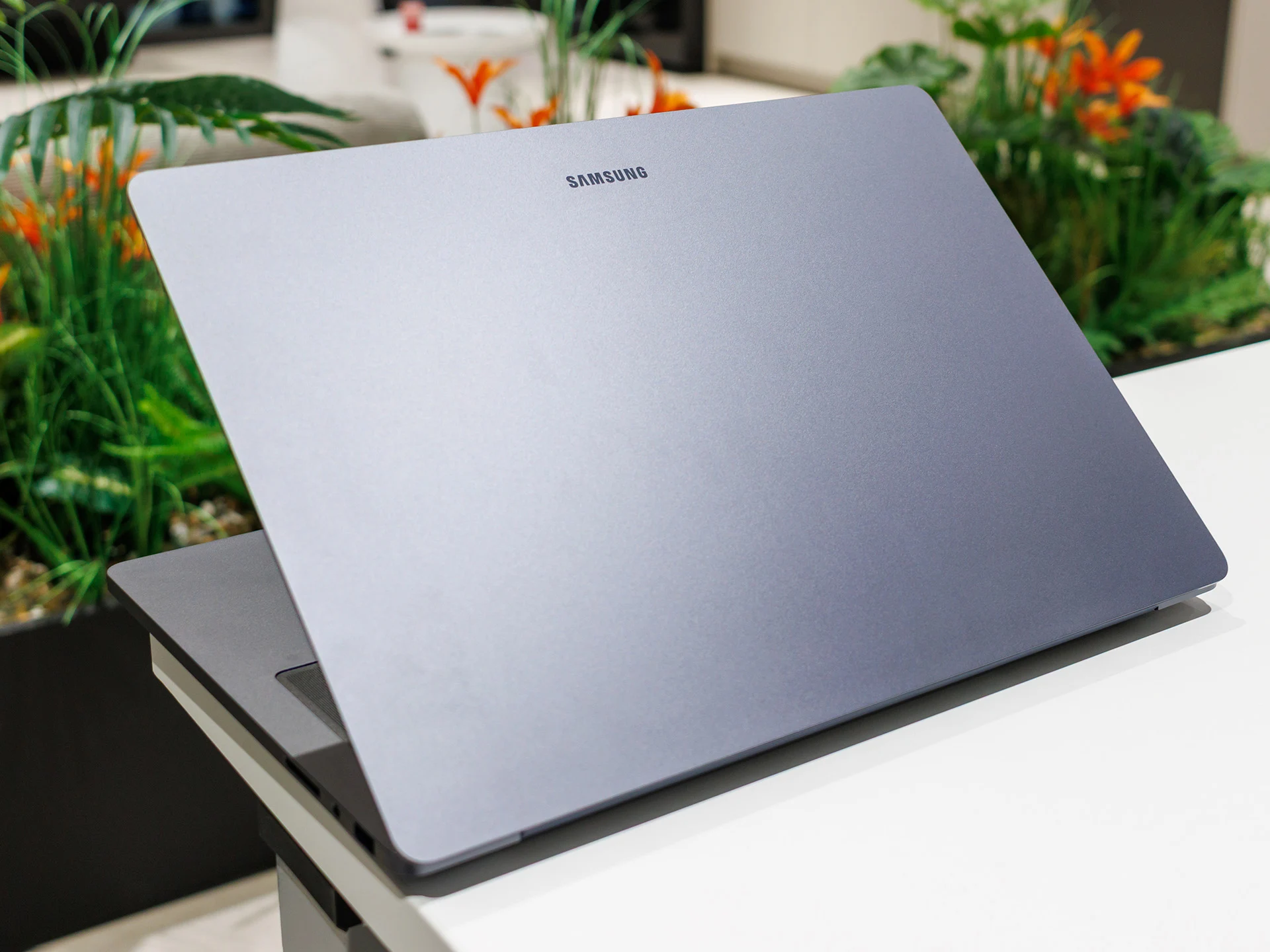
    The Galaxy Book6 Ultra is Samsung’s latest and fastest laptop for multimedia tasks. Unlike its predecessors, the company has moved away from the traditional wedge-shaped design that is still seen in other Galaxy Book6 models. Instead, Samsung seems to have taken a lot of inspiration from the Apple MacBook Pro 16, adopting features like rounded corners, a keyboard layout without a numpad, side speakers, and a large haptic trackpad. Because of these similarities, the Galaxy Book6 Ultra might be mistaken for a MacBook Pro, especially if the logos are removed.

    Build Quality and Design

    The aluminum body of the laptop is high-quality, though the hinges could use a little more stiffness to avoid any wobbling. The keyboard, however, leaves something to be desired due to its shallow key travel, which isn’t the best for typing. There are other options in the 16-inch multimedia laptop category that provide a better typing experience, such as the Asus ProArt P16 and Lenovo Yoga Pro 9i 16.

    Performance and Specifications

    Samsung has opted for soldered RAM, and it appears that certain markets will only have the option for models with 32 GB RAM (with a maximum of 64 GB). However, users can still add two M.2-2280 SSDs, which support PCIe 4.0. The performance of the GeForce RTX 5070 combined with the Intel Panther Lake processor is impressive, and the fan noise remains at a tolerable level. When it comes to brightness, the OLED display on the Galaxy Book6 Ultra does not quite match up to the brightness of the MacBook Pro’s Mini-LED screen, particularly in HDR. On the upside, Samsung does offer a touchscreen, which is not an option for the MacBook. The battery life is also quite competitive, even if its battery is smaller than Apple’s offering. Additionally, the sound system is notably good.

    In conclusion, the Galaxy Book6 Ultra is a strong contender in the multimedia laptop market, offering excellent performance but at a high price point.


  • Why the Steam Controller is the Best Gamepad for Gamers

    Why the Steam Controller is the Best Gamepad for Gamers

    Key Takeaways

    1. The upcoming Steam Controller 2 incorporates lessons learned from the Steam Deck and enhances features like dual analog sticks with TMR technology to prevent stick drift.
    2. Gyro aiming through touch on the new controller improves gameplay in titles like The Legend of Zelda: Breath of the Wild and various shooting games.
    3. The Steam Controller 2 is expected to be compatible with multiple platforms, including Valve’s own devices and potentially the upcoming Xbox, thanks to support for Steam Input.
    4. Initial reviews from outlets like IGN and Digital Foundry praise the Steam Controller 2 for its responsiveness and overall positive experience.
    5. The release date for the Steam Controller 2 is anticipated soon, following a recent tease from Valve about new hardware announcements.


    The original Steam Controller made its debut in 2015 and gained a following, including myself, but some critics pointed out that its dual touchpads weren’t always ideal for console games. With the introduction of the Steam Deck, which built on the features of the Steam Controller and Steam Input, this feedback was taken into account. The result was a device that offers complete controller support, along with the dual trackpads and four back buttons reminiscent of the first Steam Controller. Now, there’s buzz about a new version, often referred to as Steam Controller 2, set to launch this year. As someone who enjoys both mouse & keyboard and gamepad experiences across various games, I’m really looking forward to it.

    Building on Previous Successes

    The upcoming Steam Controller appears to incorporate everything learned from the Steam Deck. Nothing seems to have been lost in translation, and actually, even more enhancements have been made. The dual analog sticks are now designed to virtually eliminate stick drift due to TMR technology. As a person who developed an unexpected fondness for the 2015 Steam Controller thanks to a former roommate, this is exciting news. For those who missed out or didn’t grasp the reasons behind its popularity, I highly suggest checking out the Nerrel review, which also offers a gentle introduction to Steam Input and its role in motion controls for emulators.

    Advantages of Gyro Aim

    A standout feature of the Steam Deck update compared to the 2015 Steam Controller is the ability to activate gyro aiming solely through touch. This is beneficial for games where gyro input is essential or enhances the gaming experience, such as The Legend of Zelda: Breath of the Wild or any shooting titles. The support for easy motion controls through Steam Input is a real blessing. Among current consoles, only Xbox lacks built-in support for motion controls, while PlayStation games require manual activation and often have it disabled by developers. Since the days of Splatoon and the Wii’s IR sensor aiming, Nintendo has prioritized delivering a great gyro aiming experience in its games.

    Compatibility Beyond PC

    Interestingly, there are no strict limitations that confine the new Steam Controller to just PC hardware. At the very least, Valve’s own computers and the upcoming Xbox are expected to be fully compatible, including Steam Input. Furthermore, a lively market for controller adapters exists. If adapter manufacturers like Mayflash or Brook can maintain even basic XInput functionality, the 2026 Steam Controller could easily find its place in competitive gaming. Having reviewed multiple gamepads, I can appreciate how Valve’s controls stack up against first-party options, and I would be dishonest if I claimed the next Steam Controller doesn’t tempt me. However, I’m currently enamored with the Xbox Elite Series 2 controller’s adjustable stick tension and interchangeable sticks. There are always hardware modifications…

    Positive Early Reviews

    Initial feedback from writers who have had more access than I indicates that the high hopes for Steam Controller 2 are well-founded. Multiple outlets, including IGN and Digital Foundry, have reported that the controller offers a pleasant and responsive experience. If the D-Pad is at least as good as that on the Steam Deck, I know I’ll be convinced. The closest alternative to the Steam Controller we’ve seen since 2015 is the Wireless Horipad for Steam, which features touch-sensitive analog sticks—this carries over from Steam Deck for better gyro integration, although it lacks trackpads. Hopefully, Valve will soon reveal the release date for the 2026 Steam Controller, as a Steam Hardware announcement has been teased since Friday—more details on that below.

    Source:
    Link


  • NASA’s DART Probe Successfully Redirects Asteroid Dimorphos

    NASA’s DART Probe Successfully Redirects Asteroid Dimorphos

    Key Takeaways

    1. The DART spacecraft’s collision with Dimorphos changed its path and also affected the nearby asteroid Didymos.
    2. Observations show a small shift in the orbital cycle of Dimorphos and Didymos, which is significant over time.
    3. The impact from DART altered Dimorphos’s shape, increased its speed, and reduced its orbital period around Didymos by 33 minutes.
    4. There is no immediate threat to Earth from these changes; the mission highlights the importance of planetary defense.
    5. Future asteroid approaches, like 2024 YR4, are being monitored, with no expected collisions.


    In September 2022, the DART spacecraft collided with the asteroid Dimorphos to change its path. However, this mission not only affected Dimorphos but also altered the course of Didymos, a larger asteroid located close by.

    New Findings

    This information was shared in a study released in Science Advances. These two asteroids, which are 170 and 805 meters wide, are held together by gravitational forces. Recent observations indicate that their orbital cycle of 770 days around the Sun has shifted by a tiny fraction of a second. While this may appear trivial, even small changes can become significant over long periods.

    The Impact of DART

    When the DART spacecraft struck Dimorphos, it caused a cloud of rock and debris to be thrown into space. The shape of Dimorphos was altered, and its speed increased. Furthermore, its orbital period around Didymos, which used to be 12 hours, was reduced by 33 minutes.

    No Need to Panic

    Even though their paths have been changed, there’s no cause for alarm regarding Earth. This incident demonstrates that space missions like this one can be crucial if an asteroid poses a threat to our planet. For instance, the asteroid 2024 YR4 is expected to come close to the Moon in 2032, but it will not collide with it.

    Science Advances’

    Source:
    Link


  • Khadas Mind Graphics 2 eGPU Launches with Nvidia RTX 5060 Ti 16GB

    Khadas Mind Graphics 2 eGPU Launches with Nvidia RTX 5060 Ti 16GB

    Key Takeaways

    1. Launch of Mind Pro and Mind Graphics 2: Khadas introduced the Mind Pro powered by Panther Lake and the external GPU, Mind Graphics 2, at CES 2026.

    2. High Performance with Mind Link: The Mind Link interface allows Mind Graphics 2 to achieve PCIe 4.0 x8 performance, offering a maximum bandwidth of 31.51GBps, surpassing typical eGPU speeds.

    3. Compatibility Limitations: Mind Link is not widely available on most mini PCs or gaming setups, but the Mind Graphics 2 includes a USB4 port for broader compatibility at 40Gbps.

    4. Alternative Options: For devices without Mind Link support, using an OCuLink eGPU dock with the RTX 5060 Ti may be a better choice.

    5. Pricing: The Mind Graphics 2 is priced at $1,349, which is significantly higher than the standalone RTX 5060 Ti, but may be justified for systems using Mind Link due to enhanced performance capabilities.


    Khadas has launched the Mind Pro powered by Panther Lake at CES 2026, and with it, they also revealed the Mind Graphics 2. This external GPU features the desktop Nvidia RTX 5060 Ti with 16GB of memory. Utilizing the Mind Link, it promises to deliver native PCIe 4.0 x8 performance.

    Performance Comparison

    To give you an idea, PCIe 4.0 x8 can achieve a maximum bidirectional bandwidth of 31.51GBps or 252.08Gbps. In comparison, most eGPUs, including those using Thunderbolt 5 or USB4 v2, only reach up to 80Gbps. This indicates that the Mind Link could provide performance that is either close to native or fully native for GPUs.

    Compatibility Considerations

    It’s important to mention that Mind Link isn’t found on the majority of mini PCs or gaming setups. It is a unique solution created specifically for the Khadas Mind series, including the recently launched Mind Pro 2026. For systems lacking this interface, the Mind Graphics 2 does come equipped with USB4, which is limited to 40Gbps.

    Nonetheless, the presence of the USB4 port makes the eGPU compatible with a wide variety of mini PCs and gaming handheld devices. However, for devices that do not support the Mind Link, opting for an OCuLink eGPU dock with an RTX 5060 Ti might be a more sensible choice.

    Pricing Details

    Ultimately, the Mind Graphics 2 is priced significantly higher than the current cost of a desktop Nvidia RTX 5060 Ti 16GB (the MSI Ventus 2X is currently $569.99 on Amazon). Nevertheless, for systems that do utilize Mind Link, the price could be justified due to the increased bandwidth allowing for greater expansion options. To detail further, in addition to the USB4 port, the eGPU also includes other features.

    As for its price, the Mind Graphics 2 is available now for $1,349. Check out the images below for more insights into the eGPU.

    Source:
    Link


  • Xiaomi Redmi Pad 2: Affordable 9.7-Inch Tablet Launching Soon

    Xiaomi Redmi Pad 2: Affordable 9.7-Inch Tablet Launching Soon

    Key Takeaways

    1. Xiaomi is releasing a new tablet in the Redmi Pad series, called the Redmi Pad 2, featuring a 9.7-inch display.
    2. Three model numbers have been certified, likely indicating versions for global markets, China, and India.
    3. The new tablet will have both LTE and Wi-Fi-only models, with the Wi-Fi version possibly marketed as the Poco C Pad in some regions.
    4. The original Redmi Pad 2 has a quad-speaker setup, MediaTek Helio G100 Ultra chipset, an 8MP back camera, and a 5MP front camera.
    5. The Redmi Pad 2 includes a 9,000mAh battery with 18W wired charging and was priced at €199 in the Eurozone.


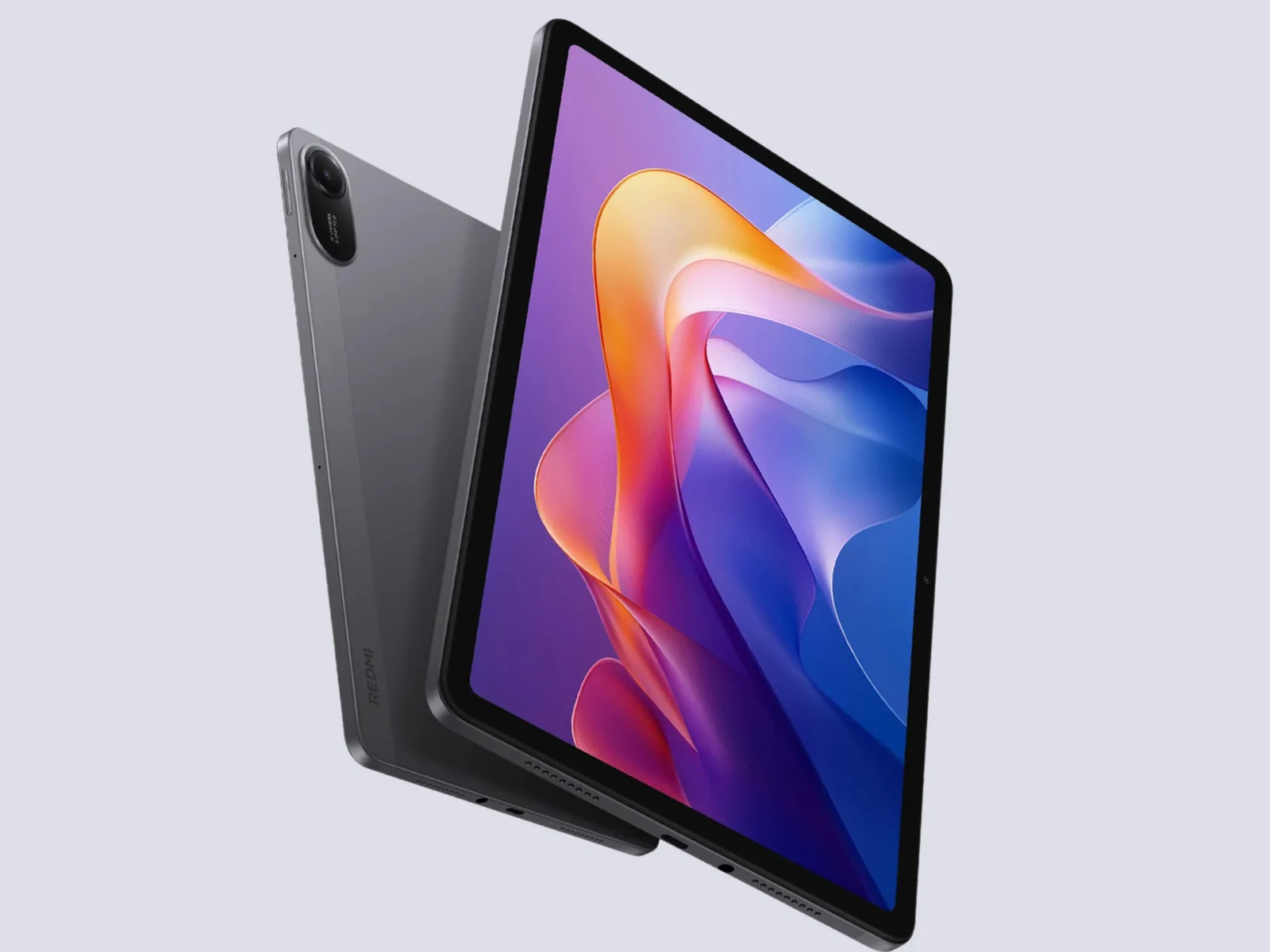
    Xiaomi is planning to add to its Redmi Pad series with a new tablet. The Redmi Pad 2, which came out in June 2025, features an 11-inch display. Recently, a fresh version of the Redmi Pad 2 has appeared in the GSMA database.

    Model Numbers Revealed

    This certification shows three model numbers: 2604ERP4DG, 2604ERP4DC, and 2604ERP4DI. These numbers likely indicate the versions for global markets, China, and India, respectively. However, the certification doesn’t provide any additional details, other than the fact that the tablet will have a 9.7-inch display.

    Variants Available

    As per XiaomiTime, this new tablet is set to come in both LTE and Wi-Fi-only models. Furthermore, the Wi-Fi version might be marketed as the Poco C Pad in certain regions.

    In our analysis of the 11-inch Redmi Pad 2, we considered it to be a reliable tablet thanks to its quad-speaker setup and a vibrant LCD. It was equipped with the MediaTek Helio G100 Ultra chipset built on a 6nm process. The device also housed a single 8MP camera on the back and a 5MP front camera.

    Battery and Pricing

    The tablet boasted a large 9,000mAh battery that supported 18W wired charging (20K Ugreen powerbank now at $29.98 on Amazon). The pricing for the Redmi Pad 2 was set at €199 in the Eurozone. In addition, Xiaomi has rolled out its top-tier Pad 8 series globally not too long ago.

    Source:
    Link