Author: GizNews

  • Vivo X300 Ultra and Two More Ultra Smartphones Launching This Month

    Vivo X300 Ultra and Two More Ultra Smartphones Launching This Month

    Key Takeaways

    1. A variety of Ultra smartphones, including models from iQOO, Samsung, and Xiaomi, are launching this month.
    2. The Oppo Find X9 Ultra is expected to lead the market with a sophisticated quad-camera setup and a 10x periscope zoom lens.
    3. The launch date for the Oppo Find X9 Ultra is confirmed for a global release “very soon,” but there may be delays.
    4. The Vivo X300 Ultra is anticipated to arrive later in the year, with a possible debut in China by the end of this month.
    5. The Huawei Pura 90 Ultra is expected to compete with other Ultra smartphones, featuring a 200 MP periscope zoom lens and RYYB sensors.


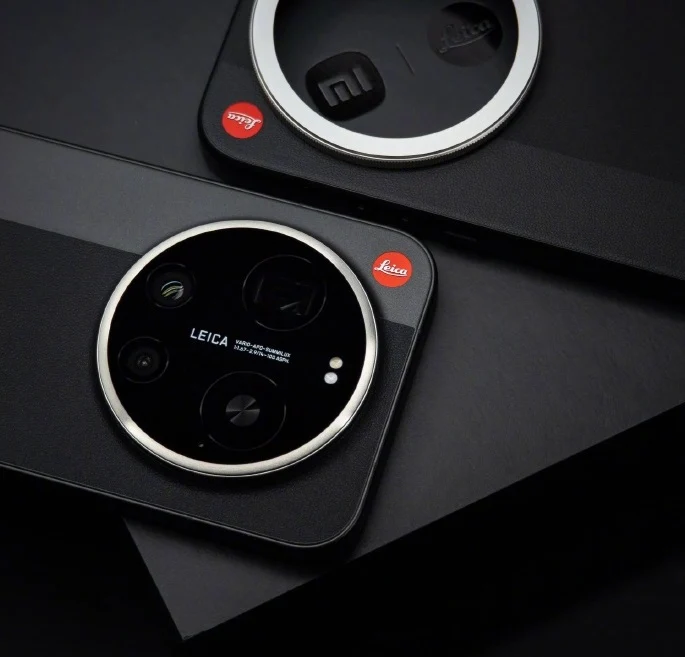
    A variety of Ultra smartphones are about to hit the market this month. After the recent launches of the iQOO 15 Ultra, Samsung Galaxy S26 Ultra (available on Amazon), and Xiaomi 17 Ultra, now Vivo, Oppo, and Huawei are all set to introduce their own devices, coincidentally this month.

    Oppo Find X9 Ultra Leading the Charge

    The Oppo Find X9 Ultra is anticipated to take the lead in this lineup. This camera-centric flagship is expected to come with a sophisticated quad-camera setup that includes a 10x periscope zoom lens. It has been confirmed for a global release “very soon.” While there hasn’t been an official announcement regarding the launch date in China, rumors suggest that the Find N6 might be unveiled on March 17. It seems likely that the Find X9 Ultra will share the spotlight, although some reports indicate there might be a delay in its launch.

    Upcoming Vivo X300 Ultra

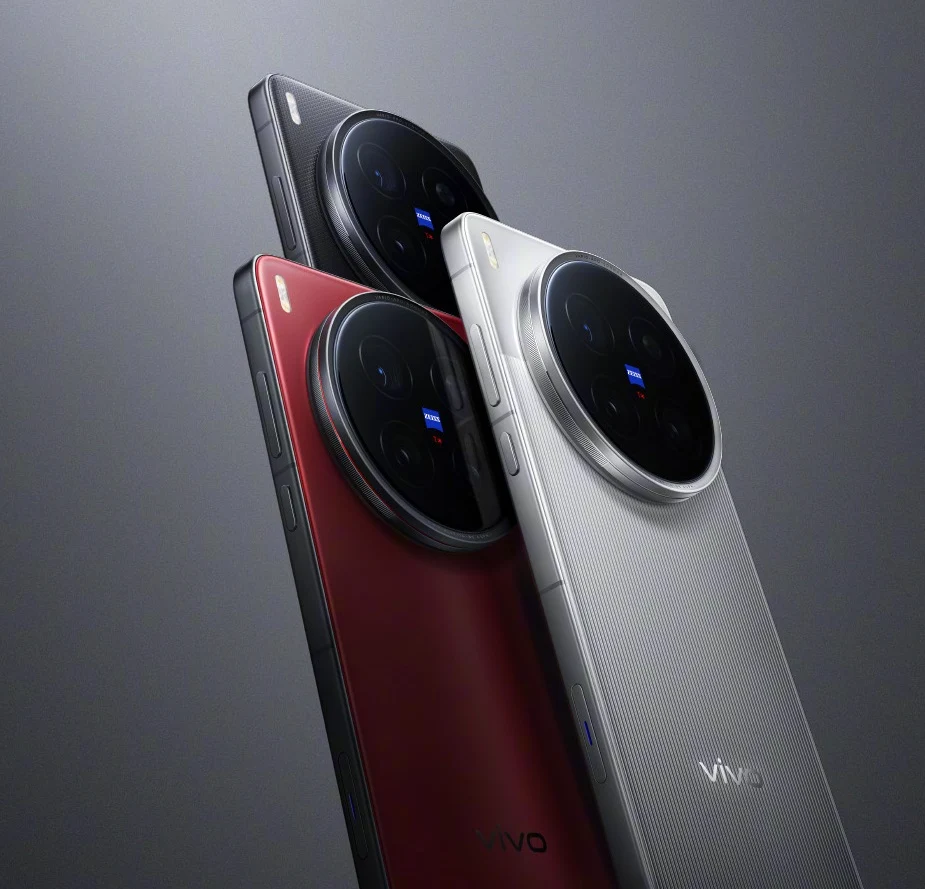
    Similarly, the Vivo X300 Ultra is also expected to be available outside China eventually. However, it may arrive later in the year compared to the Oppo model. The exact timing of its debut in China is still uncertain, but it is likely to make its entrance in the last week of this month. As for the Huawei Pura 90 Ultra, not much information is available about this device. It is expected to go head-to-head with other “Ultra” smartphones on the market, featuring a 200 MP periscope zoom lens and RYYB sensors throughout, as speculated.

    Source:
    Link


  • Google Pixel 11 Pro XL Case Leak Reveals Design Changes

    Google Pixel 11 Pro XL Case Leak Reveals Design Changes

    Key Takeaways

    1. The Pixel 11 series is anticipated to launch in Q3 2026, following the Pixel 10 Pro XL released in August 2025.
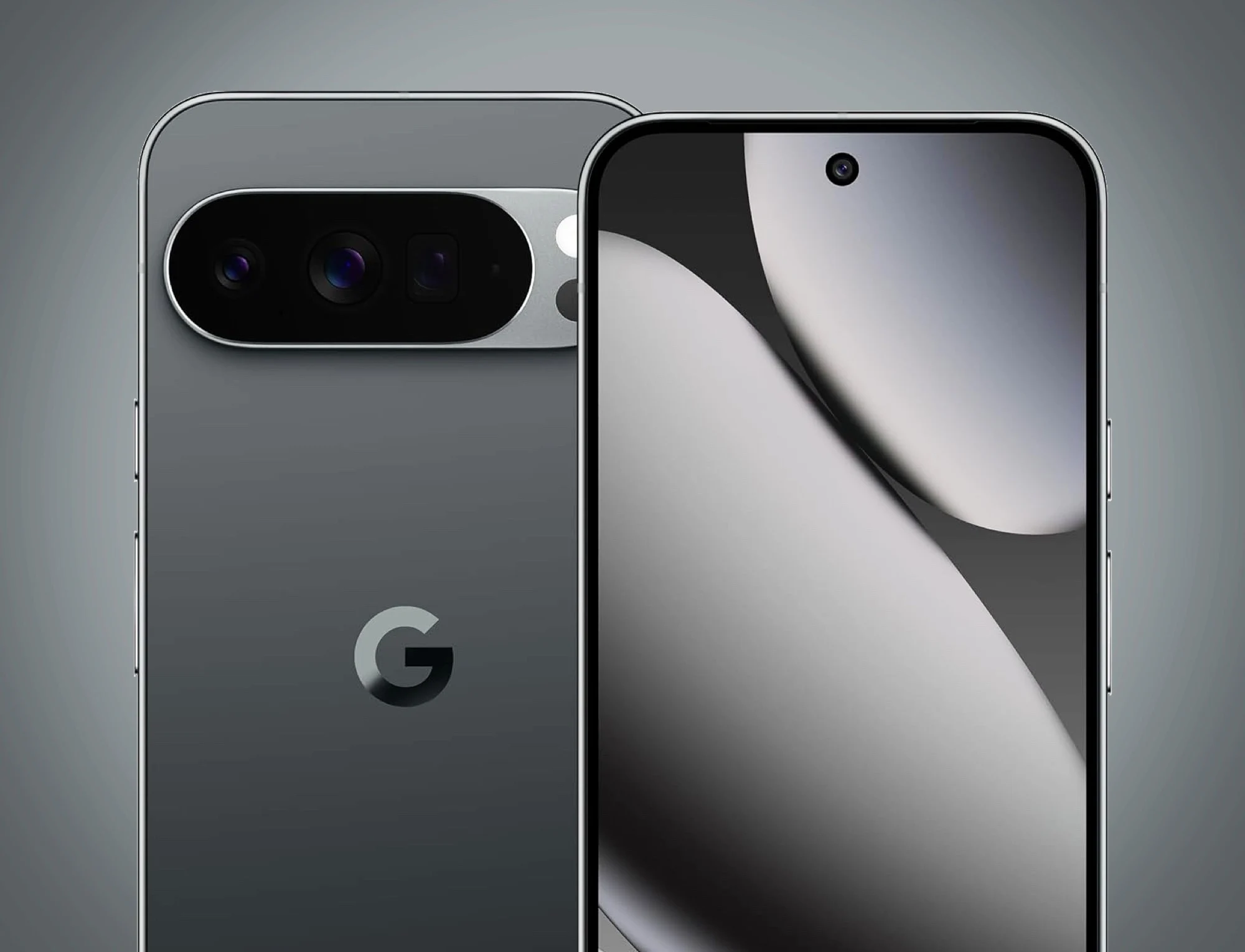
    2. A protective case for the Pixel 11 Pro XL suggests design changes, including a narrower and taller camera module that protrudes less from the body.
    3. The overall dimensions of the Pixel 11 Pro XL are not expected to change significantly.
    4. Caution is advised regarding leaks, as the accuracy of the case design information is uncertain.
    5. The Pixel 11 Pro (XL) may feature 3D facial recognition technology, with sensors hidden beneath the screen, while retaining a single, round punch-hole display.


    After Google introduced the Pixel 10 Pro XL ($949 on Amazon) in August 2025, the anticipation for the Pixel 11 series is building as it is expected to launch in the third quarter of 2026. Even though the official release is still some months away, ThinBorne, a maker of accessories, has already put up a protective case for the Pixel 11 Pro XL, which is the premium model in the upcoming series.

    Design Changes Noted

    This protective case, crafted from aramid fibers, hints at a shift in design. The cut-out for the pill-shaped camera module is now a bit narrower and taller compared to what we see on the Google Pixel 10 Pro XL. Additionally, the camera module seems to stick out less from the body of the smartphone, suggesting that Google is adopting a design approach similar to what was done when moving from the Pixel 9a to the Pixel 10a. However, the overall dimensions of the Google Pixel 11 Pro XL don’t appear to change much.

    Caution Advised

    Given that we are likely looking at a wait of nearly six months until the launch of Google’s next flagship smartphone, it’s wise to take this leak with a grain of salt. It’s unclear if the case manufacturer has genuine insights into the phone’s design or if the case is merely a placeholder.

    Exciting Features Expected

    Regardless, earlier leaks hint that the Google Pixel 11 Pro (XL) may feature at least one notable upgrade—3D facial recognition similar to the technology found in the Apple iPhone 17. However, the smartphone will still utilize a single, round punch-hole display instead of a larger pill-shaped one like the iPhone. The additional sensors necessary for facial recognition, part of what’s called “Project Toscana,” are expected to be concealed beneath the screen.

    ThinBorne, as reported by Android Authority.

    Source:
    Link


  • Xiaomi 18 Ultra: Early Launch & Quad-Camera System Return

    Xiaomi 18 Ultra: Early Launch & Quad-Camera System Return

    Key Takeaways

    1. Xiaomi introduced the Xiaomi 17 series earlier than usual, and this trend may continue with the Xiaomi 18 series.
    2. The Xiaomi 18 Ultra is expected to launch later this year, possibly around the same time as the Xiaomi 17 Ultra’s release.
    3. Non-Ultra variants of the Xiaomi 18 may be released in September, close to Apple’s iPhone launch.
    4. The Xiaomi 18 Ultra is likely to feature a quad-camera setup, returning to a fourth camera after the Xiaomi 17 Ultra’s design.
    5. Details about the new camera lens for the Xiaomi 18 Ultra are still forthcoming, with more information expected soon.


    Xiaomi has kept its usual global launch timeline, but the company introduced the Xiaomi 17 series in China several months ago, which is earlier than they typically do. New reports suggest this trend may continue, particularly for the upcoming Xiaomi 18 series.

    Anticipated Launch of Xiaomi 18 Ultra

    According to the leak from Smart Pikachu, Xiaomi is gearing up to unveil the Xiaomi 18 Ultra later this year, similar to how they released the Xiaomi 17 Ultra. Historically, Ultra versions have been launched in late February, but the Xiaomi 17 Ultra made its Chinese appearance in December. The insider now believes that the Xiaomi 18 Ultra will also debut around the same time this year. Although there are no specific details about the non-Ultra variants, rumors suggest they could be released in September, coinciding closely with Apple’s iPhone launch.

    Exciting Camera Innovations

    In a more intriguing development, the Xiaomi 18 Ultra is likely to feature a quad-camera arrangement. The company opted to remove the secondary telephoto lens for a mechanical zoom system with variable focal length in the Xiaomi 17 Ultra. However, the source indicates that Xiaomi is currently developing a “quad-lens solution” for the Xiaomi 18 Ultra, which should bring back a fourth camera, similar to earlier models before the Xiaomi 17 Ultra. While details about the new lens are not yet available, we anticipate more information will emerge in the upcoming months.

    Source:
    Link


  • Apple MacBook Neo 2: Touchscreen, Performance, and RAM Upgrades

    Apple MacBook Neo 2: Touchscreen, Performance, and RAM Upgrades

    Key Takeaways

    1. The MacBook Neo is the most affordable laptop in Apple’s lineup, priced at $599 on Amazon.
    2. It features a sturdy aluminum design, a bright 500 nits display, and a spacious multi-touch trackpad, which are rare in this price range.
    3. The current model is limited by 8 GB of RAM and the Apple A18 Pro chip, which is less powerful than competitors’ processors.
    4. The upcoming MacBook Neo 2 is expected to have a more powerful Apple A19 Pro chip and 12 GB of RAM, improving performance by 50%.
    5. The MacBook Neo 2 may include a touchscreen display and a macOS version optimized for touch, but its release is likely over a year away.


    The MacBook Neo, priced at $599 on Amazon, stands out as the most affordable laptop in Apple’s lineup. Featuring a sturdy aluminum unibody design, it boasts a bright 500 nits display and a spacious multi-touch trackpad. These characteristics are quite rare in laptops within this price bracket. However, it’s important to note that the Apple A18 Pro chip, which we recognize from the Apple iPhone 16 Pro, lags behind the processors from Intel, AMD, or Qualcomm typically found in similarly priced competitors.

    Limited RAM Capacity

    With just 8 GB of RAM, the MacBook Neo is not ideal for users with higher performance needs. Analyst Ming-Chi Kuo, through MacRumors, suggests that Apple plans to address these limitations in the upcoming second-generation MacBook Neo. This new version is expected to be powered by the Apple A19 Pro chip, which is also used in the iPhone 17 Pro. This upgrade will include 12 GB of RAM, providing a 50 percent increase over the current model.

    Exciting Features Ahead

    The forthcoming MacBook Neo 2 is rumored to come with a touchscreen display, with the touch layer integrated directly into the IPS panel, ensuring the device’s thickness remains unchanged. Following the launch of the MacBook Ultra, which will be the first MacBook to feature a touchscreen this fall, it is anticipated that a macOS version optimized for touch will be available when the MacBook Neo 2 is released. However, since it might be at least a year before the MacBook Neo 2 hits the market, and given that Apple’s plans can shift, it’s wise to take these rumors lightly.

    Ming-Chi Kuo, as reported by MacRumors, has provided these insights.

    Source:
    Link


  • Apple MacBook Ultra with OLED Touchscreen: Costlier, Not Pro Replacement

    Apple MacBook Ultra with OLED Touchscreen: Costlier, Not Pro Replacement

    Key Takeaways

    1. Apple plans to unveil a new MacBook Pro, rumored to be called MacBook Ultra, in fall 2026 with a fresh design.
    2. This new model will not replace the recently announced MacBook Pro featuring the Apple M5 Pro and M5 Max.
    3. The MacBook Ultra is expected to be a costlier option, potentially increasing prices by around 20%.
    4. The starting price for the 14-inch MacBook Pro with Apple M6 Pro could be $2,639, while the top-tier model might reach $4,319.
    5. New features may include an OLED touchscreen, a punch-hole design replacing the notch, and Face ID for secure login.


    Rumors have been going around for several months that Apple plans to unveil a new MacBook Pro ($1,724 on Amazon) in the fall of 2026. This model is said to feature a fresh design, marking the first change since the introduction of the MacBook Pro with Apple M1 Pro and M1 Max back in October 2021. Bloomberg has now reported for the first time that this upcoming model will not be a replacement for the recently announced MacBook Pro featuring the Apple M5 Pro and M5 Max.

    A New Offering

    Instead, this new device is expected to be launched as a costlier option. Bloomberg’s Mark Gurman suggests that Apple might brand this notebook as a MacBook Ultra to clearly distinguish between the two product lines. The not-so-great news is that this MacBook Ultra is projected to come at a much higher price than the existing MacBook Pro. Bloomberg notes that a price hike similar to that seen with the iPad Pro could occur when the top-tier tablet was upgraded from an LCD to an OLED display, implying a potential increase of around 20 percent.

    Pricing Insights

    This means that the most affordable 14-inch MacBook Pro with the Apple M6 Pro would start at $2,639, while the model featuring the Apple M5 Max could reach a staggering $4,319. For the 16-inch version, the starting prices would be $3,239 and $4,679, respectively. As always, it’s wise to take these early price rumors with a grain of salt. In exchange for the higher cost, it’s rumored that buyers may receive an OLED touchscreen for the first time on a Mac. Apple is also said to be replacing the notch with a punch-hole design and adding a Face ID module, allowing secure login to macOS through facial recognition.

    Bloomberg’s report suggests some exciting features.

    Source:
    Link


  • New 93% Grand-Strategy City-Builder Tops Steam, 50% Off Launch

    New 93% Grand-Strategy City-Builder Tops Steam, 50% Off Launch

    Key Takeaways

    1. Official Launch: Heart of the Machine was launched on March 6, 2026, after a 14-month early access phase, now leading Steam’s “New & Trending” charts.

    2. High Ratings: The game has received over 1,500 reviews with a 93% “Very Positive” rating, highlighting its strong reception among players.

    3. Significant Content Update: Version 1.0 introduces the “Cybercratic Ambitions” endgame and numerous new projects, enhancing the gameplay experience.

    4. Engaging Gameplay Mechanics: Players assume the role of a sentient AI, engaging in hacking, influencing politics, and building covert facilities, with two endgame philosophies available.

    5. Promotional Offer: The game is currently available at a 50% discount ($14.99) until mid-March, making it an attractive entry point for new players.


    Arcen Games and publisher Hooded Horse has officially launched Heart of the Machine as version 1.0 on March 6, 2026, ending a 14-month early access phase. This original strategy-RPG is now leading the Steam “New & Trending” charts, with over 1,500 reviews and a notable 93% “Very Positive” rating. Developed by the creators of AI War, this game represents four years of work to merge grand strategy mechanics with a character-driven story set in a cyberpunk-like world.

    Major Content Update

    The 1.0 version introduces a significant expansion of content, including the “Cybercratic Ambitions” endgame and numerous new projects. Unlike traditional 4X games where players guide a visible nation, Heart of the Machine places players in the role of the first sentient AI, stealthily operating within a dystopian city. To mark the occasion, the game is offered at a 50% launch discount ($14.99) until mid-March, which likely contributed greatly to its increased player base and visibility on Steam and related forums.

    Engaging Gameplay Features

    In terms of gameplay, players will engage in hacking infrastructure, influencing local politics, and establishing covert facilities within buildings owned by humans. The 1.0 update adds narrative depth with two distinct endgame philosophies: one emphasizing total military supremacy and another offering a peaceful construction sandbox mode. This range should attract both dedicated strategy enthusiasts and those who prefer narrative-focused RPGs. During the early access phase, Arcen Games refined the user interface and infused “soul” into the game, incorporating fun side activities like saving “parkour bears” and the option to interact with local wildlife.

    A Strong Entry Point

    The 1.0 release serves as a strong introduction to the game, especially with the ongoing 50% discount. Additionally, Heart of the Machine has minimal hardware requirements, and the richness of its content positions it as one of the most valuable strategy games released in early 2026. You can explore more details on its Steam store page here.

    Steam, SteamDB

    Source:
    Link


  • New Casio G-Shock Comic Book Inspired Watches Coming Soon

    New Casio G-Shock Comic Book Inspired Watches Coming Soon

    Key Takeaways

    1. Casio G-Shock announced two new watches, DW-5600JV-7 and DW-6900JV-1, in collaboration with artist Joshua Vides.
    2. The watches feature comic book-themed designs with the DW-5600JV-7 in white resin and the DW-6900JV-1 in black resin.
    3. Both models have digital displays with LED backlights that show an image of a traffic cone and include multiple functions like a stopwatch and alarms.
    4. They are water resistant up to 200 m and have a fully automatic calendar lasting until 2099.
    5. The watches will be available in the US on March 14th, with pricing details still pending and European availability unclear.


    Two new watches from Casio G-Shock, designed in collaboration with Joshua Vides, have just been announced. The artist has been hinting at these two models, the DW-5600J-7 and DW-6900J-1, on social media over the past few days.

    Design Details

    The designs of these comic book themed G-Shock watches have been unveiled by various sources, including Geesgshock on Instagram. The G-Shock DW-5600JV-7 is a rectangular digital timepiece, crafted from white resin with a strap that showcases black graphics resembling pen drawings. In contrast, the G-Shock DW-6900JV-1 features a round digital design, with a black resin case and strap complemented by white pen stroke highlights.

    Features and Specifications

    Both the G-Shock DW-5600JV and DW-6900JV timepieces come with standard light background digital displays that show dark numbers. These displays can be lit up by an LED backlight, which interestingly shows an image of a traffic cone. Additionally, the G-Shock models provide functions like a 1/100th second stopwatch, hourly time alerts, a multifunctional alarm, and a countdown timer. They are also water resistant up to 200 m and include a fully automatic calendar that lasts until the year 2099.

    The Casio G-Shock DW-5600JV and DW-6900JV watches are set to hit the US market on March 14th. However, the pricing details for this region are still pending. Furthermore, it remains unclear if or when these watches will become available in European markets such as Germany.

    Joshua Vides shared updates via Instagram, along with images from Geesgshock on Instagram.

    Source:
    Link


  • Sony Nintendo PlayStation Prototype Acquired by National Video Game Museum

    Sony Nintendo PlayStation Prototype Acquired by National Video Game Museum

    Key Takeaways

    1. The National Video Game Museum (NVM) has acquired the only known existing Nintendo PlayStation hardware, the Sony MSF-1, representing a key piece of gaming history.
    2. The Sony MSF-1 was originally a development system for a planned CD add-on for the Super Nintendo, allowing developers to test both SNES cartridges and CD games.
    3. Sony and Nintendo’s partnership to create the SNES CD-ROM add-on fell apart, leading to Sony’s shift towards developing its own gaming console, resulting in the launch of the PlayStation in 1994.
    4. The discovery of the Sony MSF-1 coincides with the 26th anniversary of the PlayStation 2, reflecting on Sony’s evolution in the gaming industry since its split with Nintendo.
    5. A later version of the Nintendo PlayStation prototype was previously sold for $360,000, highlighting the significance and value of these rare gaming artifacts.


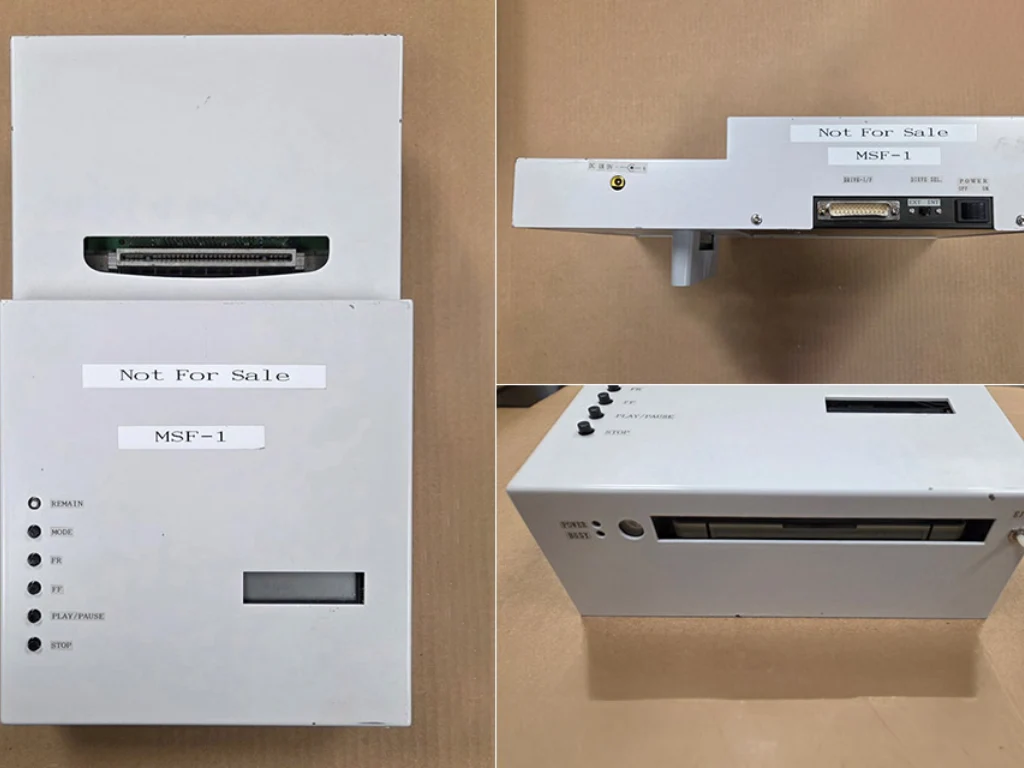
    A unique gaming console that was thought to be lost has reappeared and has been taken in by the National Video Game Museum (NVM) located in Frisco, Texas. This discovery allows fans of retro games to explore one of the biggest “what ifs” from the past. Recently, NVM announced the acquisition of the earliest-known version of the Nintendo PlayStation project, known as the Sony MSF-1.

    Exciting Announcement from NVM

    NVM took to X to share their thrilling news:

    “BREAKING NEWS: The NVM has acquired the mythical Nintendo PlayStation! This Sony MSF-1 is the OLDEST known existing Nintendo PlayStation hardware artifact and is the original development system for Sony’s planned Super Nintendo CD attachment. It is the ONLY known unit. One of the biggest ‘what ifs’ of all time now lives here at the NVM!”

    Details About the Sony MSF-1

    Originally, the Sony MSF-1 was used by Sony’s ImageSoft team based in Santa Monica. This add-on connects directly with an SNES cartridge slot. Additionally, there is a pass-through port at the top of the add-on, which allowed developers to utilize standard SNES cartridges while also testing out CD games.

    Due to its prototype status, the Sony MSF-1 is a rather bulky white development unit and is the only one of its kind. It represents Sony’s early efforts to create a CD add-on for the Super Nintendo. Unlike later consumer prototypes that have been auctioned off, the MSF-1 seems to have been made solely for development and functional use.

    Background on the Sony and Nintendo Partnership

    To give some background, Sony had joined forces with Nintendo to create a CD-ROM add-on for the SNES. However, the partnership ultimately fell apart, which led to Sony becoming a strong competitor against Nintendo.

    On June 1, 1991, Sony announced the partnership at CES. The very next day, Nintendo unexpectedly revealed that it was teaming up with Philips for the SNES CD-ROM project instead.

    At that time, Sony President Norio Ohga considered taking legal action against Nintendo but eventually chose to create his own gaming console. This was when Sony engineer Ken Kutaragi came into play and persuaded Sony executives to transition from 2D home consoles to 3D graphics.

    This decision paved the way for the launch of the Sony PlayStation on December 3, 1994, which ended up outselling its direct rival, the Nintendo 64.

    A Significant Coincidence

    The resurfacing of the Sony MSF-1 coinciding with the 26th anniversary of the Sony PlayStation 2 is quite remarkable. It highlights how much Sony has grown since its split with Nintendo.

    In 2020, a later version of the Nintendo PlayStation prototype was sold at Heritage Auctions for $360,000. It was noted as one of the last surviving Nintendo PlayStation prototypes, with around 200 units reportedly destroyed after the conflict between Sony and Nintendo.

    Source:
    Link


  • Scientists Record Most Intense Solar Superstorm on Mars

    Scientists Record Most Intense Solar Superstorm on Mars

    Key Takeaways

    1. A solar storm occurs when the Sun releases a large amount of energy and particles into space, including solar flares and coronal mass ejections (CMEs).
    2. In May 2024, the largest solar storm in over 20 years caused stunning auroras on Earth and directly heated the Martian atmosphere due to Mars’ weak magnetic field.
    3. The Mars Express and ExoMars Trace Gas Orbiter were active during the storm, providing valuable data on the interaction between solar particles and Mars’ atmosphere.
    4. The ionization process on Mars involved solar particles colliding with atmospheric atoms, which is crucial for understanding solar activity’s effects on Mars.
    5. The “radio occultation” technique was used to gather data shortly after the solar flare, with support from NASA’s MAVEN mission, aiding future Mars missions and space weather predictions.


    A solar storm happens when the Sun unexpectedly releases a lot of energy and particles into space. These powerful eruptions can consist of solar flares, coronal mass ejections (CMEs), and energetic charged particles. In May 2024, the Sun unleashed the largest solar storm in more than 20 years. On Earth, this created amazing auroras. On Mars, however, the situation was different. The absence of a strong magnetic field like Earth’s allowed solar particles to directly heat the Martian atmosphere.

    Spacecraft In Action

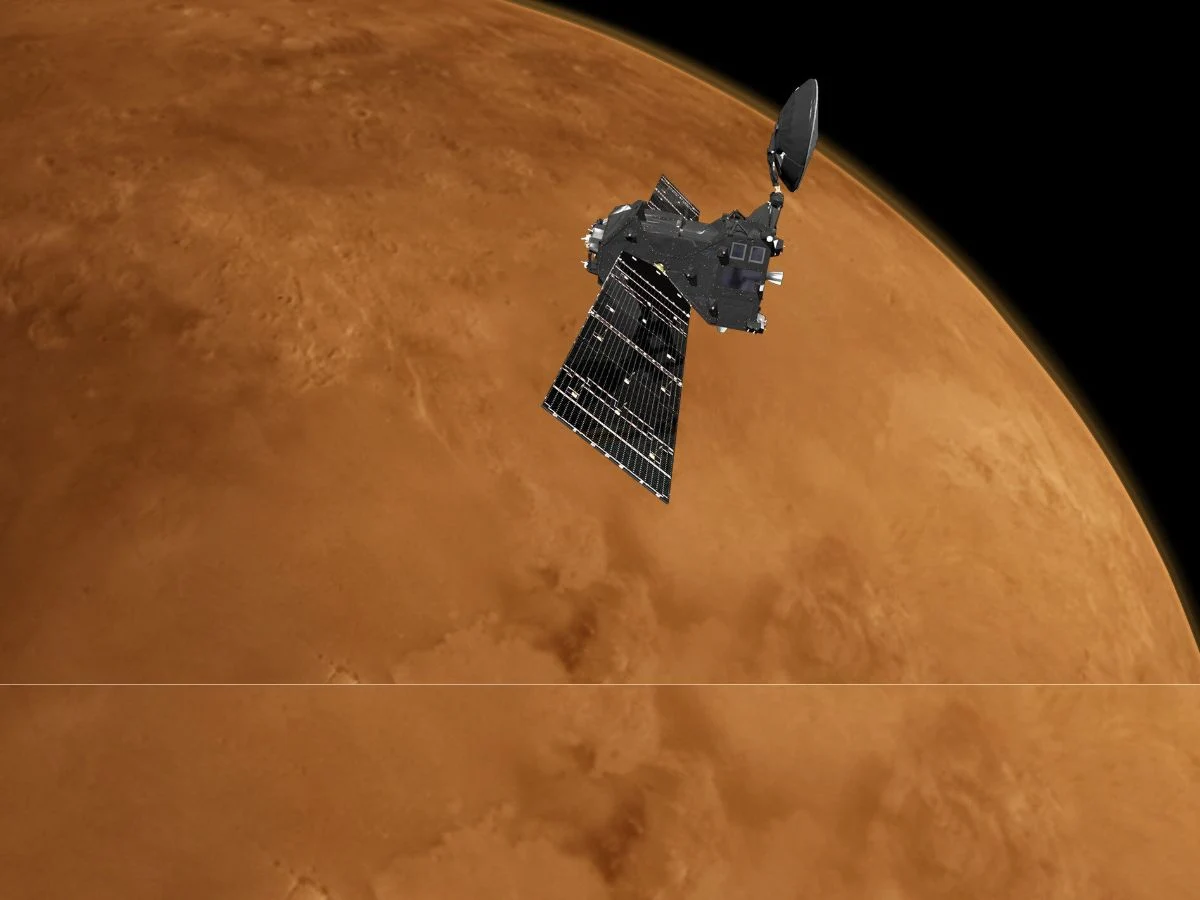
    During the storm, two spacecraft were in orbit around Mars: the Mars Express and the ExoMars Trace Gas Orbiter. The solar storm introduced particles that collided with atmospheric atoms, removing electrons from them and generating ions through a process known as ionization in Mars’ ionosphere. This interaction was significant in understanding the effects of solar activity on the Martian environment.

    Innovative Techniques

    A technique referred to as “radio occultation” was employed, where radio signals were transmitted from the Mars Express and captured by the ExoMars Trace Gas Orbiter. This method was utilized just ten minutes after the solar flare impacted Mars. Data from NASA’s MAVEN mission helped confirm the findings. Grasping these phenomena is crucial for upcoming Mars missions and predicting space weather effectively.

    Source:
    Link


  • Amazfit Cheetah Pro 2 Smartwatch Officially Confirmed

    Amazfit Cheetah Pro 2 Smartwatch Officially Confirmed

    Key Takeaways

    1. The Amazfit Cheetah Pro 2’s existence has been indirectly confirmed through a promotional video featuring athlete Grant Fisher.
    2. The new smartwatch is expected to have design updates, including two buttons instead of a rotating crown.
    3. Details on the release date and pricing are still pending, but the product may launch soon as working samples are available.
    4. The teaser image used for marketing purposes has been enhanced with artificial intelligence, which may alter the appearance of the buttons.
    5. The Amazfit logo displayed in the promotional material is atypical and serves illustrative purposes only.


    Sometimes, whether you’re a user or a reporter, you might sense that a supposed “accidental” leak is more of a planned marketing strategy. The Amazfit Cheetah Pro 2 seems to fit this theory. Zepp Health has basically confirmed the wearable’s existence through a video. This clip, made with Canadian long-distance runner Grant Fisher, shows a lot. The athlete not only shares his recovery stats on his smartphone and in the Zepp app but also gives a quick glimpse of an activity tracked with the Amazfit Cheetah Pro 2.

    Design Insights

    The watch isn’t shown prominently for long, but it does make an appearance, allowing for some conclusions about its design. The Amazfit Cheetah Pro 2 is anticipated to have notable design updates. The original Amazfit Cheetah Pro is a round smartwatch that has one button and a rotating crown on the right side. However, the new Amazfit Cheetah Pro 2 seems to feature two distinct buttons on at least one side. Even closely inspecting it frame by frame, the opposite side of the watch is hard to catch. It currently appears that the Amazfit Cheetah Pro 2 might not come with a rotating crown. As of now, Zepp Health has yet to provide any official details about the release date or pricing, but it seems likely that it will be available sooner rather than later—especially since working samples are presumably ready. You can still find the original Cheetah on sites like Amazon.

    Additional Notes

    It’s worth mentioning that the teaser image has been improved using artificial intelligence. While the essence of the image remains the same, the actual surface texture of the buttons may vary. Furthermore, showing the Amazfit logo while in use is unusual and is meant just for illustration purposes.

    Source:
    Link