Author: GizNews

  • 8BitDo Retro Cube 2 Speaker – N Edition Now Available Everywhere

    8BitDo Retro Cube 2 Speaker – N Edition Now Available Everywhere

    Key Takeaways

    1. The 8BitDo Retro Cube 2 Speaker – N Edition commemorates the 40th anniversary of the Nintendo Entertainment System and is a successor to the original Retro Cube Speaker from 2016.

    2. It became available for purchase on both the 8BitDo eShop and Amazon, expanding customer access.

    3. The speaker is priced at $49.99 and features a unique design, Bluetooth 5.3, and a built-in microphone, making it versatile for various uses.

    4. It includes two 5W speakers and supports stereo sound when paired with another Retro Cube 2 speaker, enhancing the audio experience.

    5. The device features a gaming mode for low-latency audio, a 2,000mAh battery with up to 30 hours of playback, and a wireless charging dock for convenience.


    In October 2025, 8BitDo introduced the Retro Cube 2 Speaker, which serves as the successor to their Retro Cube Speaker from 2016. This new speaker isn’t just a simple upgrade; it’s a special edition. It was launched as part of a select group of products designed to commemorate the 40th anniversary of the Nintendo Entertainment System, resulting in its full title being the 8BitDo Retro Cube 2 – N Edition.

    New Availability Options

    After its launch in December 2025, the 8BitDo Retro Cube 2 – N Edition was initially only available on 8BitDo’s eShop. However, 8BitDo has recently revealed that it can now be found on Amazon, broadening its purchase options for customers.

    Pricing and Features

    The 8BitDo Retro Cube 2 Speaker – N Edition is priced at $49.99 on Amazon, matching its price on the 8BitDo eShop. For this amount, customers receive a uniquely designed portable Bluetooth speaker packed with impressive features.

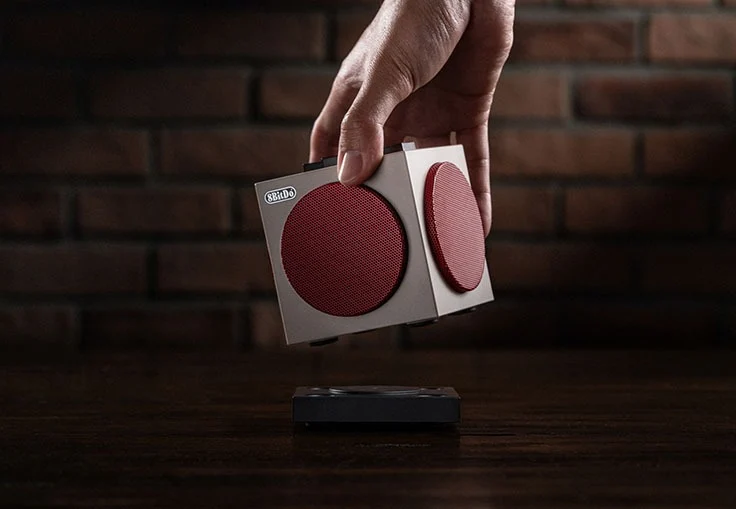
    At the top of the cube-shaped speaker are controls that are designed to resemble a game controller’s D-Pad. Inside, it houses two 5W speakers, allowing users to connect a second Retro Cube 2 speaker for an authentic stereo sound experience. The device is equipped with Bluetooth 5.3, includes a 2.4G Wi-Fi dongle, offers USB-C audio, and even has a built-in microphone, making it suitable for speakerphone use.

    Gaming Ready

    Given that the 8BitDo Retro Cube 2 Speaker – N Edition comes from a company recognized for its gaming accessories, it’s no wonder it features a gaming mode that provides low-latency audio.

    The portable speaker boasts a 2,000mAh battery, which the company claims can deliver up to 30 hours of playback time. It also includes a wireless charging dock, allowing users to avoid the hassle of dealing with a charging cable when the battery runs low.

    Source:
    Link



  • Next-Gen Smartwatches Powered by Body Heat with New Material

    Next-Gen Smartwatches Powered by Body Heat with New Material

    Key Takeaways

    1. Over 60% of the world’s energy is wasted as heat, and a new thermoelectric polymer can convert this heat into electricity without pollution.
    2. The polymer’s sponge-like design reduces heat loss by 72% by obstructing vibrations that carry heat.
    3. The porous structure encourages closer alignment of polymer molecules, improving electrical charge flow by at least 25%.
    4. The new material achieved a thermoelectric figure-of-merit of 1.64, surpassing previous records for polymers and flexible inorganic materials.
    5. The novel film can be produced on a large scale and at low cost using simple spray-coating methods.


    Over 60% of the world’s energy is wasted as heat. In an effort to capture this lost energy, a research team from the Institute of Chemistry at the Chinese Academy of Sciences has developed a very flexible material that can transform heat directly into electricity without causing pollution. Their findings, published in the journal Science, introduce a new irregular hierarchical-porous thermoelectric polymer that provides a constant power supply for wearable devices like smartwatches by utilizing differences in ambient temperatures, such as the heat from the human body.

    Efficient Conductivity and Heat Retention

    For these materials to be effective, they need to conduct electricity well while also keeping heat from escaping. Typically, flexible plastics find it hard to strike this balance. The researchers addressed this issue by mixing a polymer with a separating agent, which was later eliminated to form a network of randomly shaped, tiny holes on a microscopic and nanoscale level. This sponge-like design physically obstructs the tiny vibrations that usually transport heat through a solid, leading to a 72% reduction in heat loss.

    Improved Structural Alignment

    At the same time, the confined areas within the porous structure compel the polymer molecules to align much more closely and tidily than they typically would. This enhanced structural arrangement results in very efficient pathways for electrical charges to flow, increasing electrical mobility by at least 25%.

    The optimized film achieved a remarkable efficiency rating, known as a thermoelectric figure-of-merit, of 1.64 at around 70 degrees Celsius, successfully separating heat flow from electrical flow. This sets a new standard, exceeding the prior polymer record of 1.28 and even surpassing flexible inorganic materials. Unlike conventional high-performance materials that need complicated preparation, the researchers claim this novel film can be produced on a large scale and at a low cost using straightforward spray-coating methods similar to how a newspaper is printed.

    Source:
    Link


  • BYD Unveils Longest-Range EV and 3-Row SUV with Blade 2.0 Battery

    BYD Unveils Longest-Range EV and 3-Row SUV with Blade 2.0 Battery

    Key Takeaways

    1. BYD has launched its Blade Battery 2.0 technology, enabling the longest range electric vehicles (EVs) on the market.
    2. The Denza Z9 GT can achieve up to 1,036 km on a single charge, claiming a “world range record” based on the CLTC cycle.
    3. The Datang SUV, a premium 3-row family vehicle, can cover 950 km per charge and accelerates from 0 to 62 mph in 3.9 seconds.
    4. BYD’s 1000V architecture allows for megawatt flash charging, enabling quick recharge times, with the Z9 GT reaching 97% capacity in just over nine minutes.
    5. The pricing for the 2026 Z9 GT is set at $39,000, while the luxury Datang SUV is expected to start under $60,000.


    The largest electric vehicle manufacturer and the second-biggest battery producer in the world has revealed its latest iteration of the famous Blade battery system, along with the new electric vehicles (EVs) that it will support.

    Impressive Range Claims

    The 2026 lineup from BYD showcases some remarkable figures, as the Blade Battery 2.0 technology has enabled the creation of both the electric car with the longest range per charge and a full-sized SUV that boasts the same achievement.

    For this launch, BYD has selected its high-end Denza brand, known for introducing cutting-edge technologies such as “crab walking” to maneuver into compact spots, to present what it asserts is the EV with the longest range.

    The Denza Z9 GT Unveiled

    The refreshed Denza Z9 GT now features a rear-wheel drive (RWD) variant that stretches the limits of electric vehicle range. According to BYD, the Z9 GT can achieve an impressive 1,036 km on a single charge, which the company claims is a “world range record.” This distance is likely based on the CLTC cycle, which is more lenient than the EPA estimates in the United States that consider more highway driving.

    Initial tests for the Denza Z9 GT are expected to provide real-world numbers that can be compared with other range champions like NIO’s ET7, which utilizes a 150 kWh hybrid liquid-solid battery, or the Air Pure and Lucid’s innovative efficiency in the US market.

    The Datang SUV’s Specifications

    BYD also boasts another range record thanks to its advanced Blade Battery 2.0 energy density technology, this time for its first premium 3-row family SUV in the Dynasty series. The full-size Datang SUV measures 17 feet long and can accelerate from 0 to 62 mph in just 3.9 seconds, despite its size.

    The RWD model is said to cover 950 km on a single charge, based on the CLTC cycle, positioning it alongside the Lucid Gravity SUV’s 450 miles according to EPA standards. This specification will be put to the test in early summer when the Datang hits showrooms.

    Although these impressive range claims have yet to be verified through real-world driving tests, BYD has already secured another top specification concerning charging speed. Its 1000V architecture enables megawatt flash charging, allowing the substantial Blade 2.0 battery of the luxury SUV to be recharged for daily commuting in just five minutes. BYD is in the process of establishing the world’s largest megawatt charging network, featuring 1.5 MW T-shaped stations with a unique hanging cable design.

    Quick Charging for the Z9 GT

    The Z9 GT offers fast charging as well, reaching 97% capacity in just over nine minutes, leaving some room for the additional charge from regenerative braking. Despite its enhanced energy density and megawatt charging capabilities, the second-generation Blade battery is less expensive to produce. This has enabled BYD to set the price for the 2026 Z9 GT record holder at $39,000, while the luxury SUV is expected to start slightly under sixty thousand dollars when it arrives next quarter.

    Source:
    Link


  • New Analysis Reveals Most Likely Age of the Universe

    New Analysis Reveals Most Likely Age of the Universe

    Key Takeaways

    1. The Hubble tension is a major unresolved issue in modern cosmology regarding the rate of the universe’s expansion.
    2. Different measurement techniques yield conflicting results: local distance ladder measurements suggest a faster, younger universe, while cosmic microwave background studies indicate a slower, older universe.
    3. Astronomers analyzed stellar ages from the Gaia mission to provide a reliable estimate of the universe’s age.
    4. The most likely age of the universe is approximately 13.6 billion years, consistent with cosmic microwave background estimates.
    5. The Hubble tension persists due to uncertainties in stellar evolution models, age estimation methods, and chemical composition measurements, but future Gaia data may help resolve these issues.


    The Hubble tension represents one of the most significant unanswered questions in the field of modern cosmology. The Hubble constant is a figure that gauges how fast the universe is currently expanding, and it has been determined using various methods.

    Different Measurement Techniques

    One approach involves local distance ladder measurements, which look at nearby galaxies and utilize data suggesting that the universe is expanding at a quicker pace and is, therefore, younger. In contrast, another method examines the early universe by studying radiation from that period, known as the cosmic microwave background. This data implies that the universe expands at a slower rate and is older. This discrepancy between the two calculations has resulted in what is referred to as the Hubble tension.

    Insights from Stellar Ages

    Rather than directly measuring the expansion speed, astronomers chose to look into an existing database of stellar ages, which offers a more dependable view of the universe’s age. Information was gathered from the European Space Agency’s Gaia mission, which measures stellar parallax for precise distance calculation. The analysis focused on a catalog of over 200,000 stars in the Milky Way, selecting only data from the oldest and most trustworthy stars.

    Age Estimation Results

    The findings indicated that the most likely age of the cosmos is around 13.6 billion years. This figure aligns closely with the age estimated from the cosmic microwave background data. Despite this progress, the Hubble tension remains unresolved due to uncertainties concerning stellar evolution models, techniques for estimating age, and measurements of chemical composition. Future data releases from Gaia are expected to greatly diminish these uncertainties, allowing for a more accurate determination of the universe’s age.

    Source:
    Link


  • New Casio Edifice Mechanical Watches Launching Soon in the UK

    New Casio Edifice Mechanical Watches Launching Soon in the UK

    Key Takeaways

    1. The Casio Edifice EFK-110D watches will be released in the UK, with two variants available for £270 each: EFK-110D-1A (black dial) and EFK-110D-2A (blue dial).

    2. The launch date for these watches in EU countries is set for March 18th, with a retail price of €279.

    3. The EFK-110D watches feature a motorsport-inspired design, with a textured dial, sapphire crystal, and stainless steel casing and strap.

    4. They are powered by a Japanese automatic movement with a 42-hour power reserve and an accuracy range of -20 to +40 seconds daily.

    5. The watches are water resistant up to 100 meters and have a simple date display at the 3 o’clock position.


    The Casio Edifice EFK-110D watches are confirmed for release in the UK market. These mechanical timepieces were first introduced in February 2026, as an advancement from the EFK-100 series.

    Availability and Pricing

    On the Casio online store in the UK, the Edifice EFK-110D-1A (with a black dial) and EFK-110D-2A (featuring a blue dial) are currently marked as ‘Coming Soon’. Each will be priced at £270. Interested buyers can click the black “Available soon – sign up now” button found on the product page to join a mailing list for updates on the launch. However, it is puzzling that the third variant, the EFK-110D-7A (which has a white dial), has yet to appear on the site.

    Launch Date and Features

    These Casio Edifice EFK-110D watches are scheduled to debut in EU countries like Germany on March 18th, with a retail price of €279. Like other Edifice models, they take inspiration from motorsports, showcasing a textured dial, sapphire crystal, and a casing and strap made from stainless steel. The watch is characterized by its “sleek” design, with dimensions of 43 x 38 x 11.8 mm (approximately 1.69 x 1.50 x 0.46 inches), and it also features a transparent screw lock back.

    Movement and Specifications

    The Edifice EFK-110D is driven by an automatic movement crafted in Japan, boasting a 42-hour power reserve. The three analog hands are reported to maintain accuracy within a range of -20 to +40 seconds daily, and it includes a hacking function for the seconds hand. Additionally, there’s a simple date display located at the 3 o’clock position, and the watch is water resistant up to 100 meters. It remains uncertain whether or when these Casio Edifice EFK-110D watches will make their way to North America.

    Source:
    Link


  • Garmin Adds Security Feature to New Wearable in Latest Update

    Garmin Adds Security Feature to New Wearable in Latest Update

    Key Takeaways

    1. The Garmin Descent X50i has received a new software update (version 5.09) four months after the previous version (4.05).
    2. The update introduces a Passcode tool for added security, though it does not prevent dives from starting.
    3. Users can now see connection type details for paired devices, and pairing stability for the Descent S1 buoy has improved.
    4. The update supports Essential data fields on custom dive screens, allowing users to track metrics like depth and NDL time, and offers a customizable startup message.
    5. The rollout of the update has reached about 20% of users so far, with no specific timeline for full distribution.


    Garmin is once again updating its premium dive computer, the Descent X50i. Users of this device are currently getting the new system software version 5.09, which comes about four months after the last update that was version 4.05.

    New Features and Improvements

    With the introduction of system software 5.09, the Descent X50i now includes the Passcode tool, a security feature that started being available to users in early 2025. This feature, however, does not stop a dive from beginning. Another notable update is the inclusion of connection type details for paired devices. Additionally, the pairing stability for the Descent S1 buoy, which currently priced at $2,080 on Amazon Marketplace, has improved.

    Enhanced Functionality

    The Garmin Descent X50i also now supports Essential data fields on custom dive screens. These fields cover metrics like current depth, stop depth, and NDL time. Users have the option to create a startup message that displays on the splash screen. Furthermore, you can now view the tank volume during the pre-dive check. This update also brings a series of bug fixes that address issues related to pool mode, SubWave messages, and the Dive log. The full release notes for system software 5.09 are available below.

    Update Rollout Status

    According to a post on a forum by Garmin, system software 5.09 has reached about 20% of users as of now. It remains uncertain when this update will be fully rolled out. To check for updates on the watch, users can navigate to PREV > Settings > System > Check for Updates, or use the Garmin Dive App or Garmin Express Software.

    Source:
    Link


  • Resident Evil Requiem PS5 Patch Disables Ray Tracing Downgrade

    Resident Evil Requiem PS5 Patch Disables Ray Tracing Downgrade

    Key Takeaways

    1. Digital Foundry praised the performance of Resident Evil Requiem on PS5 Pro but noted a decline in ray tracing quality after a March 4 patch.
    2. The update aimed to fix graphical issues but led to player dissatisfaction due to visual artifacts and a loss of realistic reflections in Raccoon City.
    3. John Linneman from Digital Foundry criticized the effectiveness of the new denoiser, suggesting it was inadequate for the open-world environment.
    4. Mixed player reactions emerged, with some appreciating the cleaner visuals while many lamented the loss of vibrant lighting and reflections.
    5. The impact of the update on the Steam version remains uncertain, with reports of lighting issues prompting some players to disable ray tracing.


    Digital Foundry has given high marks to the performance of Resident Evil Requiem on PS5 Pro in a recent review. Nevertheless, the once impressive ray tracing seems to have vanished in Raccoon City. A recent patch attempted to fix the noisy visuals, but the tech site sees this as a major step back.

    The Impact of the March 4th Update

    Players started to notice the alterations after Capcom released an update on March 4. This patch was meant to resolve various graphical issues across several platforms. Ray traced global illumination (RTGI) can create lifelike reflections, but it may also bring about some unwanted effects. Gamers expressed their dissatisfaction with visual artifacts in certain locations, which hampered image sharpness.

    Insights from Digital Foundry

    In a podcast exclusive to Patreon, John Linneman from Digital Foundry discussed the changes in Resident Evil Requiem. He mentioned that a denoiser was put in place to lessen the grainy effects that ray tracing can produce, particularly noticeable in Leon’s segments of Raccoon City. However, Linneman thinks that this post-processing solution isn’t sufficient for the challenging open-world settings, leading Capcom to react.

    Mixed Reactions from Players

    Sadly, both Linneman and many fans are not happy with the outcome. The streets in the PS5 Pro Enhanced version of the game now appear flat, missing the realistic reflections that once made them vibrant. The lighting effects previously brought energy to the otherwise lackluster city ambiance. Many users on Reddit share this view, with one user, Resevil67, commenting on how the “graphics took a big hit there compared to the Grace parts.”

    Conversely, some players are not as concerned about the update and appreciate the tidier visuals. Nonetheless, Digital Foundry contends that Capcom should have offered an option to disable ray tracing. The developers might have opted for a quick fix instead of tackling the more challenging task of improving the denoiser.

    Uncertain Effects on the Steam Version

    It’s still not clear how the update has impacted the Steam version, but there are claims of strange lighting issues. Some players have chosen to turn off ray tracing, hoping Capcom will implement enhancements in the future.

    For fans of RTGI, apart from Raccoon City, much of the survival horror experience remains intact. Plus, there are numerous benefits to the PS5 Pro Enhanced edition, with the improved PSSR still in operation. Resident Evil Requiem is the first title on the console to utilize this upgraded upscaling, enhancing overall performance.

    Source:
    Link


  • Nubia Neo 5 Max: A Nostalgic Look at Classic Phablets

    Nubia Neo 5 Max: A Nostalgic Look at Classic Phablets

    Key Takeaways

    1. The Huawei Mate 20X gained a loyal fanbase despite being seen as a secondary option to the Mate 20 Pro upon its 2018 launch.
    2. Nubia’s Neo 5 Max features a massive 7.5-inch screen, making it the largest smartphone available, designed specifically for gamers.
    3. The Neo 5 Max has mid-range specifications with a Dimensity 7080 chip, 7,100 mAh battery, 8 GB RAM, and 256 GB storage, highlighting its budget-friendly nature.
    4. There is a potential gap in the market for large flagship smartphones, as upcoming models from other brands suggest a growing interest in larger devices.
    5. Compact flagships are experiencing a decline globally, while larger phablets may see a revival in popularity, especially in China.


    It’s not hard for us to see how popular a device is among people, and the Huawei Mate 20X was surprisingly popular when it launched in 2018. Even though it seemed like a secondary option compared to the top-tier Mate 20 Pro, the Mate 20X still built a loyal fanbase. Now, after eight years, a sort of successor might finally be on the scene.

    Nubia’s New Release

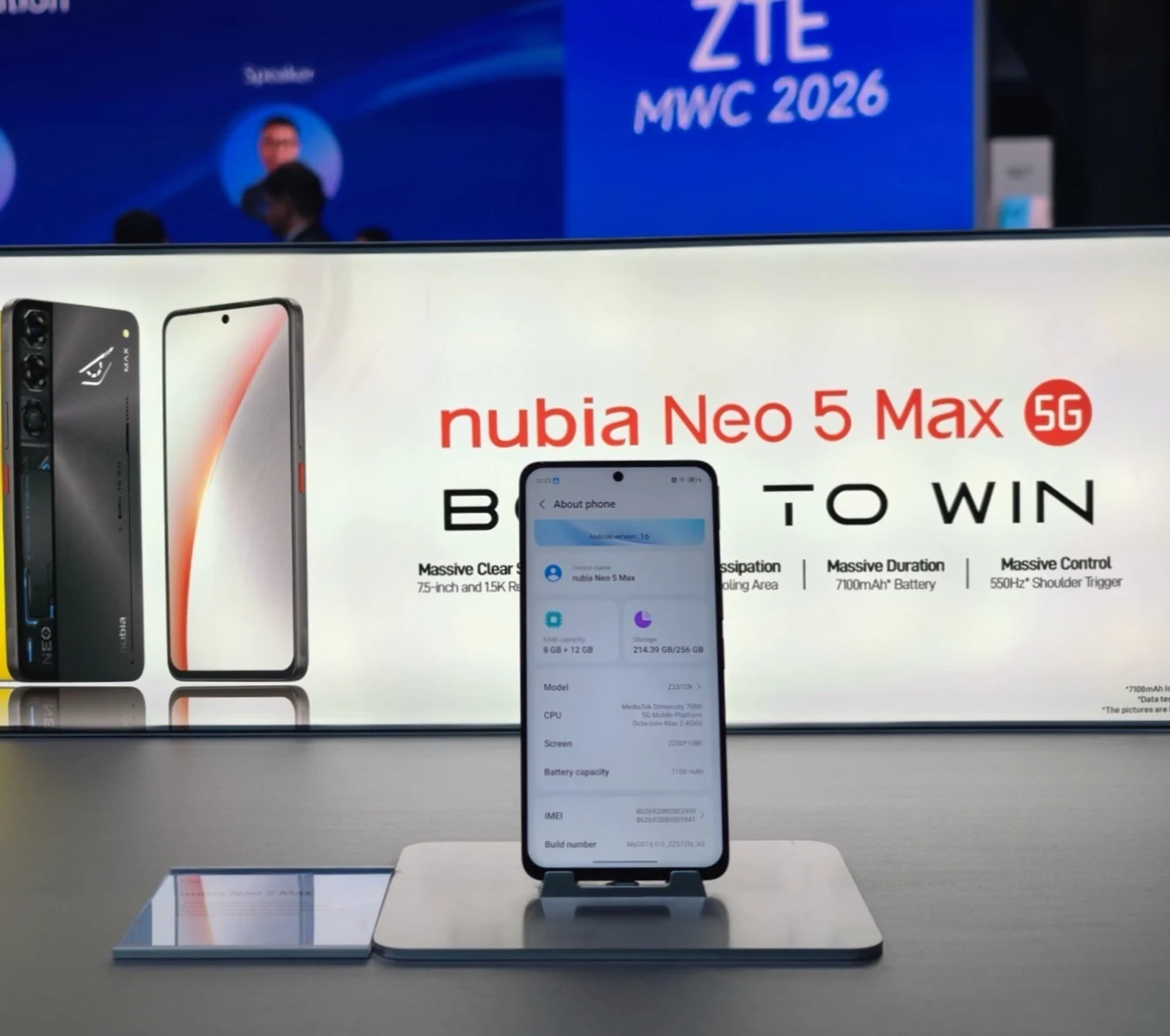
    Nubia has just unveiled the Neo 5 Max, a new smartphone aimed at gamers. The “Max” label is no joke, since the Neo 5 Max showcases a huge 7.5-inch screen, making it the largest smartphone on the world stage. Although companies like Oukitel and Cubot also produce large phones, they are primarily available in China and generally have inferior hardware compared to the Nubia Neo 5 Max.

    Specifications and Performance

    The Neo 5 Max is more of an average offering, as we noted in our first report. While it’s meant to be a gaming phone, it runs on the upcoming mid-range Dimensity 7080 chip. Other features include a 7,100 mAh battery, 8 GB of RAM, 256 GB of storage, a 50 MP primary camera, and a 3x optical zoom lens. Active cooling and shoulder triggers highlight the Neo 5 Max’s gaming focus.

    In contrast to the Mate 20X, which aimed to be a true premium device, the Neo 5 Max comes as a more budget-friendly choice, which is unfortunate. Generally, flagship devices max out around 6.9 inches, and some might say there’s a gap in the market for real large flagship phones. This might not just be wishful thinking: upcoming models like the Vivo X300 Max and Xiaomi 17 Max suggest that manufacturers are ready to roll out entry-level flagships in bigger sizes, simply to attract fans of larger devices.

    The Return of Compact Flagships

    On the flip side, compact flagships are making a comeback, at least in China. Global models like the Asus Zenfone, Sony Xperia 5, and Apple’s iPhone Mini have all been discontinued, likely due to poor sales. Perhaps the revival of phablets will perform better in the market.

  • Garmin Smartwatch Update Fixes Workout Bugs

    Garmin Smartwatch Update Fixes Workout Bugs

    Key Takeaways

    1. The Garmin Instinct 3 Solar, Instinct 3 AMOLED, Instinct E, and Instinct Crossover have received a software update to version 13.29.
    2. This update fixes a bug that caused crashes in the Interval Workouts feature on the Instinct 3 and similar models.
    3. It is uncertain if version 13.29 will be the last in the 13.xx update series, which started in February 2026.
    4. Previous updates in the series included new features like Treadmill Walk activity and Trucking tools support.
    5. The update is available for all affected smartwatch owners and can be installed via the Garmin Connect app or Garmin Express software.


    The Garmin Instinct 3 Solar, Instinct 3 AMOLED, Instinct E, and Instinct Crossover smartwatches have just received an important software update. The new system software version 13.29 comes shortly after the previous version 13.27/13.28, which addressed some issues with the Goal Alert feature and Gear Tracking.

    Update Fixes

    Similar to the beta version 13.29, this stable update fixes a bug that could lead to crashes in the Instinct 3 and similar smartwatches. The problem particularly impacted users who were utilizing the Interval Workouts feature.

    Future Updates

    It’s unclear if system software 13.29 will mark the end of the 13.xx update series. The first stable version in this line was released in mid-February 2026. This version included various enhancements for the Instinct smartwatches, such as a Treadmill Walk activity, new support for Trucking tools, and additional customization for the well-liked Morning Report option.

    Availability

    A Garmin representative recently shared on the Garmin Forum that System Software 13.29 is now accessible for all owners of the Instinct 3 Solar, Instinct 3 AMOLED (currently 45 mm priced at $449.99 on Amazon), Instinct E, and Instinct Crossover smartwatches. Users can easily install this update using the Garmin Connect app or Garmin Express software.

    Source:
    Link


  • Samsung Galaxy S26 Ultra Camera Upgrades vs iPhone 17 Pro

    Samsung Galaxy S26 Ultra Camera Upgrades vs iPhone 17 Pro

    Key Takeaways

    1. The Samsung Galaxy S26 Ultra retains the same camera setup as the Galaxy S25 Ultra, with four rear cameras including a 50 MP ultra-wide and a 10 MP telephoto lens.
    2. The main camera has been upgraded to 200 MP with a faster f/1.4 lens that allows 47% more light, improving low-light performance.
    3. The 50 MP periscope telephoto camera features a quicker f/2.9 lens, enhancing background highlights.
    4. Camera performance shows improvements in detail and low-light noise, with better skin tone accuracy compared to the S25 Ultra, but still lags behind the iPhone 17 Pro.
    5. Areas needing improvement include the autofocus system’s face detection and the quality of bokeh simulation, which can produce artifacts.


    The Samsung Galaxy S26 Ultra, priced at $1,299 on Amazon, mirrors its predecessor, the Galaxy S25 Ultra, with four rear cameras. It features a 50 MP f/1.9 ultra-wide camera with a 1/2.5 inch sensor and a 10 MP f/2.4 telephoto camera equipped with a 3x optical zoom and a small 1/3.94 inch sensor. These specifications remain unchanged from the earlier version.

    Enhanced Main Camera

    The standout feature is the 200 MP main camera, now sporting a faster f/1.4 lens, which, according to Samsung, allows 47% more light to hit the sensor compared to the last model. The 50 MP periscope telephoto camera also benefits from a quicker f/2.9 lens and incorporates a smaller ALoP module. This upgrade modifies the appearance of highlights in the background, making them round instead of square. However, it’s worth noting that the minimum focus distance has increased to 52 centimeters.

    Camera Performance Insights

    DxOMark tested the Galaxy S26 Ultra’s camera and observed notable enhancements in two specific areas. First, the 200 MP main camera captures more detailed images with reduced noise in low light, confirming that the faster lens indeed makes a difference. Second, the device records skin tones more accurately in dim conditions compared to the Galaxy S25 Ultra. Nevertheless, DxOMark points out that the Apple iPhone 17 Pro’s main camera outshines the Galaxy S26 Ultra by capturing even more detail and exhibiting less noise.

    Areas for Improvement

    Despite these advancements, DxOMark criticizes the autofocus system for not consistently detecting faces precisely, and notes that the bokeh simulation is not always perfect, leading to noticeable artifacts in some images.

    Source:
    Link