

Tag: MacBook Ultra

  • Apple MacBook Ultra: macOS 27 Touchscreen Support

    Apple MacBook Ultra: macOS 27 Touchscreen Support

    Key Takeaway

    – macOS 27 beta includes touchscreen support via Sidecar, adding credibility to MacBook touchscreen rumors.
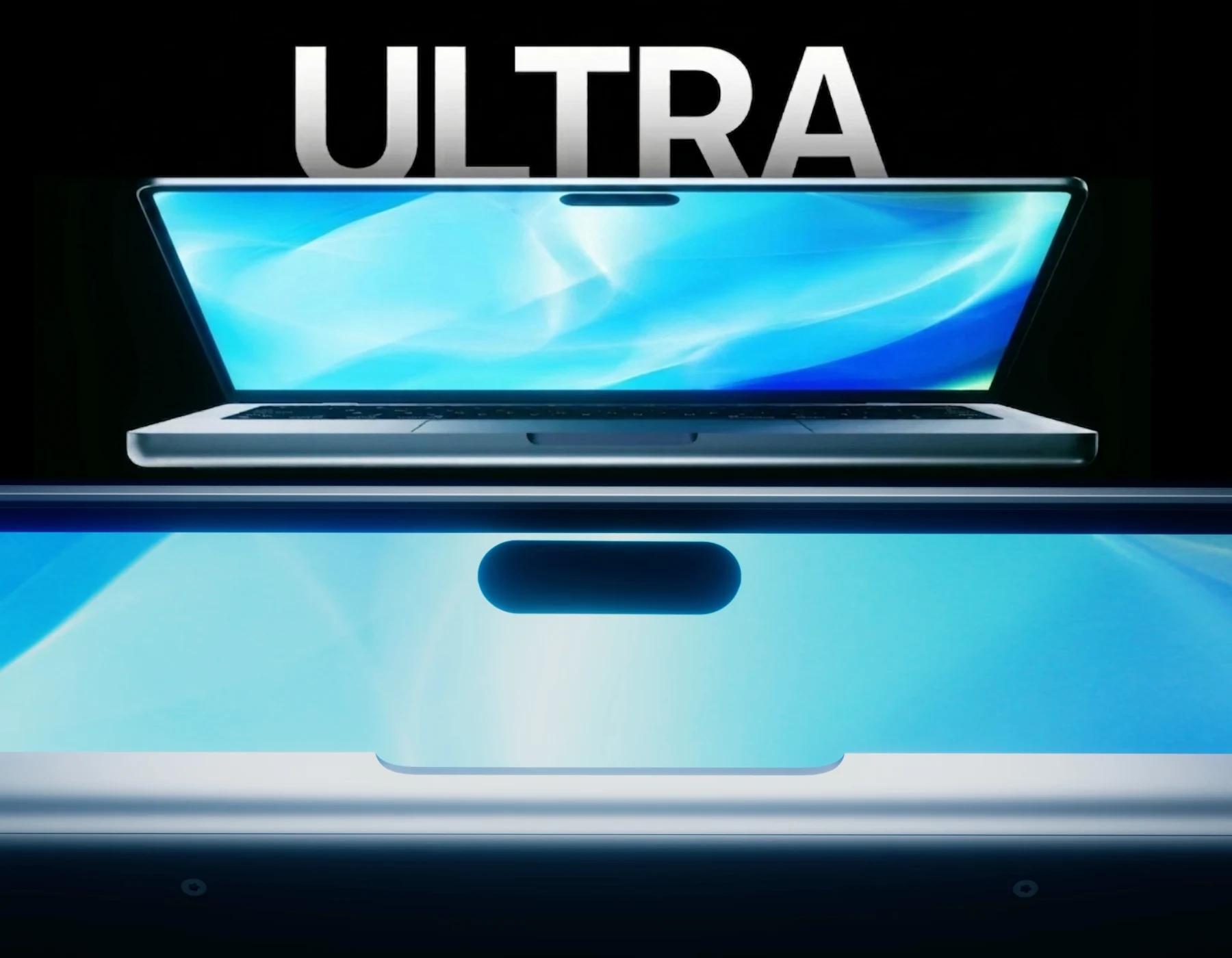
    – Rumored “MacBook Ultra” may feature a new design with OLED touchscreen, thinner body, and punch-hole/dynamic island.
    – Expected to launch with Apple M6 Pro or M6 Max chips, between September 2026 and spring 2027.
    – Touch gestures like pinch-to-zoom and hover replacement via finger movement are now supported in macOS 27.
    – Official Apple confirmation is still pending, but the evidence strengthens speculation of a higher-priced, next-gen MacBook Pro.


    Rumors have been circulating for many months according to which the next-generation MacBook Pro will have a new design and an OLED touchscreen, and will be marketed under the name “MacBook Ultra” – at a higher price than the current MacBook Pro. Apple has not yet officially commented on these rumors. However, the first beta version of macOS 27 already contains a reference to this touchscreen support.

    Sidecar and Touchscreen Functionality in macOS 27

    If an iPad is connected wirelessly to a Mac via Sidecar, it is possible to operate macOS 27 via the tablet’s touchscreen. In macOS 26, you still had to use a mouse or trackpad to do this. It is not only possible to scroll through lists and select menu items, but simple gestures such as pinch to zoom are also supported. To simplify the selection of items, the finger can be moved over a list to highlight menu items as a replacement for the hover function of the mouse pointer.

    Credibility and Specs of the MacBook Ultra

    Although this new feature is not a definitive confirmation that a MacBook with a touchscreen is actually planned, it does lend credibility to the rumors. The MacBook Ultra will be offered with either Apple M6 Pro or M6 Max. Rumors suggest that Apple will give the notebook a completely new design, featuring a thinner body and a punch-hole or dynamic island instead of a notch. The OLED touchscreen is to be offered with a diagonal of 14.3 inches or 16.3 inches. The launch is expected between September 2026 and spring 2027.
    Sources
  • Touchscreen MacBook Ultra: OLED sizes & release date leak

    Touchscreen MacBook Ultra: OLED sizes & release date leak

    Key Takeaway

    – MacBook Ultra likely launching in Q3 2026 with a potential September debut.
    – New 14.3-inch and 16.3-inch displays with reduced bezels, supplied by Samsung from July.
    – Hybrid OLED architecture (oxide TFT + RGB tandem) for improved power efficiency.
    – Complete redesign expected, including a thinner/lighter chassis and touchscreen.
    – Aim to maintain battery life while enabling the “Ultra” premium positioning.


    Major Display Changes on the Horizon

    Just days after the big launch of the Nvidia RTX Spark-powered Surface Laptop Ultra, a fresh industry report has shed new light on the highly anticipated MacBook Ultra, suggesting the radical overhaul to Apple’s high-end MacBook series may arrive sooner than initially projected. According to research firm Omdia, Samsung is scheduled to begin supplying display panels for the upcoming 14.3-inch and 16.3-inch MacBook models as early as July. Yes, apparently, the screens on the Ultra series might be getting a touch larger (perhaps due to a reduction in bezel size).

    Release Window and Timeline Shifts

    More significantly, the report explicitly states that the MacBook Ultra (and likely the new M6 MacBook Pro models) are expected to launch in Q3 2026. If accurate, this puts the MacBook Ultra on a trajectory for a potential September debut, possibly sharing the stage with the foldable iPhone Ultra and the iPhone 18 Pro. That timeline is quite abit earlier then many people predicted, which could put pressure on competing devices from other manufacturers.

    Advanced OLED Technology and Power Gains

    The Omdia report highlights that Apple is shifting to a sophisticated “hybrid OLED” architecture. By utilizing oxide TFT and RGB tandem OLED technology, Cupertino would be aiming to significantly optimize power efficiency. Jerry Kang, Practice Leader at Omdia, noted that this combination is specifically designed to lower power consumption compared to traditional LTPO or single-layer RGB OLEDs. Such power efficiency might be critical, as it would provide the foundation for Apple’s MacBook redesign goals, which (rumor has it) include making a thinner and lighter ultra-premium MacBook without sacrificing the industry-leading battery life that has defined the Apple Silicon era.

    Redesign Details and Touchscreen Rumors

    The new MacBook Ultra is expected to be more than just a component swap compared to the M5 MacBook Pro, which has used the same design since the launch of the original M1 Pro/M1 Max models. Several leaks have reiterated that a complete redesign for the MacBook Pro/Ultra is coming in late 2026. Reports from top analysts Ming-Chi Kuo and Bloomberg’s Mark Gurman indicate that the MacBook Ultra will do the unthinkable, and launch with a touchscreen panel. To maintain its “Ultra” positioning, and justify the inevitable price increase, the laptop is rumored to introduce more design changes, including:

    • A thinner chassis with reduced bezels for the 14.3-inch and 16.3-inch screens
    • Hybrid OLED display using oxide TFT and RGB tandem layers for lower power consumption
    • Touchscreen capability for the first time on a MacBook
    • Potential launch alongside the foldable iPhone Ultra and iPhone 18 Pro in September 2026
    Sources
  • Apple MacBook Ultra with OLED Touchscreen: Costlier, Not Pro Replacement

    Apple MacBook Ultra with OLED Touchscreen: Costlier, Not Pro Replacement

    Key Takeaways

    1. Apple plans to unveil a new MacBook Pro, rumored to be called MacBook Ultra, in fall 2026 with a fresh design.
    2. This new model will not replace the recently announced MacBook Pro featuring the Apple M5 Pro and M5 Max.
    3. The MacBook Ultra is expected to be a costlier option, potentially increasing prices by around 20%.
    4. The starting price for the 14-inch MacBook Pro with Apple M6 Pro could be $2,639, while the top-tier model might reach $4,319.
    5. New features may include an OLED touchscreen, a punch-hole design replacing the notch, and Face ID for secure login.


    Rumors have been going around for several months that Apple plans to unveil a new MacBook Pro ($1,724 on Amazon) in the fall of 2026. This model is said to feature a fresh design, marking the first change since the introduction of the MacBook Pro with Apple M1 Pro and M1 Max back in October 2021. Bloomberg has now reported for the first time that this upcoming model will not be a replacement for the recently announced MacBook Pro featuring the Apple M5 Pro and M5 Max.

    A New Offering

    Instead, this new device is expected to be launched as a costlier option. Bloomberg’s Mark Gurman suggests that Apple might brand this notebook as a MacBook Ultra to clearly distinguish between the two product lines. The not-so-great news is that this MacBook Ultra is projected to come at a much higher price than the existing MacBook Pro. Bloomberg notes that a price hike similar to that seen with the iPad Pro could occur when the top-tier tablet was upgraded from an LCD to an OLED display, implying a potential increase of around 20 percent.

    Pricing Insights

    This means that the most affordable 14-inch MacBook Pro with the Apple M6 Pro would start at $2,639, while the model featuring the Apple M5 Max could reach a staggering $4,319. For the 16-inch version, the starting prices would be $3,239 and $4,679, respectively. As always, it’s wise to take these early price rumors with a grain of salt. In exchange for the higher cost, it’s rumored that buyers may receive an OLED touchscreen for the first time on a Mac. Apple is also said to be replacing the notch with a punch-hole design and adding a Face ID module, allowing secure login to macOS through facial recognition.

    Bloomberg’s report suggests some exciting features.

    Source:
    Link