Tag: Tesla

  • Tesla to Fix Model Y 12V and USB Outlets in Sentry Mode

    Tesla to Fix Model Y 12V and USB Outlets in Sentry Mode

    Key Takeaways

    1. Tesla is introducing an Accessory Power mode to keep 12V sockets powered overnight or during use.
    2. The previous solution for battery drain in Sentry Mode cut power to 12V outlets, affecting accessory use.
    3. Sentry Mode was found to drain 14% of battery capacity in 24 hours, prompting optimization of video processing.
    4. The new update will include a “Keep Accessory Power On” option, allowing continuous power until battery drops below 20%.
    5. The Accessory Power feature will work independently of Sentry Mode, preventing previous phantom battery drain issues.


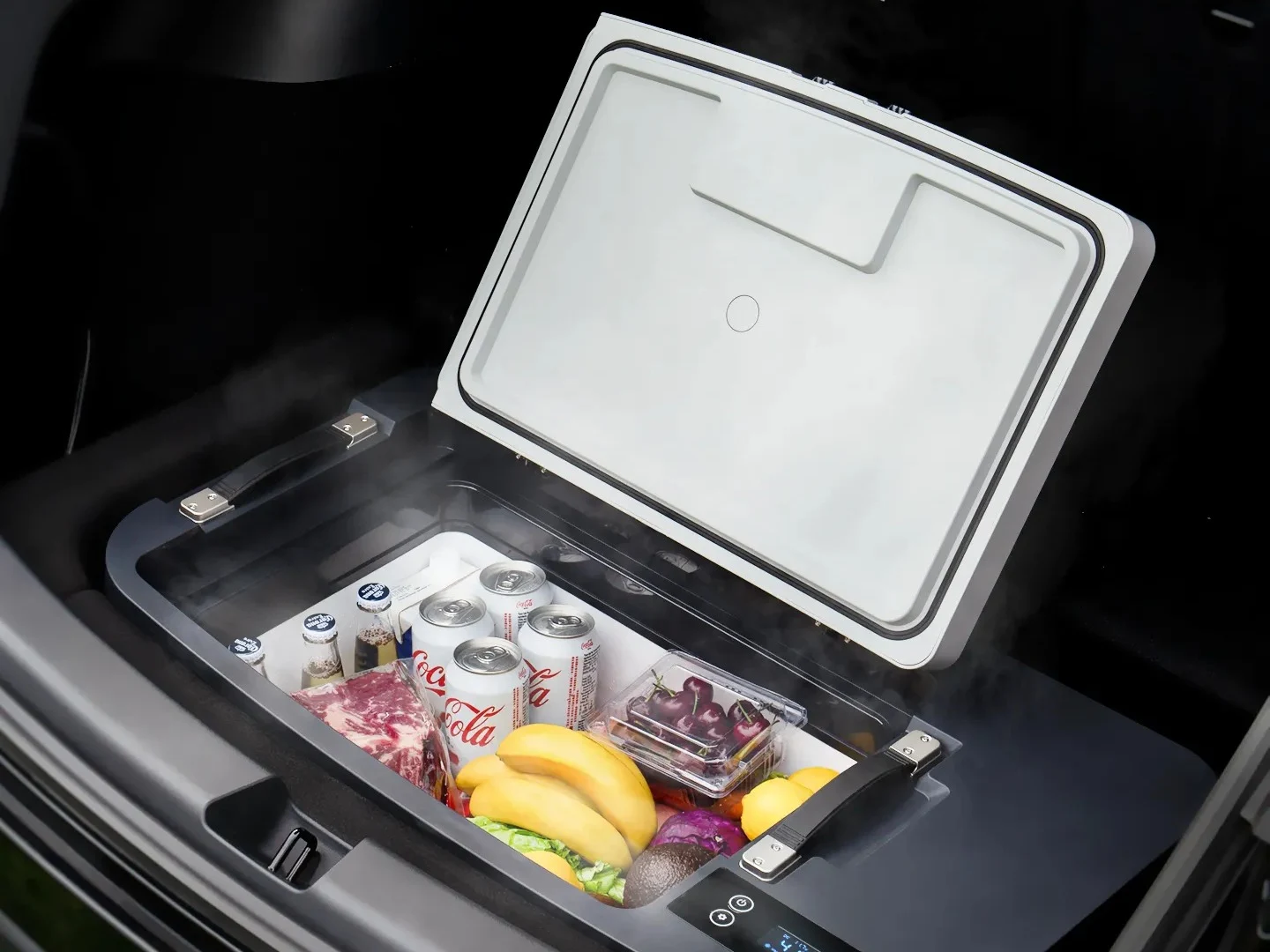
    Tesla owners who have had to leave their devices charging in their vehicles overnight or run a small fridge will be pleased to hear that an upcoming Accessory Power mode will restore power to their 12V sockets.

    Previous Battery Drain Issues

    Last year, Tesla addressed a significant battery drain problem linked to Sentry Mode, which it has now activated automatically to safeguard against vandalism. This was part of the 2024.32.6 software update. However, the solution it implemented was quite simplistic; it cut off power to the 12V outlets and USB ports when no one was in the car while in Sentry Mode. This less than smart fix meant that many Model Y owners couldn’t keep accessories like the Acopower TesFridge working overnight or charge laptops and tablets in their vehicles without power by morning.

    Confusing Power Management

    The way Tesla tackled the phantom battery drain issue in Sentry Mode, which drained 14% of the battery pack’s capacity in just 24 hours, was a bit puzzling. It was partly because of the Vision cameras recording during Sentry Mode, so Tesla optimized the video processing algorithms to significantly lower their power usage. However, for devices and accessories that needed to stay plugged into the Model Y while the driver was away, the company simply cut off power to the 12V and USB sockets. This rough approach is set to be improved with the new Accessory Power mode.

    Exciting Update Ahead

    With the upcoming Spring Update, Tesla is expected to introduce a new “Controls > Charging” menu option that allows users to select “Keep Accessory Power On.” This will ensure that all 12V sockets and USB ports receive continuous power until the vehicle’s battery level drops below 20%.

    The best part is that the new Accessory Power feature won’t require Sentry Mode to function, avoiding the risk of the phantom battery drain issues cropping up again.

    Source:
    Link
  • Tesla Cybertrucks to Recognize Each Other on the Road Soon

    Tesla Cybertrucks to Recognize Each Other on the Road Soon

    Key Takeaways

    1. The Cybertruck fails to recognize other Cybertrucks on its infotainment screen, displaying them as regular trucks.
    2. A software update is planned to fix the identification issue, but trailer recognition will be prioritized first.
    3. A photo shared on Twitter highlights the Cybertruck’s inability to identify itself among other Cybertrucks.
    4. The Cybertruck boasts a towing capacity of up to 11,000 pounds, used by companies like SpaceX and The Boring Company.
    5. Elon Musk previously claimed that Teslas would identify other Teslas, but this feature has not yet been implemented.


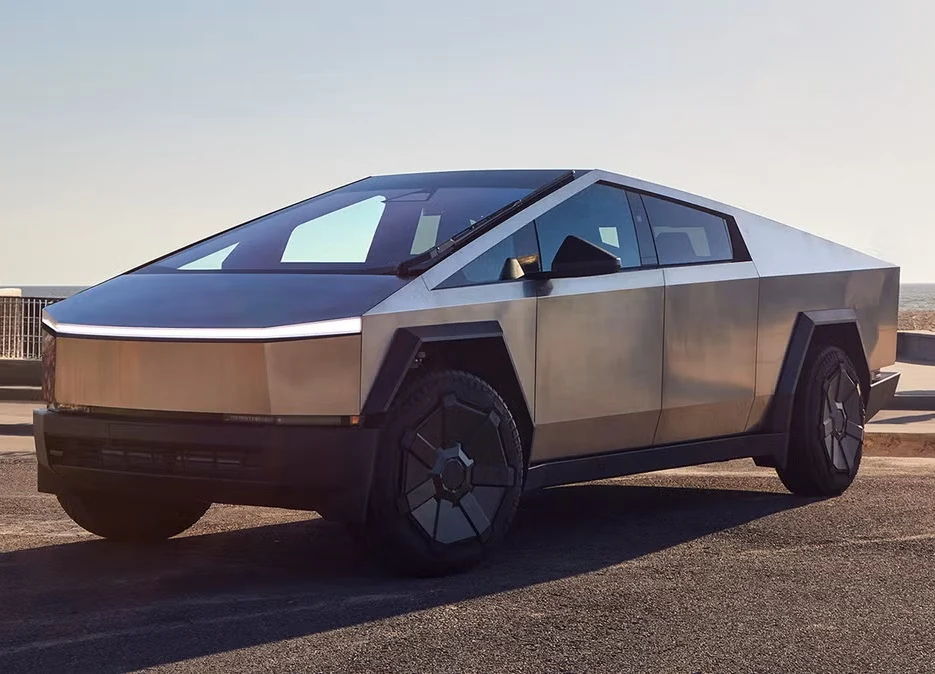
    The Cybertruck stands out as one of the most unique vehicles on the streets today. Ironically, it doesn’t recognize its own uniqueness, displaying other Cybertrucks on its infotainment screen as regular pickup trucks. A frustrated Tesla owner, unhappy with this error, has been told that a software update in the future will fix this issue.

    Image Issue

    A Twitter user known as The Cybertruck Guy shared a photo (credited to Chris Palmer) showing a Cybertruck in front but depicted on the screen as an ordinary truck. Palmer seems to have taken the shot from inside a Cybertruck, sparking The Cybertruck Guy’s curiosity about why the vehicle couldn’t identify its own kind.

    Future Updates

    Wes Morrill, Tesla’s Lead Engineer, replied to the post, confirming that the ability to recognize other Cybertrucks will be included in a future update. However, he remarked that the truck will prioritize recognizing trailers first. “I’ll add it to the list, right after we make it recognize trailers instead of looking like a semi truck is trying to mate with Cybertruck,” he said.

    Towing Capacity

    The Cybertruck has an impressive towing capacity of up to 11,000 pounds. Elon Musk’s other ventures, SpaceX and The Boring Company, frequently utilize these trucks to haul rocket components and equipment for tunnel construction.

    In the past, Musk mentioned that Teslas would eventually be capable of identifying other Teslas, including their model and color, potentially turning it into a game. Nevertheless, it’s been years since he made that claim, and the feature has yet to appear.

    Source:
    Link

  • BYD to Challenge Tesla’s Dominance in Electric Motors and Batteries

    BYD to Challenge Tesla’s Dominance in Electric Motors and Batteries

    Key Takeaways

    1. BYD is expected to outsell Tesla in electric vehicles by 2025 and may surpass Tesla in technology as well.
    2. Tesla faces financial challenges, including $200 million in unsold Cybertruck inventory, while BYD’s advancements position it as the leading EV manufacturer.
    3. BYD’s new 1 MW EV platform features cutting-edge technology, including a high-speed electric motor and fast-charging battery.
    4. BYD’s vertical integration as a major battery manufacturer gives it a competitive edge in developing efficient EV technologies.
    5. While Tesla excels in production cost management and autonomous driving software, BYD’s new self-driving system will be provided free with its vehicles, enhancing its data collection capabilities.


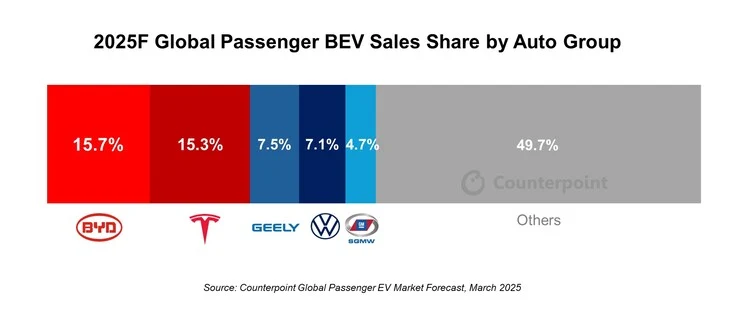
    Tesla is predicted to lose its top spot in the electric vehicle market by 2025, according to a report from market research company Counterpoint.

    BYD’s Rise in Sales

    The report states that BYD is likely to outsell Tesla in electric vehicles for the first time within a year. More troubling for Tesla and Elon Musk, however, is the expectation that BYD will surpass Tesla in technological advancements as well, rather than just sales. This may explain why Chinese authorities are cautious about allowing BYD to establish a factory in Mexico, fearing that it could enable American manufacturers like Tesla to access their technology.

    Financial Challenges Ahead

    Currently, Tesla has $200 million in unsold Cybertruck inventory, based on their recent shipping figures. Nevertheless, the new Model Y might still find success in markets outside of China. Despite this, the Counterpoint study suggests that even in such scenarios, BYD will take the lead as the largest EV manufacturer in the world by 2025, primarily because it now possesses superior technology.

    Innovative Technology from BYD

    BYD has introduced its new 1 MW EV platform, which offers an unmatched combination of powertrain and drivetrain capabilities. For instance, this high-voltage architecture enables the creation of the industry’s fastest electric motor, capable of exceeding 30,000 rpm while maintaining the same size. Additionally, the fast-charging 10C battery designed specifically for the 1MW system can recharge in just 5 minutes. BYD is also planning to establish a network of over 500 charging stations, all expected to be functional in under a month.

    Vertical Integration and Competitive Edge

    Such advancements have been made possible by BYD’s vertical integration, as it is the second-largest battery manufacturer in the world. This strategy not only allows them to develop custom EV powertrain technologies but also to achieve manufacturing efficiencies that may be challenging for Tesla to match, especially given the thermal efficiency issues with its own 4680 batteries.

    Areas Where Tesla Still Excels

    Tesla continues to excel in production cost management and its autonomous driving software. However, BYD has recently announced that it will provide its new self-driving system called Eye of God free of charge with all of its vehicles. This move could enable BYD to quickly gather millions of miles of driving data to analyze, as it works to catch up with Tesla’s $8,000 FSD option.

    Grab Your Tesla Gen 2 Wall Connector

    You can get the 80A Tesla Gen 2 Wall Connector with a 24′ cable on Amazon.

    Source:
    Link


  • Tesla boosts 0% APR financing on Model Y, top-selling EV in China

    Tesla boosts 0% APR financing on Model Y, top-selling EV in China

    Key Takeaways

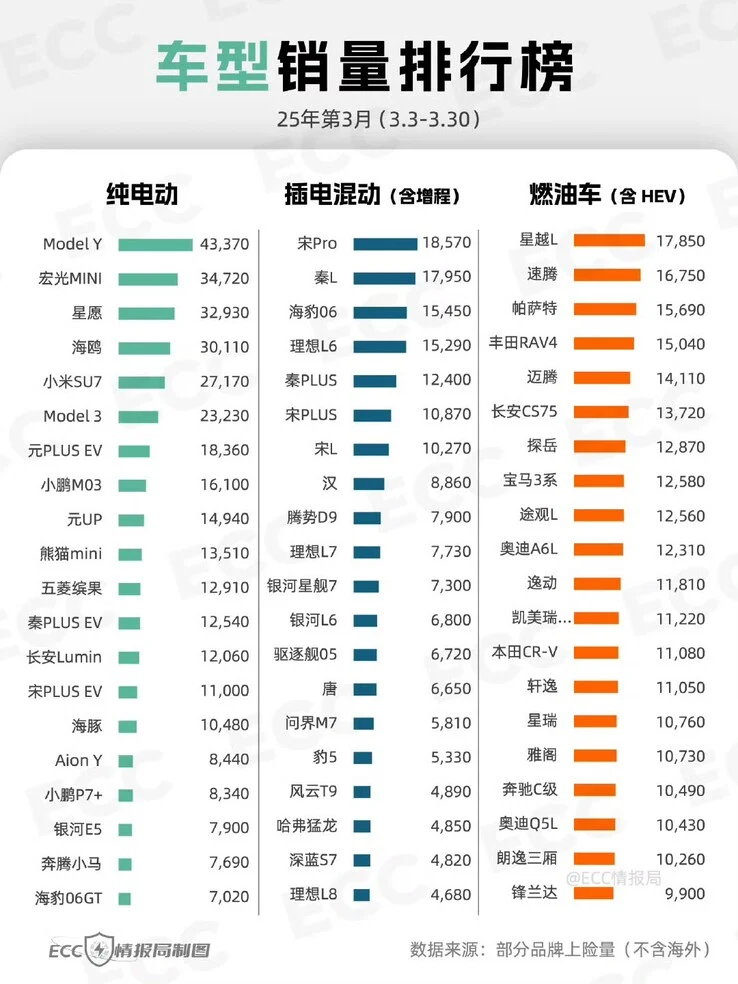
    1. Tesla sold 43,370 units of the updated Model Y in March, becoming the top seller of electric vehicles in China.
    2. The company recorded 23,000 new Model Y sales in one week, marking its third-highest sales week in China.
    3. Tesla increased the price of the AWD Model Y by around $1,380 due to longer delivery times, while the RWD version had shorter wait times.
    4. A 0% APR financing offer has been extended to all trims of the Model Y in China until the end of April, aiming to sustain sales momentum.
    5. Tesla’s sales in Europe may face challenges, with upcoming Q1 delivery figures expected to show weaker performance outside of China.


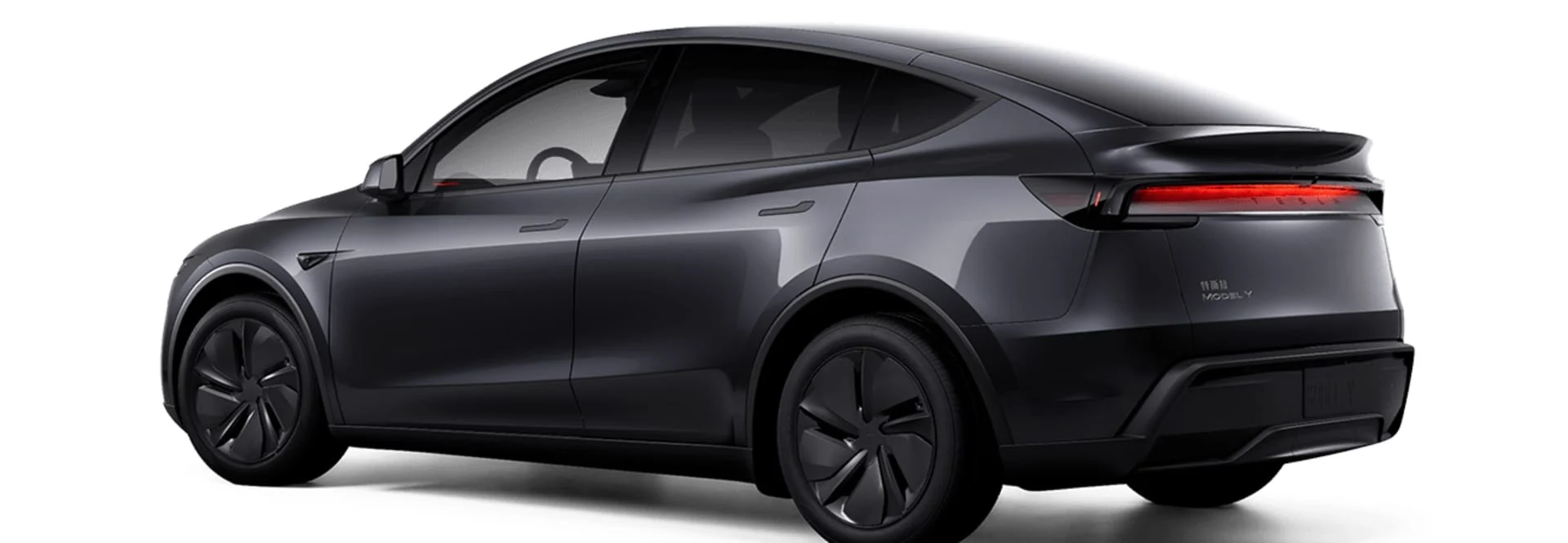
    Tesla has emerged as the leading seller of electric vehicles in China, having delivered an impressive 43,370 units of the updated Model Y in March.

    Strong Sales Week

    In just the past week, Tesla recorded sales of 23,000 new Model Y cars, based on insurance registration data, making it their third-highest sales week since they began operations in China. To maintain this strong sales trend, Tesla has broadened its 0% APR financing offer for the RWD Model Y facelift, now including the non-Launch Series AWD variant, which has been available in China since February.

    Delivery Times and Pricing Adjustments

    Normally, Tesla’s sales mix is about 80% RWD models in that market. However, last month saw longer delivery times for the AWD Model Y, prompting a price increase of around $1,380 to balance demand with production output from Giga Shanghai. At that time, the RWD trim had a delivery window of just 2-4 weeks, while the AWD orders were facing wait times of 6 to 10 weeks. With the introduction of the 0% APR financing for the RWD version, Tesla successfully boosted orders, allowing them to reduce the AWD delivery timeframe to 3-5 weeks.

    Financing Offers Extended

    Even though the pricing for the dual-motor Model Y facelift remains unchanged, Tesla has now applied the same 0% APR financing offer to the AWD model too. This financing deal for all trims of the Model Y in China will be available until the end of April, set for a 36-month payment term. Tesla seems eager to keep the sales momentum rolling into the second quarter, despite having already served many early adopters of the new Model Y.

    In contrast, Tesla’s sales in Europe might be facing challenges, possibly linked to Elon Musk’s political activities. However, the upcoming quarter could clarify if this is indeed the reason for the dip in demand, or if potential buyers are simply waiting for the new Model Y refresh to hit the market.

    Regardless of the cause, Tesla is scheduled to release its Q1 delivery figures on April 2nd, and those numbers are anticipated to be less impressive outside of China.

    Source:
    Link


  • Tesla Bankruptcy: Leaked Docs Show Huge Discounts on Model 3, Y, Cybertruck

    Tesla Bankruptcy: Leaked Docs Show Huge Discounts on Model 3, Y, Cybertruck

    Key Takeaways

    1. An emergency sale on Tesla vehicles will happen next week, featuring significant price cuts on popular models.
    2. Elon Musk’s recent political activities have negatively impacted his popularity and Tesla sales in Europe.
    3. The sale includes unbelievable prices: Model 3 for $5,999, Model X for $6,666, and Cybertruck for $9,999.
    4. Potential buyers should be cautious and read the fine print before making a purchase.
    5. The entire article is a prank for April Fool’s Day and not based on real events.


    If you’ve ever wanted to own a Tesla electric vehicle but didn’t have the cash to make it happen, this is your chance for a rare opportunity. Next week, an emergency sale will be kicking off, as reported by the trustworthy leaker @itstruebelieveme on Reddit. This event is only going to be available for a short time, and it will feature huge price cuts on popular models like the Model 3, Model Y, and Cybertruck.

    Elon Musk’s Political Drama

    It’s no surprise that the turmoil is linked to Elon Musk’s recent political activities. His popularity has taken a hit, especially in Germany and across Europe, due to his public relations efforts with the right-wing AFD party. He also made waves internationally with a certain salute at Donald Trump’s inauguration. These actions have caused a drop in sales for the first quarter of 2025 in Europe, and a recent tweet from Musk on March 31 has seriously damaged his reputation:

    “All Teslas must now turn right only – to respect the Earth’s rotation! Except for the Mars Rovers, because on Mars we believe in freedom… and sensible traffic laws.”
    – Elon Musk on X

    Prices and Discounts

    From next week until May 7, the Tesla Model 3 will be available for an unbelievable price of just $5,999. Meanwhile, you can snag the Model X for $6,666, and the Cybertruck will be priced at $9,999. But hold your horses before you dash out to buy a Tesla at such a great price; it’s wise to read the fine print, because nothing screams “deal” like unexpected catches.

    A Prank for April Fool’s Day

    This so-called sale of the century comes with an important note that you shouldn’t overlook—because, of course, this entire article is completely made up. To everyone who has made it this far through the misquotes and absurdities, NBC wishes you a joyous April 1st!

  • Zeekr’s 1.2 MW Charger vs. BYD and Tesla’s Fast Charging Tech

    Zeekr’s 1.2 MW Charger vs. BYD and Tesla’s Fast Charging Tech

    Key Takeaways

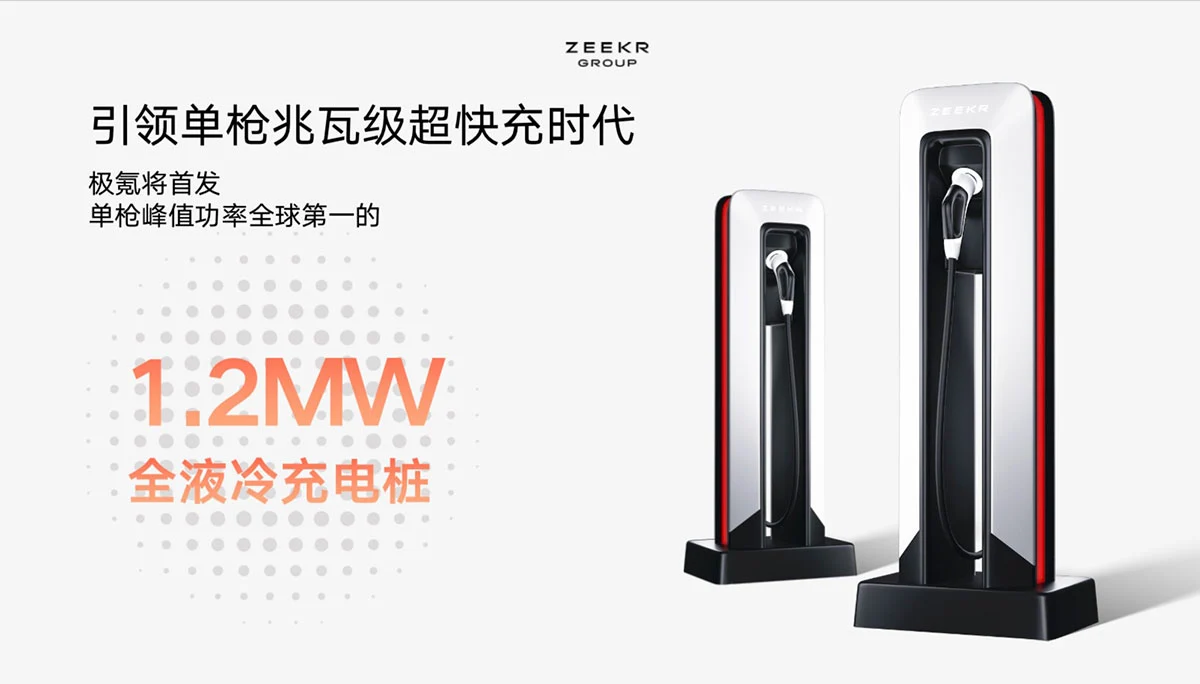
    1. Zeekr has launched a 1.2 MW rapid EV charger, surpassing BYD’s 1.0 MW charger introduced earlier in March 2025.
    2. The new ultra-fast charger will debut at the Shanghai Auto Show in April 2025 and is part of Zeekr’s plan to expand its charging network.
    3. Zeekr now holds the title for the fastest EV charger, a title recently held by BYD for a short time.
    4. BYD’s Super e-Platform technology can add 400 km of range in just five minutes, and they plan to install 500 fast chargers by April.
    5. Tesla’s Superchargers remain popular for their availability, but their charging speed is declining compared to newer competitors, with the latest model providing only 500 kW.


    If BYD believed it would bask in the limelight of its EV charger technology for an extended period, Zeekr has other plans. Zeekr has introduced a 1.2 MW rapid EV charger, outpacing BYD’s 1.0 MW charging system that was showcased earlier in March 2025.

    Unveiling the New Charger

    The ultra-fast charger was presented during VP Zhao Yuhui’s address at the China EV100 Forum. This charger is set to make its first appearance at the Shanghai Auto Show in April 2025. The Chinese company already operates over 4,000 rapid chargers, with a maximum output of 800 kW across 826 stations. The rollout of these new chargers is scheduled for the second quarter of 2025.

    A New Record in Charging Speed

    Zeekr now holds the title for the fastest EV charger in the world, a title that BYD had for only a few weeks. BYD recently showcased its Super e-Platform charging technology, capable of adding 400 km of range in just five minutes. This was at an event where they also began accepting pre-orders for the Han L sedan and Tang L SUV. BYD aims to install 500 fast chargers by April.

    The Status of Tesla’s Superchargers

    Tesla’s Superchargers remain favored for their widespread availability and dependability. Nevertheless, the American manufacturer is slowly losing its top position in charging speed, as their latest model can only provide 500 kW. Tesla also operates a smaller Megacharger network that can deliver up to 1 MW, but this is reserved for its Class 8 electric Semi trucks in the US.

    Source:
    Link

  • Tesla Model 3 Testing FSD with Cybercab Cameras Up North

    Tesla Model 3 Testing FSD with Cybercab Cameras Up North

    Key Takeaways

    1. Tesla is using a standard Model 3 equipped with the Cybercab’s Full Self-Driving (FSD) kit to gather driving data in challenging weather conditions.
    2. New camera arrangements on the Model 3 mirror those planned for the Cybercab, suggesting a focus on collecting relevant data for autonomous driving.
    3. Tesla is preparing for an unsupervised FSD pilot program in Austin, Texas, as part of their efforts to promote safe electric transport.
    4. Securing permits for the Cybercab will be more challenging than for the Model 3 or Model Y, which still have traditional controls.
    5. The testing of the Model 3 may help demonstrate safety and readiness to regulators ahead of the Cybercab’s mass production goal in 2026.


    Since Tesla can’t really train the Cybercab for every situation and event that occurs on the streets during bad weather before it gets the required permits, they are trying something else.

    Innovative Approach

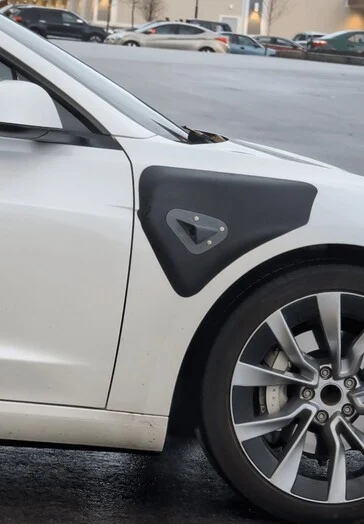
    They have seemingly equipped a standard Tesla, which has pedals and a steering wheel, to drive around on public roads with the Cybercab’s Full Self-Driving (FSD) kit. A Model 3 was spotted with unusual HW4 camera positions way up in Concord, New Hampshire, suggesting that Tesla might be collecting driving data in tough weather conditions, similar to what the Cybercab would face.

    New Camera Arrangements

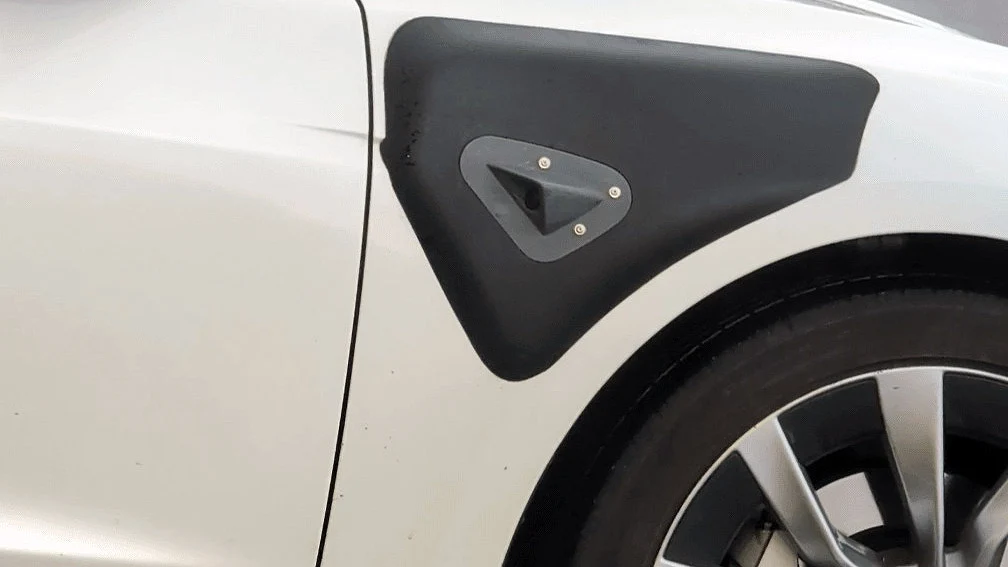
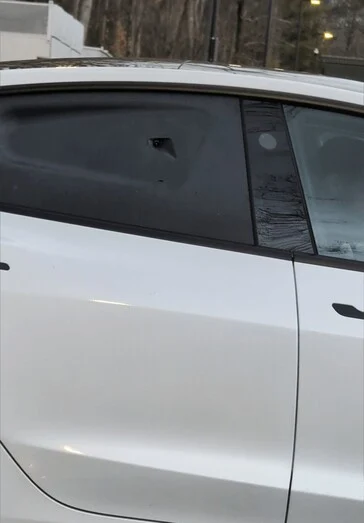
    The new cameras include one oddly positioned in the rear window, exactly where the side camera of Tesla’s two-seater robotaxi is located. There’s also another one attached to the fender with some additional fittings, again in the same spot and angle as seen on the Cybercab.

    Recently, Tesla shared a thank you message to the Texas Department of Transportation, featuring a city official inside a Cybercab. The message read, “Thanks to Austin City & Texas DOT for hosting & supporting our efforts to unlock safe & low-cost premium point-to-point electric transport,” likely pointing to the unsupervised FSD pilot program they plan to start in the city in June.

    Challenges Ahead

    Obtaining a permit for the Cybercab to operate on public roads is expected to be much more difficult for Tesla than launching unsupervised FSD for its Model 3 or Model Y that come with pedals and a steering wheel.

    This could be the reason behind retrofitting the Cybercab’s HW4 kit onto a Model 3, using it as a testing vehicle to see how the autonomous robotaxi performs outside the controlled environments of the Gigafactory where it has been tested so far.

    Tesla aims to start mass production of the Cybercab by 2026, and it needs to showcase its safety records and road readiness to regulators before that. Thus, utilizing this Model 3 test vehicle may be a clever strategy to accelerate the approval process for their first car without pedals.

    Source:
    Link


  • Model Y HW3 vs HW4 Crash Test: Why Tesla Upgrades FSD Computers

    Model Y HW3 vs HW4 Crash Test: Why Tesla Upgrades FSD Computers

    Key Takeaways

    1. Mark Rober’s test showed Tesla’s Autopilot performance negatively compared to a Lexus with LiDAR, but inconsistencies led to further independent testing.
    2. The 2022 Model Y with Hardware 3.0 failed to detect a fake wall, while the 2024 Model Y with Hardware 4.0 successfully stopped before the obstacle.
    3. A similar successful test was performed with the Cybertruck, also equipped with Hardware 4.0.
    4. Tesla plans to begin unsupervised FSD testing in Austin, Texas, starting in June, with necessary permits obtained.
    5. Tesla is considering a retrofit program for older vehicles with Hardware 3.0 if unsupervised FSD cannot be successfully implemented on those models.


    Recently, a test by Mark Rober compared a Tesla using Autopilot with a Lexus autonomous driving system, which is renowned for its use of LiDAR. This test didn’t show Tesla’s camera-only approach in a good light.

    Inconsistent Results

    However, Rober’s setup had so many inconsistencies that a group of independent testers decided to put a Tesla through similar tests to see if they could confirm or counter his findings. In a recent round of testing, a Model Y equipped with the new Hardware 4.0 FSD was tested against an older Model Y that had the Hardware 3.0 version, which is still much more common on roads in the US.

    Different Models, Different Outcomes

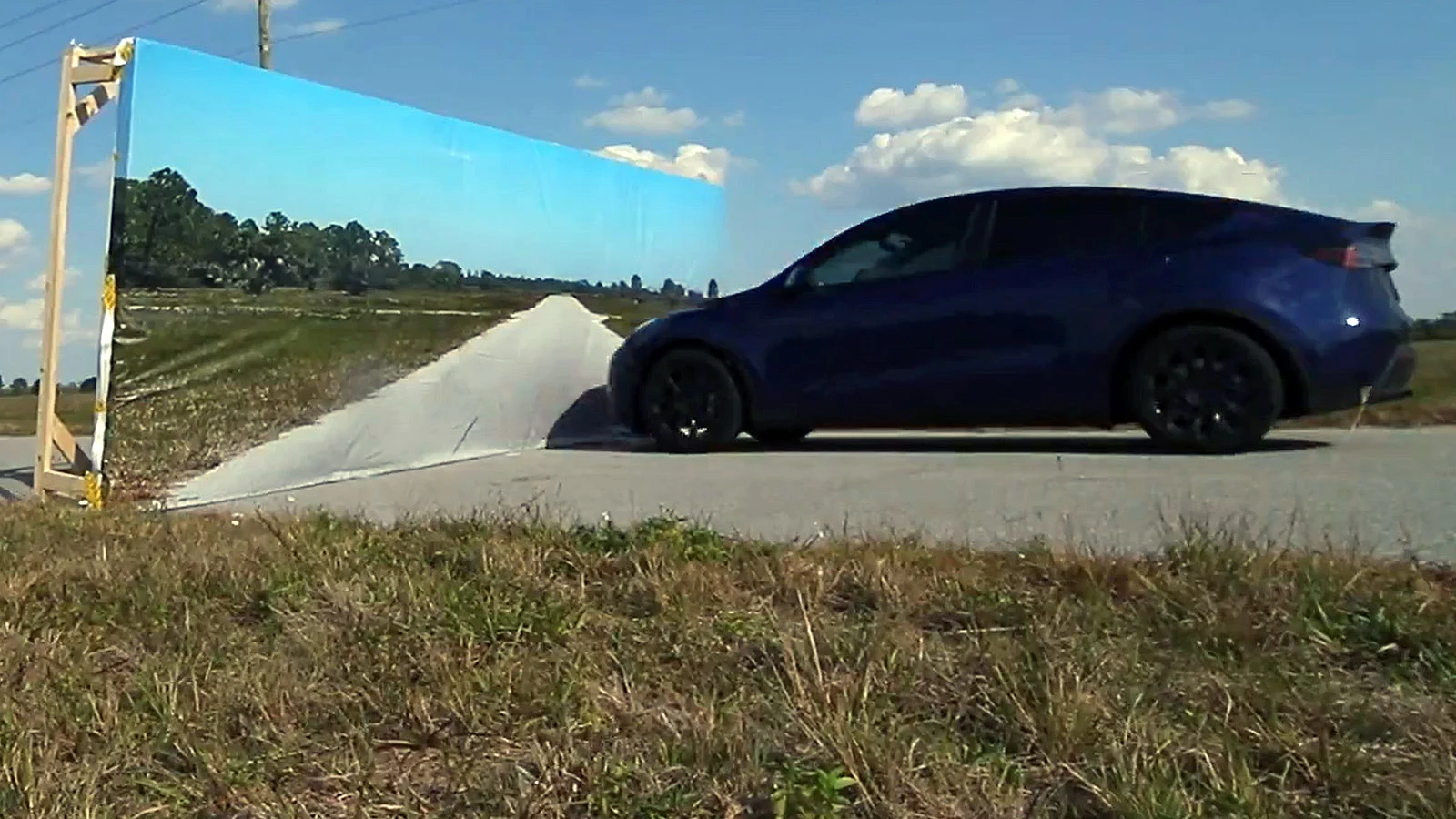
    The 2022 Model Y was fitted with the HW3 package and used the latest version of Tesla’s FSD software designed for that hardware, while the 2024 Model Y had the upgraded HW4, also referred to as AI4 by Tesla. The HW3 Model Y did indeed fail the test; it didn’t detect the wall that was painted to look like a road and drove straight through it. The testers ran the test twice, having to brake manually, and once allowed the 2022 Model Y to crash through the fake wall while in FSD mode.

    The 2024 Model Y, equipped with the HW4’s high-resolution cameras and a new FSD computer, successfully detected the fake wall every time and stopped the vehicle before it reached the obstacle while in self-driving mode. A similar test was performed with the Cybertruck, which also has the HW4 setup, and it too did not collide with the wall.

    Upcoming Unsupervised Testing

    Tesla is getting ready to test its unsupervised FSD mode, which won’t need a driver to be present or paying attention, starting this June in Austin, Texas. The autonomous driving team recently announced that they obtained the necessary permit for pilot program testing by showing city officials in a Cybercab.

    “Thanks to Austin City & Texas DOT for hosting & supporting our efforts to unlock safe & low-cost premium point-to-point electric transport,” the team stated, confirming that the June launch for unsupervised FSD is on track. However, Tesla hasn’t yet figured out how to make the newest FSD version work on older vehicles with the HW3 setup, and it may also struggle to implement unsupervised FSD successfully on those models. Elon Musk promised that if that happens, Tesla will upgrade HW4 computers into eligible HW3 vehicles at their own expense.

    The Wile E. Coyote wall test indicates that a HW3 computer retrofit program may become necessary in the future along the fake painted road.

    Source:
    Link

  • Legacy US Automaker Orders 10 GWh of 4680 Batteries for Cars

    Legacy US Automaker Orders 10 GWh of 4680 Batteries for Cars

    Key Takeaways

    1. Tesla achieved a record production of 4680 batteries and reached the lowest cost per kWh for these cells.
    2. Tesla considered abandoning the 4680 battery project due to production cost concerns but is now preparing for mass production with a new dry cathode method.
    3. Competition is increasing, with LG building a 4680 battery plant in Arizona that will support both Tesla and other automakers.
    4. LG secured a contract to supply over 10 GWh of 4680 batteries annually to a traditional US automaker, highlighting its expanding role in the market.
    5. LG’s 4680 cells may outperform Tesla’s, especially given Tesla’s reported thermal efficiency challenges affecting the Cybertruck’s charging.


    At the recent all-hands meeting, Elon Musk proudly announced that Tesla has achieved a record production of 4680 batteries and has reached the lowest cost per kWh for these cells.

    It wasn’t clear if he was referring to global figures or just the US, as he previously mentioned that Tesla aims to manufacture the 4680 battery as the least expensive cells in America. At that moment, he likely factored in the federal tax credit, which provides a subsidy of up to $45/kWh for battery packs made in the US.

    Tesla’s Doubts and Progress

    Just a few quarters ago, Tesla was uncertain about reaching this milestone and even considered abandoning the 4680 battery project if it couldn’t produce the cells more cheaply than suppliers like Panasonic and LG. Now, with the potential mastery of a more affordable dry cathode production method, the company is gearing up for mass production and plans to continue with the 4680 design. However, this doesn’t mean they won’t face competition.

    Competition Heating Up

    For example, LG is constructing a 4680 battery plant in Arizona that is set to become operational next year. This facility will complement Tesla’s 4680 production for vehicles such as the Cybertruck, Cybercab, and even a refreshed Model Y down the line. However, Tesla won’t be the only one benefiting from LG’s factory; it is expected to produce a total annual output of 53 GWh, with 36 GWh allocated for 4680-style batteries and the rest likely for LFP cells designed for energy storage systems.

    Rivian has already announced it placed an order with LG for its higher-capacity 4695 cells for the upcoming R2 SUV. Additionally, LG has revealed that they’ve secured a 4680 battery order from a traditional US automaker as well.

    LG’s New Contracts

    During a recent shareholder meeting, LG Energy Solution President Kim Dong-myung stated that LG has “finalized a contract to supply 46 series cylindrical batteries worth more than 10 GWh per year for multiple years through our Arizona corporation in the United States.”

    He highlighted that the most intriguing aspect of the contract is that it involves a legacy US automaker that also produces internal combustion engine (ICE) vehicles, unlike pure electric companies like Tesla or Rivian. The 10+ GWh annual supply represents nearly a third of the planned output for the 46 series batteries from the Arizona facility, surpassing contracts with Rivian, Mercedes, Toyota, and others.

    It will be interesting to see how much capacity the Arizona factory will allocate for Tesla, but even more compelling will be whether LG’s 4680 cells, which include advancements in cold weather cathode technology, outperform Tesla’s own cells. The Tesla 4680 battery has been reported to have thermal efficiency challenges, which have affected the charging curve of the Cybertruck.

    Source:
    Link

  • Tesla Model Y Discounts Up to $9,200 Ahead of Juniper Orders

    Tesla Model Y Discounts Up to $9,200 Ahead of Juniper Orders

    Key Takeaways

    1. The 2026 Model Y Juniper refresh is currently available only as a $60,000 Launch Series AWD trim with Full Self-Driving (FSD) included.
    2. In China and Europe, Tesla has removed the Launch Series and now offers more affordable RWD and AWD trims, with the lowest-priced RWD starting at about $36,350.
    3. Tesla may soon launch non-Launch Series AWD and RWD trims in the US, as inventory of the current model has been discounted by up to $9,200.
    4. A new Model Y Performance unit is priced at $36,270, and Tesla is clearing stock to prepare for increased orders for the Juniper refresh.
    5. Texas customers still have access to various discounted Model Y units, though the Performance model may not be available in the Juniper refresh until later in the fall.


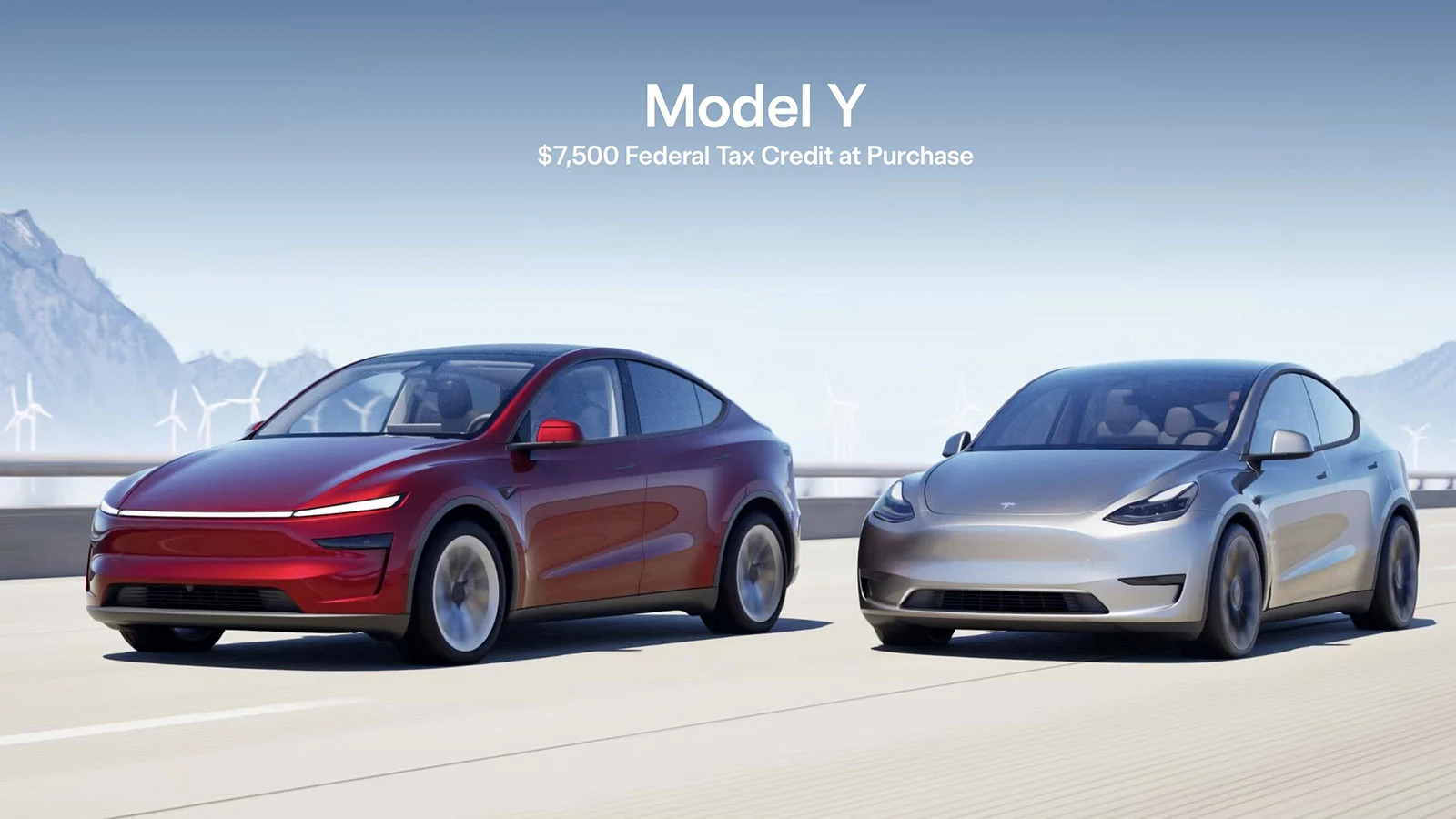
    The 2026 Model Y Juniper refresh is currently available only as a $60,000 Launch Series AWD trim, which includes the Full Self-Driving (FSD) option along with special badging and accessories.

    Sales in Different Regions

    Initially, the new Model Y was introduced in China and Europe with the same Launch Series edition. However, in both these markets, Tesla has removed the Launch Series and is now offering both RWD and AWD trims instead. These options are significantly more affordable compared to the Launch Series, which has the $8,000 FSD service included in its package. For instance, in China, the lowest-priced RWD Model Y Juniper facelift starts at about $36,350, and Tesla is also providing a 0% APR financing option to incentivize buyers.

    Upcoming Trims in the US

    If the current inventory is any signal, Tesla might be preparing to launch the non-Launch Series AWD and RWD Model Y Juniper refresh trims in the US shortly. The company has also lowered the price of the Model Y by as much as $9,200 for its inventory demo units of the previous model. Meanwhile, a brand-new Model Y Performance unit made this year is now priced at $36,270, not considering any referral discounts.

    Previously, discounts on the legacy Model Y were about $1,000 less. Tesla seems to want to clear its stock completely to make space for the expected surge in orders for the Model Y Juniper refresh. This strategy appears to be effective, as new Model Y units in Tesla’s inventory are becoming scarce, with some regions, like Washington, DC, running out of all but used Teslas.

    Availability in Texas

    On the other hand, people in Texas still have various discounted Model Y units available, including the aforementioned Performance model, which might not be included in the Juniper refresh until later in the fall.

    Source:
    Link