Tag: LG Energy Solution

  • Mercedes EQ 46 Round Cell: LG’s 107 GWh Deal for S-Class EQ 2028

    Mercedes EQ 46 Round Cell: LG’s 107 GWh Deal for S-Class EQ 2028

    Key Takeaways

    1. Mercedes-Benz and LG Energy Solution have signed a significant battery supply agreement valued at 107 GWh, with 32 GWh for Europe and 75 GWh for the US.

    2. The batteries will be cylindrical cells from the “46 series,” with production starting at a new plant in Arizona in 2026.

    3. This new agreement adds to a previous contract for 50.5 GWh, bringing the total to over 150 GWh, indicating the direction of future Mercedes electric vehicle models.

    4. The choice of the 46 round cell aligns with the MB.EA-L platform, which is designed for module-less battery integration.

    5. The deal highlights Mercedes-Benz’s commitment to high technology and quality, outpacing competitors like CATL and Farasis, and is estimated to be worth around $10.8 billion.


    According to Electrive, Mercedes-Benz has come together with LG Energy Solution to form a significant battery supply agreement, which is valued at 107 GWh in total. Out of this, 32 GWh is designated for Europe, with delivery scheduled from August 2028 to December 2035, and 75 GWh is allocated for the US between July 2029 and December 2037.

    Battery Specifications

    The batteries involved are cylindrical cells from the “46 series,” measuring about 46 millimeters in diameter. Electrive reports that this is “the largest single order to date for LG Energy for its cylindrical cells from the 46 series.” Production of these battery cells is set to increase at a new plant in Arizona, along with additional sites, starting in 2026.

    Previous Agreements

    Previously, a supply contract for 50.5 GWh was also established with LGES in October 2024, likely for the same type of cells, beginning in 2028. In total, the contracts will sum up to over 150 GWh of cylindrical battery cells, which hints at the direction that future Mercedes electric vehicle models will take.

    Strategic Decisions

    Electrive suggests that the choice of the 46 round cell may be tied to the upcoming MB.EA-L platform, which lacks a modular battery level (“module-less battery”) making it a good fit for incorporating round cells.

    In the contest for this contract, LGES outperformed well-known Chinese competitors like CATL and Farasis, showcasing Mercedes’ commitment to high technology and quality standards. The deal’s importance is further underscored by its estimated worth, with totals reaching around 15 trillion won, which is about $10.8 billion.

    Future Implications

    With the agreement with LG, Mercedes-Benz is establishing a vital base for its future S-Class EQ and other large electric vehicle models that will utilize the MB.EA-L platform. The emphasis on the 46 round cell and the early acquisition of extensive battery volumes will aid in long-term production and delivery strategies.

    Source:
    Link


  • Revolutionary EV Battery Offers 500 Miles in Just 12 Minutes

    Revolutionary EV Battery Offers 500 Miles in Just 12 Minutes

    Key Takeaways

    1. Researchers from KAIST and LG Energy Solution have developed lithium-metal batteries that can enable electric vehicles to travel 800 kilometers (500 miles) after just 12 minutes of charging.
    2. The breakthrough addresses safety and performance issues caused by dendrite formation during charging, which has limited the use of lithium-metal batteries.
    3. Dendrites are tree-like formations on battery anodes that can lead to reduced performance and safety risks, including short-circuits.
    4. The team created a new liquid electrolyte that inhibits dendrite growth by promoting even lithium deposition on the anode.
    5. Laboratory tests showed the new battery could charge from 5% to 70% in 12 minutes over 350 cycles, with energy densities reaching up to 386 Wh per kilogram.


    Researchers from the Korea Advanced Institute of Science and Technology (KAIST) along with LG Energy Solution have made a significant advancement. This development could enable electric vehicles to cover 800 kilometers (or 500 miles) after just 12 minutes of charging.

    Major Achievement in Battery Technology

    The study, which was featured in the journal Nature Energy, highlights a breakthrough in lithium-metal batteries that addresses a crucial safety and performance concern that has been hindering the progress of this technology. Lithium-metal batteries can deliver a much greater energy density when compared to traditional lithium-ion batteries, as they rely on pure lithium metal instead of a graphite anode. Yet, lithium-ion batteries remain the standard today due to the tendency of lithium-metal batteries to form dendrites.

    Understanding Dendrites and Their Impacts

    Dendrites are sharp, tree-like formations of lithium that can develop on the anodes of lithium batteries during the charging process. Their presence not only reduces performance but can also lead to short-circuits, posing a safety risk. To tackle this issue, the research team carefully examined how dendrites formed and created an innovative strategy to stop their growth. They found that the formation of dendrites was sparked by “non-uniform interfacial cohesion on the surface of the lithium metal.” As a solution, they invented a “cohesion-inhibiting new liquid electrolyte” that features an anion structure with a low binding affinity for lithium ions. This method allows lithium to be deposited evenly across the anode, which helps to minimize dendrite growth even during fast charging.

    Impressive Results in Testing

    In laboratory tests, the new battery was able to charge from 5% to 70% in just 12 minutes over more than 350 cycles. Additionally, the team created models of high-density designs that achieved energy densities up to 386 Wh per kilogram, capable of charging from 10% to 80% in 17 minutes.

    Source:
    Link


  • Legacy US Automaker Orders 10 GWh of 4680 Batteries for Cars

    Legacy US Automaker Orders 10 GWh of 4680 Batteries for Cars

    Key Takeaways

    1. Tesla achieved a record production of 4680 batteries and reached the lowest cost per kWh for these cells.
    2. Tesla considered abandoning the 4680 battery project due to production cost concerns but is now preparing for mass production with a new dry cathode method.
    3. Competition is increasing, with LG building a 4680 battery plant in Arizona that will support both Tesla and other automakers.
    4. LG secured a contract to supply over 10 GWh of 4680 batteries annually to a traditional US automaker, highlighting its expanding role in the market.
    5. LG’s 4680 cells may outperform Tesla’s, especially given Tesla’s reported thermal efficiency challenges affecting the Cybertruck’s charging.


    At the recent all-hands meeting, Elon Musk proudly announced that Tesla has achieved a record production of 4680 batteries and has reached the lowest cost per kWh for these cells.

    It wasn’t clear if he was referring to global figures or just the US, as he previously mentioned that Tesla aims to manufacture the 4680 battery as the least expensive cells in America. At that moment, he likely factored in the federal tax credit, which provides a subsidy of up to $45/kWh for battery packs made in the US.

    Tesla’s Doubts and Progress

    Just a few quarters ago, Tesla was uncertain about reaching this milestone and even considered abandoning the 4680 battery project if it couldn’t produce the cells more cheaply than suppliers like Panasonic and LG. Now, with the potential mastery of a more affordable dry cathode production method, the company is gearing up for mass production and plans to continue with the 4680 design. However, this doesn’t mean they won’t face competition.

    Competition Heating Up

    For example, LG is constructing a 4680 battery plant in Arizona that is set to become operational next year. This facility will complement Tesla’s 4680 production for vehicles such as the Cybertruck, Cybercab, and even a refreshed Model Y down the line. However, Tesla won’t be the only one benefiting from LG’s factory; it is expected to produce a total annual output of 53 GWh, with 36 GWh allocated for 4680-style batteries and the rest likely for LFP cells designed for energy storage systems.

    Rivian has already announced it placed an order with LG for its higher-capacity 4695 cells for the upcoming R2 SUV. Additionally, LG has revealed that they’ve secured a 4680 battery order from a traditional US automaker as well.

    LG’s New Contracts

    During a recent shareholder meeting, LG Energy Solution President Kim Dong-myung stated that LG has “finalized a contract to supply 46 series cylindrical batteries worth more than 10 GWh per year for multiple years through our Arizona corporation in the United States.”

    He highlighted that the most intriguing aspect of the contract is that it involves a legacy US automaker that also produces internal combustion engine (ICE) vehicles, unlike pure electric companies like Tesla or Rivian. The 10+ GWh annual supply represents nearly a third of the planned output for the 46 series batteries from the Arizona facility, surpassing contracts with Rivian, Mercedes, Toyota, and others.

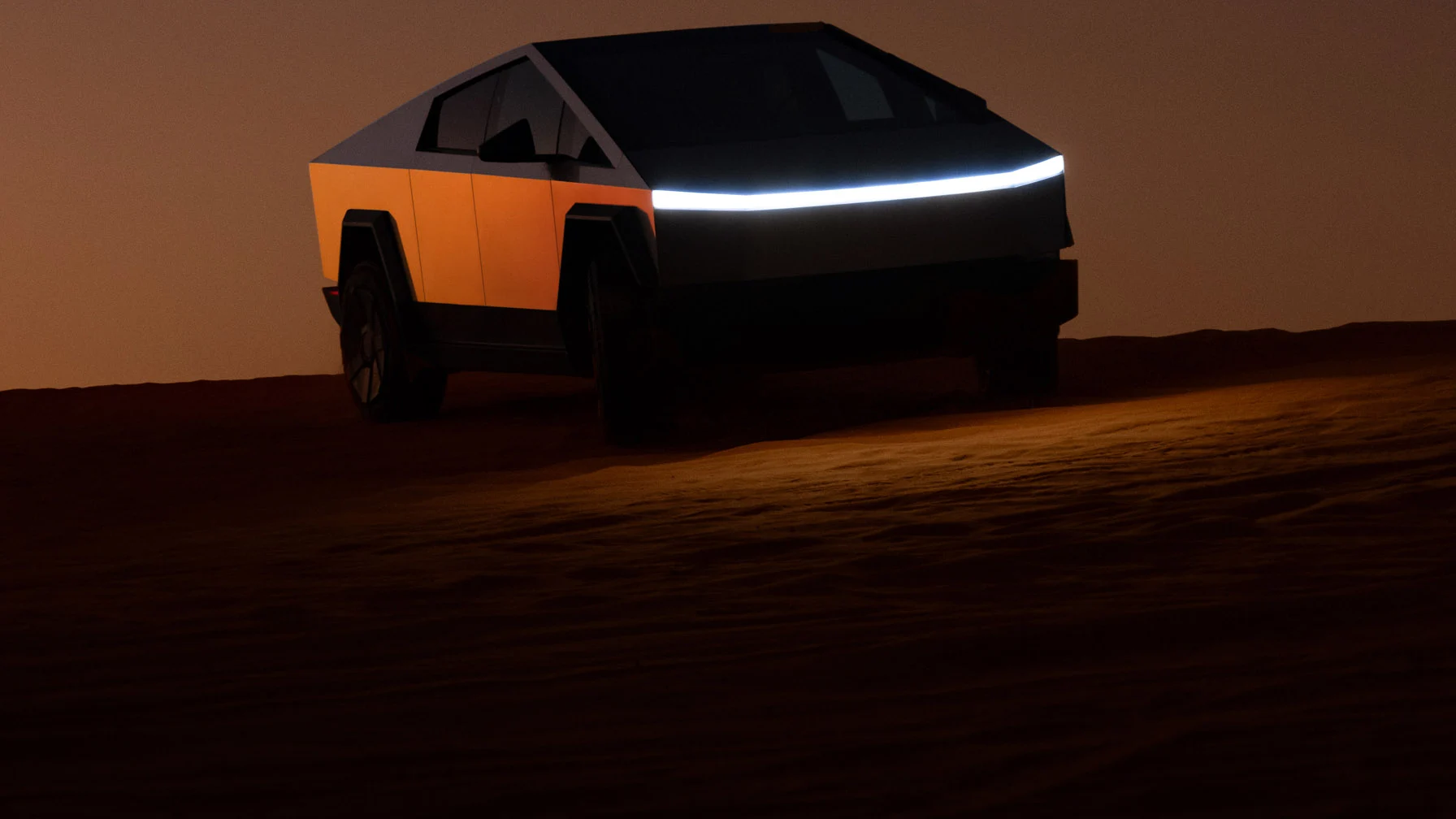
    It will be interesting to see how much capacity the Arizona factory will allocate for Tesla, but even more compelling will be whether LG’s 4680 cells, which include advancements in cold weather cathode technology, outperform Tesla’s own cells. The Tesla 4680 battery has been reported to have thermal efficiency challenges, which have affected the charging curve of the Cybertruck.

    Source:
    Link