
Tag: Tesla

  • Tesla Model Y Redesign: Folding Seats, Bigger Battery, 3-Row SUV

    Tesla Model Y Redesign: Folding Seats, Bigger Battery, 3-Row SUV

    Key Takeaways

    1. Spacious Design Enhancements: The six-seat Model Y L features a longer wheelbase and taller frame, improving legroom and headspace with captain chairs in the first two rows and standard seats in the third row.

    2. Unique Seating Configuration: The Model Y L will have individual, separated seats in the third row, allowing for more comfort and legroom compared to the six-seat Model X.

    3. Improved Headroom and Specs: The vehicle’s increased height provides better headroom for back passengers, and it’s expected to include a larger battery with up to 90 kWh capacity and dynamic electromagnetic suspension for enhanced ride comfort.

    4. Cargo Space Concerns: Previous Tesla three-row SUVs struggled with cargo space; the Model Y L may need flexible seating options, like folding down second-row captain chairs, to improve storage capacity.

    5. Promising Future Developments: Tesla China hints that the Model Y L will be a versatile “full-scene” SUV, potentially allowing all rear seats to fold flat automatically, enhancing its functionality for transporting passengers and cargo.


    Tesla enthusiasts have been eagerly waiting for a proper three-row SUV, but the electric vehicle manufacturer now claims that the closest option will be the Model Y L.

    Spacious Design Enhancements

    The new six-seat Model Y, which expands on the original five-seat version, boasts a wheelbase that is seven inches longer and a taller frame. Tesla has made significant improvements instead of simply adding extra child seats in the trunk and labeling it a family SUV.

    Passengers can expect enhanced legroom and headspace, with four captain chairs in the first two rows and two standard-sized seats in the third row, which differ from those found in the six-seat Model X.

    Unique Seating Configuration

    A source from Tesla China, known for accurate information about vehicles from Giga Shanghai, has revealed that the seating layout of the Model Y L will be unprecedented for Tesla.

    The second row will still feature two captain chairs with armrests, but the third row will now include individual separated seats. Unlike the six-seat Model X, where the third row has two seats connected, the new design allows a taller passenger to comfortably sit in the middle with more legroom.

    In the Model Y L, the second-row seats will be motorized, allowing for adjustments to the spacing between the rows. The seats are said to have a completely new design and ventilation, though it remains unclear if the third row also has this feature.

    Improved Headroom and Specs

    The third row, however, is reportedly positioned lower than the other two rows. With the increased height of the vehicle and the redesigned C-pillar, passengers in the back may enjoy similar headroom as those in the front.

    The specifications of the Model Y L are expected to include a larger battery, offering up to 90 kWh of nominal capacity, which is a 20% boost over the current Model Y battery. Additionally, Tesla has fitted the Model Y L with dynamic electromagnetic suspension to enhance ride comfort for passengers.

    Cargo Space Concerns

    But what about cargo space? The issue with Tesla’s previous attempts at three-row SUVs is that they fall short in size for that category. They struggle to fit more than five adult passengers and enough cargo in the trunk, leaving limited storage space.

    Certainly, a compromise might work if all the rear seats could be folded flat, allowing for either passengers or cargo. Fans are open to this idea, yet Tesla only allows the third bench in the Model X to fold down, which doesn’t create sufficient cargo space.

    If the captain chairs in the second row of either the six-seat Model X or Model Y L could fold down, it would transform Tesla’s so-called “3-row SUV” lineup into something genuinely functional.

    Promising Future Developments

    This is exactly what Tesla China seems to be suggesting. Grace Tao Lin, a senior executive managing government affairs and marketing in Greater China, mentioned on social media that the six-seat Model Y L will be a “full-scene 6-seat luxury SUV.”

    Insiders familiar with the local automotive terminology now interpret “full scene” as an all-purpose vehicle in China, or as a “vehicle for all scenarios,” hinting at versatile capabilities.

    In essence, the Model Y L is shaping up to be a three-row SUV designed to transport both passengers and cargo, likely by allowing all four rear seats to fold flat. The rumored capability of adjusting the second row also adds to this confirmation.

    The 2026 Model Y has the feature to fold its back seats at the push of a button, which also moves the front seats forward to create a completely flat surface, perfect for accommodating a Model Y air mattress.

    Tesla may be gearing up for something similar with the Model Y L, potentially enabling all four rear seats to fold flat automatically, which would be a welcome enhancement.

    Source:
    Link
  • Tesla Model Y Financing Deals and Free Upgrades Available Now

    Tesla Model Y Financing Deals and Free Upgrades Available Now

    Key Takeaways

    1. Tesla has launched a new financing deal for the Model Y at a rate of 3.49%, down from 4.99%.
    2. The minimum down payment for the Model Y has been reduced to 5%, from the previous 15%.
    3. Customers can use the federal tax credit as part of their down payment for the Model Y.
    4. Tesla offers complimentary upgrades for customers purchasing inventory Model Y vehicles, including free color options and wheel upgrades.
    5. The new financing promotion is available for buyers with strong credit who ordered the Model Y on or after July 17, with no specified end date.


    It didn’t take much time after the last financing promotion for the Model Y before Tesla kicked off a new one. Even though demand is expected to remain strong this quarter, especially with the federal tax credit for the Model Y ending on September 30, the company aims to boost sales further.

    Previous Offers and Extensions

    Tesla had previously provided a 1.99% APR deal for the Model Y, which was originally set to end on June 16. However, it was extended until the end of last month, likely to help bolster their sales figures for the quarter.

    New Financing Deal

    Now that we are just past the first half of the month, Tesla is rolling out a new financing deal for the Model Y at a rate of 3.49%. This is a decrease from the 4.99% interest rate that has been in effect since the start of July.

    This promo financing is available for buyers with strong credit who ordered the Model Y on or after July 17. Notably, Tesla has not specified an end date for this offer, simply labeling it as “for a limited time.”

    Down Payment and Financing Terms

    Additionally, the minimum down payment has been lowered to just 5%, down from the standard 15%. Tesla has also stated that customers who qualify for the tax credit can apply it as part of their down payment on the Model Y. The financing terms range from 3 to 5 years, although the 72-month financing option does revert back to a 5% APR. Meanwhile, leasing for the Model Y now starts at only $349.

    Inventory Model Y Vehicles

    Tesla has also launched an interesting promotion for their inventory Model Y vehicles. Customers who order a Model Y that is already in stock will receive one complimentary upgrade.

    Checking Tesla’s inventory shows that these free upgrades can differ by vehicle, including free color options that typically cost extra, along with 20″ wheel upgrades. There are also some free interior upgrades, providing various choices for buyers.

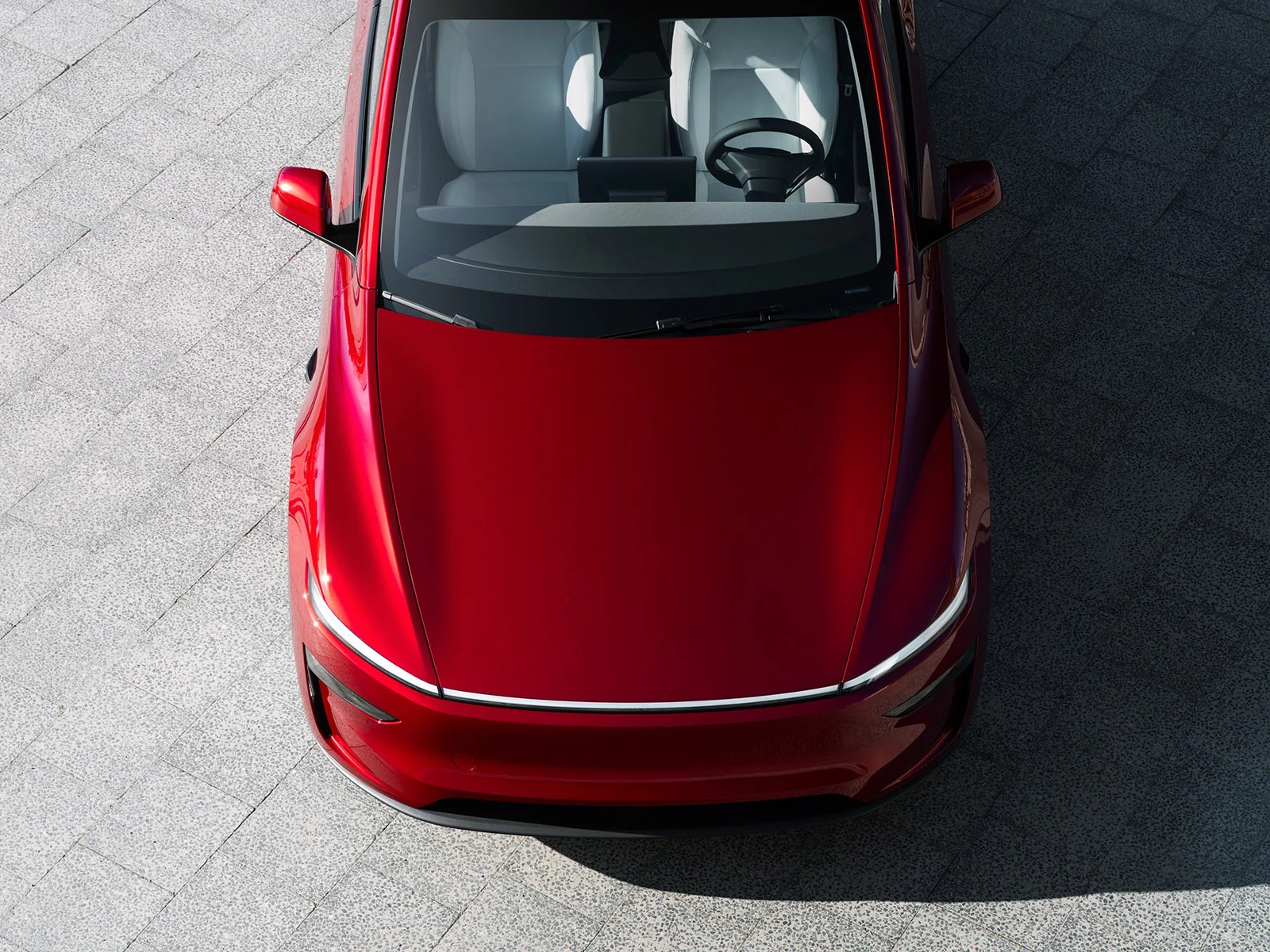
    Some colors for the Model Y, like Ultra Red or Quicksilver, are priced at $2,000, as are the 20” Helix 2.0 Wheels. This represents the maximum discount that Tesla is offering for an inventory Model Y with these features.

    For example, a Long Range RWD Model Y in Quicksilver can now be purchased for $37,490 instead of $39,490 after considering the tax credit. However, the new upgrade promotions cannot be combined, meaning you can’t get both a free color and free 20″ wheels at the same time.

    Source:
    Link

  • Tesla Model Y Robotaxi Ride Prices Expand Beyond Waymo Areas

    Tesla Model Y Robotaxi Ride Prices Expand Beyond Waymo Areas

    Key Takeaways

    1. Tesla has expanded its robotaxi service area beyond Waymo’s in Austin and raised ride fares by 65%, from $4.20 to $6.9.
    2. The new fare is a fixed price for rides, aimed at testing the Robotaxi app and payment system rather than generating profit.
    3. Tesla’s robotaxi service currently covers about 7% of Waymo’s area, with plans for further expansion to cities like San Francisco.
    4. Future two-seater Cybercabs may lower the cost per mile to around 25 cents, making the service more competitive.
    5. Cybercabs will use wireless charging and automatic cleaning, indicating advanced features for the Robotaxi platform in the future.


    The Tesla Robotaxi ride-share service has now expanded its reach beyond Waymo’s area in Austin, where it is currently running a pilot program.

    Price Increase

    In just three weeks since launching, Tesla has significantly increased the size of the geofenced robotaxi service area and, in a rather cheeky move, has also raised the ride fare. The cost of a robotaxi ride has jumped by an eye-catching 65%, soaring from $4.20 to the new price of $6.9.

    Elon Musk often includes the number 420 as a fun Easter egg, and with Tesla fans urging him to play with the number 69 ahead of the Robotaxi launch, this new fare might just be a playful joke—similar to the shape of the expanded service area on the map.

    Testing the Waters

    This $6.9 charge is a fixed price, no matter how many miles are traveled. The purpose of this pricing is not to recover operational costs or generate profit for Tesla, but mainly to test the Robotaxi app and its payment system.

    Currently, the Tesla Robotaxi platform covers about 7% of Waymo’s overall service area in the US, with plans to expand to San Francisco and other cities by year-end. This growth will necessitate Tesla to establish more realistic pricing soon, allowing for a fair comparison of its Robotaxi service with other ride-share options in the market.

    Future Prospects

    Elon Musk has stated that when the two-seater Cybercabs begin robotaxi service next year and are produced in larger quantities, the cost per mile could potentially drop to as low as 25 cents, making them highly competitive.

    However, the Cybercab won’t be able to utilize Superchargers or a Tesla wall connector; instead, they will be charged wirelessly on special pads and cleaned automatically by robots. This hints at exciting developments ahead for the Robotaxi platform, extending beyond its current trial in Austin.

    Source:
    link

  • Recycling Tesla Car Batteries for Autonomous Transport Robots

    Recycling Tesla Car Batteries for Autonomous Transport Robots

    Key Takeaways

    1. Daedong Robotics has launched the RT100, an agricultural robot powered by repurposed Tesla vehicle batteries, highlighting innovative recycling practices.
    2. Poen specializes in upcycling EV batteries by testing and remanufacturing decommissioned Tesla battery cells into new packs for the RT100.
    3. The RT100 can follow farmers, assist in harvesting, and navigate uneven terrain with a load capacity of 300 kg and a speed of 5 mph.
    4. AI functionality allows the RT100 to respond to voice commands through the Daedong app, enhancing its usability in agricultural tasks.
    5. Companies like Redwood Materials demonstrate that over 95% of valuable materials from EV batteries can be recycled, promoting sustainability in energy solutions.


    Decommissioned batteries from older Tesla vehicles are now being repurposed to power autonomous transport robots used in agriculture.

    Innovations in Agricultural Robotics

    Daedong Robotics, known for its automated lawnmowers akin to the well-known Segway Navimow in the United States, has launched the RT100. This compact robot is designed for agricultural tasks and is powered by used battery cells sourced from Tesla cars. This initiative not only showcases recycling practices but also highlights the potential for reusing electric vehicle batteries.

    Collaboration for Sustainable Energy

    The RT100 features replaceable battery modules supplied by Poen, a company specializing in upcycling EV batteries. Poen tests individual cylindrical LG cells from decommissioned Tesla packs and disassembles those that still have enough capacity. They repair and remanufacture these cells into new battery packs, providing an economical power source for Daedong’s agricultural robots.

    Smart Functionality in the Field

    The RT100 follows farmers around, adjusting its loading bed to assist in collecting harvested fruit, then transports the produce to unload before heading back. With a 4×4 drivetrain, it is capable of navigating uneven ground and can easily maneuver in tight orchard spaces.

    The RT100 has a maximum load capacity of approximately 300 kg, or 662 pounds, and can reach speeds of five miles per hour. Additionally, it features AI functionality that allows it to respond to voice commands from its operator through the dedicated Daedong app.

    Recycling for a Greener Future

    According to Redwood Materials, a leading force in battery recycling and led by Tesla co-founder JB Straubel, more than 95% of valuable materials like lithium, nickel, and cobalt can be recovered after an electric vehicle battery pack’s life has ended.

    Like the collaborative efforts of Daedong and Poen, Redwood is also involved in EV battery upcycling initiatives. They are working on projects such as creating an energy storage system for local grids using old EV battery cells, demonstrating the practicality of these recycling efforts.

    Source:
    Link

  • Grok AI Now Available in Tesla Vehicles with Latest Update

    Grok AI Now Available in Tesla Vehicles with Latest Update

    Key Takeaways

    1. Tesla’s latest software update (2025.26) introduces Grok AI to vehicles with AMD processors, still in beta testing.
    2. The update includes new features like Accent lights that sync with music, available on select models.
    3. Users can create and save multiple presets for audio settings and enjoy enhanced Dashcam Viewer functionalities.
    4. Improved charging information is provided, including details on valet services and parking options at charging locations.
    5. An Onboarding Guide is now available to help new Tesla owners navigate their vehicle’s features.


    The lines between Elon Musk’s various companies are becoming increasingly indistinct as another product makes its way across different business boundaries. Tesla has just rolled out a software update that introduces the well-known Grok AI to the extensive list of intelligent features present in its cars.

    Software Update Details

    Per the official Tesla account on X, the update 2025.26 brings Grok to vehicles in the US that feature AMD processors. This feature is still in beta testing, meaning drivers can’t use it for vehicle control, and it doesn’t interfere with current voice commands.

    To access the new AI functionality, users must have Premium Connectivity or a WiFi connection.

    About Grok and Other Features

    Grok was created by xAI and made its debut in 2023. It has been integrated into X, significantly improving its ability to perform real-time searches.

    While Grok is certainly a highlight, it isn’t the only feature included in update 2025.26. The update also brings Accent lights (Light Sync) that can react to music. Users can create a more immersive experience by syncing the lights with the colors of an album. This feature is available only on the latest Model 3, Model Y, and the 2026 editions of Model S, Model X, and Cybertruck.

    Additional Functionalities and User Experience

    The software update also enables the creation and saving of multiple presets tailored to users’ listening habits in the settings. Furthermore, Tesla has enhanced the Dashcam Viewer app by adding zooming features and options to adjust playback speed. For Cybertruck users, a grid view is now available, making it simpler to access and review recordings.

    Another important aspect of this update is the improved information regarding charging at different locations. Drivers can now see which charging spots require valet services or pay-to-park options directly in the charger list. Additionally, they will receive notifications with details such as access codes, parking limitations, level or floor information, and restroom availability.

    Onboarding Assistance for New Owners

    Lastly, Tesla has introduced an Onboarding Guide designed to assist new Tesla owners in getting accustomed to their vehicles. This guide provides a quick overview of how to adjust settings, control lights, manage wipers, and use Autopilot, among other features.

    Source:
    Link

  • Tesla Launches in New Country to Boost Sales Amid Challenges

    Tesla Launches in New Country to Boost Sales Amid Challenges

    Key Takeaways

    1. Tesla is planning to open its first showroom in Mumbai, with potential deliveries starting in August.
    2. The company faces significant challenges due to high import taxes (70%) on cars manufactured abroad, which could raise prices for Indian consumers.
    3. Previous discussions about building a local factory in India did not progress, increasing reliance on exports.
    4. Tesla is exploring the Indian market without full commitment, assessing potential demand before long-term investment.
    5. India’s growing awareness of environmental issues and advancements in electric vehicle technology could influence Tesla’s success in the market.


    For a number of months, Tesla has been seeing a steady drop in sales, and the company led by Elon Musk is on the lookout for new markets globally. India, home to more than one billion people, is a promising market, if the people there show interest in Tesla’s vehicles.

    Tesla’s Plans for India

    Bloomberg News has reported that the electric and self-driving car maker is planning to open its first showroom in Mumbai, with deliveries potentially starting as soon as August. Additionally, Tesla announced this initiative on social media, particularly on X, where they created an Indian account and shared a photo of the Mumbai skyline with the text: “Coming soon.”

    Challenges Ahead

    However, entering this market poses significant challenges for the American firm. It’s important to note that the pricing dynamics are quite different, influenced by lower wages and wealth levels in India compared to the US. To complicate matters, Tesla will need to export cars that are already manufactured, facing a hefty 70% import tax, as reported by Reuters. This could lead to Tesla’s prices soaring, making them less accessible for many Indians.

    Future Considerations

    Moreover, it’s worth mentioning that Tesla had previously initiated talks with Indian officials about constructing a factory locally. Unfortunately, those discussions did not progress. Establishing a factory in India would have helped mitigate several challenges, like the import taxes that will now apply.

    Consequently, many uncertainties linger regarding this situation. It’s plausible that Tesla intends to explore the Indian market before committing to a long-term operation. Additionally, India is currently witnessing rapid advancements in this sector along with an increasing awareness of environmental concerns. Therefore, it will be essential to keep a close eye on the outcomes of this venture to determine if it succeeds, helping the company to flourish, or if it ends up being another setback that could jeopardize its future.

    Source:
    Link

  • Tesla Model Y Price Cut: Navigating Canada Tariffs as Delays Grow

    Tesla Model Y Price Cut: Navigating Canada Tariffs as Delays Grow

    Key Takeaways

    1. Tesla has cut the price of the Model Y in Canada by CA$20,000, reducing it from CA$84,990 to CA$64,990.
    2. Delivery times for the Model Y have increased, with customers facing waits from a few weeks to September-October.
    3. The price drop and delivery delays may be influenced by a 25% tariff imposed on US goods by Canada.
    4. Tesla plans to import Model Y units from its Berlin Gigafactory to avoid high import tariffs and regain market share.
    5. European car imports to Canada do not face tariffs, while vehicles from Tesla’s Giga Shanghai factory incur a 100% tariff.


    Tesla has made a significant change to the price of the Model Y in Canada, slashing it by a remarkable CA$20,000. This reduction brings the price down from CA$84,990 (which is about 62,025 US dollars) to CA$64,990. In the US, the same Model Y Long Range RWD model has a starting price of $48,990, which is more than 20% lower than the Canadian price.

    Delivery Delays

    Alongside this major price cut, there’s been a noticeable increase in delivery times. Customers now face a wait that stretches from a few weeks to the September-October timeframe. To help ease the waiting period, Tesla has also introduced a new color option for the Model Y called Diamond Black, which was previously only available in the US.

    Tariffs Impacting Prices

    The significant price drop and the extended delivery time suggest that tariffs might be influencing these changes. Canada imposed a 25% reciprocal tariff on US goods following similar actions taken by the Trump administration. This tariff had previously caused Tesla to raise its prices in Canada back in May.

    Since then, Tesla has been managing to sell vehicles at prices prior to the tariffs, but that advantage is fading fast. The combination of a steep 25% price hike due to tariffs and Elon Musk’s controversial political stance in Canada has led to a sharp decline in sales in the region.

    Importing from Europe

    To regain some market share, Tesla is expected to start importing Model Y units from a factory that will only incur transportation fees, avoiding high import tariffs. The Berlin Gigafactory, which produces only Model Ys, appears to be the best option to navigate around the tariff issues in Canada.

    Interestingly, European car imports to Canada do not face tariffs, thanks to the CETA trade agreement signed between Canada and the EU. In contrast, vehicles imported from the Giga Shanghai factory now face a 100% tariff, while those from Giga Texas or Fremont have a 25% tariff due to reciprocal trade measures.

    The Trump administration has announced plans to escalate tariffs to 35%, with an additional 35% if Canada retaliates, which would make importing from the US even more impractical.

    This situation explains Tesla’s strategy to shift imports from Europe to bypass the newly established tariff barriers, resulting in longer wait times for Canadian customers awaiting their new Model Y as the company works to stabilize inventory levels and reduce delivery delays.

    Source:
    Link

  • Tesla resolves Supercharger issues with digital queue and parking fees

    Tesla resolves Supercharger issues with digital queue and parking fees

    Key Takeaways

    1. Tesla is introducing a digital queue system for Superchargers to improve organization and reduce conflicts at charging stations.
    2. The virtual queuing system is currently being tested at select locations and will be widely implemented in the next quarter.
    3. Drivers will be added to a waitlist at busy Supercharger stations based on arrival time and may receive a specific stall number.
    4. The new system allows drivers to move around freely rather than stay in their cars, reducing disruptions from “bad actors.”
    5. An update will provide essential information about Superchargers, including parking fees and location details, enhancing the overall charging experience.


    Tesla is about to introduce a digital queue for drivers heading to a Supercharger, aiming to create a more organized charging experience. This move comes in light of incidents that have led to arguments and even fights at charging stations for various reasons.

    Streamlining the Charging Process

    The Tesla charging team refers to waiting for a Supercharger stall as an “edge” or “corner” case, which they say happens in roughly 1% of all situations. Currently, the virtual queuing system is undergoing pressure testing at certain sites to assess its effectiveness and is expected to be widely implemented in the next quarter.

    Waitlist for Busy Stations

    When drivers input a Supercharger location, they will be added to a waitlist based on their arrival time if the station is crowded. This system may also show the specific stall number assigned to their vehicle.

    If a stall is assigned to them, drivers can move around freely instead of remaining in their cars or dealing with “bad actors,” the term Tesla uses for those who create disruptions in the queue.

    Enhancements to the Supercharger Experience

    Tesla is rolling out an update to tackle some frequent issues that users have faced with the Supercharger experience. This update will provide information such as parking fees, which floor the Supercharger is on in multi-level parking structures, or if an entry code is necessary.

    This information will be visible while drivers look for a Supercharger. Details like whether parking is paid or valet service will still be shown even after a destination has been selected. Once they arrive, the navigation card will also show the access code or indicate which floor hosts the Supercharger in multi-story lots.

    Source:
    Link


  • Tesla’s New Update: Automatic Rate-Based Charging to Cut Bills

    Tesla’s New Update: Automatic Rate-Based Charging to Cut Bills

    Key Takeaways

    1. Tesla is launching a new automatic EV charging feature that uses smart algorithms to minimize the impact of high electricity prices.
    2. The feature will enable charging based on electricity costs, utilizing the Tesla Powerwall and Universal Wall Connector for more efficient charging.
    3. The new charging protocol is currently being tested in pilot programs and will be compatible with both Tesla and non-Tesla vehicles.
    4. The charging process will focus on the best times to charge according to electricity prices rather than just following a time-of-use plan.
    5. The advanced charging options will be included in the upcoming firmware version 25.26 for the Wall Connector.


    Tesla is getting ready to launch a new automatic EV charging feature that uses smart algorithms to reduce the impact of high electricity prices from the grid. The latest update to the Tesla App, version 4.46.5, has a code string that hints at this rate-based charging option, even though it hasn’t been mentioned in the official release notes.

    New Charging Protocol

    This code refers to a future communication system that will connect a Tesla Powerwall with home charging equipment like the Universal Wall Connector, which is available for $650 on Amazon. This new feature will enable charging based on the cost of electricity rather than simply the time of day, making it more efficient.

    In practical terms, this means that the Tesla home charger will fill up the vehicle using the Powerwall according to the price of electricity and its source, whether it’s from the grid or solar, instead of just following a time-of-use utility plan.

    Future Feature Testing

    Alex Guichet, a designer for Tesla’s mobile app, mentioned that this feature is expected to roll out soon and is currently being tested in pilot programs. The presence of corresponding code in the latest app version confirms this development.

    The energy algorithms within the Powerwall are designed to determine the best time for the Wall Connector to charge your vehicle. It aims to achieve the lowest costs aligned with your Time-of-Use rate plan, and it is compatible with both Tesla and non-Tesla vehicles. The intention is to be more advanced than the basic schedule that the Wall Connector currently provides, which doesn’t account for pricing!

    Enhanced Charging Options

    The code strings powerwall_x_wall_connector_rate_based_charging_min_hours_charging_set and wallConnectorSupports4HourChargingFactory suggest a more detailed approach to charging that considers electricity costs, moving away from the existing time-based schedule provided by Tesla’s app.

    However, this new capability will be part of the upcoming firmware version 25.26 for the Wall Connector, which has yet to be made available as an update.

    Source:
    Link

  • Tesla Celebrates 4th of July with Free Model Y Color Choices

    Tesla Celebrates 4th of July with Free Model Y Color Choices

    Key Takeaways

    1. Tesla is offering free color options in red, white, or blue for the 2026 Model Y, refreshed Model S/X, and Model 3 as part of an Independence Day promotion.

    2. Buyers can receive discounts of $2,500 for the Ultra Red Model Y and Frost Blue Metallic Model X, and $1,500 for Pearl White Multi-Coat across all models (except Cybertruck).

    3. The promotion runs from July 4th to July 14th, lasting ten days.

    4. Tesla has previously used free color options as sales incentives, including a similar promotion in April to boost Q2 delivery figures.

    5. Current demand for Tesla vehicles is low, making this promotion an opportunity for potential buyers.


    Tesla is launching a special Independence Day promotion, offering customers a choice of free color options in red, white, or blue for the new 2026 Model Y, as well as for the refreshed Model S/X and the Model 3.

    Savings on Color Choices

    There are slight variations in colors across different models. Buyers of the Model Y who select the Ultra Red color will benefit from a $2,500 discount, and the same applies to those interested in the new Model X with Frost Blue Metallic. Additionally, the Pearl White Multi-Coat, available on all current Tesla models (except for the Cybertruck), offers savings of $1,500.

    Duration of the Promotion

    This Made in America free color promotion for the Model Y, Model S, Model X, and Model 3 will be available from July 4th to July 14th, lasting a total of ten days.

    This isn’t the first instance of Tesla providing free color options valued up to $2,500 as a sales incentive. Back in April, the company introduced a 0% APR financing offer for the Model 3 and included free color options to boost Q2 delivery figures.

    Previous Pricing Strategies

    When Tesla reduced the price of the Model X to align with the government tax credit requirements, they also offered free paint options. Conversely, they have taken away free color choices for the Model 3 in China during a price cut campaign that was so effective it eliminated the need for extra promotions.

    At present, there isn’t a strong demand for any of Tesla’s vehicles, including the Model Y, so potential buyers can take advantage of the free red, white, or blue color options until July 14.

    Source:
    Link