Tag: SpaceX

  • SpaceX Wins $714 Million Pentagon Launch Contract, Outsmarts Rivals

    SpaceX Wins $714 Million Pentagon Launch Contract, Outsmarts Rivals

    Key Takeaways

    1. SpaceX won a $714 million contract from the Pentagon for launching missions until 2027.
    2. The company will conduct five out of seven major missions for the US Space Force’s NSSL Phase 3 initiative.
    3. SpaceX will manage three classified missions and launch the Boeing-made WGS-12 satellite.
    4. United Launch Alliance (ULA) received contracts for the remaining two missions, totaling $428 million.
    5. Elon Musk aims for SpaceX to handle over 95% of Earth’s payload weight in orbit once Starship is operational.


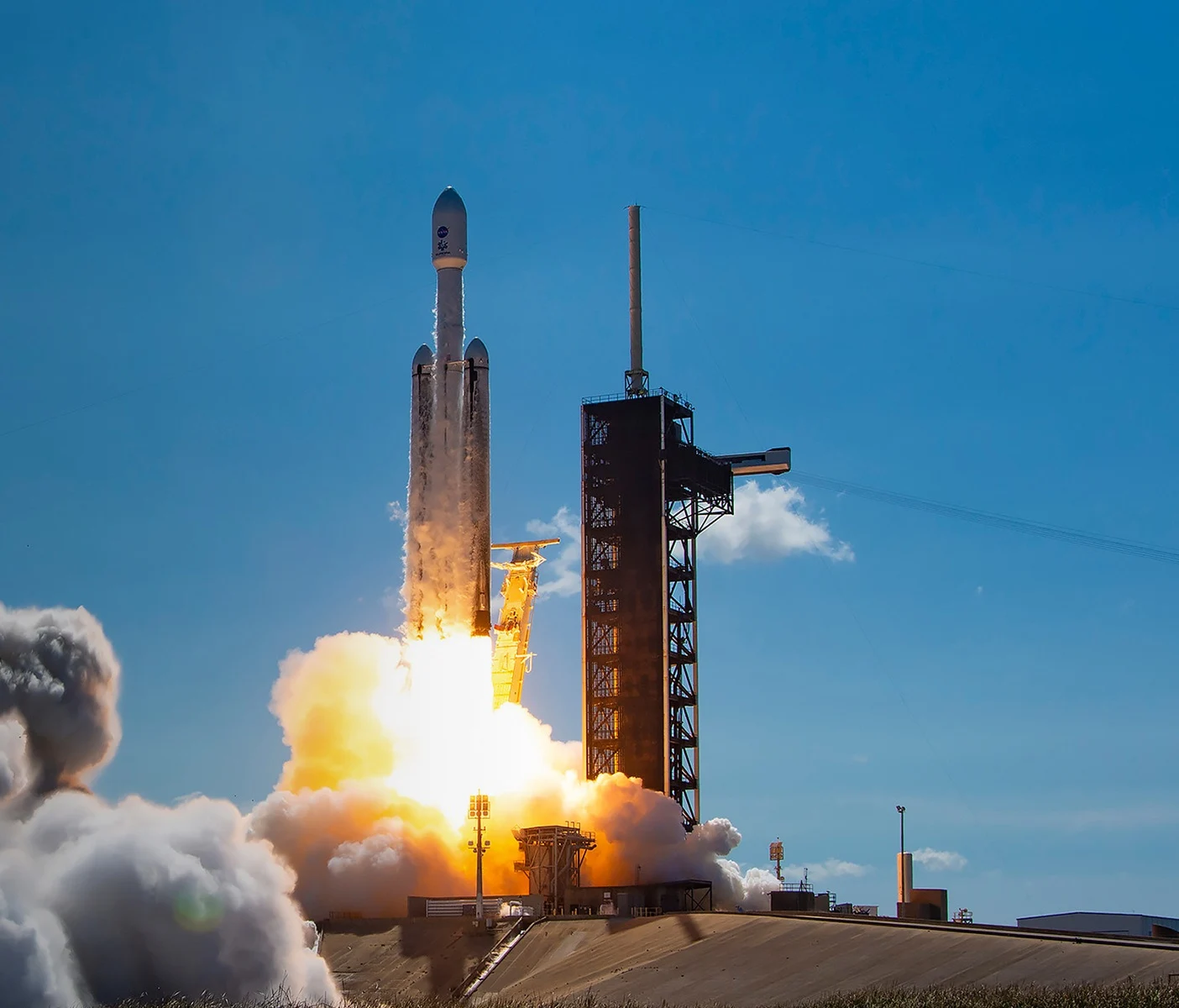
    Elon Musk’s SpaceX has emerged victorious in the competition for Pentagon contracts related to launching missions. The latest agreement is worth $714 million and is set to last until 2027.

    SpaceX’s Significant Role

    SpaceX received approval to carry out five out of seven major missions, supporting the US Space Force’s National Security Space Launch (NSSL) Phase 3 Lane 2 initiative. As per details shared by the US Space Systems Command, SpaceX will assist in placing classified payloads and communication satellites into orbit, enhancing the military’s capabilities in communication and surveillance, while also managing reconnaissance operations.

    Missions Undertaken

    SpaceX will manage three classified missions for the Space Force, specifically USSF-155, USSF-149, and USSF-63. Additionally, it will conduct the USF-206 flight, which aims to launch the Boeing-manufactured 12th Wideband Global Satcom (WGS-12) satellite. The contract also includes the NROL-86 reconnaissance mission for the National Reconnaissance Office (NRO).

    Competitors in the Field

    The remaining two missions were awarded to the United Launch Alliance (ULA), a collaboration between Boeing and Lockheed Martin, totaling $428 million. Jeff Bezos’ Blue Origin lost out because its New Glenn rocket does not have military certification.

    SpaceX has high hopes to further its dominance in the global rocket launch industry. Musk mentioned that the company could potentially handle over 95 percent of the total weight of Earth payloads launched into orbit once the Starship begins regular flights. This enormous multi-stage rocket is currently undergoing development and testing at Starbase in Texas.

    Elon Musk shared this update on X, Drive Tesla Canada.

    Source:
    Link



  • Starlink Mini Price Cut: Up to 40% Off in US and Canada

    Starlink Mini Price Cut: Up to 40% Off in US and Canada

    Key Takeaways

    1. Starlink Mini satellite internet kit is now discounted to $299 in the US (down from $499) and CAD $399 in Canada (down from CAD $599).
    2. The device is portable and ideal for travelers, campers, and outdoor enthusiasts needing internet access.
    3. To use Starlink Mini, customers must subscribe to the Starlink Roam plan, costing around $150/month in the US and CAD $189 in Canada.
    4. The free “pause” feature has been replaced with a new Standby Mode for $5/month, limiting speeds to about 0.5 Mbps.
    5. The Starlink Mini includes a built-in Wi-Fi router, is easy to set up in under 10 minutes, and is available for purchase on SpaceX’s website and at major retailers.


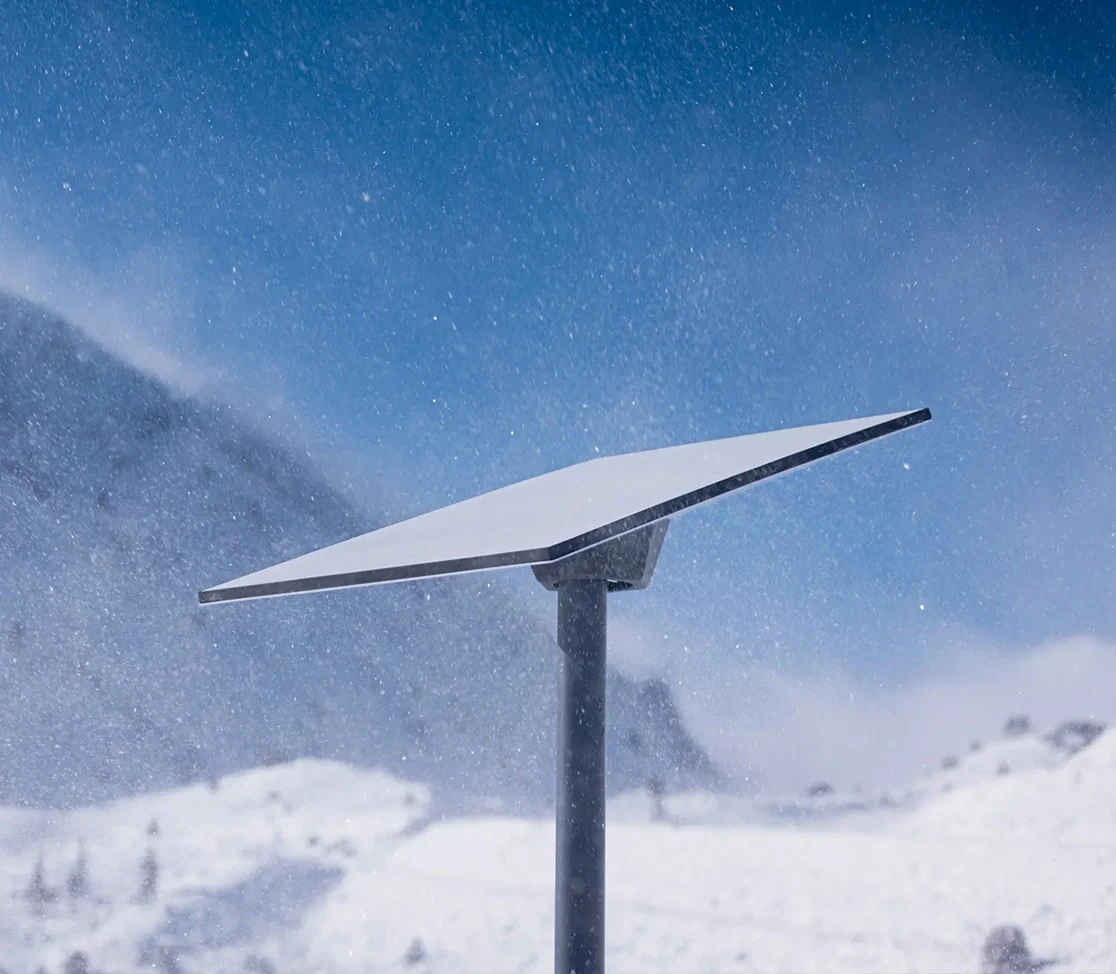
    SpaceX has rolled out new discounts for its Starlink Mini satellite internet kit, targeting customers in the US and Canada. This small, portable device is perfect for people who travel, go camping, or enjoy outdoor activities and need internet access away from traditional connections.

    Pricing Details

    In the United States, the Starlink Mini can now be purchased for $299, reduced from its original price of $499. For customers in Canada, the kit is available for CAD $399, down from CAD $599. This promotion is a repeat of a similar price reduction earlier this year, as SpaceX continues to promote its portable internet solutions.

    Subscription Plans

    To use the Starlink Mini at various locations, you need a Starlink Roam plan. In the US, the Unlimited Roam plan is priced at around $150 a month, while Canadian users will pay CAD $189. There’s also a more affordable plan that offers limited data usage.

    Policy Changes

    Recently, the satellite internet service owned by Musk has made some changes to its policies. The free “pause” feature is being replaced with a new Standby Mode, which costs $5 monthly. In this mode, internet speeds are limited to about 0.5 Mbps, which is sufficient for simple browsing and sending messages.

    The Starlink Mini is designed to fit easily in a backpack and includes a built-in Wi-Fi router. Users can set it up in less than 10 minutes. The kit is now available for purchase on SpaceX’s website and at major retailers like Best Buy and Home Depot.

    Source:
    Link


  • Starlink Referral Campaign: Get Service for Just $89 a Month

    Starlink Referral Campaign: Get Service for Just $89 a Month

    Key Takeaways

    1. SpaceX has launched a Starlink referral program that offers both referrers and new subscribers a free month of service worth up to $120.
    2. The referral program is part of a broader initiative that includes the opening of specialized Starlink retail stores for a unique customer experience.
    3. The promotion is only available to Residential plan users and excludes those on the cheaper Residential Lite plan.
    4. New subscribers can access the referral program through the Starlink app or website, but both parties must be in the same country for eligibility.
    5. SpaceX is expanding its satellite constellation to enhance bandwidth and aims to attract more customers through this referral initiative.


    SpaceX has launched a Starlink referral program that rewards both the individuals who share the referral link and the new subscribers with a free month of service. This initiative aims to benefit friends and family who join the service.

    Retail Experience Enhancements

    The inaugural Starlink referral campaign is happening alongside the company’s first job postings for a specialized Starlink store. This store intends to create a unique retail experience for potential satellite Internet users, stepping away from major retailers like Walmart and Best Buy.

    As SpaceX gears up to deploy its new high-capacity V3 satellites, which are comparable in size to a Boeing 737 when fully deployed and can provide 10 times the bandwidth of the existing V2 models, the company is eager to boost Starlink adoption. This is crucial for utilizing the increased capacity that these new satellites will bring.

    Promo Details and Limitations

    The latest Starlink referral promotion will provide a month of free service, valued at up to $120, to both the existing customer who refers someone and the new subscriber. However, only those who are on the Residential plan can benefit from this offer, leaving out users who opt for the more affordable Residential Lite plan, which comes with limited data.

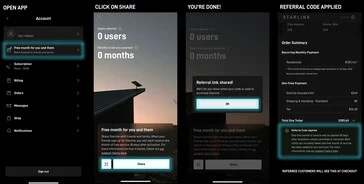
    New subscribers to the Roam plan, accessed via a Starlink Mini dish, can also enjoy the free month offer. Eligible users can find the referral option in the Starlink app under the Account tab, where they can click on the “Free month for you and them” section to create a shareable link for their friends or relatives. This can also be done on the Starlink website in the “Referrals” section.

    Signup Process and Conditions

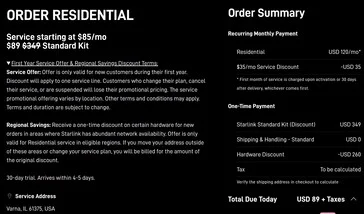
    Once a new user registers through the referral link, the referring Starlink customer will receive an email confirmation along with a free service credit within 30 days of the new account being activated, which can be used for the next billing cycle. In select underserved areas of the US, Starlink’s service can now be initiated for as little as $89 upfront, as detailed below.

    Unfortunately, the referral program requires that both the referrer and the new subscriber be in the same country, and kits purchased from third-party sellers do not qualify. Only kits bought directly from Starlink online or potentially from its new retail stores will be eligible.

    Recently, SpaceX has requested the FCC to increase its constellation launch permit from 12,000 to 44,000 satellites. This expansion is part of the company’s effort to develop a strong gigabit network. This plan includes 15,000 satellites that will connect directly to mobile phones, providing 5G data through dedicated Starlink chips. Hence, SpaceX is looking for as many Starlink referrals as possible to attract customers for its significant capacity growth.

    Source:
    Link


  • Starlink Opens Store for Dish Sales, Offers $115K Retail Manager Salary

    Starlink Opens Store for Dish Sales, Offers $115K Retail Manager Salary

    Key Takeaways

    1. Starlink is planning to open its own retail stores, moving beyond sales through large retailers like Walmart and Best Buy.

    2. The first dedicated position for a Starlink store manager has been listed, with a salary range of $95,000 – $115,000 plus bonuses.

    3. The store manager will be responsible for hiring staff, assisting customers with hardware, and discussing Internet plans, requiring both retail and technical experience.

    4. This marks a significant shift in Starlink’s sales strategy, as it aims to establish a direct retail presence for selling satellite Internet gear and subscriptions.

    5. Starlink’s future plans may include offering 5G carrier services, supported by a new retail strategy and recent acquisitions in technology.


    Starlink is looking to broaden its retail footprint beyond giant retailers like Walmart, Costco, Home Depot, and Best Buy by launching its own stores. Recently, SpaceX listed its first dedicated position for a Starlink store manager with a pay range of $95,000 – $115,000, plus bonuses.

    New Store Manager Role

    The store manager role is based in Bakersfield, California, and it’s the first time Starlink has suggested that it might run its own retail outlets. It remains uncertain if SpaceX aims to create a national network of Starlink stores or if it will just have a few flagship locations.

    Responsibilities and Qualifications

    The managerial duties include hiring “three or more employees” for the Starlink store who will assist potential customers with hardware like the Mini dish, which is currently on sale for 20% off on Amazon, and discuss available satellite Internet plans face-to-face. The job requires both retail and technical experience, including the development of strategies to boost “store traffic and Starlink adoption.”

    Additionally, the ideal candidate for the Starlink store manager role should have a thorough understanding of all Starlink products and services. They may come from a technical background but should also have experience in retail management, as skills in “hardware troubleshooting” and logistics software are advisable.

    Evolution of Sales Strategy

    Starlink initially started selling its dishes in physical stores at Costco’s locations in Japan, followed by Home Depot, Best Buy, Walmart, and other large retailers. However, this is the first instance where Starlink is aiming to establish its own dedicated retail outlet to sell satellite Internet gear and subscriptions, signifying a notable shift in its sales strategy as it increasingly positions itself as an alternative to traditional cable Internet providers.

    With the recent acquisition of Dish spectrum and the deployment of its V3 cellular satellite constellation, SpaceX might soon offer 5G carrier services through phones outfitted with custom Starlink chips. The introduction of this dedicated store manager position certainly suggests that Starlink is gearing up to become a prominent Internet provider, complete with a retail presence.

    Source:
    Link


  • Free Starlink Mini Dish for Longtime Subscribers in Australia

    Free Starlink Mini Dish for Longtime Subscribers in Australia

    Key Takeaways

    1. SpaceX is giving a free Starlink Mini Kit to subscribers in Australia who have maintained their contract for over a year, valued at approximately US$390.
    2. The promotion includes other offers, such as a free Standard Kit in certain Australian areas for new subscribers on a 12-month contract.
    3. Starlink aims to attract customers from traditional telecom providers in Australia, where the population is sparse, by offering these promotions.
    4. Subscribers must continue their Residential plan to keep the free Mini dish; otherwise, they must return it or pay for it.
    5. Those who receive the free Mini dish can also enjoy a 50% discount on the roaming plan fee.


    SpaceX is offering a complimentary Starlink Mini Kit to subscribers who have maintained their contract with the satellite internet provider for over a year.

    Value of the Offer

    If this free Starlink Mini dish promotion were available in the United States, it would be worth $500, even with the discounted price on Amazon. However, Australian customers are the lucky ones getting this appealing deal first, saving AU$599, which is around US$390.

    Other Promotions in Australia

    The offer of a free Mini dish with a Residential plan subscription isn’t the only promotion Starlink has in Australia. To attract customers from traditional telecommunications companies, Starlink is also providing a free Standard Kit in certain areas. To qualify for the free dish, subscribers must commit to a 12-month contract. In regions where the free Standard Kit promotion is not available due to higher customer saturation, new subscribers can still purchase a dish at a reduced price of just AU$149.

    Strategic Moves in the Market

    Despite partnering with Telstra, the largest local carrier that provides fixed broadband internet to remote customers, SpaceX is still rolling out these free Starlink dishes in Australia. The country’s vast spaces and scattered population present a prime opportunity for Starlink to draw subscribers away from traditional telecom services, and they are seizing the opportunity for growth.

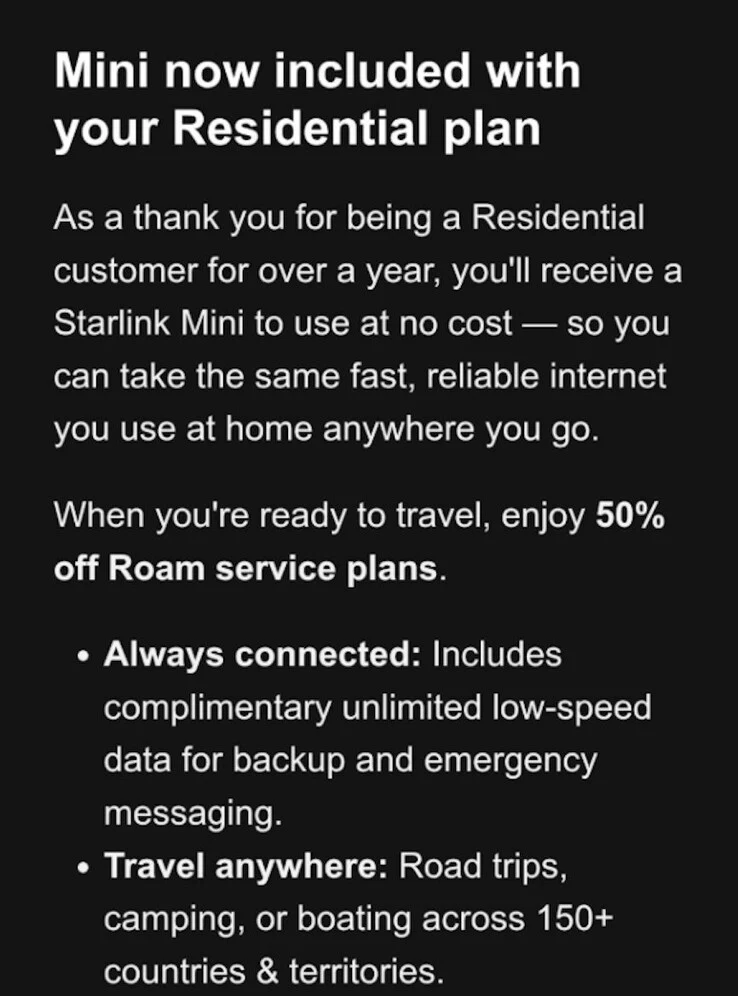
    Subscribers who have been on the Residential plan for over a year are now receiving notifications that they qualify for the free Starlink Mini dish, which is valued at US$390. This could even encourage them to sign up for the Roam plan, providing Starlink with an additional revenue stream from the same customers.

    Important Conditions

    However, there’s a catch: subscribers must continue paying for the Starlink Residential plan, or they will either need to return the Mini dish or pay for it. Those who take advantage of the free Starlink Mini dish promo will receive a 50% discount on the roaming plan fee, making it a tempting offer.

    Source:
    Link


  • Starlink Launching 5G Service with Major Satellite Expansion

    Starlink Launching 5G Service with Major Satellite Expansion

    Key Takeaways

    1. SpaceX is seeking FCC approval to launch 15,000 new V3 generation direct-to-cell satellites to enhance mobile service coverage.
    2. The new satellites will provide 20 times the throughput of the current Starlink V2 satellites, enabling full 5G service for mobile phones.
    3. Plans include expanding the Starlink ground station network to improve coverage, speed, and reduce latency, with projected speeds of up to 100 Mbps.
    4. SpaceX aims to establish itself as a major player in the mobile network industry, akin to traditional carriers like AT&T and Verizon.
    5. The launch of the V3 satellites depends on the success of the Starship 3 rocket tests, with a targeted launch date for the satellites set for 2026.


    SpaceX is getting ready to send a huge number of direct-to-cell satellites into orbit, aiming to create the largest satellite constellation that will transmit its new 5G service to mobile phones on Earth.

    Launching a New Era

    In its latest application, SpaceX is asking the FCC to approve the launch of an astonishing 15,000 new V3 generation direct-to-cell satellites. These new satellites are designed to provide 20 times the throughput of the current roughly 650 V2 satellites that Starlink uses for mobile service.

    Currently, the Starlink direct-to-cell satellites can only enable messaging and limited data for certain optimized apps through partnerships, such as the T-Satellite service with T-Mobile. With the new fleet of up to 15,000 V3 satellites, Starlink expects to establish a cellular network capable of delivering 5G data to any phone on the ground.

    Expanding the Network

    In its filing, SpaceX also plans to grow its extensive network of Starlink ground stations to enhance coverage, improve speeds, and reduce latency. The Starlink 5G service is projected to reach speeds of up to 100 Mbps, similar to what the Starlink Mini dish currently provides, but this will be achieved through a special satellite modem chip inside carrier phones.

    As for partnerships, while SpaceX is making deals with companies like T-Mobile for Starlink satellite connections, it appears to have ambitions to become the first space carrier in the world. Thanks to the vast spectrum it acquired for $17 billion from Dish’s parent company, Elon Musk mentioned that “you should be able to have Starlink like you have an AT&T, or T-Mobile, or Verizon [service]” in the near future.

    A Game Changer

    It’s clear that such a Starlink 5G service could transform the industry, even if Musk tends to downplay its potential due to the fact that U.S. carriers still “own a lot of spectrum.” While the Starlink 5G network may only offer downloads of 100 Mbps, that speed is comparable to the median LTE speeds offered by Verizon and AT&T just last year.

    All these ambitious plans depend on the successful tests of the Starship 3 rocket, which will be used to launch the V3 satellites that are about the size of a Boeing 737 when deployed. SpaceX is aiming for the first flight of the Starship 3 this year and hopes to launch the V3 satellites in 2026, which will also allow it to activate its gigabit speed network for dedicated devices like the new Performance dish.

    Source:
    Link


  • Starlink Outage: Satellite Internet Down During Geomagnetic Storm

    Starlink Outage: Satellite Internet Down During Geomagnetic Storm

    Key Takeaways

    1. Starlink experienced a global satellite Internet outage on September 15, affecting over 50,000 users in various locations, including Ukraine and Michigan.
    2. The outage was likely caused by a significant geomagnetic storm, which was predicted by NOAA, rather than an issue controlled by SpaceX.
    3. The previous outage was due to human error during a capacity upgrade of Starlink’s terrestrial network, which aims to improve service quality.
    4. The first outage lasted almost three hours, while the September 15 downtime was shorter, with users affected for up to an hour and a half.
    5. SpaceX plans to launch V3 satellites in 2026, which will increase throughput capacity and allow for faster download speeds.


    Starlink experienced a global satellite Internet outage on September 15, marking its second major disruption since a previous incident a few weeks ago.

    Over 50,000 users reported connectivity issues, stretching from Ukraine, where Madyar, chief of the drone army, noted that “Starlink is once more down along the frontline,” to users in Michigan and others utilizing a Starlink Mini dish.

    Possible Causes of Outage

    The cause of this latest Starlink outage appears to be beyond the control of SpaceX. Although Starlink did not provide specific details in its announcement, the outage coincided with a warning from the National Oceanic and Atmospheric Administration (NOAA) regarding a significant geomagnetic storm during the same timeframe.

    A geomagnetic storm with a K-index of 7 or higher (NOAA G3 or above) was predicted to occur between 02:54 and 09:00 UTC on September 15, 2025. This could result in power system voltage fluctuations, spacecraft surface charging issues, increased satellite drag, temporary GPS navigation and HF radio disturbances, and auroras visible as far south as Pennsylvania, Iowa, and Oregon.

    Previous Outage Details

    The initial significant disruption of Starlink’s service was due to human error. SpaceX was implementing a capacity upgrade for Starlink’s terrestrial network, which consists of over 100 gateways, each with 150 antennas in the United States. These hubs help to cover dead zones and reduce latency for distant users by spreading the satellite Internet signal through fiber optic cables, improving ping and providing a more stable connection.

    This upgrade aimed to enhance the terrestrial signal distribution in anticipation of the forthcoming Starlink gigabit network. SpaceX is set to launch its V3 satellites in 2026, which will offer 10 times the throughput capacity, allowing peak download speeds to exceed 1 Gbps when using a Performance dish.

    Duration of Outage

    The first major outage caused by the terrestrial gateway firmware upgrade lasted almost three hours. However, on September 15, Starlink’s downtime during the geomagnetic storm was relatively short, with users reporting that they were without satellite Internet for a maximum of an hour and a half.

    Source:
    Link


  • Starlink Boosts Download Speeds for Mini and Standard Dish Kits

    Starlink Boosts Download Speeds for Mini and Standard Dish Kits

    Key Takeaways

    1. The FCC has approved a power boost for Starlink dishes, increasing EIRP for the Standard dish from 42.1 dBW to 43.4 dBW.
    2. The Starlink Mini dish power output has increased significantly from 33.2 dBW to 39.2 dBW, improving performance during roaming.
    3. SpaceX is launching V2 satellites rapidly, adding 5 Tbps of capacity weekly, resulting in average U.S. download speeds of 200 Mbps.
    4. Some users have reported download speeds exceeding 300 Mbps after a recent firmware update, indicating potential for future improvements.
    5. It is unclear if current subscribers will get the power boost via firmware updates or if it will only be available on new dishes from the Bastrop facility.


    SpaceX has received permission for a power boost on its Starlink dishes, something it has been seeking for over a year now.

    The Federal Communications Commission (FCC) has approved an increase in the Equivalent Isotropic Radiated Power (EIRP) for the Standard dish, raising it from 42.1 decibel watts (dBW) to 43.4 dBW.

    Improved Performance for the Mini Dish

    In addition, the Starlink Mini dish, referred to in the FCC documents as UT3-V2, has seen a much larger increase in its power output, now permitted to transmit at 39.2 dBW instead of the previous 33.2 dBW.

    This increase in signal strength will enhance the performance of the Starlink Mini dish during roaming, enabling faster download speeds when a user is farther away from the Mini kit. The same applies to the Standard dish, which is currently available at a discounted price across the United States.

    Rapid Satellite Launching

    SpaceX is actively deploying V2 satellites, adding 5 Tbps of capacity every week. As a result, the average download speeds for Starlink in the U.S. have reached 200 Mbps, even during peak hours, which is double what it was three years ago, even with the growing number of subscribers.

    Some users have noted significant increases in their download speeds, exceeding 300 Mbps, following a firmware update sent to ground stations. This update was part of preparations for the launch of a gigabit network set for 2026. Although the update caused a major outage, the speed boosts some users are experiencing could indicate future improvements thanks to the recently approved power increases for both the Standard and Mini dishes.

    Uncertainty for Existing Subscribers

    The FCC has approved this power boost for use both when the Starlink dish is stationary and when it is in motion. However, it remains uncertain whether current subscribers will receive this new capability through a firmware update or if only new dishes produced at Starlink’s Bastrop facility, which operates at a rate of 15,000 units per day, will feature the enhanced power output.

    Source:
    Link


  • SpaceX Takes on Virginia’s $613M Broadband Plan with $60M Starlink

    SpaceX Takes on Virginia’s $613M Broadband Plan with $60M Starlink

    Key Takeaways

    1. SpaceX is unhappy with Virginia’s decision to spend over $613 million on a high-speed internet project, believing it can be done for much less using Starlink.
    2. The state plans to use funds from the BEAD program to connect homes without internet access, but SpaceX feels overlooked in this process.
    3. SpaceX criticizes the BEAD program for favoring costly fiber-optic solutions over more affordable and faster options like Starlink.
    4. SpaceX was chosen to provide Starlink service to only 5,579 of the 133,000 eligible households, receiving $3.2 million for this, while fiber connections will cost significantly more per household.
    5. SpaceX can deploy Starlink services immediately, unlike the four-year timeline proposed for fiber installation in Virginia.


    SpaceX is expressing dissatisfaction with Virginia’s decision to allocate over $613 million for a high-speed internet project, which the company believes could be achieved at a much lower cost. Instead of the costly fiber-optic solution, SpaceX has proposed to implement its Starlink systems.

    Funding for High-Speed Internet

    The state aims to utilize funds from the Broadband, Equity, Access, and Deployment (BEAD) program to connect those without internet access. In response, SpaceX has sent a letter to regulators, voicing concerns about being overlooked in a process that they see as an unnecessary expenditure of public funds.

    Concerns Over Cost and Efficiency

    SpaceX criticized the BEAD program in Virginia for favoring “expensive, slow-to-build fiber” rather than opting for “affordable, fast, and technology-neutral competition.” The company argues that it would only require $60 million to connect all eligible households in Virginia under the BEAD initiative.

    Limited Participation in the Program

    Notably, SpaceX was selected to provide Starlink to just 5,579 of the 133,000 households eligible under the BEAD plan in Virginia. It received $3.2 million, equating to approximately $584 per household. In contrast, the remaining households that will receive fiber connections will incur costs ranging from $6,000 to $8,000 each. A small total of $7.7 million was allocated to satellite internet providers, including SpaceX and Amazon.

    SpaceX also emphasized its capability to deploy Starlink services immediately, unlike the four-year timeframe suggested in Virginia’s broadband proposal. The company is urging the National Telecommunications and Information Administration (NTIA), part of the U.S. Department of Commerce, to revise Virginia’s broadband strategy.

    Source:
    Link


  • Tesla Roadster 2 Could Use Banned F1 Tech to Achieve Flight

    Tesla Roadster 2 Could Use Banned F1 Tech to Achieve Flight

    Key Takeaways

    1. Elon Musk hints at achieving sub-second acceleration (0-60 mph in 0.99 seconds) for the Tesla Roadster 2, possibly using SpaceX technology.
    2. The CEO of Rimac doubts such acceleration can be achieved without thrusters, emphasizing the need for advanced technology.
    3. Tesla has patented a new aerodynamic system with fans and skirts that adjusts downforce for varying speeds and driving conditions.
    4. The fan-and-skirt system aims to enhance grip and cornering, crucial for breaking racetrack records.
    5. Future developments for the Roadster 2 include a planned “epic demo” in 2024, with uncertainty around the use of thrusters or wings for acceleration.


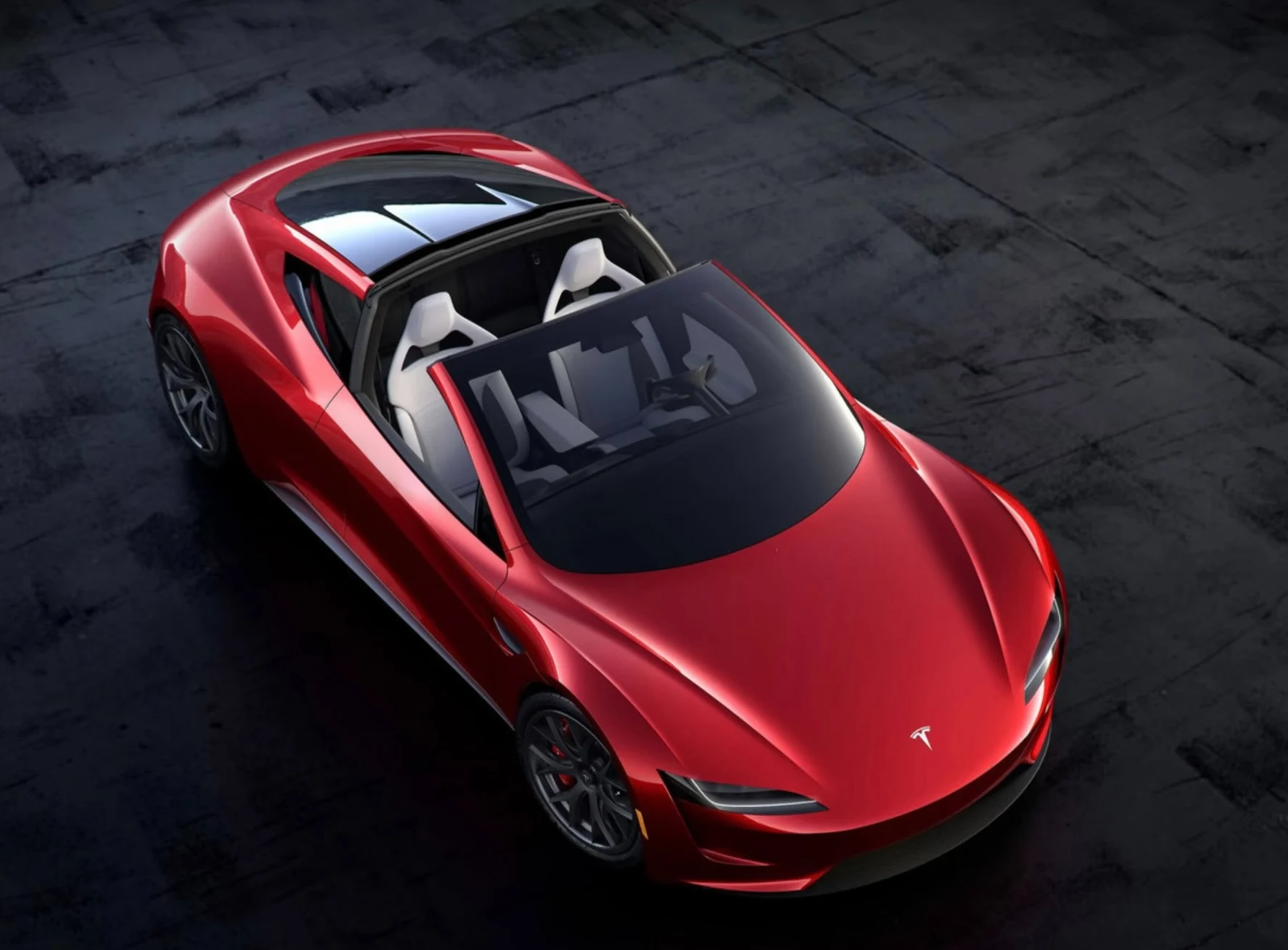
    Elon Musk has hinted at mind-blowing sub-second acceleration for the new Tesla Roadster 2 hypercar. However, the CEO of Rimac, the company behind the world’s fastest electric car, the Nevera R, expressed doubts that such performance could be achieved without using some type of thrusters.

    Potential Innovations

    Musk suggested that the Roadster 2 may utilize SpaceX’s Starship rocket technology to reach the impressive 0.99 seconds for 0-60 mph acceleration. Tesla might employ a downforce technique that was banned shortly after its Formula 1 introduction because it gave the Brabham BT46 “fan car” an unfair edge on the racetrack.

    The BT46 drew inspiration from fan-based systems on race vehicles like the Chaparral 2J, which dominated the North American Can-Am sports car series in 1970, and the later Tyrrell 008. Both of these cars featured fans powered either by a dedicated motor or the main engine. While they were ostensibly intended for cooling, the fans also helped to draw air from beneath the car, allowing the denser air above to create downforce, keeping the vehicle more stable than traditional spoilers, venturi tunnels, or other aerodynamic devices.

    New Patent for Aerodynamics

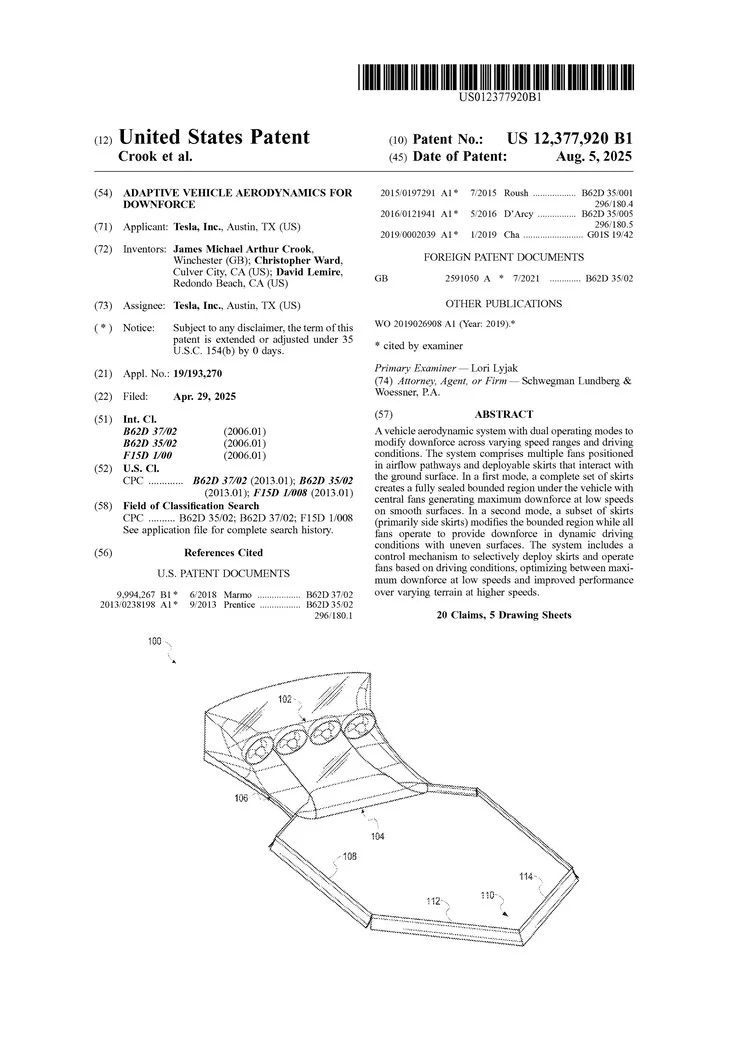
    Recently, Tesla has been awarded a patent for an “adaptive vehicle aerodynamics for downforce” system, which includes fans and skirts designed to create a vacuum under ultra-fast vehicles like the Roadster 2.

    This aerodynamic system operates in two modes to adjust downforce based on different speeds and driving conditions. It features several fans located in airflow paths and deployable skirts that interact with the ground. In the first mode, all skirts form a sealed area under the car, with central fans providing maximum downforce at low speeds on smooth surfaces. In the second mode, some skirts (mainly the side ones) adjust the sealed area while all fans work to generate downforce during dynamic driving on uneven terrains. The system has a control mechanism that selectively uses skirts and fans according to driving conditions, balancing between maximum downforce at lower speeds and better performance on varied terrain at higher speeds.

    The highlight here is “at varying speed ranges” because, unlike standard downforce tools like spoilers, the fan-and-skirt combination applies pressure continuously, thus enhancing grip, cornering, and all other crucial elements needed to break racetrack records in a vehicle that could accelerate from 0-60 mph in just one second.

    Future Developments

    Whether the acceleration boost will come from some sort of thrusters developed by SpaceX or “wings,” as Musk describes them, is still uncertain. However, he recently left a Roadster 2 presentation with the design team feeling quite impressed, mentioning that a “most epic demo” is planned for later this year. Musk previously teased that the Roadster 2 would “fly” in 2024, with promises for the demo to occur in that year.

    The hypercar has taken a back seat while Tesla focused on developing the Cybercab and completing a major portfolio overhaul, which is now finished. Fans are eagerly awaiting the Roadster 2, which could, ironically, also be equipped with fans.

    Source:
    Link