Tag: MacBook Neo

  • MacBook Neo Teardown: iFixit Rates Apple’s Most Repairable Laptop 6/10

    MacBook Neo Teardown: iFixit Rates Apple’s Most Repairable Laptop 6/10

    Key Takeaways

    1. Budget-Friendly Pricing: The MacBook Neo starts at $599, making it Apple’s most affordable laptop, appealing to casual users and students.

    2. High Repairability Score: iFixit awarded the MacBook Neo a repairability score of 6 out of 10, the best score Apple has achieved in over a decade.

    3. Easy Internal Access: The design allows for easy access to internal components, making repairs simpler, with modular USB-C ports and independently replaceable keyboards.

    4. Design Limitations: The laptop’s RAM and storage are soldered to the logic board, potentially hindering long-term competitiveness and making data recovery difficult if the board fails.

    5. Sound and Trackpad Trade-offs: The built-in speakers lack the quality of premium models, and the trackpad sacrifices advanced features for easier servicing.


    Apple has just unveiled its most budget-friendly laptop yet, the MacBook Neo, which runs on the A18 Pro chip, the same chip featured in the iPhone 16 Pro. For the first time in 14 years, repair services are praising Apple’s latest creation, declaring the MacBook Neo to be the most repairable MacBook to date. Starting at $599, the 13-inch MacBook Neo comes with 8 GB of memory and offers storage options of either 256 GB or 512 GB, making it a strong competitor against budget laptops for casual users and students.

    Repairability Score

    iFixit recently conducted a thorough teardown of the MacBook Neo, awarding it a repairability score of 6 out of 10, which is the best score Apple has achieved in over a decade. This time, Apple has moved away from the adhesive stretch-release battery swap, opting for a 36.5-watt-hour battery secured by 18 screws, significantly reducing the risk of damaging the lithium-ion cell during repairs.

    Easy Access Inside

    Despite the improvements, Apple still employs pentalobe screws on the bottom of the device. Once these screws are removed, the bottom shell of the MacBook Neo can be unclipped easily. The advantage of this design is that all internal components are well-organized and easy to access, including the battery, speakers, USB-C ports, trackpad, and display. The USB-C ports are modular, meaning if one breaks, users only need to replace that port instead of the entire logic board.

    Removing the antenna and hinge screws allows the display to come off without any hassle. For the first time, users can replace the keyboard independently without having to swap the complete top shell.

    Downsides of the Design

    However, the MacBook Neo has some drawbacks. To replace the keyboard, users must peel off a layer of adhesive tape and take out 41 screws, which contrasts sharply with many newer laptops like the Lenovo T14 Gen 7, which allows for tool-free keyboard replacement.

    The MacBook Neo features the same A18 Pro chip as the iPhone 16 Pro, which restricts RAM to 8 GB and storage to either 256 GB or 512 GB, both soldered to the logic board. This limitation might hinder the MacBook Neo’s competitiveness against Apple’s MacBook Air and other ultrabooks in the long run. Moreover, if the logic board fails, recovering data can be extremely difficult.

    Sound Quality and Trackpad

    Another trade-off is the quality of the built-in speakers. They are easily replaceable but lack the crispness and dynamic sound found in more premium MacBooks like the new 13-inch MacBook Air M5 or the 16-inch MacBook Pro M5.

    The trackpad on the MacBook Neo also sacrifices haptic Force Touch for more basic controls, which partly simplifies servicing the device.

    Parts Replacement Made Easier

    Lastly, Apple has simplified parts replacement with the Repair Assistant tool introduced last year. Users can easily swap out display panels, trackpads, batteries, or Touch ID modules without the laptop triggering warnings or locking them out of features.

    Source:
    Link



  • MacBook Neo Might Skip Touchscreen; Pro Gets Upgrade

    MacBook Neo Might Skip Touchscreen; Pro Gets Upgrade

    Key Takeaways

    1. The MacBook Neo, introduced in March 2026, offers excellent value with strong build quality and performance, surpassing similar-priced laptops and iPads.
    2. For current MacBook Pro or Air owners, the MacBook Neo may not be appealing due to performance and feature differences.
    3. Apple has not decided on adding touchscreen capabilities to its Mac models, with the MacBook Pro being a possible exception by late 2026.
    4. The MacBook Air is unlikely to receive a touchscreen upgrade for another two years, despite being a suitable candidate.
    5. The pricing of the MacBook Neo ($599, $499 for education) was carefully considered, and adding a touch display would increase production costs.


    Apple introduced the affordable MacBook Neo in March 2026. Nevertheless, as per Gurman, the tech giant from Cupertino might bypass this new laptop when it comes to refreshing the MacBook lineup with touch capabilities.

    Value of MacBook Neo

    Gurman discussed the MacBook Neo in his well-known newsletter, Power On, recognizing the device’s strong value. He pointed out its excellent build quality, impressive performance, and overall power, emphasizing that it surpasses other laptops within the same price bracket. Additionally, he remarked that the MacBook Neo is “much better than a similarly priced iPad.” Still, Gurman noted that if you already have a MacBook Pro or MacBook Air, the MacBook Neo lacks appeal due to the notable differences in performance, screens, and various features.

    Touchscreen Uncertainty

    According to Gurman, Apple hasn’t yet determined if it will implement touchscreen capabilities on any of its Mac models. The MacBook Pro stands out as the only exception, as he mentioned it might receive a touchscreen by late 2026. On the other hand, the MacBook Air, which he thinks is a more suitable option for a touchscreen upgrade, wouldn’t see this enhancement for another two years.

    Pricing Strategy

    Gurman clarified that the $599 price tag ($499 for educational purchasers) for the MacBook Neo was set after a thorough evaluation of the device’s components. He cautioned that incorporating a touch display would only drive up production costs.

    Earlier, we mentioned that another Apple analyst, Ming-Chi Kuo, reversed his assertion that the upcoming MacBook Neo would feature touch functionality.

    Source:
    Link


  • Apple’s $599 MacBook Neo: Great for Gaming, But 8GB RAM Lacks

    Apple’s $599 MacBook Neo: Great for Gaming, But 8GB RAM Lacks

    Key Takeaways

    1. The MacBook Neo is priced at $599 and features the A18 Pro SoC, the same chip used in iPhone 16 Pro models, which enhances its gaming capabilities.

    2. It can run demanding games like Cyberpunk 2077 and Control at lower settings, achieving over 40 FPS at 720p and around 50 FPS at 1080p, respectively.

    3. The 8 GB RAM can limit performance, particularly with memory-intensive games and emulations, affecting the experience with titles like Elden Ring.

    4. While less demanding games, such as Minecraft, perform well, challenging titles may struggle, especially when using CrossOver for Windows games.

    5. Overall, the MacBook Neo is suitable for daily tasks and light gaming, but gaming performance can vary widely based on the game’s requirements.


    Aside from its lackluster battery performance, Apple has managed to keep the MacBook Neo priced at $599 by incorporating the A18 Pro SoC, the same chip found in the iPhone 16 Pro and 16 Pro Max. This A18 Pro chip actually performs quite well for gaming. The MacBook Neo is capable of playing demanding games like Cyberpunk 2077, Resident Evil 2 Remake, and Control at 1080p and 720p with lower settings. However, it’s important to note that the 8 GB RAM can be a significant limitation.

    Gaming Performance Insights

    In tests conducted by Andrew Tsai, the MacBook Neo achieves over 40 FPS in Cyberpunk 2077 at 720p (with MetalFx upscaled from 360p) when set to the lowest settings. Control runs at about 50 FPS on the laptop at 1080p using low settings (with MetalFx upscaling from 540p). Games that are optimized properly can perform even better.

    Frame Rates and Limitations

    Tsai’s results suggest that Resident Evil 2 Remake can nearly hit 60 FPS at 1080p, upscaled from 540p with default graphics. Less demanding or indie games like Minecraft can even reach high frame rates without much trouble.

    However, not all games run smoothly. The MacBook Neo has difficulties with titles that heavily rely on memory. This issue becomes especially pronounced when emulating consoles such as the Nintendo Switch or attempting to play PC games via CrossOver, which allows Windows applications to run on macOS and Linux.

    Emulation Challenges

    For example, Elden Ring reportedly struggles significantly, averaging in the mid-20s FPS with choppy performance at 450p/low settings. The limited memory makes it hard to run CrossOver alongside a modern AAA game. On a brighter note, Dark Souls Remastered performs decently through CrossOver, achieving a steady 60 FPS with few frametime hiccups.

    Emulating Nintendo Switch games also tends to be quite unstable, especially with demanding titles like The Legend of Zelda: Breath of the Wild, while other Switch games might work better.

    In conclusion, the MacBook Neo proves to be a capable machine for daily tasks and light gaming. It handles less demanding macOS-native titles well. While it can emulate Windows games and other platforms, the gaming experience will vary significantly depending on the title.

    Source:
    Link


  • Apple MacBook Neo Teardown Reveals Modular Ports and No Glue Battery

    Apple MacBook Neo Teardown Reveals Modular Ports and No Glue Battery

    Key Takeaways

    1. The MacBook Neo is easy to open, requiring only eight screws to access the internal components.
    2. Minimal glue is used, allowing for quick swaps of parts like speakers, antennas, and the mainboard.
    3. The two USB-C ports are modular, making them easily replaceable without soldering.
    4. Battery replacement is straightforward, with no adhesive and only 18 screws holding it in place.
    5. Most components, including the display and trackpad, can be replaced easily, enhancing user repairability.


    The Apple MacBook Neo ($599 on Amazon) was released on Wednesday. A new detailed teardown video by Tech Re-Nu demonstrates how simple it is to fix the MacBook Neo and reveals the inner workings of this budget-friendly notebook, which is powered by an iPhone processor. To access the aluminum casing, users need to remove just eight screws on the bottom, similar to the MacBook Air and MacBook Pro.

    Easy Access to Components

    Once the device is opened, many parts can be swapped out by loosening screws and connectors. Thankfully, Apple has used minimal glue in the MacBook Neo. If something goes wrong, the speakers, the 3.5 mm headphone jack, the Wi-Fi and Bluetooth antennas, and even the mainboard can be replaced in just a few minutes. Furthermore, the two USB-C ports are modular and are not soldered to the mainboard.

    Battery Replacement Made Simple

    The battery is secured inside the body with a total of 18 screws; however, Apple doesn’t use any adhesive here either. This makes battery replacement easier and lowers the chances of damaging the battery while taking it out of the casing. The only part that has a glued connection is the cable linking the trackpad to the mainboard, but the glue is relatively weak and doesn’t pose a significant issue for repairs. Although the teardown video does not address the difficulty of replacing the keyboard, all other components, including the display and trackpad, can be replaced without hassle, making the MacBook Neo quite user-friendly when it comes to repairs.

    Tech Re-Nu (YouTube)

    Source:
    Link


  • $40 Accessory Fixes MacBook Neo’s Battery Anxiety Issue

    $40 Accessory Fixes MacBook Neo’s Battery Anxiety Issue

    Key Takeaways

    1. The MacBook Neo features A18 Pro performance, an aluminum build, and an IPS display, priced at $599 ($499 for students).
    2. The laptop has a small 36.5 Wh battery, leading to concerns about battery life, especially during multitasking.
    3. A portable power bank, such as the Sixthgu Power Tower, is recommended for MacBook Neo users due to its limited battery performance.
    4. The Sixthgu Power Tower power bank has a 20,000 mAh capacity, multiple ports, and can charge devices quickly, including a MacBook Pro 16 to 50% in 28 minutes.
    5. The power bank includes a display showing battery percentage and energy draw, enhancing user experience.


    Apple has begun sending out the new MacBook Neo to its customers. With its A18 Pro single-core performance, aluminum build, and IPS display, the MacBook Neo stands out as a remarkable yet budget-friendly laptop. Nevertheless, to reach the price of $599 ($499 with a student discount), Apple has cut corners on certain internal components. One of the main drawbacks of the MacBook Neo is its small 36.5 Wh battery.

    Battery Performance Concerns

    Testing by independent sources showed that the battery life of the MacBook Neo falls short compared to the MacBook Air 13. If you’re running multiple applications on the MacBook Neo, you may frequently need to charge it. This is where having a portable power bank becomes essential.

    Best Accessory for the MacBook Neo

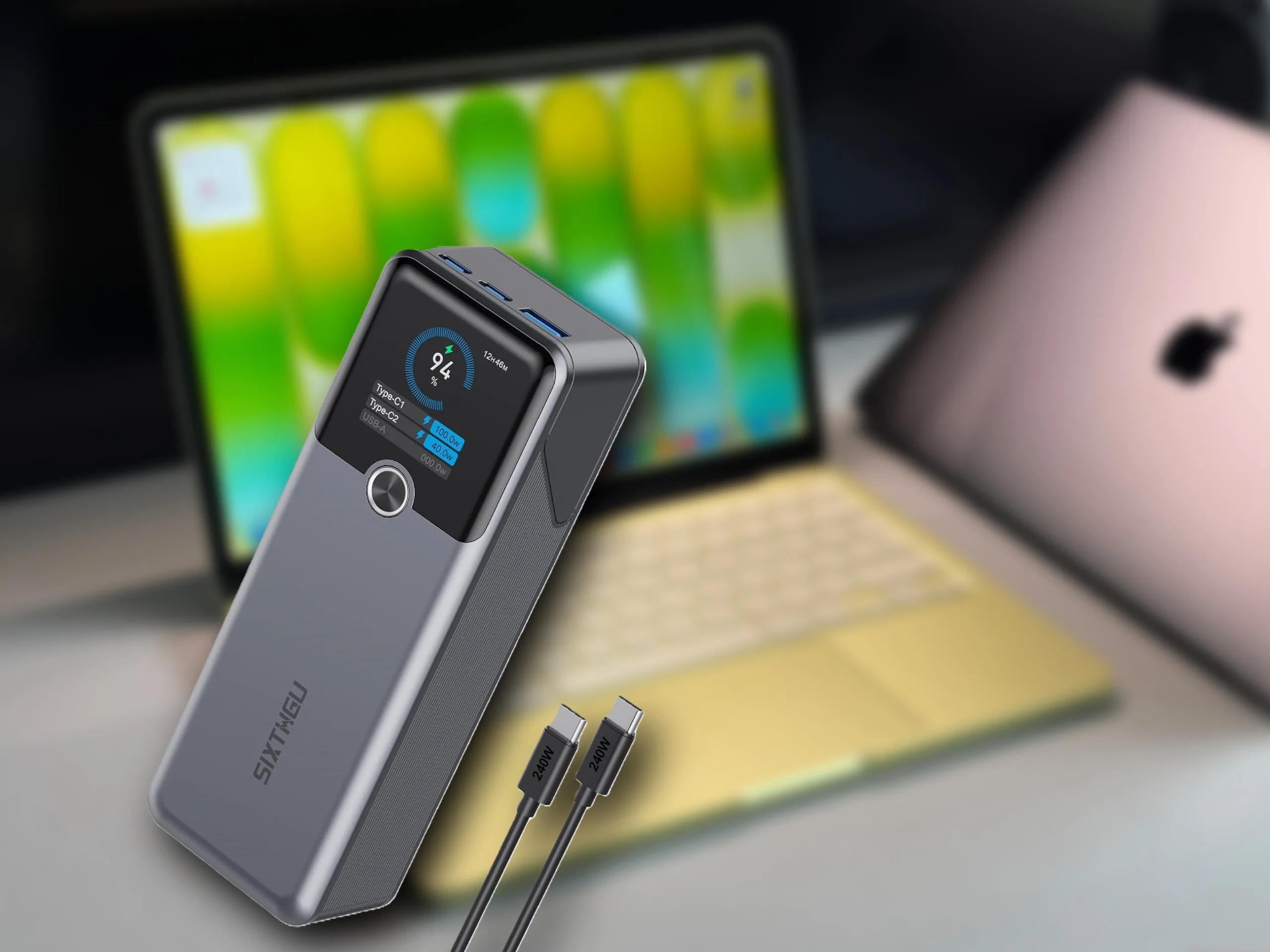
    For those who’ve purchased a MacBook Neo, a small power bank is an excellent accessory to have, and they are typically quite affordable. For example, the Sixthgu Power Tower power bank is currently priced at only $40 on Amazon when you use the coupon code Y4JJUQH7. With a capacity of 20,000 mAh, this power bank can recharge the MacBook Neo fully two times.

    Features of the Power Bank

    Along with its 20,000 mAh capacity, the Sixthgu Power Tower P1 includes two Type-C ports and one Type-A port. It can power three devices at once, with a maximum output of 200 W, offering up to 140 W through the C1 Type-C port. The power bank even comes with a 240 W Type-C to Type-C cable, which allows for fast charging of connected devices and recharging of the power bank itself.

    For instance, the makers of Sixthgu assert that the Power Tower P1 can charge a MacBook Pro 16 with the M4 Pro to 50% in just 28 minutes using 140 W PD.

    Handy Display Feature

    Lastly, the Sixthgu Power Tower P1 is equipped with a useful small screen on its front. This display shows the remaining battery percentage, the amount of energy being drawn by connected devices through its ports, and more.

    Source:
    Link


  • MacBook Neo Outperforms AMD, Intel, Qualcomm in Single-Core Performance

    MacBook Neo Outperforms AMD, Intel, Qualcomm in Single-Core Performance

    Key Takeaways

    1. The MacBook Neo’s A18 Pro chip excels in single-core performance, surpassing most mobile processors and competing closely with Apple’s own M4 and M5 chips.
    2. Benchmark tests indicate the A18 Pro outperforms all x86 processors and recent mobile chips from AMD, Intel, and Qualcomm, except for potentially upcoming Snapdragon X2 chips.
    3. The MacBook Neo offers impressive everyday performance, reinforcing Apple’s choice to use the A18 Pro over the newer A19 Pro.
    4. Budget-friendly Windows laptops are likely to struggle against the MacBook Neo’s performance due to weaker processors.
    5. The MacBook Neo combines strong performance with appealing features, such as a durable aluminum chassis and high-quality display, at a competitive price point, potentially disrupting the budget laptop market.


    When Apple unveiled its latest affordable MacBook Neo, many were curious about how the smartphone chip would perform. After conducting our first set of benchmarks, it’s clear that Apple is playfully competing with AMD, Intel, and Qualcomm. The single-core performance of the MacBook Neo outshines all other mobile processors, except for Apple’s own M4 and M5 chips. And it’s important to note that we’re examining a processor from the year 2024.

    Impressive Benchmark Results

    We ran several benchmarks and found the single-core performance to be quite impressive. Not just in the quick Geekbench test, but also in the Cinebench 2024, where a single-core test lasts around 10 minutes. The A18 Pro uses between 3.5-4 Watts during this test and achieves a score of 147 points. This puts it ahead of all x86 processors in our records, including the Intel Core Ultra 9 285K and AMD Ryzen 9 9950X3D desktop processors. This also indicates that the MacBook Neo surpasses every recent mobile chip from AMD, Intel, and Qualcomm, even though the soon-to-be-released Snapdragon X2 chips may offer slightly better performance. Additionally, the A18 Pro is marginally quicker than Apple’s M3 generation in similar tests.

    Everyday Performance Insights

    Thus, the question regarding everyday performance is mostly settled, which also clarifies why Apple did not opt for the newer A19 Pro from the latest iPhone 17 Pro. This suggests that budget-friendly Windows laptops, which typically come with weaker processors than those in our comparison chart, will struggle to keep up performance-wise. Alongside its other favorable features, such as an aluminum chassis, a bright 500-nit IPS display, and a full sRGB color range, the low price tag—especially considering the software that comes pre-installed with macOS—means the MacBook Neo could truly disrupt the budget laptop market.

  • Apple’s $599 MacBook Neo: First Impressions and Review

    Apple’s $599 MacBook Neo: First Impressions and Review

    Key Takeaways

    1. Affordability: The MacBook Neo starts at $599, with a special price of $499 for education, targeting budget-conscious consumers.

    2. Design Options: Available in various colors including citrus, silver, Indigo, and Blush, with a solid aluminum body and a choice of storage options.

    3. Performance: Equipped with the A18 Pro chip, the MacBook Neo performs well for multitasking and runs smoothly without significant differences compared to the MacBook Air.

    4. Display Quality: The IPS display offers vibrant colors and sharp images, featuring a brightness sensor, which is a notable advantage at this price point.

    5. User Experience: The laptop has a responsive clickpad and a familiar typing experience, though it lacks keyboard backlighting, and operates quietly due to its passive cooling system.


    After checking out Apple’s latest MacBook Air and MacBook Pro models in the past few days, we can now dive into a detailed review of Apple’s newly released budget-friendly MacBook Neo. Starting at a price of $599 (or just $499 for those in education), Apple aims to capture a larger share of the market. This 13-inch device is equipped with Apple’s A18 Pro chip, which is the same processor found in the older iPhone 16 Pro. But does it perform well?

    Design and Colors

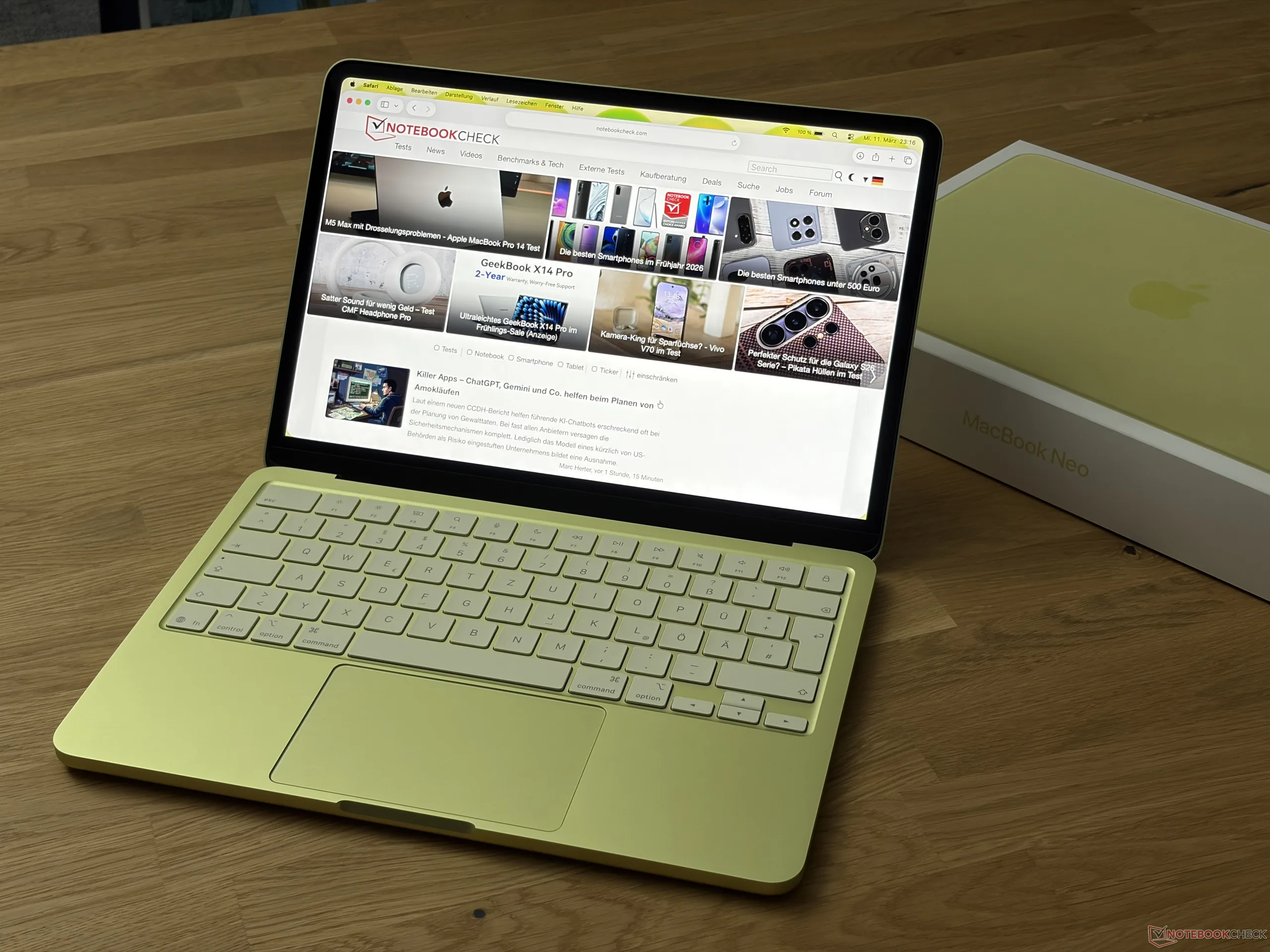
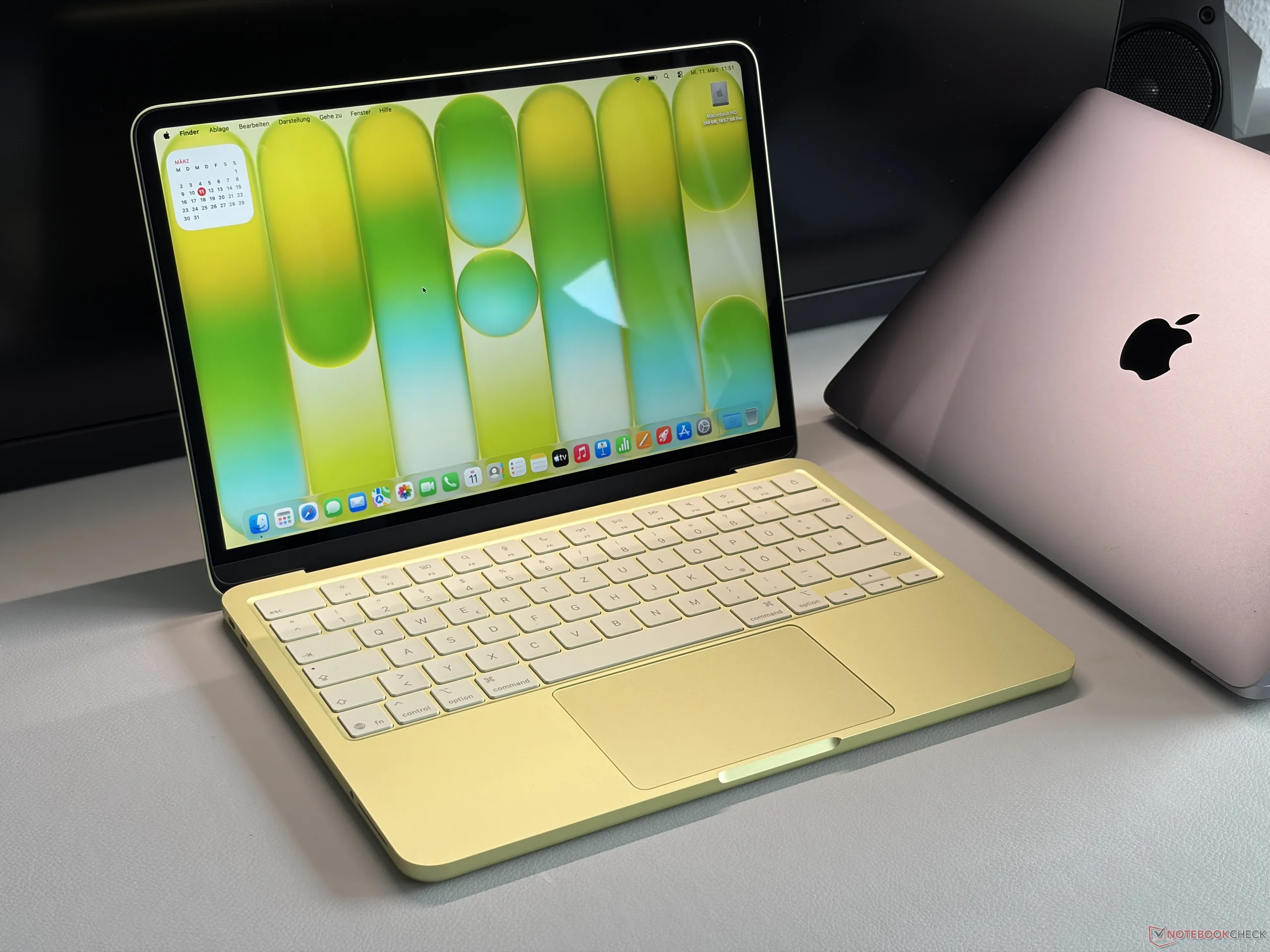
    We take a look at the entry-level version priced at $599, featuring 8 GB of RAM and 256 GB of SSD storage, presented in a bright citrus color that many may find refreshing, although personal taste plays a big role here. It also comes in silver, Indigo, or Blush. For those willing to spend $699, there’s a model that includes a bigger 512 GB SSD and a Touch ID fingerprint scanner.

    Performance and Quality

    Our first thoughts are quite good. The MacBook Neo has the feel of a standard MacBook, boasting a sturdy aluminum body and the typing experience we’ve come to expect. However, one noticeable downside is that it doesn’t have keyboard backlighting. The new clickpad, which is responsive across its entire surface, provides solid feedback, but it is smaller than the one on the MacBook Air. The IPS display maintains the quality Apple is known for, delivering vibrant colors, sharp images, and adequate brightness, complete with a brightness sensor—a feature not common in this price bracket.

    Testing Phase

    While setting up the laptop, we faced no difficulty, and so far, the performance seems really good. Even when multitasking by installing apps from the App Store, downloading files with Safari, and transferring apps from an external SSD, everything ran smoothly. Honestly, we haven’t detected any significant difference when compared to the new MacBook Air 13 up to this point. Plus, due to its passive cooling system, the Neo operates without making any noise.

    We are gearing up to conduct our standard tests and measurements. Please feel free to leave a comment if you have any specific requests or ideas for the review!

  • iPhone 17e Outperforms MacBook Neo: Budget Laptop vs. Phone

    iPhone 17e Outperforms MacBook Neo: Budget Laptop vs. Phone

    Key Takeaways

    1. The MacBook Neo underperformed compared to the iPhone 17e in Geekbench 6 tests, being about 5% slower in both single-core and multi-core performance.
    2. The MacBook Neo uses a modified A18 Pro chip, which is older than the A19 chip in the iPhone 17e, leading to slightly slower CPU performance.
    3. Both the MacBook Neo and the iPhone 17e have similar graphics capabilities in benchmark tests.
    4. Initial feedback on the MacBook Neo is positive, especially regarding its price-to-performance ratio, showcasing the advancement of Apple’s mobile chips.
    5. Future comparisons with similarly priced Windows laptops will provide a clearer picture of the MacBook Neo’s performance, with a detailed review expected soon.


    Apple’s latest MacBook Neo might actually be the slowest device in its current lineup.

    Performance Comparison

    Initial Geekbench 6 results reveal that the MacBook Neo (model Mac17,5) doesn’t perform as well as the iPhone 17e (model iPhone 18,5) in both single-core and multi-core tests. On average, the budget iPhone outperformed its laptop counterpart by about 5% in these benchmarks.

    Chip Specifications

    This result isn’t entirely unexpected, given that the MacBook Neo operates on a modified version of Apple’s A18 Pro SoC, which is the same chip found in last year’s iPhone 16 Pro and 16 Pro Max. When compared to the iPhone 17e’s newer A19 chip, the A18 Pro shows slightly slower CPU performance. However, both chips have similar graphics capabilities, with no distinct advantage for either in the various benchmark tests.

    Positive Feedback

    Early impressions of the MacBook Neo have been generally favorable, particularly regarding its price-to-performance ratio. This highlights how advanced Apple’s mobile chips have become, indicating that even the most affordable iPhone can meet the needs of many users. The initial feedback on the Neo suggests that it should serve most consumers well, which reflects positively on Apple’s current iPhone offerings.

    Future Comparisons

    Naturally, a more accurate assessment of the Neo would involve comparing it to similarly priced Windows laptops, which are still being released. Notebookcheck plans to publish a thorough review of the MacBook Neo soon, which will provide an extensive look at its performance relative to a large collection of laptops.

    Source:
    Link


  • Apple MacBook Neo 2 May Not Include Touch Support, Says Analyst

    Apple MacBook Neo 2 May Not Include Touch Support, Says Analyst

    Key Takeaways

    1. The MacBook Neo is Apple’s first laptop priced under $600, featuring an A18 Pro chip and a solid build.
    2. It has a 13-inch Retina display with 500 nits brightness, providing a strong visual experience.
    3. Rumors about a touchscreen for the MacBook Neo 2 have been dismissed, according to analyst Ming-Chi Kuo.
    4. The initial touchscreen idea aimed to compete with Chromebooks, which are popular in educational settings.
    5. The MacBook Neo outperforms many Chromebooks in performance, display quality, and desktop application support.


    MacBook Neo Makes Waves

    Recently, the MacBook Neo has captured attention as Apple’s first laptop priced under $600. Powered by the A18 Pro chip, this notebook does come with its share of issues, yet it still boasts a solid build and a 13-inch Retina display with 500 nits brightness, offering a visually pleasing experience.

    Touchscreen Speculations

    After the launch, there were rumors surrounding the upcoming MacBook Neo 2, hinting that it would include a touchscreen display, as suggested by well-known analyst Ming-Chi Kuo. However, a later update from Kuo indicated that the plans for a touch display might be off the table, mentioning “industry checks” as the reasoning behind this shift.

    Competing in the Market

    Kuo pointed out that the initial idea of equipping the next MacBook Neo with a touchscreen was aimed at making it competitive against Chromebooks, many of which come with touch capabilities and are popular in schools. While Kuo didn’t elaborate on why these plans were scrapped, it’s reasonable to think that the costs of components played a significant role.

    When we look at the Apple MacBook Neo (which is priced at $599 on Amazon), it clearly outperforms many Chromebooks in terms of performance, display quality, and it also supports desktop applications fully, setting it apart in the crowded market.

    Source:
    Link


  • iPhone 18 Pro and Pro Max Prices Expected to Stay the Same

    iPhone 18 Pro and Pro Max Prices Expected to Stay the Same

    Key Takeaways

    1. Apple introduced the MacBook Neo and iPhone 17e, both priced at $599, targeting a wider audience amid high RAM and storage costs.
    2. Industry analyst Ming-Chi Kuo suggests that the upcoming iPhone 18 may maintain similar pricing to previous models, with staggered release timings for different versions.
    3. Kuo believes steady pricing could help Apple increase its market share, especially as AI features are integrated into its products.
    4. The iPhone 18 Pro and Pro Max are expected to have notable upgrades but may not see a price increase; new devices are set to be revealed in September.
    5. Projected shipments for the MacBook Neo in 2026 are slightly lower due to delayed mass production, but the model is expected to perform well; MacBook Air models may transition to OLED displays by 2028 or 2029.


    Apple has just unveiled a variety of new products, enhancing its offerings in laptops, smartphones, and tablets. Given today’s market with extremely high prices for RAM and storage, Apple introduced a $599 laptop called the MacBook Neo and a $599 smartphone dubbed the iPhone 17e aimed at a wider audience. This indicates that the upcoming iPhone 18 may not experience a price hike compared to its earlier versions, or at least that’s what a source from the industry suggests.

    Insights from Ming-Chi Kuo

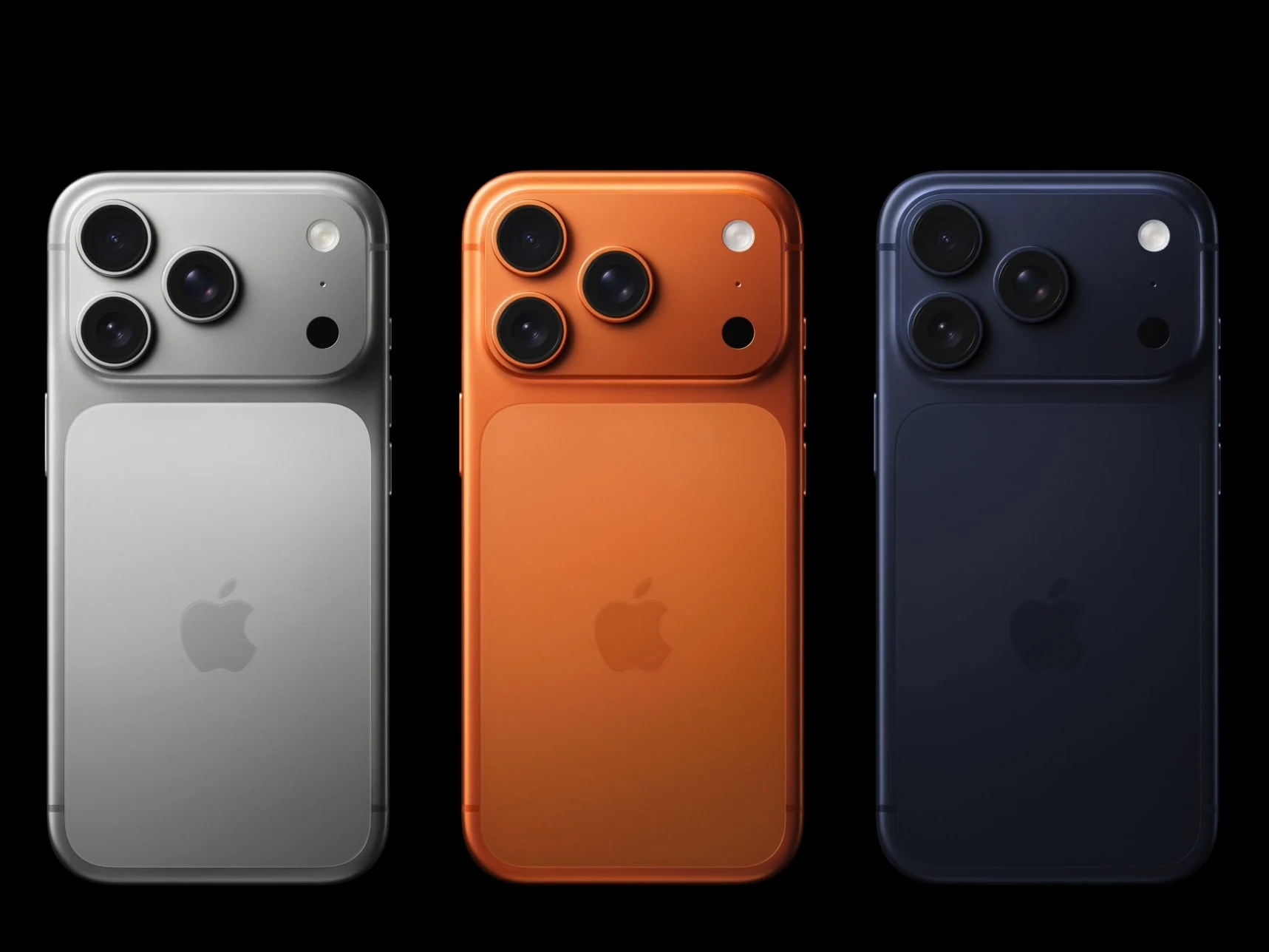
    Industry analyst Ming-Chi Kuo shared some details on social media regarding Apple’s plans for OLED technology in its future products. Concerning the new iPhones, Kuo indicated that Apple might keep the pricing steady, although he mentioned, “iPhones launching in 2H.” This year, Apple is anticipated to stagger release timings and only introduce the iPhone 18 Pro and Pro Max, with the standard iPhone 18 set to debut in 2027. For the base model of the iPhone 18, Apple might opt to absorb costs again and price it similarly to the existing model.

    Market Impact of Pricing Decisions

    Kuo believes that maintaining the current pricing will allow Apple to grow its market share even further, especially as its AI features and services become fully integrated. However, it remains uncertain whether the prices for the iPhone 18 Pro and Pro Max will increase. The new devices are expected to be revealed in September, featuring some notable upgrades while keeping the same design aesthetics.

    In relation to the rest of the product lineup, Kuo noted that the projected shipments for the MacBook Neo in 2026 are slightly lower because it began mass production three months later than planned. Nonetheless, it is still expected to perform well due to its appealing price. Additionally, it will likely take several years for the MacBook Air models to transition to OLED displays, probably by 2028 or 2029. Overall, MacBook shipments in 2026 are anticipated to hit 25 million units, which would match sales figures from the peak period of the COVID era.

    Source:
    Link