Tag: iPhone 17

  • PITAKA iPhone 17 Cases: Gold Glints in Aramid Fiber Design

    PITAKA iPhone 17 Cases: Gold Glints in Aramid Fiber Design

    Key Takeaways

    1. PITAKA introduces the Glints of Gold finish for iPhone 17 cases, focusing on artistry and texture rather than just protection.
    2. The finish is a collaboration with British artist Gordon Hunt, emphasizing fluid light and water reflections in the design.
    3. Two unique finishes are available: Lucid Blue, resembling ocean gradients, and Golden Glint, featuring reflective components.
    4. A limited “Artist Edition” collector’s gift box will include the Lucid Blue case, a matching ring holder, a power bank, signed postcards, and a display panel.
    5. PITAKA offers three case series for the iPhone 17: Edge (minimal bulk), Ridge (enhanced protection), and Apex (strengthened material).


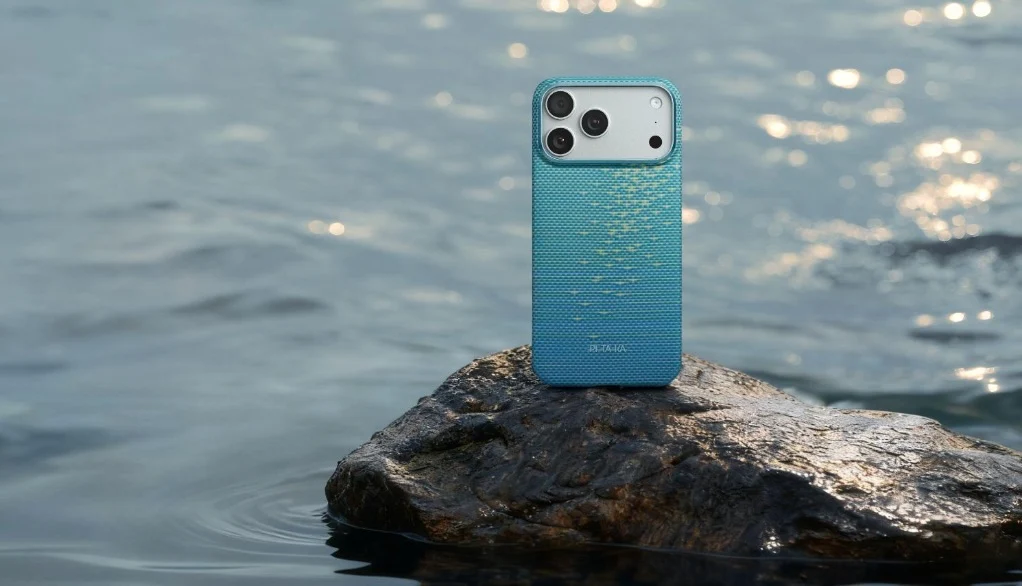
    PITAKA is adding to its selection of iPhone 17 cases with a fresh finish named Glints of Gold, which introduces a creative twist to a market often centered on strength and usability. These cases merge artistry and craftsmanship, focusing more on aspects like light, texture, and tactile experience rather than solely on safeguarding the device.

    Artistic Collaboration

    The Glints of Gold finish is included in PITAKA’s Moment collection and was created in partnership with British artist Gordon Hunt. Hunt is celebrated for his tranquil artwork that highlights soft lighting and reflections of water. Instead of using paint, his style is expressed through materials, transforming his fascination with glimmering surfaces into a texture for phone cases that aims to suggest fluid movement and gentle shifts in light.

    Two Unique Finishes

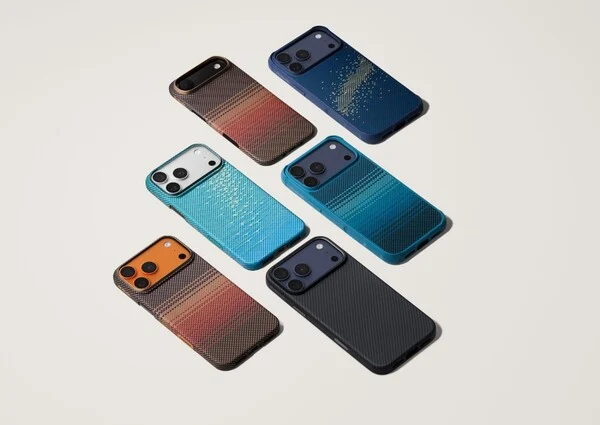
    This new series comes in two distinct finishes: Lucid Blue, which features a gentle gradient reminiscent of peaceful ocean vistas, and Golden Glint, which includes small reflective components designed to mimic light bouncing off calm water. The company applies its Fusion Weave – LightRipple technology to create this effect, using exact tension control to develop a textured surface that seems to change as it interacts with light. The outcome is a case that serves not just as protection but also as a piece of art for daily use.

    Special Collector’s Edition

    As mentioned earlier, a limited “Artist Edition” gift box for collectors will be available soon. This box will contain the Lucid Blue case, a matching ring holder, a power bank, five postcards signed by the artist, and a light-up display panel. The idea is to consider the case as something to showcase, store, or pass on, rather than merely a typical phone accessory. Besides the Glints of Gold finish, PITAKA will present three case series for the iPhone 17.

    Case Series Details

    For example, the Edge Series aims for minimal bulk, measuring just 0.84 to 0.89 millimeters thick and weighing about 18 to 21 grams. It features the company’s PitaTap capacitive layer and is compatible with MagSafe. The Ridge Series prioritizes protection, including cushioned corners and military-grade drop resistance up to 8 feet. This case is thicker at 2.00 to 2.05 millimeters and weighs between 33.5 to 39 grams. Finally, the Apex Series utilizes 3D full-wrap thermoforming and Orca Resin, enhancing material strength by 200%. It has a thickness of 2.03 to 2.05 millimeters and weighs 34 to 36 grams.

     

  • iPhone 18: Expected Center Stage Upgrade and iPhone Fold Features

    iPhone 18: Expected Center Stage Upgrade and iPhone Fold Features

    Key Takeaways

    1. The iPhone 17 features an 18 MP front camera, contrary to predictions of a 24 MP sensor, but analysts expect the iPhone 18 series will include 24 MP selfie cameras (except for the iPhone 18e).
    2. Apple may introduce a 24 MP under-display camera with its first foldable device, likely called the iPhone Fold, expected to launch in September 2026.
    3. The iPhone Fold will have a dual-camera setup with 48 MP but won’t include variable aperture or sensor shift stabilization.
    4. Future iPhone models, including the iPhone 19 (possibly iPhone 20), might see a larger aperture for the ultra-wide-angle camera and an improved main camera sensor.
    5. Plans for integrating Face ID and FaceTime cameras under the display have been delayed, adding uncertainty to Apple’s upcoming designs.


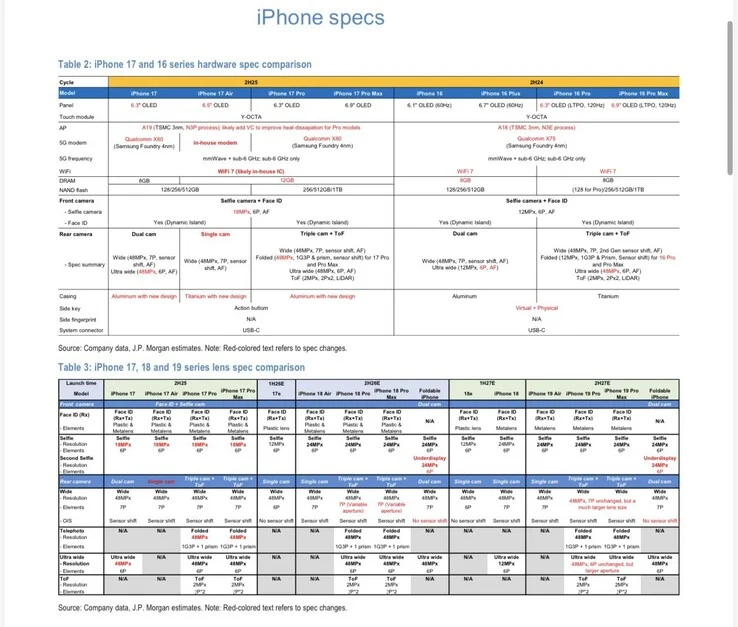
    Even before the launch in September, experts were predicting that the iPhone 17 series would come with a 24 MP camera on the front. However, it turned out that the actual setup was the nearly square center-stage camera featuring an 18 MP sensor for the iPhone 17. Nevertheless, the analysts from JP Morgan are still hopeful. According to a table shared by Max Weinbach on X, they believe that all models of the iPhone 18, except for the iPhone 18e, will include 24 MP selfie cameras.

    Future Upgrades

    It’s still uncertain whether Apple plans to upgrade the sensor again in 2026 and 2027, especially so soon after the recent upgrade to the front camera. Yet, the report does mention something intriguing: a 24 MP under-display camera could be part of Apple’s first foldable device, likely to be called the iPhone Fold, which might debut in September 2026. Display analysts like Ross Young pointed out a few weeks ago that Apple’s plans for placing Face ID and FaceTime cameras under the display have been delayed, adding an element of mystery to the situation.

    Camera Specifications

    JP Morgan also reports that the iPhone Fold will boast a dual-camera setup with 48 MP, including both an ultra-wide-angle and a main camera. Unlike the iPhone 18 Pro and iPhone 18 Pro Max, this device is not expected to have a variable aperture, nor is sensor shift stabilization included in the plans. Additionally, JP Morgan has given some early insights into what the iPhone 19 generation might look like in 2027, which could be called the iPhone 20. In contrast to a rumor that surfaced recently, the iPhone 19 Air, also referred to as iPhone Air 2, will still have a single camera. Analysts are predicting a larger aperture for the ultra-wide-angle camera and a significantly enhanced sensor for the main camera.

    Source:
    Link


  • iPhone 17 Charging Test Reveals Minor Gains with 40W Charger

    iPhone 17 Charging Test Reveals Minor Gains with 40W Charger

    Key Takeaways

    1. The iPhone 17 charges at different speeds depending on the power adapter used, with the 20 W adapter being the slowest.
    2. The 40 W, 70 W, and 140 W adapters all peaked at around 36 W and showed similar charging performance.
    3. Charging times to reach 50%, 80%, and full charge were consistent across the 40 W, 70 W, and 140 W adapters, averaging around 18-19 minutes, 42-44 minutes, and 1 hour and 41-42 minutes, respectively.
    4. The 20 W adapter took significantly longer to charge the iPhone 17, reaching 50% in 27 minutes and full charge in 1 hour and 50 minutes.
    5. ChargerLAB concluded that the new 40 W charger does not offer significant advantages for the iPhone 17, which still uses the standard USB-C PD protocol.


    ChargerLAB recently conducted tests to see how the iPhone 17 performs with four different USB-C power adapters from Apple: 20 W, 40 W, 70 W, and 140 W. The tests were carried out using a POWER-Z KM003C tester and POWER-Z Lab V2.4 software, all within a thermotank set at 25 °C (77 °F).

    20 W Adapter Performance

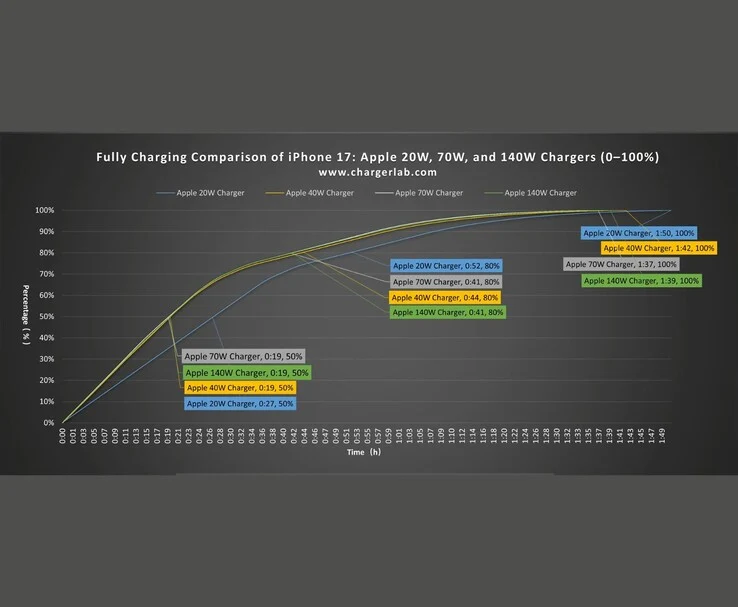
    With the 20 W adapter, the iPhone 17 started with a 9 V output and consumed 19 W for the first 36 minutes. After that, the power usage dropped to 12 W, and then to 7 W around the 65-minute mark, entering a trickle-charging stage thereafter. It took 27 minutes to reach 50%, 52 minutes for 80%, and a total of 1 hour and 50 minutes for a full charge.

    40 W and 70 W Adapter Results

    Using the 40 W adapter, the iPhone 17 generated a 15 V output and peaked at 36 W. The power level remained approximately 28 W for the initial 11 minutes, gradually decreasing in a stepwise manner to about 8 W by the 57-minute mark, and finally dropping to 5 V as it neared the end. The times to reach 50%, 80%, and full charge were 19 minutes, 44 minutes, and about 1 hour and 42 minutes, respectively.

    The 70 W adapter showed nearly identical results, also triggering a 15 V output with a peak of 36.7 W. It maintained 28 W for 13 minutes before gradually falling to 24 W, 19 W, 12 W, and ending at 7 W by the 57-minute point. The charging times for this adapter were the same as the 40 W, reaching 50% in 19 minutes, 80% in 44 minutes, and a complete charge in 1 hour and 42 minutes.

    140 W Adapter Similarity

    The test with the 140 W adapter yielded a nearly identical charging curve, peaking around 36 W and reaching 50% in 18 minutes, 80% in 42 minutes, and finishing in 1 hour and 41 minutes.

    When these results are compared, the charging curves for the 40 W, 70 W, and 140 W adapters look nearly the same. The iPhone 17 achieved 50% in 19 minutes, 70% in 30 minutes, 80% in 41 minutes, and a full charge in about 1 hour and 39 minutes.

    In contrast, the 20 W adapter showed a noticeably slower charging rate. The 70 W adapter was only slightly faster than the others, with the differences being minimal. ChargerLAB concluded that Apple’s new 40 W charger with the SPR AVS protocol does not provide any significant benefits for the iPhone 17, which continues to utilize the standard USB-C PD protocol.

    Source:
    Link


  • Nomad Stand One Max: 25W Fast Charging for Android After Qi2 Upgrade

    Nomad Stand One Max: 25W Fast Charging for Android After Qi2 Upgrade

    Key Takeaways

    1. The Nomad Stand One features a Qi2 charging coil and supports wireless charging up to 25 watts for compatible smartphones.
    2. It includes a secondary Qi charging pad for devices like AirPods Pro, with a maximum charging power of 5 watts.
    3. The Stand One Max variant offers an additional charging puck for fast charging Apple Watch models, including older versions.
    4. Constructed from aluminum and glass, the Stand One is designed for ease of use and portability, weighing 20 ounces.
    5. The Nomad Stand One is priced at $119, while the Stand One Max is $159, with potential additional shipping costs.


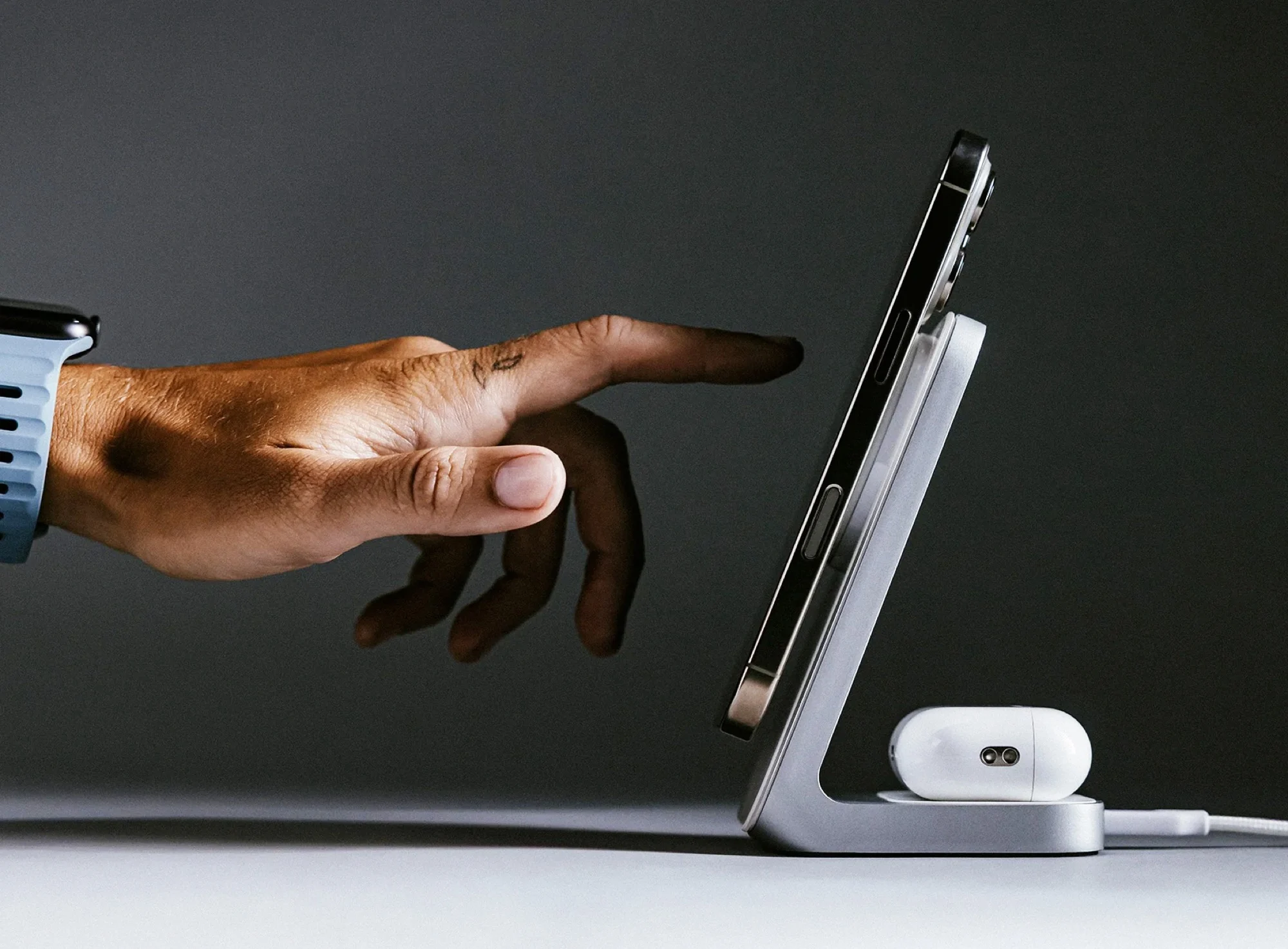
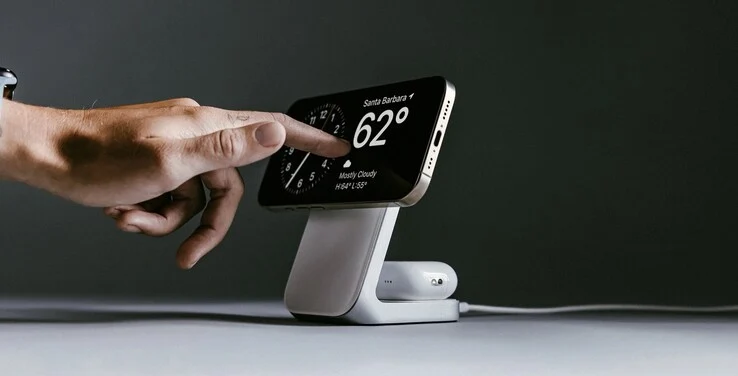
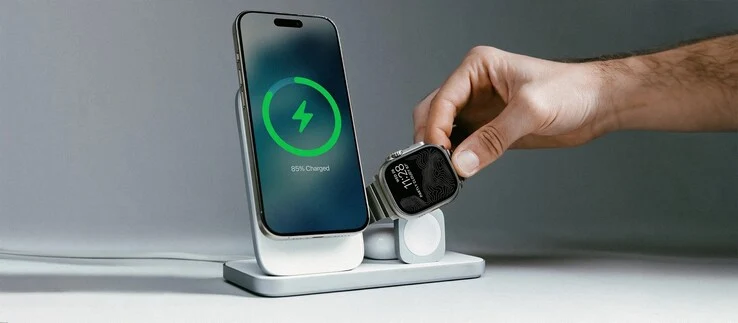
    The latest version of the Nomad Stand One has been released and features a design that many will recognize, now equipped with a Qi2 charging coil. It can securely hold a smartphone with magnets and allows for wireless charging at a power of up to 25 watts. This device is compatible with the new Apple iPhone 17, alongside other iPhones and Android devices that adhere to the Qi2 standard, also supporting the same 25 watts charging speed.

    Additional Features

    Within the Nomad Stand One package, there is a secondary Qi charging pad that operates at a maximum of 5 watts, which is ideal for charging wireless earbuds like the Apple AirPods Pro. For those looking for something bigger, the Nomad Stand One Max includes a charging puck designed for the Apple Watch, providing fast charging for the latest models while still being able to charge older versions of the watch too.

    Design and Build Quality

    The build quality of the Nomad Stand One is impressive, primarily constructed from aluminum and glass materials. However, it’s important to note that a 40-watt USB-C power adapter is needed to use the charger, but this adapter is not included with the purchase. The charging pad features a TPU coating that helps to prevent scratches on smartphones. Weighing 20 ounces, the Stand One is designed so that you can easily lift a smartphone off of it with one hand, without needing to hold the base down, while the Stand One Max is slightly heavier at 31 ounces.

    The Nomad Stand One is currently sold on the manufacturer’s official online store for $119 and is available in either silver or black. The Stand One Max, which comes with an extra charging puck for the Apple Watch, is priced at $159. Be aware that there may be additional shipping costs.

    Source:
    Link


  • Apple Launches iOS 26.1 and macOS 26.1 with Liquid Glass Feature

    Apple Launches iOS 26.1 and macOS 26.1 with Liquid Glass Feature

    Key Takeaways

    1. iOS 26 update (4.6 GB) introduces features like reduced transparency and tinted “Liquid Glass” for better text visibility.
    2. Apple Music mini-player gains gesture controls for easier track navigation and a setting to disable the lock screen swipe for the camera.
    3. Alarm clock now requires a swipe to deactivate instead of tapping, addressing previous user feedback.
    4. Fitness app updated to allow users to create custom workouts.
    5. iPadOS 26.1 returns “Slide Over” multitasking, while macOS 26.1 features minor updates, including darker Liquid Glass and revamped icons.


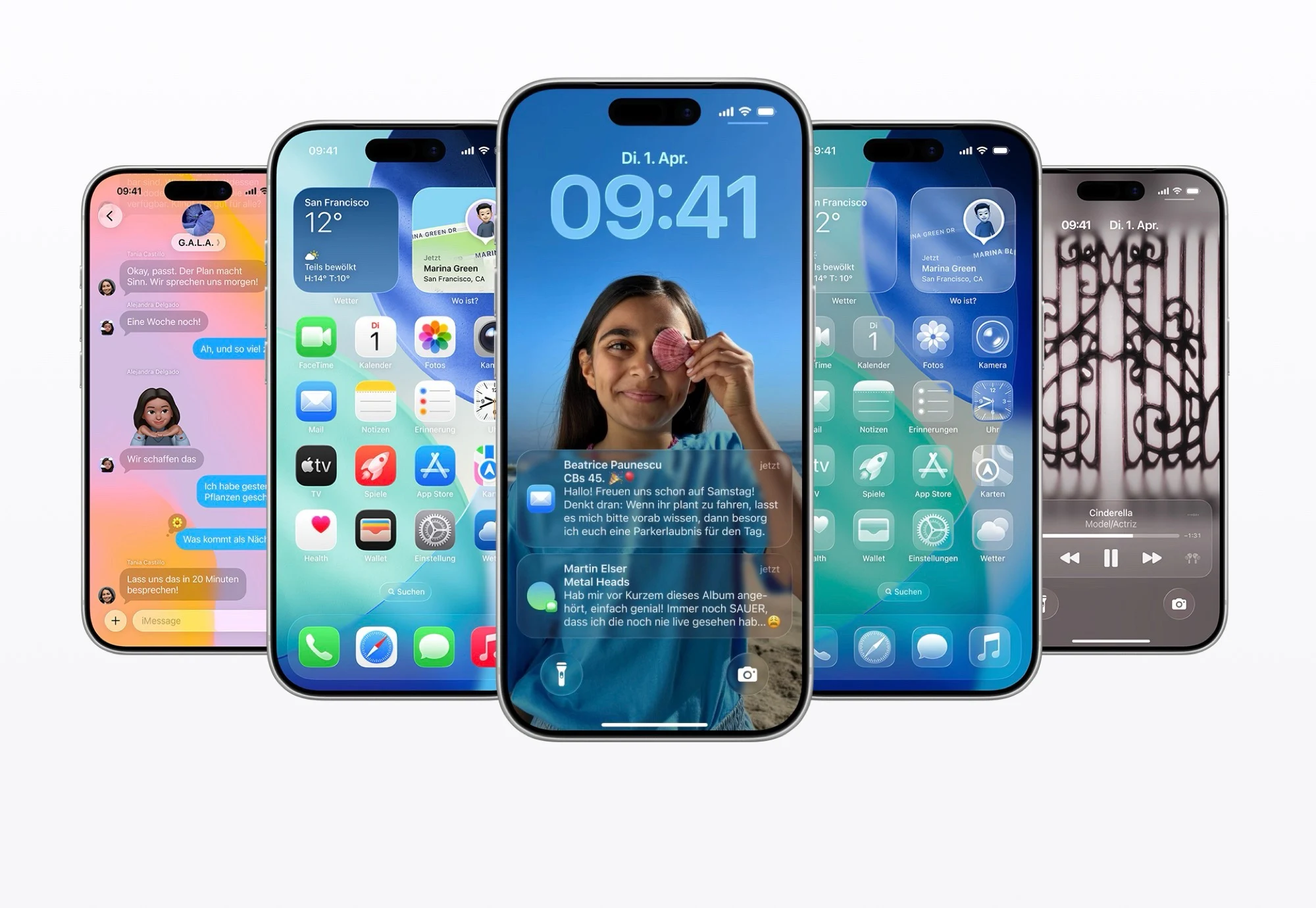
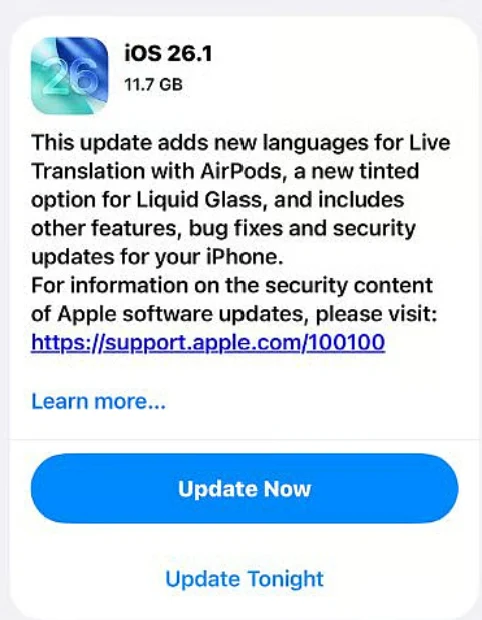
    Following the debut of iOS 26 in September with the iPhone 17, the first major upgrade to the current iPhone operating system is here. This update, which is about 4.6 GB, brings several enhancements, including a feature to lessen transparency and the option to tint Apple’s “Liquid Glass” for better text visibility.

    New Features in Apple Music

    In Apple Music, the mini-player now includes new gesture controls, letting users swipe to skip to the next track or go back to the previous one. There’s also a fresh setting that lets users turn off the swipe gesture on the lock screen that usually opens the camera app. For those using a USB-C connected microphone, it is now possible to adjust its level and choose where voice recordings are saved. Additionally, Apple has enhanced audio quality for FaceTime calls when the internet connection is not strong.

    Alarm Clock Changes and Fitness Updates

    To deactivate an alarm instead of hitting snooze, you now need to swipe rather than simply tap the large button. This change comes after Apple faced a lot of criticism for the new alarm clock design in iOS 26. The fitness app has also been updated to let you create your own custom workouts.

    iPadOS and macOS Updates

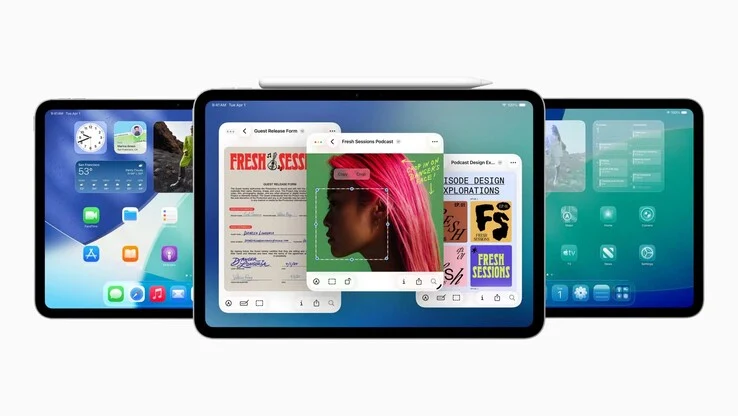
    The Apple iPad gets similar updates through iPadOS 26.1, but it also sees the return of the “Slide Over” multitasking feature, which allows users to place an app on the right side of the screen as a floating window. Meanwhile, macOS 26.1 has fewer noticeable changes: Liquid Glass can now appear in a darker tone on Macs, and both the Apple TV and hard drive icons have been revamped.

    Apple’s ongoing updates continue to enhance user experience across its devices, making them more intuitive and user-friendly.


  • Apple Sells Replacement Parts for iPhone 17 and iPhone Air

    Apple Sells Replacement Parts for iPhone 17 and iPhone Air

    Key Takeaways

    1. Apple now offers replacement components for all iPhone 17 models and the iPhone Air through its Self Service Repair Store.
    2. The price of a replacement display for the basic iPhone 17 model has increased from $279 to $329 due to the upgraded 120Hz LTPO AMOLED screen.
    3. The cost for the back cover remains unchanged at $159, while the 48MP main camera for the iPhone Air and the dual-camera setup for the iPhone 17 are both priced at $169.
    4. The ultra-wide camera for the iPhone 17 is not available for individual purchase.
    5. DIY repairs may not be cost-effective, as many parts (like batteries) have prices similar to those at Apple Stores.


    Apple has begun offering replacement components for every iPhone 17 model and the iPhone Air through its Apple Self Service Repair Store. Most of the parts are priced similarly to those for the previous iPhone 16 series, but there’s one significant difference.

    Price Changes for Displays

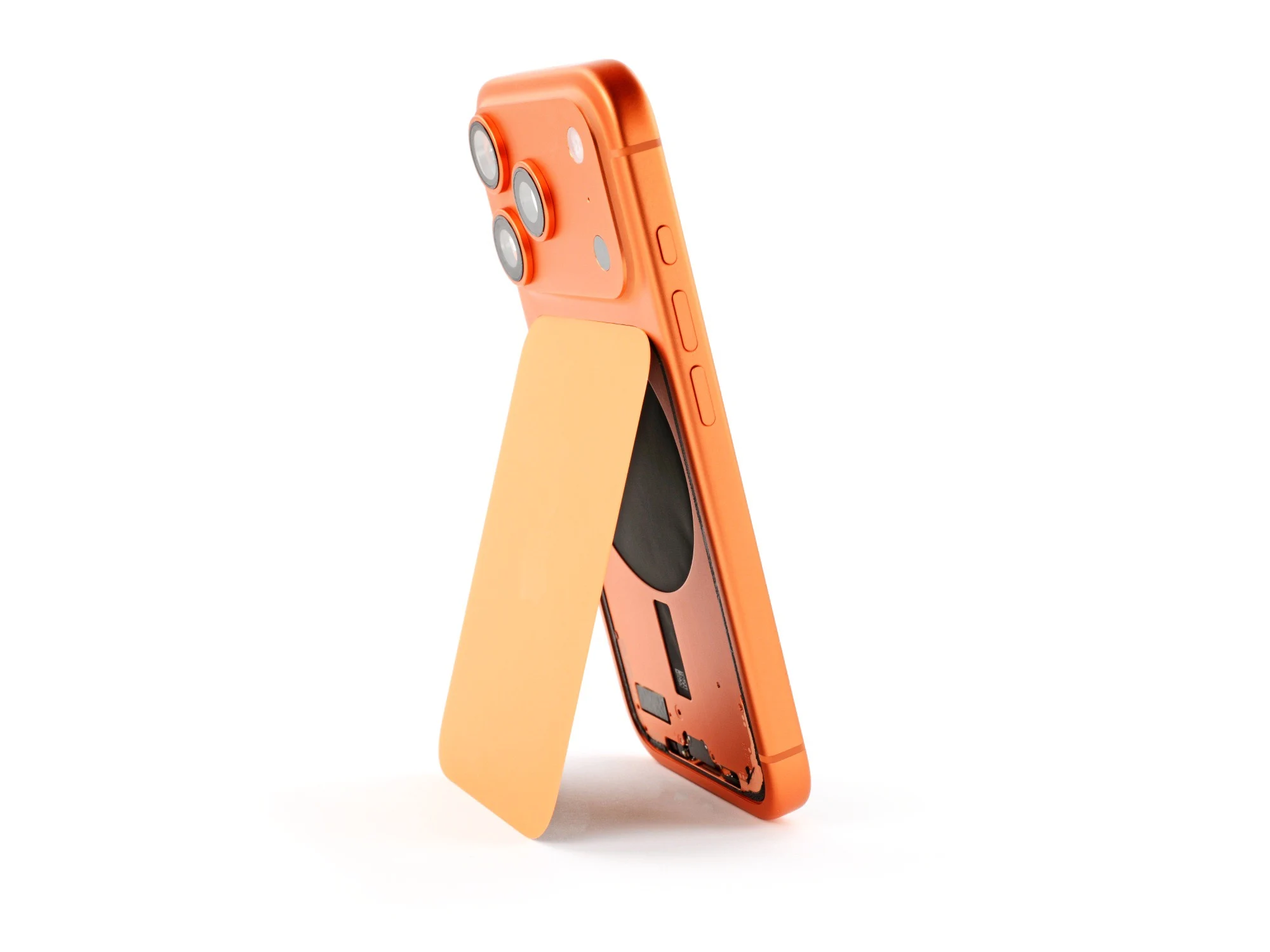
    The cost of a replacement display for the basic model has risen from $279 to $329. This increase is likely because of the iPhone 17’s 120Hz LTPO AMOLED screen, unlike the iPhone 16’s 60Hz display. The price for the back cover remains unchanged at $159. Interestingly, Apple asks for $169 for the 48MP main camera of the iPhone Air, which is also the same price as the dual-camera setup for the iPhone 17. However, the ultra-wide camera is not available for individual purchase.

    DIY Repairs Not Worth It

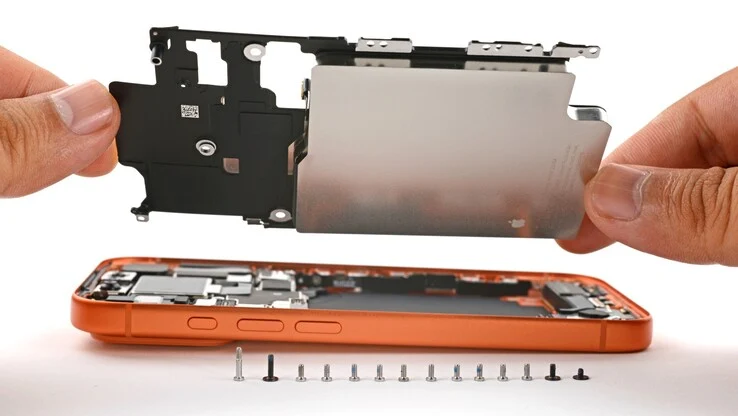
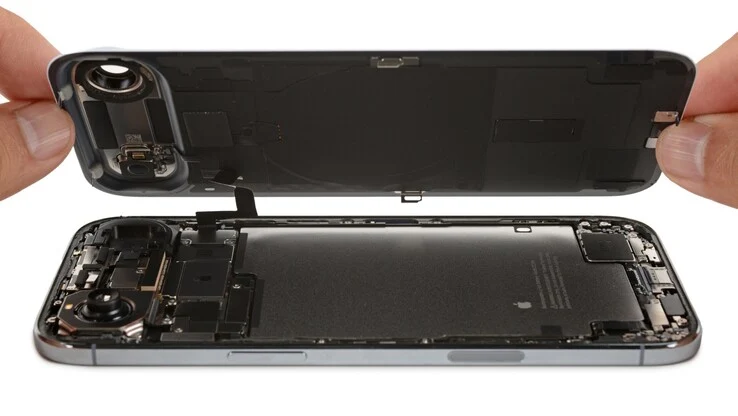
    In many instances, though, doing the repairs by yourself may not be the best choice. For instance, a new battery is priced at $99 for the basic model and $119 for the higher-end models, which is the same cost if you go to an Apple Store for battery replacement. This also applies to the back glass, display, and camera repairs. Because of this, DIY repairs can be financially unappealing, which is unfortunate, since iFixit’s teardown shows that even the slim iPhone Air is fairly simple to repair.

    Source:
    Link


  • Intel Enhances Laptop Battery Life with 1 Hz Displays and SmartPower HDR

    Intel Enhances Laptop Battery Life with 1 Hz Displays and SmartPower HDR

    Key Takeaways

    1. Intel and BOE are collaborating to develop new display technologies to reduce power usage and extend laptop battery life.
    2. Innovative frame rate adjustments will allow laptop screens to drop to 1 Hz when displaying static images or text.
    3. Multi-Frequency Display (MFD) technology will enable dynamic frame rate adjustments based on content, reducing power consumption.
    4. Gaming laptops can benefit from MFD by capping the display rate to 60 Hz when not in active use.
    5. SmartPower HDR technology will decrease power consumption for HDR content at lower brightness, but is currently only compatible with OLED screens.


    Intel is set to team up with the Chinese display maker BOE to create new display technologies aimed at slashing power usage and extending the battery life of laptops. While these energy-efficient strategies aren’t completely original, two of them are already in use in devices like the Apple iPhone 17.

    Innovative Frame Rate Adjustments

    One of the key goals for Intel and BOE is to cut the frame rate of laptop screens down to a mere 1 Hz when showing static images or text. This initiative was first announced over a year ago, and now the release date is approaching, with the initial laptops equipped with OLED and IPS displays expected to be available as soon as 2026.

    Dynamic Display Technology

    Typically, laptop screens run at a constant frame rate, often at 60 Hz or 120 Hz. However, Intel has developed a technology called Multi-Frequency Display (MFD) that adjusts the frame rate based on the content being shown. For instance, if a film is playing at 24 frames per second, the display can lower its rate to 24 Hz, which helps prevent image tearing and cuts down on power usage. This tech could also mean that a gaming laptop’s screen could automatically cap at 60 Hz when not actively playing games.

    SmartPower HDR Technology

    Additionally, Intel has introduced a new technology named SmartPower HDR that aims to greatly decrease power consumption, particularly when watching HDR content at lower brightness levels. This is achieved by smartly modifying the display’s power supply voltage. However, it’s worth noting that this feature is currently only compatible with OLED screens.

    Source:
    Link


  • iPhone 17 Series Fails to Rank in DxOMark Display Top 20

    iPhone 17 Series Fails to Rank in DxOMark Display Top 20

    Key Takeaways

    1. The iPhone 17 series features LTPO OLED screens with a 120 Hz refresh rate and impressive brightness levels (1,600 nits full-screen, 3,000 nits peak HDR).

    2. All models in the iPhone 17 lineup have similar display quality, with precise color accuracy and excellent readability, despite their different price points.

    3. The average touch response time for the iPhone 17 is 35 ms, making it faster than the Galaxy S25.

    4. Some drawbacks include low contrast at 1 nit brightness, which can hinder readability in dark settings and make videos appear overly dark in low light.

    5. The iPhone 17 series scores 151 in DxOMark’s rankings, placing it 25th, significantly behind competitors like the Google Pixel 10 Pro XL and Samsung Galaxy S25 Ultra.


    The Apple iPhone 17, iPhone Air, and iPhone 17 Pro Max come equipped with LTPO OLED screens that boast a refresh rate of 120 Hz. They also achieve a full-screen brightness of 1,600 nits and peak HDR brightness reaching 3,000 nits. A detailed analysis by DxOMark reveals that there is no significant difference in display quality among the entire iPhone 17 series, no matter the price.

    Display Quality Insights

    The evaluation of the iPhone 17, iPhone Air, and iPhone 17 Pro Max confirmed that all three devices provide precise color accuracy, even at elevated brightness levels. They also deliver excellent readability, thanks in part to an enhanced display surface that minimizes distracting reflections. Additionally, DxOMark found a PWM frequency of 480 Hz, which is generally not expected to create problems for most users.

    Performance Comparison

    The average response time for touch inputs on the iPhone 17 is 35 ms, enabling it to respond to touches twice as quickly as the Galaxy S25. However, the displays in the iPhone 17 series do have some drawbacks. DxOMark pointed out that content can be displayed at just 1 nit, resulting in low contrast in darker settings, which makes reading difficult unless brightness is adjusted manually. Moreover, videos can seem overly dark in low-light situations.

    Rankings and Scores

    With an overall score of 151, the trio of devices ranks 25th in DxOMark’s listings. This places Apple’s latest smartphones significantly behind other high-performing models like the Google Pixel 10 Pro XL (161 points), Pixel 10, Samsung Galaxy S25 Ultra, Pixel 9 Pro XL, and Galaxy S25 Edge.

    Source:
    Link


  • Apple Cuts iPhone Air Orders to End of Production Levels

    Apple Cuts iPhone Air Orders to End of Production Levels

    Key Takeaways

    1. The iPhone Air is underperforming in various markets, leading to significant production cuts shortly after its release.
    2. iPhone Air now accounts for less than 10% of Apple’s smartphone orders, down from 15%.
    3. Total iPhone production remains stable due to strong sales of the iPhone 17 and iPhone 17 Pro models.
    4. The iPhone 17 features a new 120 Hz ProMotion display and has received a positive review rating of 88%.
    5. The iPhone Air’s decline may indicate a shift towards developing a foldable iPhone expected to launch in 2026.


    The slimmest iPhone of this generation might soon disappear.

    Reports indicate that the iPhone Air is not performing well in various markets, leading Apple to significantly cut production orders for this new model just about a month after it was released. Sources close to Apple’s production lines, as reported by Nikkei Asia, suggest that the iPhone Air now represents under 10% of all smartphone orders from Apple, a noticeable drop from its earlier 15% share in iPhone manufacturing.

    Production Levels Decline

    One insider mentioned that this diminished figure suggests the Air is nearing its “end of production” phase.

    In a twist, total iPhone production orders are mostly stable. This is largely due to the overwhelming success of the base iPhone 17 and the iPhone 17 Pro, both of which have surpassed sales predictions. The iPhone 17 features a new 120 Hz ProMotion display, a technology that used to be exclusive to the pricier Pro and Pro Max versions, along with other attractive features like enhanced storage for the base model. For context, the iPhone 17 earned an impressive 88% rating in our review.

    Future Prospects

    While the reduced orders for the iPhone Air might hint at no future models, Nikkei cites three insiders who claim the main aim of the iPhone Air was to “strategically pave the way for the first foldable iPhone,” which is expected to launch in 2026.

    On a brighter note, Nikkei reports that there are no wait times for the iPhone Air, unlike the several weeks consumers are facing for other models.

  • iPhone 2025 vs 2015: 10 Years of 1000%+ Performance Boost

    iPhone 2025 vs 2015: 10 Years of 1000%+ Performance Boost

    Key Takeaways

    1. Smartphones have become powerful enough for demanding tasks like AAA gaming, video editing, and AI tasks.
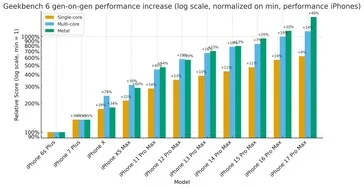
    2. The iPhone 17 shows a 588% improvement in single-core performance and 1,250% in graphics since the iPhone 6S.
    3. Year-on-year performance gains for the iPhone 17 include an 8% increase in single-core and 34% in graphics compared to the iPhone 16.
    4. Over the past decade, iPhones have improved by over 500% in single-core tasks and 1,200% in GPU capabilities.
    5. Despite performance gains, the price increase from the iPhone 6S to the iPhone 17 is relatively modest, from $649 to $799.


    As smartphones have developed over the years, the improvements in performance from one generation to the next seems to have shrunk. Many users have forgotten that, when we look at the bigger picture, high-end smartphones are now powerful enough to tackle demanding tasks such as AAA gaming, video editing, and even AI tasks. This is particularly true for those who always want the most powerful device when they make a purchase.

    Performance Evolution

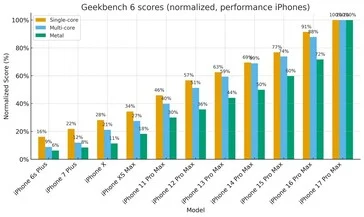
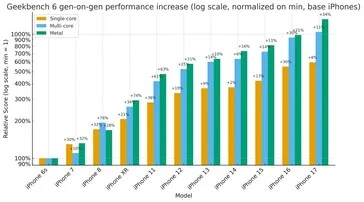
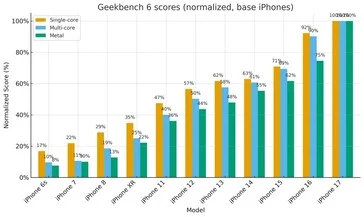
    To really understand how much smartphones have advanced, especially from a performance viewpoint, it’s helpful to reflect on the power we carry with us daily. A user on r/iPhone has gathered various charts illustrating the performance enhancements from generation to generation for iPhone models, beginning with the iPhone 6S (2015) up to the recent iPhone 17 series.

    Since the debut of the iPhone 6S in 2015, which featured the Apple A9 SoC, the Geekbench 6 single-core score for the base iPhone 17 has shown a staggering improvement of 588%. The gains in multi-core and graphics performance are even more remarkable, sitting at 1,000% and 1,250%, respectively. These figures were derived from the Geekbench 6 database and adjusted against the A19 score, which was set at 100%.

    Comparing Generations

    Examining the performance gains for each iPhone model compared to its direct predecessor, the iPhone 17 is said to be 8% quicker in single-core performance, 11% improved in multi-core, and 34% more efficient in graphics when compared to the iPhone 16. Notably, the iPhone 11 with the A13 Bionic holds the record for the largest single-core performance jump at 36%. The titles for the best multi-core and graphics performance go to the iPhone 8 (A11 Bionic) and the iPhone XR (A12 Bionic), respectively.

    Now, let’s look at the “Pro” iPhones. The iPhone 17 Pro Max boasts improvements of about 625% in single-core, 1,111% in multi-core, and an impressive 1,667% in graphics when compared to the iPhone 6S. The year-on-year performance growth for the iPhone 17 Pro Max appears to be 9% for single-core, 14% for multi-core, and 40% for the GPU compared to the iPhone 16 Pro Max (Available “Renewed” on Amazon).

    A Decade of Advancements

    In other words, over the past decade since the iPhone 6S was released, the latest iPhones have become over 500% faster in single-core tasks, more than 1,000% faster in multi-core tasks, and an astonishing 1,200% better in GPU capabilities. This progress should make us value the technology that powers our smartphones. Of course, these performance advancements haven’t come without a cost, as the prices of iPhones have gradually increased. Nevertheless, considering that the iPhone 6S was launched at a starting price of $649 and the base iPhone 17 is priced at $799, the increase in cost over the years isn’t too bad.

    Source:
    Link