Category: Video / Photo

  • Fujifilm X-T30 III Launching in October: Compact, Affordable Camera

    Fujifilm X-T30 III Launching in October: Compact, Affordable Camera

    Key Takeaways

    1. Fujifilm launched two new cameras, the GFX100RF and X-E5, while planning to reintroduce the affordable X-T line with the upcoming X-T50.
    2. Recent leaks suggest the X-T30 III will be released soon, marking the third update in the compact X-Mount camera series.
    3. The X-T30 III is expected to feature a 26.1 MP X-Trans CMOS 4 sensor and an X-Processor 5, similar to the latest models.
    4. Enhancements in autofocus, tracking, image processing, and read-out speeds are anticipated, though IBIS inclusion remains uncertain.
    5. The X-T30 III is aimed at entry-level users, likely featuring user-friendly controls to attract potential buyers.


    Fujifilm has had an exciting year, launching two new cameras, the GFX100RF and the X half, along with the much-anticipated X-E5. These cameras have mostly attracted their target audience, although the prices may be a bit high for some buyers. Now, it looks like Fujifilm is planning to bring back the affordable spirit of the X-T line with the upcoming X-T50.

    New Leaks Suggest Launch

    According to recent leaks from FujiRumors, which is known for its reliable information, Fujifilm is preparing to release the X-T30 III. This would be the third update to the compact X-Mount camera series.

    Speculations Confirmed

    Notably, this isn’t the first mention of the X-T30 refresh. Earlier this year, there were whispers about an October launch for the X-T30 III. Now, FujiRumors claims to have unofficial confirmation regarding this. Besides the release timeline, some basic specifications have also been revealed. The X-T30 III is expected to come equipped with a 26.1 MP X-Trans CMOS 4 sensor alongside the X-Processor 5.

    This sensor is the same one found in the X-T30 II, but it’s paired with the enhanced processor from the latest X100 VI and similar models.

    Improvements and Performance

    The specifications suggest that the X-T30 III will bridge the gap between the existing X-T30 II and the X-T50, with significant enhancements in autofocus performance, tracking capabilities, better image processing, and quicker read-out speeds. The internal features of the X-T30 III are on par with the X-S20, though it’s still unknown if this new model will include IBIS (in-body image stabilization). Should the X-T30 III lack IBIS, it might be priced lower than Fuji’s X-S20, which currently goes for $1,499 on Amazon, closely matching the $1,599 price tag of the X-T50. If Fujifilm aims to create a clear price distinction between these cameras, they might need to reconsider including IBIS.

    The X-T line has always catered to Fujifilm’s entry-level APS-C cameras, and if they stick to this tradition, the X-T30 III will likely feature user-friendly photography buttons and dials. This is precisely what potential buyers of the X-S20 have been searching for.

    Source:
    Link


  • 8 Stunning Images Illustrating Einstein’s Theory of Relativity

    8 Stunning Images Illustrating Einstein’s Theory of Relativity

    Key Takeaways

    1. Gravitational lensing occurs when massive objects warp spacetime, causing light to curve and creating distorted or duplicated images of background objects.

    2. This phenomenon acts like a “natural telescope,” allowing scientists to observe distant galaxies and gain insights into the early universe.

    3. The COSMOS-Web program is a 255-hour initiative aimed at exploring the formation and development of large cosmic structures, like galaxy clusters.

    4. The program identified over 400 candidates for gravitational lensing from more than 42,000 galaxies, highlighting eight impressive examples.

    5. Findings reveal galaxies when the universe was 2.7 to 8.9 billion years old, with some images showing galaxies from as early as one billion years after the Big Bang.


    In space, massive objects warp the fabric of spacetime around them. This warping causes light to curve as it moves through that area. When we look at a background object that aligns with this massive entity, the image can appear wavy, round, or even duplicated.

    Understanding Gravitational Lensing

    This phenomenon is known as gravitational lensing, and it comes with some benefits. The large object functions like a gravitational lens or a “natural telescope,” enhancing and distorting the light from far-off galaxies. By utilizing telescopes like Webb and harnessing the power of gravitational lensing, scientists can observe distant objects that reflect what the universe looked like during its formative years.

    The COSMOS-Web Program

    COSMOS-Web is a 255-hour Treasury initiative focused on exploring those early cosmic times. The goal of this program is to comprehend how gigantic structures such as galaxy clusters formed and developed. Researchers analyzed data from COSMOS-Web to identify gravitational lenses.

    The survey discovered over 400 candidates for lensing after examining more than 42,000 galaxies. From these candidates, the eight most impressive were chosen, which are displayed in the collage.

    Insights from the Findings

    The galaxies in the foreground of the image showcase the Universe when it was approximately 2.7 to 8.9 billion years old. The galaxies in the background show distorted images and date back even further.

    The background galaxy located in the top row and second column depicts the Universe when it was just around one billion years old. This galaxy has been nicknamed “The COSMOS-Web Ring.” Surveys like these are aiding us in observing distant galaxies and the early Universe with much more clarity.

    Source:
    Link


  • Pre-Order GoPro Fluid AI Pro Gimbal for Smartphones and Action Cameras

    Pre-Order GoPro Fluid AI Pro Gimbal for Smartphones and Action Cameras

    Key Takeaways

    1. GoPro has launched the Fluid AI Pro gimbal, priced at $229, competing against other models like the Hohem iSteady V3 Ultra and DJI OSMO Mobile 7P.
    2. The Fluid AI Pro will be available in early November, with pre-orders now open on GoPro’s official website.
    3. It supports various devices, including most GoPro action cameras and flagship smartphones, with a maximum weight capacity of 400 grams.
    4. The gimbal features AI tracking, a built-in fill light, and a display for easy control, with a battery life claimed to last up to 18 hours.
    5. It is compatible with the GoPro Fluid app, providing creative tools for content creation, although specific dimensions and weight details have not been revealed.


    Last month, GoPro, a famous maker of action cameras, introduced its new Fluid AI Pro gimbal. This new product is a direct competitor to the Hohem iSteady V3 Ultra, Insta360 Flow Pro, and DJI OSMO Mobile 7P. Pre-orders for the Fluid AI Pro gimbal are now being accepted on GoPro’s official website. The price for this smartphone gimbal is set at $229, and it is available in just one color—black.

    Availability Timeline

    Regarding when it will be available, GoPro plans to release the Fluid AI Pro gimbal in retail stores in early November, but they haven’t specified an exact launch date yet. When we look at the pricing compared to its competitors, the Fluid AI Pro is on the higher side compared to the Hohem iSteady V3 Ultra (currently priced at $169.99 on Amazon), the Insta360 Flow Pro (currently $129 on Amazon), and the DJI OSMO Mobile 7P (currently $149 on Amazon).

    Compatibility and Features

    The Fluid AI Pro offers more compatibility than the Karma Grip that came out nine years ago, as it works with most GoPro action cameras (Hero 13, 12, 11, and 10 Black), smartphones, and even some compact point-and-shoot cameras. This makes it a great choice for vloggers and content creators. The gimbal can hold a maximum weight of up to 400 grams (0.88 lbs), which means it can easily support many flagship smartphones, including the Vivo X200 Ultra (229 grams), Samsung Galaxy S25 Ultra (218 grams), and the new iPhone 17 Pro (233 grams).

    AI Tracking and Battery Life

    GoPro has integrated AI tracking into this gimbal, allowing for effective subject tracking. Similar to the Hohem iSteady V3 Ultra, it comes with a built-in fill light and a small display for easy camera control access. Although GoPro hasn’t disclosed the exact battery capacity of the Fluid AI Pro, they do claim it can achieve up to 18 hours of use on a single charge. It can also function as a power bank.

    Additionally, the gimbal supports the GoPro Fluid app, which offers various creative tools for capturing photos and videos. However, GoPro has yet to provide the specific dimensions and weight of the gimbal. For more details on the Fluid AI Pro, you can check out GoPro’s official website.

    Source:
    Link


  • Webb Image Unveils Stunning Details of Milky Way’s Star-Forming Region

    Webb Image Unveils Stunning Details of Milky Way’s Star-Forming Region

    Key Takeaways

    1. Sagittarius B2 is located a few hundred light-years from the Milky Way’s central black hole, Sagittarius A.
    2. Half of the star formation in the galactic core occurs in Sagittarius B2, despite it having only 10% of the gas compared to other areas.
    3. The James Webb Space Telescope (JWST) is studying Sagittarius B2 using its Near-Infrared Camera (NIRCam) and Mid-Infrared Instrument (MIRI).
    4. NIRCam images reveal numerous stars and bright gas clouds, while dark patches may indicate areas that could form new stars in the future.
    5. The images from NIRCam and MIRI are credited to various institutions and researchers, highlighting collaborative efforts in this research.


    Sagittarius B2 is situated just a few hundred light-years from Sagittarius A, which is the massive black hole found at the center of the Milky Way galaxy. The entire core of the Milky Way is rich in gas, an environment that typically supports the creation of stars.

    Surprising Star Formation

    Interestingly, about half of the star formation occurs in Sagittarius B2, even though this area contains just 10 percent of the gas relative to the rest of the region. This uneven distribution of star creation in the galactic core is still not fully understood.

    To get to the bottom of this enigma, a closer look at Sagittarius B2 is necessary. The James Webb Space Telescope (JWST) studied this region using its Near-Infrared Camera (NIRCam) and Mid-Infrared Instrument (MIRI).

    Captivating Images

    The NIRCam images show a multitude of stars accompanied by bright clouds of gas and dust surrounding them. There are also several dark patches visible in the images. These dark areas are filled with dense clouds that Webb cannot penetrate. Although they seem like empty voids now, these clouds could eventually lead to the formation of new stars.

    In the images produced by MIRI, glowing gas and dust are at the forefront. Only the most luminous stars show up as blue dots in the images. Researchers plan to conduct additional studies in this area to gather more information about these stars, such as their age and mass.

    Collaborative Efforts

    NIRCam and MIRI image credits go to NASA, ESA, CSA, STScI, Adam Ginsburg (University of Florida), Nazar Budaiev (University of Florida), Taehwa Yoo (University of Florida), and Alyssa Pagan (STScI).

    Source:
    Link


  • DJI Osmo Pocket 4 and New 50 MP Sensor for Oppo, Vivo, Xiaomi

    DJI Osmo Pocket 4 and New 50 MP Sensor for Oppo, Vivo, Xiaomi

    Key Takeaways

    1. OmniVision has developed a new camera sensor, the OV50R40, which may be used in the upcoming DJI Pocket action camera.
    2. The OV50R40 is a 50 MP sensor designed for high-end consumer gadgets, including smartphones and action cameras.
    3. The sensor features advanced capabilities such as 110 dB Single Exposure HDR, in-sensor zoom cropping, and 8K video recording.
    4. There are speculations that the OV50R40 could also appear in flagship smartphones from brands like Oppo, Vivo, and Xiaomi.
    5. The OV50R40 may serve as a secondary camera for the DJI Osmo Pocket 4, alongside a new 1-inch type CMOS sensor.


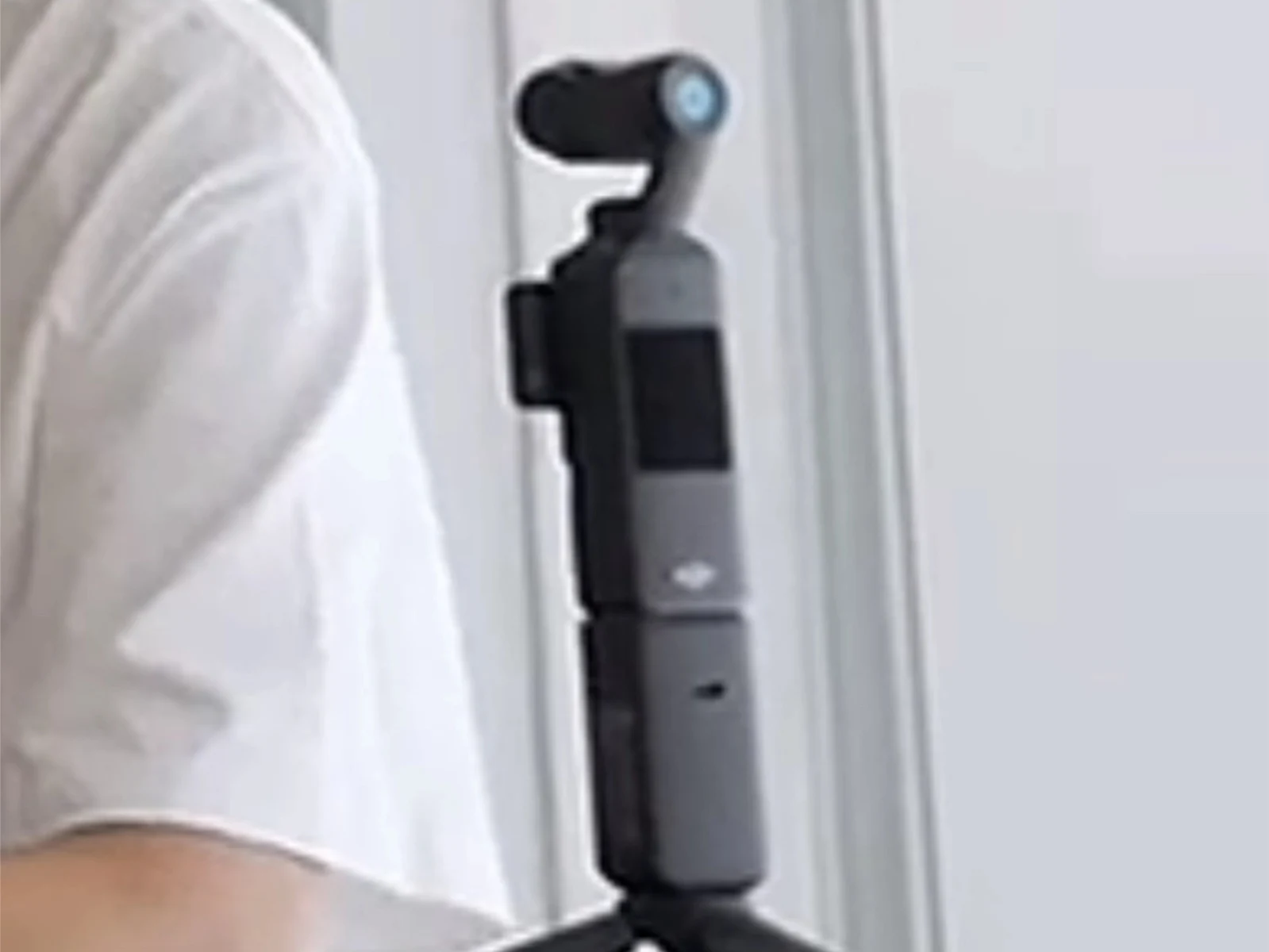
    It appears that OmniVision has revealed a camera sensor that may be the foundation for the upcoming DJI Pocket action camera. To summarize, Digital Chat Station mentioned at the end of September that OmniVision was in the ‘project evaluation phase’ for a sensor that could rival the imaging capabilities of devices like the DJI Osmo Pocket 3 (currently priced at $618 on Amazon).

    Future Flagship Phones

    In addition, other sources have suggested that this enigmatic sensor might be featured in upcoming flagship smartphones from brands like Oppo, Vivo, and Xiaomi. OmniVision has now introduced the OV50R40, which is a 50 MP and 1/1.3-inch sensor intended for:

    …high-end consumer gadgets including smartphones, along with action, vlog, and pocket cameras.

    Impressive Features

    The OV50R40 also includes 110 dB Single Exposure HDR, in-sensor zoom cropping, and the ability to record 8K video. Previously, there were rumors that the Osmo Pocket 4 would use a new 1-inch type CMOS sensor, along with an extra camera to set it apart from its predecessor. It is possible that both of these rumors could be accurate, with the OV50R40 serving as the secondary camera for the Osmo Pocket 4. It will be interesting to see how Android manufacturers incorporate OmniVision’s new 50 MP sensor into their devices, however.

    Source:
    Link


  • Accuro N1 Review: Bright Night Photos with Misleading Marketing

    Accuro N1 Review: Bright Night Photos with Misleading Marketing

    Key Takeaways

    1. The Accuro N1 is a digital camera designed to capture photos and videos in low light, featuring a sensitive sensor and an f/1.0 lens.
    2. It includes a 3-watt infrared LED for black-and-white images in total darkness, but claims about its resolution (58MP) are misleading as the actual sensor is only 2MP.
    3. The device has practical uses like an emergency flashlight and limited infrared vision, but it is not meant to be a serious camera.
    4. The Accuro N1 has a 3-inch display and a 3,000mAh battery, but the manufacturer does not provide details on battery life.
    5. Currently crowdfunding on Kickstarter for $119, with shipping expected in January 2026, but there are financial risks involved.


    The Accuro N1 may resemble a set of binoculars, but it is actually a digital camera. At the front, it has a lens and a flashlight featuring an infrared LED. The maker promotes this device by asserting that it captures bright photos and videos with minimal noise, even in very dim conditions, thanks to its highly sensitive sensor and an f/1.0 lens.

    Infrared Features

    A 3-watt infrared LED is used for clear black-and-white images in total darkness. Yet, the advertising seems to be intentionally misleading. The integrated SmartSens SmartClarity sensor is said to take photos at a resolution of 58MP and record in 4K video. The problem here is that a 58MP SmartClarity does not actually exist. The specified sensitivity of 7178 mV/lux*s corresponds only to the SmartClarity SC230AI, which is a 1/2.8-inch sensor with a mere 2MP resolution.

    Practical Uses

    The Accuro N1 isn’t really a serious camera, but the emergency flashlight and infrared LED can at least make it somewhat handy for seeing in the dark, albeit only in a limited 10-degree field of vision. There’s a 3-inch display at the back with a resolution of 854 by 480 pixels, and the battery has a capacity of 3,000mAh, but the manufacturer fails to give any details regarding battery life.

    The Accuro N1 is currently being crowdfunded on Kickstarter until October 29. During this campaign, the camera can be pre-ordered for $119, plus shipping and import charges. Shipping is projected to start in January 2026. Even though this is Accuro’s third Kickstarter endeavor, the usual financial risks are there, as the product may not arrive as promised or may not meet expected quality standards.

    Source:
    Link


  • Insta360 Antigravity A1: Pricing and Launch Package Details Revealed

    Insta360 Antigravity A1: Pricing and Launch Package Details Revealed

    Key Takeaways

    1. Insta360’s Antigravity A1 drone will be available for pre-order starting January 2026.
    2. The Antigravity A1 will be offered in three packages: Standard Bundle, Fly More Combo, and Creator or Pro Kit.
    3. Enterprise Add-Ons will be available, including extended warranty plans and SDK access.
    4. The Standard Bundle is expected to include the drone, a Grip Controller, and Vision goggles.
    5. The starting price for the Antigravity A1 is rumored to be around $999, potentially exceeding $1,500 with the Creator Kit.


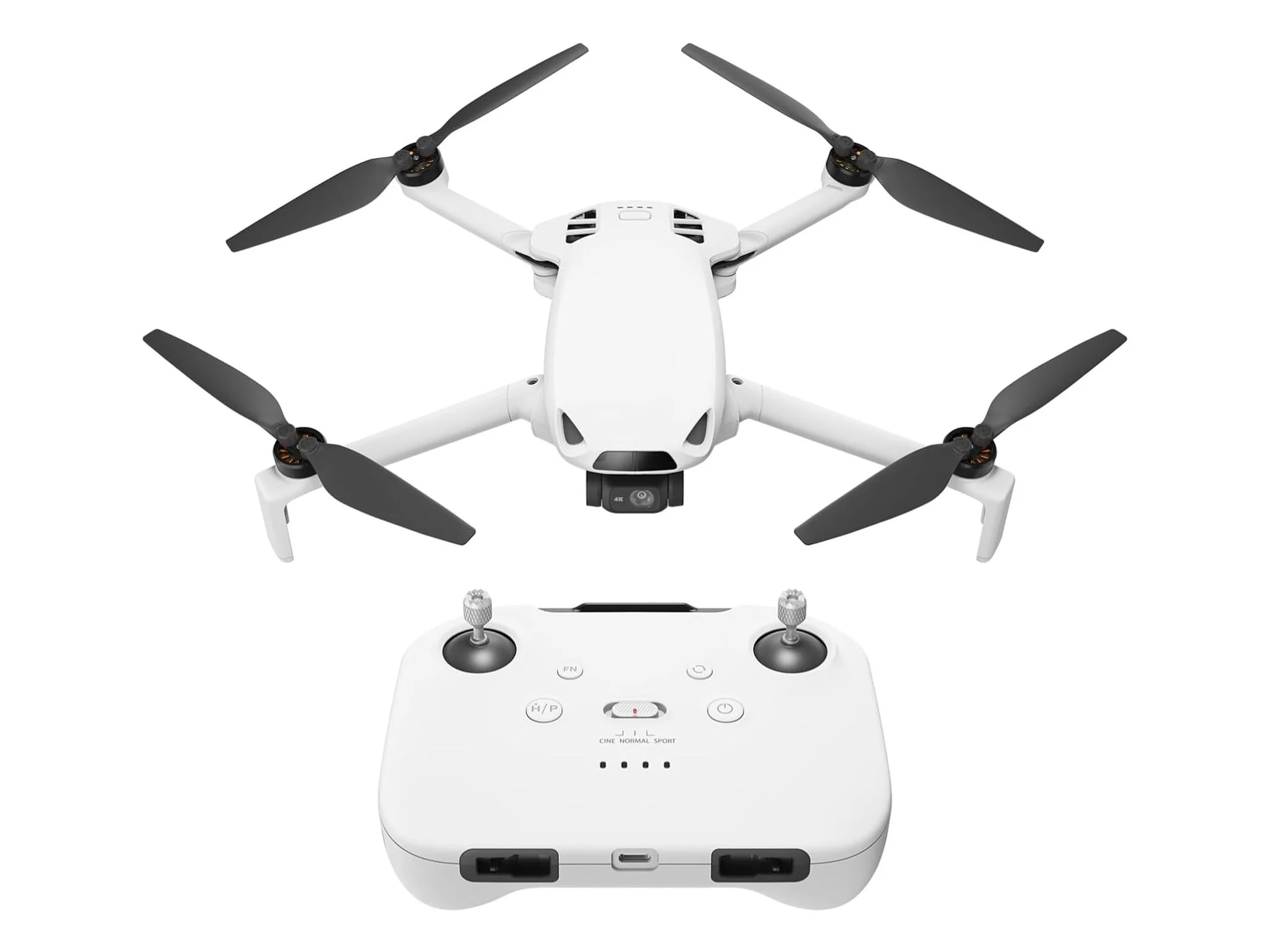
    Insta360 introduced its first Antigravity drone nearly two months ago. At that time, the company mentioned that the Antigravity A1 would not be ready for purchase until January 2026 at the earliest. Meanwhile, DJI has launched the Mini 5 Pro, which improves upon the Mini 4 Pro (current price: $759 on Amazon) in several aspects while keeping the same weight of under 250 g.

    More Details on the Antigravity A1

    As we wait for further updates from Insta360, The New Camera has provided some insights about the Antigravity A1. It appears that pre-orders are still slated to open in January 2026 after the drone’s official debut. Additionally, The New Camera suggests that Insta360 might offer the Antigravity A1 in three packages: the Standard Bundle, the Fly More Combo, and the Creator or Pro Kit.

    Bundles and Add-Ons

    Besides these bundles, the Antigravity A1 will come with options for Enterprise Add-Ons, such as extended warranty plans and SDK access. In contrast, the Creator or Pro Kit is expected to include ND filters and other accessories, alongside extra batteries, spare propellers, and a carrying case that comes with the Fly More Combo.

    The Standard Bundle is rumored to contain the Antigravity A1 drone, a Grip Controller, and Insta360’s Vision goggles. Reportedly, the starting price for the Antigravity A1 could be as low as $999 but may go beyond $1,500 when bundled with the Creator Kit. For more hardware information about Insta360’s initial drone offering, you can check out our Antigravity A1 launch article.

    The New Camera

    Source:
    Link


  • DJI Neo 2 Expected to Launch with Osmo Mobile 8 in November

    DJI Neo 2 Expected to Launch with Osmo Mobile 8 in November

    Key Takeaways

    1. DJI launched several new products this summer, including the Mini 5 Pro drone and its first robot vacuum cleaner.
    2. Three upcoming products are expected to be released in November: Osmo Action 6, Osmo Pocket 4, and RS 5 camera gimbal.
    3. The Neo 2 drone and a new Osmo Mobile smartphone camera gimbal, likely named Osmo Mobile 8, are also anticipated in November.
    4. There are speculations about a possible release of the Mic 3 Pro microphone next month, marking the third launch in the Mic series within a year.
    5. DJI is expected to continue its product launches into 2025 beyond the current announcements.


    DJI has been busy launching a variety of products this summer, including the much-anticipated Mini 5 Pro drone. Alongside this, the company has also introduced its first robot vacuum cleaner, a new wireless microphone, a competitor to the Insta360 X5 and GoPro Max 2, and its first modular action camera in four years, currently priced at $299 on Amazon. There are reports suggesting that DJI is not finished with its product launches for 2025.

    Upcoming Releases in November

    As reported by DroneXL, DJI has three more products lined up for release in November alone. Recently, there has been buzz around the Osmo Action 6, Osmo Pocket 4, and RS 5 camera gimbal. However, these products are not expected to be the next in line for the company’s release calendar.

    New Drone and Gimbal on the Horizon

    Instead, DroneXL has hinted that the Neo 2 drone is on track to be released in November. This compact drone is likely to be accompanied by a new Osmo Mobile smartphone camera gimbal. Recent leaks suggest that DJI plans to name this gimbal the Osmo Mobile 8. It’s still unclear if DJI will release an Osmo Mobile 8P at the same time, similar to what they did earlier this year with the Osmo Mobile 7 series.

    Possible New Microphone

    Interestingly, DroneXL also speculates that DJI might introduce a Mic 3 Pro next month. However, there hasn’t been any substantial evidence regarding the Mic 3 Pro yet. If this release takes place, it would mark DJI’s third launch in the Mic series within one year, following the Mic Mini and the newly released Mic 3.

    Source:
    Link


  • Lexar Launches 1TB Armor Gold and Silver Pro SDXC Cards

    Lexar Launches 1TB Armor Gold and Silver Pro SDXC Cards

    Key Takeaways

    1. Lexar has launched two new 1TB SDXC cards: Armor Silver Pro and Armor Gold, featuring UHS-II, V60, and U3 ratings.
    2. The cards offer impressive read speeds of 280 MB/sec; write speeds are 160 MB/sec for Silver and 205 MB/sec for Gold.
    3. Both cards have a durable stainless steel design but lack a write-protection switch or ribbing near the contacts.
    4. With an IP68 rating, the cards are dust-tight, water-resistant, and can withstand drops from up to 5 meters; they operate in extreme temperatures from -25°C to 85°C.
    5. The Armor Silver Pro is priced at $364.99 and will be available in Q4 2025, while the Armor Gold is priced at $369.99 and will be available in Q3 2025.


    Lexar has revealed two new SDXC cards: the 1TB Armor Silver Pro and the 1TB Armor Gold. These cards boast UHS-II, V60, and U3 ratings, with impressive read speeds reaching 280 MB/sec. The write speeds are also notable, hitting 160 MB/sec for the Silver variant and 205 MB/sec for the Gold.

    Durable Design

    Both of these cards are crafted with stainless steel, which offers superior protection when compared to standard plastic cards, as per the company’s claims. However, they do not feature a write-protection switch or ribbing near the contacts on the back, which may be a consideration for some users.

    Water and Dust Resistance

    With an IP68 rating, the cards are completely dust-tight and can withstand being submerged in water for extended periods. Lexar further emphasizes their durability, stating that they can endure drops from heights up to 5 meters (16.4 ft.) and are shock-resistant up to 1,500 G. The Lexar Armor series is designed for use in extreme temperature ranges from -25°C to 85°C (-13°F to 185°F). If any problems occur, these cards come with a complimentary Lexar Recovery Tool and a lifetime guarantee.

    The 1TB Armor Silver Pro SDXC from Lexar is priced at $364.99 and is set to be available in the fourth quarter of 2025 through the Lexar store on Amazon. The 1TB Armor Gold SDXC carries a price tag of $369.99 and will hit the market in the third quarter of 2025 via B&H Photo Video.

    Source:
    Link


  • Stunning Spiral Galaxy Image: Hot Blue Stars vs. Cold Red Stars

    Stunning Spiral Galaxy Image: Hot Blue Stars vs. Cold Red Stars

    Key Takeaways

    1. NGC 6000 is a spiral galaxy located 102 million light-years away in the Scorpius constellation.
    2. Two notable supernovae events occurred in NGC 6000: SN 2007ch in 2007 and SN 2010as in 2010, which help researchers study star sizes and their companions.
    3. Hubble Space Telescope captured an image showing a vibrant yellow core, where older stars are concentrated, surrounded by dark dust lanes.
    4. The galaxy’s spiral arms contain younger, hotter stars that appear blue, while older stars are cooler and appear red.
    5. Hubble continues to be a valuable tool for scientists to learn about star formation and their lifecycle.


    NGC 6000 is a spiral galaxy situated 102 million light-years away in the Scorpius constellation. Hubble Space Telescope managed to capture this galaxy while it was looking at areas with recent supernovae in nearby galaxies. Supernovae are really strong and bright explosions that signal the end of a star’s lifecycle.

    Recent Supernovae Events

    In NGC 6000, there have been two notable supernovae: one occurred in 2007 (SN 2007ch) and another in 2010 (SN 2010as). By studying these supernovae, researchers can gain insights into the size of stars before they explode. They can also determine if the star that blew up had a companion star alongside it.

    Hubble’s Stunning Imagery

    The image taken by Hubble reveals a vibrant yellow core in this galaxy. The older stars are generally located nearer to this central area. Dark dust lanes encircle the center, obscuring some of the light emanating from the galactic core.

    Spiral Arms and Star Colors

    Around the center, we can see the spiral arms of the galaxy. These arms are home to younger and more massive stars, which are hotter and look bluer. In contrast, the older stars are cooler and appear redder in color.

    If you zoom in on the right side of the galaxy’s disc from the image, you might notice four thin lines. These lines represent asteroids from our solar system. They were moving through Hubble’s view while it was observing NGC 6000.

    Scientists keep using Hubble to learn more about stars, including their formation and eventual demise.

    Source:
    Link