Category: Video / Photo

  • BenQ GV32 Portable Smart Projector: Versatile and Compact Design

    BenQ GV32 Portable Smart Projector: Versatile and Compact Design

    Key Takeaways

    1. The BenQ GV32 projector is portable, weighing 1.6 kilograms and measuring 130 x 211.2 x 191.4 centimeters.
    2. It supports FullHD resolution (1,920 x 1,080) but has a brightness of 500 ANSI lumens.
    3. The projector has a throw ratio of 1:1.2, requiring specific distances for different screen sizes (1.5 meters for 60 inches, 3.2 meters for 120 inches).
    4. It comes with Google TV pre-installed for streaming content and supports WiFi and USB-C connectivity.
    5. The GV32 is priced at $599 in the U.S., with no current information on availability in other regions.


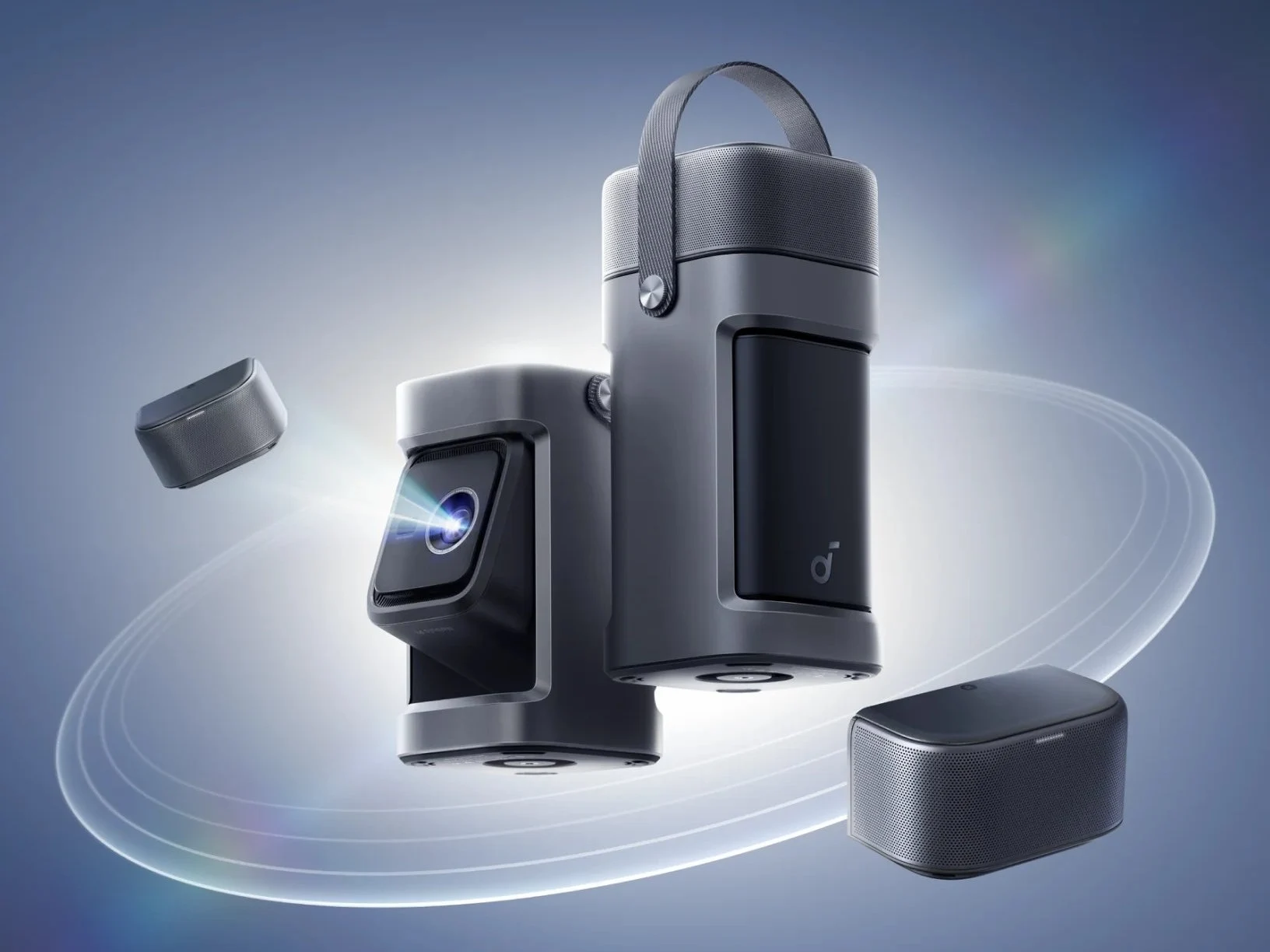
    BenQ has introduced a new projector called the GV32, which is quite similar in design to earlier models like the BenQ GV11. This projector is portable, weighing only 1.6 kilograms and measuring 130 x 211.2 x 191.4 centimeters. It can be tilted significantly using the included stand, allowing it to project images onto walls and even ceilings. The device supports a resolution of 1,920 x 1,080, enabling it to display FullHD content at its native resolution. However, like many compact LED projectors, its brightness is limited to 500 ANSI lumens.

    Projection Capabilities

    The GV32 is not equipped with a particularly short throw ratio, set at 1:1.2. This means to achieve a 60-inch projection, you will need to place it 1.5 meters away, while for a 120-inch display, a distance of 3.2 meters is necessary. An external media player is not required since it comes with Google TV pre-installed, allowing users to stream content from services like Netflix and YouTube. It also supports WiFi and can work with a 60-watt power bank. Additionally, image content can be sent through USB-C. The projector claims to have an input lag of 22.4 milliseconds, which could make it a good choice for gamers. The smart features are designed to make the setup process easier and less time-consuming.

    Pricing and Availability

    In the United States, the GV32 will be available for a price of $599. There is currently no information regarding its availability in other regions, so interested buyers will need to wait for updates on that front.

    Source:
    Link



  • Affordable Xming Q6 Projector with Ambient Lighting Now Available

    Affordable Xming Q6 Projector with Ambient Lighting Now Available

    Key Takeaways

    1. The Xming Q6 smart projector features 1080p resolution with HDR10+ decoding and supports 4K content, offering a brightness level of 500 CVIA lumens.
    2. It can project images up to 120 inches with a throw ratio of 1.2:1 and includes tools for enhancing image quality.
    3. The projector runs on WanOS, has built-in 5W speakers, and offers connectivity options like Wi-Fi 6, Bluetooth, HDMI 2.0, and USB 2.0.
    4. Users can control the projector via the Xiaomi Home app, and it features ambient lighting that syncs with music.
    5. The Xming Q6 is priced at CNY 1,799 (approximately $253) and will be available in China starting October 15th, with no current plans for international release.


    The new Xming Q6 smart projector has been introduced in China. This launch comes shortly after the unveiling of the Q6 Neo projector for the same market, both models continuing the legacy of the previous Q5 series.

    Specs and Features

    Similar to the Q6 Neo, the Q6 projector also offers a 1080p resolution with HDR10+ decoding and the ability to support 4K content. Nevertheless, this Xming version claims to provide a superior brightness level of 500 CVIA lumens. It’s important to note that the company has not shared brightness measurements that align with globally recognized standards such as ANSI or ISO lumens. The projector can display images as large as 120 inches with a throw ratio of 1.2:1, and includes multiple tools for enhancing image quality.

    Operating System and Connectivity

    Powered by WanOS, the Q6 comes equipped with two built-in 5W speakers. For connectivity, it offers Wi-Fi 6, Bluetooth, and ports including HDMI 2.0 and USB 2.0. Additionally, users can manage the device remotely through the Xiaomi Home app, and it supports HyperOS. The top of the projector features ambient lighting that can be either white or colorful, and it provides effects that can synchronize with music. The projector has a mint green exterior and includes an adjustable angle stand, with dimensions of 172 x 291 x 286 mm (around 6.8 x 11.5 x 11.3 inches).

    Pricing and Availability

    In China, the Xming Q6 smart projector is set to be priced at CNY 1,799 (approximately $253) when it becomes available on October 15th. The company has not yet revealed any intentions to release this model in other regions like North America, where they offer various products under their international brand, Formovie. For instance, the Formovie X5 4K Laser projector can currently be found for $1,249 on Amazon.

    JD.com, IT Home

    Source:
    Link



  • Snapchat Introduces Paid Storage Plans: Free Users Limited to 5 GB

    Snapchat Introduces Paid Storage Plans: Free Users Limited to 5 GB

    Key Takeaways

    1. Snapchat introduced the Memories feature in July 2016, allowing users to access previously shared content.
    2. Free users are now limited to 5 GB of storage; exceeding this limit requires selecting a paid plan.
    3. Paid storage plans include 10 GB for $2.99/month, 50 GB for $4.99/month, and 100 GB for $9.99/month.
    4. Free users over the limit get 12 months of temporary storage to manage their content before new Snaps are removed.
    5. Snapchat has over 900 million active users monthly, with India and the US being the top two countries in user count.


    Back in July 2016, Snapchat introduced the Memories feature, which enables users to access their previously shared content. Even though other users can’t see these Memories, there was no limit on the storage space until this month. Free users are now allowed 5 GB, after which they must choose one of the three paid options available.

    Current Paid Storage Plans

    Here are the three paid storage plans that Snapchat offers, along with the corresponding storage capacity and prices:

    Plan 1: 10 GB – $2.99/month
    Plan 2: 50 GB – $4.99/month
    Plan 3: 100 GB – $9.99/month

    It’s worth mentioning that free users who exceed the 5 GB limit will be given 12 months of temporary storage. This allows them time to download their content or switch to a paid plan before next September. However, while older Snaps remain safe, any new ones will be removed until an appropriate storage plan is selected.

    User Base Statistics

    Snapchat boasts over 900 million active users each month, with India leading at 210 million users, followed by the US at 105 million. The daily active user count is also remarkable, averaging around 460 million.

    Conclusion

    In summary, Snapchat’s Memories feature has evolved, now offering limited storage for free users while also providing several paid plans for those needing more space. This change reflects Snapchat’s ongoing growth and the significant number of users engaging with the platform.

    Source:
    Link


  • OpenAI to Launch AI-Driven TikTok Clone Soon

    OpenAI to Launch AI-Driven TikTok Clone Soon

    Key Takeaways

    1. OpenAI is entering the short video market, competing with TikTok, Instagram Reels, and YouTube Shorts, focusing on AI-generated content.
    2. The platform will use OpenAI’s Sora 2 video generation model, allowing video lengths of up to ten seconds and featuring user-uploaded images.
    3. The app will include features like Remix, enabling users to modify content created by others.
    4. Copyright issues may arise as the app can generate copyrighted material, requiring owners to opt out to prevent their work from being used.
    5. Future developments will enhance Sora’s capabilities, and OpenAI may adopt an invite-only strategy to manage access and create interest.


    Wired has discovered that OpenAI is looking to dive into the short video scene, going head-to-head with platforms like TikTok, Instagram Reels, and YouTube Shorts. But there’s a big twist with OpenAI’s approach: it will focus solely on AI-generated content, which takes away much of the work involved in creating videos. This could be a great opportunity for prompt engineers.

    Initial Features

    At the start, the new platform will utilize OpenAI’s Sora 2 video generation model, keeping video lengths to a maximum of ten seconds. Users will be able to upload their own image to the app through a verification tool. Key features found in TikTok and Reels, like Remix, will also be included, allowing users to alter content made by others.

    Copyright Issues

    Interestingly, the app will have the ability to create copyrighted material. For copyright owners, this means they will have to actively opt out to prevent their work from appearing on the platform. This could cause a lot of trouble for creators and companies at first, as there may be significant uncertainty regarding what content is allowed.

    Future Developments

    By focusing exclusively on AI-generated videos, OpenAI can enhance future versions of Sora. The content will stay within the app, potentially reducing the need for popular tools like CapCut from ByteDance. It’s still unclear if this will truly affect the crowded short video landscape.

    OpenAI hasn’t made any official statements yet, but now that the news is out, it won’t be long before they do. Considering the massive computing power needed for AI video creation, OpenAI might adopt an invite-only strategy to create buzz and limit access to a few markets.

    Source:
    Link


  • Sony IMX927: 105 MP Square Camera Sensor with 113 fps Global Shutter

    Sony IMX927: 105 MP Square Camera Sensor with 113 fps Global Shutter

    Key Takeaways

    1. Sony has introduced the IMX927 square camera sensor, measuring 39.7 mm diagonally, aimed at industrial machine vision and video cameras.
    2. The sensor features a high resolution of 10,272 × 10,272 pixels (about 105 MP) and can achieve speeds of up to 113 fps at 8-bit color depth.
    3. The IMX927 includes a global shutter, eliminating rolling shutter effects, and has an integrated HDR function for enhanced dynamic range without affecting frame rates.
    4. Two versions of the sensor are available: one with a Bayer filter for color and one without for monochrome, which captures more light.
    5. The sensor maintains compatibility with existing mounts used in 16 other sensors, with cropped variants like the IMX937, IMX298, and IMX929 offering different resolutions and frame rates.


    Sony has introduced a new square camera sensor with a diagonal size of 39.7 millimeters, making it only a bit smaller than a full-frame sensor. The Sony IMX927 is mainly designed for use in industrial settings, particularly in machine vision for automated mass production, but it could also be suitable for video cameras.

    Exciting Technology

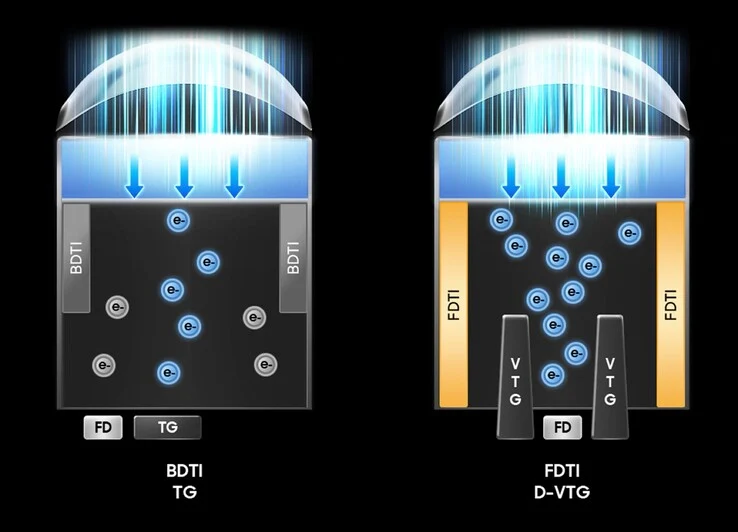
    It’s still uncertain if this sensor can be integrated into existing cameras, but the technology is definitely intriguing. The IMX927 boasts a resolution of 10,272 × 10,272 pixels, which translates to about 105 MP, and can operate at speeds of up to 113 frames per second at an 8-bit color depth. Alternatively, it can achieve 73 frames per second with 12-bit color depth—all thanks to a global shutter. This feature allows all pixels to be read at once, eliminating the rolling shutter effect that can occur with line-by-line readings.

    Versatile Options

    The sensor comes in two versions: one with a Bayer filter as a color sensor, and another without a filter, which is a monochrome sensor that can capture more light. The Sony IMX927 is also equipped with an integrated HDR function that enhances dynamic range without needing to combine multiple images, so the effective frame rate remains unaffected when using HDR.

    Compatibility and Variants

    Sony has maintained the same mount used across 16 other sensors in this series, meaning that existing setups could potentially be upgraded. Additionally, Sony has released cropped variations of the IMX927, including the IMX937, which has 105 MP and a maximum frame rate of 56 fps. There are also the smaller IMX298 and IMX929, with resolutions of 64 MP and 51 MP, respectively, but they can achieve impressive frame rates of up to 138 fps and 225 fps. More information about the Sony IMX927 is available in the official press release.

    Sony | Press release

    Source:
    Link


  • Scientists Use 3 Telescopes to Capture Stunning Westerlund 1 Image

    Scientists Use 3 Telescopes to Capture Stunning Westerlund 1 Image

    Key Takeaways

    1. Westerlund 1 is a youthful super star cluster located about 12,000 light-years away in the constellation Ara, with a mass of 50,000 to 100,000 solar masses.
    2. It is one of the largest super star clusters in the Milky Way and the closest to Earth.
    3. New imagery combines X-ray data from Chandra, infrared data from Webb, and optical data from Hubble, revealing various colors representing different types of data.
    4. The imagery shows many stars, with large stars appearing bright and smaller ones as faint dots, surrounded by hot gas clouds.
    5. Mottled golden clouds indicate areas of cooler dust and gas where new stars are forming, showcasing ongoing stellar formation.


    Westerlund 1 is a youthful star cluster situated approximately 12,000 light-years away in the southern constellation Ara, also known as the Altar. It has an estimated total mass ranging between 50,000 and 100,000 solar masses, which classifies it as a “super star cluster.”

    Characteristics of Super Star Clusters

    Super star clusters are characterized by a large number of stars, often tens of thousands, packed closely together. Among these, Westerlund 1 is recognized as one of the largest super star clusters in the Milky Way and is notably the closest one to our planet.

    Stunning New Imagery

    A fresh image of Westerlund 1 incorporates X-ray data from Chandra, infrared data from Webb, and optical data from Hubble. The data from Chandra is represented in shades of pink, blue, purple, and orange, while Webb’s infrared information is depicted in yellow, gold, and blue. Hubble’s visuals are displayed in cyan, gray, and light yellow.

    The imagery reveals a multitude of stars within the cluster, showcasing both the brighter, larger stars and smaller stars that appear as faint dots. Surrounding these are purple clouds, indicating hot, high-energy gas.

    Formation of New Stars

    Additionally, mottled golden clouds can be seen, signifying cooler dust and gas where new stars are formed. This image was made public on July 23, 2025, as part of a new series that combines data from Chandra with various other telescopes.

    Source:
    Link


  • Oppo Find X9 Pro vs $11,000 Hasselblad: Photo Comparison Challenge

    Oppo Find X9 Pro vs $11,000 Hasselblad: Photo Comparison Challenge

    Key Takeaways

    1. Smartphone vs. Camera: Smartphones like the Oppo Find X9 are closing the gap with DSLRs and mirrorless cameras, making them suitable alternatives for casual users, especially while traveling.

    2. Resolution Advantage: The Oppo Find X9 Pro features a 200 MP sensor, which offers higher resolution compared to the Hasselblad’s 100 MP sensor, potentially enhancing image quality.

    3. Price Comparison: The Oppo Find X9 is significantly cheaper at around $1,000 compared to the Hasselblad camera setup, which costs over $11,000.

    4. User Preferences: The choice between smartphone and traditional camera may depend on personal taste, but the Oppo Find X9 Pro is expected to meet the needs of most vacationers.

    5. Upcoming Features: The Oppo Find X9 series, including external Hasselblad lens compatibility, is set to launch in China on October 16, with global availability to follow.


    200 MP against 100 MP. About $1,000 compared to $11,000. Smartphone versus system camera. For years, smartphones have sought to make DSLRs and mirrorless cameras outdated. Indeed, sleek smartphones are getting closer to the quality of full-sized cameras, and they are increasingly taking their place, at least for many casual users. Oppo wants to encourage Chinese consumers to leave their cameras behind, especially while traveling, as many recent teasers for the Oppo Find X9 have made very clear.

    “Hasselblad 200 million ultra-clear, no need to carry a camera when traveling!” said a recent Weibo post from September 29, 2025 (translated by a machine). To back up this statement, Oppo’s manager Zhou Yibao, who oversees the Find smartphone series, recently shared a photo comparison using his Hasselblad X2D II 100C during a trip in Mongolia. This system camera currently retails for approximately $7,400 just for the camera body, and $11,098 when combined with an XCD 2.5/55V lens, as listed on the Hasselblad website.

    Resolution Comparison

    In terms of resolution, the Oppo Find X9 Pro actually holds some advantages. It features a 200 MP ISOCELL HP5 sensor in its 70mm telephoto lens, a detail that leaker Digital Chat Station revealed in a Weibo post. The yet-to-be-announced Samsung sensor is said to merge 200 MP with a sensor size of 1/1.56 inches, leading to a pixel size of 0.5 micrometers. On the contrary, Hasselblad specifies a pixel size of 3.76 micrometers for its 100 MP medium-format sensor. What sets the Oppo Find X9 Pro apart is that it now captures images at the highest resolution by default, either 50 or 200 MP, and doesn’t scale down to 12 MP, at least when “certain conditions” are satisfied, like having enough light around.

    Personal Taste Matters

    Whether the comparison leans towards the “real” Hasselblad camera or not is likely to depend on individual preference for many. Regardless, the Oppo Find X9 Pro is likely sufficient for most vacationers. Leaker Digital Chat Station also recently enumerated the specific features of both the Oppo Find X9 Pro and Find X9. Some specifications had already been disclosed earlier; below is a summary of the expected hardware details. The external Hasselblad lens, which is compatible with at least the Pro model, was first spotted in an unboxing video last weekend, transforming the 70mm telephoto lens into approximately a 220mm telephoto lens. The Oppo Find X9 and Find X9 Pro are set to be launched in China on October 16, with a global launch date likely to be revealed soon.

    Source:
    Link


  • Oppo Find X9 Pro Unboxing: Hasselblad Lens & Camera Specs Revealed

    Key Takeaways

    1. Oppo and Vivo will release a camera kit with a handle/protective case and an extra teleconverter for their models with the Dimensity 9500 by the end of 2025.
    2. Vivo has successfully used a Zeiss lens and color-matching camera case for its Vivo X300 series.
    3. Oppo introduced the Hasselblad lens for the Find X9 series during a recent Weibo roundtable talk.
    4. The Oppo Hasselblad Professional Teleconverter Kit includes a lens and two adapters, enhancing the camera’s capabilities.
    5. The Oppo Find X9 Pro’s 70 mm telephoto lens can achieve an effective 230 mm magnification with the new teleconverter.


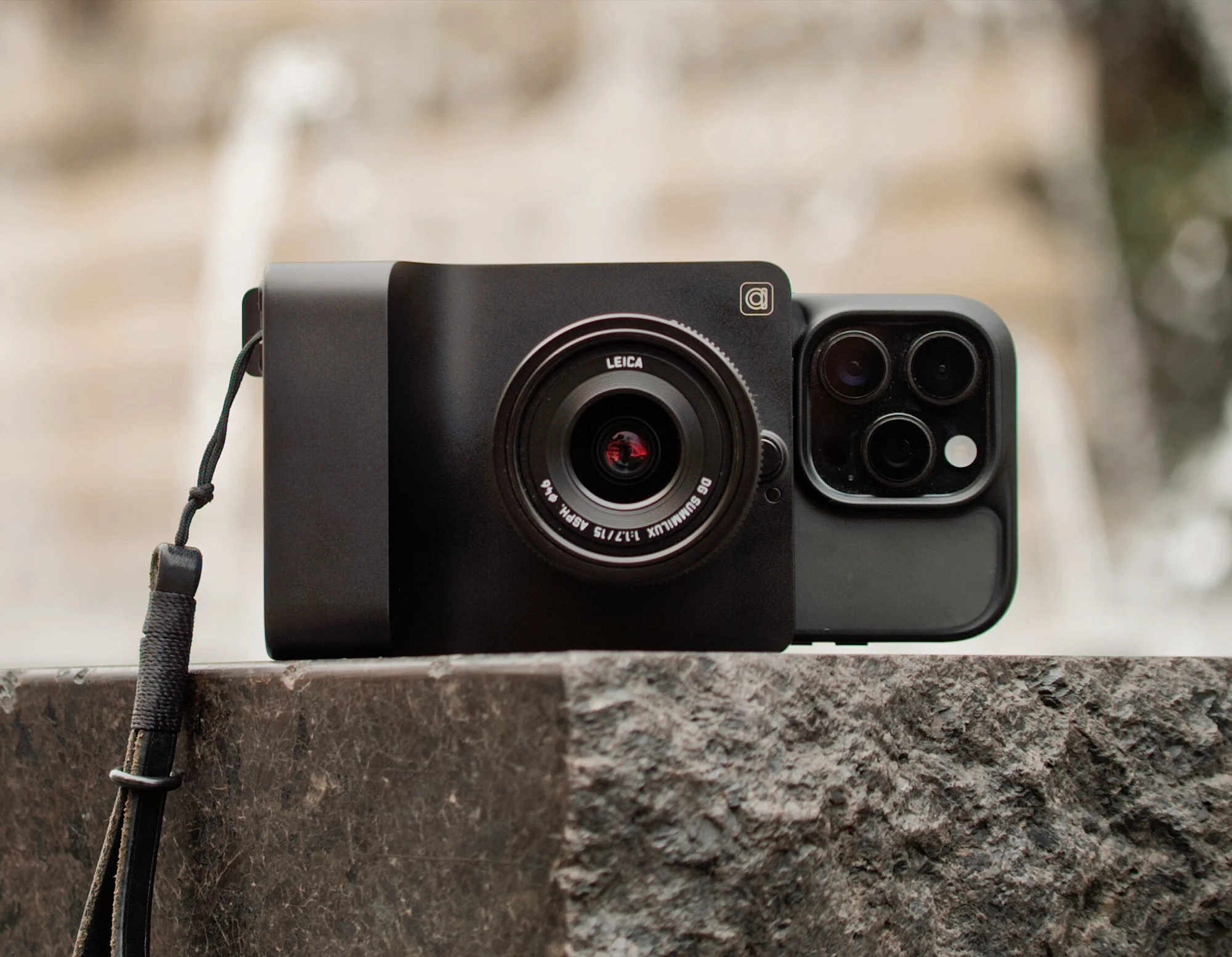
    Not only Vivo, but Oppo will also provide a camera kit that includes a handle/protective case along with an extra teleconverter for their regular and Pro models equipped with the Dimensity 9500. This offering is set to release at the end of 2025. The idea has clearly worked wonders for the Vivo X200 Ultra. Vivo has already demonstrated the Zeiss lens paired with a color-matching camera case for the Vivo X300 and Vivo X300 Pro, while the first external Hasselblad lens for the Oppo Find X9 series has remained a mystery until now.

    Exciting Developments

    This past weekend, Oppo hosted a roundtable talk about its new camera flagships on Weibo and revealed the Hasselblad lens for the first time. We have some important screenshots from the broadcast below; the notable moments start around 1:10:00 in the video. The packaging is labeled as the Oppo Hasselblad Professional Teleconverter Kit, containing the lens and two adapters. Although the purportedly magnetic case wasn’t revealed, the dark lens resembles those from Vivo/Zeiss and offers a magnification of 3.28. This implies that the 70 mm telephoto lens of the Oppo Find X9 Pro would effectively transform into an optical 230 mm telephoto lens, which is much greater than the 2.35x magnification provided by the Zeiss teleconverter.

    Key Specifications

    A summary of all camera specifications for the two new Hasselblad flagships, as teased so far, can be found on Weibo, included below in machine translation.

    Source:
    Link


  • Camera with 8× More Channels Revolutionizes Mobile Photography

    Camera with 8× More Channels Revolutionizes Mobile Photography

    Key Takeaways

    1. The University of Utah has developed a camera system for smartphones that captures 25 color channels instead of the usual three (red, green, blue).
    2. This technology allows smartphones to perform advanced tasks like evaluating fruit ripeness, recognizing plant stress, and improving facial recognition.
    3. The system uses a specialized diffractive filter with nanoscale patterns to encode spectral information into a compressed 2D image.
    4. This innovation offers advantages over traditional hyperspectral cameras, which are often large, costly, and slow for video capture.
    5. Potential applications extend beyond smartphones to include surveillance, food processing, and improved data transmission for satellites.


    Researchers at the University of Utah have created a groundbreaking camera system that might soon enable your smartphone to observe the world with significantly greater detail than is currently possible. Unlike traditional cameras that only capture three color channels (red, green, and blue), this innovative technology captures 25 different color channels. This allows it to record a “spectral fingerprint” for each pixel in high-definition video.

    Revolutionizing Smartphone Photography

    The scientists claim their system is compact enough to fit inside a cellphone, which could transform smartphone photography. A future device equipped with this technology may be able to instantly evaluate the ripeness of fruits, recognize stress or illnesses in plants, distinguish various skin conditions, and much more. Furthermore, it could enhance facial recognition technology by detecting features that are invisible to both human eyes and standard digital cameras.

    Breakthrough Technology

    This innovation — discussed in the journal Optica — consists of a specialized diffractive filter with nanoscale patterns, which is placed directly over a conventional camera’s sensor. This filter encodes all 25 channels of spectral information from a scene into a compressed 2D image, known as a “diffractogram.” Subsequently, a computer algorithm reconstructs this image into a comprehensive data cube.

    Future Applications

    This method marks a significant advancement, as traditional hyperspectral cameras are typically large, costly, and too slow for video capture. While the possibilities for smartphones are vast, this technology also has great potential in other fields. It could be adapted for use in surveillance cameras, food processing facilities, and beyond. Due to the compression of captured images, the resulting data files are much smaller, which could be advantageous for satellites that need to transmit data over long distances. If this technology is further developed and embraced, it could lower the costs of hyperspectral cameras across various industries, while also enhancing their portability.

    Source:
    Link


  • PJC D18 Budget Drone with Remote Control, Display, and Obstacle Avoidance

    PJC D18 Budget Drone with Remote Control, Display, and Obstacle Avoidance

    Key Takeaways

    1. The PJC D18 drone is designed for beginners and is priced attractively at around €32 with one battery included.
    2. It has a flight time of up to 10 minutes and captures video at 480p, which is suitable for casual use but not for professional content.
    3. The drone has a limited FPV range of 65 to 130 feet, while the remote control can reach up to 330 feet.
    4. Features include obstacle avoidance and gesture recognition, but performance is poor in low-light conditions.
    5. Warranty support may be difficult to access if technical issues arise.


    With the D18 model, PJC seems to be aiming for people who haven’t used drones before and just want to give this type of gadget a shot. Because of this, there are some noticeable sacrifices in features, but the price is very appealing at around €32 for one battery included. Shipping to Europe is about €3, and you can expect delivery between mid-November and early December. If you encounter any technical issues, getting warranty support might be a bit tricky.

    Weight and Flight Time

    The drone has a weight of around 5.5 oz and can fly for up to 10 minutes. It captures video at 480p, which could be enough for basic flying but won’t cut it for making professional videos for YouTube. The FPV (First Person View) range is also quite limited, sitting at only 65 to 130 feet. This means that, aside from the short battery life, exploring a larger area with this budget-friendly drone won’t be very enjoyable. However, the remote control that comes with it has a much better range of about 330 feet and even features a display. Additionally, the affordable PJC D18 drone can be paired with a smartphone app.

    Features and Functionality

    The drone includes obstacle avoidance that makes use of the cameras mentioned before. Unfortunately, this system doesn’t function well in low-light situations. It also recognizes gestures, which could be handy for taking selfies. Finally, there are test videos available online for drones in this price bracket, which can help potential buyers get a better feel for the PJC D18 before making a purchase decision.

    Source:
    Link