Tag: iPhone 17 Pro

  • Apple iPhone Air 2: 3 Major Upgrades from Bloomberg

    Key Takeaway

    – iPhone Air inferior to iPhone 17 in battery life and single rear camera
    – Second-gen iPhone Air to get three major upgrades: extended battery life, ultra-wide-angle camera, and A20 Pro chip
    – Second-gen model launching spring 2027, not alongside iPhone 18 Pro in September


    Apple’s Slimmest iPhone Gets a Second Chance

    The Apple iPhone Air (priced at $744 on Amazon) includes some of the iPhone 17 Pro’s features, like the Apple A19 Pro ARM processor. However, this ultra-thin flagship smartphone is actually inferior to the more affordable iPhone 17 in certain areas, particularly regarding its significantly smaller battery and single rear camera.

    Three Major Upgrades Coming to the iPhone Air

    According to the latest information from Bloomberg, Apple is planing to make improvements to the second-generation iPhone Air, as the smartphone is set to receive three major upgrades. First, Apple is expected to extend the battery life, though it is not yet known whether the smartphone will simply operate more efficiently or if a larger battery will be installed. In our in-depth test, the iPhone Air couldn’t quite keep up with the battery life of the thicker iPhone 17 Pro, but it did outperformed slightly older models like the iPhone 15 Pro.

    Camera and Processor Enhancements

    Second, Apple is said to be adding an ultra-wide-angle camera, which should address the second major point of criticism from customers. And third, the iPhone Air 2 is reportedly getting an upgrade to a variant of the Apple A20 Pro, the same ARM chip that is also expected to be used in the iPhone 18 Pro (Max) and the iPhone Ultra.

    Launch Timeline for the iPhone Air 2

    The second-generation iPhone Air is not expected to be unveiled alongside the iPhone 18 Pro in September, but rather in the spring of 2027, around the same time as the base model iPhone 18, just under a year and a half after the launch of the first-generation iPhone Air.
    Sources
  • Nomad Launches AirTag Wallet Card & MagSafe Charger in Stellar Orange

    Nomad Launches AirTag Wallet Card & MagSafe Charger in Stellar Orange

    Key Takeaway

    – Nomad releases “Stellar Orange” limited editions of the Stand One and Tracking Card Pro, matching the iPhone 17 Pro’s color.
    – The Tracking Card Pro is credit-card-sized, waterproof (IPX7), and traceable via Apple’s “Find My” app with 16-month battery life.
    – The Stand One is a 25W Qi2 charger that also charges other devices via a second coil, priced at $135.
    – The Tracking Card Pro Limited Edition costs $39, same as standard colors; the Stand One costs $10 more than standard versions.


    Nomad Adds Orange to Two Accesories

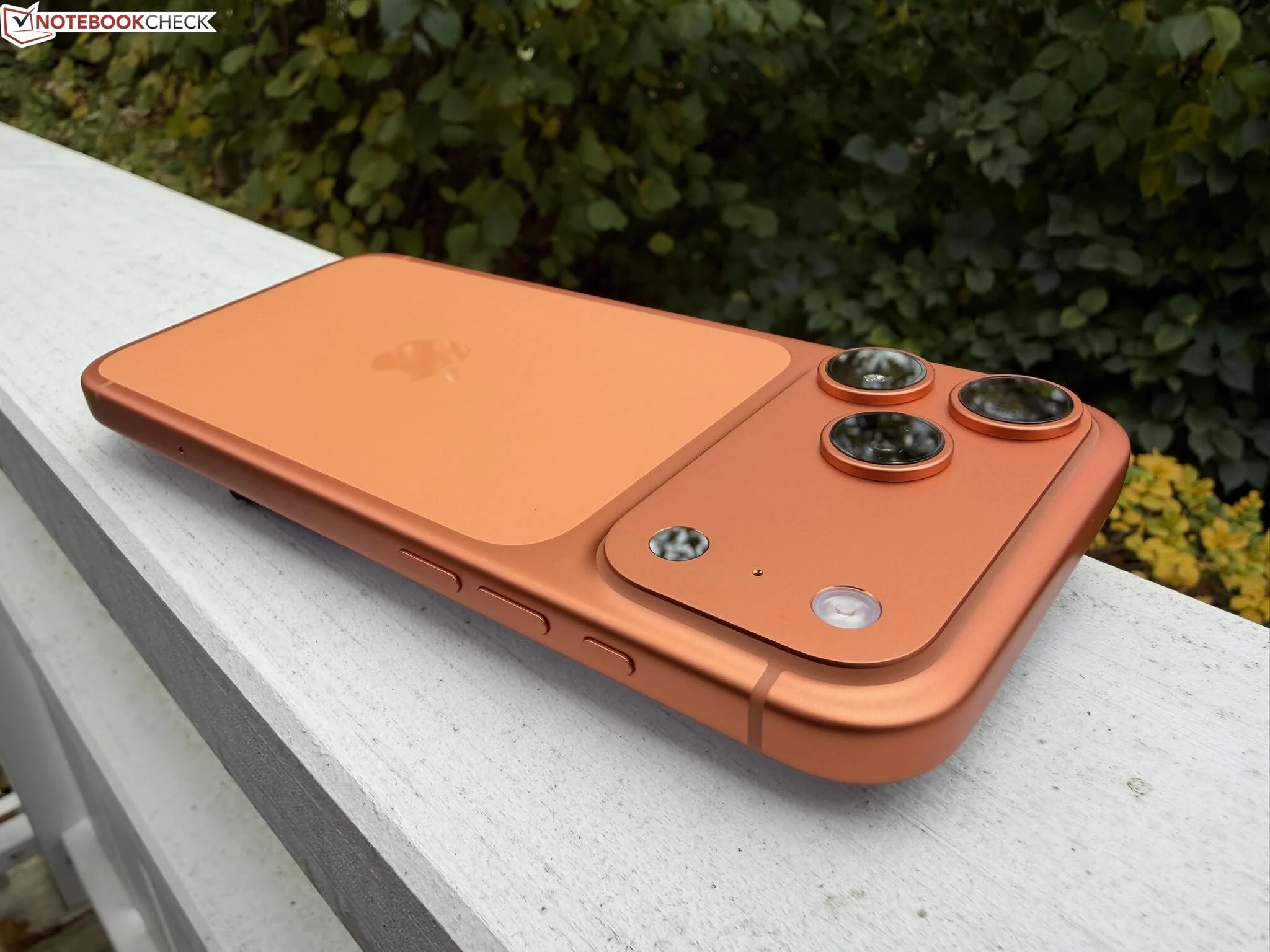
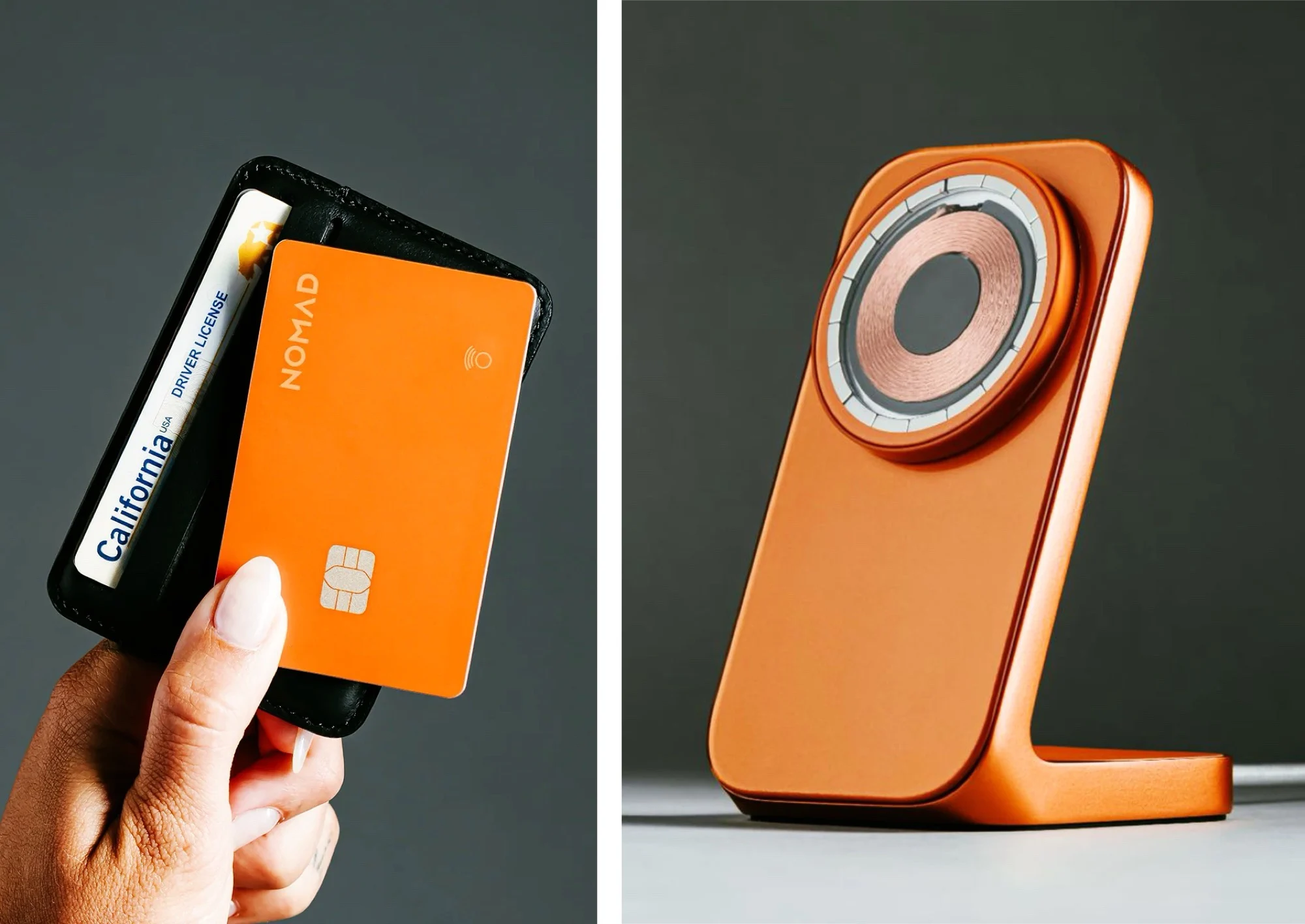
    Nomad picks up on the orange of the Apple iPhone 17 Pro and offers two of it’s most popular products in the same colour. Measuring 85 x 54 millimetres, the Nomad Tracking Card Pro is roughly the same size as a credit card, even if it is slightly thicker at 2.5 millimetres. Thanks to this format, the Nomad Tracking Card Pro should fit easily into a standard wallet.

    The AirTag-Like Card Details

    Just like a Apple AirTag ($29 on Amazon), the card can be tracked down via Apple’s “Find my” app if it is lost. The card weighs 15 grams. The housing is IPX7 certified and therefore waterproff. The chip marks the position of the Qi charging coil, which can be used to charge the integrated battery, with Nomad advertising a battery life of 16 months.

    Stand One Qi2 Charger Specifications

    The Nomad Stand One is a Qi2 charger that can charge compatible smartphones with up to 25 watts. The base accomodates a second Qi charging coil so that, for example, can charge Apple AirPods Pro. The Limited Edition not only features an aluminum housing with an orange finish, but also a transparent glass cover in front of the Qi charging coil. Nomad includes a 2-meter USB-C cable, but a matching 40-watt USB-C power adapter must be purchased seperately.

    Pricing Details for Both Accessories

    The Nomad Stand One in the “Stellar Orange” Limited Edition is now available for $135 in the manufacturers online store and therefore costs $10 more then the same product in silver or black. The Nomad Tracking Card Pro Limited Edition is available for $39 and therefore costs the same as the white or black versions.

    • Nomad Tracking Card Pro: $39
    • Nomad Stand One: $135
    • Both include Limited Edition orange color
    • Stand One requires separate 40W USB-C adapter


  • Apple AI requires 12GB RAM and subscription only

    Apple AI requires 12GB RAM and subscription only

    Key Takeaway

    – Apple Intelligence is region-restricted: unavailable on EU iPhones/iPads, but functional on Macs with English settings.
    – Full AI features require high-end hardware: at least iPhone 17 Pro, iPad with M4, or Mac with M3 and 12GB+ RAM.
    – On-device Foundation model supports core features (e.g., Siri), while cloud-based tasks (e.g., image generation) use Google Gemini.
    – Daily usage limits apply to cloud AI tasks; an iCloud+ subscription is needed to increase limits.
    – EU users face partial exclusion, though some AI features (e.g., photo editing) remain accessible in the region.


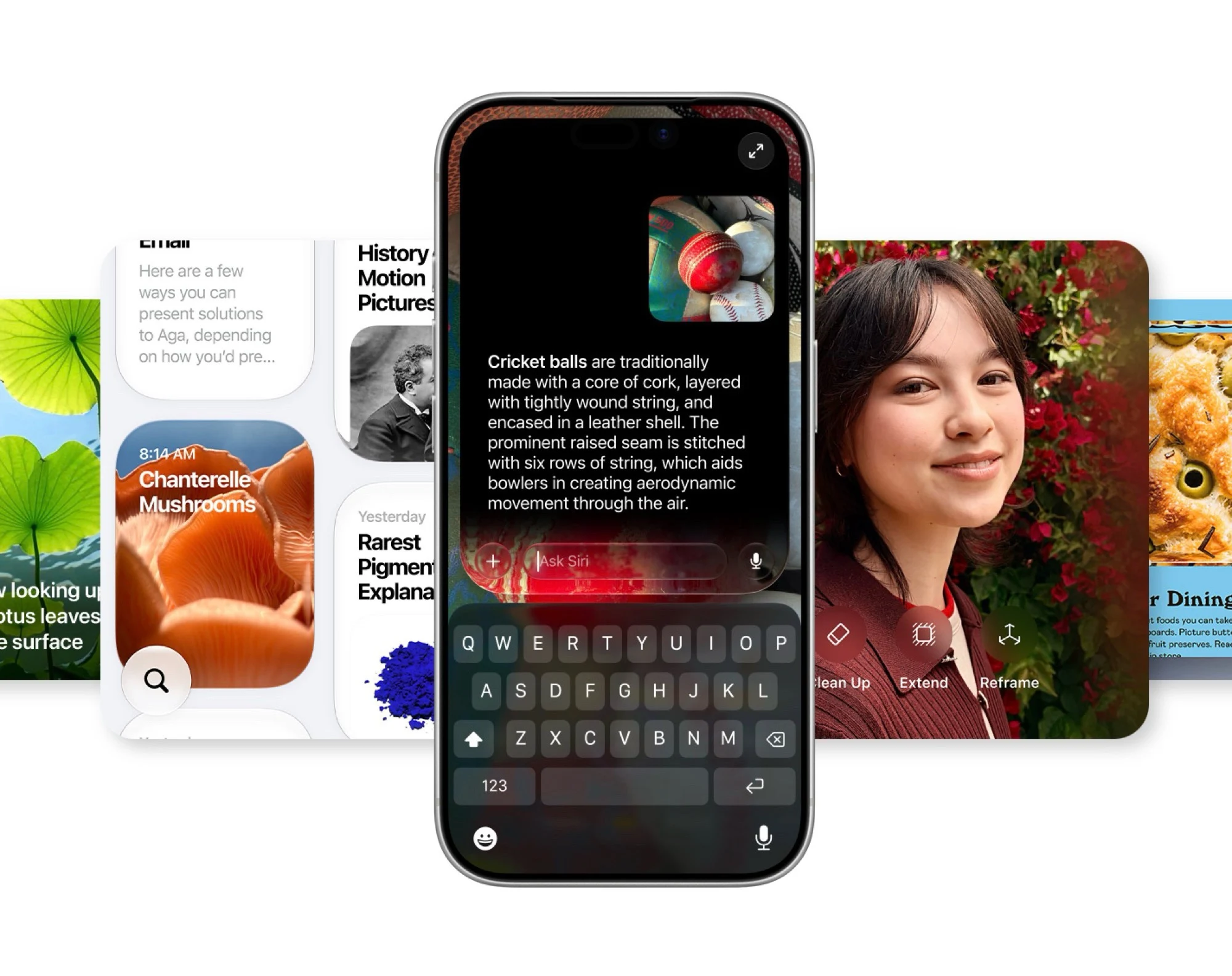
    While iOS 27, iPadOS 27 and macOS 27 recieve performance improvments and design optimizations, Apple’s focus is clearly on catching up with Windows and Android in terms of artificial intelligence. However, if you want to use all the features, there are three restrictions – region, hardware and subscription requirements.

    Regional and EU Limitations

    Apple once again leaves the European Union out of the equation, at least to some extent. This is because users from the EU cannot use Apple’s chatbot on the iPhone or iPad for the time being. Interestingly, however, this does not apply to the Mac – if you switch macOS 27 to English, you can also use Siri AI in Europe. Other Apple Intelligence features, such as the ability to edit photos using AI, are also available in the EU.

    Hardware Requirements and RAM Needs

    Apple Intelligence is still available on the iPhone 15 Pro (Max), on the iPhone 16, on Macs and iPads with Apple M1, on the MacBook Neo and on all newer models. However, if you want to use all the features, you need significantly more modern hardware, namely at least an iPhone 17 Pro (Max), an iPhone Air, an iPad with Apple M4 or a Mac with Apple M3 and at least 12 GB RAM.

    Due to the RAM requirements, even the iPhone 17 is missing from this list. Those who meet these requirements can make use of Apple’s new Foundation model, which runs directly on the device instead of on a server. At least for now, this model is only required for a few features, such as Siri’s more natural voice, which can be personalized.

    Cloud Subscription and Usage Limits

    Not all AI features can be executed directly on the end device. Those who generate images, for example, do not use Apple’s Foundation model, but Google Gemini. For this reason, there are daily usage limits for these features. An iCloud+ subscription is required to generate more images. The same applies to AI object recognition for smart home cameras in Apple Home. Apple has not yet confirmed which limits apply to which subscriptions.

    • Apple (1) (2)


  • VisionCase: $50 iPhone Case with 1.85-Inch Display

    VisionCase: $50 iPhone Case with 1.85-Inch Display

    Key Takeaway

    – VisionCase is an iPhone case with a built-in 1.85-inch circular HD display for notifications and apps.
    – Powered by an AB5691G chip and a 400 mAh battery, charging magnetically or via reverse charging from the iPhone.
    – Handles real-time call, message, and app alerts without unlocking the phone; includes audio recording, screen mirroring, and bullet-chat mode.
    – Currently only shown as compatible with the iPhone 17 Pro lineup; no Android support mentioned.
    – Priced at $49.99, available in Black, Orange, Gray, and Coffee from Rollme’s official store.


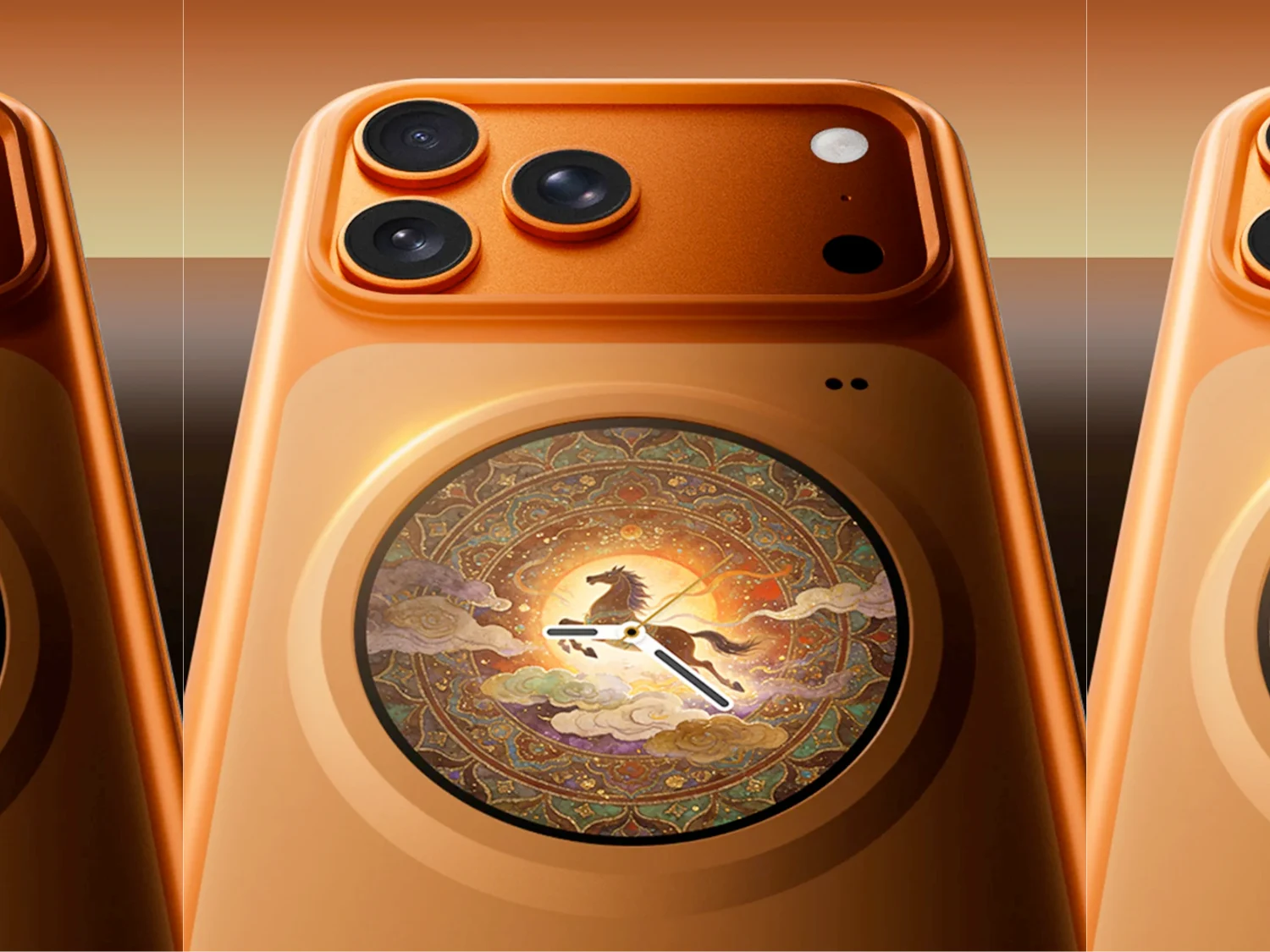
    The Rollme company, who normally puts out affordable smartwatches, has now launched the VisionCase. It’s essentially an iPhone case with a built-in 1.85-inch circular HD display running at 360×360 resolution. The case is powered by an AB5691G chip, carries a 400 mAh battery, and charges magnetically — or via reverse charging directly from the phone itself, meaning no separate cable is needed to keep the case topped up.

    How the rear display works

    The rear display handles real-time notifications for calls, messages, and app alerts without requiring the user to unlock their phone. Incoming call information shows up on the display instantly. It also supports one-touch audio recording, a real-time screen preview that mirrors the phone’s main display, and a bullet-chat mode that scrolls customizable text across the screens in user-defined colors and directions.

    Extra features and mini-games

    An auto color-rotation feature cycles the display through eight colors. Built-in mini-games — including what appears to be a Tetris clone and a whack-a-mole style title — are also present. The case is powered by an AB5691G chip, carries a 400 mAh battery, and charges magnetically — or via reverse charging directly from the phone itself, meaning no separate cable is needed to keep the case topped up.

    Compatibility and color options

    Rollme does not specify which Android models the VisionCase is compatible with, or whether it is compatible at all. There’s no imagery showing it fitted on an Anrdoid device as well — all marketing material is iPhone-based, specifically, the iPhone 17 Pro lineup. The case comes in four colorways: Black, Orange, Gray, and Coffee.

    Pricing and availability

    The VisionCase is available now from Rollme’s official store at $49.99.

    • 1.85-inch circular HD display
    • 360×360 resolution
    • AB5691G chip
    • 400 mAh battery
    • Magnetic or reverse wireless charging
    • Real-time notifications for calls and messages
    • One-touch audio recording
    • Screen preview mirroring
    • Bullet-chat mode
    • Auto color rotation (8 colors)
    • Built-in mini-games
    • Compatible with iPhone 17 Pro series
    • Colorways: Black, Orange, Gray, Coffee
    • Price: $49.99


    Sources

  • New $39 Made in Japan iPhone Back Eliminates Camera Bump, Redesigns Apple Back

    New $39 Made in Japan iPhone Back Eliminates Camera Bump, Redesigns Apple Back

    Key Takeaway

    – Provides a minimalist, non-traditional back accessory that eliminates the iPhone 17 Pro’s camera bump and allows the phone to sit flat, without offering drop protection.
    – Claims to keep MagSafe and Qi charging compatibility while installed, but with caveats on full device-function compatibility.
    – Not a case; designed as a magnetic back and plans to release a similar ultra-slim option for iPhone Air, with potential duties/taxes for international shipping.


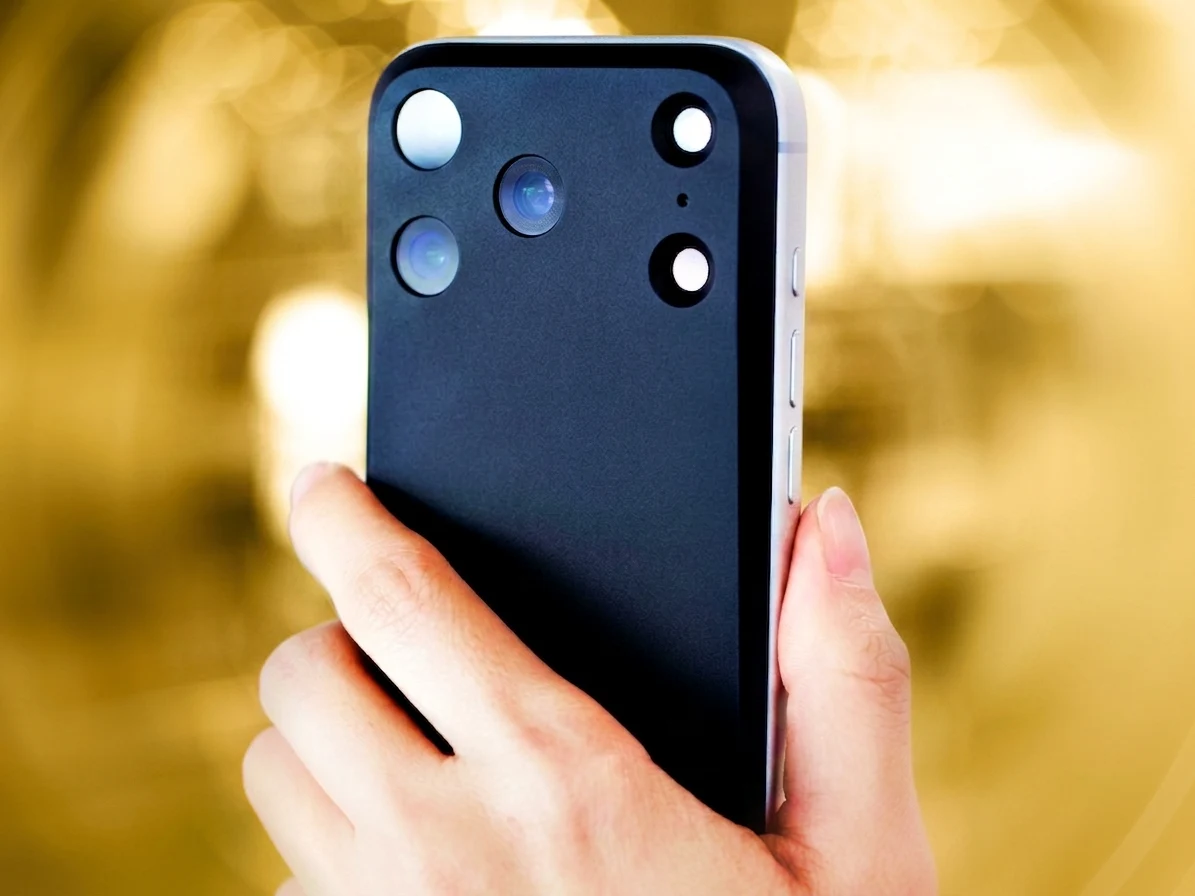
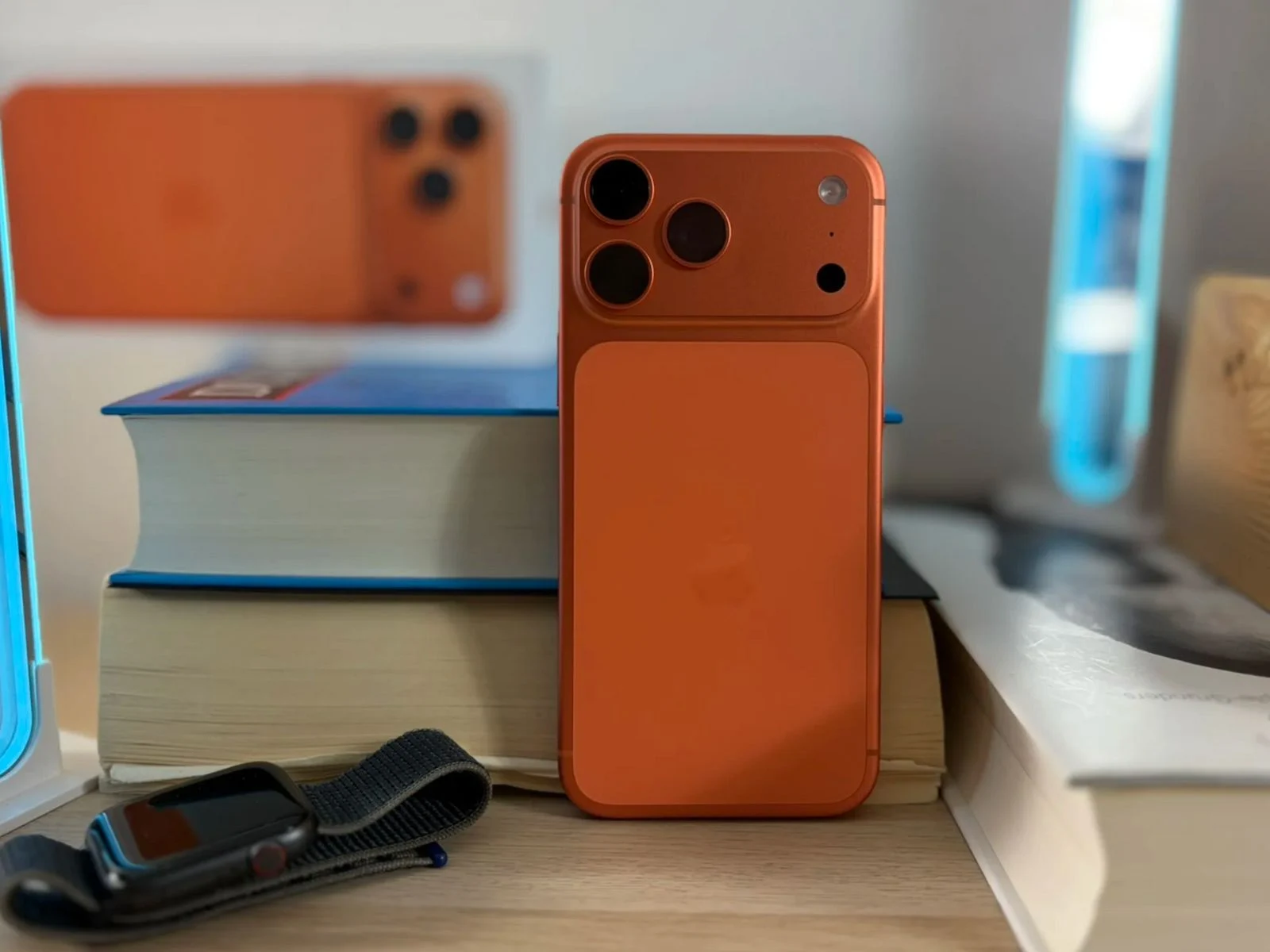
    If you’re fed up with the iPhone 17 Pro’s sticking out camera lump but despise bulky cases, a Japanese firm named Mynus might have hit the sweet spot with their latest gadget. It’s the newly released, minimalist Mynus magnetic back for iPhone 17 Pro, which the company claims isn’t a traditional “case”.

    Mynus iPhone 17 Pro back features:

    What stands out is Mynus’s claim that the iPhone 17 Pro will stay fully MagSafe and Qi charging compatible once the back is attached. Yet the company clearly states this isn’t a standard protective case since it doesn’t provide drop protection and it does not guarantee complete compatibility with every phone function (whatever that means).

    Launch plans and shipping notes

    The firm is gearing up to roll out the same accessory for the ultrathin iPhone Air by June. While international shipping appears to be available, the Japan-based maker cautions buyers that additional duties and taxes may apply depending on where it’s shipped to.

    Overall impression and caution

    In sum, this looks like one of the most distinctive iPhone add-ons we’ve seen in a long time because it offers a full design overhaul for one of the planet’s most popular devices. Plus, using the back eliminates the chunky camera bump on the iPhone 17 Pro, and the phone rests flat on a table, which makes the design practical.

    Practical considerations

    Of course, we don’t know how well the Mynus back performs in real-world scenarios, so treat the advertised features with a pinch of salt.


    Sources

  • Apple iPhone 17 Pro with Lightning Port via Protective Case

    Apple iPhone 17 Pro with Lightning Port via Protective Case

    Key Takeaway

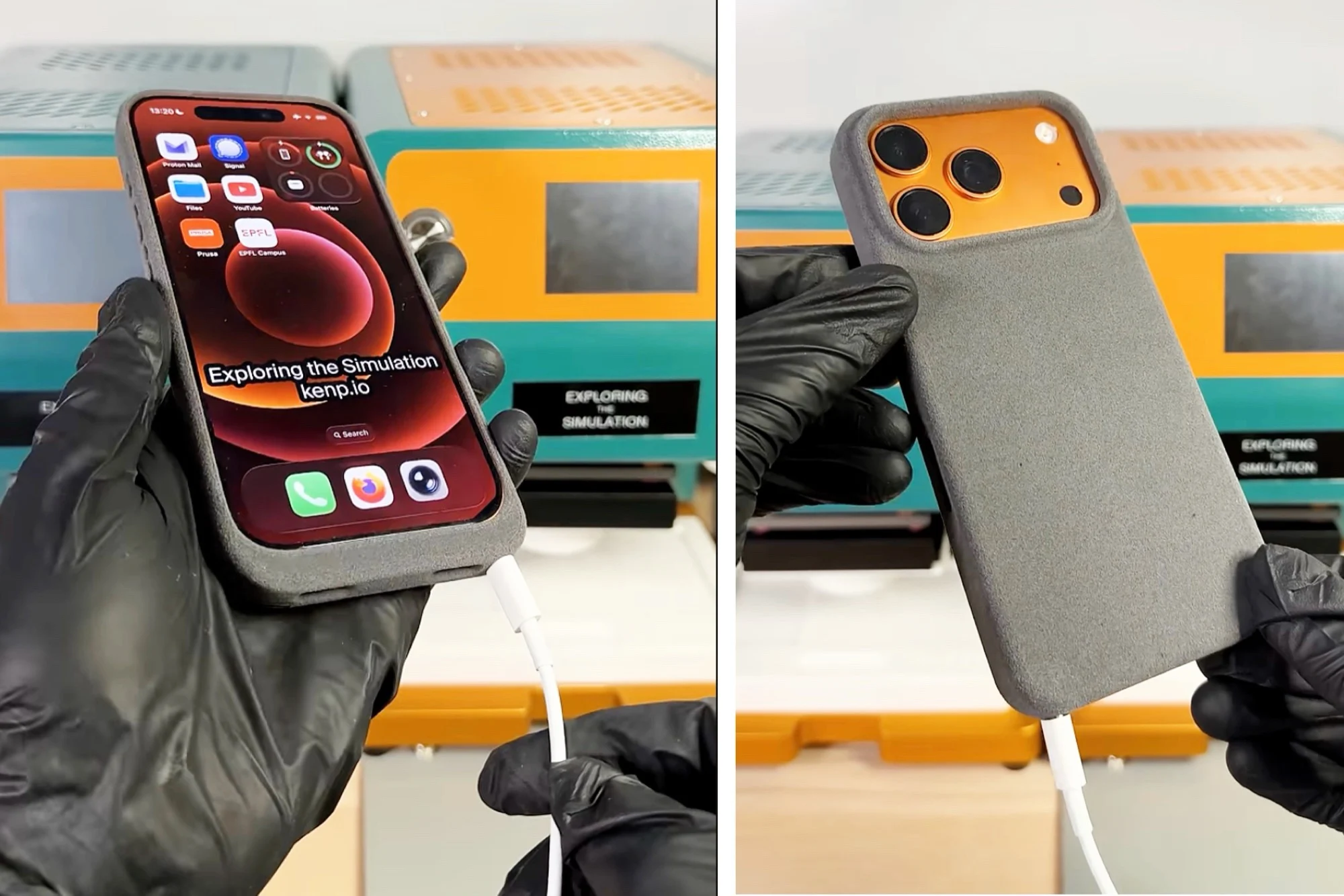
    1. Ken Pillonel has modified a current iPhone 17 Pro to include a Lightning port using a 3D-printed protective case and a modded adapter.
    2. The project demonstrates that charging a modern iPhone via the proprietary Lightning connector is technically feasible with moderate effort.
    3. The modification primarily serves as a hobby and is not intended for commercial sale, with unclear capabilities for data transfer or accessory connection through the custom Lightning port.

    Ken Pillonel’s Creative Modding for Apple Devices

    Over a past few years, this innovative guy Ken Pillonel has been very busy with modding and tinkering with iPhones. He managed to convert older models into ones with a USB-C port and even installed a 3.5 mm headphone jack by himself. The coolest part? His online shop shows off protective cases that actually add a USB-C port to recent iPhones like the iPhone 13 and 14. So, it’s not just a hobby, but also a bit of a showcase of possible DIY upgrades.

    April 1st Project: Replacing the Lightning Port

    On April 1, he took things a step further by trying out something pretty wild—adding a Lightning port to the latest iPhone 17 Pro, which costs around $1,149 at retail. The project seems like a fun, humorous hobby stunt rather than a serious product. Despite that, it prove that charging a current iPhone through its proprietary connector could be feasibly done with some effort and creativity. The process isn’t very complex: he combined a 3D-printed protective case with a custom-modded USB-C to Lightning adapter, designed to take up as little space as possible so the case only adds a few millimeters to the phone’s bottom end.

    Technical Capabilities and Limitations

    It’s worth noting though, Ken doesn’t specify whether this Lightning port can do more than just charge — like transferring data or connecting other accessories. The original Apple official USB-C to Lightning adapter, which you can get for roughly $29, does support data transfer and headphone connections as well. However, don’t expect lightning-fast data speeds—since Lightning mostly caps data transfer at USB 2.0 levels, maxing out at about 480 Mbit/s, which is quite standard for this technology.

    Summary of the Project’s Purpose and Feasibility

    • This mod is more about showcasing possibilities than practical use.
    • It highlights that, with some technical skill, even the latest devices could be modified to include outdated but familiar ports, if users really want that.
    • Keep in mind, such modifications are not supported officially by Apple and could void warranties or damage your device if not done carefully.

    Overall, Pillonel’s project reflect on what is technically possible with a bit of hacking and creativity, even if it’s not practical on everyday use. It also adds a playful aspect to tech customization, showing that with enough effort, we can push the limits of out-of-the-box devices.

    Sources
  • Apple iPhone 18 Lineup May Feature Bigger Batteries Worldwide

    Apple iPhone 18 Lineup May Feature Bigger Batteries Worldwide

    Key Takeaways

    1. The iPhone 17 Pro in the US has a larger battery due to the removal of the SIM slot, which is not the case for international models.
    2. Apple’s successful trial of eSIM-only devices will lead to all iPhone 18 models having larger batteries globally.
    3. Some regions may struggle with Apple’s shift to eSIM, as eSIM usage is not widespread everywhere.
    4. The iPhone 18 Pro Max is expected to have a battery capacity of 5,100 to 5,200 mAh, an improvement over previous models.
    5. The iPhone 18 Pro series is set to launch in September, while standard iPhone 18 models will be released in March next year, featuring several rumored enhancements.


    Folks who have purchased an Apple iPhone 17 Pro in the United States are enjoying a bigger battery capacity. This is thanks to Apple removing the SIM slot in US models, which allowed them to fit in a slightly larger battery. However, this modification hasn’t been applied to models outside the US.

    Apple’s Successful Experiment

    Techmaniacs reports that Apple’s internal trial was considered successful, leading the company to decide to shift to eSIM-only for its entire iPhone 18 series worldwide. This means that all iPhone 18 models will benefit from larger batteries, making these advantages accessible to customers globally, not just in the US.

    Potential Market Challenges

    Nevertheless, some regions where eSIM usage is not widespread may find it hard to adjust to Apple’s new plans. It remains uncertain if Apple will take market-specific factors into account. Additionally, Techmaniacs mentions that the iPhone 18 Pro Max is expected to feature a battery capacity of around 5,100 to 5,200 mAh. While this isn’t close to the capacities offered by Chinese flagship phones using Silicon-Carbon technology, it’s still a noticeable improvement.

    Upcoming Release Dates

    The iPhone 18 Pro series is anticipated to launch this September, alongside the highly awaited iPhone Fold. However, the standard iPhone 18 models are not expected to be released until March next year. Other rumored features for the iPhone 18 Pro series include a slimmer Dynamic Island, a more robust and thicker design, a rear camera system with variable aperture, enhanced sensors, and A20 Pro SoCs manufactured using TSMC’s 2nm process.

  • Leica Lux Case for iPhone 17 Pro: Perfect for Camera Grip

    Leica Lux Case for iPhone 17 Pro: Perfect for Camera Grip

    Key Takeaways

    1. First official protective case by Leica for iPhone 17 Pro and Pro Max.
    2. Made from authentic cowhide leather with a microfiber lining for scratch protection.
    3. Features aluminum buttons and a recess for a dedicated camera shutter button.
    4. Includes a magnetic ring for MagSafe compatibility.
    5. Priced at $95, available through the Leica Online Store and select retail locations.


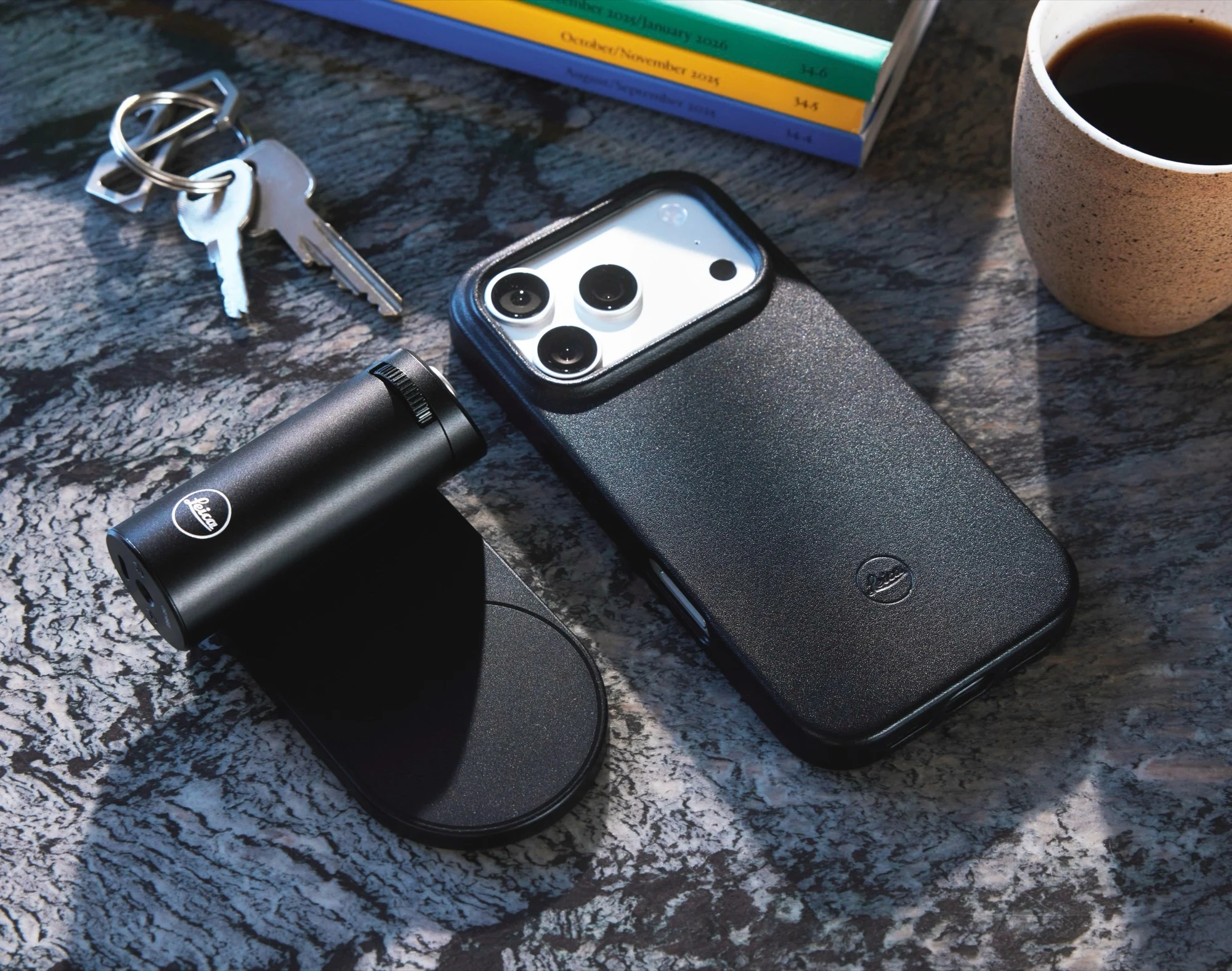
    The Leica Lux Case is the first official protective case by Leica designed specifically for the Apple iPhone 17 Pro and iPhone 17 Pro Max. This case showcases Leica’s well-known high-quality craftsmanship, featuring a back made from authentic cowhide leather, which adds a touch of elegance.

    Protection and Design

    Inside the case, there’s a microfiber lining that helps prevent scratches on the iPhone 17 Pro. The buttons for volume, power, and action are crafted from aluminum, providing a premium feel. The case has a special recess for the dedicated camera shutter button, allowing users to zoom and adjust exposure settings through touch gestures, even when the phone is safely encased.

    Compatibility and Functionality

    Moreover, the case includes a magnetic ring for compatibility with MagSafe accessories, making it perfect for the Leica Lux Grip that attaches magnetically to the iPhone. Notably, the Leica Lux Case does not contain any electronic parts. For added safety against falls, the case is designed to extend slightly over the display and camera module, providing edge protection from impacts from nearly any direction.

    The Leica Lux Case for the Apple iPhone 17 Pro and iPhone 17 Pro Max retails for $95. It is available for purchase through the Leica Online Store and select retail locations.

    Source:
    Link


  • Square Camera Sensors Could Arrive on Android Phones Soon

    Square Camera Sensors Could Arrive on Android Phones Soon

    Key Takeaways

    1. Oppo and Huawei are developing smartphones with front-facing square sensors, with Oppo likely launching it first in the Find X10 series and Huawei in the more affordable Nova 16 series.
    2. The Apple iPhone 17 series is currently the only smartphone featuring a square front-camera sensor, which enhances usability for portrait and landscape photos.
    3. Apple’s square sensor offers an AI feature that automatically adjusts the aspect ratio for group shots.
    4. Users can record square videos with the iPhone 17’s square sensor and crop them for different formats suitable for social media and YouTube.
    5. The iPhone 17 Pro has the highest-rated selfie camera according to DxOMark, scoring 154 points, surpassing the iPhone 16 Pro.


    Digital Chat Station has recently shared that manufacturers Oppo and Huawei are working on smartphones that will feature front-facing cameras with square sensors. It’s reported that Oppo plans to launch this technology first in a high-end model, likely the Oppo Find X10 series. Meanwhile, Huawei might introduce it in a more affordable range, with the Nova 16 series being a strong contender for this camera upgrade.

    iPhone’s Unique Offering

    At the moment, the only smartphones that have a square front-camera sensor are the Apple iPhone 17, iPhone 17 Pro (Max), and iPhone Air. Apple claims that the square sensor is more user-friendly compared to the 12 MP front sensor of the iPhone 16, which has a 4:3 aspect ratio. This new design enables users to take pictures in both portrait and landscape modes without needing to turn their phone.

    Smart Features at Work

    There’s an AI-driven feature that automatically tweaks the aspect ratio so that everyone in front of the camera can fit nicely in the shot. Even though Apple doesn’t permit Open Gate recording across the entire sensor, you can still theoretically record square video with the square sensor and later crop it for both vertical formats suitable for social media and horizontal ones for platforms like YouTube.

    Advanced Video Chat Capabilities

    When video chatting, the iPhone 17’s Center Stage feature automatically adjusts the framing to keep the user’s face in focus. According to DxOMark, the Apple iPhone 17 Pro currently boasts the top spot for the best selfie camera among smartphones, with its latest sensor earning a score of 154, just three points above that of the iPhone 16 Pro.

    Source:
    Link


  • iPhone 17 Pro Leads Early Sales; Top 3 Best-Selling Models Revealed

    iPhone 17 Pro Leads Early Sales; Top 3 Best-Selling Models Revealed

    Key Takeaways

    1. The iPhone 17 Pro Max accounts for 27% of early sales in the iPhone 17 series, highlighting strong demand for Apple’s premium models.
    2. Together, the Pro models (iPhone 17 Pro and Pro Max) make up 52% of total early sales, a significant increase from 39% in the iPhone 16 series.
    3. The standard iPhone 17 holds a 22% share, indicating it remains popular among general consumers.
    4. The iPhone Air has only captured 6% of early sales, suggesting challenges in marketing this fourth model effectively.
    5. Features like larger screens, better cameras, and longer battery life are more appealing to buyers than sleek design or mid-range options.


    New sales information released by Consumer Intelligence Research Partners (CIRP) shows that customers are more and more choosing Apple’s top-tier iPhones, with the iPhone 17 Pro Max standing out as the most favored model in the series.

    Sales Breakdown

    As per the findings, the iPhone 17 Pro Max makes up 27% of the initial sales of the iPhone 17 series, with the iPhone 17 Pro not far behind at 25%. Together, the Pro models now account for 52% of total early sales, which is a significant rise from the iPhone 16 series, where both Pro and Pro Max models only represented 39% of the sales.

    In contrast, the standard iPhone 17 holds a 22% share, remaining a strong choice for general consumers. However, the report also reveals Apple’s ongoing difficulties in effectively marketing a fourth model. The iPhone Air, despite being highly publicized during its launch, only makes up 6% of early sales, falling short of the iPhone 16 Plus, which captured 8% in the same timeframe last year.

    Historical Context

    Looking back at the iPhone 16 series, the iPhone 16 Pro Max was the top seller with 23%, followed by the iPhone 16 and the iPhone 16 Pro, which both stood at 21% and 16%, respectively. The changes seen in the iPhone 17 series imply that buyers are increasingly willing to invest more for Apple’s premium models, even though the design and materials have sparked some discussions. However, as previously noted, the aluminium body and new vapor chamber technology in the iPhone 17 Pro series deliver enhanced thermal efficiency, particularly beneficial for gaming.

    The data suggest that features usually linked with the Pro lineup, such as bigger screens, advanced cameras, and longer battery life, continue to be more important for many buyers than factors like sleekness or mid-range positioning. At the same time, Apple’s efforts to introduce a high-end option below the Pro range seem to appeal to a much smaller segment of the market.

    Sales Trends

    While CIRP’s statistics show early sales instead of long-term trends, the pattern reflects a recurring theme Apple has observed over the past few generations: strong demand for Pro and Pro Max models, consistent interest in the standard iPhone, and variable success for other options placed in the middle.

    CIRP – Apple Report

    Source:
    Link