Category: Video / Photo

  • Swiss Transparent Compact Camera Prints Photos Instead of Digital

    Swiss Transparent Compact Camera Prints Photos Instead of Digital

    Key Takeaways

    1. The Await Camera resembles a classic disposable camera with a small lens, viewfinder, and flash, but includes a digital screen for displaying battery life and photo count.
    2. It offers a film-like experience by allowing users to take 24 photos per “film roll,” which can only be viewed and ordered for prints through a smartphone app.
    3. Unlike some models, the Await Camera does not let users preview photos after taking them, making it more similar to traditional film cameras.
    4. The camera is compact (98 x 68 x 15 mm, 96 grams) and charges via USB-C, but lacks manual focus or exposure adjustments.
    5. The Await Camera is expected to launch globally in March or April, with a price range between $70 and $100, and film rolls costing $9.99 for printing and delivery of 24 photos.


    At first look, the Await Camera appears very much like a classic disposable camera. The front has just a tiny lens, an optical viewfinder, and a flash. On the back, there’s a small screen that shows details like the battery level, how many pictures are left on the “film roll,” and the status of the connection to the smartphone app.

    Digital or Analog?

    This little display is the only sign that the Await Camera is digital, not analog. The Swiss company Rolling Square, which created the Await Camera, aims to give users an experience that feels more like using a film camera rather than a smartphone. Once the digital “film roll,” which can hold up to 24 photos, is fully used, users must change the film through the smartphone app. At this stage, pictures can’t be viewed, but users can order prints that will be sent directly to them.

    Comparing to Other Models

    This feature makes the Await Camera a step ahead of the Fujifilm X half model, where pictures can at least be seen digitally in “film camera mode” after the roll is finished. However, with the Fujifilm, users must pay for the 24 photos before they even capture them. The Await Camera is quite small, measuring 98 x 68 x 15 millimeters and weighing just 96 grams, and it charges via USB-C. The company hasn’t shared any details about the camera’s hardware, and users can’t manually adjust focus or exposure settings.

    Launch Information

    The Await Camera is set to be released globally around March or April. The final price is still undecided, but it is predicted to be between $70 and $100. A “film roll” will cost $9.99, which includes the printing and delivery of 24 photos. More details about the launch will be available soon on the manufacturer’s website.

    Source:
    Link


  • Oppo Find X9 Pro vs Honor Magic 8 Pro: DxOMark Camera Test Results

    Oppo Find X9 Pro vs Honor Magic 8 Pro: DxOMark Camera Test Results

    Key Takeaways

    1. DxOMark has been rating smartphone cameras for years, providing a dynamic ranking of top models.
    2. The Oppo Find X9 Pro recently moved to seventh place, closely following the Honor Magic8 Pro.
    3. No current flagship cameras, including the Oppo and Honor, achieved new top scores in any category this year.
    4. The Vivo X300 Pro set new benchmarks in bokeh, telephoto, zoom, and low-light performance, ranking second in evaluations.
    5. The Oppo Find X9 Pro is praised for exposure, dynamic range, and color accuracy, but has issues with slower autofocus and video noise.


    Whether the quality of a camera can be evaluated in points remains a topic of debate. Nevertheless, DxOMark has been rating them for years and, much like our list of the finest smartphone cameras, provides an ever-changing roster of leading smartphone cameras. Recently, the Oppo Find X9 Pro surpassed the Honor Magic8 Pro, shifting from sixth to seventh position. When examining the scores, it seems that Oppo and Honor are very close this year.

    Notable Scoring Trends

    What stands out about the score distribution in both cases is that neither of the current flagship cameras achieved new top marks in any category. This is in stark contrast to the Vivo X300 Pro, which has recently claimed second place in the DxOMark evaluation, establishing new benchmarks for bokeh, telephoto, zoom, and low-light capabilities. In comparison, the Oppo Find X9 Pro performs well across the board but is missing any truly exceptional characteristics, based on the test findings from our colleagues in France.

    Testers’ Insights

    The evaluators commend the Oppo Find X9 Pro for its generally high-quality exposure, dynamic range, and color accuracy, featuring a neutral white balance and realistic skin tones, along with efficient video stabilization, even during moments of active movement. Both videos and photographs are rich in detail. However, there are some drawbacks, such as slower autofocus when set against competitors and increased noise in videos, even under bright lighting. Autofocus also seems to struggle often while filming videos.

    Source:
    Link


  • Hubble Discovers Bright Glow from Young Massive Star

    Hubble Discovers Bright Glow from Young Massive Star

    Key Takeaways

    1. Hubble’s Wide Field Camera 3 captured a view of Herbig-Haro objects HH 80/81, located 5,500 light-years away in Sagittarius.
    2. HH 80/81 are the brightest Herbig-Haro objects discovered, formed by jets of gas from a new star colliding with slower gas.
    3. The jets of HH 80/81 span an impressive 32 light-years, making them the largest protostellar jets observed.
    4. These jets are powered by a young massive star, IRAS 18162-2048, which is about 20 times the mass of the Sun.
    5. Sections of the jets are moving at speeds over 1,000 kilometers per second, setting a record for the fastest outflow from a young star.


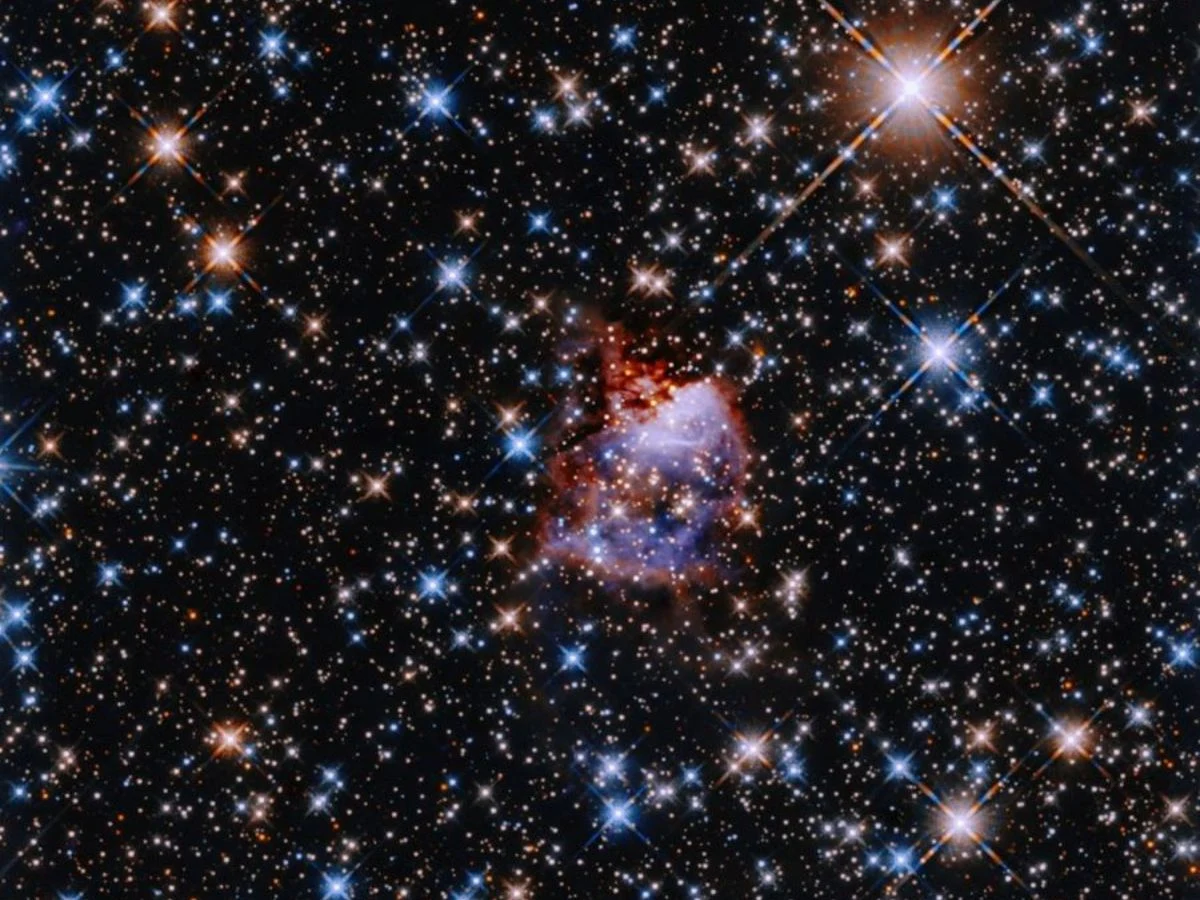
    Using Hubble’s Wide Field Camera 3, astronomers could investigate a remarkable view from 5,500 light-years away, situated in the constellation Sagittarius. The captured image reveals bright pink and green areas arranged diagonally. These areas are two Herbig-Haro (HH) objects named HH 80/81. The patch on the upper left belongs to HH 81, while the lower streak is associated with HH 80.

    Brightest Known HH Objects

    HH 80/81 are recognized as the brightest Herbig-Haro objects ever discovered. Like other HH objects, they are created when fast jets of gas released from a new star collide with slower gas expelled earlier. This collision results in shock waves that heat the gas, making it shine.

    Record-Breaking Jets

    The length of HH 80/81 is an astounding 32 light-years, making them the largest protostellar jets witnessed so far. Uniquely, these jets are powered by a young massive star, unlike other observed HH objects that are driven by young low-mass stars. The young star fueling HH 80/81 is IRAS 18162-2048, which has a mass about 20 times that of the Sun.

    Incredible Speed Measurements

    Moreover, the speed of sections within HH 80/81 has set a new record. Astronomers found that parts of the jets are moving at speeds exceeding 1,000 kilometers per second. This is the fastest outflow recorded in both radio and visual wavelengths from a young star.

    Source:
    Link


  • DJI RS 5 Gimbal Stabilizer Launches Early with Extended Battery Life

    DJI RS 5 Gimbal Stabilizer Launches Early with Extended Battery Life

    Key Takeaways

    1. DJI has introduced the RS 5, a new gimbal stabiliser, replacing the RS 4 Mini without a Pro version.
    2. The RS 5 features DJI’s 5th generation stabilisation algorithm and offers up to 30 hours of battery life.
    3. The RS 5 charges faster than previous models, taking only about one hour for a full charge.
    4. It has a maximum payload of 3 kg, which is the same as the RS 4 but 50% less than the RS 4 Pro.
    5. The RS 5 is priced at CNY 3,099 (~$445) in China, positioned between the RS 4 and RS 4 Pro in terms of features and cost.


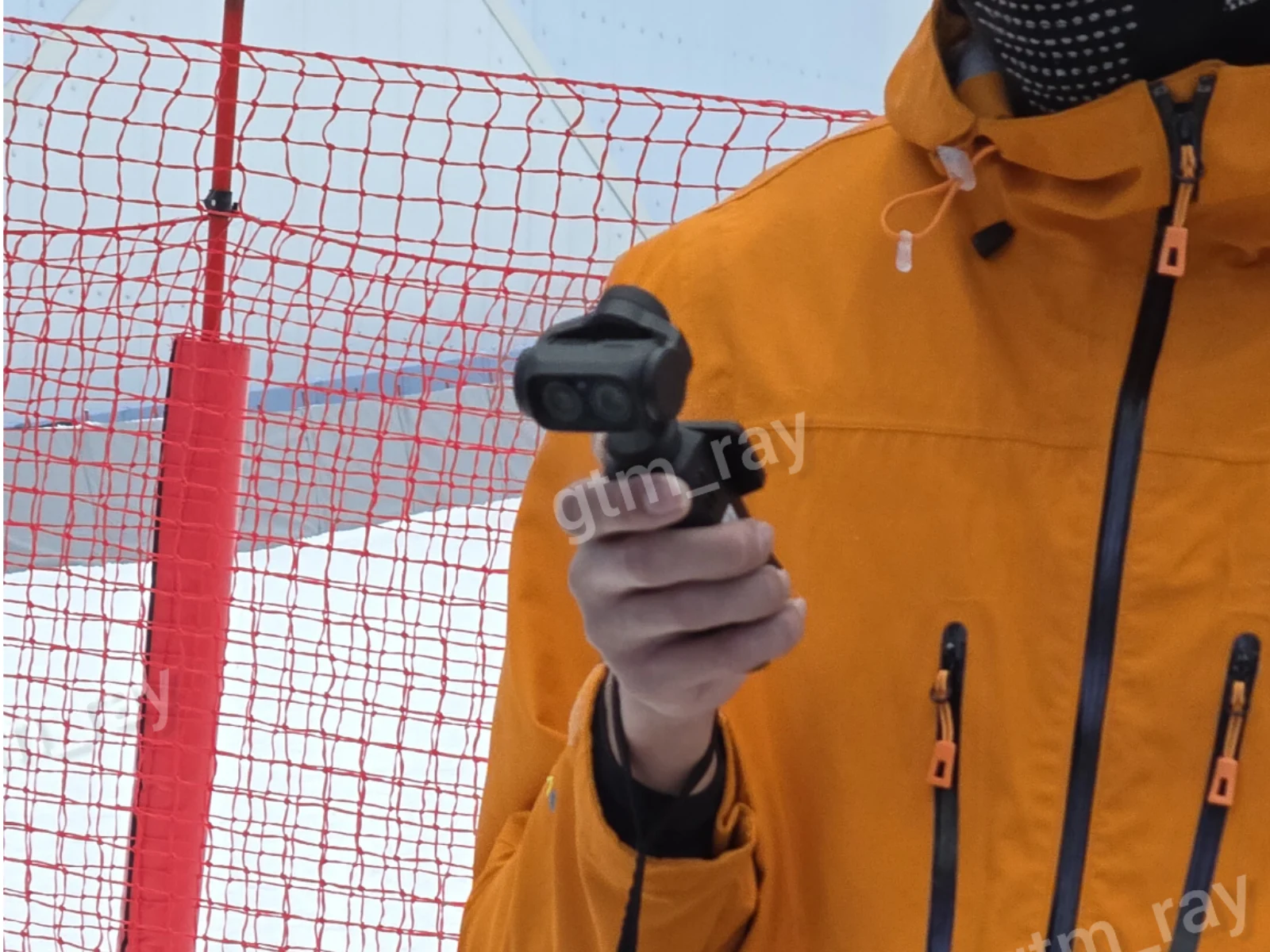
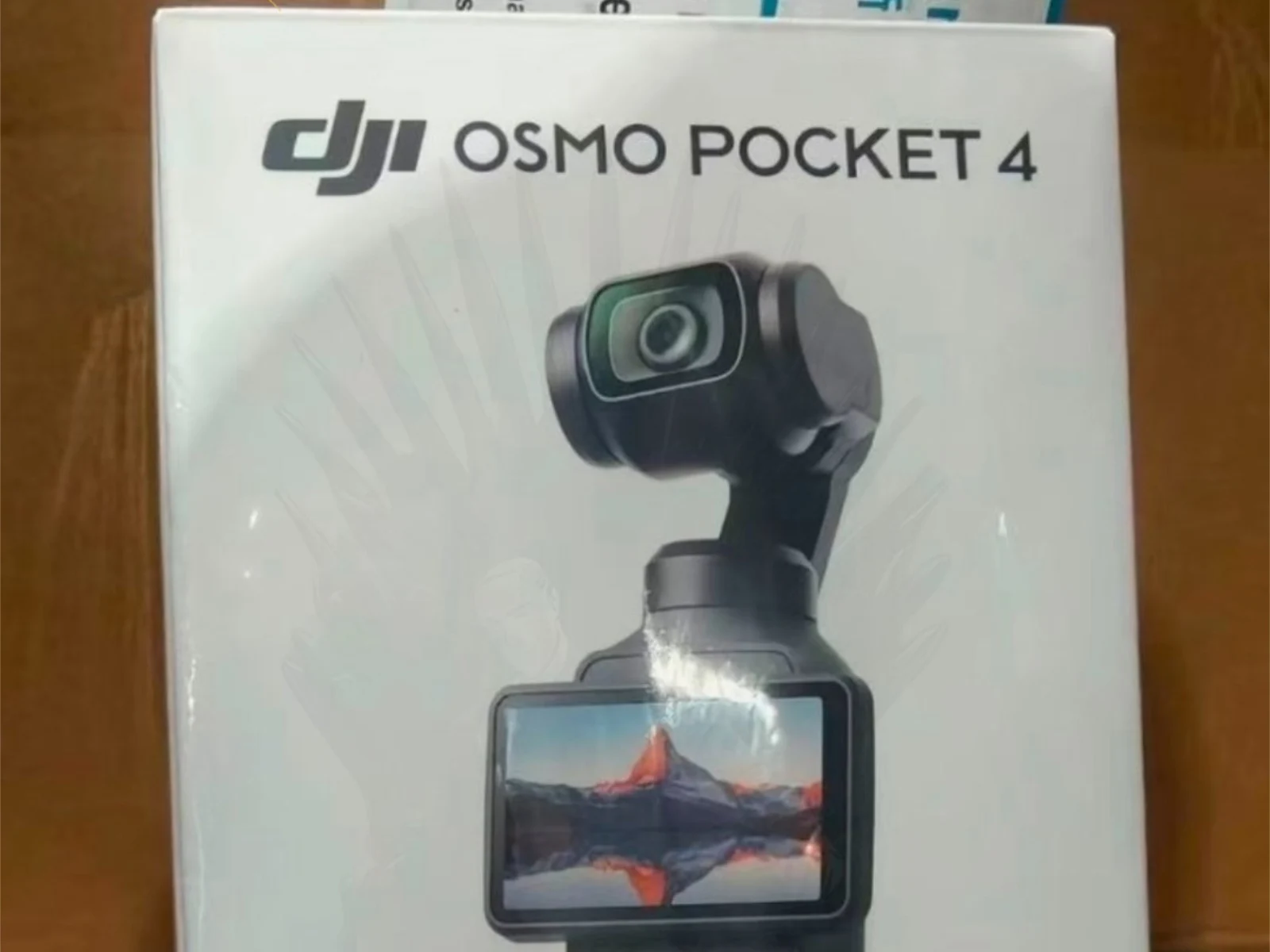
    DJI has unveiled a brand new product after teasing it on Chinese social media last week. To recap, the company hinted at a new offering that would ‘firmly sit in the main position’ or ‘firmly take the main seat.’ Although there has been speculation about the Avata 360 drone and the Osmo Pocket 4 vlogging camera for several months, DJI’s teaser suggested that these devices are not the ones being released.

    New Stabiliser Announcement

    Instead, the clues provided by DJI hinted at a replacement for their Ronin camera stabilisers, specifically the RS 4 Mini, which is currently priced at $369 on Amazon. Following this lead, DJI has officially introduced the RS 5 in China as the first gimbal stabiliser of its fifth generation for professional cameras. Unlike prior models, this time, the company has not introduced a Pro version alongside the standard model.

    Improved Features

    However, the RS 5 does excel over the RS 4 Pro in several ways. For example, it features DJI’s 5th generation stabilisation algorithm. Furthermore, the RS 5 offers up to 30 hours of battery life, eclipsing the RS 4 generation. It also charges significantly faster, needing only about an hour for a full charge, which is less than the RS 4 Pro’s 1.5 hours and the RS 4’s 2.5 hours of charging time.

    Weight Limitations

    The RS 5 has a maximum payload of 3 kg, which is the same as the RS 4 but falls about 50% short of the RS 4 Pro’s capacity. Overall, the RS 5 occupies a middle ground between the RS 4 and RS 4 Pro regarding features, with a complete list available on DJI’s website. Launch pricing reflects this positioning, as the RS 5 is priced at CNY 3,099 (~$445) in China, compared to CNY 2,549 (~$365) for the RS 4 and CNY 5,499 (~$789) for the RS 4 Pro. As of now, details about an international launch remain unclear.

    Source:
    Link


  • Ricoh GR IV Monochrome Launch Date Set for February 2026

    Ricoh GR IV Monochrome Launch Date Set for February 2026

    Key Takeaways

    1. The Ricoh GR IV Monochrome camera features a 25.74 MP APS-sized sensor, optimized for stunning black and white photography.
    2. It eliminates the Bayer filter to enhance sensitivity, with an ISO range from 160 to 409,600 and reduced aliasing artifacts.
    3. The camera includes a 28mm f/2.8 lens, a selectable internal red light filter, and various black and white picture modes for creative control.
    4. A 5-axis image stabilizer and dual autofocus systems ensure sharp and clear images.
    5. It supports black and white video recording at 1,920 x 1,080 resolution and 60p, viewable on a 3-inch display screen.


    The Ricoh GR IV Monochrome digital camera, which was announced earlier, is set to hit the market on February 13, 2026.

    Camera Features

    This 25.74 MP camera is perfect for those who wish to capture stunning black and white images. The GR IV Monochrome enhances this experience by eliminating the Bayer filter commonly found in most CMOS sensors used for color photos. This change boosts the sensitivity of its APS-sized sensor, offering an ISO range that stretches from 160 to 409,600, while also reducing aliasing artifacts.

    Lens and Stabilization

    Equipped with a 28mm f/2.8 lens known for its great resolving power, the camera also includes a selectable internal red light filter and multiple B&W picture modes. These features enable photographers to create images with diverse monochrome appearances. A 5-axis image stabilizer, along with dual passive and contrast autofocus, helps ensure that images are sharp and clear.

    Video Capabilities

    Additionally, the camera can record black and white videos at a resolution of 1,920 x 1,080 and 60p. Users can easily view their photos and videos on a 3-inch display screen.

    Source:
    Link


  • Thypoch Launches Affordable Compact Ksana 21mm f/3.5 Lens

    Thypoch Launches Affordable Compact Ksana 21mm f/3.5 Lens

    Key Takeaways

    1. Compact Design: The Thypoch Ksana 21mm f/3.5 lens is 2.7 cm long and weighs 4.6 oz (131 grams), making it lightweight and portable.

    2. High Image Quality: The lens features eight elements in seven groups, including one aspherical and two ED elements, providing good sharpness and minimal distortion.

    3. Unique Coating: The lens has “Epoch Coating 73,” which adds a subtle amber hue to images, depending on the camera’s white balance settings.

    4. Manual Focusing: The lens allows only manual focusing but is user-friendly for zone focusing due to its extensive depth of field and a minimum focus distance of 0.5 meters.

    5. Pricing and Compatibility: The lens is priced at $549, available with a Leica M mount, and can be adapted for use with Sony E, Nikon Z, or Canon R cameras.


    The new Thypoch Ksana 21mm f/3.5 lens for full-frame cameras is compact, measuring just 2.7 cm in length and weighing a mere 4.6 oz (131 grams). It features a design comprising eight elements arranged in seven groups. This includes one aspherical element and two ED elements, which are all said to contribute to producing high-quality images, even though the lens is quite small.

    Sharpness and Image Quality

    According to the manufacturer’s MTF charts, this lens delivers good sharpness throughout the frame, even when fully opened, including at the edges. Minimal distortion and chromatic aberration have been reported, although specific figures aren’t provided for these aspects. The Ksana 21mm features nine aperture blades, which allows it to create attractive sunstars at an aperture of f/4.

    Unique Coating and Usability

    Additionally, the lens comes with “Epoch Coating 73,” which is designed to add a subtle amber hue to photos, as long as it isn’t altered by the camera’s white balance settings. It’s worth noting that the lens only allows for manual focusing; however, due to its extensive depth of field, zone focusing is quite manageable. The lens can focus on subjects located at a minimum distance of around 0.5 meters. The body of the lens is made entirely from aluminum, giving it a sturdy feel.

    The Thypoch Ksana 21mm f/3.5 full-frame lens is currently priced at $549 on the official website of the manufacturer. Shipping is complimentary, but buyers outside the country should be aware that import fees and taxes are not included in the listed price. This lens is available exclusively with a Leica M mount, featuring rangefinder coupling. However, it can also be adapted for use with Sony E, Nikon Z, or Canon R cameras by using the suitable adapters.

    Source:
    Link


  • Kodak Printomatic+ Instant Camera: Zink Photos in an Instant

    Kodak Printomatic+ Instant Camera: Zink Photos in an Instant

    Key Takeaways

    1. The Kodak Printomatic Plus features a 10 MP sensor and a built-in Zink photo printer for instant printing.
    2. It uses Zink photo paper, producing 2 x 3-inch prints that are resistant to smudges, tears, and water.
    3. The camera automatically prints images and has the option to save them on a microSD card; it includes a fixed-focus lens and automatic flash.
    4. The camera is priced at $79.99 and is available in black, blue, pink, or yellow, with a starter pack of photo paper included.
    5. Zink photo paper costs about $0.49 per sheet and can be ordered on Amazon.


    The Kodak Printomatic Plus instant camera has been launched, featuring a 10 MP sensor and a built-in Zink photo printer. This compact device lets photographers take and print their images on the go.

    Printing Technology

    The integrated printer employs Zink photo paper, which relies on high-temperature pulses to activate its color layers. Each print measures 2 x 3 inches and is produced in just one pass, making it resistant to smudges, tears, and water.

    Camera Features

    The Printomatic Plus automatically generates prints of the 10 MP digital images captured and also offers the option to save them on a microSD card. It is equipped with a fixed-focus 3.57 mm, f/2.8 lens and an automatic flash, making it suitable for use in both bright and dim lighting. A multicolor LED light surrounding the shutter button gives updates on the camera’s status.

    Pricing and Availability

    You can purchase the Kodak Printomatic+ camera on Amazon for $79.99. It is available in several colors: black, blue, pink, or yellow. Included with the camera are a USB charging cable, a starter pack containing five sheets of Zink photo paper, and a quick start guide. The Zink photo paper is priced around $0.49 per sheet and is also available for order on Amazon.

    Source:
    Link


  • Affordable Leica Noctilux Alternative: 7Artisans 75mm f/1.25 II

    Affordable Leica Noctilux Alternative: 7Artisans 75mm f/1.25 II

    Key Takeaways

    1. The 7Artisans 75mm f/1.25 II lens features redesigned lettering for better visibility in low light.
    2. Weight has been reduced from 600 grams to 514 grams, and the aperture ring operates more smoothly.
    3. The lens is positioned as a budget-friendly alternative to the Leica Noctilux-M 1.25/75 ASPH., which is significantly more expensive.
    4. The lens is best for portrait photography, capturing decent sharpness primarily in the central third of photos, with less intense bokeh and lower overall contrast compared to Leica.
    5. The lens is priced at US$469, available on the brand’s website, with free shipping to Europe but potential import VAT and customs fees.


    7Artisans is bringing back one of its unique portrait lenses. The 75mm f/1.25 II has been redesigned, mainly changing its lettering which now shines in low light for better visibility.

    Weight Reduction and Improved Features

    The lens now weighs less, dropping from 600 grams to 514 grams. The aperture ring is said to function more smoothly, and according to the brand’s promotional materials, the bokeh effect is better than that of the earlier version. This lens is clearly positioned as a budget-friendly choice compared to the Leica Noctilux-M 1.25/75 ASPH., which costs a hefty $15,615, is significantly heavier, and offers superior quality. Those choosing the 7Artisans lens may need to accept a bit lower image quality in return.

    Performance and Characteristics

    According to the manufacturer’s MTF graphs, only the subjects in the central third of a photo are captured with decent sharpness. This makes the lens excellently suited for portrait photography. Sample images provided by 7Artisans reveal that the bokeh is less intense compared to Leica, and the overall contrast in photos is a bit lower. The 7Artisans 75mm f/1.25 II lens requires manual focus, with a closest focusing distance of 0.8 meters. The barrel of the lens is constructed from aluminum.

    Pricing and Availability

    You can purchase the 7Artisans 75mm f/1.25 II full-frame lens from the brand’s website for US$469. Shipping is free to Europe, but customers should be aware that the price may include import VAT and customs fees.

    Source:
    Link


  • Fujifilm X-T6 Launching in September: 200MP Mode and Upgrades

    Fujifilm X-T6 Launching in September: 200MP Mode and Upgrades

    Key Takeaways

    1. The Fujifilm X-T6 is expected to be announced in September 2023, following the release of the X-T5 in November 2022.
    2. The X-T6 will likely feature a new 40MP APS-C X-Trans VI CMOS sensor and an updated X-Processor 6.
    3. Image resolution may improve to 200 megapixels in multi-shot mode, and video recording capabilities are anticipated to increase to 8K.
    4. The camera is rumored to have a fully articulating display, an upgraded autofocus system with 500 focus points, and enhanced image stabilization.
    5. Battery life is expected to last up to 750 shots per charge, along with 20 different film simulations, though the accuracy of these specs is yet to be confirmed.


    The Fujifilm X-T5 (starting at $1,899 on Amazon) was launched in November 2022, and a new model is anticipated to arrive in 2026. Recent updates from FujiRumors suggest that the Fujifilm X-T6 will be officially announced in September. Meanwhile, a Vietnamese store called FujifilmShop has already put the upcoming camera on its website.

    Caution Advised

    It’s important to note that this retailer is independent and not connected to Fujifilm, so any information from them should be taken with a grain of salt. The online store reports that the Fujifilm X-T6 will keep the 40MP APS-C sensor, but it’s said to feature a newer Fujifilm X-Trans VI CMOS sensor. Additionally, it seems Fujifilm will probably use the updated X-Processor 6 in this model.

    Exciting New Features

    Combining this new sensor and processor might enable capturing images at a resolution of 200 megapixels instead of the previous 160 in multi-shot mode. Video capabilities are also set to improve, with expectations for 8K recording rather than the existing 6.2K resolution. One upgrade many users are likely eager about is the fully articulating display, which simplifies taking selfies and shooting photos or videos from unique perspectives.

    The claims from the retailer include a revamped autofocus system boasting 500 focus points, image stabilization that permits shutter speeds extended by up to eight stops without needing a tripod, a battery life that can last for up to 750 shots per charge, and 20 different film simulations. However, these assertions seem to mix well-informed predictions with hopeful aspirations. The accuracy of these specs should become clearer as leaks emerge in the upcoming months.

    FujiRumors | FujifilmShop

    Source:
    Link


  • NASA’s New Satellite Aims to Solve Long-Standing Issues

    NASA’s New Satellite Aims to Solve Long-Standing Issues

    Key Takeaways

    1. Pandora aims to determine whether detected atmospheric molecules on exoplanets originated from the planets or their host stars.
    2. The mission utilizes a 17-inch all-aluminum telescope to observe each exoplanet and its star ten times, with 24-hour observation windows.
    3. Pandora’s goal is to conduct the first thorough examination of starlight passing through exoplanet atmospheres.
    4. The mission plans to study at least 20 exoplanets and their stars in its first year, enhancing knowledge from previous missions like Kepler and James Webb.
    5. Pandora was launched on a SpaceX Falcon 9 rocket alongside two other missions, BlackCAT and SPARCS, with different scientific focuses.


    Missions like NASA’s TESS (Transiting Exoplanet Survey Satellite) have found over 6,000 exoplanets. Researchers have identified molecules that are thought to be in the atmosphere of some of these planets. However, it remains unclear whether those molecules actually originated from the planet or if they are signals from the host star. This is the question that Pandora aims to resolve.

    Telescope Specifications

    Pandora is equipped with a 17-inch all-aluminum telescope that gathers visible and near-infrared light. The mission plans to observe each planet and its star ten times, with each observation lasting a total of 24 hours. During these extended observations, the telescope will capture light from the star both before and during a transit, which occurs when an exoplanet moves in front of its host star. By implementing this strategy, Pandora hopes to distinguish between signals from the planet itself and those that have been affected by the star.

    Mission Goals

    This mission marks the first time a spacecraft will conduct a thorough examination of starlight that has passed through exoplanet atmospheres. Over its first year, Pandora is set to investigate at least 20 exoplanets and their corresponding host stars. The information gathered will assist scientists in understanding data from previous and ongoing missions, such as NASA’s Kepler and James Webb.

    Launch Details

    Pandora was launched aboard a SpaceX Falcon 9 rocket, alongside two other missions: BlackCAT (Black Hole Coded Aperture Telescope) and SPARCS (Star-Planet Activity Research CubeSat). While BlackCAT will explore the transient, high-energy universe, SPARCS will focus on examining the activity of low-mass stars.

    Source:
    Link