Tag: Gskyer Astronomical Refracting Telescope

  • Scientists Discover Icy Exoplanet Similar to Earth

    Scientists Discover Icy Exoplanet Similar to Earth

    Key Takeaways

    1. HD 137010 b is a potential exoplanet resembling Earth, located about 146 light-years away and likely a rocky world.
    2. The planet orbits a cooler and dimmer star, receiving only one-third of the heat and light that Earth receives.
    3. HD 137010 b is estimated to be on the outer edge of its star’s habitable zone, with varying chances of being in a habitable state.
    4. The expected temperature on HD 137010 b is around minus 90° Fahrenheit, making it cooler than Mars and unlikely to support liquid water.
    5. The planet was discovered through a single transit event, where its shadow caused a dimming effect on its star, but further studies are needed for confirmation.


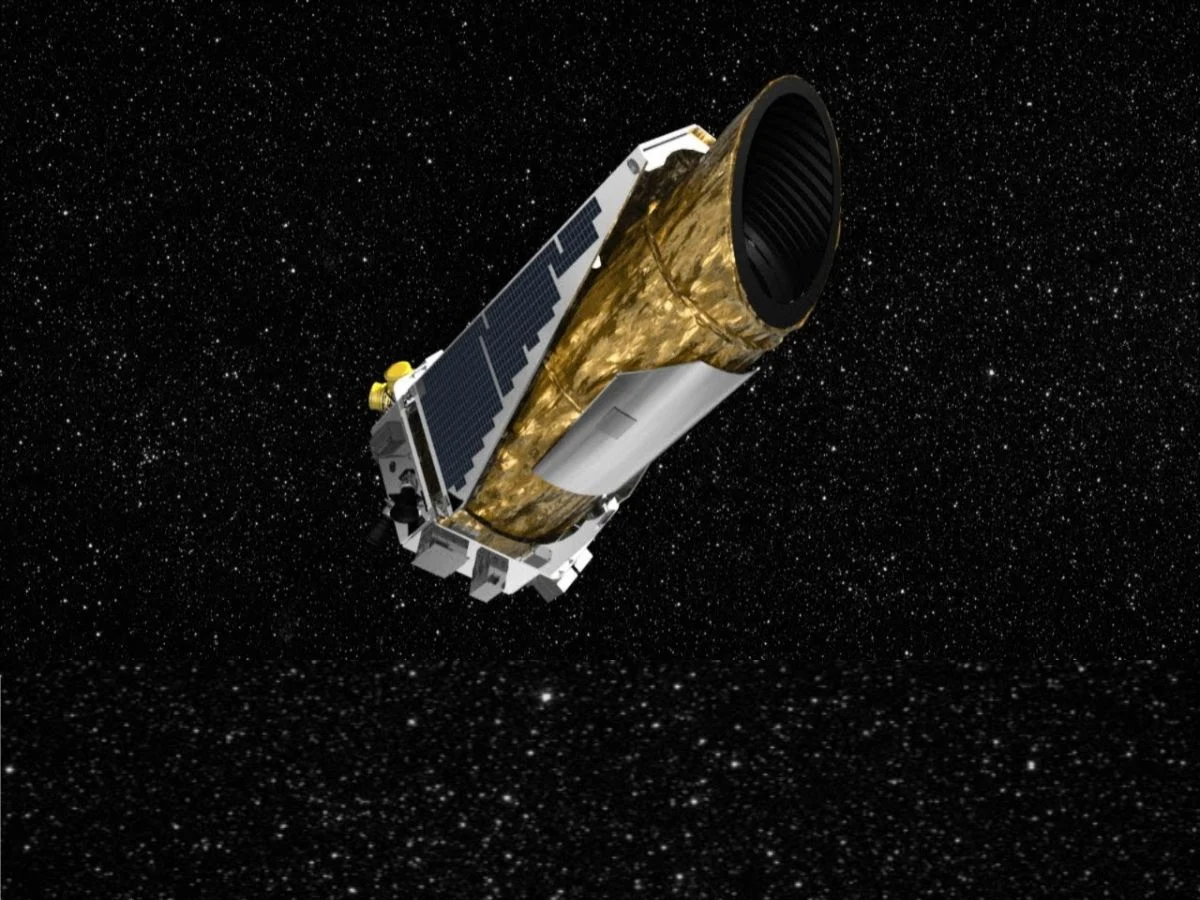
    From the old data of NASA’s retired Kepler Space Telescope, a team of scientists from around the world has found a potential exoplanet that resembles Earth but is much cooler — even cooler than Mars. This candidate planet has been named HD 137010 b.

    Planetary Characteristics

    HD 137010 b is probably a rocky world that orbits a star similar to our Sun, located about 146 light-years away. It is estimated that it takes about one year for HD 137010 b to complete its orbit around its star, just like Earth does. Based on their research, the team believes that HD 137010 b is likely to be on the outer edge of the star’s habitable zone. This distance might allow for liquid water to exist on the surface if the planet has a suitable atmosphere. The models from the research indicate that there is a 40% chance that HD 137010 b is within the “conservative” habitable zone and a 51% chance of being in the more extensive “optimistic” habitable zone. However, the study’s authors also mention that there is a 50-50 chance the planet could be completely outside the habitable zone.

    Temperature and Sunlight

    The star of HD 137010 b is alike to Earth’s, but it is cooler and dimmer. Because of this, the planet receives only one-third of the heat and light compared to what Earth gets. Consequently, scientists expect the temperature on HD 137010 b to not exceed minus 90° Fahrenheit, which is significantly cooler than Mars’s temperature of minus 85° Fahrenheit. At such a low temperature, the chances of finding liquid water on HD 137010 b are very slim, especially since it likely has an atmosphere that contains more carbon dioxide than Earth’s.

    Discovery Method

    The discovery of this new planet is based on a single transit event. A transit occurs when a planet’s shadow crosses in front of a star, causing a dimming effect in the light from that star. For HD 137010 b, this transit lasted for 10 hours. By analyzing this one transit, the researchers were able to classify HD 137010 b as a candidate planet, but additional studies are needed to confirm if it is indeed a planet.

    Source:
    Link


  • Hubble Finds Hidden Young Stars Behind Thick Dust Clouds

    Hubble Finds Hidden Young Stars Behind Thick Dust Clouds

    Key Takeaways

    1. Hubble captured images of protostars in dense dust, making them hard to see in visible light, but visible in near-infrared through outflow cavities created by jets of gas and dust.

    2. Cepheus A is a key star-forming region about 2,400 light-years away, with a bright protostar contributing to half of its brightness, surrounded by pink HII areas from ionized hydrogen gas.

    3. The star-forming area G033.91+0.11 in the Milky Way features a reflection nebula that scatters light from a hidden star.

    4. The images reveal an emission nebula (GAL-305.20+00.21) that glows due to ionization from a protostar’s light.

    5. The Hubble images are part of the SOFIA Massive Star Formation Survey, focusing on understanding the formation of massive stars over eight times the mass of the Sun.


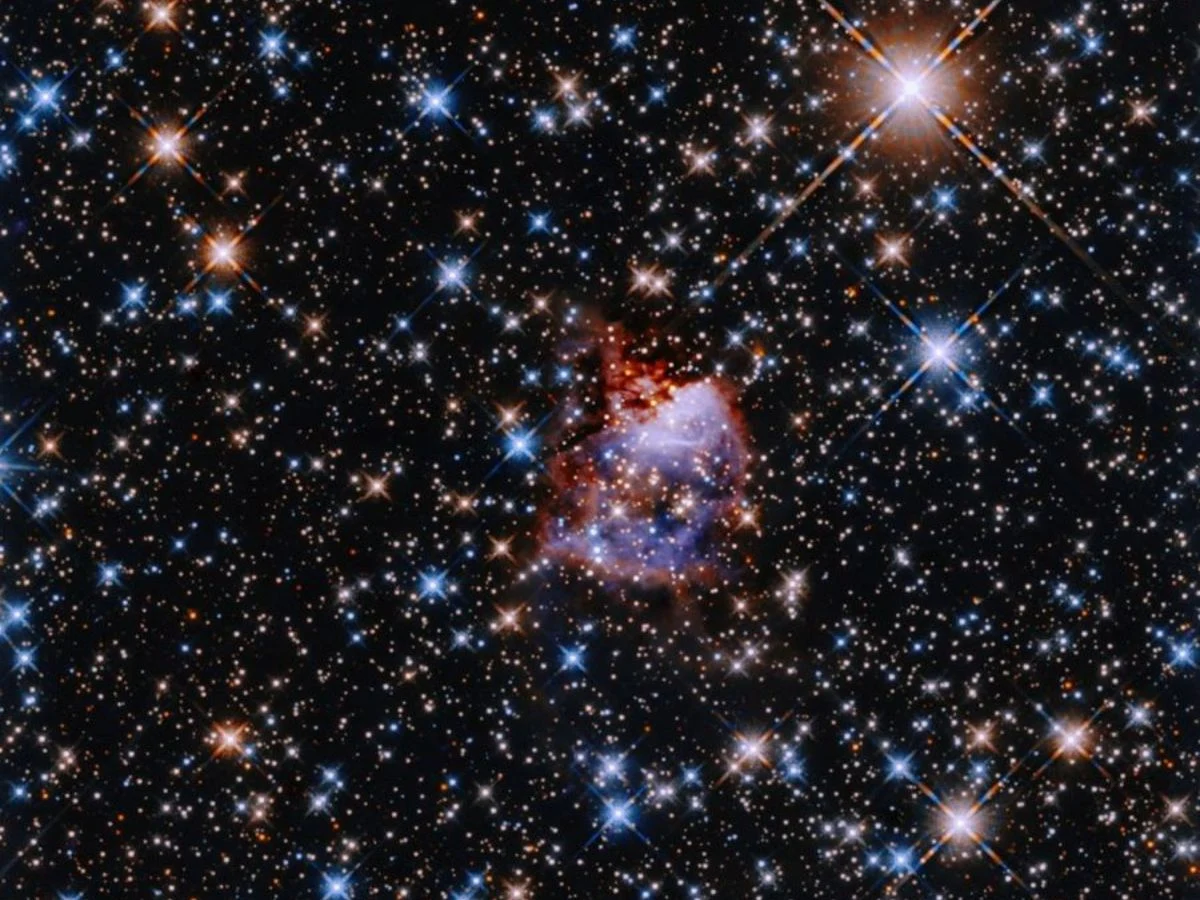
    NASA’s Hubble captured stunning pictures of protostars enveloped in dense dust. These stars are in their early stages of development. Due to the thick dust, observing them in visible light is quite hard. However, Hubble can see their near-infrared emissions through openings known as outflow cavities. These cavities are created by jets of gas and dust that flow away from the star.

    Cepheus A Observed

    One of the areas that Hubble studied is Cepheus A. This region is a high-mass star-forming area situated approximately 2,400 light-years away in the Cepheus constellation. It contains many young stars, but around half of the region’s brightness is attributed to one significant protostar. The captured image shows pink and white nebulae, where the pink region represents an HII area. This area is generated when ultraviolet light from nearby stars ionizes the hydrogen gas around it, leading it to glow. Although most stars are obscured in this picture, their light shines through the outflow cavities.

    Inside Our Milky Way

    This star-forming area is part of our Milky Way galaxy and is designated G033.91+0.11. The bright spot at the center is a reflection nebula. This nebula scatters and reflects light from a concealed star.

    Emission Nebula Discovery

    In addition, this image unveils a different feature—an emission nebula. Positioned just to the right of the center, this emission nebula is generated when a protostar’s light ionizes the gas surrounding it, making it glow. The area shown in this image is known as GAL-305.20+00.21.

    Final Image from Hubble

    The last picture in this Hubble collection showcases the massive protostar IRAS 20126+4104. This B-type protostar is found in a high-mass star-forming region roughly 5,300 light-years away in the Cygnus constellation.

    These Hubble images were collected as part of the SOFIA Massive (SOMA) Star Formation Survey. The survey specifically focuses on massive stars that are over eight times the mass of our Sun. Researchers intend to utilize this survey to understand the formation process of these enormous stars.

    Source:
    Link


  • Hubble Uncovers New Celestial Object Type in Space Discovery

    Hubble Uncovers New Celestial Object Type in Space Discovery

    Key Takeaways

    1. Cloud-9 was first detected three years ago using the FAST telescope, but no stars were found at that time.
    2. Recent observations with the Very Large Array (VLA) and Hubble’s Advanced Camera for Surveys confirmed that Cloud-9 contains no stars.
    3. Cloud-9 is identified as a Reionization-Limited H I Cloud (RELHIC), a new type of starless, gas-rich cloud theorized to exist.
    4. This cloud is considered a “failed galaxy” that never formed stars due to insufficient mass, providing insights into the early universe.
    5. The discovery suggests that similar clouds may exist throughout the universe and contributes to understanding the formation of galaxies.


    Cloud-9 was first noticed three years ago during a radio survey conducted by the Five-hundred-meter Aperture Spherical Telescope (FAST). At that time, astronomers couldn’t find any stars in it, suspecting that their tools were simply not sensitive enough to detect them.

    Recent Observations

    In a new observation, the Very Large Array (VLA), a ground-based radio telescope, picked up radio signals from Cloud-9. Following this, Hubble’s Advanced Camera for Surveys analyzed the cloud, but it still found no stars, which surprised the astronomers involved in the study.

    “Before we used Hubble, you could argue that this is a faint dwarf galaxy that we could not see with ground-based telescopes,” said lead author Gagandeep Anand from Space Telescope Science Institute (STScI). “But with Hubble’s Advanced Camera for Surveys, we’re able to nail down that there’s nothing there.”

    Groundbreaking Discovery

    Astronomers had theorized about the existence of starless, gas-rich, dark-matter clouds, and this marked the first discovery of such a cloud. This particular cloud is named a Reionization-Limited H I Cloud (RELHIC) and is thought to be a remnant from the early universe, abundant in neutral hydrogen (H I).

    This cloud is referred to as a “failed galaxy,” meaning it never gathered enough mass to collapse and start star formation. The identification of this RELHIC hints that there may be many similar clouds scattered throughout the universe. Moreover, it provides a glimpse into the early universe, as these objects are seen as leftovers from the initial stages of galaxy development. The findings from this study were published in the Astrophysical Journal Letters.

    Source:
    Link


  • Strange Galaxy with Bright Core: Hubble Picture of the Week

    Strange Galaxy with Bright Core: Hubble Picture of the Week

    Key Takeaways

    1. NGC 4102 is a spiral galaxy located about 56 million light-years away in Ursa Major, featuring an active galactic nucleus (AGN) powered by a supermassive black hole.

    2. The gas spiraling towards the black hole heats up and produces bright radiation, but NGC 4102’s center is less luminous than many other AGNs due to its calmer nature.

    3. NGC 4102 is categorized as a Compton-thick AGN, meaning its nucleus is surrounded by a dense layer of gas.

    4. It is classified as a LINER galaxy, indicating that the gas emits light from weakly ionized elements, suggesting the supermassive black hole is not very strong.

    5. Recent observations of NGC 4102 combine data from Hubble and the Chandra X-ray Observatory to study the relationship between the galaxy and its active galactic nucleus.


    NGC 4102 is a spiral galaxy that sits about 56 million light-years away in Ursa Major, also known as The Great Bear. Its core is particularly fascinating because it contains an active galactic nucleus (AGN), which is driven by a supermassive black hole. This black hole consumes gas at a rapid rate.

    Rapid Gas Inflow

    As the gas moves towards the black hole, it spirals in at astonishing speeds. This rapid motion causes the gas to heat up to very high temperatures, producing bright radiation. This explains why galaxies with AGNs often have very bright centers. However, NGC 4102’s center is not as luminous as some other galaxies with AGNs.

    The reason behind this is that there are various kinds of active galactic nuclei, some of which are stronger than others. NGC 4102 is categorized as a calmer type. It is known as Compton-thick, indicating that its nucleus is enveloped by a dense layer of gas.

    LINER Characteristics

    Additionally, NGC 4102 is classified as a LINER (Low-ionization Nuclear Emission-line Region) galaxy. In these types of galaxies, the gas surrounding the center emits light from weakly ionized elements. This implies that the supermassive black hole in this galaxy isn’t very potent.

    The image of NGC 4102 was captured using data from the Wide Field Camera 3, which has replaced the previous Wide Field Planetary Camera 2 (WFPC2). WFPC2 was used for earlier images of this galaxy taken by Hubble.

    Research and Observations

    This latest observation of NGC 4102 is part of a research program that merges information from Hubble and the Chandra X-ray Observatory. The goal of the program is to explore the connection between NGC 4102 and its active galactic nucleus.

    You can purchase the user-friendly Gskyer Astronomical Refracting Telescope for $97.14 on Amazon.

    ESA: 1 and 2′

    Source:
    Link