
Key Takeaways
1. Cloud-9 was first detected three years ago using the FAST telescope, but no stars were found at that time.
2. Recent observations with the Very Large Array (VLA) and Hubble’s Advanced Camera for Surveys confirmed that Cloud-9 contains no stars.
3. Cloud-9 is identified as a Reionization-Limited H I Cloud (RELHIC), a new type of starless, gas-rich cloud theorized to exist.
4. This cloud is considered a “failed galaxy” that never formed stars due to insufficient mass, providing insights into the early universe.
5. The discovery suggests that similar clouds may exist throughout the universe and contributes to understanding the formation of galaxies.
Cloud-9 was first noticed three years ago during a radio survey conducted by the Five-hundred-meter Aperture Spherical Telescope (FAST). At that time, astronomers couldn’t find any stars in it, suspecting that their tools were simply not sensitive enough to detect them.
Recent Observations
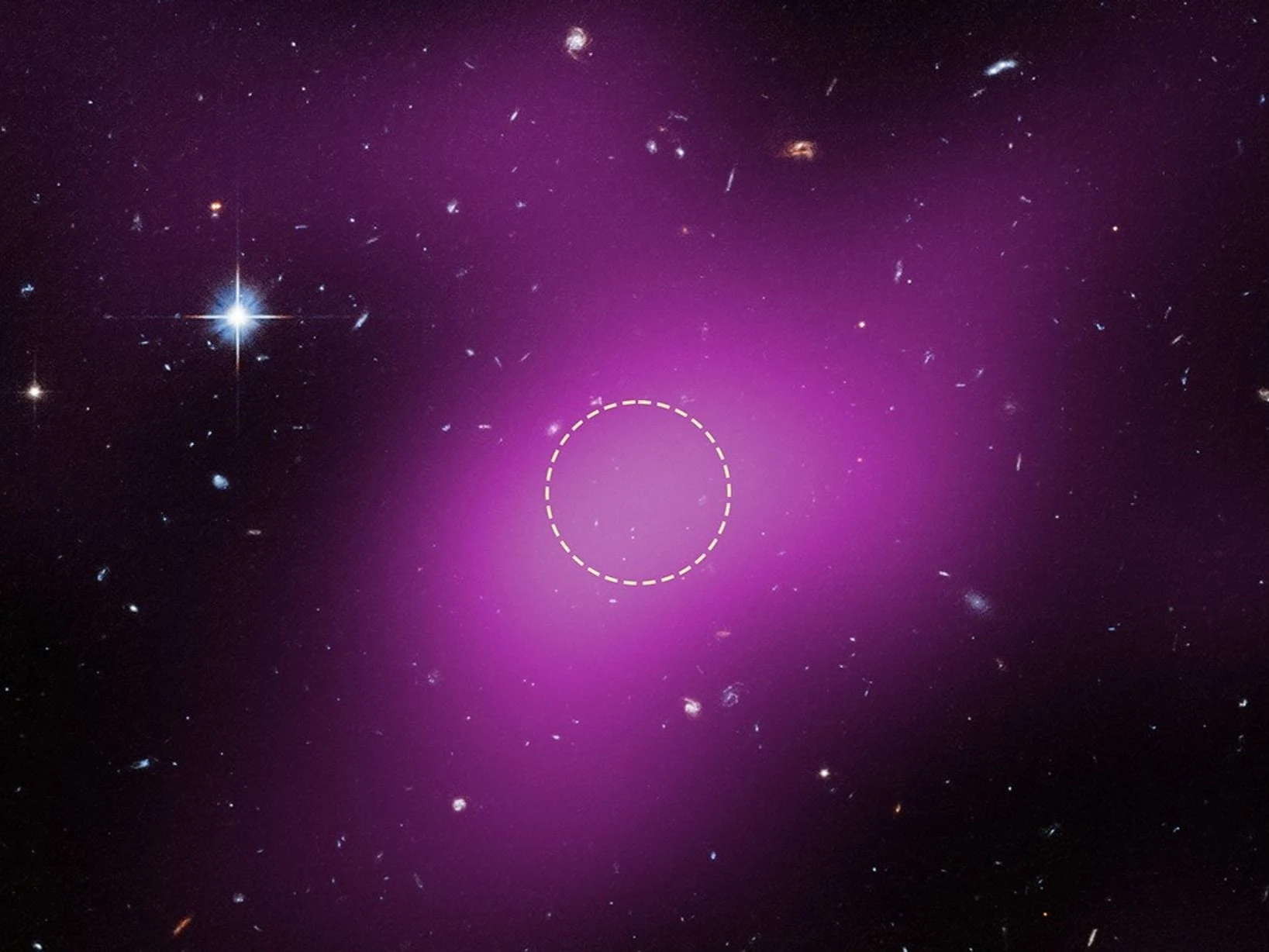
In a new observation, the Very Large Array (VLA), a ground-based radio telescope, picked up radio signals from Cloud-9. Following this, Hubble’s Advanced Camera for Surveys analyzed the cloud, but it still found no stars, which surprised the astronomers involved in the study.
“Before we used Hubble, you could argue that this is a faint dwarf galaxy that we could not see with ground-based telescopes,” said lead author Gagandeep Anand from Space Telescope Science Institute (STScI). “But with Hubble’s Advanced Camera for Surveys, we’re able to nail down that there’s nothing there.”
Groundbreaking Discovery
Astronomers had theorized about the existence of starless, gas-rich, dark-matter clouds, and this marked the first discovery of such a cloud. This particular cloud is named a Reionization-Limited H I Cloud (RELHIC) and is thought to be a remnant from the early universe, abundant in neutral hydrogen (H I).
This cloud is referred to as a “failed galaxy,” meaning it never gathered enough mass to collapse and start star formation. The identification of this RELHIC hints that there may be many similar clouds scattered throughout the universe. Moreover, it provides a glimpse into the early universe, as these objects are seen as leftovers from the initial stages of galaxy development. The findings from this study were published in the Astrophysical Journal Letters.
Source:
Link