
Key Takeaways
1. Hubble captured images of protostars in dense dust, making them hard to see in visible light, but visible in near-infrared through outflow cavities created by jets of gas and dust.
2. Cepheus A is a key star-forming region about 2,400 light-years away, with a bright protostar contributing to half of its brightness, surrounded by pink HII areas from ionized hydrogen gas.
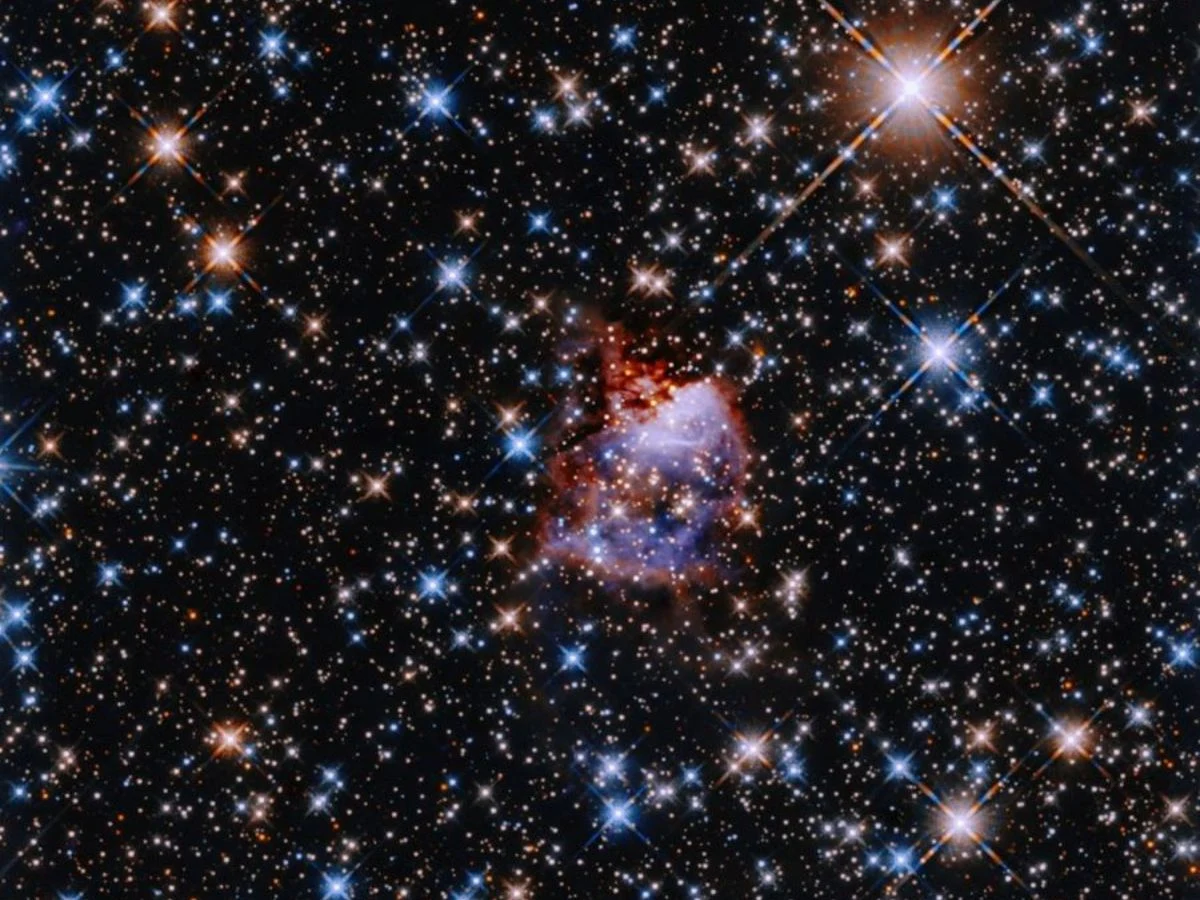
3. The star-forming area G033.91+0.11 in the Milky Way features a reflection nebula that scatters light from a hidden star.
4. The images reveal an emission nebula (GAL-305.20+00.21) that glows due to ionization from a protostar’s light.
5. The Hubble images are part of the SOFIA Massive Star Formation Survey, focusing on understanding the formation of massive stars over eight times the mass of the Sun.
NASA’s Hubble captured stunning pictures of protostars enveloped in dense dust. These stars are in their early stages of development. Due to the thick dust, observing them in visible light is quite hard. However, Hubble can see their near-infrared emissions through openings known as outflow cavities. These cavities are created by jets of gas and dust that flow away from the star.
Cepheus A Observed
One of the areas that Hubble studied is Cepheus A. This region is a high-mass star-forming area situated approximately 2,400 light-years away in the Cepheus constellation. It contains many young stars, but around half of the region’s brightness is attributed to one significant protostar. The captured image shows pink and white nebulae, where the pink region represents an HII area. This area is generated when ultraviolet light from nearby stars ionizes the hydrogen gas around it, leading it to glow. Although most stars are obscured in this picture, their light shines through the outflow cavities.
Inside Our Milky Way
This star-forming area is part of our Milky Way galaxy and is designated G033.91+0.11. The bright spot at the center is a reflection nebula. This nebula scatters and reflects light from a concealed star.
Emission Nebula Discovery
In addition, this image unveils a different feature—an emission nebula. Positioned just to the right of the center, this emission nebula is generated when a protostar’s light ionizes the gas surrounding it, making it glow. The area shown in this image is known as GAL-305.20+00.21.
Final Image from Hubble
The last picture in this Hubble collection showcases the massive protostar IRAS 20126+4104. This B-type protostar is found in a high-mass star-forming region roughly 5,300 light-years away in the Cygnus constellation.
These Hubble images were collected as part of the SOFIA Massive (SOMA) Star Formation Survey. The survey specifically focuses on massive stars that are over eight times the mass of our Sun. Researchers intend to utilize this survey to understand the formation process of these enormous stars.
Source:
Link