Tag: NIRCam

  • ESA’s Stunning Spiral Galaxy Image: February Picture of the Month

    ESA’s Stunning Spiral Galaxy Image: February Picture of the Month

    Key Takeaways

    1. NGC 5134 is a spiral galaxy located 65 million light-years away in the constellation Virgo.
    2. The James Webb Space Telescope used its NIRCam and MIRI instruments to observe the galaxy’s stars and warm dust.
    3. The NIRCam captures blue-white light from stars, while MIRI detects red and orange light from surrounding dust.
    4. The galaxy contains interstellar clouds where new stars are born, affected by the radiation from young stars and their lifecycle events.
    5. Studying NGC 5134 helps astronomers understand the star lifecycle, which may provide insights into more distant galaxies.


    NGC 5134 is a spiral galaxy found in the constellation Virgo, sitting 65 million light-years away from Earth. This distance is close enough for the Webb Space Telescope to take a closer look at it. For this particular observation, Webb utilized its Near-InfraRed Camera (NIRCam) along with the Mid-Infrared Instrument (MIRI).

    Observing the Galaxy

    The NIRCam captures the light emitted by the stars and star clusters scattered throughout the spiral arms of the galaxy, which appear a blue-white color. In contrast, MIRI detects the light that comes from warm dust surrounding these stars. This dust shines in bright red and orange hues in the images taken. The glowing dust also reveals complex organic molecules such as polycyclic aromatic hydrocarbons, giving astronomers a chance to explore the chemistry within interstellar clouds.

    Features of the Image

    The image showcases the galaxy’s bright blue-white core along with scattered clumps of dust and gas across its spiral arms. These elements combine to create interstellar clouds, which serve as regions where new stars are born. Some parts of the image show these clouds to be dense, while other areas look sparse. This variation might be a result of the powerful radiation emitted by young stars that clear the surrounding space. As stars form, they consume gas from these clouds, but when they reach the end of their lifecycle, they expel some of that gas back into their vicinity. Massive stars, those at least eight times heavier than our Sun, do this dramatically through supernova explosions that can affect areas hundreds of light-years away, while stars similar to our Sun have more gentle end-of-life explosions.

    Context and Implications

    In the backdrop of this image, there are additional galaxies that are farther away. However, the insights gained from studying the lifecycle of stars in galaxies like NGC 5134 can greatly enhance our understanding of those more distant galaxies.

    ESA

    Source:
    Link


  • James Webb Space Telescope Unveils Stunning Nebula Image

    James Webb Space Telescope Unveils Stunning Nebula Image

    Key Takeaways

    1. The Exposed Cranium Nebula (PMR 1) is located 5,000 light-years away and was discovered in 2000.
    2. NASA’s James Webb Space Telescope has captured new images that reveal unique details of the nebula.
    3. The nebula’s structure includes an outer hydrogen gas shell and a denser core, along with dark twin jets.
    4. The central star responsible for the nebula’s formation is nearing the end of its life, but its mass remains uncertain.
    5. Further studies of the nebula may uncover additional secrets and deepen our understanding of cosmic phenomena.


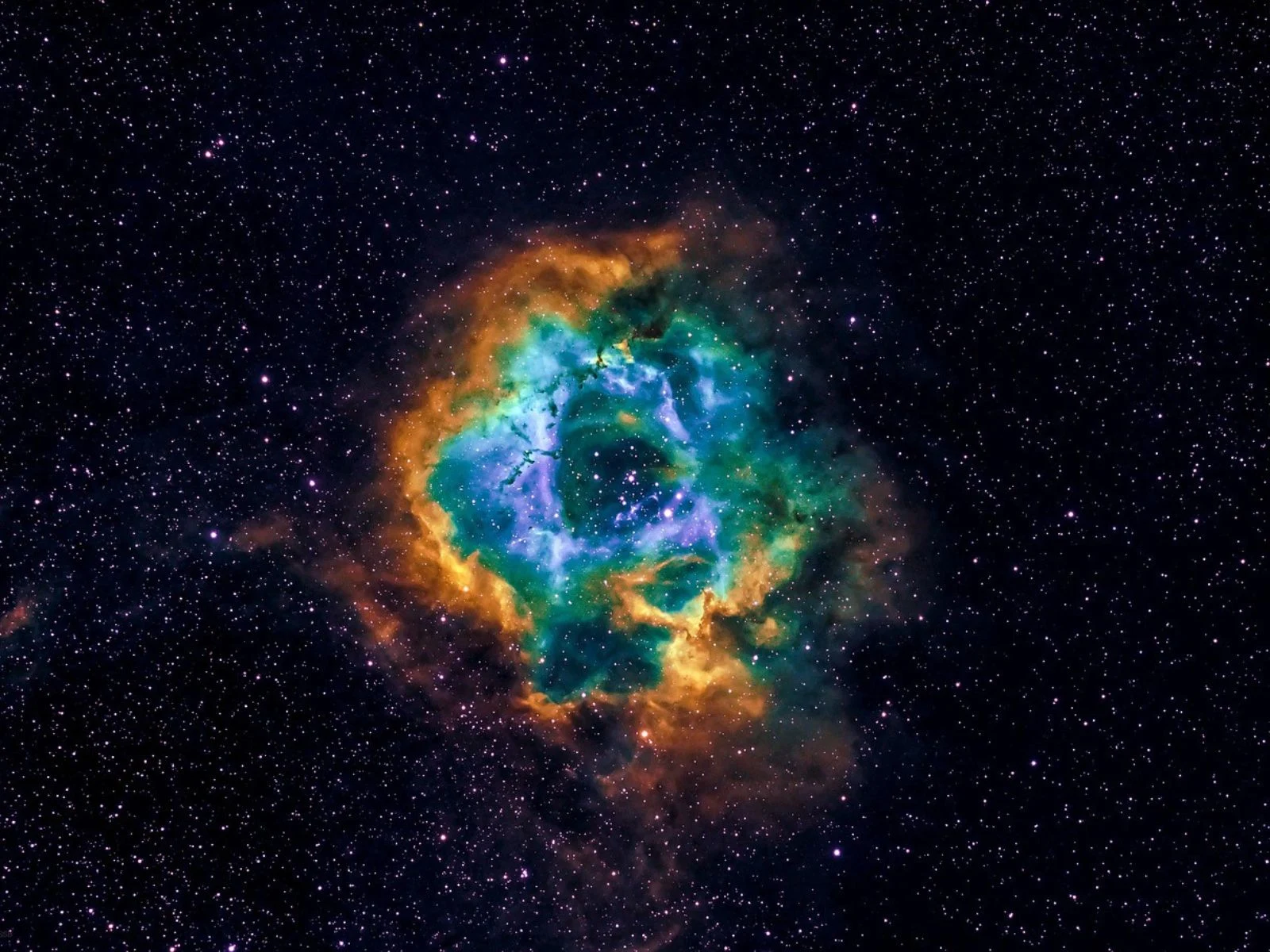
    The Exposed Cranium Nebula, also refereed to as PMR 1, was found in 2000 and is around 5,000 light-years away from our planet. This nebula, which consists of gas and dust, presents a fascinating enigma for scientists.

    New Discoveries with James Webb

    Recently, NASA released stunning images captured by the James Webb Space Telescope, showcasing the nebula’s unique characteristics. The telescope’s advanced instruments, such as the NIRCam (Near-Infrared Camera) and the MIRI (Mid-Infrared Instrument), enable us to observe details that were previously hidden from view.

    Exploring the Structure

    In the visuals produced by these two instruments, we can observe the various stages of this nebula’s development. The outer gas shell is mainly made of hydrogen, while the center features a denser cloud of gas. Additionally, two dark twin jets can be seen in the core of the structure, which might be the result of activity from the central star.

    The Mystery Star

    The star that led to the formation of this nebula remains shrouded in mystery. Although astronomers have determined that this star is nearing the end of its life, its mass is still unknown. This uncertainty leaves its future ambiguous; it could either explode as a supernova or shrink into a white dwarf if it doesn’t have enough mass. Based on the recent image, it’s likely that some astronomers will take a greater interest in studying this nebula. Further investigations could reveal additional secrets and enhance our understanding of such cosmic phenomena.

    Source:
    Link


  • Webb Telescope Explores Helix Nebula Around Dying Star

    Webb Telescope Explores Helix Nebula Around Dying Star

    Key Takeaways

    1. The Helix Nebula is located 650 light-years from Earth in the constellation Aquarius.
    2. The Near-Infrared Camera (NIRCam) on the Webb Telescope provides clearer images than Hubble and Spitzer.
    3. The gas structure in the nebula resembles comet-like pillars due to interactions between fast-moving and slower gases.
    4. The central white dwarf star illuminates the surrounding gas, with blue areas indicating the hottest gas and yellow areas cooler gas.
    5. The materials from the white dwarf are essential for the formation of new stars and planets.


    The Helix Nebula is situated 650 light-years from Earth in the constellation of Aquarius. Because it is fairly nearby, astronomers have examined this nebula multiple times using both ground and space observatories. However, when you compare it to images from Hubble and the retired Spitzer, the Near-Infrared Camera (NIRCam) on Webb gives a clearer picture.

    Focus on the Structure

    This new image sharpens the view of the gas’s structure. The gas looks like pillars that resemble comets with long tails. Fast-moving hot gas is colliding with slower gas that was released by the star earlier. This interaction creates the stunning visuals captured in the image.

    The Heart of the Nebula

    The dying star, known as a white dwarf, is not visible in the image. It is located at the center of the nebula. However, the light from the white dwarf illuminates the gas around it. The different colors in the image show how hot each gas area is. The gas that is nearest to the white dwarf shines blue, indicating it is the hottest part. As you move further away, the gas cools and turns into the yellow hues shown in the image.

    The material—dust and gas—released from the white dwarf serves as the building blocks for new stars and planets. Images like this are aiding astronomers in learning more about how planets come to be.

    Source:
    Link