Tag: ESA

  • ESA to Use High-Power Lasers for Space Collision Prevention

    ESA to Use High-Power Lasers for Space Collision Prevention

    Key Takeaways

    1. The Earth’s orbit is becoming crowded, increasing the risk of satellite collisions with debris.
    2. ESA uses laser technology to detect and track space debris for safety.
    3. CREAM initiative aims to prevent collisions in space through risk estimation and automation.
    4. OMLET is a new ground-based laser system designed to adjust the speeds of space debris to reduce collision risks.
    5. OMLET is currently in the design and implementation phase, managed by the German Aerospace Center (DLR).


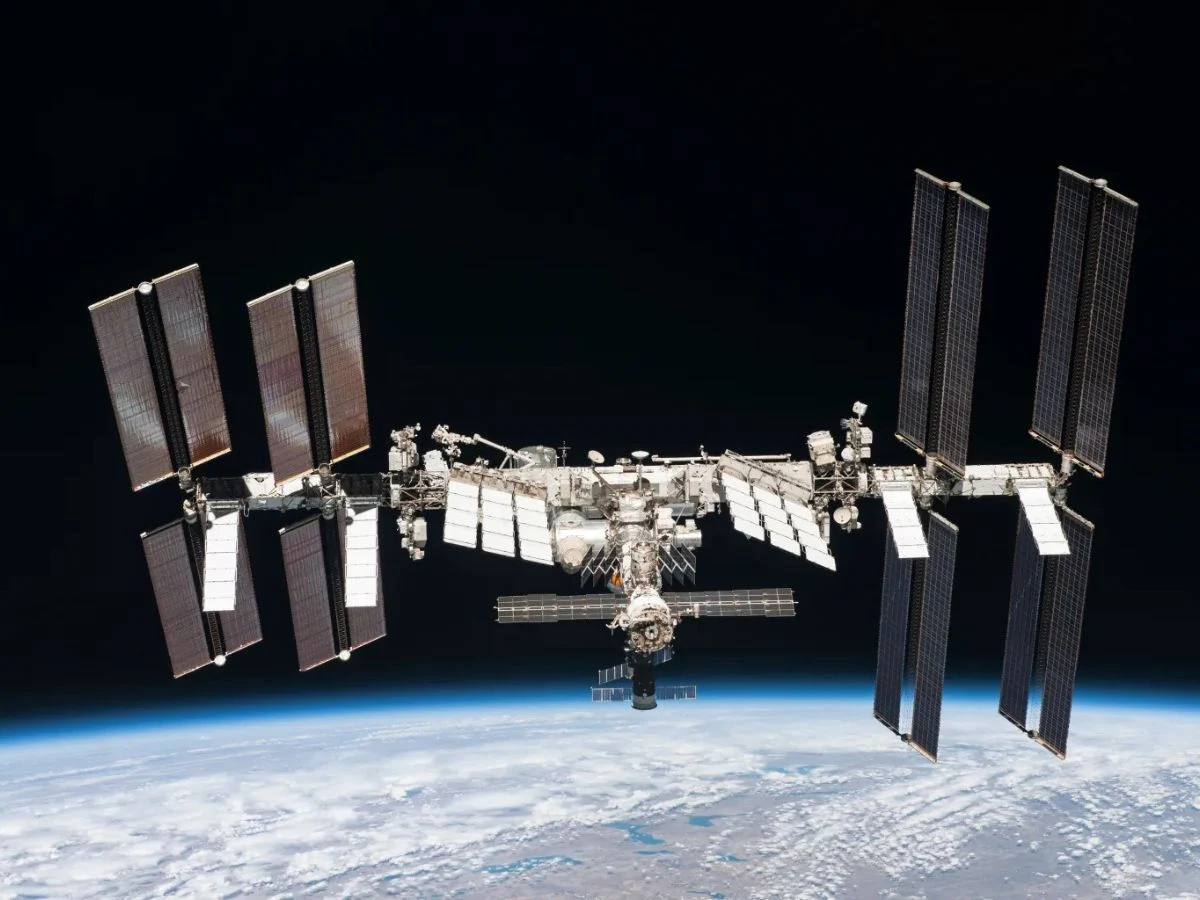
    The Earth’s orbit is getting more and more crowded. When space fills up, satellites become less secure because they might get hit by fast-moving debris. Right now, ESA uses laser tech to spot and keep track of this debris to ensure space safety. Initiatives like CREAM (Collision Risk Estimation and Automation Mitigation) are also working to stop crashes in space. However, the up-and-coming OMLET (Orbit Maintenance via Laser MomEntum Transfer) project introduces a different method.

    How OMLET Works

    OMLET is a ground-based laser system that will utilize a strong laser to make small adjustments to the speeds of space debris. The high-power laser setup of OMLET will be combined with precision aiming systems and adaptive optics. Overall, the system will direct a laser beam at space debris. The result of the laser striking the debris is anticipated to cause a minor change in the object’s velocity and path. This could lessen the chance of debris coming dangerously close to satellites, which is known as conjunction. Additionally, it could help avoid collisions entirely.

    Current Development Phase

    OMLET is now progressing from defining its requirements to moving into the design and implementation phase. This current stage (Phase A/B1) is being overseen by the Institute of Technical Physics at the German Aerospace Center (DLR).

    Source:
    Link


  • ESA Time-Lapse Shows Huge Scale of Artemis II Rollout

    ESA Time-Lapse Shows Huge Scale of Artemis II Rollout

    Key Takeaways

    1. ESA released a time-lapse video showcasing the Artemis II moon rocket rollout, highlighting collaboration with NASA.
    2. The European Service Module (ESM), provided by ESA, is crucial for supplying the Orion capsule with essential resources.
    3. The video condenses a 12-hour transport journey from the Vehicle Assembly Building to Launchpad 39B into just over 90 seconds.
    4. The crawler-transporter moves slowly at 1.6 km/h, emphasizing the rocket’s massive size in comparison to its surroundings.
    5. Artemis II aims to send four astronauts on a ten-day lunar flyby, with initial launch dates set for February or April if tests are successful.


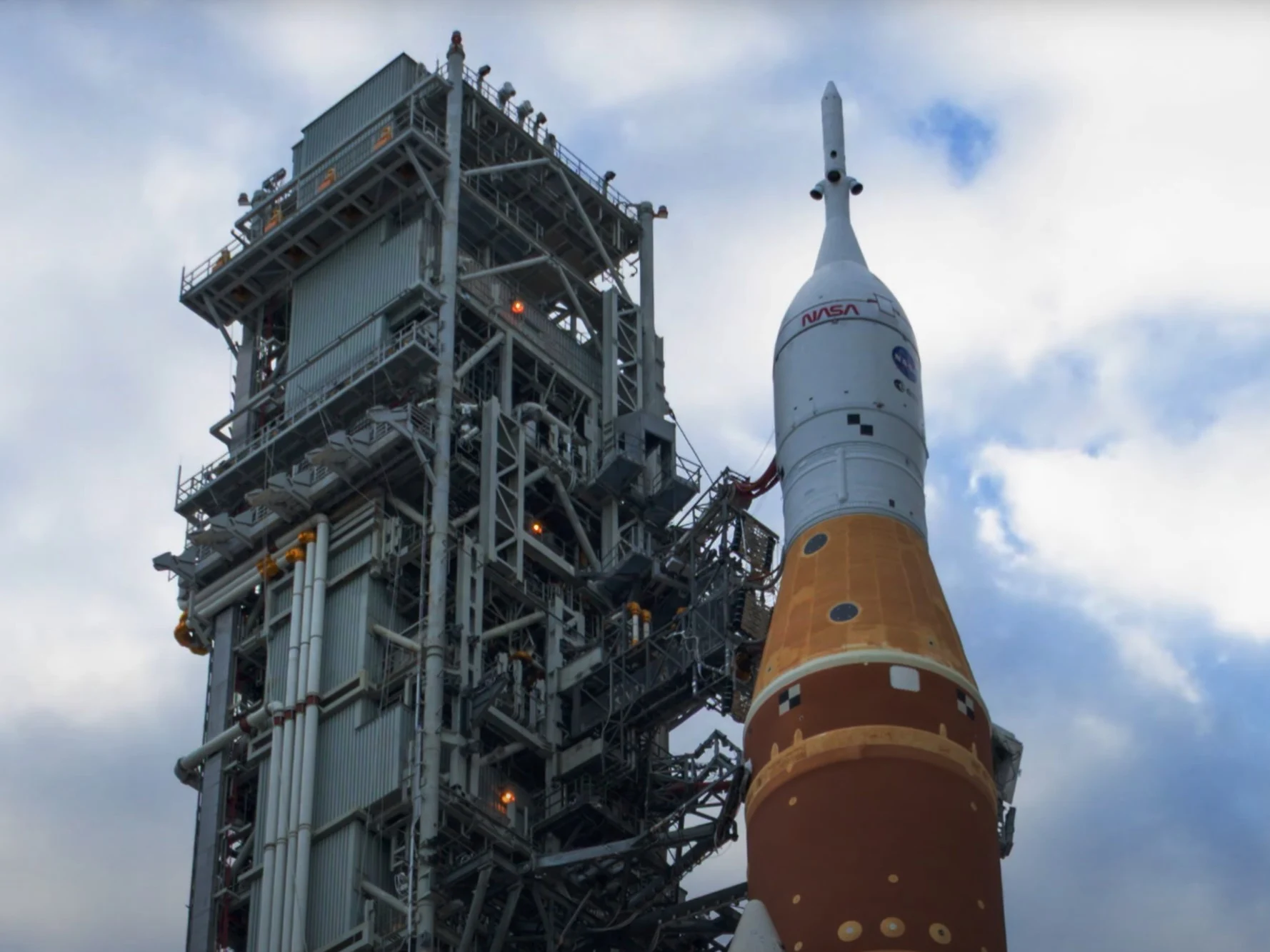
    The European Space Agency (ESA) has shared a brief video that captures the entire rollout of the Artemis II moon rocket in a speedy time-lapse. This video is significant because the mission is a collaboration. NASA is responsible for the enormous Space Launch System, while ESA provides a vital part known as the European Service Module (ESM). This essential component is located directly beneath the Orion capsule and supplies the crew with vital resources like electricity, water, air, and propulsion needed for the journey to the Moon. As a result, the ESA logo is clearly visible on the spacecraft.

    Impressive Time-Lapse

    The ESA video effectively compresses the twelve-hour journey from the Vehicle Assembly Building to Launchpad 39B into just over 90 seconds. Before the rocket emerges into the open air, the video offers a striking glimpse inside the Vehicle Assembly Building (VAB). Standing tall at 160 meters and with a volume of around 3.7 million cubic meters, this assembly facility is among the largest buildings in the world, providing an enormous backdrop that makes the already massive SLS rocket seem small in comparison.

    Slow Yet Steady

    In reality, the gigantic crawler-transporter moves at a maximum speed of 1.6 km/h (1 mph), a pace that even pedestrians could easily surpass. This special vehicle has been operational since 1965, having transported countless rockets and shuttles. The time-lapse makes up for the slow movement and skillfully showcases the 6.5-kilometer (4 mi) route along with the sheer size of the rocket.

    Preparing for Launch

    After reaching the launch pad, the preparations for the significant launch are now moving into an intense phase. Artemis II is scheduled to send four astronauts on a ten-day flyby of the Moon, marking the first crewed flight into deep space in fifty years. Once the rocket separates, the European Service Module will take over control. If the upcoming tests go well, initial launch dates are already planned for February, aiming for a departure by April at the latest. Since the rocket’s rollout, people can follow Artemis II through a live stream on YouTube.

    Source:
    Link


  • ESA to Automate Crash Avoidance for 1.2M Orbital Debris with CREAM

    ESA to Automate Crash Avoidance for 1.2M Orbital Debris with CREAM

    Key Takeaways

    1. CREAM is an ESA initiative launched in 2020 to prevent satellite collisions in Earth’s orbit.
    2. The project aims to automate collision threat evaluation and avoidance strategies for satellite operators.
    3. CREAM seeks to improve coordination among satellite operators by creating a connected network.
    4. The system can send collision alerts and suggest mediation for disputes between active satellites.
    5. Future plans include pilot usage on the ground and in-orbit demonstrations as a digital payload on other satellites.


    Collision Risk Estimation and Automated Mitigation (CREAM) is an initiative from ESA aimed at preventing satellites from crashing into each other in Earth’s orbit. Launched in 2020, this project is currently in the phase of testing on the ground.

    The Challenges of Space Operations

    Operators in space often deal with the difficult job of evaluating collision threats, planning how to avoid them, collaborating with other operators, and managing communication issues and misinterpretations. These responsibilities are not only time-consuming but also come with a lot of challenges.

    Automation to the Rescue

    CREAM aims to streamline and automate this process, easing the load for operators. The system is intended to identify possible collisions and devise prompt avoidance strategies. It will aid in decision-making and facilitate coordination among satellite operators by establishing a network that connects all key participants.

    Future Benefits and Developments

    In addition, the CREAM project could assist in resolving disputes when two active satellites are involved, even suggesting mediation services for disagreements. Although it is still in the ground-testing phase, the system is capable of sending out collision alerts, formulating practical avoidance strategies, and aiding in the coordination between involved parties.

    The next significant milestone for CREAM is the pilot usage phase, which will integrate technologies on the ground to enable effective decision-making. Future plans include missions where the system will operate as a digital payload on other satellites, known as “piggyback missions,” followed by a dedicated in-orbit demonstration to thoroughly evaluate its functionalities.

    Source:
    Link


  • First Direct 5G Satellite Connection Established Worldwide

    First Direct 5G Satellite Connection Established Worldwide

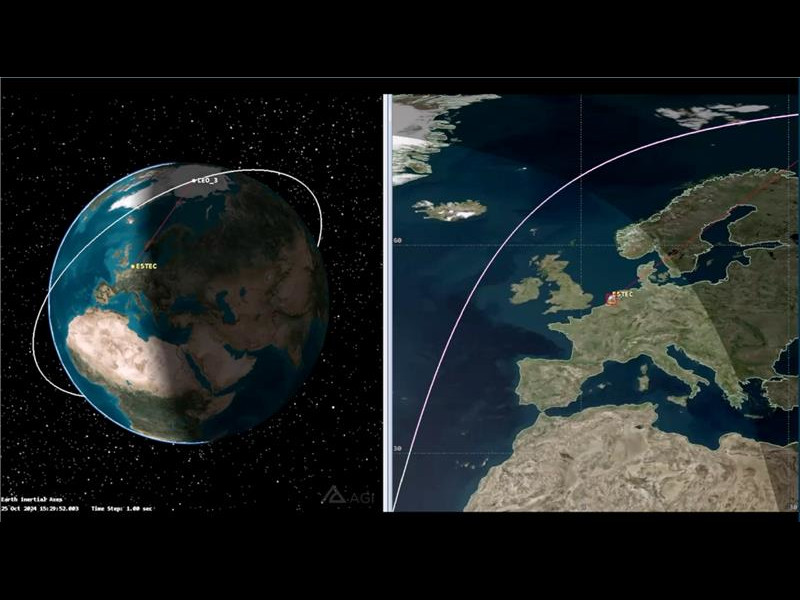
    After ESA and several European partners showed in a feasibility study that building a satellite-based phone network is not just technically possible but also quite affordable, recent tests have confirmed this. A test link to a satellite with standardized 5G tech remained stable while it was visible from the receiver’s location. This is impressive for two main reasons.

    Satellite Specifications

    The LEO 3 satellite, launched into low earth orbit specifically for research demo purposes, orbits just below 1,000 km from the Earth’s surface. Considering the often angled path (as the satellite moves away from the receiver), the distance can reach 2,000 km or more, which presents challenges for antenna technology.

    Speed Challenges

    Another aspect is that to stay in orbit, the satellite must move at around 28,000 km/h. This speed makes it quite challenging to maintain 5G coverage throughout the entire visible area of its orbit.

    Earlier tests were only done with geostationary satellites that maintain a consistent position above the Earth. However, 5G or any connection with minimal latency can’t be effectively achieved this way. These satellites are positioned at an altitude of 36,000 km, and when factoring in angle, it quickly adds up to over 50,000 km. For this distance, even light takes nearly a third of a second to travel, which is too long for real-time uses.

    Future Developments

    After the successful initial test, real-time applications seem possible now, partly because a stable connection was made on a regular frequency band using well-established technology. ESA noted that the standards set by 3GPP, a mobile communications standardization committee, were adhered to.

    This development opens the door for mobile communications that do not require extra ground-based tech, marking a significant advancement for hard-to-reach areas, crisis zones, and secure communication channels. ESA has already plans for extensive practical testing in 2025.

    Source: Link