Category: EV vehicles

  • Kia Unveils New ADVNTR and WKNDR Electric Vehicle Concepts

    Kia Unveils New ADVNTR and WKNDR Electric Vehicle Concepts

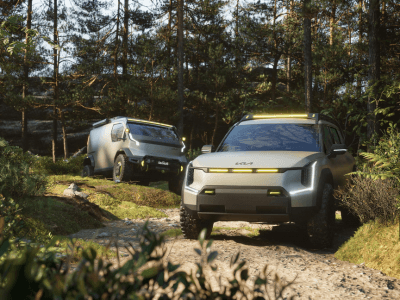
    Kia has introduced two new concept electric vehicles at the 2024 Specialty Equipment Market Association (SEMA) show: the ADVNTR and the WKNDR. These innovative designs come from the Kia Design Center America located in California and aim to foster “responsible engagement with nature”.

    ADVNTR Concept SUV

    The Kia ADVNTR concept electric SUV draws inspiration from the upcoming 2025 EV9. This three-row SUV boasts a tough look, featuring custom panels on both the front and back. With reinforced rocker panels, rugged tires, and a height that’s 3 inches more than the original model, it’s built for adventure. Additionally, Kia mentions that the roof rack could serve for a tent or extra baggage.

    WKNDR Electric Van

    On the other hand, the Kia WKNDR is an electric van utilizing the Platform Beyond Vehicle (PBV) structure. The company calls this elevated electric vehicle an “escape pod for extended weekends in nature,” complete with a modular interior. When parked, the Gear Head on the side can provide additional storage. The vehicle’s battery can be charged while driving, thanks to hydro turbine wheels and solar panels integrated into its design. Other highlights include off-road tires, reclinable lounge seats, and an onboard compressor, which can be used for adjusting tire pressures or inflating air mattresses.

    Kia has made it clear that the EV9 ADVNTR electric SUV and PV5 WKNDR electric van are just concepts for now, with no current plans to put either model into production. However, the 2025 Kia EV9 is anticipated to be available for purchase in the US market by late 2024.

    Kia, ArenaEV

  • First Cybertruck Dually Unveiled at SEMA in Heavy-Duty Style

    First Cybertruck Dually Unveiled at SEMA in Heavy-Duty Style

    After seeing its stainless steel exterior transformed in various ways, and being used to operate welding machines and even washing appliances, the Cybertruck is now ready for more classic pickup truck modifications.

    Exciting New Modifications

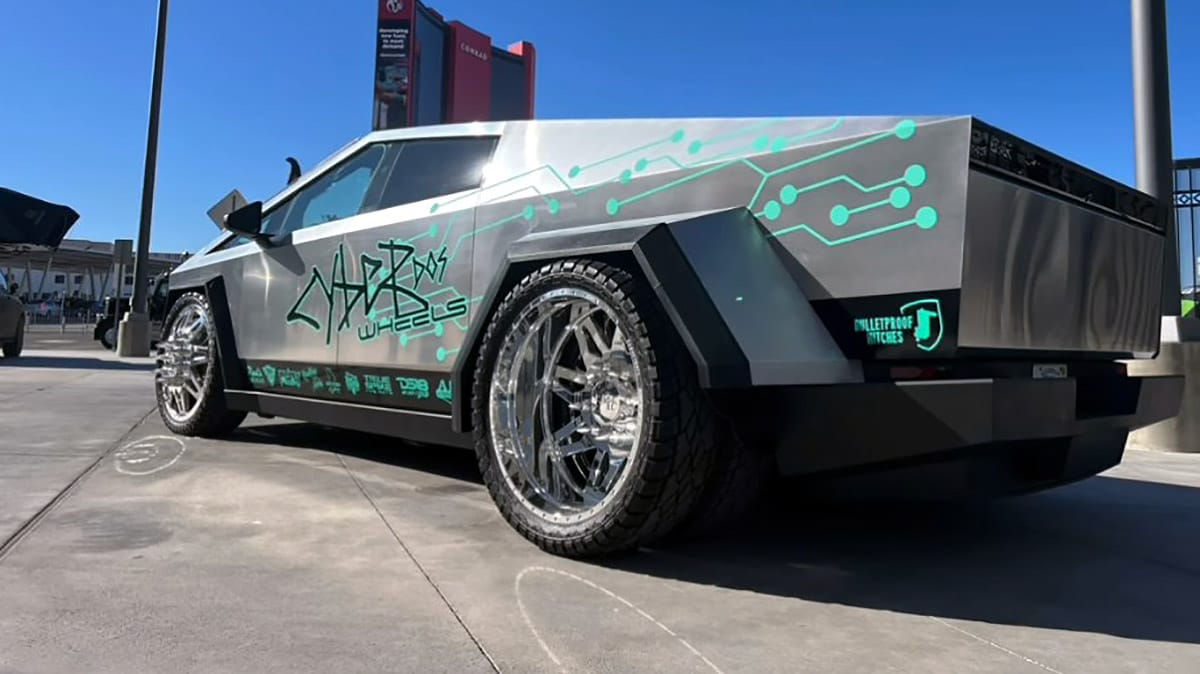
    The first widebody upgrade, priced at $10,000, along with an unannounced price for a dually version, has been introduced. This dually Cybertruck was showcased at the ongoing SEMA expo in Las Vegas.

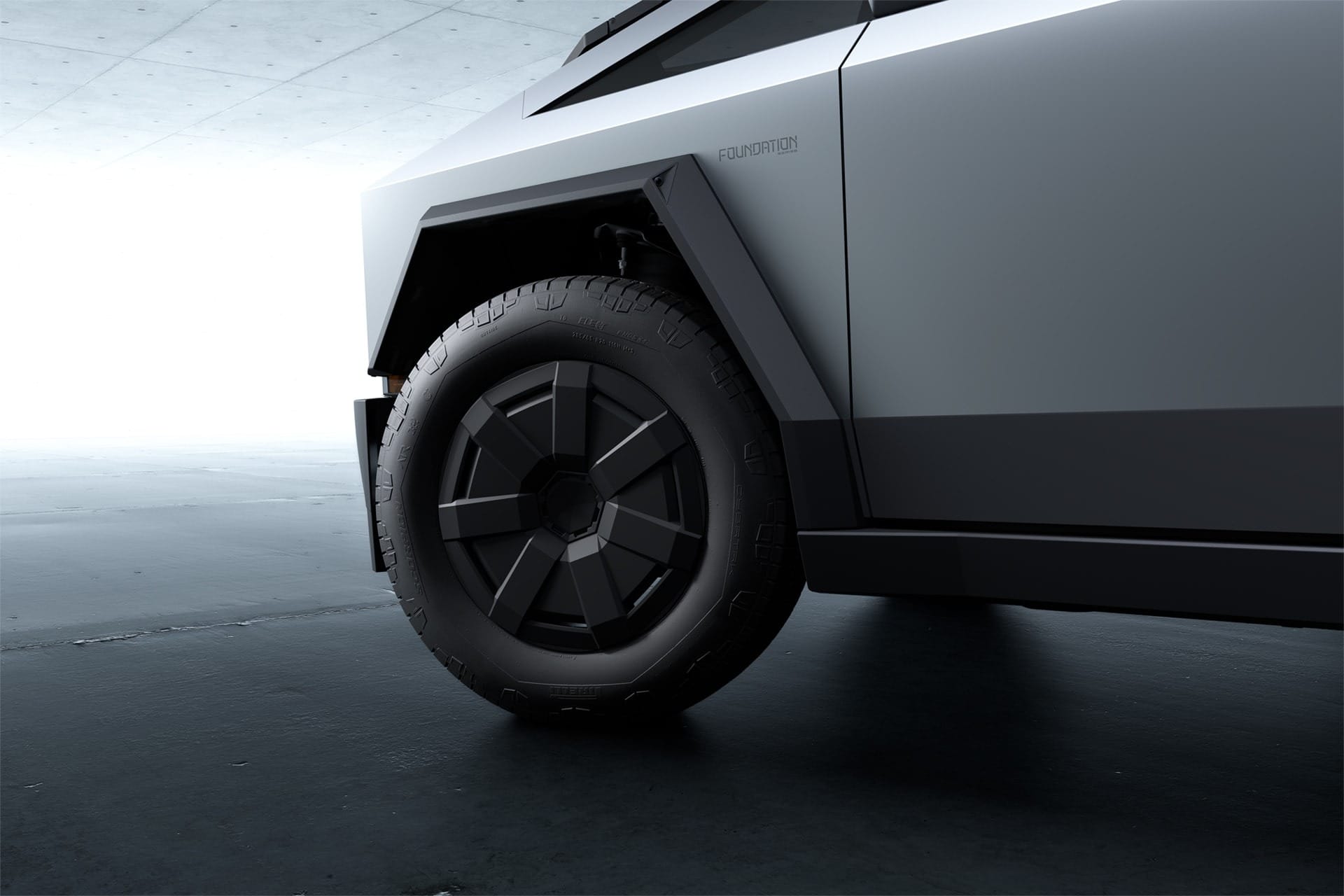
    This dually modification was created by the well-known Red’s Miami shop, featuring impressive 26" Diesel Wheels paired with 35" Fury tires. This addition places Tesla’s Cybertruck into the heavy-duty pickup category, a necessary step for any truck aiming to become a legendary model.

    Specifications and Features

    According to the shop, the front wheels of the Cybertruck dually can easily be attached using the original lug nuts, while the rear Diesel Wheels come with custom caps displaying the Cybertruck logo.

    Red’s Miami hasn’t revealed the exact towing or payload capacity of the Cybertruck equipped with these dually wheels. Presently, this build seems to serve more as a concept to impress at the expo than a practical application.

    Moreover, it’s unclear what has happened to the much-lauded rear wheel steering feature that Tesla has boasted about. Tesla’s lead engineer has mentioned how the new 48V system enables more power to be delivered to the steering motors, allowing the Cybertruck to maneuver quickly. However, it remains uncertain if the dually modification has affected this functionality in any way.

    Red’s Miami, Thatwide.bowtie (YT)

  • Tesla Model S Plaid: LAPD’s Fastest Patrol Car with 1,000 HP

    Tesla Model S Plaid: LAPD’s Fastest Patrol Car with 1,000 HP

    Imagine you’re cruising through the streets of Los Angeles and you accidentally blow a red light. As you peek into your rearview mirror, you notice a police car right behind you. You might think about hitting the gas, but now you gotta reconsider, because the Los Angeles Police Department is adding a super-fast Tesla Model S Plaid to their lineup.

    The New Patrol Car

    That’s correct, Unplugged Performance has rolled out the first-ever Tesla Model S Plaid designed for police duties at high speeds. Named the "UP.FIT Plaid Pursuit," this electric patrol vehicle packs over 1,000 horsepower and can zoom from 0 to 60 mph (0-100 km/h) in just 1.99 seconds. This is a big step up for law enforcement, especially when it comes to chasing down fast cars that are more likely to get away.

    Features and Compliance

    This police-ready car comes with custom lights on the front and back that are integrated into its body to improve aerodynamics, plus it has side skirt and bumper lights. It also has high and low-frequency sirens, so it meets all California Highway Patrol standards.

    Underneath the surface, the Model S has upgraded brakes and lightweight forged wheels for better handling. This vehicle is currently being showcased at the SEMA show in Las Vegas, where the newest innovations in electric vehicle technology for police use are being displayed. With its stealthy look and rapid acceleration, this police version of the Model S Plaid will surely be a strong deterrent on the streets, potentially tricking unaware speedsters into thinking it’s just another electric vehicle. But good luck trying to outrun this one!

    Conclusion

    Unplugged Performance’s new creation marks a noteworthy advancement in law enforcement capabilities. With its unique features and impressive specs, the UP.FIT Plaid Pursuit is set to change the game for police chases in Los Angeles and beyond.


    Image 1
    Image 1
    Image 1
    Image 1
  • Tesla Unveils 2025 Model 3 RWD with Longer Range Battery

    Tesla Unveils 2025 Model 3 RWD with Longer Range Battery

    Tesla is set to upgrade its budget-friendly 2025 Model 3 by adding a bigger battery, as indicated by recent regulatory filings.

    New Battery Details

    The new 6M battery pack will have the same number of cells as the existing Model 3 RWD battery. This suggests that the company may be using a different battery chemistry or a more effective way to package the cells, which could lead to higher energy density.

    In Europe and the UK, Tesla has already launched a Model 3 Long Range version, achieving an impressive 702km (436 miles) on a single charge, a notable increase from the earlier 390-mile capacity.

    Modest Range Improvements

    However, the range increase for the Model 3 RWD in these markets will be less dramatic. According to the filing, the new range will be 520km (323 miles) per charge, which is only a slight improvement over the current rating for the 19-inch wheels.

    Tesla is making this happen with a new 62.5 kWh LFP battery pack sourced from CATL, which maintains the same size and weight as the existing model. It’s worth noting that this isn’t a groundbreaking chemistry, as the energy density indicates that the upgraded Model 3 RWD battery doesn’t utilize CATL’s manganese phosphate type.

    Cost-Effective Strategy

    It seems likely that Tesla aims to reduce costs by opting for CATL’s latest LFP battery pack, which offers slightly better specifications at what is probably a significantly lower price.

    This year, prices for battery-grade lithium have fallen to their lowest due to a decrease in EV demand, and CATL is likely providing attractive packs to Tesla for vehicles made in China that are then shipped worldwide, including to Europe.

    There are speculations that this same battery pack might also be utilized in the Model Y Juniper refresh to keep expenses down, and enhancements to the charging curve could be forthcoming. We will have to wait until Tesla officially reveals the 2025 Model 3 RWD later this month or in the next quarter, which is expected to boast a confirmed range of 520km (323 miles) with the larger and more costly wheel option.

    US Market Changes

    Currently, Tesla no longer offers a base Model 3 version with an LFP battery in the US, as it does not qualify for federal tax credits. Nevertheless, the company has recently updated its range estimate for the LR version with the 19-inch wheels, indicating that it is actively working to enhance the 2025 lineup of its most economical vehicle.

  • CATL Launches 500 Wh/kg Solid-State EV Battery Cell Trial Production

    CATL Launches 500 Wh/kg Solid-State EV Battery Cell Trial Production

    The largest manufacturer of electric vehicle (EV) batteries and energy storage systems, CATL, has commenced the sample validation of 20Ah solid-state battery cells utilizing its sulfide technology research.

    Initial Skepticism

    At first, CATL dismissed the rapid commercialization claims surrounding solid-state batteries. The company stated that after several years of research and development, it remains skeptical about their mass-market readiness before 2030 due to the high costs of production.

    Revised Outlook

    Recently, it has adjusted its forecast, suggesting that solid-state batteries could be available for high-end electric vehicles by 2027. CATL plans to provide its own cells featuring an all-solid electrolyte by that time.

    To facilitate this progress, CATL has assigned about 1,000 engineers to concentrate on the solid-state battery initiative. They have achieved an impressive energy density of 500 Wh/kg, which is nearly double that of batteries commonly found in standard electric vehicles.

    Overcoming Challenges

    Nevertheless, industry insiders mention that CATL still has some issues to resolve regarding charging speeds and battery life. This is the reason for the current sample validation phase for the 20Ah solid-state battery cells, which are essential components of EV battery packs.

    Once the charging and lifespan criteria are satisfied, CATL will need to tackle production engineering and scaling up manufacturing capacity, which are actually where it excels the most.

    CATL isn’t the only player in the solid-state battery arena, as other companies like BYD, Toyota, and Samsung are also making strides with their respective projects. However, CATL is seen as the most adept in this field. The chairman recently stated that CATL’s solid-state technology is significantly ahead of the competition. Given its progress to the sample validation phase for EV-grade cells, this claim may hold some truth.

    Industry Consensus

    Most companies that have disclosed their solid-state battery plans share a common goal: they aim to have their battery packs ready for electric vehicles by 2027. However, Toyota has cautioned that these solid-state batteries will likely be pricier than the existing ternary lithium cells that use liquid electrolytes, meaning they will initially be reserved for luxury electric vehicles in its Lexus lineup.

  • Tesla Offers 0% APR on Model Y and Cybertruck with Luxury Tax in Canada

    Tesla Offers 0% APR on Model Y and Cybertruck with Luxury Tax in Canada

    Tesla is almost finished with the initial Cybertruck reservations in the US, leaving only a week or two of orders to be filled, and is now moving swiftly to accommodate new requests.

    Cybertruck Launch in Canada

    This might be one reason Tesla has decided to expand the Cybertruck’s availability beyond the US, launching it in Canada starting this week. However, British Columbia’s government has announced that the Cybertruck will be subject to a luxury tax of up to 20%, significantly raising its already high cost.

    Pricing Details

    In Canada, the starting price for the Cybertruck is around CA$137,990 for the dual-motor AWD version. Once all taxes, including the federal luxury item levy, are added, the base price can quickly exceed the equivalent of US$120,000. This price point was previously for the tri-motor Cyberbeast Foundation Series trim in the US.

    Tesla challenged the federal luxury tax, but the BC government decided that the Cybertruck’s hefty price tag and weight make it eligible for the tax aimed at expensive vehicles.

    Financing Options for Canadian Customers

    To ease the disappointment for its Canadian customers, Tesla has rolled out the same zero-interest financing deal for the Model Y that was offered in the US last month. Buyers of the FSD feature along with the Model Y or Model 3 in Canada can benefit from a 0% APR financing option for terms of up to 48 months.

    Starting this month, Tesla has also lifted the FSD purchase requirement for obtaining the 0% APR financing for the Model Y in the US, and it may extend this offer to Canadian customers in the future as well.

  • Huawei Patents Innovative Solid-State Battery Technology

    Huawei Patents Innovative Solid-State Battery Technology

    Huawei is making big strides in energy storage with its new solid-state battery technology. The tech leader has recently announced a patent for a sulfide-based solid electrolyte, which is a key part of the next-gen lithium-ion batteries.

    Huawei’s Battery Patent Enhances Lifespan and Safety

    This groundbreaking technology tackles a major issue in the battery sector: the breakdown of liquid electrolytes. By swapping out these liquid elements for solid electrolytes, Huawei seeks to greatly improve the lifespan, safety, and efficiency of batteries, especially for uses like electric vehicles (EVs) and energy storage systems.

    The sulfide-based solid electrolyte in the patent shows outstanding traits, such as high energy density, quick charging and discharging capabilities, and superb performance in low temperatures. Additionally, it enhances safety by reducing the chance of thermal runaway, which is a frequent worry with standard lithium-ion batteries.

    Aligning with the Push for Sustainable Energy

    This development fits well with the worldwide movement towards sustainable energy solutions and the rising need for high-performing batteries. By tackling the drawbacks of existing battery technologies, Huawei’s solid-state battery innovation could speed up the use of electric vehicles and renewable energy sources.

    As society moves towards a greener future, breakthroughs like Huawei’s solid-state battery technology are crucial. By solving the problems of traditional batteries, this innovation might open the door to a new age of energy storage options.

    Battery Innovations in the Smartphone Market

    Battery advancements are also a hot topic in the smartphone industry. At the Mobile World Congress this year, the focus was on creating batteries that charge faster and last longer for smartphones.

    Various companies are investigating materials such as lithium-sulfur and graphene to prolong battery life. This year, most leading smartphone brands are utilizing silicon-carbon batteries, which provide greater energy density, quicker charging, and a longer lifespan compared to conventional lithium-ion batteries.

    In addition, a Chinese startup has introduced a nuclear battery that could potentially power a smartphone for as long as 50 years. The European Union has also rolled out new standards to promote more sustainable and recyclable batteries.

  • Royal Enfield Launches Flying Flea EV: Retro Electric Motorcycles

    Royal Enfield Launches Flying Flea EV: Retro Electric Motorcycles

    After numerous leaks and a good amount of teasing, Royal Enfield has at last launched its Flying Flea electric motorcycle sub-brand. The official announcement was made at EICMA 2024. The name “Flying Flea” comes from the light and small motorcycles that were often air-dropped into combat zones during World War II, hinting at what the new electric motorcycle line could bring.

    New Models on the Horizon

    Royal Enfield has stated that Flying Flea will introduce two electric motorcycles, with the first being a cruiser-style model dubbed the FF.C6. The second model, expected to be released after the FF.C6 in 2026, is named the FF.S6. Just like Royal Enfield’s internal combustion engine bikes, both the C6 and S6 are likely to be built on the same mid-drive motor and belt-driven system. From the images released, featuring slim tires and compact battery and motor units, it might be wise for electric vehicle enthusiasts to temper their expectations—these bikes aren’t set to be high-powered street racers, even with Royal Enfield’s claims of highway-capable speeds and cruise control.

    A Different Approach

    The Flying Flea motorcycles appear to differ from the usual modern Royal Enfield models in terms of weight and agility. The C6 will feature a forged aluminum frame along with a magnesium battery case. In terms of modern technology, the C6 will include wireless smartphone charging and a keyless start system that connects to smartphones. As is common with many recent electric vehicles, the Flying Flea motorcycles will also support over-the-air software updates.

    Anticipation for the Future

    Electric motorcycles from Royal Enfield have been hinted at for a long time, with the company even showcasing an all-electric version of its Himalayan adventure bike during last year’s EICMA. So, it wouldn’t be surprising to see a Flying Flea take on a similar adventure or sport-touring style. For now, though, the Indian electric motorcycle brand seems to be leaning towards the modern classic design and ergonomics it is renowned for.

  • Tesla Boosts Model 3 Long Range Estimate with Premium Wheels

    Tesla Boosts Model 3 Long Range Estimate with Premium Wheels

    Tesla has recently been expanding the range of its popular Model Y and Model 3 cars, updating their performance figures positively.

    Updates Following EPA Testing

    These positive adjustments typically occur after Tesla finishes the new EPA range evaluations, leading to updates on previously reported numbers from its more rigorous internal testing system. There was even a pause in deliveries of the Model Y AWD until the EPA tests were completed, resulting in a confirmed longer range on a single charge.

    Efficiency Boost for Model 3 Highland

    In the case of the Model 3 Highland refresh, Tesla has shifted into a mode focused on enhancing efficiency. The internal estimate for the Long Range version’s distance on a charge has been increased, especially when equipped with a specific set of wheels.

    If a buyer opts for the Long Range Model 3 with the $1,000 Nova wheels instead of the standard 18-inch Photons, they will enjoy an 11-mile increase in range. Previously, the Model 3 with the 19-inch Nova wheels was rated for 305 miles according to Tesla’s internal tests, but that has now been raised to 316 miles with the larger Nova wheels and all-season tires.

    Aesthetic and Performance Changes

    This increase in range for the Model 3 when using the pricier wheels is a welcomed change, as the 19-inch wheels look sleek but are larger and have a bit more resistance compared to the standard 18-inch Photon wheels.

    The gap in range between these two types of wheels was quite significant, with the stock wheels outperforming the 19-inch version by a full 41 miles, based on EPA estimates. However, this difference has now been reduced, and Tesla has not disclosed any specific gains in tire efficiency or changes in their testing procedures that may have led to this favorable update.

  • Tesla Increases Pay by 4% at German Gigafactory

    Tesla Increases Pay by 4% at German Gigafactory

    Between 2015 and 2018, Tesla had plans to open its first gigafactory in Europe. However, the specifics of the Giga Berlin, also known as Gigafactory 4, were revealed by Elon Musk in November 2019. The grand opening occurred in late March 2022, and by the end of April, the facility began producing the Model Y Performance featuring 2170-cells. With a workforce of 12,000 and an annual output of 250,000 vehicles, this sole production site in Europe has the potential to reach a capacity of 1 million vehicles per year in the future, though current market conditions have put this ambition on pause.

    Job Security and Wage Increases

    Last month, Tesla made the decision to convert 500 temporary positions into permanent ones, effective November 1st. Just today, the company announced that all employees at the German gigafactory will receive a 4% wage increase starting this month. Erik Demmler, the HR director, stated,

    "This is particularly good news for our workforce – especially when many companies in the German automotive industry are discussing layoffs and plant closures."

    Cost-Cutting Measures

    According to Reuters, Tesla has not renewed contracts with some subcontractors and has also implemented voluntary staff reductions earlier this year as part of its efforts to cut costs. However, these measures did not include any pay reductions. In contrast, Volkswagen, Europe’s largest automaker, is currently requesting that its employees accept a 10% salary cut to retain their jobs and maintain competitiveness.