Category: EV vehicles

  • BMW Praises Tesla FSD V13.2 as Impressive, Then Deletes Tweet

    BMW Praises Tesla FSD V13.2 as Impressive, Then Deletes Tweet

    Social media exchanges between businesses, or more specifically their social media profiles, are nearly always captivating. Not long ago, BMW made a brief mention of Tesla’s Full Self-Driving (FSD) v13.2, calling it ‘very impressive’ in a tweet that was later deleted. This remark came after @AIDRIVR posted about Tesla’s latest FSD features, which have gained attention for significant improvements in parking automation and executing three-point turns.

    The Interaction Unfolds

    The interaction took place when a third-party account drew attention to Tesla’s FSD abilities, tagging BMW, Volkswagen, and Mercedes-Benz with the message, “Isn’t that impressive?” BMW replied with a concise yet revealing “very impressive.” Tesla’s official account soon joined the conversation with a cheeky “Hi @BMW,” creating a light-hearted moment online.

    Speculation Over Deletion

    However, BMW’s tweet vanished soon after, leading users to ponder the reasons behind its disappearance. Was it an accidental compliment from BMW, or did someone in the company think that praising a rival’s technology wasn’t appropriate? Regardless, the internet swiftly captured screenshots (see above), as that’s just how it operates.

    Competitive Landscape

    While Tesla continues to roll out updates like FSD v13.2, other car manufacturers, including BMW, are diligently developing their own advanced driver-assistance technologies. The deleted tweet might reflect a blend of recognition and prudence, as traditional automakers strive to keep pace with Tesla’s advancements in autonomous driving.

    Source: Link


    Image 1
    Image 1
  • Lucid Gravity: Longest Range SUV Beats Rivian and Tesla with NACS

    Lucid Gravity: Longest Range SUV Beats Rivian and Tesla with NACS

    Lucid’s Air Pure sedan has recently been recognized as the most efficient electric vehicle available for sale, managing to deliver over 500 miles of range with just an 84 kWh battery.

    Comparing with Tesla

    In comparison, the Tesla Model S AWD holds the title for the longest driving distance on a single charge, with an official EPA estimate of 402 miles, but it utilizes a larger 100 kWh battery.

    Innovative Technology

    Lucid attributes the remarkable efficiency of its electric vehicles to its cutting-edge drivetrain and lightweight electric motors, which are designed for optimal energy conversion. This is supported by the performance of the new Gravity SUV, which features integrated drive units that produce 670 horsepower while weighing only 74 kg (163 pounds).

    The EPA has just published the official range estimate for the Gravity, surpassing Lucid’s own internal prediction of 440 miles. Now, the Lucid Gravity is listed as the electric SUV with the longest range in the EPA’s records, capable of traveling 450 miles on a single charge from its relatively compact battery pack.

    Efficiency in Design

    Lucid’s Rowlinson stated that having a "smaller, lighter, and higher technology battery pack means fewer precious metals and minerals, less energy to charge, less electricity consumed, less pressure upon the grid, and a lighter weight and more dynamic vehicle." Their claims seem to hold true based on the performance of the Gravity.

    The Rivian R1T follows as the second-best electric SUV for range, reaching 420 miles but requiring a massive nearly 150 kWh battery pack.

    Future Prospects

    Currently, Lucid is delivering the more premium AWD GT version of the Gravity, and there’s a strong possibility that the more affordable Touring model could achieve even greater distances if it employs the same battery pack when it arrives in dealerships in 2025.

    The Gravity utilizes a modern and efficient 900V powertrain setup, allowing for the addition of 200 miles of range within just 15 minutes at Tesla’s new Superchargers equipped with V4 cabinets.

    Indeed, the Gravity is among the first electric vehicles produced by third-party manufacturers to feature Tesla’s NACS port, conveniently located on the left rear side.

    Source: Link

  • Kia Integrates myQ Garage Door Remote in 2024-2025 Vehicles

    Kia Integrates myQ Garage Door Remote in 2024-2025 Vehicles

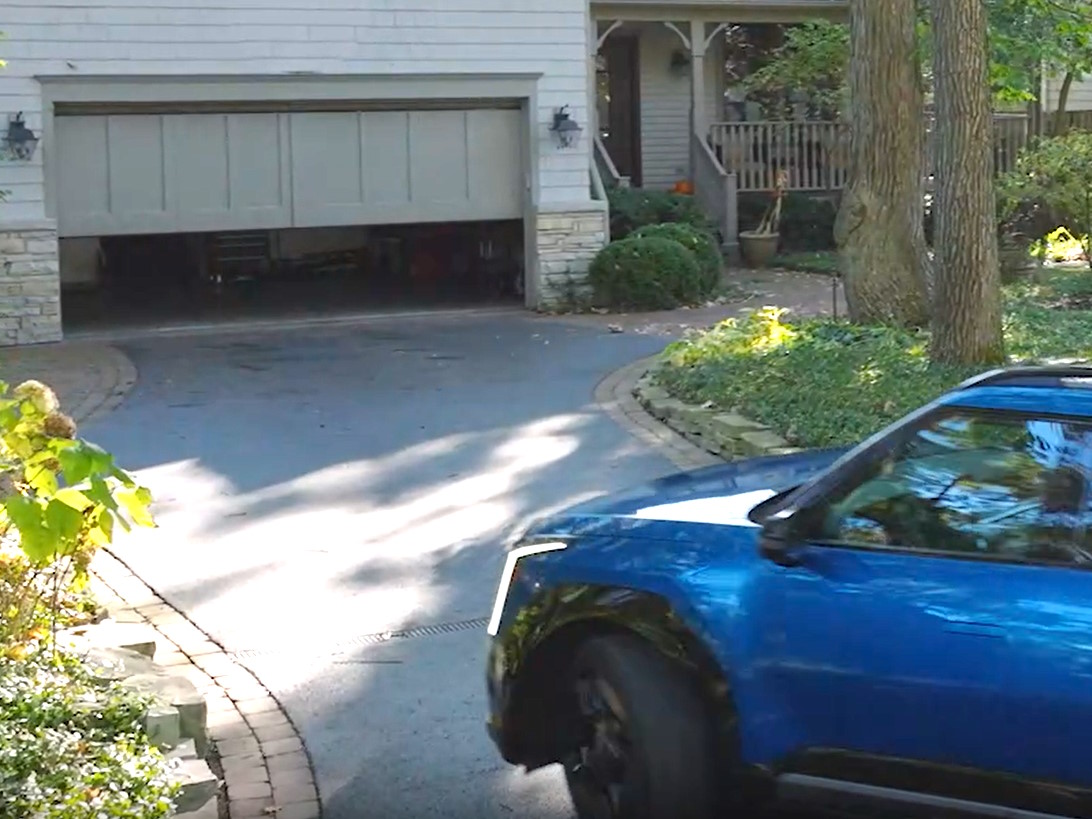
    Kia has added the myQ Connected Garage feature to certain 2024-2025 Kia models, transforming them into smart remote controls for garage doors. This innovation allows drivers to avoid the tediousness of using traditional remotes, as geofencing technology automatically opens and shuts garage doors whenever the vehicles approach or depart. Additionally, if the automatic closing is interrupted, the geofencing can send notifications to drivers about open doors. Users can manage and monitor several garage doors across different locations.

    Requirements for myQ Integration

    To use the myQ Connected Garage feature, a compatible 2024-2025 Kia with a ccNC head unit, active Kia Connect and myQ accounts, as well as an ongoing LTE data connection in the car, are necessary. Furthermore, the myQ garage doors need an active Wi-Fi connection to be accessible from the Kia vehicles. This means that drivers can supervise and operate their garage doors from virtually anywhere in the world, as long as their vehicles are connected to the internet.

    About Chamberlain Group

    Chamberlain Group is the owner of well-known garage door brands like Liftmaster and the myQ smart home accessory brand. The myQ feature is built into many of Chamberlain’s garage door openers, allowing for remote access to the doors via cars or smartphones.

    For those curious about using myQ for their garage doors, they can either install a new myQ-compatible smart garage door opener or add a Smart Garage Control with myQ to their current garage door openers.

    This announcement comes from the Chamberlain Group, highlighting the collaboration between myQ and Kia America to enhance in-vehicle smart access options.

    Source: Link

  • Everything You Need to Know About Xiaomi’s YU7 Electric SUV

    Everything You Need to Know About Xiaomi’s YU7 Electric SUV

    If you’re following the electric vehicle scene, you’ve probably heard about Xiaomi entering the car market with the SU7 sedan. Now, the Chinese technology powerhouse is stepping it up by launching the YU7, an all-electric SUV that’s expected to arrive in the summer of 2025.

    Regulatory Unveiling

    The YU7 was introduced under the watchful eye of regulators. As part of the approval process with China’s Ministry of Industry and Information Technology (MIIT), Xiaomi had to disclose important specifications and the first official photos of the YU7. This can be a frustrating step for car manufacturers since it reveals details about vehicles before their official debut, but it’s a goldmine of info for us. Here’s what we’ve gathered about the YU7.

    Impressive Specifications

    This all-electric SUV measures a length of 4,999 mm, a width of 1,996 mm, and has a height of 1,600 mm, with a wheelbase reaching 3,000 mm. The YU7 doesn’t skimp on power either. It has dual electric motors—one in the front producing 220 kW and another in the rear delivering 288 kW, resulting in a total output of 508 kW or 681 hp. That gives this SUV a maximum speed of 253 km/h, which is quite remarkable for an SUV.

    The energy for this SUV is supplied by a lithium NMC battery from CATL, though details about the battery’s capacity have not been shared yet. With Xiaomi’s collaboration with CATL, we can anticipate impressive range figures, but we’ll have to wait for more precise numbers as the launch date nears.

    Sleek Design

    In terms of design, the YU7 shares the sleek look of the SU7 sedan. Xiaomi CEO Lei Jun has teased the YU7’s design with images on Weibo, showcasing a vehicle that looks both modern and sporty.


    Image 1
  • Mercedes-Benz Solar Paint Boosts EV Range by 12,000 KM Annually

    Mercedes-Benz Solar Paint Boosts EV Range by 12,000 KM Annually

    Electric vehicles (EVs) are becoming more popular as the world moves towards cleaner forms of energy, but there’s still a big issue—range anxiety. Many drivers are afraid of running out of battery power on long trips or having to wait too long at charging stations. To tackle this problem, Mercedes-Benz is developing an innovative solution that could enhance the energy independence of EVs: solar paint.

    How It Works

    This technology transforms the car’s exterior into a power generator by embedding solar modules in a paint-like layer. With an efficiency rate of 20%, this special paint captures sunlight and changes it into electricity, which can then be used to charge the vehicle’s high-voltage battery. It covers an area of approximately 11 square meters, similar to the size of a mid-sized SUV, and under ideal conditions, it can produce enough energy to allow an electric car to travel up to 12,000 kilometers (around 7456 miles) each year.

    Unique Features

    The secret behind Mercedes-Benz’s solar paint is its wafer-thin solar cells that can be applied to any car body, irrespective of its shape or design. This is different from standard solar panels that are placed on the roofs; the solar paint can cover all surfaces of the vehicle.

    The energy generated isn’t just for driving; it keeps producing power even when the vehicle is parked. This means longer ranges and fewer stops to charge, plus there’s a chance to use any extra energy for homes or the power grid via bidirectional charging. However, this brings up questions—what happens to all the extra energy that’s gathered? Mercedes-Benz hasn’t provided detailed answers in its announcement, but surplus energy might be used for homes (V2H, or vehicle-to-home), sent back to the grid (V2G, or vehicle-to-grid), charged into other EVs (V2V, or vehicle-to-vehicle), or saved for later driving needs.

    Location Matters

    The efficiency of solar paint largely relies on how much sunlight it receives, which can change based on the location. For instance, drivers in Stuttgart, Germany, typically cover about 52 kilometers daily. Solar paint could potentially account for around 62% of that distance using solar energy alone. In sunnier locations like Los Angeles, cars could generate more than enough energy, meeting or exceeding daily driving requirements, according to claims by Mercedes.

    This advancement could help alleviate range worries while lowering energy expenses for EV users. Furthermore, Mercedes-Benz confirms that the paint is eco-friendly, as it does not contain rare earths or silicon, utilizes non-toxic materials, and is easy to recycle—making it both sustainable and cost-effective.

    Future Outlook

    Currently, solar paint is in the research stages, but its possibilities are substantial. By allowing EVs to produce their own energy, it lessens the dependency on charging stations, making electric cars a more viable choice for drivers everywhere. At the moment, manufacturers like Hyundai and Toyota are incorporating traditional solar panels into some of their EVs. However, if Mercedes-Benz can successfully launch its solar paint, it could transform the landscape of clean transportation.

    Source: Link

  • Tesla Cybercab: Launching Robotaxis and Waymo-like Service

    Tesla Cybercab: Launching Robotaxis and Waymo-like Service

    During an event to announce its Robotaxi initiative, Tesla expressed plans to introduce its most affordable car by 2026, assuming it can navigate all regulatory challenges by that time.

    Limited Launch Plans

    This upcoming release will be a more modest affair compared to the detailed vision of the Cybercab ride-share service shared by Elon Musk and other members of the Tesla team. In various quarterly press briefings, Musk has outlined an extensive ride-hailing network that will feature both Tesla-owned vehicles equipped with pedals and steering wheels, along with the Robotaxi service. Additionally, current Tesla owners will have the opportunity to rent out their Model Y or Model 3 when they aren’t using them, allowing them to earn some extra cash.

    Robotaxi Fleet Details

    The Robotaxi segment of the Cybercab fleet will likely begin with two-seaters that are owned and operated by Tesla. It will include a customer service call center with human operators for added safety, mirroring the approach taken by Waymo. This information was communicated to Deutsche Bank analysts by Tesla’s investor relations head, Travis Axelrod, who noted that the service will initially be available only in California and Texas, where there are either no driverless car restrictions or established regulations.

    Tesla thinks it’s sensible to have some form of teleoperation, at least in the beginning, for safety reasons. The management plans to kick off the service with a fleet entirely owned by the company and will utilize an in-house developed ride-hailing app.

    Future of the Cybercab Service

    It remains unclear if the Cybercab service will feature Model Y, Model 3, and Cybertruck vehicles at launch, or if it will solely consist of Robotaxis. Regardless, it appears that current Tesla owners will only be able to rent their vehicles on the ride-share platform after the company has conducted thorough testing on public roads.

    Moreover, analysts from the bank have confirmed that Tesla might actually pursue the launch of a more affordable car, which Deutsche Bank has named Model Q, in the first half of 2025, as mentioned during Tesla’s last earnings call. Previously known as Model 2, this new vehicle is anticipated to resemble a smaller Model Y and will be priced around $30,000 with potential subsidies, slightly above the Robotaxi, which is expected to be Tesla’s least expensive offering.

    Some suppliers who have collaborated with Tesla have indicated that the Model 2 project was genuine, and Tesla had even shared innovative cost-saving engineering ideas with them before deciding to postpone it in favor of launching the Robotaxi.

    What led to this abrupt shift in strategy and the choice to move forward with the Model 2/Q, despite recent statements suggesting that it wasn’t necessary, is still unclear.

    Source: Link

  • BMW M Cars Go All-Electric with Quad-Motor AWD System

    BMW M Cars Go All-Electric with Quad-Motor AWD System

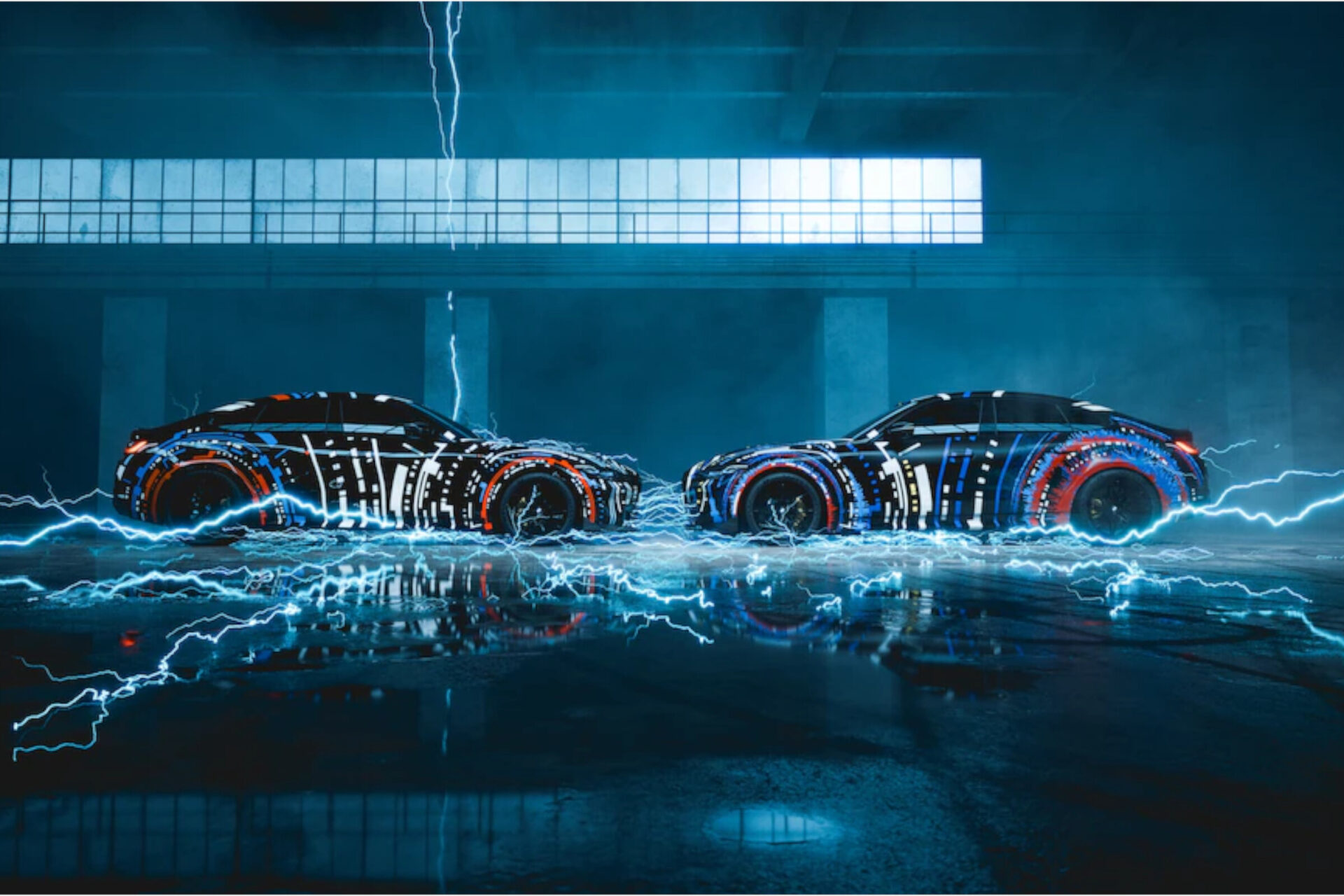
    BMW’s M series vehicles have always been synonymous with exceptional performance, promising an exhilarating experience for drivers. It appears that BMW is committed to maintaining this tradition as it shifts gears toward electric vehicles (EVs). The company recently showcased its first prototype EV from the M series on its YouTube channel.

    Future of BMW M Electrification

    Carsten Wolf, who is involved with Integration Vehicle Characteristics at BMW M, stated, “We will see the technical concept that we are devleoping here now, four electric motors in all BMW M High Performance vehicles at some point in the future.” This quote not only indicates that BMW plans to electrify all its M models eventually, but it also raises opinions among car enthusiasts, as reactions to this news can vary widely. Presently, the only BMW EVs wearing the M badge are part of the standard “i” family, such as the BMW i4 M50 xDrive. While these vehicles come equipped with all-wheel drive (AWD), they operate on a dual-motor system, which lacks the flexibility of a quad-motor setup.

    Anticipating the M3 EV

    It looks like the first M-series EV will be the M3, as this model will be the initial focus for BMW’s transition to electric sedans. However, the exact release date for the M3 EV remains uncertain. As it stands, BMW aims to launch the Neue Klasse-based i3 sedan in 2026, which suggests that we could potentially see an M3 EV debut around 2028 or 2029.

    A quad-motor AWD system on an electric vehicle can significantly enhance the responsiveness of the car to handling inputs. This improvement is largely due to the superior traction provided by all four wheels delivering power, along with features like torque vectoring. When executed properly, torque vectoring adjusts the power distribution to each wheel, ensuring optimal traction and speed while navigating corners.

    Enhanced Capability for SUVs

    For BMW’s SUVs, incorporating these advancements not only improves road safety for the EVs but also boosts their off-road performance. Torque vectoring can direct power only to the wheels that have grip in tough conditions. Alongside better steering, safety, and traction, quad-motor systems can enhance the effectiveness of regenerative braking, allowing all four wheels to recover energy via the motors.

    However, these advantages, whether on or off the road, may come at the expense of driving range. Therefore, it is likely that BMW will implement a way to deactivate some of the motors for an economy mode, a practice that has become increasingly standard in the industry.

  • Tesla Model Q: Details on Price, Range, and 2025 Launch

    Tesla Model Q: Details on Price, Range, and 2025 Launch

    Tesla has been a leader in the electric vehicle (EV) industry for a long time, offering high-end models like the Model S and Model X, along with more affordable choices such as the Model 3 and Model Y. Nonetheless, the issue of cost still poses a significant barrier to the wider acceptance of EVs, especially in competitive markets like the United States and China. To tackle this challenge, Tesla is gearing up to launch its most economical model to date—the Tesla Model Q. This vehicle was first mentioned in news reports at the start of 2024, where it was suggested that it would come equipped with a HW5 FSD self-driving computer featuring a cutting-edge 3nm processor.

    Launch Plans and Pricing

    Expected to be unveiled in the first half of 2025, the Tesla Model Q is predicted to be priced below $30,000 (around 218,000 CNY), with some reports hinting at a possible low of $25,000. This would mark Tesla’s initial major move into the budget-friendly EV market. The information was revealed during a meeting with investors at Deutsche Bank.

    Design and Features

    Internally referred to as “Redwood,” the Model Q will be 15% smaller and 30% lighter than the Model 3, boasting a compact length of 3,988 mm. By minimizing both size and weight, Tesla is likely to reduce production expenses. This strategy will enable Tesla to more effectively rival less expensive competitors in an increasingly crowded marketplace.

    Battery and Variants

    The Model Q will be available with lithium iron phosphate (LFP) battery options, presenting configurations of 53 kWh and 75 kWh, allowing for a remarkable range of up to 500 km (310 miles). Customers will also be able to choose between rear-wheel drive (RWD) and all-wheel drive (AWD) versions.

    Tesla’s approach with the Model Q appears to focus not just on affordability. In China, where the EV competition is fierce, thanks to companies like BYD, the Model Q is anticipated to begin at 140,000 CNY (~$19,281). Nevertheless, Tesla’s strong brand presence and technological advantages may offer it a significant edge in this market.

    Growth Projections

    Market experts predict that the Model Q could propel Tesla‘s global expansion, forecasting a 20-30% increase in sales year-on-year for 2025. Production is set to kick off at Tesla’s Gigafactory in Texas, with plans for possible growth to other facilities, including the Shanghai Gigafactory. If it performs well, the Model Q could serve as a substantial competitor in the affordable EV market and further solidify Tesla’s dominance in the global electric vehicle arena.


    Image 1
  • Deogam’s EV System Recovers Energy to Increase Range by 10%

    Deogam’s EV System Recovers Energy to Increase Range by 10%

    South Korean tech firm Deogam has introduced an innovative Electric Recycling System that enhances the range of electric vehicles by as much as 10 percent through the capture of harmonic energy. The system utilizes a toroid-shaped energy core to harness electromagnetic waves produced while the vehicle operates, converting that energy into usable electric power.

    Addressing Energy Loss

    This technology tackles a significant issue in electric vehicles, where energy is wasted during the transition from DC to AC, which is essential for the vehicle’s propulsion system. Deogam’s approach features a Buck & Boost converter that ensures energy conversion remains consistent and reliable, even when there are significant changes in input voltage.

    Impressive Energy Recovery

    Internal evaluations reveal that the system can reclaim up to 18 percent of the energy lost to harmonics while the vehicle is in motion. For electric taxis, this could mean savings of approximately KRW 700,000 (about USD 500) each year in maintenance expenses. The installation cost of the system is roughly $1,000 per vehicle, but thanks to the energy savings, this expense can be offset in about 18 months.

    Deogam has teamed up with Kakao Mobility to implement this technology in electric taxis. The initial deployment is set for Jeju in April 2025, featuring 500 electric taxis. The company aims to expand its influence in the commercial vehicle market before venturing into the personal EV sector.

    Environmental Impact

    The environmental advantages could be substantial. If this system were adopted by the 14 million electric vehicles currently in operation worldwide, it could save around 3,577,000 megawatt-hours of energy each year—equivalent to the output of 10 nuclear power plants. Moreover, it could reduce approximately 6,700 tons of CO2 emissions annually.

    CEO Kim Jin-wook is determined to enhance the system further, aiming to increase the range improvement to 15 percent. Deogam is preparing to showcase its advancements at CES 2025 in Las Vegas, where it will share field test results and outline plans to enter markets such as Germany, Norway, and key U.S. cities.

    Deogam envisions extending this technology to electric buses by 2030. The system will also begin collecting real-time data on power consumption from the battery, motor, and recovered energy to refine energy recovery based on the vehicle’s driving patterns.

  • Xiaomi YU7: First Electric SUV Set to Launch in 2025

    Xiaomi YU7: First Electric SUV Set to Launch in 2025

    Xiaomi’s debut electric vehicle has made a big splash, with more than 100,000 units sold since its launch in February 2024. The company has now announced that their next model will be an SUV instead of another sedan.

    Exciting New Design

    The YU7 appears to be a promising seven-seater option, resembling the popular SU7 based on its early promotional images. Reports suggest that Xiaomi has teamed up with CATL to create the battery, but the specific details about the battery’s specifications are still not available.

    Powerful Performance

    According to the manufacturer, the SUV will feature front and rear motors producing 220kW and 280kW, leading to a combined output of 508kW, which equals roughly 681 horsepower.

    Impressive Specifications

    The YU7 is expected to reach a maximum speed of 253 kilometers per hour (km/h, or about 157 mph). Its weight is estimated to be around 2,405 kilograms (kg, or nearly 2.405 tonnes), with a wheelbase of 3.0 meters (m), a height of 1.6m, a length of approximately 4.9m, and a width of around 1.9m.

    Xiaomi is planning to host a launch event for the YU7 in mid-2025, and it’s anticipated that the price will range from 250,000 to 350,000 yuan (about $34,000 to $48,000). This pricing strategy seems to be influenced by the current market, as Tesla’s Model Y SUV is priced similarly in China.


    Image 1
    Image 1
    Image 1
    Image 1