Category: Computers

  • Affordable MacBook with iPhone Processor Launching This Spring

    Affordable MacBook with iPhone Processor Launching This Spring

    Key Takeaways

    1. Apple plans to launch a compact and budget-friendly laptop in spring 2026, alongside the MacBook Air priced at $799.
    2. The new model will feature a 12.9-inch display with thinner bezels, making it slightly smaller than the current MacBook Air.
    3. It aims to improve performance with the Apple A18 Pro chip, significantly outperforming the older Intel Core processors.
    4. The new MacBook is expected to capture more market share as laptop prices are projected to rise over 20% due to a DRAM shortage.
    5. The lightweight design, reminiscent of the 2015 12-inch MacBook, will appeal to travelers, weighing only 2 lbs.


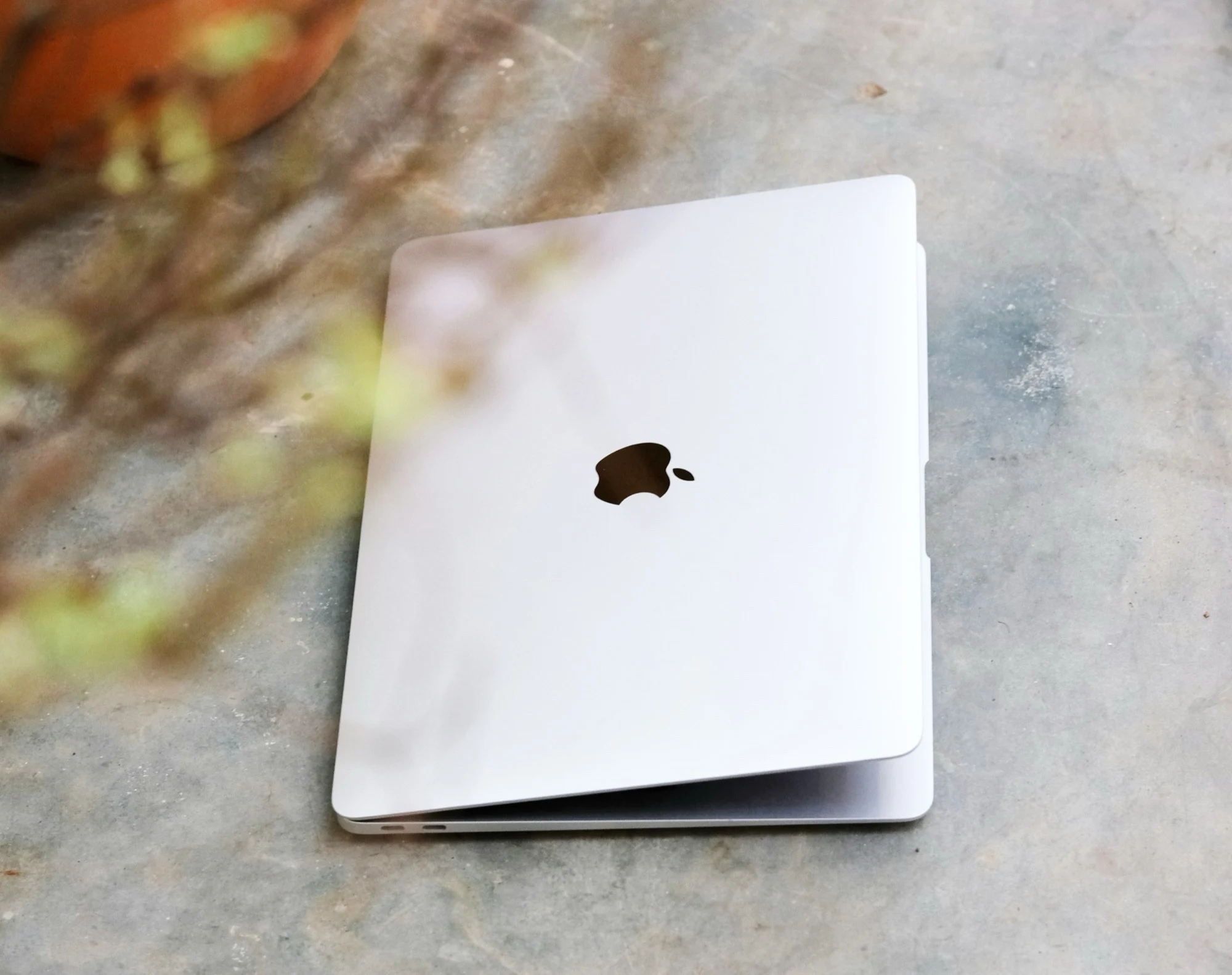
    Previous speculation has hinted that Apple is planning to unveil a more compact and, notably, a more budget-friendly laptop alongside the MacBook Air (starting at $799 on Amazon). Analysts from TrendForce have now validated these speculations, suggesting that this cost-effective MacBook is set to be released in the spring of 2026.

    Specifications and Display

    The analysts shared additional insights regarding the technical features, highlighting a 12.9-inch display. This would make the upcoming MacBook a bit smaller than the 13.6-inch MacBook Air. With thinner bezels, the laptop is expected to be about the width of a standard laptop keyboard. This dimension was previously established by the 12-inch MacBook from 2015, which was particularly attractive to travelers due to its lightweight design of only 2 lbs, and it included a 39.7Wh battery. However, its performance was notably limited owing to the slow dual-core Intel Core M processors.

    Performance Expectations

    The anticipated new model aims to rectify this limitation, as Apple is likely to equip it with the Apple A18 Pro, a chip that was earlier introduced in the iPhone 16 Pro. Geekbench 6 benchmarks suggest that the Apple A18 Pro outperforms the Intel Core i5-7Y54 by more than four times, the processor used in the last version of the 12-inch MacBook from 2017. Additionally, its multi-thread performance is nearly on par with the Apple M1. TrendForce believes that this 12.9-inch MacBook could assist Apple in capturing more market share, especially considering that laptop prices are predicted to rise by over 20% this year, largely due to a significant DRAM shortage.

    Source:
    Link



  • MacBook Air Saves Ukrainian Soldier from Shell Fragment Attack

    MacBook Air Saves Ukrainian Soldier from Shell Fragment Attack

    Key Takeaways

    1. A soldier from the AZOV brigade reported that his M1 MacBook Air survived a shell fragment hit, showcasing its unexpected resilience.
    2. Photos shared show a large hole in the MacBook, indicating the severity of the damage from the artillery fragment.
    3. Apple’s M1 MacBook Air is made from 100% recycled aluminum, which is claimed to provide better structural integrity than plastic.
    4. Although the screen was damaged, it remained partially functional, allowing the soldier to use it after the incident.
    5. Previous instances have shown that MacBooks can protect users in extreme situations, such as stopping bullets during violent events.


    A military member using the handle @lanevychs on X has shared a remarkable incident involving an Apple device that survived a shell fragment hit. This soldier, affiliated with the AZOV brigade of the National Guard of Ukraine, reported that his M1 MacBook Air managed to stop an artillery fragment.

    Evidence of Damage

    The post includes several photos, one of which clearly shows a large hole in the back of the MacBook where the fragment entered. However, the poster has not disclosed the details of how this incident occurred.

    Apple’s Material Choices

    Apple claims that the outer shell of this device is made from 100 percent recycled aluminium, covering the top and bottom cases as well as the structural frame. The use of aluminium alloys is said to provide better structural integrity than plastic materials, which lanevychs must be pretty pleased about.

    Screen and Functionality

    Unfortunately, the MacBook’s screen did not come through the incident without damage, as one of the photos indicates. Still, the display remained partially functional, and the video shows lanevychs scrolling through his posts on X, proving it still works.

    While Apple has never claimed its products can stop bullets, there have been instances where MacBooks have protected users. For instance, Steve Frappier, a survivor of the 2017 Fort Lauderdale shooting, attributed his survival to his university-issued MacBook Pro, which he says stopped a bullet.

    Our assessment of the Apple M1 MacBook Air 2020 highlighted its sturdy and high-quality unibody design, showcasing its durability.

    In the end, lanevychs on X has provided quite the story that highlights the unexpected resilience of tech in extreme situations.

    Source:
    Link


  • Orange Pi: Powerful SBC with 96GB RAM Outperforms Raspberry Pi 5

    Orange Pi: Powerful SBC with 96GB RAM Outperforms Raspberry Pi 5

    Key Takeaways

    1. The Orange Pi AI Station is a compact single-board computer (SBC) aimed at the DIY market for custom projects.
    2. It is powered by a Huawei Ascend 310 SoC with 10 AI cores, 16 CPU cores at 1.9 GHz, and 8 vector cores, offering an AI performance of 176 TOPS.
    3. The device runs on openEuler 22.03 and supports HDMI output with FHD resolution at 60 frames per second.
    4. Memory options include 48 or 96 GB of LPDDR4X RAM, with storage options up to 256GB eMMC, microSD cards, and PCIe SSDs.
    5. Connectivity features include two Gigabit Ethernet ports, built-in WiFi, and a 40-pin GPIO header for various controls; pricing and availability are not yet disclosed.


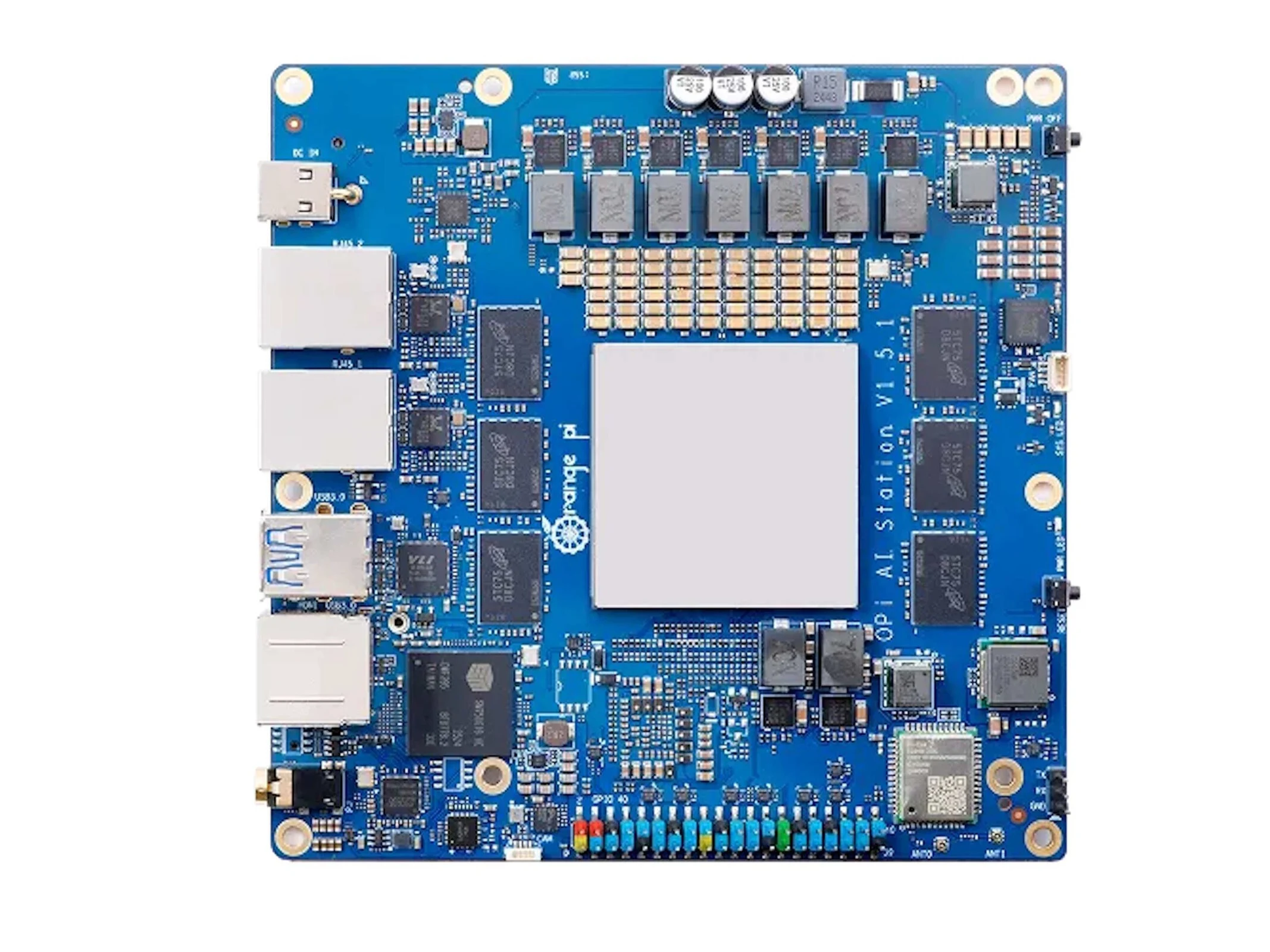
    The newly released Orange Pi AI Station is a compact single-board computer, which the maker refers to as a mini PC. In reality, it’s more of an SBC that serves as a base for creating a mini PC. This system is aimed at the DIY market and is designed for custom projects, meaning it might not be ready to go right out of the box. It runs on openEuler 22.03, and it features HDMI output capable of delivering FHD resolution at 60 frames per second.

    Powerful Hardware

    This fresh Orange Pi mini PC is powered by a Huawei Ascend 310 SoC, which includes an NPU boasting 10 AI cores, in addition to 16 CPU cores running at 1.9 GHz and 8 vector cores. The device claims an AI performance of 176 TOPS, indicating that it is tailored for applications requiring significant AI processing that can occur directly on the device. There are numerous potential applications, including real-time image analysis for crowd monitoring and swift identification of dangerous areas.

    Flexible Memory and Storage Options

    Depending on the setup, the LPDDR4X RAM comes in either 48 or 96 GB versions. This single-board computer can also accommodate up to 256GB of eMMC storage, plus microSD cards and a PCIe SSD. For connectivity, it includes two Gigabit Ethernet ports and built-in WiFi. An active fan can be added for cooling as well. Lastly, the Orange Pi SBC features a 40-pin GPIO header, which can be utilized for various controls like motors or alarms. Orange Pi has not yet disclosed the specific pricing or availability information.

  • LG Gram Pro AI Laptops Launch with Exaone 3.5 and Long Battery Life

    LG Gram Pro AI Laptops Launch with Exaone 3.5 and Long Battery Life

    Key Takeaways

    1. The LG Gram Pro AI 2026 features the Exaone 3.5 language model for AI tasks on-device and includes the My Archive function for improved local searches and AI replies.
    2. The 16-inch LG Gram Pro weighs only 1.199 kg, utilizing Aerominum material for lightweight design.
    3. The laptop offers impressive battery life, with a 77 Wh battery lasting up to 27 hours on a single charge and quick charging capabilities.
    4. LG plans to launch seven new Gram models, including the Gram Pro AI, Gram Pro 360 AI, and Grambook AI, on January 6 in South Korea.
    5. Previous models released in July 2025 feature Intel Core Ultra 7 processors and Nvidia RTX 5050 graphics, enhancing user experience through advanced technology.


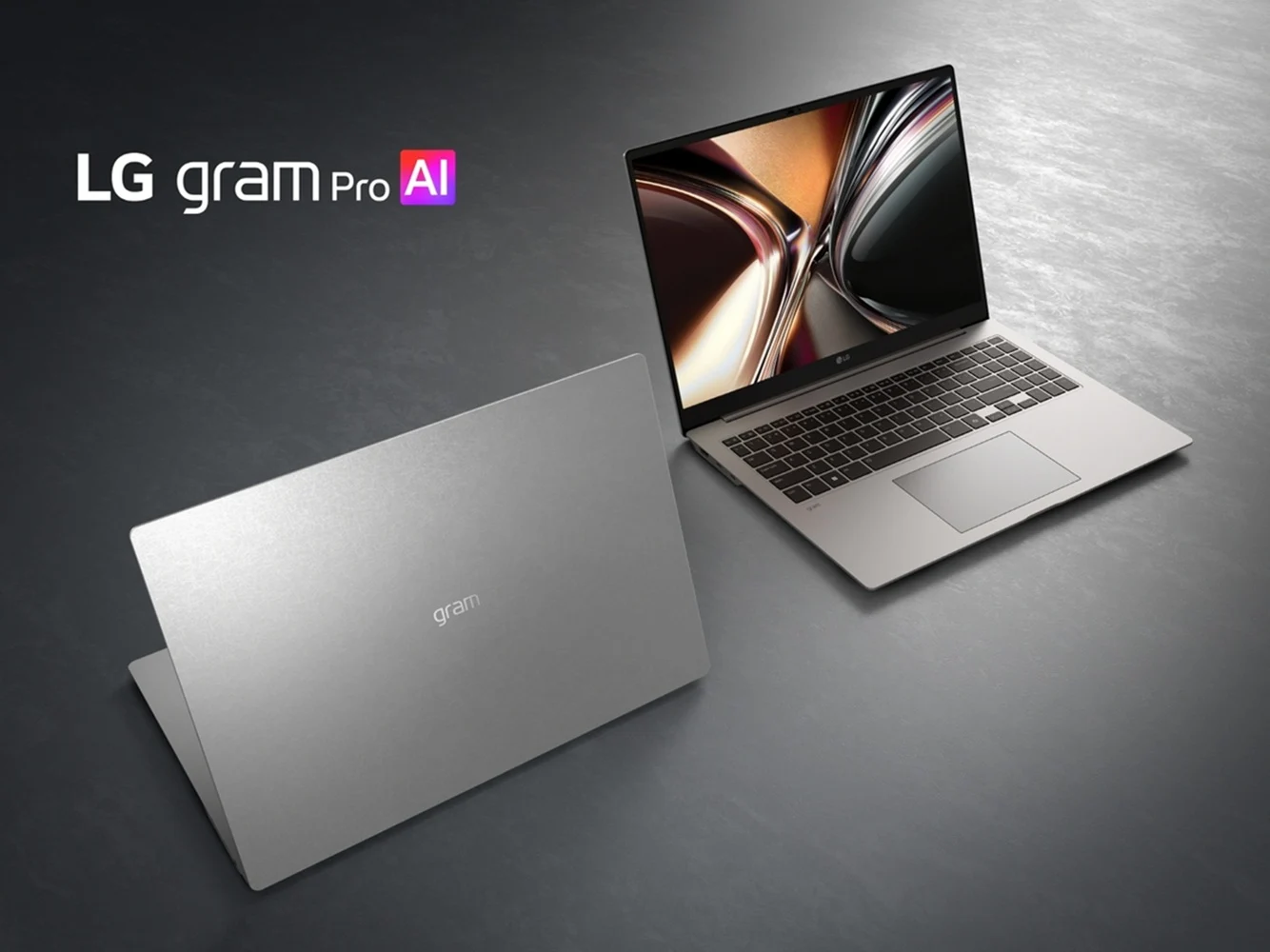
    The LG Gram Pro AI 2026 boasts the Exaone 3.5, a significant language model capable of executing AI tasks right on the device. It also features the My Archive function that saves data from the computer’s files to enhance local searches and generate AI-based replies.

    Lightweight Design

    The latest LG Gram laptops keep the series’ focus on being light, with the 16-inch version tipping the scales at just 1.199 kg, as per LG’s claims. The company mentions that the Gram Pro is made from a special material known as Aerominum, which is commonly used in aviation.

    Impressive Battery Life

    LG emphasizes the long battery life of its new laptops. The 16-inch edition is equipped with a 77 Wh battery, which can last up to 27 hours on a single charge. According to LG, just half an hour of charging can provide enough power for over nine hours of use.

    Upcoming Models

    On January 6, LG plans to launch seven different LG Gram models in South Korea, including the LG Gram Pro AI, the LG Gram Pro 360 AI, and the LG Grambook AI.

    Earlier, in July 2025, LG announced two models of the Gram Pro. The 16Z90TR and 17Z90TR both feature the Intel Core Ultra 7 series 2 255H processor, alongside a dedicated Nvidia RTX 5050 graphics card. Their weights are 1.3 kg and 1.4 kg, respectively.

    Source:
    Link


  • Spigen Classic C1 Transforms Mac Mini M4 with iMac G3 Style

    Spigen Classic C1 Transforms Mac Mini M4 with iMac G3 Style

    Key Takeaways

    1. The Apple Mac Mini M4 features a 10-core CPU and GPU, with 16GB of unified memory, making it a powerful minimalist desktop option.
    2. Spigen’s Classic C1 cover for the Mac Mini combines retro design inspired by the classic iMac G3 with practical protection against scratches and damage.
    3. The Classic C1 is available in two vibrant colors, Classic Bondi Blue and Tangerine Orange, capturing the nostalgic essence of Apple’s colorful past.
    4. Designed for airflow and maintenance, the C1 case includes slots, side grilles, and PVC dust filters, ensuring the Mac Mini remains clean and cool.
    5. Spigen has expanded its retro-inspired series to include cases for other Apple products, with the Classic C1 priced at $44.99 on their website and $32.99 on Amazon.


    Apple’s new Mac Mini is trending right now due to the renewed interest in mini PCs. The Apple Mac Mini M4 features a powerful 10-core CPU, a 10-core GPU, and a 16-core neural engine, alongside 16GB of unified memory. This makes it an excellent minimalist choice for your desktop. If you want to add a touch of vintage style to your setup reminiscent of Apple’s colorful past, you should definitely check out Spigen’s C1 Classic.

    A Touch of Retro

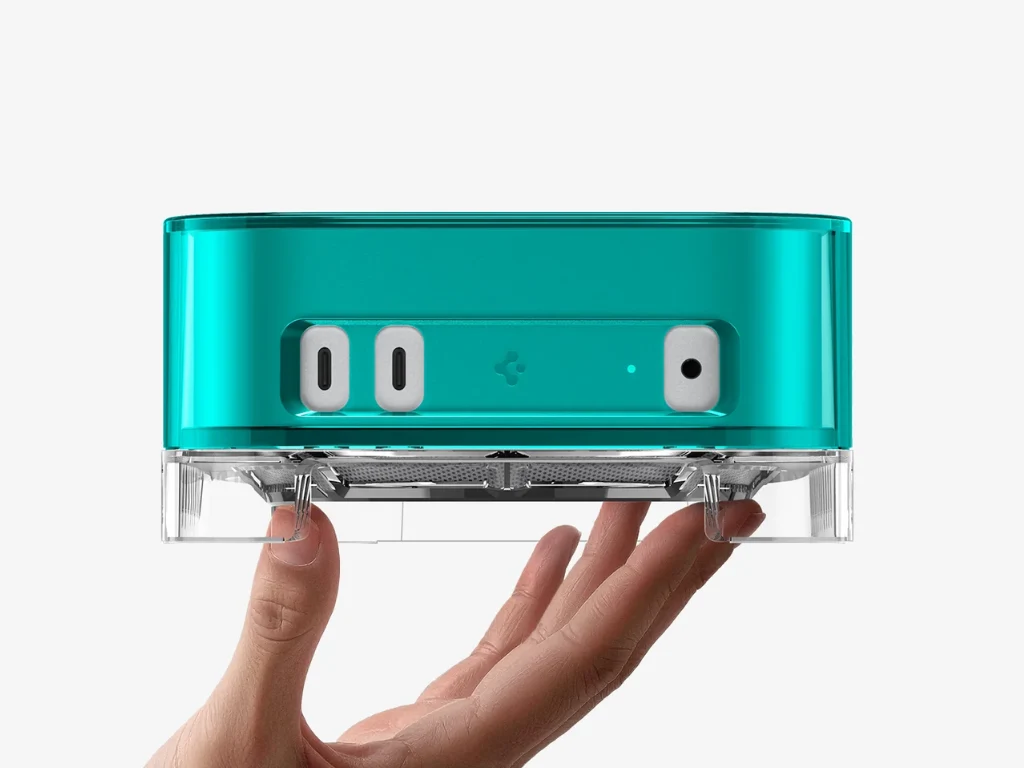
    Spigen’s Classic C1 is a smart translucent cover that fits your 2024 Mac Mini, capturing the nostalgic essence of Apple and honoring the classic iMac G3 from 1998. Additionally, it provides a protective layer to your Mac Mini, guarding against scratches or damage to its aluminum unibody.

    Inspired by the Past

    The new Classic C1 from Spigen is influenced by the colorful iMac series, particularly the iconic Bondi Blue shade. The Classic C1 case is available in two lively colors: Classic Bondi Blue and a cheerful Tangerine Orange.

    Function Meets Aesthetic

    Apart from its retro appeal, the C1 also serves a practical purpose. It’s crafted from PMMA, acrylic, and PVC, allowing for easy removal for cleaning and upkeep. Naturally, since the Mac Mini is quite a powerful device, it requires adequate airflow.

    Spigen took this into consideration when creating the Classic C1 case. They included precise slots and side grilles that bring to mind the Power Mac G4 Cube. Plus, it features a raised transparent base that enhances airflow from underneath. The C1 Classic also comes with PVC dust filters to keep the insides clean.

    The Classic C1 is specifically designed for the 2024 M4 and M4 Pro Mac Mini models. Putting on the case is as easy as snapping together LEGO pieces, and you’re good to go.

    More Than Just a Case

    This is merely the beginning of Spigen’s retro-inspired range for Apple accessories. They have introduced a wider C1 series of retro cases for AirPods, iPhones, and Apple Watches, perfect for those who want a charming retro theme that fits with their Apple products.

    The price of the Spigen Classic C1 case for the Mac Mini M4 is set at $44.99 on Spigen’s official website. However, you can find it on Amazon for $32.99, which is around 12 dollars less than the listed price on Spigen’s site, making it a more affordable and potentially quicker option for purchase.

    Source:
    Link


  • 15 AMD Ryzen 7 9800X3D CPUs Fail in Asus Motherboard PCs

    15 AMD Ryzen 7 9800X3D CPUs Fail in Asus Motherboard PCs

    Key Takeaways

    1. The AMD Ryzen 7 9800X3D, a top gaming CPU, has faced a notable failure rate, with 15 out of 150 CPUs failing in an internet cafe since March 2025.

    2. Most issues with the Ryzen 7 9800X3D have been linked to ASRock motherboards, though problems were reported on B650M-AYW WiFi MicroATX Asus motherboards as well.

    3. AMD recommends keeping systems updated to avoid problems, particularly those related to elevated voltage settings from Precision Boost Overdrive on certain motherboards.

    4. Overclocking does not appear to be a factor in the failures, as the affected systems had conservative memory speeds and PBO was not activated; however, unreliable power supplies may be a contributing factor.

    5. Community reactions are mixed, with some skeptics demanding evidence of the issues, while others acknowledge a trend of failing AMD CPUs, possibly reflecting AMD’s growing market share.


    RTX 5090 GPUs aren’t the only high-end parts that grab attention when they fail. The AMD Ryzen 7 9800X3D, often seen as the top gaming CPU, has faced its own share of problems. While BIOS updates have fixed most of these issues, there are still some processors that die earlier than expected. An owner of an internet cafe has reported a surprising failure rate, with 15 out of 150 CPUs failing since March 2025.

    Issues with Specific Motherboards

    Many troubling tales about the Ryzen 7 9800X3D involve ASRock motherboards, but that’s not the case here. A Reddit user named RealisticLoad3327 pointed out that all the computers were using the B650M-AYW WiFi. These MicroATX Asus motherboards were operating on a BIOS version released in September and designed specifically for the AM5 platform.

    AMD’s Recommendations

    Following the emergence of CPU issues after its November 2024 launch, AMD has emphasized keeping systems updated. They mentioned that most problems stemmed from dangerously elevated voltage settings. The Precision Boost Overdrive choices on ASRock motherboards were particularly problematic.

    Power Supply Concerns

    Interestingly, overclocking doesn’t seem to have contributed to the failures in the internet cafe’s setup. The owner stated that PBO wasn’t activated, and the DDR5 memory was running at conservative speeds. Given that there’s a bigger sample size than what most gamers could provide, it’s easy to blame the 9800X3D. However, an unreliable power supply might also be a culprit. RealisticLoad3327 noted that the PCs were using Huntkey 850-watt PSUs, which are known for being susceptible to voltage spikes and may not suit high-performance processors well.

    Community Reactions

    Some people are skeptical and want evidence that the entire situation isn’t made up. Others in the community think that either the Asus motherboard, the PSU, or inconsistent power supply at the cafe could explain the issues. Still, a Redditor named cCBearTime, who runs a repair shop, confirmed that they have seen an unusually high number of failing AMD CPUs. On the flip side, this trend may also reflect how much market share AMD has gained from Intel.

    Source:
    Link


  • New Anker Docking Station with Removable Hub Launches in Europe

    New Anker Docking Station with Removable Hub Launches in Europe

    Key Takeaways

    1. The Anker Nano Docking Station is a 13-in-1 device designed to organize workspaces effectively.
    2. It features a 100W USB-C port, two HDMI ports, and a DisplayPort, supporting up to three displays at 4K@60Hz resolution.
    3. A removable USB-C Hub is available separately, providing additional connectivity options and data transfer capabilities.
    4. The docking station is currently available in Germany for €139.99, with limited stock on Amazon.
    5. MacOS users will see the same content on all external displays, while Windows users can utilize multiple different displays.


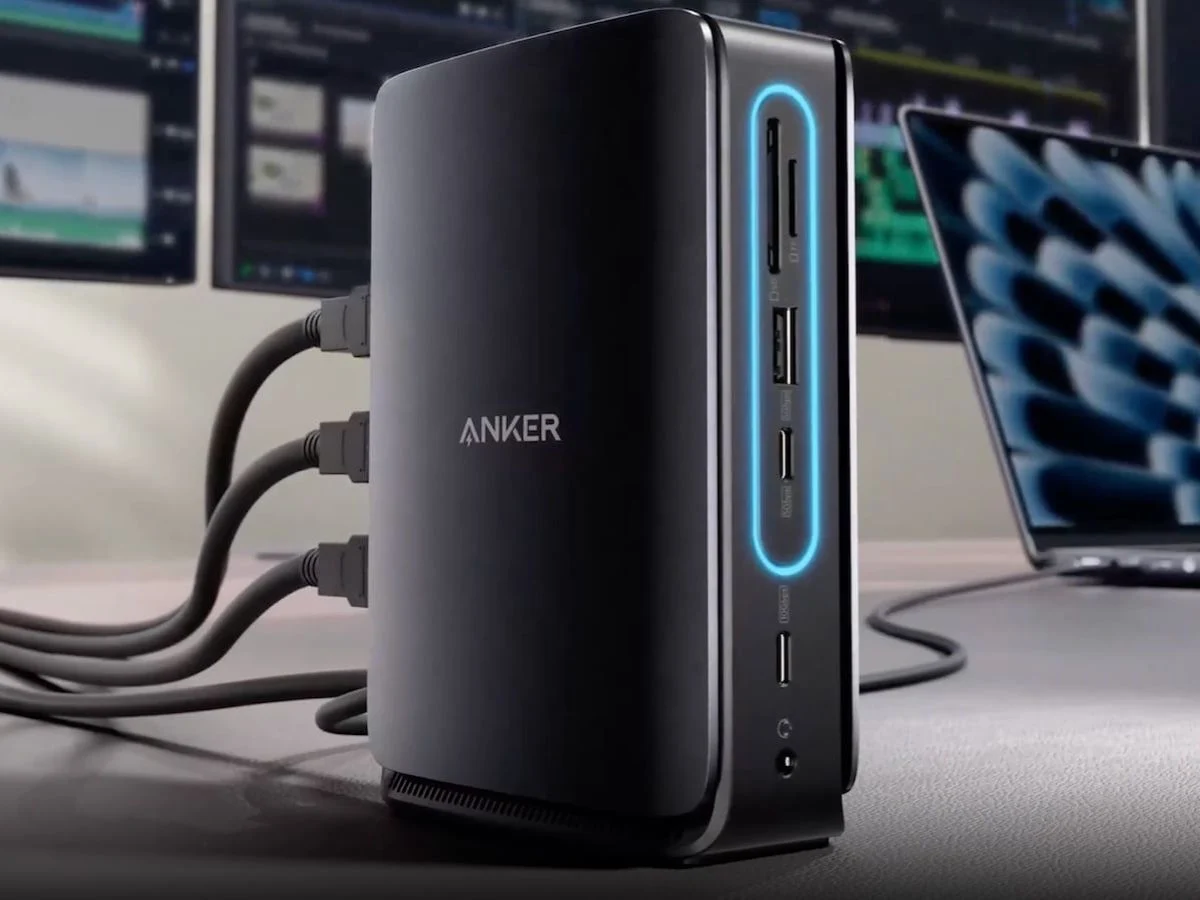
    The Anker Nano Docking Station (13-in-1, Triple Display, Built-In Removable Hub) has just hit the market in one European nation. It was already accessible in the US, and this gadget aims to enhance the organization of your workspace.

    Key Features

    The Anker Nano Docking Station features a 100W USB-C upstream port to connect with the host device, offering a data transfer speed of 10 Gbps. You can connect devices through the 7.5 W USB-C port (10 Gbps) and two USB-A ports (2.5W at 480 Mbps). Additionally, it includes a Gigabit Ethernet port, an audio jack, and a power input of 140W. You can link up to three displays using the two HDMI ports and a DisplayPort, all supporting up to 4K@60Hz resolution. MacOS users should keep in mind that all external screens will show the same content, whereas Windows users can have different displays on each monitor.

    Additional Accessory

    A standout aspect of the Anker Nano Docking Station is its removable USB-C Hub, which is sold separately. This compact device includes 7.5W USB-C and 4.5W USB-A ports, both capable of 5 Gbps data transfer, along with slots for SD and TF cards. It also has a 4K@60Hz HDMI port, a 100W USB-C input, and an 85W USB-C output for upstream connections.

    You can now purchase the Anker Nano Docking Station (13-in-1, Triple Display, Built-In Removable Hub) at the Anker Store in Germany for €139.99. It’s also available on the brand’s Amazon page, though it’s important to note that the product page indicates limited availability, with fewer than 10 units in stock. It remains unclear when this product will be launched in other European nations like the UK, the Netherlands, and France.

    Source:
    Link


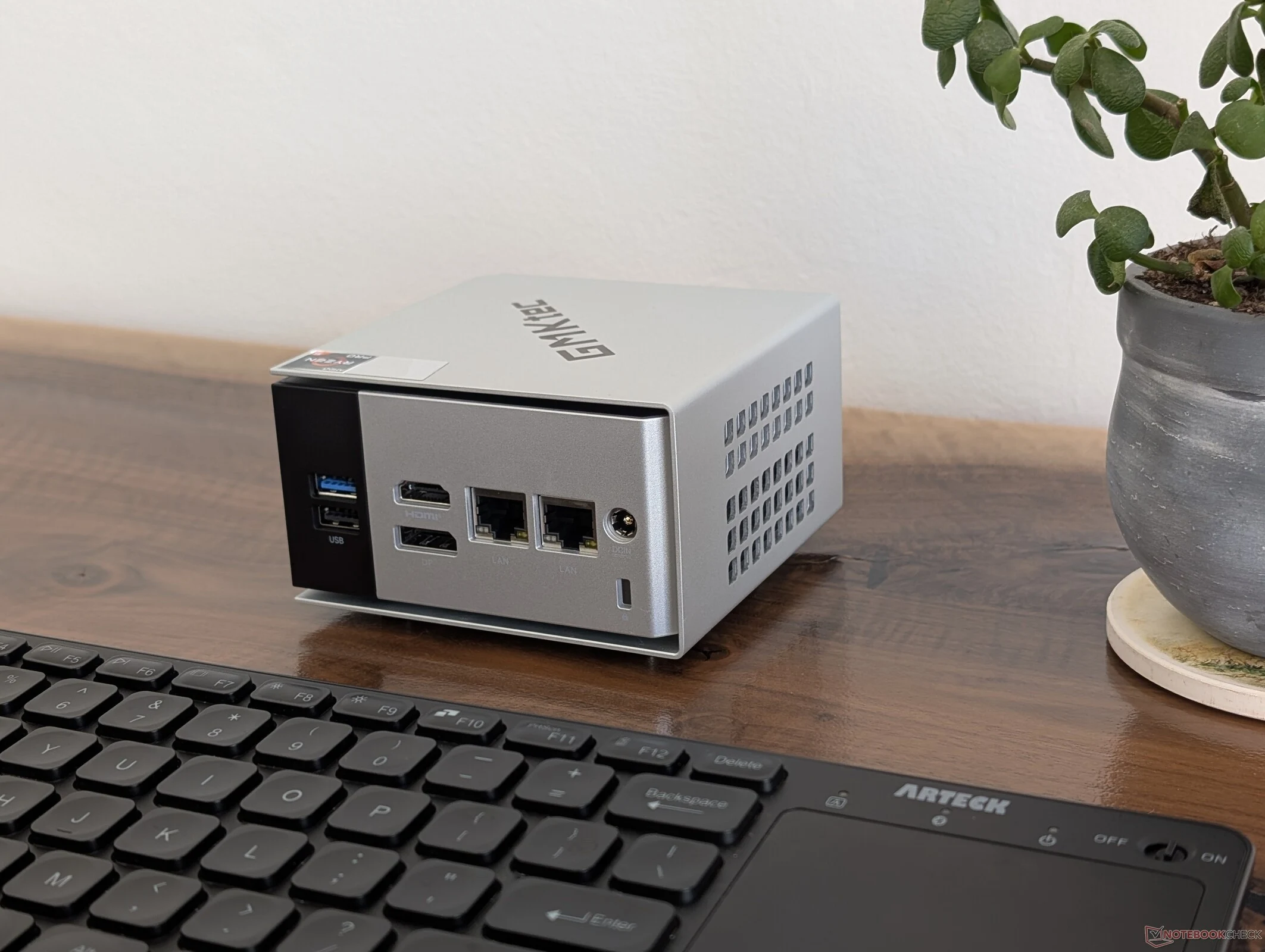
  • GMKtec NucBox M8: New Mini PC with AMD Zen 3+ Processor

    GMKtec NucBox M8: New Mini PC with AMD Zen 3+ Processor

    Key Takeaways

    1. The GMK NucBox M8 is priced starting at $360, featuring 16 GB of RAM and a 512 GB SSD.
    2. It uses a Ryzen 5 Pro 6650H CPU, which helps keep costs lower compared to other mini PCs.
    3. The design is modern and sleek, similar to the GMK EVO-X1 series, despite the CPU being nearly four years old.
    4. The M8 performs well in multi-thread tasks, making it suitable for typical office or retail uses.
    5. Limitations exist in watt performance and graphics capabilities, making it unsuitable for 3D rendering or AI tasks.


    The GMK NucBox M8 is now available for purchase, with prices starting at $360 for the configuration that includes 16 GB of RAM and a 512 GB SSD. Its Ryzen 5 Pro 6650H CPU helps keep costs down, in stark contrast to many other mini PCs which are seeing their prices soar toward four-digit figures.

    Design Choices

    Even though the CPU is close to four years old, the M8 still presents a sleek and modern appearance, thanks to its chassis design that matches the newer GMK EVO-X1 series. Basically, the company replaced the costly Ryzen AI 9 Zen 5 CPU found in the EVO-X1 with the more budget-friendly Zen 3+ Ryzen 5 CPU to attract a broader audience that might not require such high performance. In our assessment of the M8, we found that this mini PC actually outshines the MSI Cubi NUC AI+, which uses the newer Lunar Lake-V CPU, when it comes to multi-thread performance. Therefore, for typical office or retail uses, the M8 is “fast enough,” particularly at this price point.

    Performance Limitations

    However, there are some limitations with this system due to the older CPU. Both watt performance and graphics capabilities lag behind more recent processors, meaning the M8 lacks efficiency compared to some other mini PCs, even if its multi-thread performance is quite good. If you’re looking to use the device for any sort of 3D rendering or AI tasks, the M8 might not meet your requirements.


  • “4TB DDR5 RAM Kit for AI Servers Launches at $77,000”

    “4TB DDR5 RAM Kit for AI Servers Launches at $77,000”

    Key Takeaways

    1. Nemix launched a 4TB DDR5 RAM kit priced around $70,800 to $76,999, targeting high-end users.
    2. The kit includes 16 x 256GB ECC RDIMMs operating at 6400 MT/s with a CAS latency of 52.
    3. The high price is due to the memory density, server-grade features, and the current market conditions for RAM.
    4. This RAM kit is not suitable for gamers, as consumer-grade motherboards typically support fewer RAM sticks.
    5. Growing demand for specialized memory is driven by AI data centers and enterprise needs, despite tightening DRAM supply.


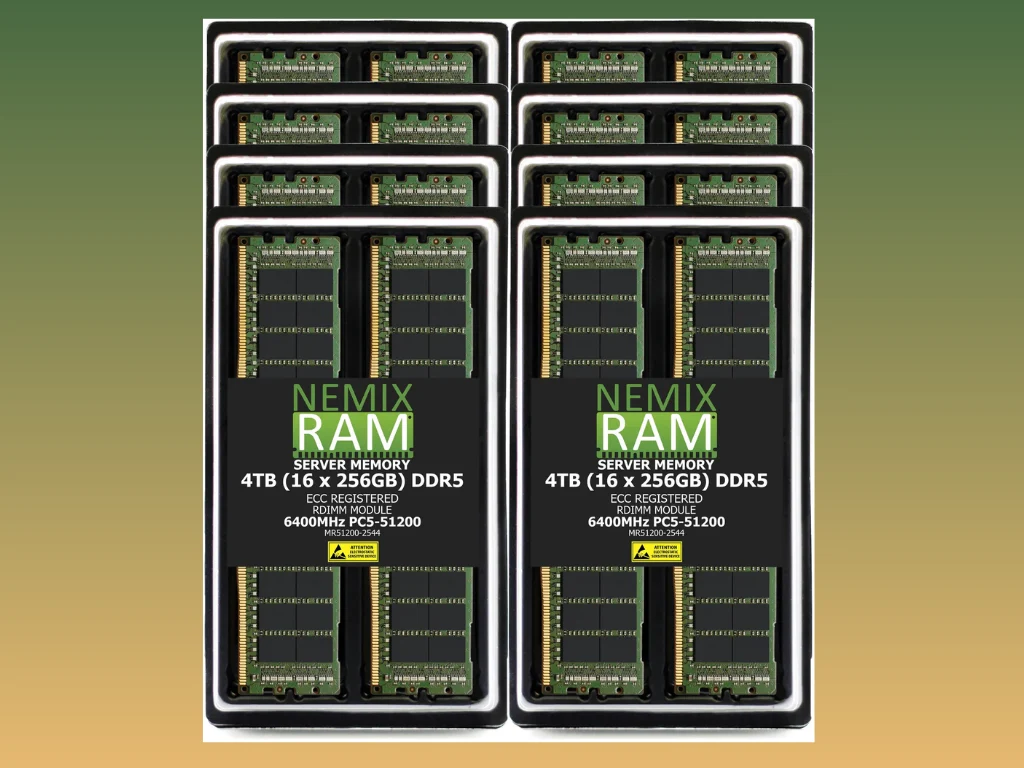
    While many gamers likely won’t be using ultra-high-capacity memory any time soon due to the current costs, a new RAM kit has emerged in the market. However, this isn’t exactly a budget-friendly option. This latest DDR5 RAM kit is from NEMIX, an American company that focuses on memory and storage solutions for government agencies and big tech companies. They have revealed an impressive 4 TB DDR5 memory kit that includes 16 individual 256GB ECC RDIMMs, with a staggering price tag of $76,999.

    Kit Specifications

    The 4TB DDR5 RAM kit from Nemix features modules that operate at a high speed of 6400 MT/s and have a CAS latency of 52. The starting price is approximately $70,800, though some listings have inflated the cost to $76,999.99.

    This positions Nemix’s RAM kit firmly within the reach of serious AI data centers, government initiatives, hyperscale data centers, and high-end workstation users who require top-notch bandwidth and performance without compromises.

    Why the High Price?

    Following the recent price hikes in RAM and storage, one might wonder why this kit is so pricey. The answer lies in the combination of the high density of the memory chips used and the significant amount of memory involved, along with features like ECC that make them fit for server-grade applications. These RAM kits come in various configurations, from 1Rx8 to 4Rx4, ensuring stable performance even under heavy loads.

    To give some context, these RAM kits are priced around $17–$18 per GB, which is nearly double the cost of consumer-grade DRAM, which can still be found for under $10/GB for similar memory modules, despite worsening supply conditions.

    Not for Gamers

    Naturally, Nemix’s 4TB DDR5 RDIMMs aren’t designed for gaming enthusiasts due to their relatively high CAS latency. Even if someone could afford them, no consumer-grade motherboard supports 16 RAM sticks, as most PCs typically have a limit of 4. For additional context, workstation-class PCs equipped with Threadripper CPUs can accommodate up to 8 DIMM slots. With multiple RAM kits appearing to be unavailable on their website, it seems that AI data centers, enterprise users, and hyperscalers are quickly purchasing these kits, even as DRAM supply becomes tighter.

    This highlights the growing demand for specialized memory to fulfill the ever-expanding requirements of data-heavy computations, even at a hefty price of almost $77,000 per kit.

    Source:
    Link


  • Anker Launches New 6-in-1 Compact Nano USB-C Hub at 5Gbps

    Anker Launches New 6-in-1 Compact Nano USB-C Hub at 5Gbps

    Key Takeaways

    1. The Anker Nano USB-C Hub (6-in-1, 5Gbps) is now available for purchase in the UK for £29.99.
    2. It features six ports, including USB-C and USB-A ports with 5 Gbps data transfer speeds.
    3. The hub has SD and TF card slots with a UHS-1 speed of 104 Mb/s.
    4. It includes a USB-C upstream port that provides up to 85W power and a data transfer rate of 10 Gbps.
    5. The HDMI port supports resolutions up to 4K@60Hz, and the device is compact and lightweight.


    A new accessory from Anker, the Nano USB-C Hub (6-in-1, 5Gbps), is now available for purchase in the UK. This small device seems to be the same removable hub that comes with the larger Anker Nano Docking Station (13-in-1, Triple Display, Built-In Removable Hub), which is currently priced at $149.99 on the Anker Store.

    Features and Ports

    The Anker Nano USB-C Hub, known by the model number A83C3, includes six ports in total. On one of the longer sides, you will find a 7.5W USB-C port and a 4.5W USB-A port, both capable of data transfer speeds up to 5 Gbps. Alongside these ports are SD and TF 3.0 card slots, which have a UHS-1 speed of 104 Mb/s. On the other edge, there is a USB-C upstream port that can provide up to 85W to power the host device, along with a data transfer rate of 10 Gbps.

    Additional Ports and Specifications

    Located on one of the shorter edges are the last two ports. The first one is a 100W USB-C PD input, while the other is an HDMI port that can support resolutions up to 4K@60Hz. This accessory is compact, measuring 41.9 x 80.0 x 11.9 mm (approximately 1.6 x 3.1 x 0.5 inches) and weighs 36.1 g (around 1.3 oz), featuring a sleek dark metallic gray finish.

    In the UK, you can currently get the Anker Nano USB-C Hub (6-in-1, 5Gbps) from the brand’s Amazon store for £29.99. It remains unclear when this accessory will be available in other parts of Europe or in markets like North America.

    Anker via Amazon

    Source:
    Link