Category: Computers

  • HP OmniBook 14 Ultra: Compact Laptop with 1000 Nit OLED & 64GB RAM

    HP OmniBook 14 Ultra: Compact Laptop with 1000 Nit OLED & 64GB RAM

    Key Takeaways

    – HP has updated the OmniBook 14 Ultra, now featuring Intel and Qualcomm processors instead of AMD.
    – Processor options include Intel’s “Next Gen AI Processors” and various Snapdragon models.
    – The laptop includes a 70 Wh battery, a 2.8K OLED display with a 120 Hz refresh rate, and Wi-Fi 7 support.
    – Storage can be configured up to 2 TB of PCIe NVMe, with RAM options reaching 64 GB.
    – Design choices include different colors for Intel (Eclipse Grey, Silk Sand) and Qualcomm (Stone Blue) models, but pricing and availability are still unknown.


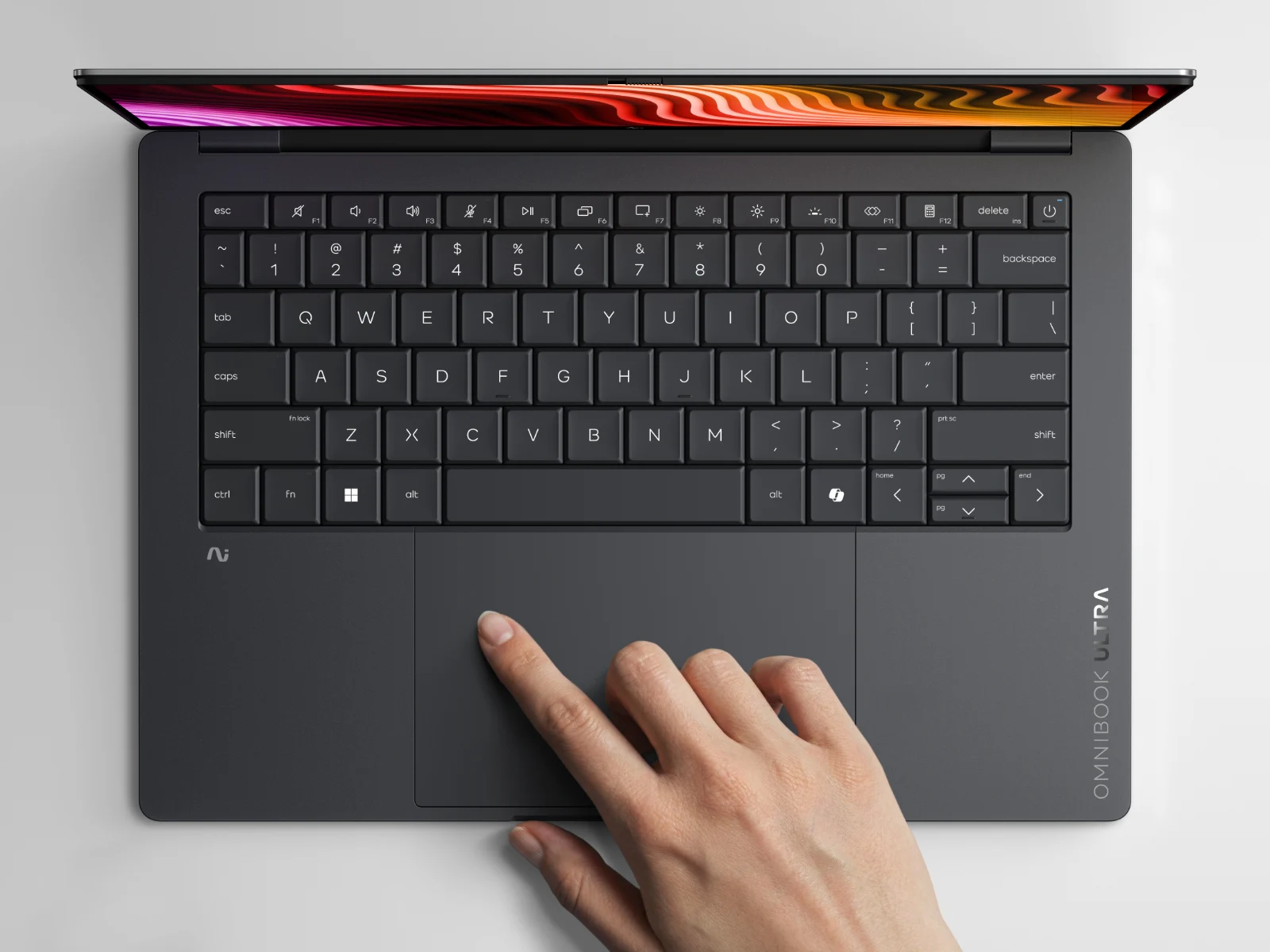
    HP has refreshed the OmniBook 14 Ultra during its CES 2026 presentation. Last year, the company presented a similar 14-inch laptop equipped with AMD Strix Point APUs, such as the Ryzen AI 9 365 and Ryzen AI 9 HX 375, priced at $1,449 on Amazon. This year, however, HP has shifted its focus to Intel and Qualcomm solutions, allowing for up to 64 GB of LPDDR5X RAM.

    Processor Options

    Currently, HP only refers to “Intel’s Next Gen AI Processors.” Many think these will be Panther Lake options, possibly the Core Ultra 5 338H or Core Ultra X7 356H. On the other hand, buyers can also choose Snapdragon X2 Plus (X2P-64-100), X2 Elite (X2E-84-100), and X2 Elite (X2E-90-100) processors for the OmniBook Ultra 14.

    Display and Battery Features

    No matter which processor you select, HP provides a 70 Wh battery supported by 65 W charging, together with a 2.8K OLED display featuring a 120 Hz variable refresh rate and a 16:10 aspect ratio. It also offers brightness levels of 500 nits SDR and 1,000 nits HDR peak. Additionally, all models of the OmniBook Ultra 14 come with three USB Type-C ports, a 3.5 mm audio jack, Wi-Fi 7 support, and a haptic trackpad that allows for gestures to control brightness and volume.

    Storage and Design Choices

    Furthermore, the OmniBook Ultra 14 can be configured with up to 2 TB of PCIe NVMe storage. In Qualcomm models, this is paired with 9,522 MT/s RAM, while Intel models feature 8,533 MT/s RAM that can increase to 9,600 MT/s for 64 GB versions. Both Intel and Qualcomm versions have identical hardware inside their 1.27 kg chassis, but HP sets them apart with Eclipse Grey and Silk Sand colors for Intel models and a Stone Blue finish for Qualcomm models. Sadly, HP has yet to reveal any details on pricing or availability.

    Source:
    Link


  • Qualcomm Snapdragon X2 Plus SoCs for Windows Laptops: 10 Cores, 35% Boost

    Qualcomm Snapdragon X2 Plus SoCs for Windows Laptops: 10 Cores, 35% Boost

    Key Takeaways

    1. Qualcomm introduced the Snapdragon X2 Elite and X2 Elite Extreme ARM SoCs for Windows laptops in September 2025, featuring third-generation Oryon CPUs and a powerful Adreno X2-85/90 iGPU.

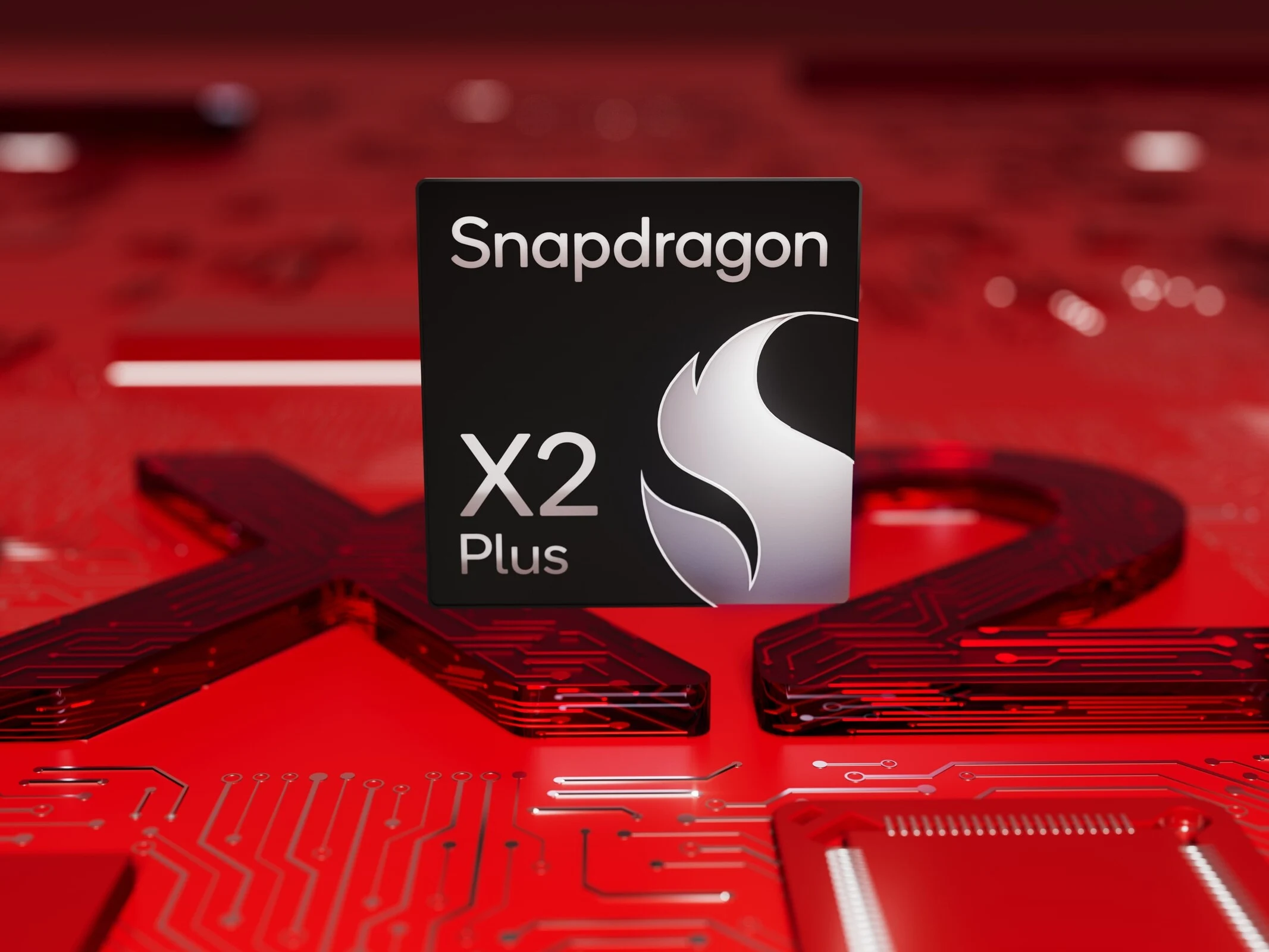
    2. The Snapdragon X2 Plus series, revealed at CES 2026, includes 6-core and 10-core variants with varying CPU and iGPU performance while maintaining the same architecture as the X2 Elite models.

    3. Both Snapdragon X2 Plus models support up to 128 GB of LPDDR5x memory, Wi-Fi 7, Bluetooth 5.4, and can drive three 4K/144 Hz displays simultaneously.

    4. Qualcomm claims significant performance improvements for the Snapdragon X2 Plus, including 35% better single-core and 17% better multi-core performance compared to its predecessor.

    5. The Snapdragon X2 Plus is positioned to compete strongly against AMD and Intel CPUs, offering greater performance and power efficiency, with laptops expected to launch in the first half of 2026.


    Qualcomm recently unveiled the new Snapdragon X2 Elite and X2 Elite Extreme ARM SoCs designed for Windows laptops in September 2025. These advanced systems-on-chip (SoCs) include third-generation Oryon CPUs, an impressive Adreno X2-85/90 integrated GPU (iGPU), and a new Hexagon NPU that delivers 80 TOPS of performance. As anticipated, Qualcomm also plans to release several Snapdragon X2 variants suitable for lightweight Windows laptops that require less power.

    New Snapdragon X2 Plus SoCs at CES 2026

    During CES 2026, Qualcomm revealed the 6-core Snapdragon X2 Plus X2P-42-100 and the 10-core Snapdragon X2 Plus X2P-64-100 SoCs. While these chips share the same architecture as the Snapdragon X2 Elite and X2 Elite Extreme, they feature less powerful CPUs and less robust iGPUs.

    CPU Specifications

    In terms of CPU, the Snapdragon X2 Plus X2P-42-100 comes with 6 Nuvia cores, while the X2P-64-100 has 10 cores. The stronger 10-core Snapdragon X2 Plus includes 6 Prime Cores and 6 Performance cores, whereas the 6-core variant only has 6 Prime Cores. Both models offer a maximum single-core clock speed of 4.04 GHz for the Prime Cores, with a reported maximum multi-core frequency of 4 GHz. The total cache sizes are 34 MB for the 10-core and 22 MB for the 6-core Snapdragon X2 Plus.

    iGPU Performance

    Regarding the iGPU, both Snapdragon X2 Plus models are equipped with the X2-45 Adreno iGPU. The 10-core X2P-64-100 is clocked at a higher 1.7 GHz, while the 6-core X2P-42-100 operates at 0.9 GHz. Similar to its larger counterpart, the Adreno X2-45 supports DirectX 12.2 Ultimate, Vulkan 1.4, and OpenCL 3.0.

    Memory and Connectivity

    In terms of memory, both Snapdragon X2 Plus variants can support up to 128 GB of LPDDR5x-9523, featuring a 128-bit wide bus and 152 GB/s memory bandwidth. Additional specifications include connectivity options such as Wi-Fi 7 and Bluetooth 5.4, support for up to three Type-C ports, and the capability to drive three 4K/144 Hz displays at the same time.

    Qualcomm emphasized the performance of the Snapdragon X2 Elite and X2 Elite Extreme back in September 2025, and they are doing the same for the Snapdragon X2 Plus SoCs. If the first-party performance metrics are correct, the Snapdragon X2 Plus could pose a significant challenge to the Intel Panther Lake CPUs.

    Performance Claims

    According to Qualcomm, the 10-core Snapdragon X2 Plus X2P-64-100 achieves a 35% improvement in single-core performance and a 17% increase in multi-core performance compared to the 10-core Snapdragon X Plus, based on Geekbench 6.5 results. The Adreno X2-45 iGPU is said to be 29% faster than its predecessor in the 3DMark Steel Nomad Light benchmark. For the NPU, Qualcomm claims a remarkable 78% generational performance boost.

    The 6-core Snapdragon X2 Plus reportedly has the same single-core performance gains as its 10-core counterpart, while it enjoys a 10% improvement in multi-core performance and a significant 39% enhancement in GPU performance over the Snapdragon X Plus.

    Competitive Edge Over AMD and Intel

    Qualcomm is also highlighting considerable advantages over similarly positioned AMD and Intel CPUs. For example, the company asserts that the 10-core Snapdragon X2 Plus is approximately 3.5 times faster than the Core Ultra 7 265U in Geekbench 6.5 at “ISO power” and offers 28% superior peak single-core performance. Additionally, the Snapdragon X2 Plus X2P-64-100 is more power-efficient, requiring 4.6 times less power than the Core Ultra 7 265U to reach its peak performance.

    In terms of multi-core performance, Qualcomm boasts an astonishing 50% greater multi-core peak performance compared to the Intel Core Ultra 7 265U.

    Upcoming Availability

    Laptops equipped with the latest Qualcomm Snapdragon X2 Plus SoCs are anticipated to appear in stores in the first half of 2026. Therefore, we expect to see a variety of Snapdragon-based Windows laptops showcased at CES 2026.

    Source:
    Link



  • HP Chromebook Plus 14 and x360 14 Launch with 2K Display and Intel N355

    HP Chromebook Plus 14 and x360 14 Launch with 2K Display and Intel N355

    Key Takeaways

    1. The HP Chromebook Plus 14 and HP Chromebook Plus x360 14 feature improved specifications over standard models, with both having a 14-inch IPS display at 1920 × 1200 resolution and 300 nits brightness.
    2. Both models are powered by an Intel Core 3 N355 processor and come with 8GB LPDDR5 RAM, with storage options ranging from 128GB UFS to 512GB PCIe NVMe M.2 SSD.
    3. They include a 1080p webcam with noise reduction, dual-array microphones, a privacy shutter, and a mute key for enhanced security.
    4. Connectivity options include Wi-Fi 6/Wi-Fi 6E, Bluetooth 5.4/5.3, USB-A, and varying USB-C ports, along with fast charging capabilities allowing 50% battery in 45 minutes.
    5. The Chromebook Plus models will be available on HP’s website starting in February, with no announced pricing, and will include a one-year subscription to Google AI Pro.


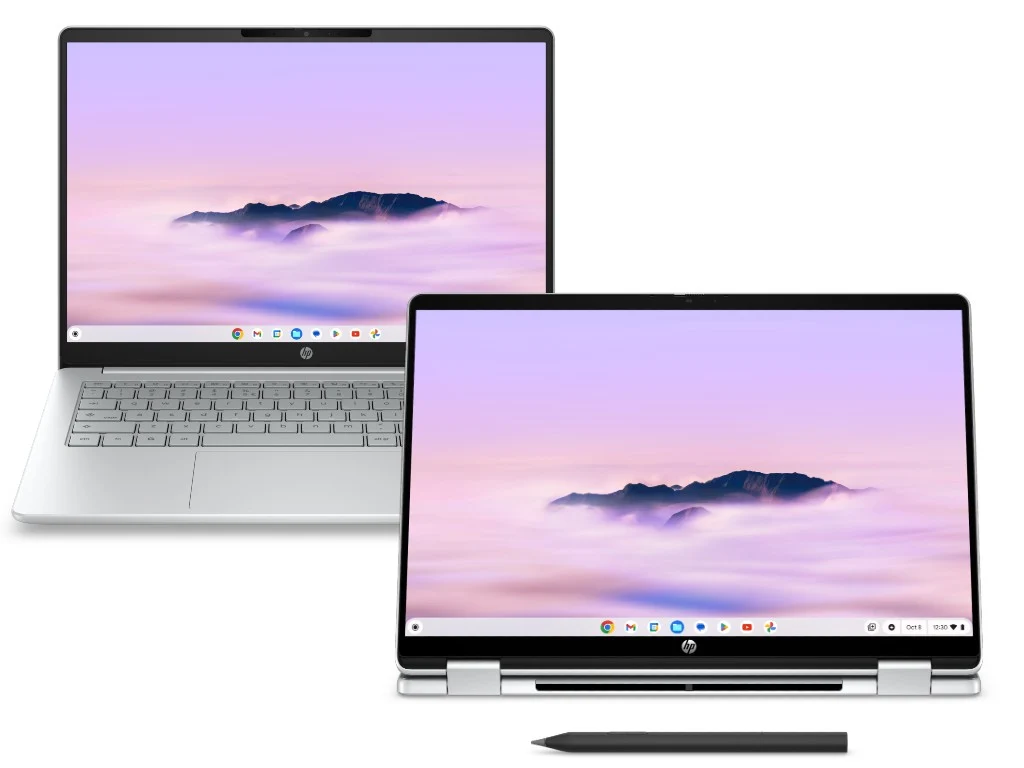
    If you’re not interested in the latest HP Chromebook 14 and HP Chromebook x360 14, you might want to consider the 2026 HP Chromebook Plus 14 and HP Chromebook Plus x360 14. These models boast improved specifications compared to their standard counterparts.

    Specs Overview

    Both the HP Chromebook Plus 14 and HP Chromebook Plus x360 14 come with comparable specifications, with the x360 model being a versatile 2-in-1 device. Each features a 14-inch IPS display with a resolution of 1920 × 1200 and a brightness of 300 nits. The Chromebook Plus 14 offers a touchscreen option, while the Chromebook Plus x360 14 includes a variant with edge-to-edge glass that supports multitouch, as well as another model designed to reduce glare.

    Performance Features

    These new Chromebook Plus devices are equipped with an Intel Core 3 N355 processor. Since they are part of the Plus lineup, both models come with 8GB LPDDR5 RAM. For storage, options start at 128GB UFS and can go up to 512GB PCIe NVMe M.2 SSD. Each model includes a 1080p webcam with temporal noise reduction and dual-array digital microphones. Additionally, there’s a privacy shutter for the camera and a key to mute the microphone for added security.

    Connectivity and Battery Life

    When it comes to connectivity, both the Chromebook Plus 14 and the Chromebook Plus x360 14 support Wi-Fi 6/Wi-Fi 6E and Bluetooth 5.4/Bluetooth 5.3. They also feature a USB-A port and an audio jack. The Chromebook Plus 14 has a single USB-C port, while the Chromebook Plus x360 14 has two USB-C ports that support USB Power Delivery 3.1, DisplayPort 1.4, and HP Sleep and Charge. Both models are powered by a 3-cell 41Wh battery and can utilize an optional 45W Type-C GaN charger, with fast charging capabilities that allow them to reach 50% battery in just 45 minutes.

    Availability and Pricing

    Like the earlier models, HP has not yet announced the pricing for the Chromebook Plus 14 and Chromebook Plus x360 14. However, these devices are set to be available on HP’s website starting in February, and they will come in Glacier Silver and Meteor Silver. Buyers of the Chromebook Plus 14 duo will also receive a one-year subscription to Google AI Pro.

  • Khadas Unveils World’s Smallest Modular Mini PC with eGPU Dock

    Khadas Unveils World’s Smallest Modular Mini PC with eGPU Dock

    Key Takeaways

    1. Mind Pro Mini-PC: A compact mini-PC with a modular design, Intel processors, up to 64 GB LPDDR5x RAM, and 2 TB NVMe SSD support, with multiple connectivity options.

    2. Mind Graphics 2 Dock: A docking solution featuring an RTX 5060 Ti with 16 GB GDDR7 memory, multiple HDMI and USB ports, a memory card reader, and high-speed Ethernet.

    3. Mind xPlay Display: A versatile display device with 2880 x 1920 resolution, 500 cd/m² brightness, and 60 Hz refresh rate, functioning as both a notebook screen and external display.

    4. High Connectivity: The Mind Pro offers extensive connectivity with two Thunderbolt 4 ports, HDMI, and expansion modules via four PCIe 4.0 lanes.

    5. Pre-order Availability: The Khadas Mind products are expected to be available for pre-order starting January 9, 2026.


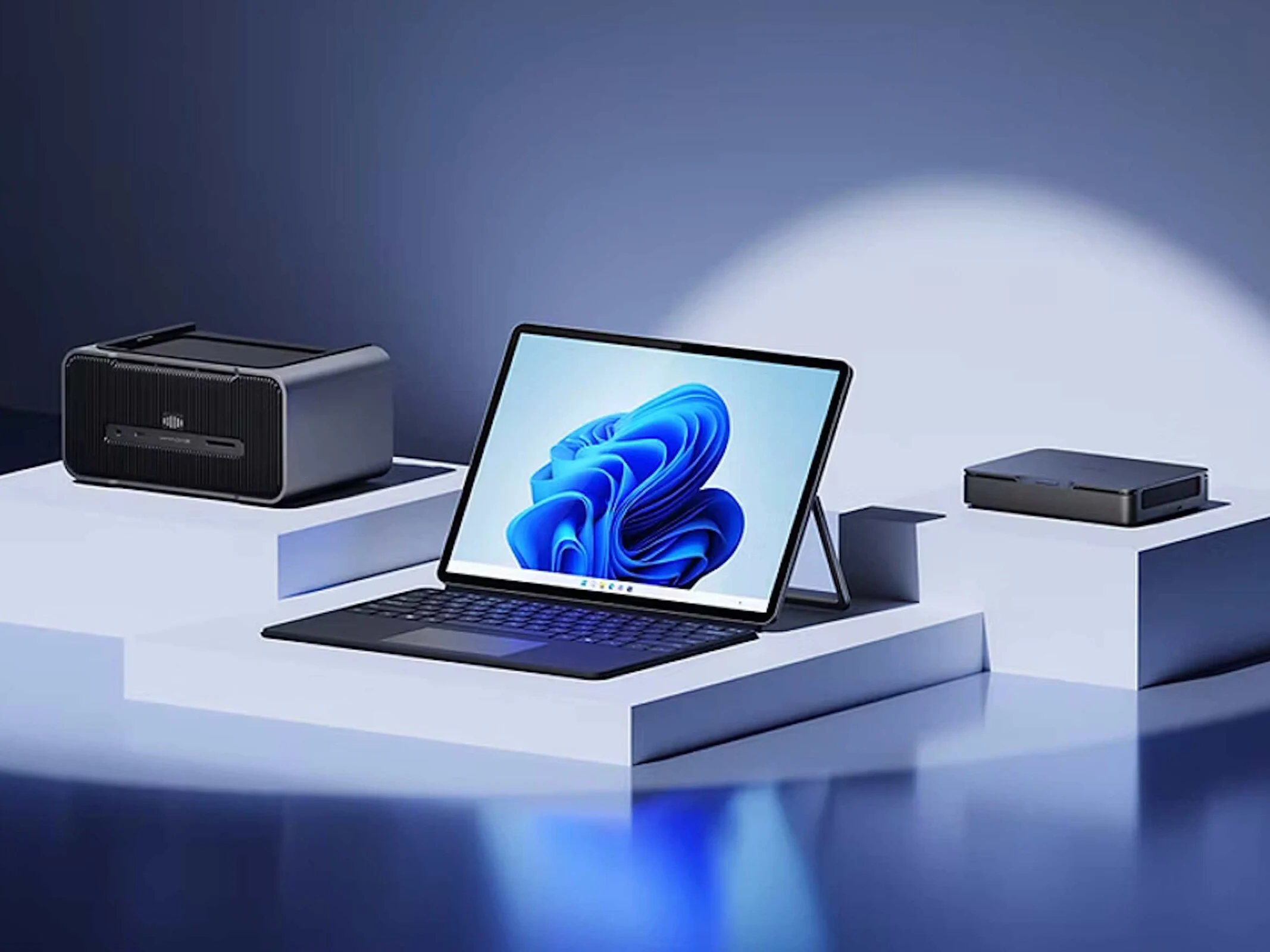
    Khadas is presenting a range of products at CES 2026. The first item is the Mind Pro, a mini-PC that has a modular design and features the newest (though not specified) processors from Intel. It can function either with a dedicated graphics card or as a portable notebook. This model is remarkably compact, with a volume of just 0.43 liters. It can accommodate up to 64 GB of LPDDR5x RAM and supports an NVMe SSD with a storage capacity of up to 2 TB. Users can connect video output through two Thunderbolt 4 ports and HDMI. Additionally, high-bandwidth expansion modules can be attached via four PCIe 4.0 lanes.

    New Docking Solution

    Among the products is the Mind Graphics 2 Dock, which can be connected to the Mind Pro. It features an RTX 5060 Ti that boasts 16 GB of GDDR7 video memory. This dock is equipped with two HDMI 2.1a ports and a DisplayPort 1.4a, along with extra USB ports (both Type-A and Type-C), a memory card reader, and an Ethernet port that offers a data transfer speed of up to 2.5 Gbit/s.

    Innovative Display

    The third product in Khadas’ showcase at CES is the Mind xPlay. This device is essentially a display that allows the Mind Pro to function as a notebook and can also serve as an external display for other gadgets. It features an LCD panel with a resolution of 2880 x 1920, a peak brightness of 500 cd/m², and a refresh rate of 60 Hz. A webcam and microphones are included as well. The Khadas Mind is projected to be ready for pre-order starting January 9, 2026.

    Source:
    Link


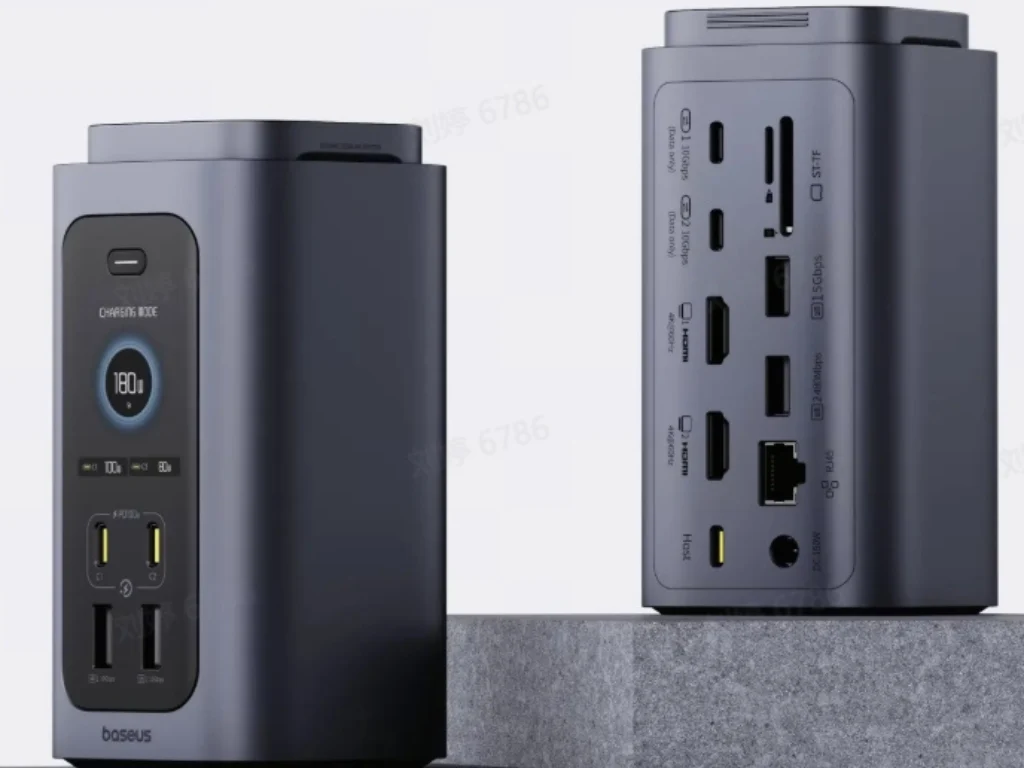
  • Baseus Spacemate RD1 Pro: Dual 4K Displays & 100W Charging

    Baseus Spacemate RD1 Pro: Dual 4K Displays & 100W Charging

    Key Takeaways

    1. Dual HDMI Outputs: Supports two external displays with up to 4K at 60 Hz for enhanced multitasking on Windows laptops.

    2. Power Delivery: Features a 180 W DC input, providing up to 100 W USB-C Power Delivery and intelligent power management for efficient device charging.

    3. Extensive Connectivity: Includes various ports: two USB-C (10 Gbps), four USB-A (5 Gbps and USB 2.0), Gigabit Ethernet, and SD/TF card readers.

    4. Wireless Charging: Integrates a Qi2.2 retractable magnetic wireless charging pad capable of delivering up to 25 W for compatible smartphones.

    5. Real-Time Monitoring: Equipped with a digital display to show real-time power output and port usage information.


    Baseus is introducing the Spacemate RD1 Pro at CES 2025, a multifunctional 15-in-1 docking station designed for Windows laptops that require high display bandwidth and robust power delivery from a single hub.

    Enhanced Display Features

    The RD1 Pro features dual HDMI outputs, allowing for two external displays with a maximum resolution of 4K at 60 Hz. This makes it suitable for extended desktop setups, which are frequently used in both office and home environments. Baseus specifically targets Windows users, emphasizing stable multi-monitor support instead of just mirroring the output.

    Power Management

    Power delivery is a significant aspect of this device. The dock comes with a DC input rated at 180 W, enabling it to provide up to 100 W of USB-C Power Delivery to a connected laptop. According to Baseus, its intelligent power distribution system efficiently manages power allocation across the dock, depending on the number of active ports and devices at any given time.

    Diverse Connectivity Options

    The RD1 Pro offers a wide range of ports. It includes two USB-C ports that can operate at 10 Gbps, along with two USB-A ports at 5 Gbps, and two more USB-A ports functioning at USB 2.0 speeds. Additionally, a Gigabit Ethernet port is available for wired networking, along with SD and TF card readers with speeds of up to 104 MB/s. This feature is particularly useful for those who work with cameras or storage cards, eliminating the need for separate adapters.

    Convenient Charging Features

    One notable feature is the Qi2.2 retractable magnetic wireless charging pad integrated into the dock, which is capable of delivering up to 25 W. This allows compatible smartphones to be charged directly from the dock while keeping them within reach on the desk. A front-facing digital display provides real-time information regarding power output and port usage, offering a quick overview of how the dock is functioning.

    Baseus is set to launch the Spacemate RD1 Pro with a suggested retail price of $199.99, with Amazon designated as the primary sales channel.

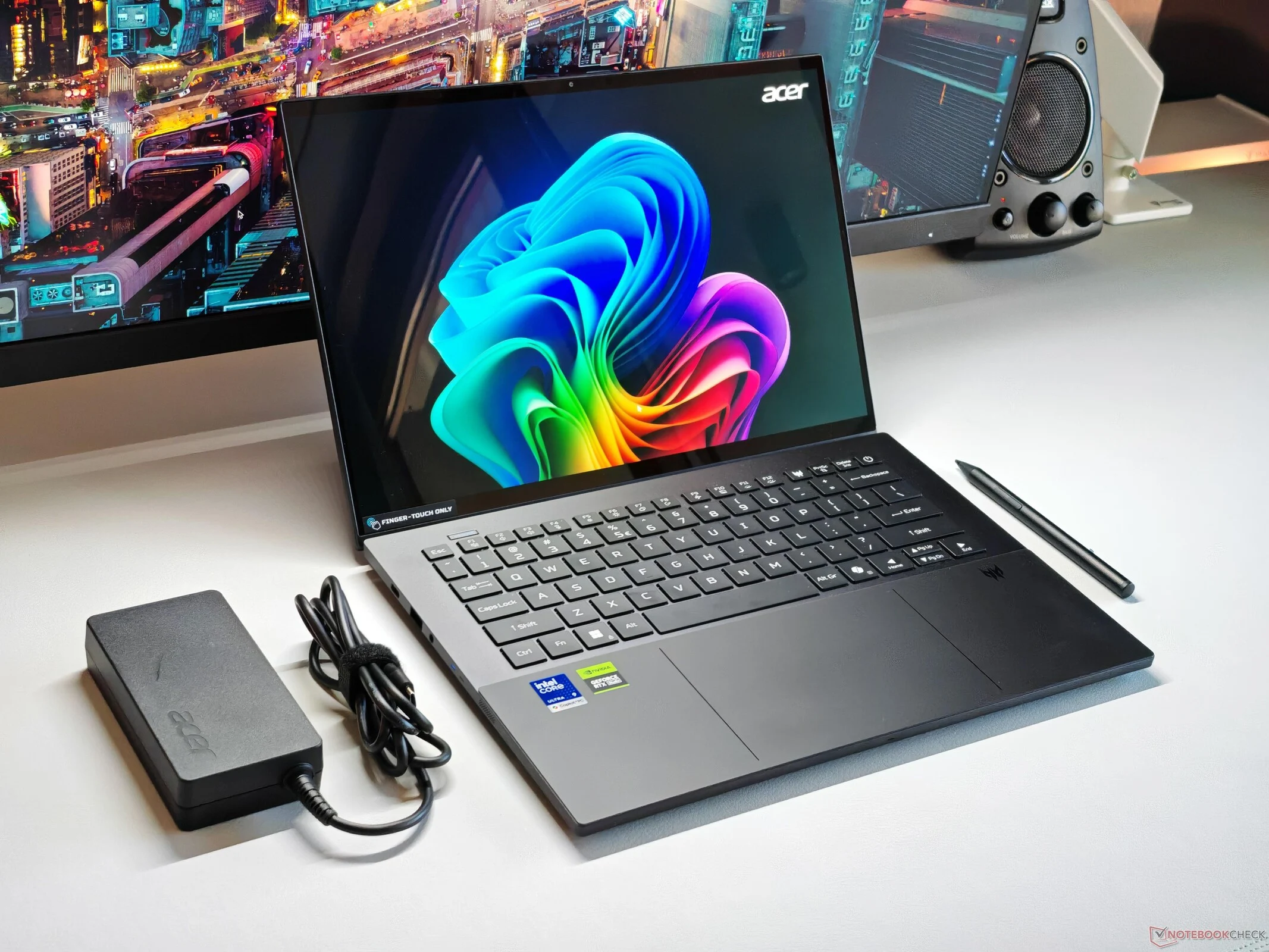
  • Acer Predator Triton 14 AI with RTX 5070 Priced at $2599

    Acer Predator Triton 14 AI with RTX 5070 Priced at $2599

    Key Takeaways

    1. The Acer Predator Triton 14 AI features a mobile GeForce RTX 5070 GPU, but its performance is limited by the Intel Lunar Lake CPU, which excels in single-core tasks but struggles in multi-core scenarios.
    2. The battery life is not significantly improved by the Lunar Lake processor, though its low power consumption allows for quieter operation during light tasks.
    3. The laptop’s touchscreen display has issues, including a noticeable grid effect and PWM flickering, which affect the visual quality and undermine the benefits of OLED technology.
    4. Despite a strong build quality and advanced input features, the laptop’s high price of $2599 is hard to justify compared to competitors like the Asus ROG Zephyrus G14 and Razer Blade 14, which offer better value.
    5. Competitors provide superior overall packages and configurations at lower prices, with options for faster GPUs, making the Triton less appealing for gamers and content creators.


    Acer’s Predator Triton 14 AI is a sleek 14-inch laptop packed with a mobile GeForce RTX 5070 GPU, catering to multimedia users, gamers, and content creators alike. This GPU can draw up to 110 Watts, making it one of the swiftest options available, but its performance is somewhat restricted by the processor. The device features an Intel Lunar Lake CPU, which is why it has the AI label for Copilot+, boasting 8 cores and a maximum power draw of 37 Watts, aimed at efficiency. While the single-core performance is commendable, it falls short in multi-core scenarios compared to its closest competitors, impacting gaming experiences. Engaging Turbo mode for peak performance also leads to the laptop becoming quite loud at 58 dB(A).

    Battery Performance and Processor Choice

    The Lunar Lake processor doesn’t extend battery life significantly; however, its low power consumption does ensure a quieter operation during standard tasks (when the dGPU isn’t in use). Overall, we believe opting for an AMD Ryzen chip or an Arrow Lake processor could have been a better decision for this model.

    Display Issues

    Another concern lies with the display itself, as the touchscreen layer introduces a noticeable grid effect, especially against bright backgrounds, which detracts from the visual quality. This compromises the typical strengths of OLED displays, such as deep blacks and vibrant colors. Additionally, there are issues with PWM flickering, and the color profiles for sRGB and P3 aren’t perfectly adjusted.

    Build Quality and Pricing

    On the upside, the laptop features a robust chassis and impressive input devices, including a haptic touchpad with stylus support. Yet, these advantages don’t significantly offset the drawbacks. The pricing also stands out, as it is steep at $2599, which is difficult to rationalize. This perception is further solidified when comparing it with its main competitors, the Asus ROG Zephyrus G14 and the Razer Blade 14. Both offer superior overall packages and are currently a few hundred dollars cheaper in similar configurations (G14: ~$2099, Blade 14: ~$2299). Although they lack a touchscreen, there are no compromises in image quality, and the G14 even comes with faster GPU options (up to RTX 5080 Laptop) for those seeking greater graphics performance.

  • GMKtec Unveils Evo-T2 Mini PC with Intel Core Ultra X9 at CES 2026

    GMKtec Unveils Evo-T2 Mini PC with Intel Core Ultra X9 at CES 2026

    Key Takeaways

    1. GMKtec’s Evo-T1 mini PC features the Intel Core Ultra 9 285H chip, delivering strong performance and efficiency.
    2. The Evo-T2 gaming mini PC will launch at CES 2026, featuring Intel’s next-gen Panther Lake processors.
    3. The Evo-T2 is expected to have a powerful Intel Core Ultra X9 388H CPU with 16 cores, performing well in benchmarks.
    4. Graphics will be managed by an Intel Xe3-based Arc B390 iGPU, potentially offering double the performance of its competitors.
    5. The Evo-T2 will support up to 128 GB of LPDDR5X memory and will include advanced storage options, but pricing details remain unavailable.


    GMKtec is a name that many people recognize when it comes to compact and powerful mini PCs. One of their latest products, the Evo-T1, is equipped with the robust Intel Core Ultra 9 285H chip. After reviewing this system, we found that it delivers solid performance and efficiency.

    Upcoming Release

    The company is set to release the Evo-T2 gaming mini PC, which will feature Intel’s next-gen Panther Lake processors. This mini PC has been teased in the past, and now GMKtec has confirmed its launch at CES 2026. Additionally, it has been announced that the Evo-T2 will run on the Intel Core Ultra X9 388H “Panther Lake” CPU.

    Impressive Specifications

    Previously, we have seen this CPU in leaked benchmarks from sources like Geekbench, showing a configuration of 16 cores divided into 4 performance, 4 low-power, and 8 efficiency cores. According to the Geekbench data, the CPU surpasses the 3,000-point threshold in single-core performance and reaches about 17,600 points in multi-core tests. The Core Ultra 285H falls significantly behind, while the chip performs comparably to the Ryzen AI Max+ 395 Strix Halo APU (the GMKtec Evo-X2 is currently listed at $1,660 on Amazon).

    An Intel Xe3-based Arc B390 iGPU will manage graphics, featuring a total of 12 cores. If the leaked benchmarks are accurate, the B390 could be as much as double the performance of the Radeon 890M iGPU. It’s clear that the Evo-T2 is being designed to be a highly capable mini PC, able to compete with AMD’s Strix Halo series, making it suitable for gaming and local LLMs tasks.

    Memory and Storage

    The Evo-T2 mini PC will come with up to 128 GB of LPDDR5X-10677 memory, dual network ports with unspecified speeds, and a wide range of connectivity options. Storage will be managed by both a PCIe 4.0 and a PCIe 5.0 drive. Pricing information is not available yet, but given the recent rise in DRAM prices, it’s likely that the memory-rich versions of the Evo-T2 will come at a significant cost.

    GMKtec via ITHome

    Source:
    Link


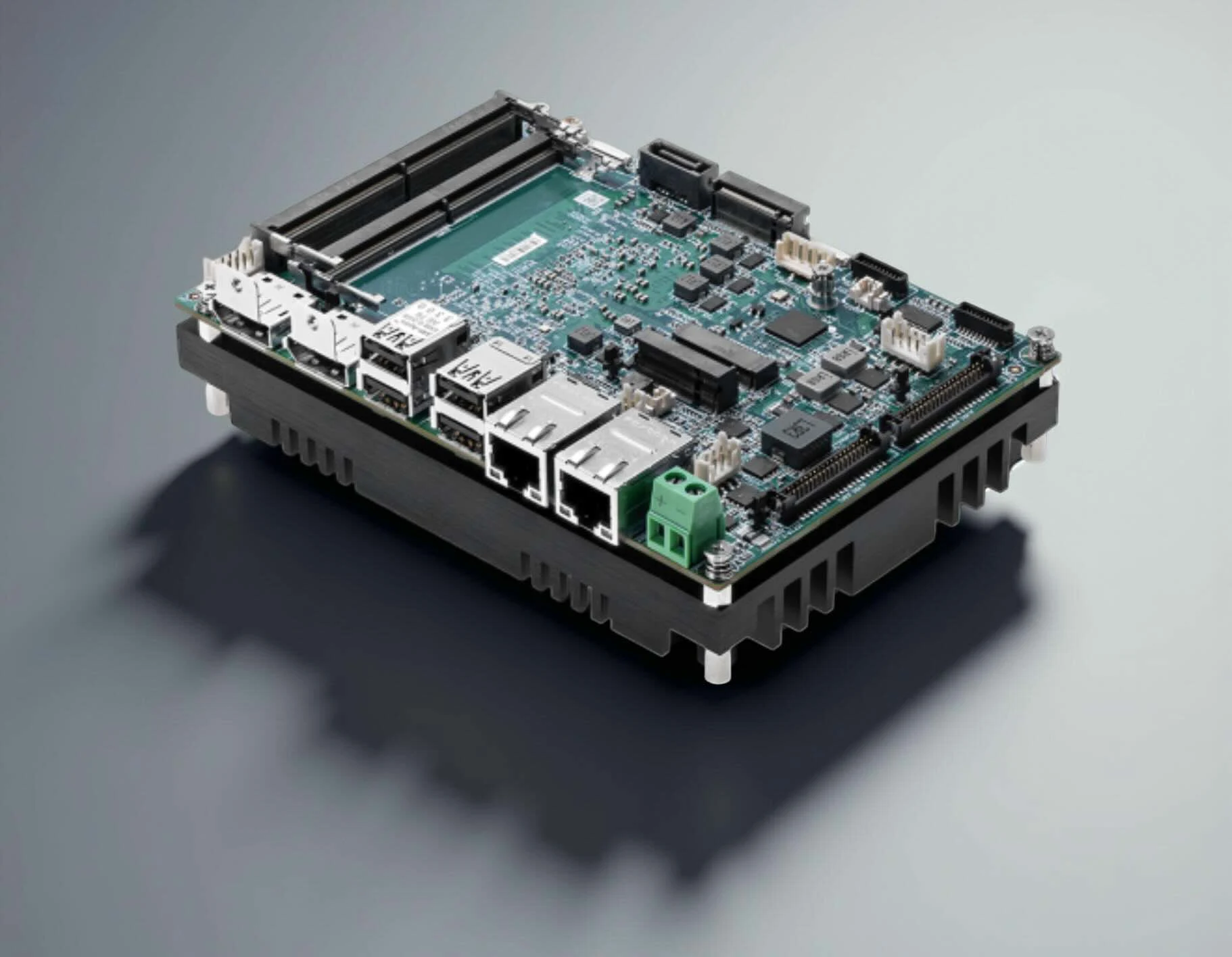
  • MSI Launches Silent 3.5-Inch SBC with 12-Core Intel Core Ultra 7

    MSI Launches Silent 3.5-Inch SBC with 12-Core Intel Core Ultra 7

    Key Takeaways

    1. MSI has launched the fanless MS-CF19 single-board computer (SBC) featuring Intel’s Core Ultra processors.
    2. The SBC supports up to 96 GB of DDR5 RAM and offers multiple CPU options, including the high-performance Core Ultra 7 265U.
    3. The design promotes quiet operation due to its passively cooled architecture.
    4. It includes a fan header for optional active cooling, catering to diverse user needs.
    5. Pricing and availability details for the MS-CF19 are currently unclear.


    MSI has introduced a new fanless single-board computer (SBC) featuring robust Intel processors, known as the MS-CF19. Currently, the pricing and availability of this product are not clear, but all specifications have been provided. This 3.5-inch SBC is designed to be compact, and its passively cooled architecture ensures quiet operation.

    Specifications and Performance

    The MS-CF19 SBC will offer various models equipped with Intel’s Core Ultra 100U and 200U processors, along with a maximum of 96 GB of DDR5 RAM in dual SODIMM slots. At the top tier, there’s the Core Ultra 7 265U “Arrow Lake-U” chip that boasts 12 cores and 14 threads, delivering performance that competes with Apple’s M2 chip.

    Other available CPU choices include those from the Meteor Lake-U range (Core Ultra 7 165/155U and Core Ultra 5 135/125U) and Arrow Lake-U series (Core Ultra 5 235/225U). While the device is designed to operate without a fan, LinuxGizmos has noted the presence of a fan header, which seems to be for users who might want to add active cooling. As anticipated for an SBC aimed at industrial applications, the MS-CF19 is equipped with a wide array of communication, expansion, and networking features, detailed below.

    Additional Information

    As previously stated, the pricing for the MS-CF19 SBC remains uncertain at this time. For those interested in learning more about the product, they can visit its official product page on MSI’s website.

    MSI, as pointed out by LinuxGizmos,

    Source:
    Link


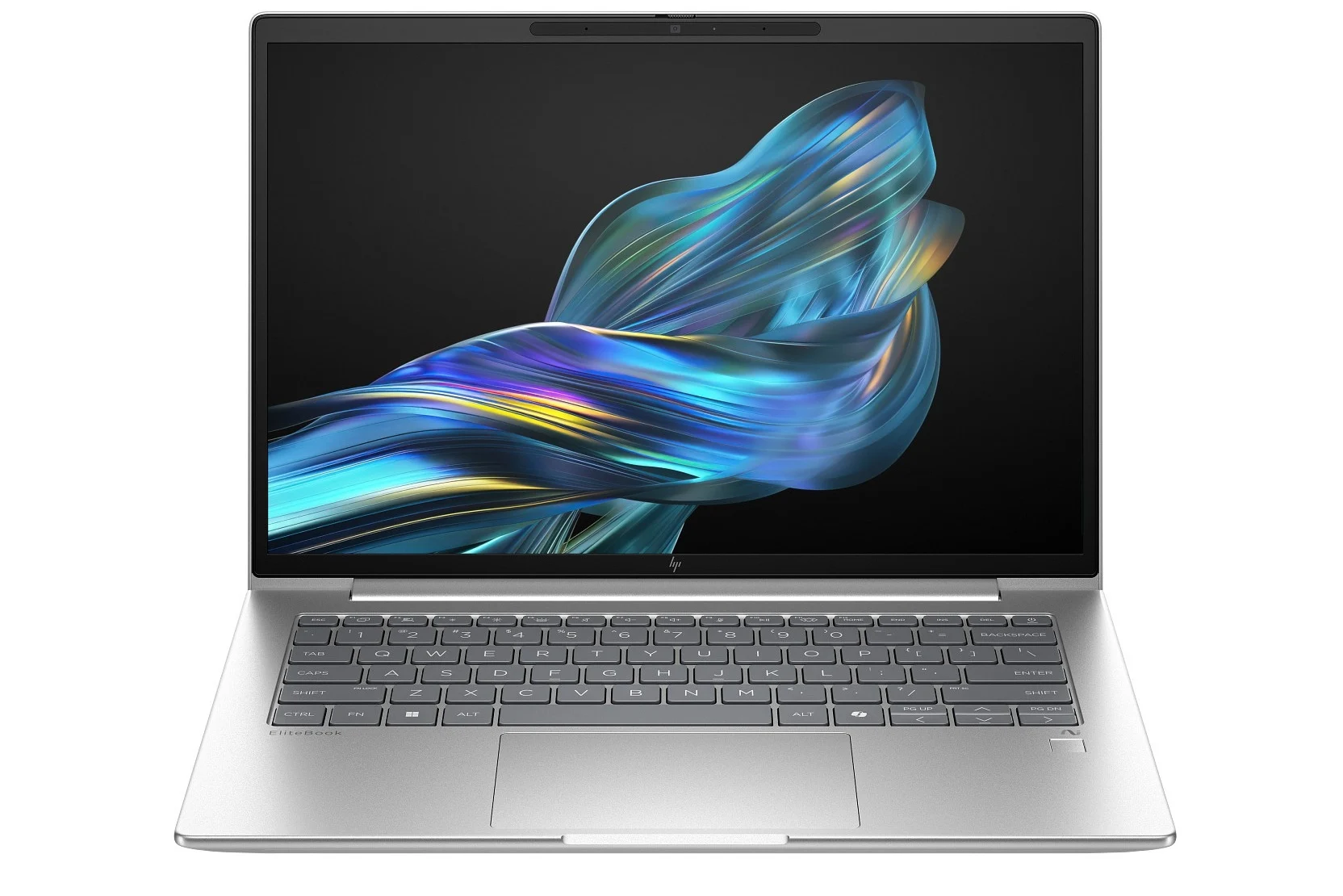
  • HP EliteBook 6 G1q 14 Lacks Key Feature Found in Other Laptops

    HP EliteBook 6 G1q 14 Lacks Key Feature Found in Other Laptops

    Key Takeaways

    1. The EliteBook 6 G1q offers solid performance and features at a more affordable price compared to other EliteBook models.
    2. It has more ports than some pricier models, but lacks an integrated Smart Card reader.
    3. The Snapdragon-powered model cannot support a discrete GPU, unlike Intel versions which can be upgraded.
    4. The integrated NPU in the EliteBook 6 G1q is more powerful, reaching up to 45 TOPS, enhancing AI feature performance.
    5. The absence of a Smart Card reader may affect compatibility due to the Snapdragon processor running on Windows ARM.


    The EliteBook 6 G1q, powered by Snapdragon, offers a solid performance and feature set, especially considering it’s one of the more affordable models in the EliteBook range. It actually comes with more ports than some of the pricier EliteBook 8 14 models. However, it is missing an integrated Smart Card reader, regardless of the configuration or SKU chosen.

    Configurations and Limitations

    In our latest review, we pointed out that the Qualcomm EliteBook 6 G1q 14 cannot be equipped with an integrated Smart Card reader, unlike the AMD and Intel versions of this same model. Additionally, it does not support a discrete GPU, whereas the Intel version can be upgraded with an optional GeForce RTX 3050. The absence of a Smart Card reader is probably related to the Snapdragon processor, which operates on Windows ARM, rather than the standard x64, thus affecting compatibility.

    Performance Advantages

    On the plus side, the EliteBook 6 G1q 14 boasts a more powerful integrated NPU that reaches up to 45 TOPS, compared to less than half that on the Intel or AMD models. Because of this, the Snapdragon system tends to be faster and more efficient for running Co-Pilot+, HP Poly Cam Pro, and other features that are powered by AI. Depending on your office’s reliance on a Smart Card reader, the system has its own set of advantages.

  • ASUS RAM and Flash Memory Prices Set to Rise After January 5

    ASUS RAM and Flash Memory Prices Set to Rise After January 5

    Key Takeaways

    1. ASUS is set to increase prices on certain memory products, including SSDs and DRAM kits, starting January 5, 2026.
    2. The price hikes are seen as a strategic move to establish new pricing standards ahead of CES 2026, with potential increases up to 45% throughout the year.
    3. The impact of these price changes may affect various hardware sectors, including laptops, prebuilt PCs, and graphics cards.
    4. ASUS is supporting DDR4 motherboards to provide users with a more budget-friendly option despite some price increases in DDR4.
    5. Other companies are responding to the situation by planning to release more laptops with only 8 GB of RAM.


    Just before CES 2026, the situation with RAM supplies seems to be getting quite serious. ASUS has announced that it will increase prices on some memory products starting January 5. This information comes from a leaked internal message to business partners, which was first reported by Videocardz. ASUS in Taiwan has confirmed that the document is real, stating it was meant for internal business communication and not for public view.

    Price Changes Affecting SSDs and DRAM

    The price changes will specifically target SSDs and DRAM kits, but only certain product combinations and configurations will be affected, according to the leaked document. The timing, right before CES 2026, is interpreted by many in the industry as a strategic effort to set new pricing standards. ASUS has not yet shared specific details about which models will be affected or how extensive the price increases will be. Industry speculations indicate that RAM prices might rise by as much as 45% throughout 2026.

    Impact on Hardware Segments

    These price increases could have a ripple effect on all hardware sectors that rely on memory components like DRAM or NAND flash, which includes laptops, prebuilt PCs, and graphics cards. In response, ASUS is offering continued support for DDR4 motherboards, allowing users to stick with the older standard. While DDR4 has also seen some price hikes, it still remains more budget-friendly overall. Other companies are starting to implement similar temporary solutions, with an increase in laptops expected to ship with just 8 GB of RAM in the near future.

    Current Product Pricing

    The ASUS Low-Profile GeForce RTX 5060, featuring 8 GB of GDDR7 memory, is presently available on Amazon for about $424.


    Source:
    Link