Category: Computers

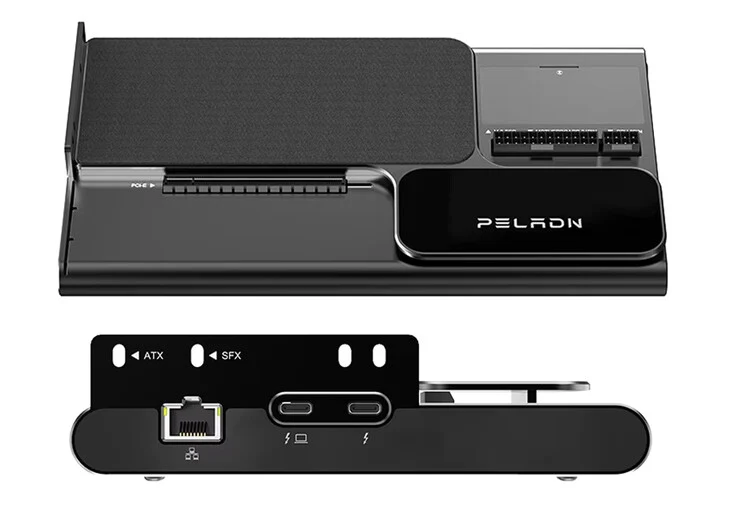
  • Peladn Link S-3: Global Launch of Thunderbolt 5 eGPU Dock

    Peladn Link S-3: Global Launch of Thunderbolt 5 eGPU Dock

    Key Takeaways

    1. Peladn has launched the Link S-3 eGPU graphics dock globally, following its debut in China.
    2. The Link S-3 features Thunderbolt 5 connectivity, offering up to 80 Gbps bandwidth, while still being compatible with Thunderbolt 4 and USB4 devices.
    3. Despite the higher bandwidth of Thunderbolt 5, performance may not exceed that of its predecessor or competitors due to existing limitations.
    4. The Link S-3 includes additional features like 2.5 Gigabit Ethernet, a USB Type-A port, an SD card reader, and an M.2 slot for SSDs.
    5. The pricing for the Link S-3 is approximately $337 on AliExpress, but due to US tariffs, it is priced at $460.52 for US customers.


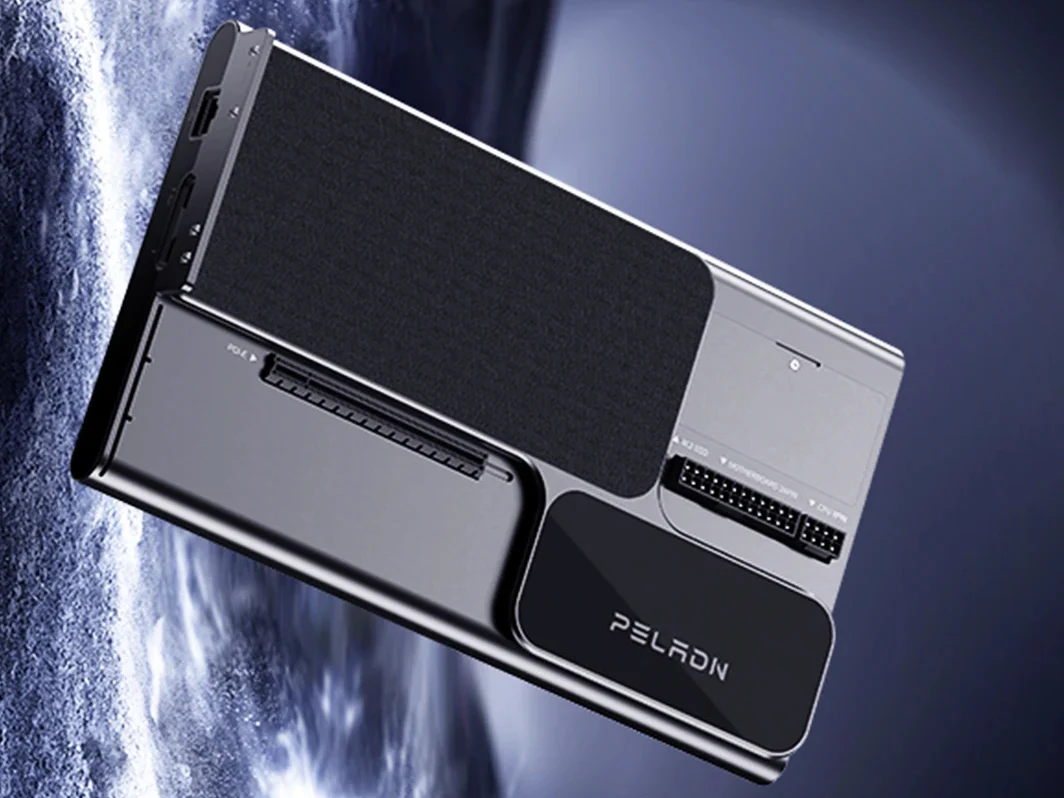
    Peladn has just launched its new eGPU graphics dock worldwide, coming after the device’s debut in China nearly a month ago. To summarize, the Link S-3 is the successor to the Link S-2, which was introduced late last year. At that time, Peladn aimed to market the Link S-2 as a budget-friendly option compared to the Minisforum DEG1 (currently priced at $99 on Amazon) since it utilized OCuLink connectivity to connect a desktop graphics card with laptops, mini-PCs, or gaming handhelds.

    New Connectivity Features

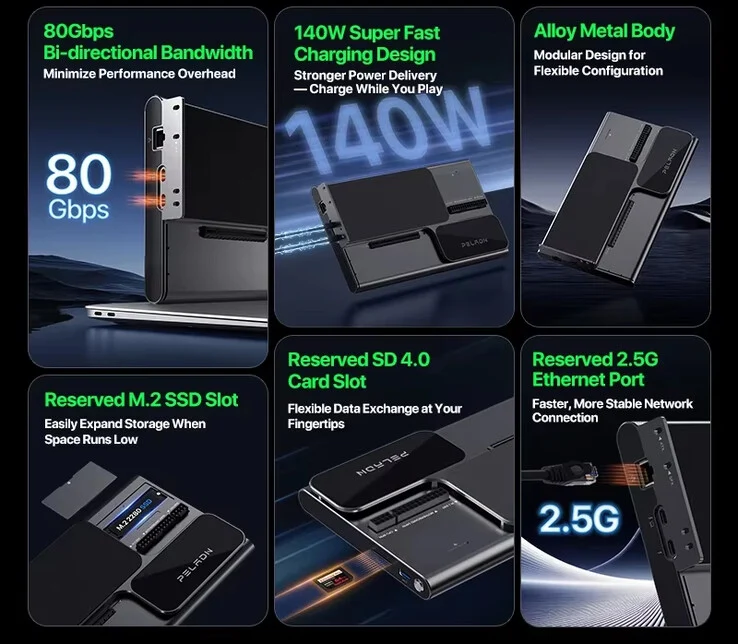
    In a significant change, Peladn has opted for Thunderbolt 5 for the Link S-3, which is intended for devices that can support this newer standard. The Link S-3 should also work well with Thunderbolt 4 and USB4 devices, but they’ll be limited to a maximum bandwidth of 40 Gbps. On the other hand, Thunderbolt 5 offers up to 80 Gbps bandwidth, though it still provides the same 64 Gbps to graphics cards through PCIe 4.0 x4.

    Performance Expectations

    This means that you shouldn’t expect the Link S-3 to outperform its predecessor or the Minisforum DEG1 just because Thunderbolt 5 boasts a higher theoretical peak bandwidth compared to OCuLink. Nonetheless, Thunderbolt 5 does come with various advantages over OCuLink, such as the ability to hotswap connections and transmit more than just video signals.

    Additional Features and Pricing

    Furthermore, the Link S-3 is equipped with 2.5 Gigabit Ethernet (Realtek RTL8156B), a USB Type-A port (10 Gbps), an SD card reader, and an M.2 2280 slot that can support up to PCIe 3.0 x1 bandwidth for SSDs. Additionally, the Link S-3 can charge a connected device at a power of up to 140 W, surpassing the capabilities of OCuLink graphics docks. Presently, the Link S-3 is available on AliExpress for £253.79/€291.99 (~$337) or CAD$384.38 (~$279). Unfortunately, due to US tariffs on Chinese imports, the price for US customers is set at $460.52.

    Source:
    Link


  • ThinkPad E14 G7: 14-inch Office Laptop with 2 SSD & RAM Slots

    ThinkPad E14 G7: 14-inch Office Laptop with 2 SSD & RAM Slots

    Key Takeaways

    1. Maintenance choices for consumer laptops are mainly limited to SSD upgrades due to soldered RAM on motherboards.
    2. The new Lenovo ThinkPad E14 G7 features SO-DIMM slots, allowing RAM upgrades up to 128GB with Arrow Lake processors.
    3. The E14 G7 includes an extra M.2 2280 slot for secondary SSD, enhancing storage options.
    4. Upcoming models with Lunar Lake processors will not support RAM upgrades or additional SSD slots due to integrated memory.
    5. Battery capacity and cooling performance are expected to remain unchanged in the Lunar Lake variant.


    When discussing consumer laptops, it’s generally understood that maintenance choices are mostly restricted to the SSD. This is because the memory is frequently soldered directly onto the motherboard or integrated into the processor, as seen with Intel’s recent Lunar Lake processors. This pattern has also extended to business laptops in the past few years, providing some benefits since SO-DIMM modules take up less room on the motherboard. Lenovo’s ThinkPad line has models that feature either 8GB or 16GB of soldered RAM along with an additional SO-DIMM slot for memory upgrades.

    A Shift in Trend

    The new ThinkPad E14 G7, which is one of Lenovo’s more budget-friendly office options, has turned this trend upside down. Specifically, the Intel setup with the latest Arrow Lake processors comes with SO-DIMM slots. This advancement allows the RAM to be increased to as much as 128GB in certain configurations. Additionally, the E14 G7 is well-provided for in terms of SSD capacity. Besides the shorter M.2 2242 slot filled by the default SSD, there’s another complete M.2 2280 slot available for a secondary solid-state drive.

    Variants and Limitations

    Nonetheless, this feature isn’t available across all versions of the ThinkPad E14 G7. In a few weeks, another model utilizing Lunar Lake processors will be released alongside the Arrow Lake version we reviewed. As the memory is integrated into the processor, the upgrade option will be lost. Moreover, that variant will not feature an extra SSD slot, as it comes with just a single M.2 2280 slot. The battery capacity also won’t be increased, and we don’t anticipate any notable enhancements in cooling performance due to the lower power limits of the Lunar Lake CPUs, meaning there may be a lot of unutilized space. We expect to evaluate that version in a few weeks.


  • Minisforum MS-A2 Mini-PC Launches with Up to 96GB RAM Options

    Minisforum MS-A2 Mini-PC Launches with Up to 96GB RAM Options

    Key Takeaways

    1. Minisforum updated the MS-A2 mini workstation, now featuring only the Intel Core Ultra 9 285H processor and up to 128 GB of RAM.
    2. The Ryzen 9 7945HX models have been removed from availability, with no current plans for their return.
    3. The starting price for the MS-A2 has increased from $639 to $871 for the barebones unit with Ryzen 9 9955HX.
    4. New configurations allow for a maximum of 96 GB of RAM and 2 TB of storage, with the highest setup priced at $1,295.
    5. Minisforum plans to start shipping new MS-A2 orders by August 10.


    Minisforum has made a quiet update to its MS-A2 mini workstation, just a few days after it started offering the M1 Pro worldwide, which features an Intel Core Ultra 9 285H processor and up to 128 GB of RAM. To summarize, the MS-A2 was first revealed in late April, providing options between AMD’s Ryzen 9 7945HX and Ryzen 9 9955HX processors. We recently reviewed the mini-PC with the Ryzen 9 9955HX paired with 32 GB of RAM, but that RAM capacity was only available in conjunction with the Ryzen 9 7945HX.

    Changes in Availability

    Now, Minisforum has completely removed all Ryzen 9 7945HX models, at least for the moment. The company’s website states that customers can sign up for notifications when barebone and 32 GB RAM/1 TB SSD versions featuring the Ryzen 9 7945HX become available again. However, there are no current signs from Minisforum suggesting that this will happen anytime soon.

    Pricing Adjustments

    Because of this, the starting price for the MS-A2 has increased from $639 to $871 for a barebones unit with the Ryzen 9 9955HX. This price change marks an almost 4% rise since April, when it was introduced at $839. Additionally, since Minisforum is not currently offering 1 TB SSD configurations either, the least expensive pre-built MS-A2 setup is now about 8% more expensive than it was a few months ago, priced at $1,191, which includes 64 GB of RAM and 2 TB of storage. Interestingly, a Ryzen 9 9955HX model with 64 GB of RAM and a 1 TB SSD is still available through Minisforum on Amazon for $1,135.

    New Configurations Available

    On top of that, the MS-A2 can now be set up with a maximum of 96 GB of RAM and 2 TB of storage, which was not an option at first. However, this upgrade raises the cost of the mini-PC to $1,295. Minisforum is currently aiming to start shipping new MS-A2 orders by August 10. For more details on the MS-A2 and its performance with AMD’s Ryzen 9 9955HX APU, take a look at our review from last month.

    Source:
    Link


  • Aoostar Launches Affordable Mini PC with AMD CPU and GPU

    Aoostar Launches Affordable Mini PC with AMD CPU and GPU

    Key Takeaways

    1. Aoostar launched the budget-friendly GODY mini PC in China, powered by the Ryzen 9 7940HX CPU.
    2. The GODY can be equipped with up to 64 GB of fast DDR5 RAM running at 5,200 MHz.
    3. It features the Radeon RX 7600XT GPU with 8 GB of VRAM, providing smooth 1080p gaming and decent 4K performance.
    4. The mini PC includes an efficient cooling system with dual fans and various connectivity options, housed in a compact 3.1-liter chassis.
    5. The base model starts at CNY 4,999 (about $694), with higher configurations available, but global release details are yet to be announced.


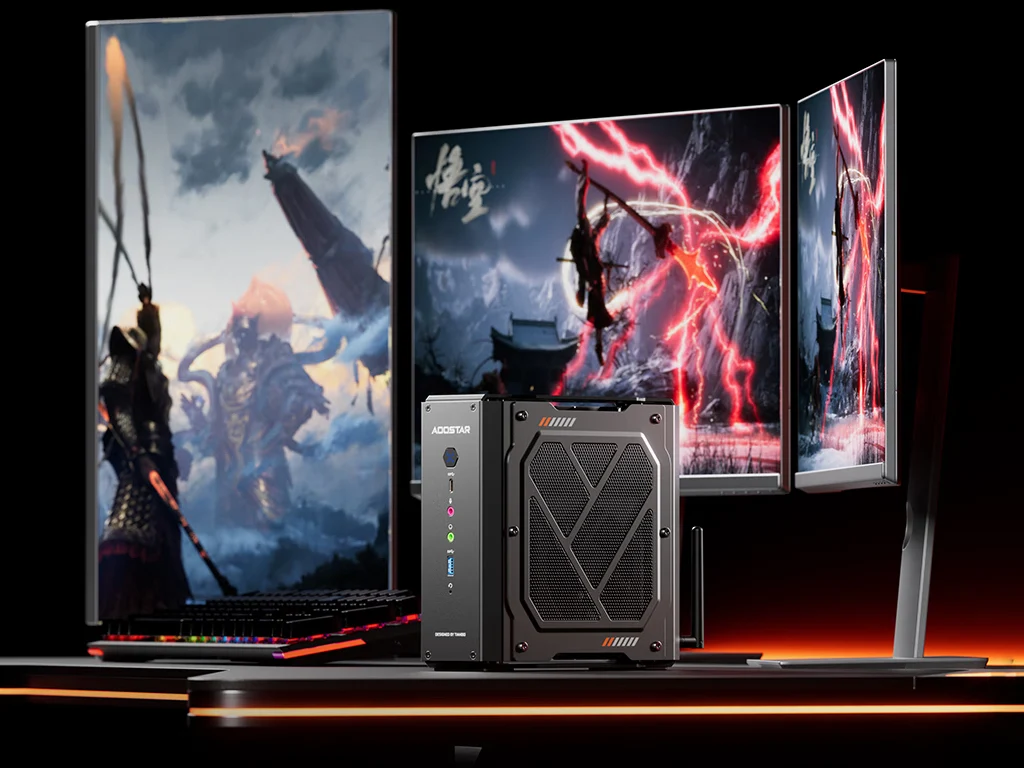
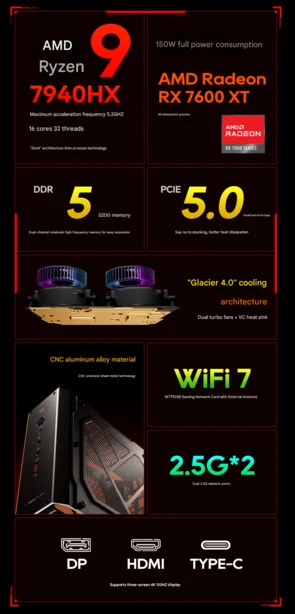
    Aoostar has launched a new budget-friendly mini PC in China, known as the GODY. This compact device is powered by the Ryzen 9 7940HX, a premium CPU from AMD’s Dragon Range series. Users can equip it with up to 64 GB of DDR5 RAM, which operates at a speedy 5,200 MHz.

    Graphics Performance

    On the graphics side, the GODY is outfitted with the Radeon RX 7600XT, a desktop GPU boasting 8 GB of VRAM. This combination allows the Aoostar GODY to deliver smooth gaming experiences at 1080p and decent performance for 4K gaming as well.

    Cooling System and Connectivity

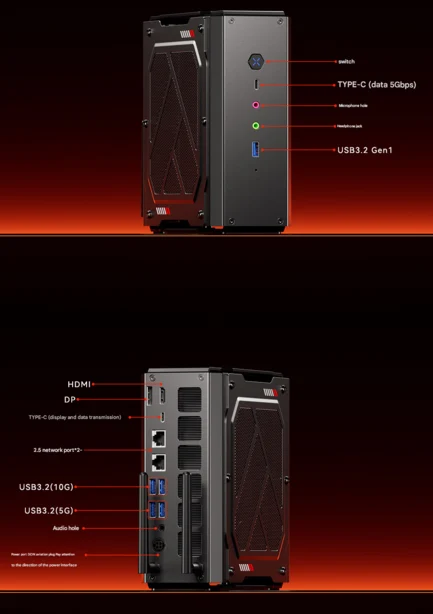
    The mini PC also comes with an efficient cooling system featuring dual fans, which enables the GPU to operate at a 150 W TGP. It provides a good variety of connectivity options, including:

    In addition to these features, the Aoostar GODY has a compact 3.1-liter chassis, two M.2 PCIe 5.0 slots (currently, a Samsung 9100 Pro 2 TB is priced at $229.97 on Amazon), and WiFi 7 capabilities. The base model of this gaming mini PC starts at CNY 4,999, roughly translating to $694. There are two other configurations available, with the highest-end option including 64 GB of RAM and 2 TB of PCIe storage. The company hasn’t announced when this system will be available outside of China, but it typically releases most of its products globally.

    Source:
    Link


  • GMKtec K12 Mini-PC Launches Globally with OCuLink and USB4

    GMKtec K12 Mini-PC Launches Globally with OCuLink and USB4

    Key Takeaways

    1. GMKtec has launched the K12 mini-PC globally after its debut in China.
    2. The K12 features a Ryzen 7 H 255 processor with 8 Zen 4 cores and a Radeon 780M GPU.
    3. The starting price for the K12 is $409.99 for a barebones version without RAM, storage, or a Windows license.
    4. Pre-configured options are available, starting at $549.99 for 32 GB RAM and $609.99 for 64 GB RAM.
    5. The K12 supports connectivity with OCuLink or USB4 eGPU docks.


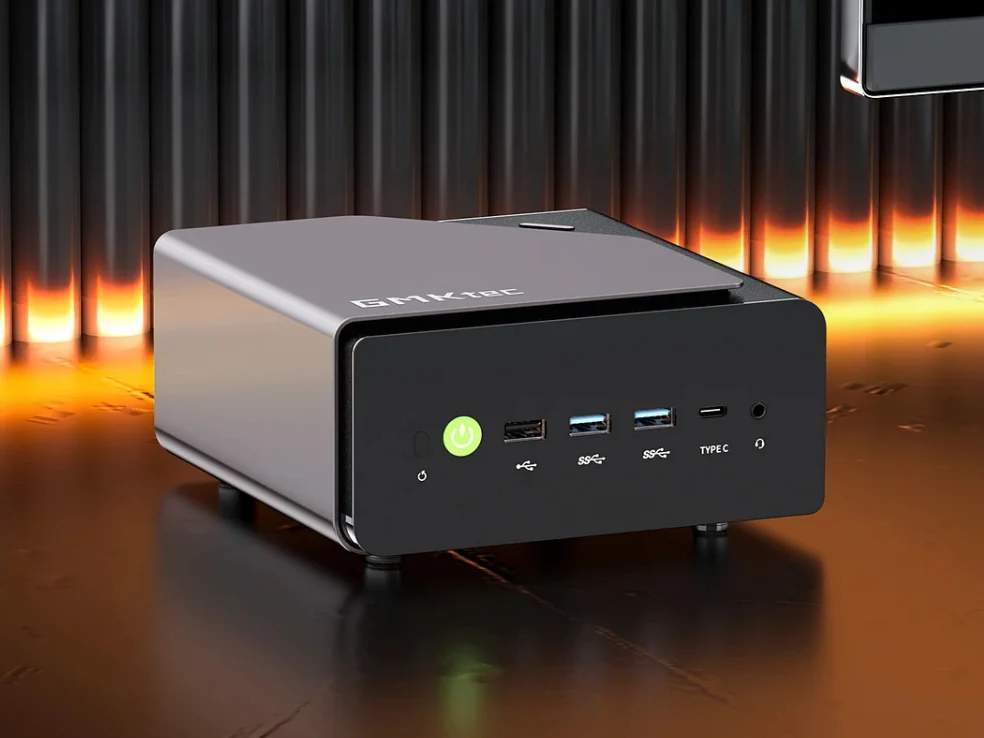
    GMKtec has officially introduced the K12 to a global audience, just a short while after showcasing the same mini-PC in China. To provide some background, the K12 is released right after the EVO-T1, which is currently priced at $1,299.99 on Amazon. At the moment, the EVO-T1 is equipped with an Intel Core Ultra 9 285H processor from the Arrow Lake series.

    Unique Processing Power

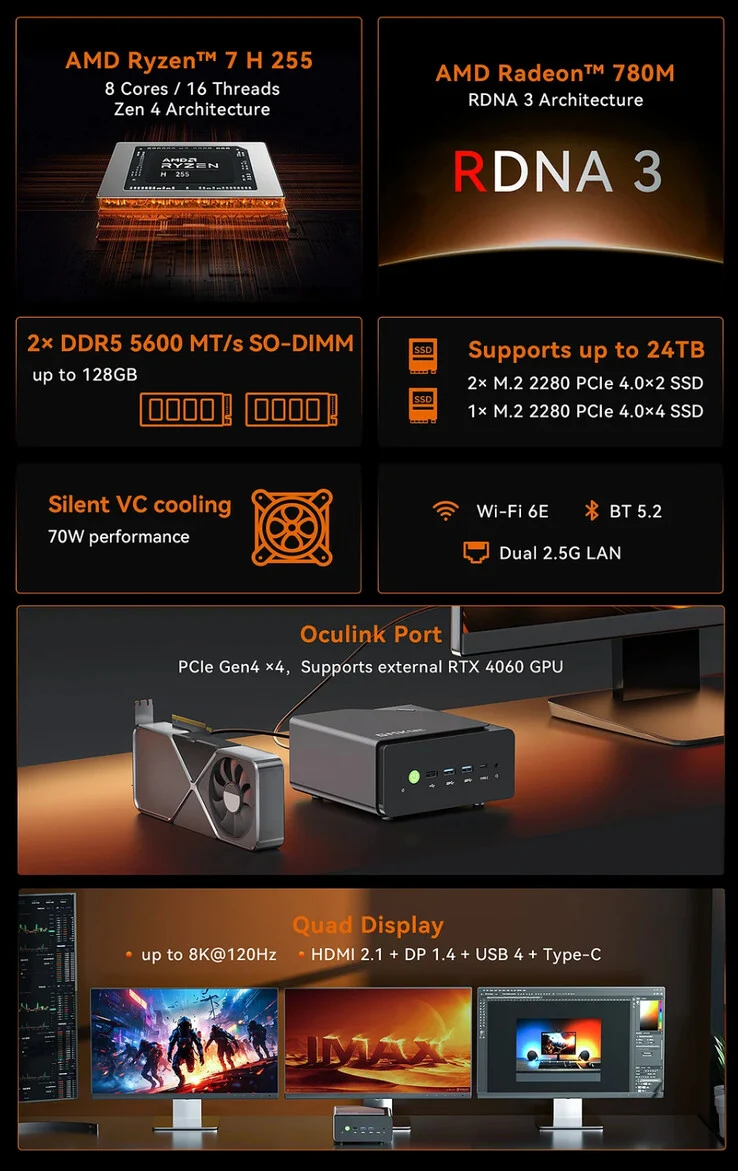
    In a notable difference, GMKtec has outfitted the K12 with the uniquely branded Ryzen 7 H 255. This APU, which is exclusive to China, is part of AMD’s Hawk Point series and features 8 Zen 4 cores along with a Radeon 780M integrated GPU capable of delivering up to 70 W in performance. According to GMKtec, the K12 boasts the following ports for connectivity:

    This means that the K12 can connect to OCuLink or USB4 eGPU docks. Presently, the starting price for GMKtec’s latest mini-PC is $409.99 as a barebones version, which does not include a Windows license, RAM, or storage. They do have pre-configured options available as well, but these only come with a 1 TB SSD in each case. As it stands, GMKtec lists the K12 at $549.99 for the version with 32 GB of RAM and $609.99 for the one with 64 GB of RAM.

    Source:
    Link


  • NASA Installs Powerful Sunblock with 427°F Temperature Difference

    NASA Installs Powerful Sunblock with 427°F Temperature Difference

    Key Takeaways

    1. The Nancy Grace Roman Space Telescope aims to discover around 100,000 cosmic explosions and evidence of the earliest stars.
    2. It has been equipped with two sunshields, called the Lower Instrument Sun Shade, to protect its instruments from solar heat and light.
    3. The sunshields consist of two panels, the Solar Array Sun Shield and the Deployable Aperture Cover, each measuring 7 × 7 feet and 3 inches thick.
    4. The lightweight design of the sunshields minimizes heat transfer, keeping the inner temperature extremely low while the outer side can reach high temperatures.
    5. The telescope is set for a launch between fall 2026 and May 2027, with a 70-day thermal vacuum test planned to ensure functionality in space-like conditions.


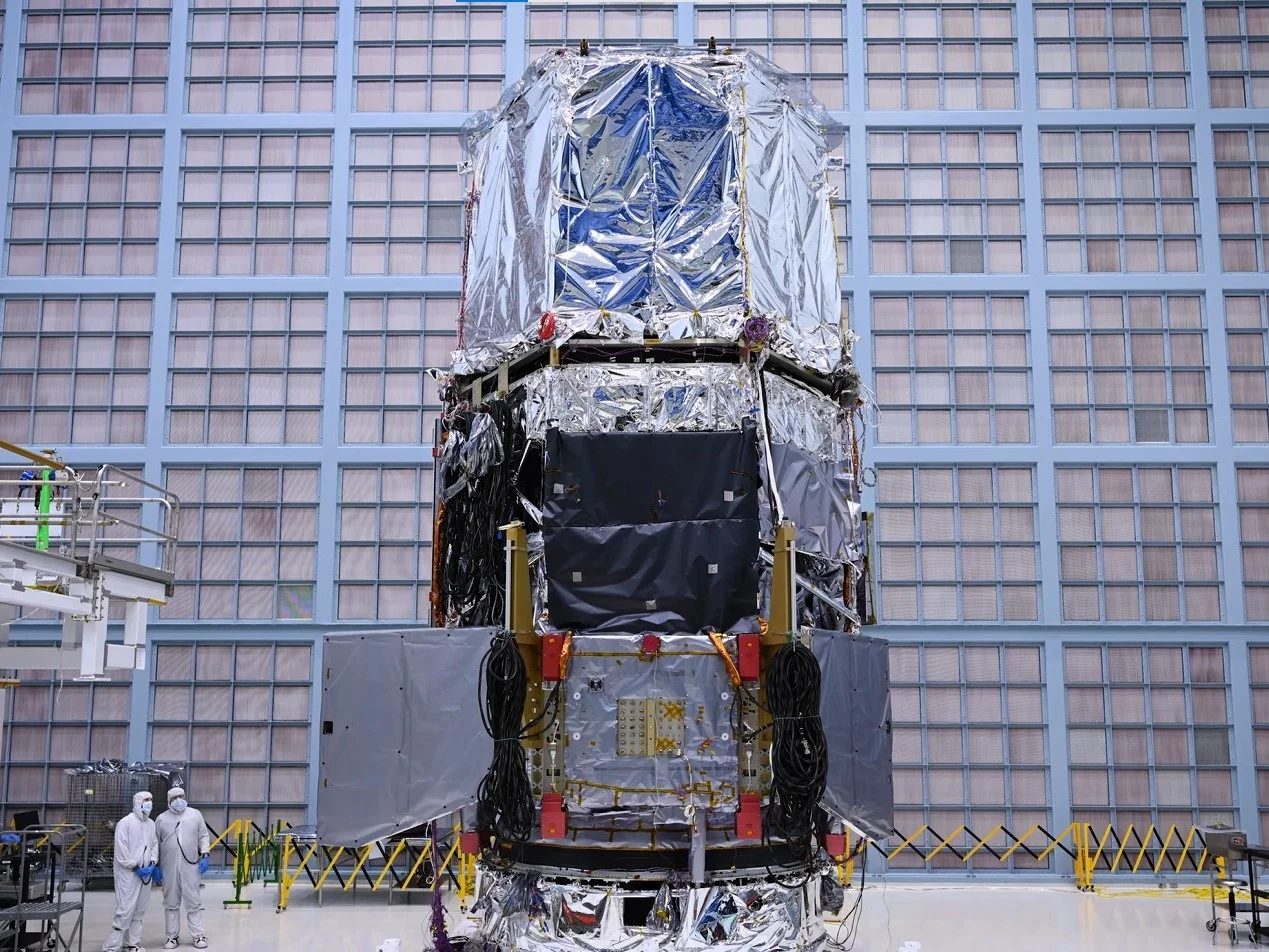
    NASA has reached another significant point in putting together the Nancy Grace Roman Space Telescope. This telescope is anticipated to uncover about 100,000 cosmic explosions and proof of the earliest stars. Recently, it has been fitted with two sunshields. These sunshields, known collectively as the Lower Instrument Sun Shade, are designed to shield the telescope’s delicate instruments from the heat and light of the Sun. This protection is essential since strong solar radiation could interfere with the telescope’s capability to pick up faint infrared signals from the universe.

    Details of the Sunshields

    The two panels that form the sunshield are named the Solar Array Sun Shield and the Deployable Aperture Cover. Each panel measures roughly 7 × 7 feet (2.13 × 2.13 m) and has a thickness of 3 inches (7.62 cm). Conrad Mason, an aerospace engineer at NASA Goddard, likens them to “giant aluminum sandwiches,” as their design consists of metal sheets on the top and bottom, sandwiching a lightweight honeycomb core in the middle.

    Lightweight Design and Thermal Protection

    Thanks to its clever design, the sunshields are both light and strong. The materials used help to minimize heat transfer, keeping the inner side at temperatures as low as −211° F (−135 °C), even while the side facing the Sun can reach up to 216 °F (102.22 °C). Each panel is covered with a special polymer film, featuring 17 layers on the side exposed to the Sun and one layer on the other side.

    Upcoming Tests and Launch Plans

    The sunshade will be folded away for launch and will deploy about an hour post-launch. Roman’s inner segment is now prepared for a 70-day thermal vacuum test, during which engineers and scientists will evaluate the complete functionality of the spacecraft, telescope, and its instruments under conditions that mimic space. With everything proceeding smoothly, NASA aims to launch Roman as soon as the fall of 2026, but definitely no later than May 2027.

    Source:
    Link

  • Dynabook Portege Z40L-N SSD Throttling Issues Like Predecessor

    Dynabook Portege Z40L-N SSD Throttling Issues Like Predecessor

    Key Takeaways

    1. The Dynabook Portege Z40L-N is a lightweight 14-inch laptop, ideal for professionals on the go, but has a higher price tag.
    2. The NVMe SSD in the Portege Z40L-N experiences significant throttling, dropping from nearly 7000 MB/s to as low as 2300 MB/s during stress tests.
    3. Compared to previous models, such as the Dynabook Portégé X30L-K, the Portege Z40L-N has better initial speeds but still suffers from throttling.
    4. The lightweight design sacrifices performance, as there are no cooling solutions for the SSD, limiting high-speed performance duration.
    5. Heavier laptops, like the Dell Pro 14 Premium, tend to avoid SSD throttling issues due to better heat management.


    The Dynabook Portege Z40L-N has recently become accessible for professionals seeking a lightweight 14-inch laptop. Its ease of transport makes it a great choice for those on the go, but it does come with a higher price tag, as mentioned earlier. Sadly, to achieve the target weight of less than 1 kg, some sacrifices have been made.

    Performance Under Pressure

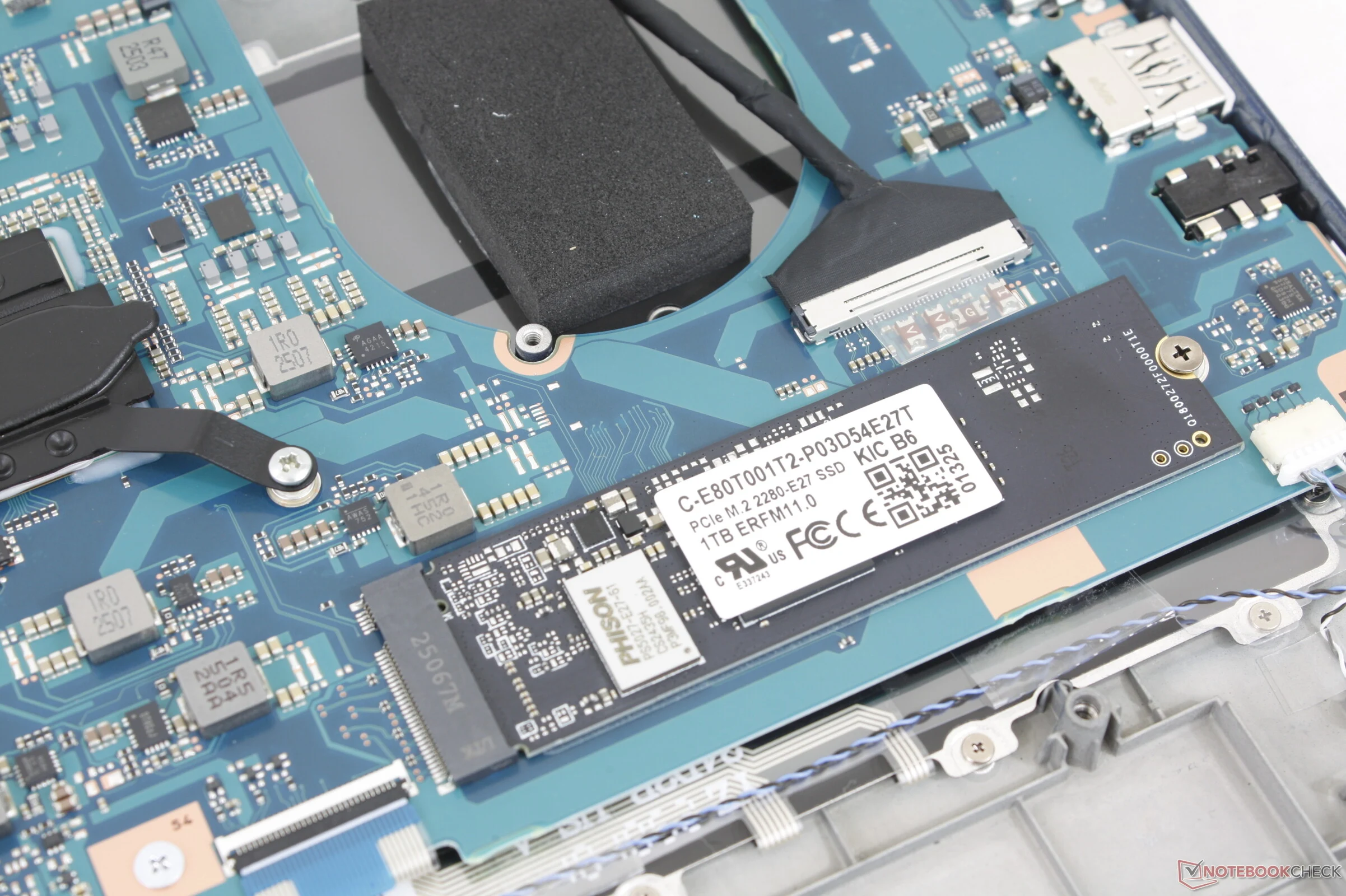
    According to our DiskSpd stress test results below, the Phison C-E80T001T2 PICe4 x4 NVMe SSD found in the Portege Z40L-N experiences throttling just one minute into the test. Initially, the transfer speeds can reach nearly 7000 MB/s, which is quite close to the maximum real-world performance of PCIe4 x4 SSDs. However, these speeds drop significantly to as low as 2300 MB/s shortly after.

    Comparison with Previous Models

    In comparison, the Samsung PM9A1 in the earlier 2022 Dynabook Portégé X30L-K faces even more severe throttling, with performance dipping to around 1700 MB/s during the same stress test.

    Weight vs. Performance Trade-off

    The main reason behind the throttling issue with these SSDs is the priority given to a lighter design in these Dynabook models, which comes at a price. There are no cooling solutions or heat pads available for the drives to help manage heat, meaning the SSDs can only deliver high performance for a limited time before they hit temperature limits. In contrast, heavier 14-inch laptops like the Dell Pro 14 Premium are less prone to experiencing these kinds of SSD throttling issues.

    For more detailed benchmarks and performance evaluations, users can check out our review on the Dynabook Portege Z40L-N.

    Source:
    Link

  • NISAR Satellite Launch: Capturing Unmatched Earth Details

    NISAR Satellite Launch: Capturing Unmatched Earth Details

    Key Takeaways

    1. NISAR was launched on July 30 from Satish Dhawan Space Centre in India, equipped with advanced radar to create detailed 3D images of Earth’s surface.

    2. The satellite features a dual payload combining L-band and S-band systems to measure various surface attributes like moisture, texture, and movements.

    3. NISAR will help researchers understand natural disasters, monitor infrastructure, and support emergency responders during events like hurricanes and floods.

    4. The satellite is designed for a long-term mission, expected to orbit for at least three years and scan land and ice surfaces twice every 12 days.

    5. This mission marks the first collaboration between NASA and ISRO for Earth observation, enhancing global scientific understanding and international cooperation.


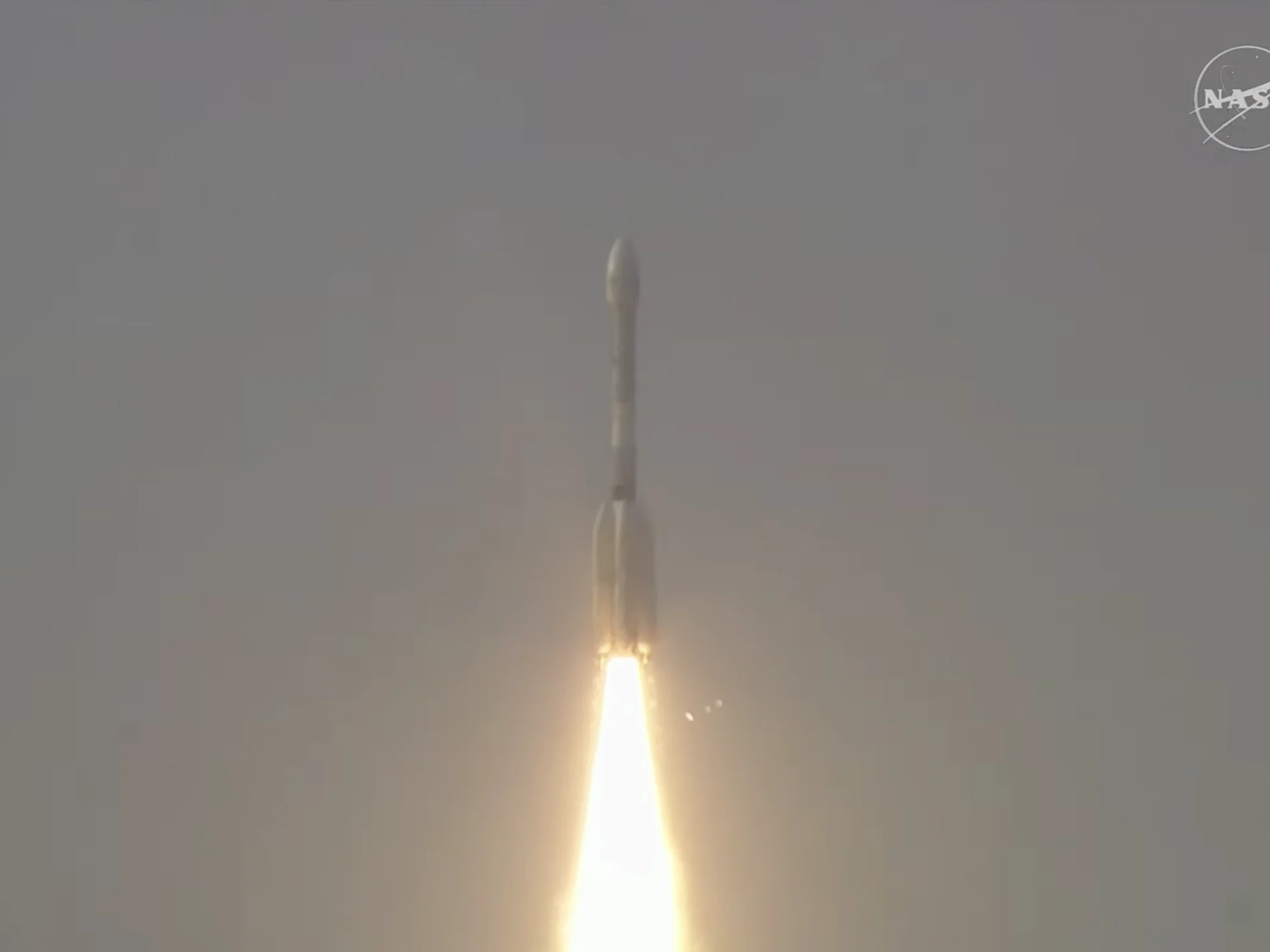
    NASA-ISRO Synthetic Aperture Radar (NISAR) was launched on July 30 from Satish Dhawan Space Centre in Sriharikota, Andhra Pradesh, India. This satellite is equipped with an advanced radar system that will create dynamic, three-dimensional images of the Earth’s surface with remarkable clarity.

    Innovative Dual Payload

    The main structure of the satellite houses engineering systems along with a unique dual payload. It combines a 10-inch (25-centimeter) wavelength L-band system with a 4-inch (10-centimeter) wavelength S-band system, which are each designed to identify various surface attributes. Each system’s signal is specifically tuned to measure different features — including moisture levels, surface texture, and movements occurring on the Earth’s exterior.

    Enhancing Scientific Understanding

    The information collected by NISAR will assist researchers in gaining better insights into the processes related to natural disasters and major events. It will also help in monitoring infrastructure like dams, bridges, and roads. Furthermore, NISAR’s imaging capabilities will be beneficial for emergency responders dealing with hurricanes, floods, and storm surges. The satellite will provide global observations of changing ice sheets, melting glaciers, and thinning sea ice, while also illuminating the effects of deforestation, wildfires, and melting permafrost on the carbon cycle.

    Long-Term Orbit Mission

    NISAR is expected to orbit the Earth for a minimum of three years, scanning almost all land and ice surfaces twice every 12 days. This mission marks the first collaboration between NASA and ISRO on hardware designed for Earth observation, and it promises to greatly enhance our understanding of the planet.

    NASA and Jet Propulsion Laboratory are closely involved in this groundbreaking initiative, aiming to push the boundaries of what we know about our planet’s systems and changes. The collaboration represents a significant step forward in international cooperation for scientific exploration.

    Source:
    Link

  • New U.S. Tariff Imposes $80-$200 Duties on Mini PCs

    New U.S. Tariff Imposes $80-$200 Duties on Mini PCs

    Key Takeaways

    1. A new executive order requires complete customs processing for all tech imports valued under $800, imposing a flat duty between $80 and $200.
    2. The de minimis exemption has been eliminated, affecting budget-friendly mini PCs and single-board computers (SBCs).
    3. The change will significantly increase costs for hobbyists and developers who rely on affordable components from overseas.
    4. Many low-cost tech products may become unavailable in the U.S., as suppliers may raise prices or stop shipping due to compliance costs.
    5. Buyers should act quickly, as the new rules take effect on August 29, with August 28 being an unofficial deadline for overseas purchases.


    A recent executive order from the U.S. has once again shaken the global tech hardware market, with budget-friendly mini PCs and single-board computers (SBCs) feeling the initial effects. This policy change means that all imports valued under $800 will now undergo complete customs processing, which includes a flat duty ranging from $80 to $200, based on where the product comes from.

    Impact on Compact Computing

    If you’re into compact computing—whether you’re creating a low-power home server, constructing an emulation device, or experimenting with alternatives to Raspberry Pi—this new tariff could pose a significant challenge. This new rule is a result of a surprise executive order issued on July 30, which eliminates the U.S. de minimis exemption that previously allowed low-value tech imports to skip over duties and complex customs paperwork. Up until now, buyers could easily order a $129 Beelink mini PC or a $70 Orange Pi kit from abroad, requiring only a shipping label. However, beginning on August 29, these same deliveries will be treated as if they were high-end enterprise hardware.

    New Requirements for Imports

    Every item that meets the criteria will necessitate:

    This change will create issues in the hobbyist and developer communities, where projects that are sensitive to costs often depend on affordable yet powerful components sourced from places like Shenzhen or Hong Kong. A $110 SBC that used to ship without duties may now see a price hike of over 80% due to tariffs and processing fees. Furthermore, many of these boards and mini PCs aren’t available in the U.S., leaving consumers with no other options. Websites like AliExpress, Geekbuying, and Banggood might either pass on compliance costs to buyers or stop shipping these items altogether.

    Act Quickly Before the Deadline

    For the moment, if you’re thinking about purchasing a mini PC or SBC from overseas, it’s wise to act quickly—August 28 is your unofficial deadline.

    Source:
    Link

  • NASA Tests Supersonic Parachutes for Safe Mars Landings

    NASA Tests Supersonic Parachutes for Safe Mars Landings

    Key Takeaways

    1. NASA’s EPIC project successfully tested a flexible sensor on a parachute to measure strain during descent.
    2. The flight test confirmed that the sensors provided crucial data without disrupting parachute performance.
    3. Developing effective sensor technology involved evaluating 50 candidates and conducting extensive ground tests.
    4. Analyzing flight data will guide future steps and partnerships for improved parachute reliability.
    5. NASA is also exploring advanced technologies for safer exploration and air taxi travel.


    NASA researchers are working on new methods to better understand the behavior of supersonic parachutes when landing payloads. The agency’s EPIC project recently finished a successful flight test using a flexible sensor that measures the strain on a parachute canopy during its descent.

    Successful Flight Test

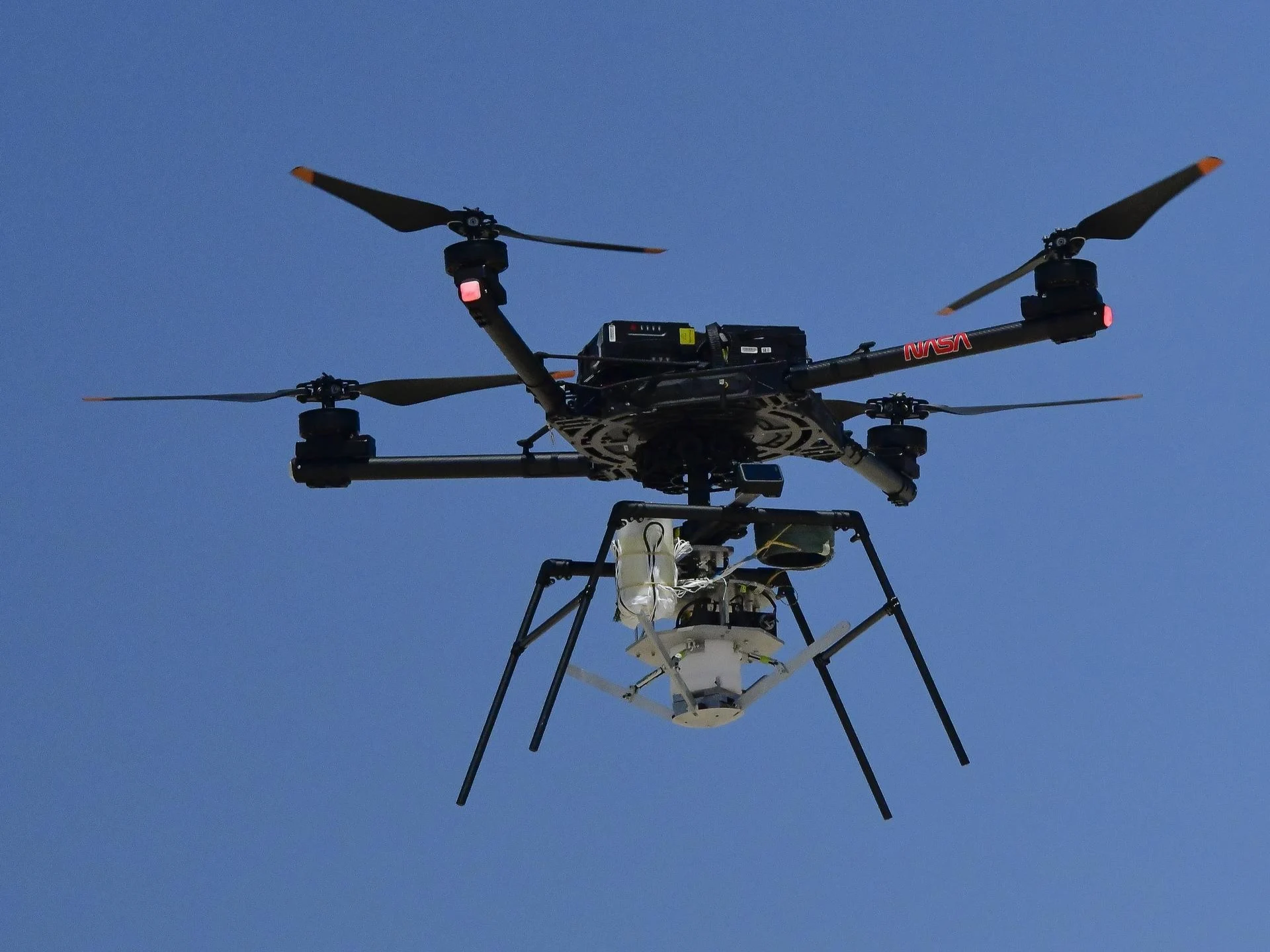
    This test occurred in June and involved a drone launching a capsule that released a parachute equipped with the innovative strain sensors. The EPIC team at NASA’s Armstrong Flight Research Center confirmed that the sensors performed as expected, providing crucial data without disrupting the parachute’s inflation or flight. This real-world information is vital for enhancing the computer models that engineers depend on to create more reliable parachutes for delivering rovers and other scientific tools to Mars.

    Advancements in Sensor Technology

    The recent flight test builds on an earlier stage of the project that was focused on developing the sensor technology. The initial difficulty for the EPIC team was to find a sensor that could stretch along with the parachute fabric and to determine how to attach it to the canopy’s thin and slippery material.

    After examining 50 possible candidates, the team chose the three most promising commercially available sensors for further evaluation. They proceeded to conduct a series of ground tests, including pull tests and “bubble” tests that mimic the 3D stretching of an inflating parachute, to confirm the sensors’ effectiveness before advancing to flight.

    Future Steps and Goals

    Reviewing the flights will assist us in deciding the next steps. We are talking with potential partners to create a framework to gather the data they are interested in exploring. — Matt Kearns, current project manager for EPIC.

    The team is now preparing to analyze the flight data and perform additional temperature tests, aiming to develop a robust system that guarantees safer and more reliable landings as we enter a new era of exploration.

    NASA is presently engaged in numerous tests, particularly focusing on an americium-based nuclear power technology that will support exploration further from Earth. Additionally, NASA is conducting tests aimed at ensuring safer air taxi travel, which will pave the way for the development and acceptance of air taxis.

    Source:
    Link