Category: Computers

  • NASA Loses Contact with Moon Mission Spacecraft After Launch

    NASA Loses Contact with Moon Mission Spacecraft After Launch

    Key Takeaways

    1. The Lunar Trailblazer mission aimed to explore the Moon’s water, including its quantity, location, form, and changes over time.
    2. Contact was lost with the spacecraft just a day after launch due to misaligned solar panels, leading to battery drainage.
    3. The mission utilized two key instruments: the HVM³ infrared spectrometer and the Lunar Thermal Mapper (LTM) for mapping water and minerals.
    4. Despite the mission’s failure, the technologies developed will be used in future lunar missions, such as the UCIS-Moon.
    5. NASA and the Jet Propulsion Laboratory will apply lessons learned from this mission to continue lunar exploration.


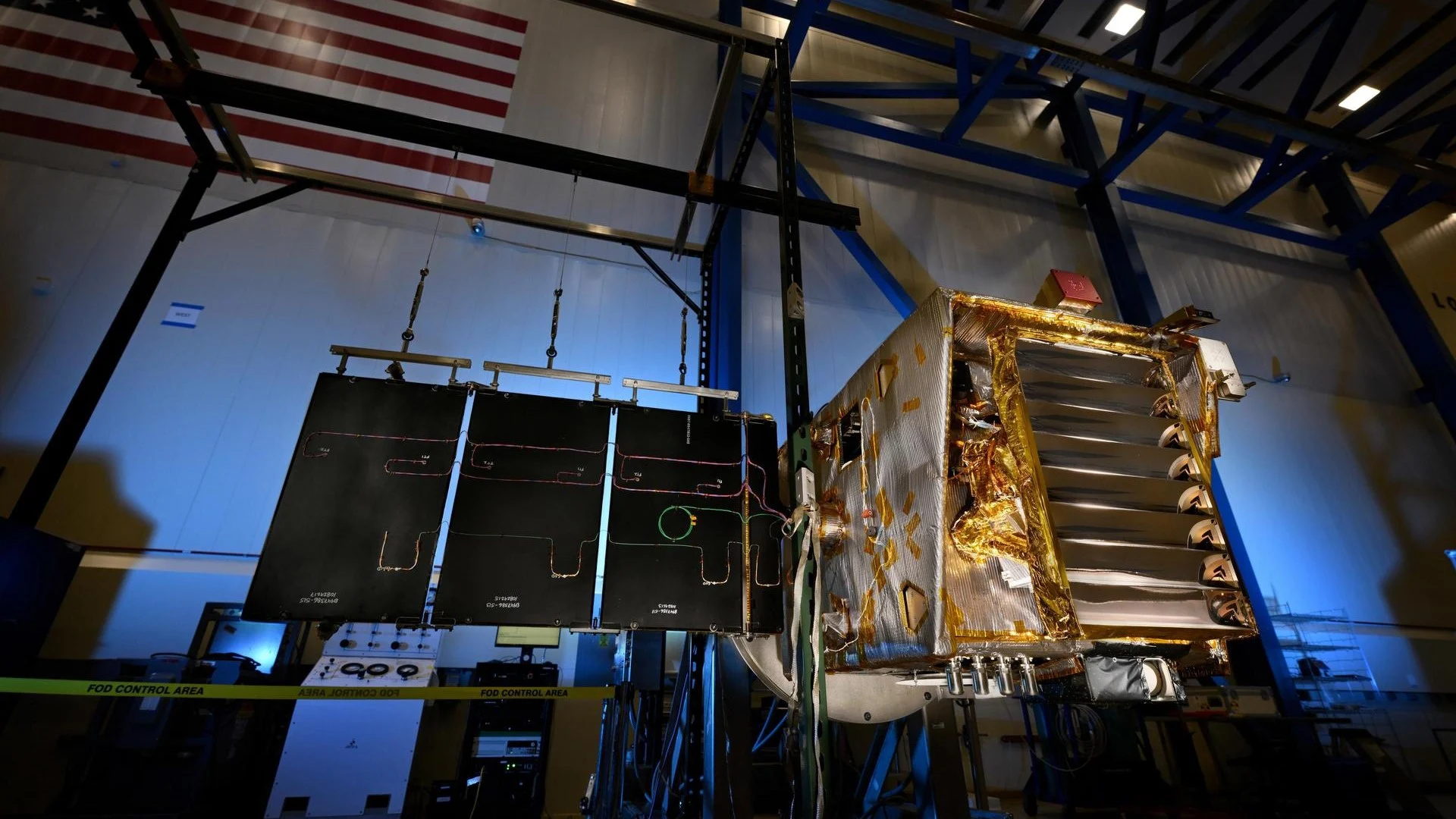
    The Lunar Trailblazer mission, which took off on February 26, was created to explore the Moon’s water in terms of how much there is, where it’s located, its form, and how it changes over time. However, just a day after it launched, the mission’s control team lost contact with the spacecraft. Despite various attempts, they couldn’t re-establish two-way communication.

    Communication Issues

    The only information they managed to get from Lunar Trailblazer suggested that its solar panels were not angled correctly towards the Sun. This misalignment led to the batteries draining. To try to regain contact, NASA teamed up with other groups. They discovered that the Lunar Trailblazer was drifting deeper into space and rotating slowly. Eventually, it became too distant for any attempt at reconnecting to succeed.

    Mission Goals

    Originally, the Lunar Trailblazer mission aimed to answer key questions regarding lunar water using two onboard instruments: the High-resolution Volatiles and Minerals Moon Mapper (HVM³) infrared spectrometer and the Lunar Thermal Mapper (LTM).

    The HVM³ was designed by NASA’s Jet Propulsion Laboratory to identify and chart the locations of water and minerals, while the LTM, developed by the University of Oxford with funding from the UK Space Agency, focused on mapping the minerals and thermal characteristics of the Moon’s surface.

    Importance of the Instruments

    These instruments were expected to deliver crucial data about the Moon’s water quantity, position, type, and how its distribution evolves over time. Such information is vital for the larger goal of establishing a long-term human and robotic presence on the Moon.

    Even though the Lunar Trailblazer mission did not succeed, the technologies used for its instruments will continue to be utilized in future missions. For instance, the Ultra Compact Imaging Spectrometer for the Moon (UCIS-Moon), which has been chosen for an upcoming orbital mission, uses the same spectrometer design as the HVM³.

    NASA and the Jet Propulsion Laboratory will keep exploring with the knowledge gained from this mission, looking forward to new opportunities in lunar exploration.

    Source:
    Link



  • Keychron Launches Ergonomic Mouse with Metal Scroll Wheel for $39.99

    Keychron Launches Ergonomic Mouse with Metal Scroll Wheel for $39.99

    Key Takeaways

    1. Keychron’s M6 ergonomic wireless mouse features an 8 kHz polling rate, improved sensor, and new silent micro switches, addressing previous criticisms of its design compared to the Logitech MX Master 3S.

    2. The updated M6 1K model has a reduced price of $39.99, making it significantly cheaper than the Logitech MX Master 3S, which retails for $79.99.

    3. The M6 mouse series offers similar features to the MX Master, including an unlockable scroll wheel and a side scroll wheel, along with reprogrammable options.

    4. The M6 1K is equipped with the PixArt 3311 sensor, supporting up to 300 IPS tracking and 12,000 DPI, although it lacks some gaming-specific features of its predecessor.

    5. Design improvements include a metal scroll wheel, silent clicks for productivity, a USB Type-C dongle for better compatibility, and support for Keychron Launcher for customization and macro creation.


    Keychron has recently refreshed its M6 ergonomic wireless mouse, introducing an 8 kHz polling rate, an improved sensor, and new silent micro switches. This update addresses many of the usual criticisms aimed at the Logitech MX Master 3S alternative. However, the M6 8K still retails for $69.99, which keeps it in a similar price range to the Logitech.

    Upgraded Features

    With this hardware refresh, Keychron has revamped the switches, scroll wheel, and sensor on the 1 kHz-polling version, aligning it with the design and feel of the M6 8K. Additionally, the price has been reduced by $10, making the Keychron M6 1K half the cost of the most affordable Logitech MX Master 3S, which is currently priced at $79.99 on Amazon.

    Strong Alternative

    Price isn’t the only factor to choose the Keychron M6 over the MX Master. The Keychron M6 has consistently presented itself as a strong contender against the very popular Logitech MX Master mouse series. It boasts a similar unlockable scroll wheel and a side scroll wheel, just like the MX Master. It’s also reprogrammable, although there are some subtle differences in how these features are implemented.

    Sensor Specifications

    The updated Keychron M6 1K is now equipped with the PixArt 3311 sensor, which is a minor downgrade from the 3950 found in the previous 1K model, particularly concerning gaming features. It lacks customizable lift-off distance and supports up to 300 IPS tracking and 12,000 DPI. Nevertheless, in almost every other aspect, the 3311 version of the M6 1K is an enhancement.

    Design Improvements

    The most significant update pertains to the main scroll wheel and the left and right click hardware. Although we have yet to release our M6 8K review, we are in the process of doing so. The metal scroll wheel and silent clicks that have been introduced to the M6 1K are standout features, especially beneficial for productivity users. The silent clicks require less effort to press compared to other mice, making them ideal for extended work sessions. Additionally, the metal scroll wheel allows for customizable acceleration, enabling users to fine-tune their settings. The soft-touch coating also offers a comfortable experience. The new 1K variant includes a USB Type-C dongle, enhancing compatibility with devices like MacBooks while maintaining a snappy feel with the 1 kHz polling rate.

    Functional Enhancements

    The earlier M6 1K had infinite scroll capability but featured a plastic scroll wheel, which felt inferior and resulted in louder scrolling in notched mode. Like the 8K and other 1K versions of the M6 mouse, the updated 1K model supports Keychron Launcher, which has always been a plus for customization, macro creation, and firmware updates (you can read more about Keychron Launcher in our Keychron K4 HE keyboard review).

    The new Keychron M6 1K is priced at $39.99 on Keychron’s official site or $49.99 on Amazon.

    Source:
    Link


  • AMD AM6 Socket: 22% More Pins, Same Size & Cooler Compatibility

    AMD AM6 Socket: 22% More Pins, Same Size & Cooler Compatibility

    Key Takeaways

    1. The upcoming AM6 socket will feature a 22% increase in pin count, totaling 2,100 pins compared to the AM5’s 1,718 pins.
    2. The AM6 socket is expected to maintain a similar size to the AM5, allowing compatibility with existing AM5 coolers.
    3. The new socket will support DDR6 memory and PCIe 6.0, enhancing overall performance and features.
    4. AMD’s Zen 7 architecture, compatible with the AM6 socket, is expected to offer significant performance gains with a potential increase in core count up to 32 cores.
    5. The AM6 socket is projected to be available to the public in 2028, coinciding with the release of Zen 7 CPUs.


    Looks like AMD is getting ready to boost the pin count on its upcoming AM6 socket again. Even so, users might still be able to utilize AM5 compatible coolers since the overall size of the socket probably won’t change much. The new socket is still a few years off from being available to the public, but it will support AMD’s seventh generation Zen architecture, along with the latest PCIe standards.

    Pin Density Increase

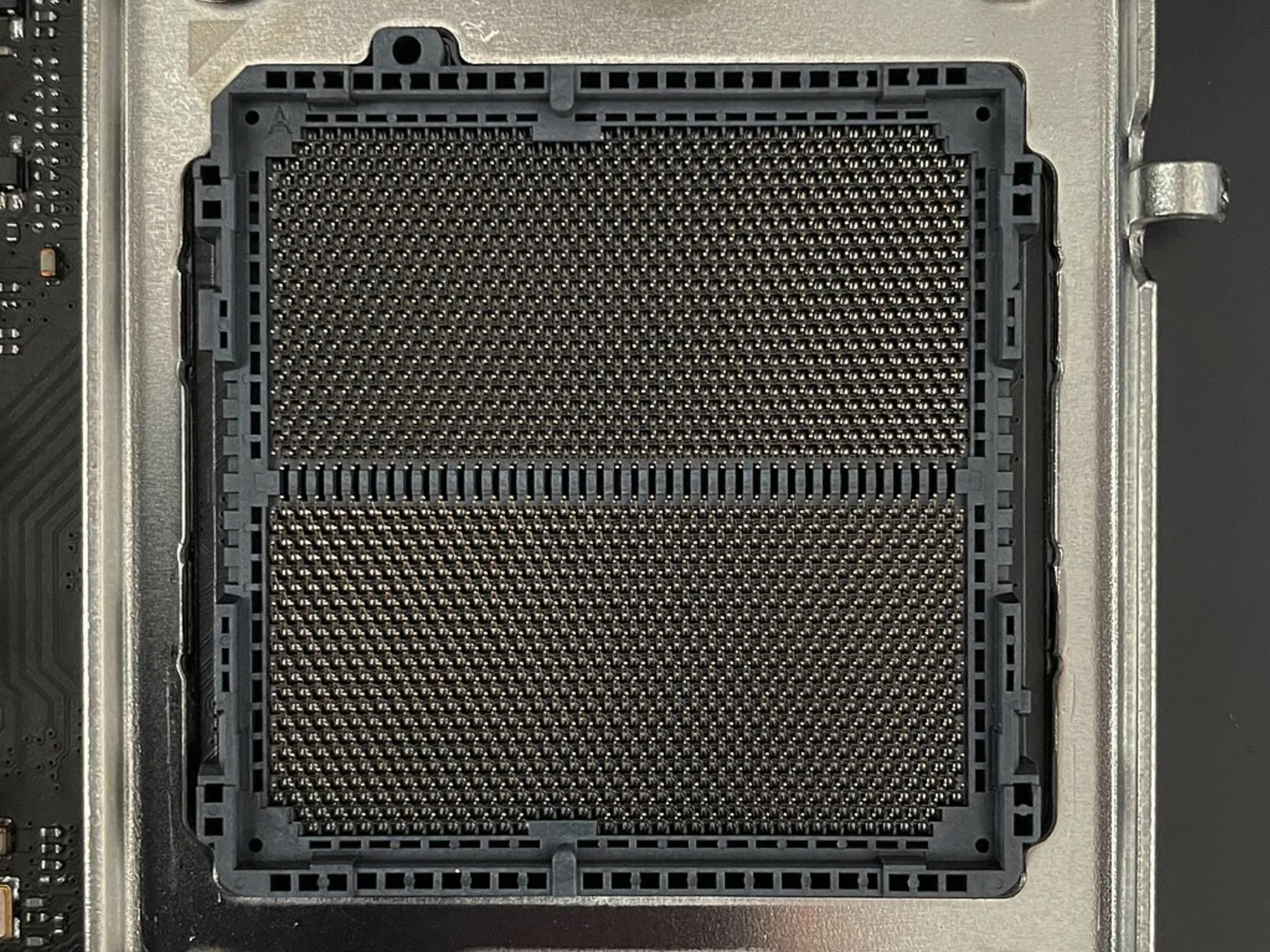
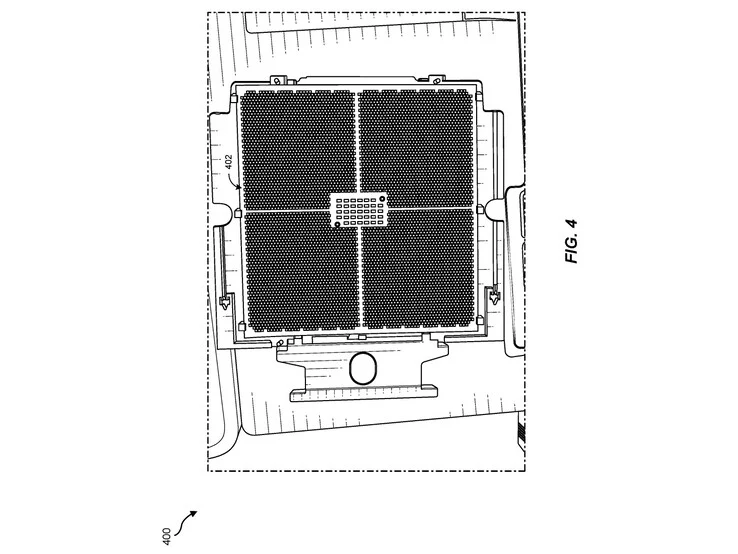
    A report from Bits and Chips, which references insider sources, claims that the AM6 socket will feature a greater pin density than the AM5, coming in at a total of 2,100 pins. The AM5 socket has 1,718 pins, indicating that the new socket will see a 22% increase. This report includes some images from an AMD patent that shows a socket with densely packed pins. Though the images are hard to decipher and the patent itself is not accessible, the arrangement of the pins appears to differ from the current generation socket.

    Similar Size, More Features

    Interestingly, the new socket is said to maintain a similar size to the AM5 socket. AMD seems to have managed to increase the pin density without expanding the overall size of the socket, suggesting that existing CPU coolers should still work with the AM6. The greater pin density will also enable support for DDR6 memory and PCIe 6.0. Furthermore, it is reported that it will be compatible with AMD’s Zen 7 architecture, with CPUs built on this architecture expected to come with significant improvements over those based on Zen 6.

    Core Count and Performance Boost

    A well-known leaker suggested back in June that the Zen 7 CPUs will see a nice increase in core count, possibly reaching up to 32 cores due to dual 16-core CCDs. With Hyperthreading, these CPUs could handle 64 threads. Additionally, the leaker mentioned that these CPUs will include “tons of V-Cache.”

    In conclusion, the Bits and Chips report states that the AM6 socket is set to be commercialized in 2028, which aligns with when the Zen 7 is anticipated to be ready.

    Source:
    Link


  • Intel Panther Lake CPU Profitability Hit by Low 18A Yields

    Intel Panther Lake CPU Profitability Hit by Low 18A Yields

    Key Takeaways

    1. Intel’s Panther Lake laptop processors have no confirmed launch date, with speculation ranging from early 2026 to sooner.
    2. Intel is facing yield challenges, potentially selling chips at lower profit margins or losses due to poor production yields.
    3. The die size of Panther Lake chips is approximately 274.2 mm², larger than the previous Lunar Lake size of 220 mm².
    4. Production hurdles include yields reported at only 10%, significantly below the desired 50% for break-even, leading to high defect rates.
    5. Intel’s focus is on producing Panther Lake and Clearwater Forest chips while preparing for future Nova Lake desktop chips using TSMC’s advanced 2 nm node.


    Despite managing to power on, Intel’s new laptop processors that are built on the Panther Lake design still do not have a clear launch date. Some believe it could happen as soon as early 2026, while others think it might be sooner. However, Intel has remained quiet about the situation, making it difficult to know for sure. A recent report is trying to clarify what’s happening with Panther Lake.

    Yield Challenges

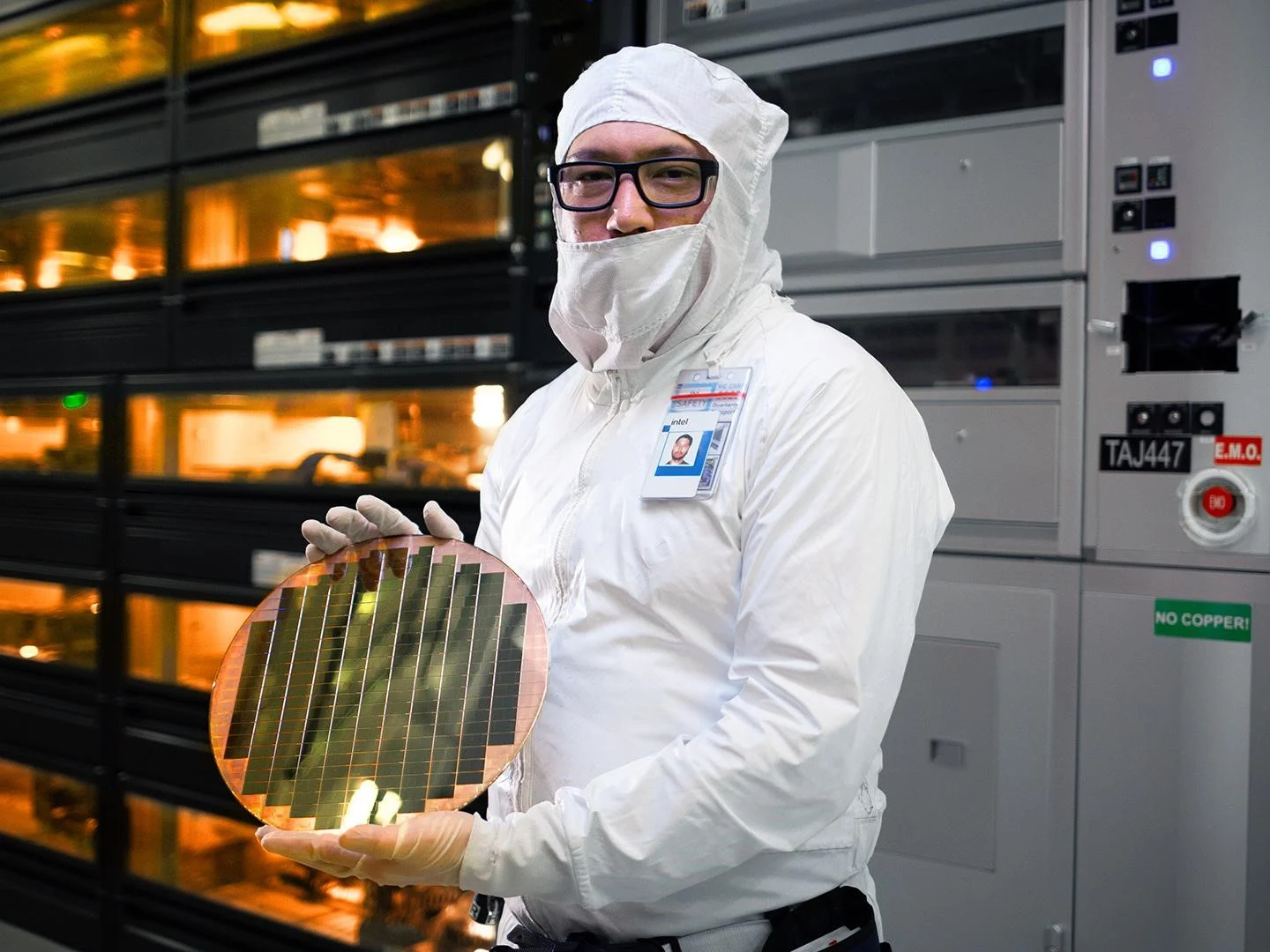
    Insiders informed Reuters that “Intel may have to sell some chips at a lower profit margin or at a loss,” suggesting that the situation with Intel 18A’s yield has not improved much. Yield figures are not very informative without knowing the die size, but a previous leak indicated that the die size would be around 274.2 mm², which is slightly larger than the Lunar Lake’s size of approximately 220 mm².

    Production Hurdles

    The report also mentions that Intel was hoping to achieve 50% yields at some point to break even, but if they are selling chips at a loss, this clearly hasn’t been achieved. Allegedly, “Panther Lake chips had about three times too many defects for Intel to start high-volume production.” Yields were reported to be at 10%, a claim that was also made in an earlier report, which Intel strongly refuted.

    Future Prospects

    With Intel 18A effectively limited to new external clients, its main goal is to successfully produce enough Panther Lake and Clearwater Forest chips. The upcoming Nova Lake desktop chips will utilize TSMC’s advanced 2 nm node for the CPU tile and various suppliers for other parts. This will also prepare the way for the next-generation 18A-P and the future 14A, marking Intel’s significant return to the foundry sector.

    Source:
    Link


  • TSMC Takes Legal Action Over Potential Trade Secrets Leak

    TSMC Takes Legal Action Over Potential Trade Secrets Leak

    Key Takeaways

    1. TSMC has taken legal and disciplinary actions against staff for leaking confidential trade information.
    2. Two ex-employees and a related individual have been arrested, marking the first use of national security law for trade secrets in Taiwan.
    3. The breach was detected early through TSMC’s monitoring systems, although details of the information leaked remain undisclosed.
    4. The leak may involve TSMC’s upcoming 2-nanometer chip technology, with mass production expected in late 2025.
    5. Taiwanese authorities have conducted interrogations and searches related to the case as part of the ongoing investigation.


    Taiwan Semiconductor Manufacturing Company (TSMC) has disclosed that it has taken legal and disciplinary measures against staff who are believed to have leaked confidential trade information from the firm. This possible breach of trade secrets was uncovered through a standard monitoring process, which indicated unauthorized actions, as reported by Reuters.

    Arrests Made in Connection with the Case

    Following these revelations, Taiwanese officials apprehended two ex-employees along with a third individual related to these charges. This marks the first instance in which the national security law will be applied in a case involving trade secrets. TSMC has not provided additional information about what was leaked or the extent of the breach, stating that judicial scrutiny restricts their ability to disclose such details.

    Early Detection of the Leak

    The firm indicated that the breach was identified during its initial stages. “Thanks to our extensive and effective monitoring systems, we were able to spot the problem early,” TSMC stated. According to Nikkei Asia, it appears that the employees might have been involved in acquiring details about TSMC’s 2-nanometer (N2) chip technology, although it remains unclear who received this information.

    This specific chip is still being developed and is expected to be the most advanced regarding density and energy efficiency, according to the manufacturer. TSMC has announced that mass production is projected for the second half of 2025, aiming for a commercial release in early 2026.

    Investigation Details Released

    The Taiwan High Prosecutors Office revealed that multiple suspects and witnesses were interrogated between July 25 and July 28, and multiple searches were performed at the homes and workplaces of those involved, as reported by The Financial Times.

    Source:
    Link


  • Intelligence Agents Discover 2020 Bitcoin Theft from LuBian Mining Pool

    Intelligence Agents Discover 2020 Bitcoin Theft from LuBian Mining Pool

    Key Takeaways

    1. Arkham Intelligence identified a hack from December 2020 involving the closed Chinese mining pool LuBian, which lost 127,426 Bitcoins valued at $3.5 billion at the time, now worth about $14.5 billion.

    2. The breach occurred on December 28, 2020, with over 90% of LuBian’s holdings disappearing in one transaction, followed by an additional $6 million in Bitcoins and USDT extracted the next day.

    3. A weak key-generation method with only 32 bits of entropy was likely the cause of the breach, making it vulnerable to attacks.

    4. LuBian attempted to recover their stolen funds by spending 1.4 Bitcoins on over 1,500 messages pleading with the attacker to return the money.

    5. LuBian still holds 11,886 Bitcoins (valued at around $1.35 billion), while the hacker has moved funds recently, ranking them as the 13th largest known Bitcoin holder.


    Arkham Intelligence has tracked down a hack from December 2020 involving the now-closed Chinese mining pool LuBian, which lost 127,426 Bitcoins. At the time, those coins were valued at $3.5 billion, but they are now worth about $14.5 billion. This mining pool briefly held the sixth spot globally, commanding roughly six percent of Bitcoin’s total hash rate in mid-2020, before it vanished from the spotlight in 2021.

    Details of the Breach

    According to blockchain investigations, the primary breach happened on December 28, 2020, when over 90 percent of LuBian’s holdings disappeared in a single transaction. The following day, attackers extracted an additional $6 million in Bitcoins and USDT from a LuBian address on the Bitcoin Omni layer. On December 31, LuBian rushed to transfer their remaining assets into recovery wallets.

    Weak Key-Generation Routine

    Arkham’s findings suggest that a notably weak key-generation method was likely the source of the breach: LuBian reportedly used just 32 bits of entropy, a level that can be easily cracked with gaming equipment if given enough time.

    The pool seemed to have identified the breach, spending 1.4 bitcoins on over 1,500 OP_RETURN messages begging the attacker to return the stolen funds. These messages strongly imply they were sent by the real operators rather than someone trying to impersonate them.

    Current Status of the Coins

    Both parties have kept their coins since the incident. LuBian still possesses their remaining 11,886 Bitcoins (valued around $1.35 billion), while the hacker only moved funds last to consolidate wallets in July 2024. At present values, the stolen Bitcoins would rank the attacker as the 13th largest known Bitcoin holder, just ahead of the Mt. Gox attacker, according to Arkham’s rankings.

    Source:
    Link


  • US Pressures TSMC to Acquire 49% of Intel for Tariff Relief

    US Pressures TSMC to Acquire 49% of Intel for Tariff Relief

    Key Takeaways

    1. The US government, under President Trump, has used trade tariffs inconsistently to address the trade deficit, significantly impacting Taiwan as a trading partner.

    2. Taiwan faces a 20% tariff on exports to the US, higher than Japan’s 15%, prompting negotiations for potential tariff reductions.

    3. TSMC is under pressure from Trump to meet two strict conditions for tariff relief, which includes a substantial financial investment and a stake in Intel.

    4. Intel is struggling financially, with a 33% revenue drop from 2021 to 2024, raising concerns about its ability to meet the US’s semiconductor manufacturing goals.

    5. TSMC’s potential reluctance to comply with US demands regarding Intel could affect the future of both companies and the US chip supply chain.


    The US government, under President Donald Trump, has primarily utilized trade tariffs to tackle the nation’s trade deficit with its partners. However, this tariff strategy has been inconsistent and often unexpected. Taiwan, a significant trading ally of the US, has also felt the impact of these tariffs.

    Tariff Rates and Their Implications

    With tariffs set at 20%, Taiwan faces a higher rate than nations like Japan, which has a baseline of 15%. Unsurprisingly, this 20% tax on Taiwanese exports to the US can severely impact Taiwanese companies. Therefore, Taiwan is negotiating with the US to lower these tariffs or potentially remove them completely. Nevertheless, a recent report from Taiwan indicates that President Trump has laid down two tough conditions for any tariff relief.

    According to mnews.tw, an industry insider revealed that Trump has required TSMC to meet these two strict conditions in exchange for tariff reductions. Ignoring the implications of TSMC owning 49% of Intel, these requirements are significant financial obligations. TSMC is already pouring a considerable amount into the US, with one of its fabrication plants expected to begin volume production by 2024. The company is also in the process of constructing two additional fabs in Arizona, along with an R&D center and a packaging facility. In total, TSMC has committed to investing $165 billion in the US.

    Financial Challenges Ahead

    Trump’s supposed requirement for TSMC to invest an additional $400 billion in the US while acquiring a share in Intel appears unrealistic from a financial perspective. Intel is experiencing a downward trend. All its sectors, from fabrication to consumer goods, are facing challenges. This decline is reflected in its reported annual revenue, which has dropped dramatically from $79 billion in 2021 to $53 billion in 2024, marking a 33% decrease.

    Intel plays a crucial role in the US strategy for domestic semiconductor manufacturing. The company has already secured billions in federal funding. However, this financial aid hasn’t resolved Intel’s issues, as the timeline for its Ohio fab has been pushed back from 2025 to between 2030 and 2031. This delay appears to be tied to Intel’s attempts to conserve capital in light of insufficient support from the US CHIPS Act and external partners.

    The Future of TSMC and Intel

    In summary, it seems that the US administration is pressuring TSMC to take a significant stake in Intel to provide much-needed capital and sustain the US’s domestic chip supply chain ambitions. However, TSMC might not agree to this condition.

    It will be interesting to watch Intel in the next few months. There are some promising products in development, like the Panther Lake and Nova Lake CPUs. If these products perform well, it could lead to improvements for Team Blue.

    Source:
    Link


  • Geekom A6 Mini PC: Powerful, Compact, and Now in Matte Pink Discount

    Geekom A6 Mini PC: Powerful, Compact, and Now in Matte Pink Discount

    Key Takeaways

    1. Compact Design: The Geekom A6 mini PC measures just 4x4x1.4 inches and features a stylish matte pink aluminum finish.

    2. Reliable Performance: Extensive testing ensures the A6’s reliability, with a three-year warranty and dedicated support for users.

    3. Powerful Specs: Equipped with an AMD Ryzen 7 6800H APU, 32 GB RAM, and a 1 TB SSD, the A6 is suitable for multitasking, gaming, and creative tasks.

    4. Innovative Cooling: The A6 uses IceBlast cooling technology to maintain performance without throttling during demanding operations.

    5. Versatile Connectivity: It includes multiple ports, supports up to four 4K displays, and offers Wi-Fi 6E and Bluetooth 5.4 for a seamless online experience.


    Geekom, a leader in the mini PC market, has launched a new Matte Pink version of the popular A6 mini PC.

    Compact Powerhouse

    The Geekom A6 is a small device that holds impressive power, despite its tiny size. Measuring only 4x4x1.4 inches, it fits perfectly in any office environment. Crafted from high-quality aluminum, the A6 not only looks stylish but also stands out, particularly with its eye-catching pink finish.

    Reliable and Versatile

    Geekom has put the A6 through extensive testing, covering environmental factors, ports, radiation, and overall system reliability. This ensures that the A6 is a dependable machine for everyday use. Additionally, Geekom provides a three-year warranty along with dedicated support, giving users peace of mind.

    The A6 offers versatility in operating systems. While it comes pre-loaded with Windows 11 Pro, it also supports various Linux distributions such as Ubuntu.

    Performance and Specs

    At the heart of the A6 is the AMD Ryzen 7 6800H APU, which includes a powerful integrated Radeon 680M GPU. This mini PC is ideal for those needing a solid system for office tasks, web browsing, and even photo and video editing, as well as casual gaming.

    With 32 GB of dual-channel DDR5-4800 RAM and a speedy 1 TB PCIe NVMe SSD, the A6 excels at multitasking in collaboration software, creative tools, coding, and gaming in popular titles like CS:GO, Fortnite, Genshin Impact, Apex Legends, and Valorant.

    Innovative Cooling Technology

    Geekom has integrated its latest IceBlast cooling technology to ensure the A6 maintains optimal performance, preventing any throttling during demanding tasks.

    Connectivity Options

    Even with its small size, the Geekom A6 offers ample connectivity options. It features 2x HDMI 2.0 outputs and 2x USB4 ports, along with several USB 3.2 Gen2 Type-A ports, an SD card reader, and a 2.5 GbE RJ-45 port, allowing users to connect a wide range of peripherals, including support for up to four 4K displays simultaneously.

    For wireless connectivity, it includes fast Wi-Fi 6E and Bluetooth 5.4, providing a seamless experience for online gaming, 8K video streaming, and real-time VR applications.

    You can purchase the Geekom A6 in matte pink for only $449 on Geekom and Amazon. Use the code NBCA6PINK for an extra 5% discount at the checkout.

    Source:
    Link


  • Lenovo Unveils Affordable Power Bank with 125W Fast Charging

    Lenovo Unveils Affordable Power Bank with 125W Fast Charging

    Key Takeaways

    1. Fast Charging Capability: The Lenovo ThinkPlus Fluxo power bank offers 125 W fast charging, capable of charging a ThinkPad X1 Carbon AI laptop from 0% to 35% in about 30 minutes.

    2. Wide Compatibility: It supports multiple charging standards, including SCP, PPS, QC, and PD, allowing it to charge various devices.

    3. Impressive Capacity: The power bank has a capacity of 12,800 mAh, capable of charging most modern smartphones twice.

    4. Port Configuration: It features one USB Type-A port (30 W max) and two Type-C ports (125 W max), although power output for all ports when used simultaneously is unspecified.

    5. Additional Features: It includes 45 W self-charging support, a built-in smart display, a compact design, and is priced at approximately $32 (CNY 229) in China.


    Lenovo has introduced a new budget-friendly power bank in China, which is part of the ThinkPlus Fluxo series. This power bank offers 125 W fast charging capabilities and is reported to take the ThinkPad X1 Carbon AI laptop from 0% to 35% in about 30 minutes. It is also designed to work with standard charging protocols.

    Wide Compatibility

    The company emphasizes that the power bank supports various charging standards, including SCP, PPS, QC, and PD. This broad compatibility allows the ThinkPlus Fluxo 125 W power bank to charge a wide array of devices, even those that require less power.

    Impressive Capacity

    In terms of capacity, the new Lenovo power bank is rated at 12,800 mAh. According to the company, this means it can charge most of the latest smartphones twice. It features one USB Type-A port and two Type-C ports.

    The two USB Type-C ports can deliver up to 125 W (240 W Anker Bio-Braided 10-ft USB-C cable currently priced at $15.29 on Amazon), while the Type-A port offers a maximum of 30 W for fast charging. However, Lenovo has not specified the power output for each port when all three devices are connected to the power bank.

    Additional Features

    Other key features of the ThinkPlus Fluxo 125 W include support for 45 W self-charging, a built-in smart display, and a compact design. The power bank’s launch price in China is CNY 229, which is approximately $32. Lenovo has not yet provided information regarding its availability and pricing in other markets, as the company is not particularly known for releasing all its accessories internationally.

    Source:
    Link


  • BricBloc: 3-in-1 Modular Charger, Docking Station & M.2 Enclosure

    BricBloc: 3-in-1 Modular Charger, Docking Station & M.2 Enclosure

    Key Takeaways

    1. The BricBloc is a customizable hub that functions as a standard GaN charger and docking station, providing up to 67 watts of power.
    2. It includes features like HDMI 2.0 for 4K60 video output and a USB 3.2 Gen 2 Type-A port with a maximum output of 5 watts.
    3. The hub has two USB Type-C ports, one of which supports full USB Type-C specifications and charges at 62 watts, both with data transfer speeds of up to 10 Gbps.
    4. An additional module allows for an M.2 2230 SSD insertion, which provides extra connectivity and power options.
    5. The BricBloc is currently crowdfunding on Indiegogo, with the Essential Kit priced at $89 and the Complete Kit with a 512GB SSD at $159, expected to ship in September.


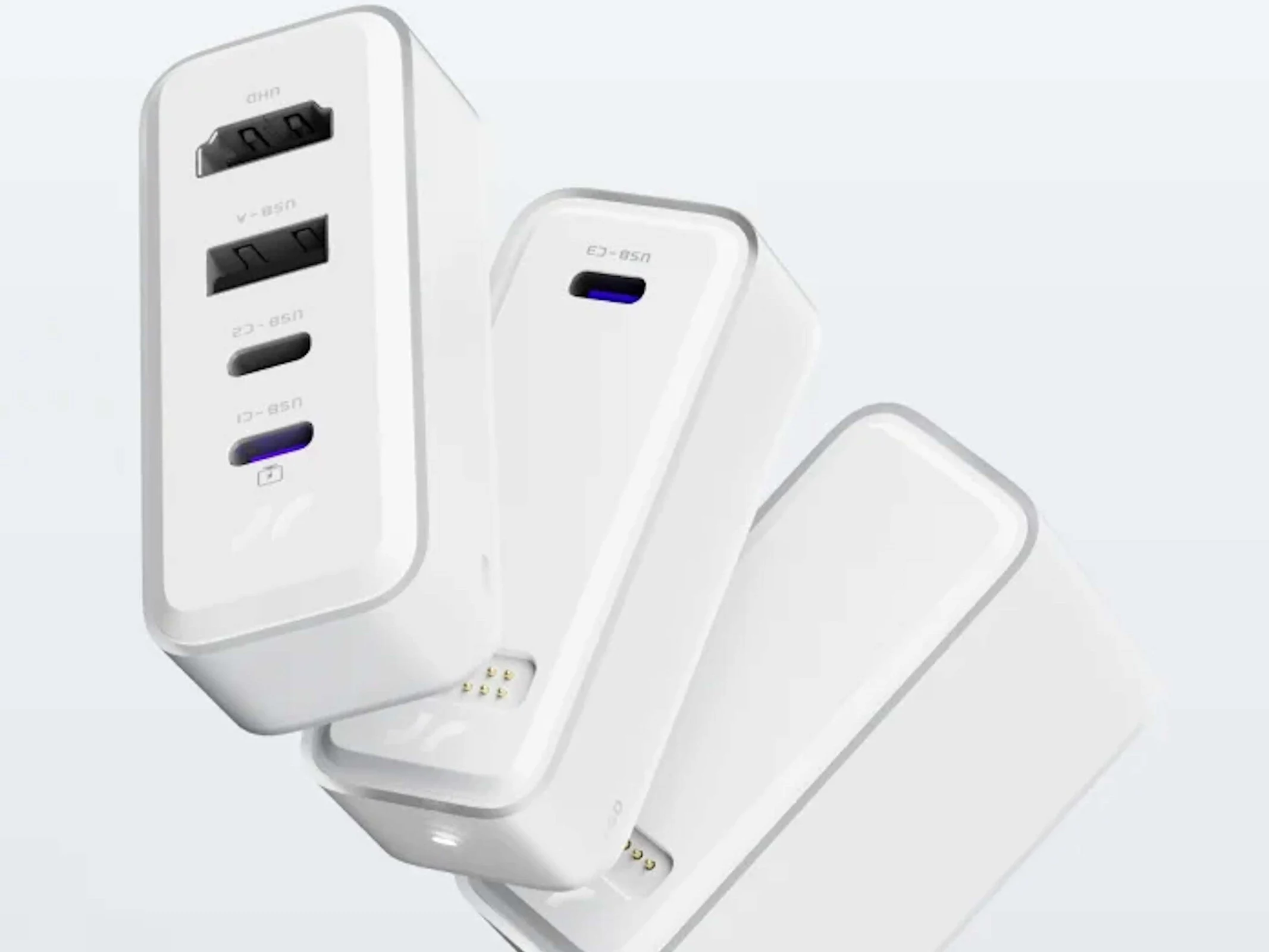
    We’ve shared insights on different chargers and docking stations before. The BricBloc is a customizable hub that can be tailored to meet specific needs, although it has some clear downsides. Alone, it functions as a standard GaN charger, delivering up to 67 watts through a USB Type-C port. Additionally, it can operate as a docking station, providing HDMI 2.0 for 4K60 video output and featuring a USB 3.2 Gen 2 Type-A port that can deliver a maximum of 5 watts.

    Connectivity Options

    Both USB Type-C ports are capable of data transfer speeds reaching 10 Gbps, but only one of them supports the complete USB Type-C specification and can charge at 62 watts. There’s an additional module that allows for the insertion of an M.2 2230 SSD. This SSD module also includes a USB Type-C port that can output 62 watts and achieve bandwidth of up to 10 Gbps. You can stack these three modules together, or use them separately, enhancing the flexibility of the BricBloc.

    Crowdfunding Details

    Currently, the device is raising funds on Indiegogo. The Essential Kit, which includes the GaN charger and hub, is available for $89. On the other hand, the Complete Kit, bundled with a 512GB SSD, is priced at $159. As with any crowdfunding project, there are inherent financial risks involved. The BricBloc is anticipated to ship in September.

    Source:
    Link