Category: All News

  • Osmo Pocket 4P: Dynamic Range Upgrade for DJI Vlogging Camera

    Osmo Pocket 4P: Dynamic Range Upgrade for DJI Vlogging Camera

    Key Takeaway

    – Osmo Pocket 4 replaces Osmo Pocket 3 (about $499) and is available in most markets outside the US, with upgrades over the previous model.
    – DJI is teasing the Osmo Pocket 4P (likely 4 Pro) with a Cannes appearance ahead of a full debut.
    – Dynamic range: Pocket 4 has 14 stops on its main lens, while the 4P is claimed to offer up to 17 stops, signaling cinema-quality potential.
    – Full specs and details remain unconfirmed, with teaser imagery and limited details circulating ahead of a broader announcement.

    Hardly any time has passed since DJI replaced the Osmo Pocket 3 (curr. $499 on Amazon) with the Osmo Pocket 4. Available in all but the US, the Osmo Pocket 4 contains various upgrades over its predecessor. Please see our launch article for more details about what is still DJI’s latest vlogging camera release, at least for now anyway. The swap signals a continued push toward compact, portable cinema capabilities that still fit in a pocket, even as enthusiasts probe its full potential.

    Osmo Pocket 4: A quick take

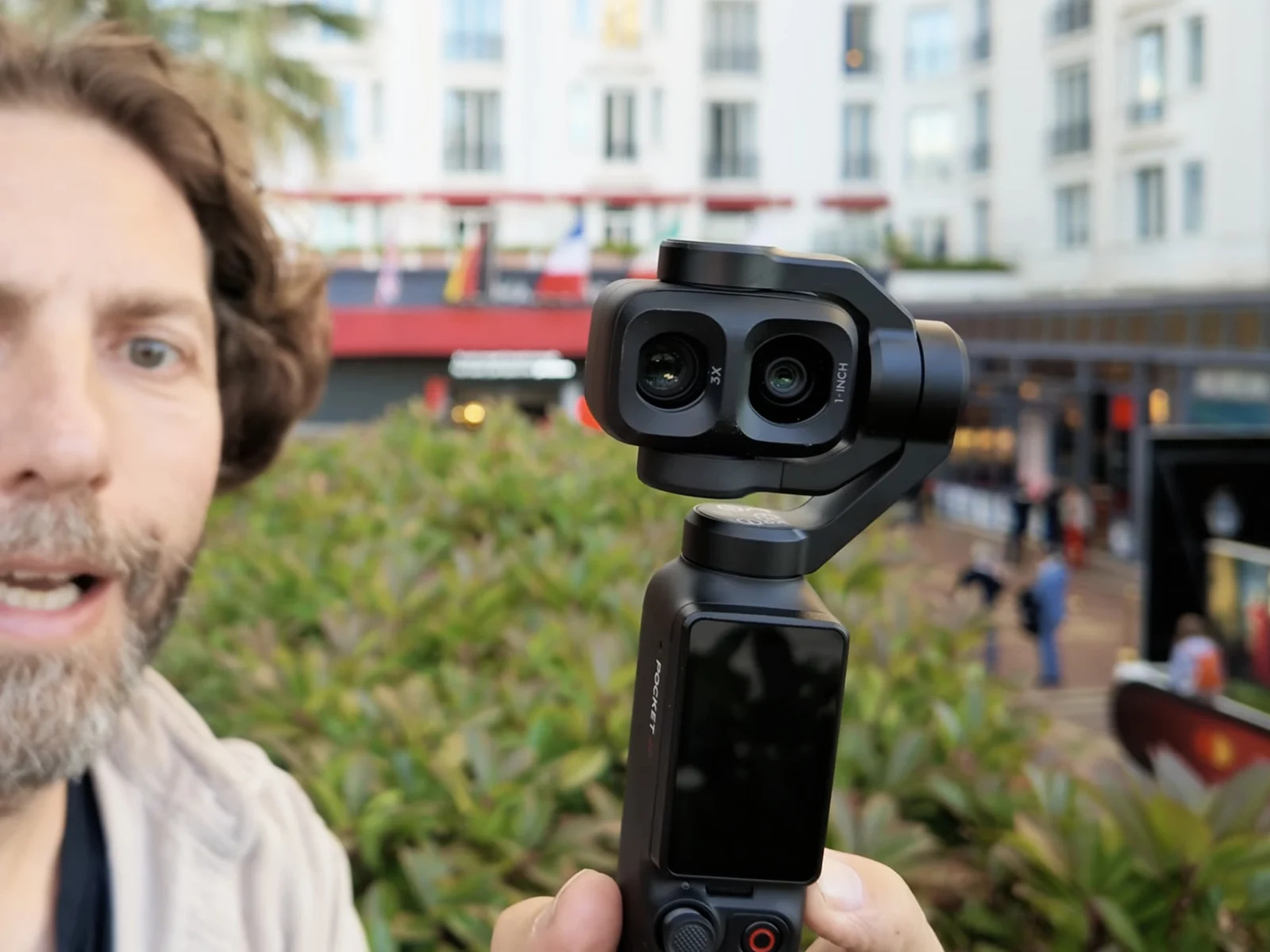
    DJI hasn’t kept the tease to themselves for long; the company is already in the throes of presenting the Osmo Pocket 4P, which many had speculated would be named the Osmo Pocket 4 Pro. For instance, DJI has now brought the Osmo Pocket 4P to the Cannes Film Festival ahead of its full debut, turning heads with a red carpet moment and the promise of a more capable model.

    Pro tease and festival appearance

    Initially, it seemed that the company would make a broader announcement on May 14, having teased the camera’s red carpet appearance on May 11. At the time of publication, the company has not been forthcoming with any additional details. Nonetheless, it appears to have shared imagery with some outlets, which we have embedded above. Additionally, Adam Juniper of Digital Camera World has confirmed a crucial hardware upgrade that will help distinguish the Osmo Pocket 4P from its sibling.

    Announcement timing and imagery

    Discussed in the video below, Juniper has confirmed that the new vlogging camera supports 17 stops of dynamic range across its 1-inch style primary lens. Although not acknowledged in the 71-second clip, the Osmo Pocket 4 musters 14 stops of dynamic range, which was already a major upgrade over the Osmo Pocket 3. While the full extent of camera hardware improvements remains unknown for now, Juniper has hinted that these extra steps of dynamic range help the Osmo Pocket 4P achieve cinematic video quality, achievable by some small camera rigs.

    Dynamic range and hardware hints

    Even with the hints and previews, the full range of improvements remains speculative until DJI releases comprehensive specs. For now, prospective buyers and vloggers should watch the official channels for confirmed details on the pocket-sized successor, as the trend toward higher dynamic range and smarter processing continues to shape the mini camera category.

    Sources

  • Bluetti Converts Power Stations to PV Storage with Balcony Solar

    Bluetti Converts Power Stations to PV Storage with Balcony Solar

    Key Takeaway

    – Bluetti launches Balco Series for balcony power plants: Balco 260, Balco 500 storage systems, and Balco Transfer Hub (grid-tied) to enable balcony storage and cross-brand compatibility with portable power stations.
    – Output to home grid and total power: Balco 260 up to 800 W to grid (2,300 W total with battery); Balco 500 up to 3,680 W total with battery+grid.
    – PV input capabilities: Balco 260 up to 2,400 W PV via four MPPTs; Balco 500 up to 4,300 W PV with high-voltage MPPT (70–470 V).
    – Safety and BMS: 5VA flame-retardant housing, redundant design, and predictive intelligent BMS.
    – Promotion/availability: Pricing and availability not disclosed; promotion page offers 20% discount and a €500 voucher.

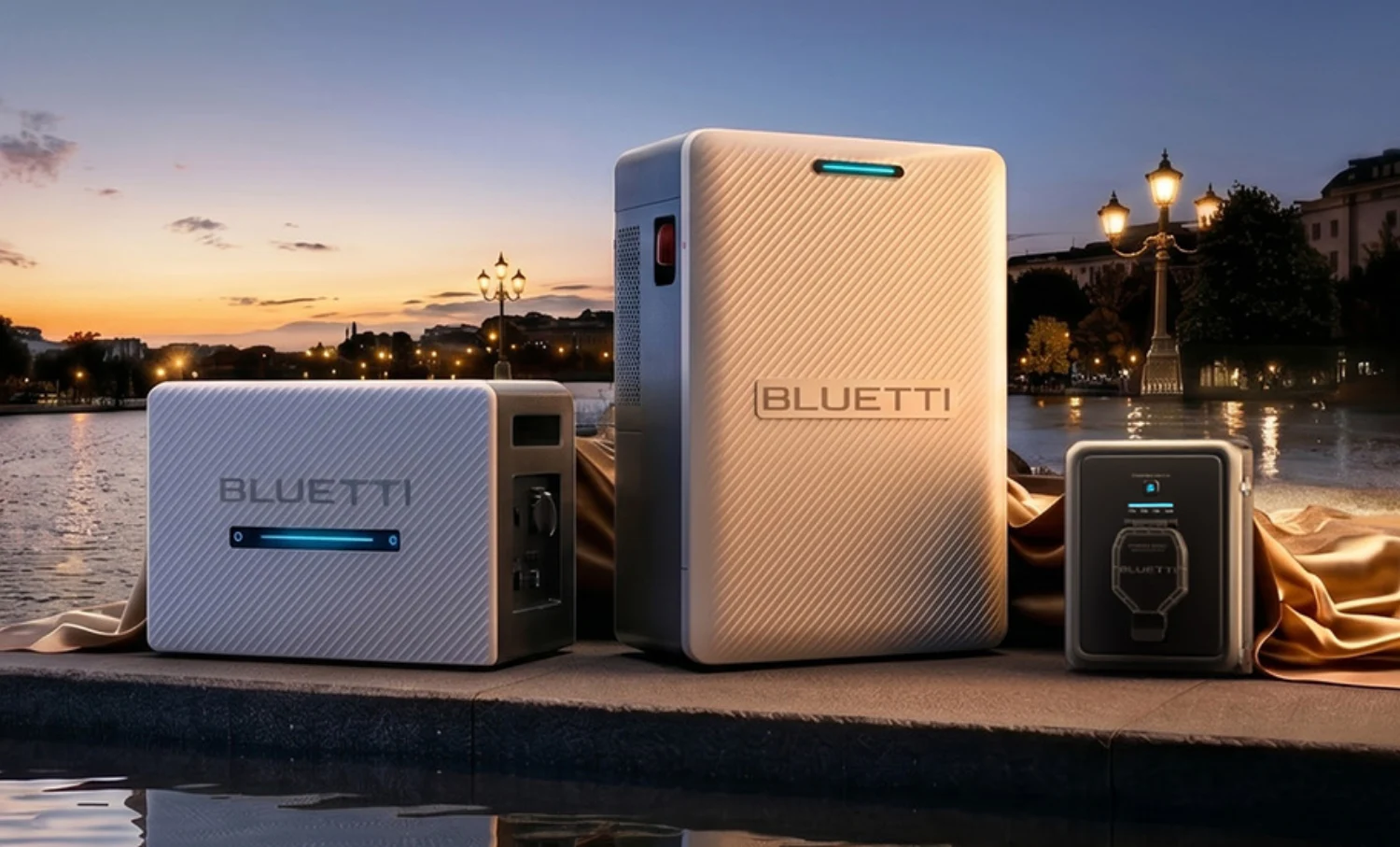
    On the same day as Anker Solix’s Solarbank 4 Pro launch, Bluetti is also bringing new balcony power plant solutions to the market. Unveiled at an event in Paris, the Bluetti Balco Series consists of three products: the Balco 260, the Balco 500, and the Balco Transfer Hub. These devices are pitched as smarter energy solutions for urban balconies, aiming to combine convenience with expandable power, reliability, and simplified management for homeowners.

    Balco Series overview

    The Balco 260 and Balco 500 are classic storage systems for balcony power plants, similar to those we have seen from various other manufacturers. They combine MPPT controllers, inverters, modularly expandable battery storage (up to 15 or 30 kWh), and safety technology into one smart system, offering predictable uptime, a tidy enclosure, and easy monitoring for residents dealing with fluctuating electricity prices.

    Storage capabilities and PV input

    In accordance with balcony power plant regulations, both systems feed up to 800 W into the home grid. Management can be handled via the “S Meter,” which magnetically attaches to the electricity meter. According to the manufacturer, a total output of up to 2,300 W is possible for the Balco 260 when combining battery storage and grid power, while the Balco 500 can reach up to 3,680 W.

    PV input and safety features

    On the input side, the Bluetti Balco 260 can accept up to 2,400 W of PV power via its four MPPTs. Thanks to its high-voltage MPPT design (70 to 470 V), the Balco 500 can even handle up to 4,300 W of PV power. For safety, Bluetti utilizes a 5VA flame-retardant housing, a redundant system design, and a predictive intelligent Battery Management System (BMS) designed to proactively minimize operational risks.

    Transfer Hub and interoperability

    Also new is the Bluetti Balco Transfer Hub. This is a grid-tied controller that allows traditional portable power stations from various manufacturers to be used as storage for a balcony power plant. According to Bluetti, this solution also offers scenario-based applications, AI optimization, and cross-platform interoperability, providing house and apartment owners with a simple and flexible way to reduce electricity costs using solar energy. Information regarding availability and pricing is not yet available. However, interested parties can register on this promotion page to secure a 20% discount and a €500 voucher Bluetti

    Sources
  • Microsoft MDASH AI Finds 16 Windows Flaws Before Exploitation

    Microsoft MDASH AI Finds 16 Windows Flaws Before Exploitation

    Key Takeaway

    – MDASH (Multi-model Agentic Scanning Harness) found 16 Windows vulnerabilities (4 critical RCEs) before attackers; all patched on May 12 Patch Tuesday; uses 100+ specialized agents and human verification.

    – The four critical flaws include CVE-2026-33827 (tcpip.sys, crafted IPv4) and CVE-2026-33824 (IKEEXT, pre-auth RCE over UDP 500); plus two 9.8 CVSS flaws in Netlogon and Windows DNS Client; most flaws were network-reachable without credentials.

    – MDASH is model-agnostic and goes beyond traditional scanners by multi-file, multi-path reasoning with verification steps before human review; demonstrated strong performance in CyberGym and private testing (0 false positives in StorageDrive; 96–100% recall on MSRC-related code).

    – It’s in limited private preview with enterprise customers, with broader availability expected in coming months, part of a broader AI-driven defense/offense race among major players.

    Microsoft has a new AI system that hunts for Windows vulnerabilities, and it just proved its worth. The system, codenamed MDASH, found 16 security flaws in Windows before any attacker could get to them, including four critical remote code execution bugs that could have handed unauthenticated attackers a straight line into enterprise networks. All 16 were patched in the May 12 Patch Tuesday. Satya Nadella posted about it on X the next day.

    MDASH’s modular, multi-model approach

    MDASH stands for Multi-model Agentic Scanning Harness. Microsoft’s Autonomous Code Security team built it, with several members coming from Team Atlanta, the group that won the $29.5 million DARPA AI Cyber Challenge. It does not work like a traditional scanner or a single AI model reviewing code. It runs more than 100 specialized agents across a mix of frontier and distilled models, each one assigned a specific job: some look for flaws, others challenge whether the finding is real, and a final stage tries to build inputs that prove the bug is actually exploitable. Only then does a human engineer see the result.

    The 16 vulnerabilities and critical flaws

    The 16 vulnerabilities are spread across the Windows TCP/IP stack, the IKEEXT IPsec service, and HTTP.sys, Netlogon, Windows DNS, and the Telnet client. Ten were kernel-mode. Most were reachable over the network without any credentials. Two of the four critical flaws stand out. CVE-2026-33827 lives in tcpip.sys and is triggered by crafted IPv4 packets. CVE-2026-33824 is a pre-authentication double-free in the IKEEXT service, reachable over UDP port 500 on machines running RRAS VPN, DirectAccess, or Always-On VPN. Both yield LocalSystem execution. Two more critical flaws in Netlogon and the Windows DNS Client each carried CVSS scores of 9.8.

    Microsoft says these were not bugs that a standard scanner would surface. The tcpip.sys flaw required reasoning across three concurrent code paths, all freeing the same object. The IKEEXT issue spanned six source files. That kind of multi-file, multi-path analysis is exactly where single-model approaches fall apart.

    Performance, testing and notable results

    MDASH scored 88.45% on CyberGym, a UC Berkeley benchmark built around 1,507 real-world vulnerability reproduction tasks. That put it at the top of the public leaderboard. Anthropic’s Mythos Preview model scored 83.1%. OpenAI’s GPT-5.5 scored 81.8%. In private testing against a Windows driver codebase called StorageDrive that had never been publicly released, MDASH found all 21 planted vulnerabilities with zero false positives. Against five years of confirmed MSRC cases in clfs.sys and tcpip.sys, it hit 96% and 100% recall.

    The system is model-agnostic. Microsoft can swap the underlying models as newer ones arrive without rebuilding the pipeline. MDASH is currently in limited private preview with a small group of enterprise customers. Broader availability is expected in the months ahead. The announcement follows Anthropic’s Project Glasswing and OpenAI’s Daybreak initiative, both running similar programs behind narrow access gates. All three are racing to find exploitable flaws before attackers do, and the gap between AI-powered defense and AI-powered offense is narrowing fast.

    Outlook and comparison

    The other side of that race is already underway. The broader landscape includes efforts like these programs from major AI labs, all aiming to find exploitable flaws before attackers do. MDASH is designed to adapt as newer models arrive, and its private-preview status suggests Microsoft intends to bring it to more enterprises soon. In the meantime, the field remains highly competitive, with performance metrics evolving as more vulnerabilities are discovered and reproduced across real-world targets.

  • Xiaomi Details Luxury Clip-On Earbuds With May Launch Confirmed

    Xiaomi Details Luxury Clip-On Earbuds With May Launch Confirmed

    Key Takeaway

    – Xiaomi teases a new clip-on open-ear earbuds, named Ear Clip-On Headphones, with China launch planned by the end of May (global availability not announced).
    – Design is clip-on open-ear style (similar to Anker Soundcore C50i and Sony LinkBuds Clip), weighing 5.5 g with multiple color options (two shown).
    – Key specs include LHDC 5.0 support, Hi-Res Audio certification, and a triple microphone array, plus reverse acoustic technology to reduce sound leakage.
    – Launch is expected to coincide with other Xiaomi devices (potentially the Xiaomi 17 Max and Smart Band 10 Pro), but official timing and global rollout remain unconfirmed.

    Earlier this week, Xiaomi teased the release of a new pair of earbuds on Chinese social media. At the time, the company only shared a cryptic image with the promise of bringing a ‘brand new form’ to market. As it turns out, that claim extends as far as Xiaomi’s ecosystem and no further. For now, it has clarified that its mysterious earbuds are a pair of clip-on open earbuds like the Anker Soundcore C50i and Sony LinkBuds Clip before them (curr. $228). Moreover, the company has confirmed that the so-called ‘Ear Clip-On Headphones’ will be launching in China before the end of May.

    Ear Clip-On Initiative

    Presumably, the earbuds will arrive alongside the Xiaomi 17 Max and Smart Band 10 Pro. However, Xiaomi has not confirmed as much yet. Instead, it has focused on features like LHDC 5.0 support, Hi-Res Audio certification and the inclusion of a triple microphone array. Apparently, the Ear Clip-On Headphones minimise sound leakage too via ‘reverse acoustic technology’.

    Specs and Market Position

    Each earbud also weighs a mere 5.5 g and will be available in multiple colour options. Currently, Xiaomi has showcased two, which we have embedded above and below. The company has not commented on global availability yet.

    Launch Timing

    Taken together, the moves show Xiaomi testing a new form factor with potential to shake up wellness and portable audio lines. The exact pricing and global release windows remain unconfirmed, but the China launch timeline is clear for the Ear Clip-On Headphones by May end. Xiaomi (1) (2) (3) (4) (5)


  • New Robot Vacuum for Hard-to-Reach Areas, €319 Savings

    New Robot Vacuum for Hard-to-Reach Areas, €319 Savings

    Key Takeaway

    – Availability and pricing: MSRP €1,399; limited-time €1,249 with €150 discount plus an €169 accessory kit and a 3-year warranty (total value €319).
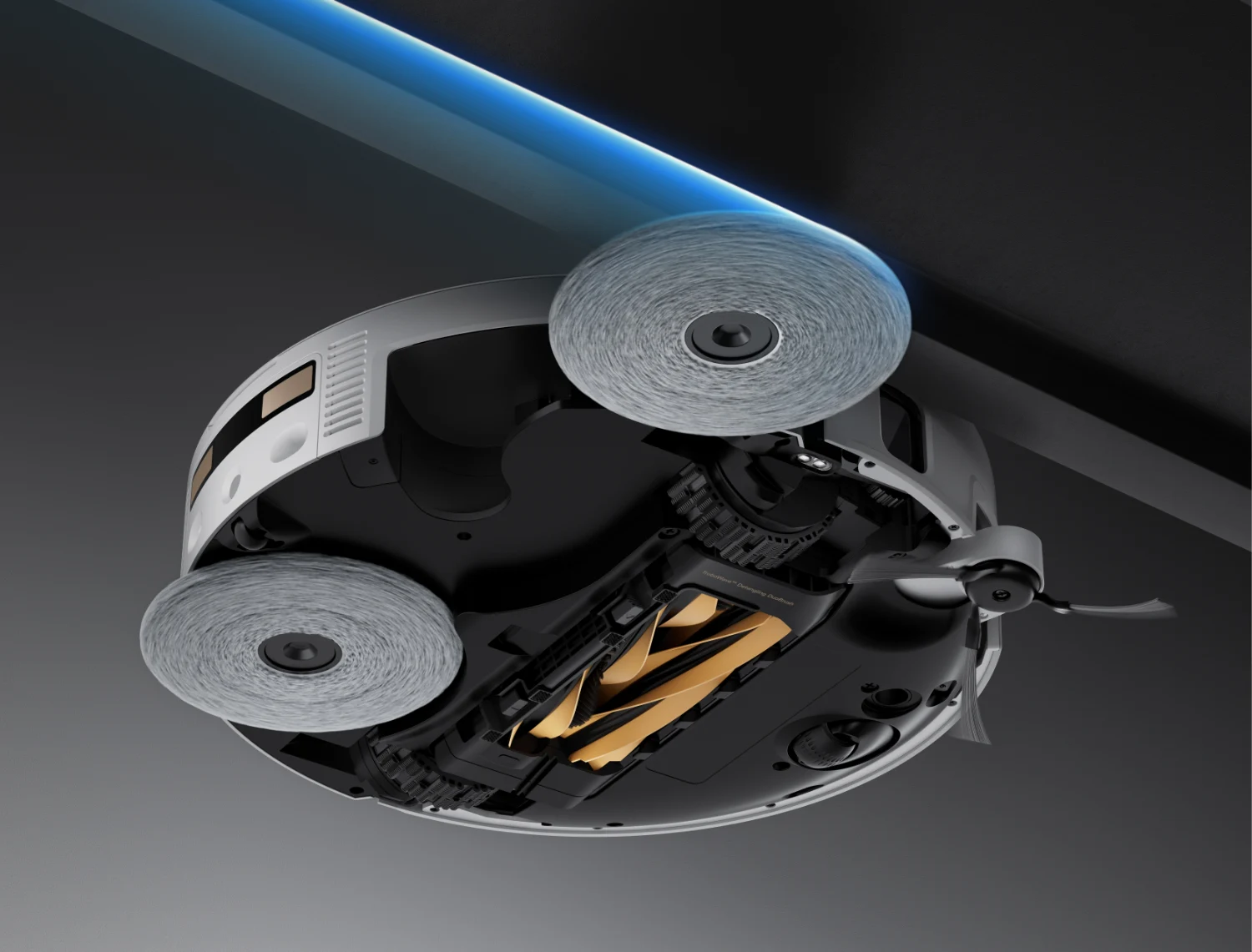
    – MaxiReach: side brush extends up to 12 cm, mop up to 16 cm for deeper corner cleaning.
    – EcoCyclone station: first bagless dust system—remove, empty, and wash the dust container.
    – 100°C wash: station uses a heated “washboard” process to clean the mopping unit.
    – Performance: 40,000 Pa suction, StepMaster 2.0 handles up to 9 cm obstacles, anti-tangle brush system.

    Just a few weeks after its initial reveal, Mova has moved forward and the V70 Ultra Complete is officially available. It can be purchased immediately through the manufacturer’s website and other retailers, with an MSRP of €1,399. Those who decide to buy by May 22 can benefit from double savings, which makes the product more tempting for shoppers watching prices closely. The launch is pitched as a broad, ready-to-ship offering aimed at enthusiasts and newcomers alike.

    Availability and pricing snapshot

    First, Mova is offering a €150 discount, bringing the introductory price down to €1,249. Second, the manufacturer includes an additional accessory kit valued at €169 and a three-year warranty, which together creates a total price advantage of €319. This combination is presented as a limited time bundle, and the savings are highlighted prominently to encourage earlier orders.

    Technically, the new V70 stands out primarily due to its MaxiReach system. This allows the side brush and mop to extend significantly from the housing, giving the unit more reach than typical models. The side brush can adaptively sweep up to 12 cm deep into corners, while the mop reaches up to 16 cm, ensuring a more thorough clean in hard-to-reach areas that often get missed.

    Technical and station innovations

    Another innovation lies in the V70 Ultra Complete’s station. With EcoCyclone, the maker introduces its first bagless system—a concept familiar from brands like Ecovacs, though ours is distinct. Instead of disposing of and regularly purchasing dust bags, the dust container can simply be removed, emptied, and washed, reducing ongoing consumable costs and creating less waste over the lifetime of the device.

    Additionally, the station cleans the mopping unit using a “washboard” cleaning process heated to 100°C. Other key features of the Mova V70 Ultra Complete include 40,000 Pa suction power, the ability to overcome obstacles up to 9 cm (two 4.5 cm steps) thanks to the StepMaster System 2.0, and an anti-tangle brush system designed to prevent hair from getting caught.


    Sources

  • Xiaomi upgrades luxury smartwatch with 21-day battery life

    Xiaomi upgrades luxury smartwatch with 21-day battery life

    Key Takeaway

    – Official confirmation of the Smart Band 10 Pro in China, unveiled with the Xiaomi 17 Max; pricing noted around $89 on Amazon.
    – 21-day battery life, unchanged from the Smart Band 9 Pro.
    – New dual-light PPD sensor with claimed 98.2% heart-rate accuracy.
    – Refined HRV-based sleep monitoring and Sleep Algorithm 2.0 improvements.
    – New cycling mode and enhanced vehicle integrations; China launch by end of May, global release expected later in 2026.

    Xiaomi finally confirmed the existence of the Smart Band 10 Pro earlier this week in China. Presented alongside the Xiaomi 17 Max, the Smart Band 10 Pro had quite a lot in common with the older Smart Band 9 Pro at first glance (curr. $89). Yet there are whispers of subtle tweaks that could change how people use it day to day, and the company was eager to share the news despite sparse detail.

    Battery life and sensor tweaks

    To that end, Xiaomi has confirmed that the Smart Band 10 Pro should deliver up to 21 days of battery life, too. While this is unchanged from the Smart Band 9 Pro, Xiaomi has added a new dual-light PPD sensor for its tenth-generation model. Allegedly, this change allows the Smart Band 10 Pro to monitor heart rates with 98.2% accuracy. Early users might find the daily readings more stable, and the long life battery could mean less recharging day by day.

    HRV, Sleep tracking and cycling

    Moreover, the new smartwatch boasts refined heart rate variability (HRV) monitoring when sleeping. Similarly, Xiaomi states that the Smart Band 10 Pro leverages its Sleep Algorithm 2.0 for sleep monitoring improvements, too. The new fitness tracker also features a new cycling exercise mode and superior Xiaomi vehicle integrations compared to older Smart Band wearables, offering a more rounded experience for athletes and commuters alike.

    Release timing and rollout

    A release date remains unknown for now. However, Xiaomi continues to claim that the Smart Band 10 Pro will arrive before the end of May in some capacity. Based on Xiaomi’s social media posts, this launch will likely only apply in China, though. A global release should occur later in 2026, though. Industry watchers caution that shipping windows may slip, yet official posts suggest a China-first rollout.

    Sources
  • PS5 Now Shows Player Counts for Top PlayStation Games

    PS5 Now Shows Player Counts for Top PlayStation Games

    Key Takeaway

    – PS5 Welcome Hub beta now shows weekly top 10 and trending games with visible concurrent player counts, offering a rare CCU view for consoles.
    – Fortnite leads with 14.6 million players in the past 7 days; GTA V, Call of Duty, and Minecraft hover around 5 million each.
    – Not all PS5 store/retail titles are included; Roblox and NBA 2K appear missing, with unclear criteria (revenue or publisher opt-in may factor in).
    – The top-10 list can be repetitive week to week; trending may offer more variety, but new releases may struggle to break in.
    – Console CCU data comes from third-party sources with limited transparency, though some services offer projections to aid cross-platform engagement comparisons.

    Often, when an anticipated title launches on Steam, fans use player counts to judge its success. Similar concurrent user (CCU) data is much less accessible on consoles, making comparisons difficult for observers who rely on cross platform metrics. Yet a new beta PS5 feature reveals how many gamers are actively playing the top 10 and trending games.

    PS5 Beta Shows Top 10 and Trending Counts

    On a recent podcast, YouTuber Mystic discussed the Welcome Hub currently in testing. Gamers can choose to see a week’s 10 most popular PlayStation games or which additions are trending. What’s significant is that player counts, normally difficult to gauge, are also visible, providing a rare glimpse that fans and analysts alike have craved.

    Highlights from the Welcome Hub

    Maki on the ResetEra forums shared statistics showing Fortnite dominating with 14.6 million users in the past 7 days. GTA 5, Call of Duty, and Minecraft are all around the 5 million mark. The numbers illustrate a snapshot of the community’s engagement and where attention is currently concentrated, these days.

    Fortnite Leads and Other Big Titles

    Unfortunately, it doesn’t seem that all PS5 games sold on the PS Store or at retailers are considered. One poster noted that ultra-popular Roblox is missing, as are live-service sports titles like NBA 2K. It’s unclear how Sony makes the lists, but revenue or whether a publisher opts in may be factors.

    Missing Titles and List Criteria

    As Mystic explained, another issue is that the same top PlayStation games could appear every week. New releases would struggle to place unless they draw massive audiences, and that’s a risk with the top 10 option, though the trending category may offer more variety. For those watching across platforms, the approach hints where interest lies, yet it may overemphasize big franchises while underrepresenting smaller titles, Mystic YouTube, Maki@ResetEra forums.

    Sources
  • Insta360 Luna Ultra Price Revealed by CEO: US/EU Buyers

    Insta360 Luna Ultra Price Revealed by CEO: US/EU Buyers

    Key Takeaway

    – Price points confirmed: dual-camera body 5,299 RMB (~$780) and bundle 6,499 RMB (~$960).
    – Domestic MSRP will be lower; lower-cost routes include importing Luna Ultra from China or buying Luna Pro single-cam.
    – International pricing appears steep: US around $950-$1,000; EU rumors up to €1,050 (dual-cam) with single-cam around €850.
    – Indicates a two-tier strategy: competitive in China against DJI, but premium pricing abroad with no official justification given.

    Following the recent flurry of leaks surrounding the upcoming Insta360 Luna series, the company’s CEO, Liu Jingkang, has weighed in on the matter. In a statement that clarifies the eye-watering price tags circulating online, there is finally a mix of relief for domestic buyers and a reality check for the global market. CEO Liu Jingkang confirmed that while the leaked figures of 5,299 RMB (~$780) for the dual-camera body and 6,499 RMB (~$960) for the bundle are accurate, there is a major catch. For those worried that Insta360 was ready to abandon the “affordable” gimbal segment, Jingkang clarified that the 5,299 RMB starting price point represents the US retail price converted back into local currency. Still, to get the lower price, you’d likely have to import the Luna Ultra from China, or just get the single-cam Luna Pro.

    Domestic pricing and market positioning

    “Even if I had the guts, I wouldn’t dare sell it at this price domestically,” Jingkang noted, suggesting that the official Chinese MSRP will be significantly lower than the international conversion. This positioning suggests Insta360 is aiming to remain competitive against DJI in its home market, where the Osmo Pocket 4 (and the older Pocket 3) are the dominant force. That said, the domestic stance appears designed to placate local buyers while signaling that the Luna line is not simply a budget accessory, but a strategic move in a price-conscious landscape.

    International implications and EU pricing hints

    That said, for international buyers, the CEO’s statement effectively confirms previous fears that the Insta360 Luna Ultra is going to be a very expensive piece of kit. By confirming the ~$960 bundle price (likely to be rounded down/up to $950 or $1,000) for the US market, Insta360 is officially moving the Luna Ultra out of the “vlogging accessory” category and into the territory of entry-level mirrorless cameras like the Sony ZV-E10 II or even the Canon EOS R50. According to previous rumors about EU pricing, bundle prices (emulating the Osmo Pocket Creator Combo) for the single-cam Insta360 Luna Pro and dual-cam Luna Ultra could be as high as €850 and €1,050.

    Conclusion and what remains unclear

    Insta360’s CEO hasn’t provided further details or justification for this steep international pricing. Unlike the single-lens DJI Osmo Pocket 4, the Luna Ultra is expected to feature: Liu Jingkang

    Sources
  • 50 Billion Solar Mass Black Hole: One of the Largest Ever Found

    50 Billion Solar Mass Black Hole: One of the Largest Ever Found

    Key Takeaway

    – A402-BCG, a galaxy about 4.4 billion light-years away in the Abell 402 cluster, hosts an ultramassive black hole estimated at ~50 billion solar masses.
    – JWST and Hubble observations reveal a bright central source with a kiloparsec-wide dark region nearby, signaling the black hole’s presence.
    – At ~50 billion solar masses, it ranks among the most massive black holes known, about 25× the mass of all stars in the Large Magellanic Cloud; the Milky Way is 100–400 billion solar masses for scale.
    – A large cavity in the galaxy suggests the possible existence of a second supermassive black hole at its center.

    Black holes are among the most puzzling cosmic objects, known for extreme gravity and strange behaviors. A team led by Michael McDonald at the Massachusetts Institute of Technology has announced the discovery of a black hole tucked away in a galaxy, a finding that challenges ideas about how objects grow.

    Discovery in a distant galaxy

    Named A402-BCG, the galaxy sits 4.4 billion light-years from Earth and belongs to the Abell 402 cluster. In discussing the outcome, researchers point to two features: a bright, pointlike glow at the core and a wide, kiloparsec-scale dark region lying to its east, hinting at powerful processes within the cluster.

    Central features and interpretation

    Team used the James Webb Space Telescope and the Hubble Space Telescope to study the light from its center, concluding that the glow signals an ultramassive black hole. Its mass is estimated at about 50 billion solar masses, a value that places it among the most massive known black holes.

    Observational evidence

    This finding matters because it ranks among the largest black holes. It is about 25 times bigger than all the stars in the Large Magellanic Cloud, located 158,000 light-years away, while the Milky Way weighs in at about 100 to 400 billion solar masses, illustrating the power of such objects.

    Scale and significance

    Observers also note a large cavity in the host galaxy that hints at a second supermassive black hole at its center, a possibility that remains speculative until more data comes in. The discovery continues to spark discussion about how multiple gargantuan holes might shape their galaxies over cosmic time together.


    Sources

  • Asus 18-Inch Gaming Laptop: 320W Upgrade with 4K Mini LED

    Asus 18-Inch Gaming Laptop: 320W Upgrade with 4K Mini LED

    Key Takeaway

    – Total system power increases to up to 320W (145W CPU + 175W GPU) with the RTX 5090 still capped at 175W; Core Ultra 9 290HX Plus can deliver up to 200W sustained power in some scenarios.
    – A 450W power adapter provides significantly more headroom than the 380W used on 2025 models.
    – 4K Mini LED display with 1,600 nits peak brightness and Nebula ELMB motion clarity (40 zones) without compromising brightness or refresh rate.
    – Expect at least two SKUs (RTX 5080 and RTX 5090) with 64GB RAM and up to 8TB storage (dual SSDs on the 5090), plus a 90Wh battery.

    Asus has finally revealed more details about its latest ROG Strix Scar 18, a machine that seems to be aimed at serious gamers and multitaskers alike. First teased in March, the ROG Strix Scar 18 (2026) G835 was said to deliver a ‘much higher total system TDP than the 2025 model’, with Asus adding that this change would allow the ROG Strix Scar 18 to ‘fully stretch its legs like never before’. The company now points to new power settings and a bigger focus on cooling to justify the leap.

    Performance and power claims

    Fast forward almost two months, and Asus has confirmed the various ways in which the ROG Strix Scar 18 (2026) G835 departs from its 2025 predecessor (curr. $2,699). Unfortunately, the company has been unable to extract any additional wattage from Nvidia’s GeForce RTX 5090 laptop GPU. While this remains locked at up to 175 W, Asus’ 2026 model can push 54% more wattage to its CPU in Turbo Mode and 81% in Manual Mode.

    Power distribution and CPU/GPU limits

    As a result, the ROG Strix Scar 18 (2026) can draw up to 320W, with 145 W assigned to its CPU and 175W to its GPU. Asus adds that the Core Ultra 9 290HX Plus can deliver up to 200W of sustained power too, albeit without clarifying under what circumstances. The new laptop will also ship with a 450 W power adapter for a 18% higher headroom than the 380W equivalent that came with 2025 models.

    Display technology leap

    This massive power increase is joined by a new Mini LED display. Previously, Asus has offered the ROG Strix Scar 18 with a 2.5K and 240 Hz Mini LED panel. Not only does the 2026 model jump to a 4K resolution, but it also gets 33% brighter at 1,600 nits peak brightness (3% APL). Asus claims that the Scar 18 is the first ROG laptop that supports ROG Nebula ELMB too, which is said to use 40 zones to improve motion clarity by up to 16x without affecting brightness or refresh rates.

    Availability and variants

    Currently, Asus has not clarified when it will begin selling the ROG Strix Scar 18 (2026) G835. At least two SKUs should be available, though, distinguished by GeForce RTX 5080 and GeForce RTX 5090 GPUs, as well as 64 GB of RAM and 8 TB of storage split across two SSDs in the latter’s case. Both variants will ship with the same 4K Mini LED display and 90 Wh battery. Please see the company’s website for more details.

    Looking ahead, Asus frames the Scar 18 (2026) as a premium platform with two SKUs powered by RTX 5080 or RTX 5090, 64 GB of RAM and 8 TB of storage spread across two solid-state drives, all in a chassis designed to handle a 90 Wh battery for longer gaming sessions. The 4K Mini LED panel remains as the bright centerpiece, Nebula ELMB is included, and overall the system is built to push heavy workloads while preserving image quality and stability across frames.


    Sources