Category: All News

  • Anker Solix Solarbank 4 Pro Doubles Power and Capacity

    Anker Solix Solarbank 4 Pro Doubles Power and Capacity

    Key Takeaway

    – 5 kWh base capacity, upgradeable to 30 kWh with BP5000 expansion modules (up to 12 solar modules).
    – Upgraded power: default 800 W to home; up to 2,500 W with professional Wieland install; off-grid 2,500 W; solar input up to 5,000 W via 4 MPPTs.
    – MSRP €1,999; release date TBD; early-bird May 12–June 11, 2026 with 25% discount and free three-phase Anker Solix Smart Meter Gen 2; orders June 12–21.
    – AI-powered controls and connectivity: AI optimization, Anka voice assistant, Home Assistant open APIs, built-in display.

    Anker Solix’s fourth generation Solarbank was teased beforehand and appeared today, signaling a notable leap in personal energy storage. At a Berlin event, Anker’s solar brand unveiled the Anker Solix Solarbank 4 E5000 Pro. First things first: if you’re looking to grab the successor to the Anker Solix Solarbank 3 Pro, which started at approx. €1,000, you’ll need to be patient and prepared to invest more than last year. The company promises bigger capacity and clearer power figures to justify the jump, with an emphasis on reliability across both grid-tied and off-grid configurations.

    Overview

    Currently, you can only register your interest in a future pre-order, and the official release date has not yet been announced. However, the MSRP has already been confirmed at €1,999, which is significantly higher than its predecessor. In return, buyers get substantially more power, improved efficiency, and smarter integration options that hint at a broader ecosystem rather than a single device. This move signals a bold, if expensive, step for early adopters and planners who want better long-term energy management.

    Power and Specs

    As the ‘E5000’ in the name suggests, the Solarbank 4 Pro offers a capacity of 5 kWh—nearly double the 2,688 Wh found in the Solarbank 3 Pro. For those who need even more, the new BP5000 expansion battery (MSRP €1,399 each) allows for upgrades in 5 kWh increments up to a total of 30 kWh. The modular approach remains friendly to future-proofing, while the introduced expansion line signals a clear path from modest use to larger-scale installations.

    Capacity and Expansion

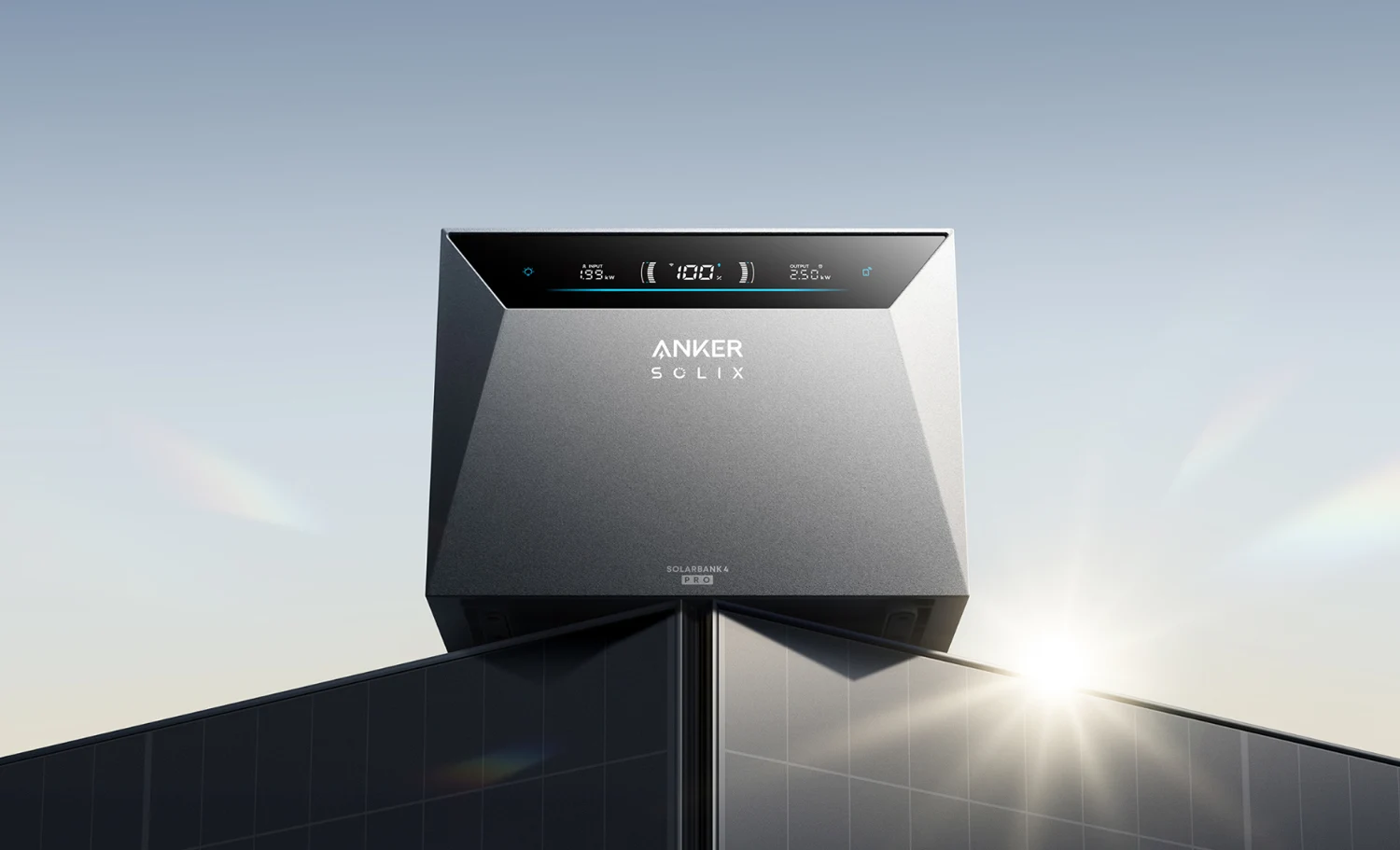
    There are also major upgrades in terms of input and output. By default, the Solarbank 4 Pro still feeds a maximum of 800 W into the home (the standard limit for balcony power plants). However, with professional installation via a Wieland plug, users can draw up to 2,500 W in grid-tied mode—more than double the third generation’s output. The off-grid connection also delivers up to 2,500 W. The device retains 4 MPPTs, but these now support a solar input of up to 5,000 W, an increase of 1,400 W over the Solarbank 3 Pro. According to the manufacturer, this allows for the connection of up to 12 solar modules. Additionally, Anker Solix has equipped the Solarbank 4 Pro with a proper display, similar to the one recently seen on the XXL home storage system, the Solarbank Max AC.

    AI, Tariffs, and Interfaces

    There are also major upgrades in terms of input and output. By default, the Solarbank 4 Pro still feeds a maximum of 800 W into the home (the standard limit for balcony power plants). However, with professional installation via a Wieland plug, users can draw up to 2,500 W in grid-tied mode—more than double the third generation’s output. The off-grid connection also delivers up to 2,500 W. The device retains 4 MPPTs, but these now support a solar input of up to 5,000 W, an increase of 1,400 W over the Solarbank 3 Pro. According to the manufacturer, this allows for the connection of up to 12 solar modules. Additionally, Anker Solix has equipped the Solarbank 4 Pro with a proper display, similar to the one recently seen on the XXL home storage system, the Solarbank Max AC.

    Familiar features such as AI-optimized control (in combination with the new Anker Solix Smart Meter Gen 2) and support for dynamic electricity tariffs are also on board. These are joined by Anka, Anker’s proprietary AI voice assistant, and open APIs for integration into Home Assistant and similar platforms.

    Promotions and Availability

    Anker Solix has now shared its early-bird deals. From May 12 to June 11, 2026, customers can register without obligation for the purchase to secure a 25% discount off the MSRP of the Solarbank 4 E5000 Pro and the BP5000 expansion battery. Additionally, the discount code includes a free three-phase Anker Solix Smart Meter Gen 2. These codes can be redeemed between June 12 and June 21, 2026, when placing an order at the Anker Solix online shop.

    Final Thoughts

    All told, the Solix 4 Pro line positions Anker Solix as a serious contender for home energy setups that want scalable storage, smarter control, and straightforward expansion. While numbers look imposing on paper, the real-world gains will depend on installation quality, solar conditions, tariffs, and user behavior, yet the direction seems to be toward deeper integration, more capacity, and easier operation for varied households. Anker Solix.

    Sources

  • Lenovo ThinkPad 16-Inch OLED 120Hz 96GB RAM

    Lenovo ThinkPad 16-Inch OLED 120Hz 96GB RAM

    Key Takeaway

    – Lenovo launches the Panther Lake-based ThinkPad P16s i Gen 5 with Core Ultra 7/9/X9 options and RTX Pro 500/1000 Blackwell GPUs, up to 96 GB RAM, 2 TB Gen 5 storage, and a 16-inch 1800p OLED display (500 nits, 30–120 Hz VRR).
    – Optional upgrades include Snapdragon X61 5G modem, Smart Card Reader, and a 90 Wh battery (vs 60 Wh default).
    – Pricing and regional availability: Europe €2,219–€2,730; UK £2,200; Australia AUD 4,249; North America pricing not yet announced; AMD Gorgon Point options due in June.
    – Announcement and timeline: Unveiled at Nvidia GTC 2026, expected May launch; AMD options to join in June.

    Almost two months have passed since Lenovo unveiled the ThinkPad P16s Gen 5 as a successor to its older Gen 4 model (curr. $1,849 on Amazon). Announced during Nvidia GTC 2026, the laptop was slated to arrive in May with Intel Panther Lake processors. Additionally, Lenovo claimed that AMD Gorgon Point options would be joining in June.

    Separator

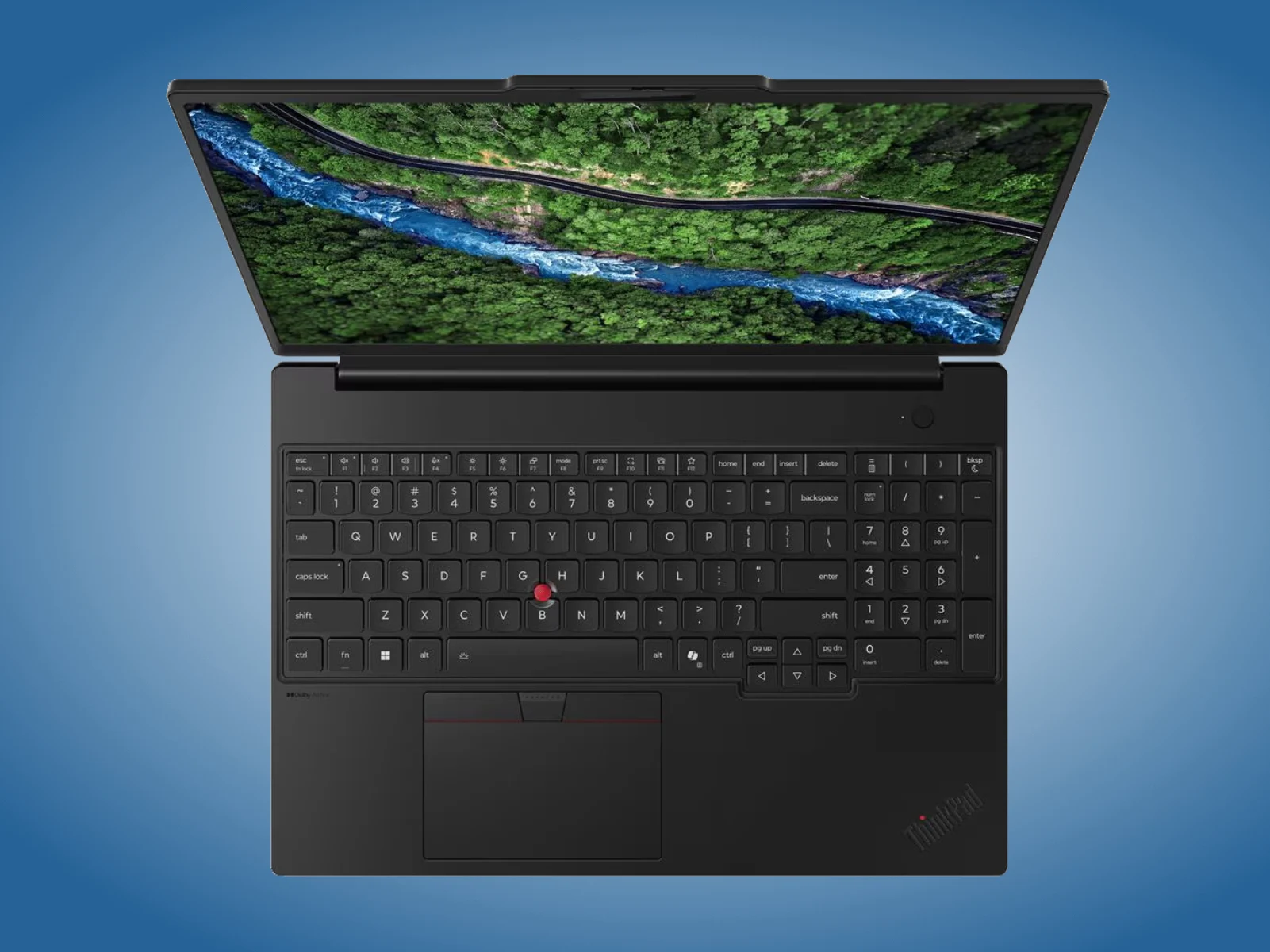
    While we await AMD models, Lenovo has now released the Panther Lake-based ThinkPad P16s i Gen 5 with a choice between Core Ultra 7 356H, Core Ultra 7 366H vPro, Core Ultra 9 386H vPro and Core Ultra X9 388H vPro processors. Also, the 16-inch laptop can be configured with Nvidia’s RTX Pro 500 Blackwell (6 GB) or RTX Pro 1000 Blackwell (8 GB) discrete GPUs. Those options represent a broad spectrum for light to heavy workloads, with the laptop aiming at business users who require mobile power while preserving portability.

    Separator

    On top of that, Lenovo complements these GPUs with up to 96 GB of LPCAMM2 RAM, 2 TB PCIe Gen 5 storage and an 1800p (2.8K) OLED display that combines 500 nits peak brightness with a 30-120 Hz variable refresh rate. Moreover, one can configure other features like a Snapdragon X61 5G modem, a Smart Card Reader and a 90 Wh battery instead of the 60 Wh equivalent that Lenovo includes by default. Such configurations could impact heat and weight, though Lenovo emphasizes a thin profile.

    Separator

    Currently, the ThinkPad P16s i Gen 5 starts at between €2,219 and €2,730 depending on the member state. Meanwhile, the new 16-inch laptop retails for £2,200 in the UK, featuring the same Core Ultra 7 356H processor, 16 GB of RAM and 512 GB of storage as its Eurozone counterparts. Pricing starts at AUD 4,249 in Australia. Lenovo has not confirmed how much the ThinkPad P16s i Gen 5 will cost in North America yet, though. For now, regional listings suggest pricing may vary with local taxes and import duties, but a precise NA figure remains unannounced. Lenovo Australia, France, Germany, Ireland & UK


  • AI Camera Blunder Turns Xperia 1 VIII Into a Meme, Sony Roasted

    AI Camera Blunder Turns Xperia 1 VIII Into a Meme, Sony Roasted

    Key Takeaway

    – Sony clarifies AI Camera Assistant is a four-option creative suggestion engine, not an automatic photo editor; users can choose an option or use their own settings.
    – The marketing post triggered strong backlash on X with drastic before/after edits, spawning memes and questions about authenticity.
    – Reactions from tech figures, including Nothing’s Carl Pei, amplified the controversy and fueled discussions on engagement farming vs. genuine feature demos.
    – The incident could impact Xperia 1 VIII’s public perception and Sony’s AI-marketing strategy, highlighting trust and clarity concerns.

    Following the post about AI Camera Assistant we’d like to explain the feature in more detail; it doesn’t edit photos after shooting, it suggests 4 settings in different creative directions based on the scene and subject. You can choose any option or use your own settings, which keeps the photographer in charge rather than handing over all control to an algorithm. The wording used in the release emphasizes guidance over automation and frames the feature as a creative assistant rather than a replacement for human decisions.

    Official clarification

    Sony has issued an official statement after the amusing backlash to its Xperia 1 VIII AI Camera Assistant marketing push, attempting to clarify how the feature actually functions. The company explains that the system does not edit photos after you shoot them; instead it suggests 4 settings in different creative directions based on the scene and subject. You can choose any option or use your own settings, which keeps the photographer in charge rather than handing over all control to an algorithm. The wording used in the release emphasizes guidance over automation and frames the feature as a creative assistant rather than a replacement for human decisions.

    Controversy and initial reactions

    Controversy started when Sony’s official X account posted a sequence of before and after shots intended to demonstrate Xperia 1 VIII’s AI capabilities. In a strange turn, the original images showed balanced exposure and natural shadows while the AI enhanced versions looked markedly overexposed, with blown highlights and faded colors. The visuals sparked instant reaction across the tech community on X, where skepticism and humor collided, and commentators questioned whether the results reflected a misstep in presentation or a larger issue with how the feature was marketed.

    Influence of Carl Pei

    Among the responses, Nothing founder Carl Pei stepped into the discussion by sharing the samples with a straightforward query about whether this was engagement farming or a genuine showcase. The post did not attack the devices themselves but raised doubts about how the project was framed and whether the timing of the release amplified attention without delivering a clear demonstrable benefit. His quick comment added another layer to the conversation, and some followers echoed the sentiment with mixed tones of irony and curiosity.

    Memes and public discourse

    Rather than simply criticizing, many X users converted the event into a meme machine, creating a trend where people upload their own before and after images and purposefully edit the after shots to resemble the aftermath of a nuclear flash or a cartoonish burst of light. The meme culture surrounding smartphones is nothing new, yet this particular thread amplified the discourse around the Xperia 1 VIII in ways Sony probably did not intend. The tonal shift toward humor and surreal exaggeration dominated many feeds for days.

    Clarification of AI role

    Separately from the memes, Sony followed up to clarify that the AI is not an auto editor but a suggestion engine meant to offer four distinct directions for creative looks. By pioneering multiple options rather than a single default, the company argues that users gain more control over the final image rather than being pushed toward one perceived correct outcome. The language used frames the tool as a creative partner that can spark experimentation, rather than a shortcut that fixes each shot to a fixed style or grade.

    Conclusion and takeaway

    Whether this is a technical glitch in the marketing department’s image selection process or a calculated strategy to drive engagement, the Xperia 1 VIII has become the week’s most talked about device, though perhaps not for the reasons Sony initially intended. The episode raises questions about how marketing teams present AI features, how audiences interpret those promises, and how a few visible missteps can overshadow a product’s intended strengths. In the end, Sony remains at the center of a noisy debate that shows no easy resolution.

    Sources
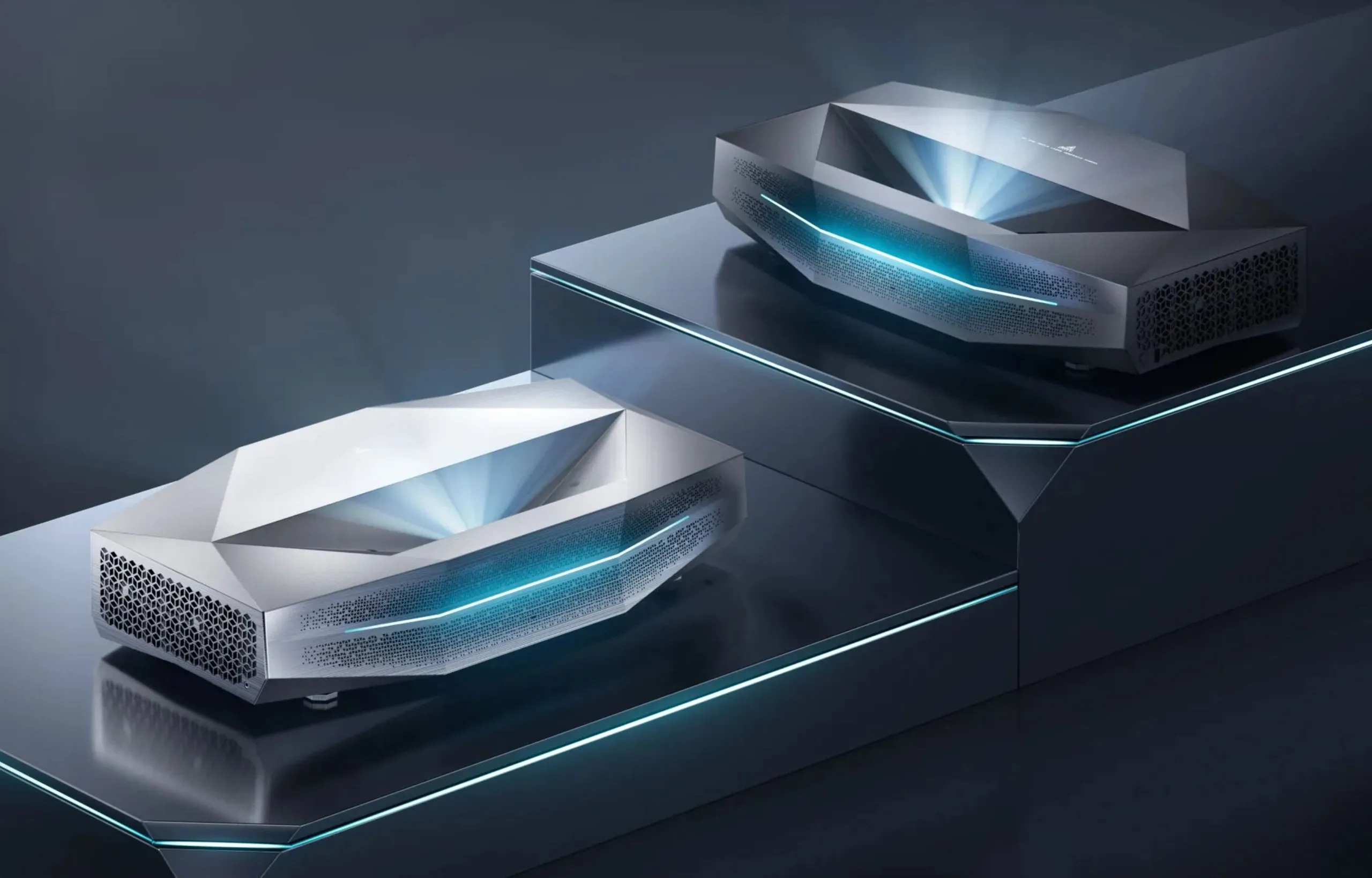
  • AWOL Vision 4K Laser UST Projectors Pre-Order Deals

    AWOL Vision 4K Laser UST Projectors Pre-Order Deals

    Key Takeaway

    – Aetherion Pro: release May 20; €2,799 MSRP standalone; bundles with a 100″ ALR screen €3,299 or 120″ €3,499, with savings up to €999 when bundled.
    – Aetherion Max: release June; 3,300 ISO lumens; pre-orders €3,699 (€300 off €3,999); bundles up to €1,398 off (examples: 100″ floor-rising €4,999; 120″ €5,499; Station package €5,999).
    – Kickstarter launch occurred in February; official retail launch approaching, with pre-order discounts still available.
    – Both models are ultra-short-throw, 4K laser projectors designed for large-screen home cinema with strong image quality.

    At CES 2026 in early January, AWOL Vision introduced the Aetherion UST series, consisting of two ultra-short-throw laser projectors: the Aetherion Pro and the Aetherion Max. We have already conducted a hands on review of the flagship version, where the 4K UST projector and its accompanying screen impressed us primarily with their exceptional image quality. The debut created a buzz around compact home theater gear, promising impressive detail and color with bright whites and deep blacks, even in brighter room conditions that typical projectors sometimes struggles to handle.

    Retail momentum and market expectations

    In February the Aetherion series launched on Kickstarter, offering crowdfunding enthusiasts the chance to order either of the two models at a significant discount. Now, the official retail launch is approaching, and prospective buyers can still secure some savings—at least to a certain extent. Early backers bragged about benefits, while retailer channels begin to align pricing for later buyers. Shipping estimates have shifted slightly, but the core value propositions remains to be seen by those who wants a high end UST without breaking the bank.

    Aetherion Pro pricing and bundles

    The AWOL Vision Aetherion Pro is set for release on May 20. It is available for pre-order at the full MSRP of €2,799. However, those looking to purchase the UST projector in combination with a screen can save up to €999. The Aetherion Pro is available in a bundle with a 100-inch ALR screen for €3,299 (instead of the €3,798 MSRP). If you want to treat yourself to 120 inches, the price is €3,499 (instead of €4,498).

    Aetherion Max options and furniture friendly setups

    If you prefer the even brighter Aetherion Max with 3,300 ISO lumens, you will have to be patient until June. Currently, there is an opportunity to save €300 on pre-orders, allowing the Max version to be ordered for €3,699 instead of the €3,999 MSRP. Here, too, the manufacturer is offering various bundles with discounts of up to €1,398—for example, in combination with a 100-inch floor-rising screen for €4,999 or a 120-inch version for €5,499. For those who want to hide the projector and screen inside a piece of furniture, the Station package is available for €5,999.


    Sources

  • GTA 6 Leak: 6 Editions Confirmed, Trailer 3 Soon

    GTA 6 Leak: 6 Editions Confirmed, Trailer 3 Soon

    Key Takeaway

    – Six editions total: three digital/physical versions, one rarer edition with extras, and two console-specific versions (Pro and standard); bundles will not include a physical copy.
    – Price likely in the $60–$80 range, with some editions potentially reaching $100; exact pricing not disclosed due to market considerations.
    – Trailer 3 expected to drop before pre-orders, possibly May 16–17, ahead of Take-Two’s May 21 earnings call.
    – No official Rockstar update in the past two days amid ongoing leaks and May 18 pre-order rumors.

    The past two days had fans eagerly waiting for some kind of update from Rockstar, whether it be a new GTA 6 trailer or any kind of marketing material, but to everyone’s disappointment, there was nothing. That lull did not quiet the chatter, though, as leaks kept bubbling up and several reports still suggested a May 18 pre-order date. Now, another leaker has shared new information about the bundles, timeline for the new trailer, and also hinted at the pricing.

    Update Pulse

    Detective Seeds, who has been sharing leaks about GTA 6 for quite some time now, posted on X that there will be six ways of purchasing the game, or six editions, in total. The leaker cites the same source that informed them about the pre-order week. According to the post, there will be three digital/physical versions, one version that will be rarer and include additional items, and two more versions for consoles. This breakdown, as described, seems aimed at appeasing both hardcore collectors and casual buyers, while leaving room for multiple bundles in different regions.

    Edition Breakdown

    The leaker adds that these two console versions will be for the Pro and standard models. Furthermore, the bundles for GTA 6 will not come with a physical copy of the game, which its fans would expect for certain editions. The note suggests digital delivery only on those two console variants, possibly aiming to cut manufacturing costs and adapt to a streaming minded market, even if mixed reception looks likely.

    Physical Copies and Pricing

    Responding to the comments, Detective Seeds shared that the game will be priced in the $60 to $80 range but could not share the exact price due to market impacts. Previous leaks suggested an $80 price tag as well, but $60 for any version seems very unlikely. There could even be some editions of the game that are priced at $100. In another response, the leaker stated that the new trailer for GTA 6 will come out before pre-orders go live. That means, if the leaked date is accurate, we could see Trailer 3 either tomorrow May 16 or the day after May 17. Initially, the trailer was expected on May 6 as it marked one year since the second trailer came out, but the long-standing speculation has been that Rockstar will release the trailer before Take-Two’s earnings call on May 21. Detective Seeds on X

    Sources
  • Gimbal Camera-Phone 200MP Sensor AI Tracking vs iPhone 18 Pro

    Gimbal Camera-Phone 200MP Sensor AI Tracking vs iPhone 18 Pro

    Key Takeaway

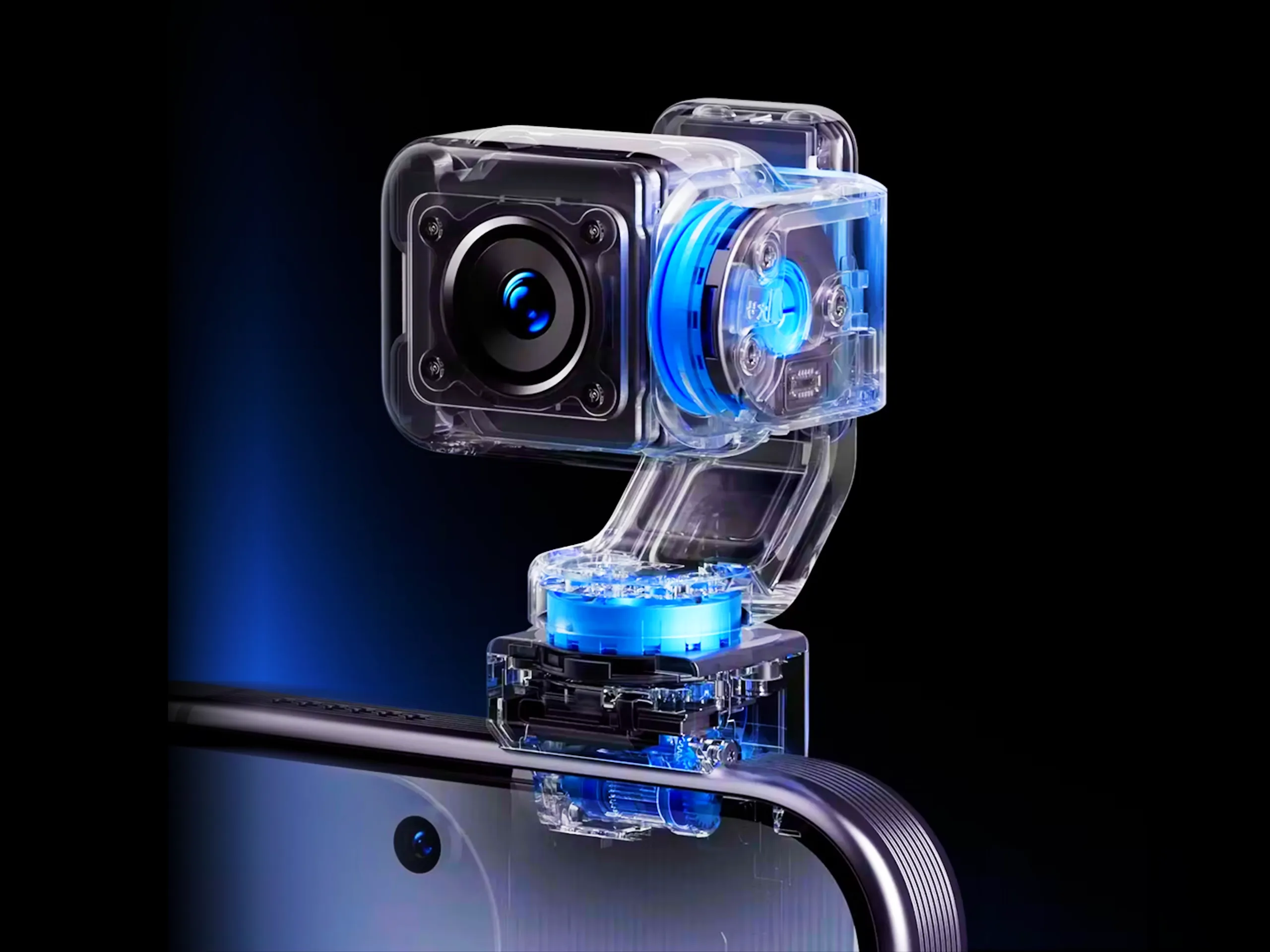
    – Honor’s Robot Phone introduces a built-in 3-axis motorized gimbal, signaling a move toward true mobile filmmaking hardware.
    – Release window is Q3 2026 (July–September), following hands-on Cannes previews after earlier MWC prototype phase.
    – The device targets the dedicated camera market, aiming to compete with DJI Osmo Pocket/Osmo Pocket 4/4P with cinema-grade motion control and color science.
    – Rival efforts from Vivo and Oppo are underway, with direct gimbal camera competitors expected in late 2026.

    The concept of “mobile filmmaking” is about to get a literal mechanical upgrade as Honor has confirmed a Q3 2026 release window for its innovative Robot Phone, following a hands-on preview at the Cannes Film Festival. The device features a built-in 3-axis motorized gimbal that promises steadier shots even when moving through crowded streets or dim interiors, and risks some overkill for casual users.

    Innovation timeline

    After turning heads at MWC earlier this year, the Honor Robot Phone has officially moved beyond the prototype phase as Honor has promised a July-September release window for its ambitious gimbal camera-phone, which might land right in the middle of the year’s biggest hardware storm. Industry watchers ponder whether the bold approach can keep up with mainstream phones while still delivering the promised stabilization and cinematic appeal.

    Cannes interaction

    The details emerged from the 79th Cannes Film Festival, where Honor served as the official imaging partner for the “China Night” event. Unlike previous appearances at CES and MWC where the device was strictly “hands-off,” select attendees in Cannes were finally able to interact with the hardware, testing the motion system, the feel of the form factor, and the potential for real world use.

    Launch window and market competition

    The timing of the Q3 launch announcement, expected between July and September 2026, places Honor in a direct battle with the smartphone industry’s heavyweights, and the window has mentors watching. The company hints at a disruption, but pricing and practical real world results remain to be seen, with pricing details not disclosed at this time. The Robot Phone is positioned as a flagship blend of mobility and creative tooling.

    Camera market ambitions

    That said, the Robot Phone won’t just compete with other phones. Honor is taking a clear shot at the dedicated camera market. Specifically, the Chinese giant seeks to enter the niche currently held by the DJI Osmo Pocket cameras like the new Osmo Pocket 4 and Osmo Pocket 4P, aiming to combine pocket camera convenience with a phone’s connectivity and app ecosystem.

    Durability and control

    Whether the mechanical complexity of a rotating camera can survive the rigors of daily smartphone use remains the primary question. However, with “robot-grade” motion control and cinema-tier color science, it seems that Honor is done playing by the rules of iterative phone camera upgrades while chasing a true mobility-first cinematic experience.

    Rivalry grows

    In related news, Vivo and Oppo are working on direct gimbal camera competitors to the Osmo Pocket series, expected to launch in late 2026, signaling a broader trend toward stabilised mobile rigs. The race grows more intense as each brand tries to balance compactness, power, and software to deliver professional grade results in everyday shooting.

    Future expectations

    Industry watchers await more concrete details on actual pricing, battery life, and how the system performs in real world conditions. The concept hints at a future where films can be shot with less heavy gear, but the tradeoffs and durability questions remain. For now the focus rests on whether a portable device can sustain a rotating lens under daily use.

    Sources
  • SwitchBot Reveals First 3D Facial Recognition Smart Door Lock

    SwitchBot Reveals First 3D Facial Recognition Smart Door Lock

    Key Takeaway

    – World-first smart deadbolt with 3D structured-light facial recognition (over 20,000 infrared points) and unlocks in under 1 second.
    – Wide unlock options including palm vein (touchless), semiconductor fingerprint, cards, passwords, app, voice, smartwatch, geofencing, physical keys; Matter-over-Wi‑Fi support.
    – 10,000 mAh battery (~12 months runtime), IP65 rating, and six-tier security with tamper alerts, remote unlock confirmation, forced unlock protection, and auto lockout after failed attempts.
    – Pricing and availability: Lock Vision Pro at $229.99 / CA$299.99 and Lock Vision at $169.99 / CA$229.99; available on SwitchBot’s site and Amazon.

    SwitchBot is expanding its smart home locks portfolio by launching the new Lock Vision series smart door locks. SwitchBot has introduced two models under the Lock Vision series, the Lock Vision and the Lock Vision Pro. The latest offering from SwitchBot is advertised as the world’s first smart deadbolt lock equipped with 3D structured-light facial recognition technology. Industry observers note the marketing talk claims about being first, while some rivals hover on the edge of similar tech, but SwitchBot emphasizes its own sensors, processing power, and ease of installation, so the market will decide.

    Key tech and models

    SwitchBot is inspired by the same core technology used in flagship smartphones. According to the brand, the Lock Vision series projects over 20,000 infrared points to create highly accurate 3D facial maps capable of millimeter-level recognition. On top of this, SwitchBot claims that the system unlocks doors in under one second. Some analysts suggest the price points remain competitive in this segment.

    Unlocking methods and palm vein tech

    Besides, the Lock Vision series offers multiple unlock methods, including app control, NFC cards, passwords, voice assistant, smartwatch control, auto-unlock via geofencing, physical keys, palm vein recognition, and semiconductor fingerprint unlocking. The security gadget uses infrared sensing technology for palm vein recognition, which is the same technology found on the Anker Eufy FamiLock E34. That combo lets users unlock easily even when wearing gloves or in dim spaces.

    Power, battery and connectivity

    This enables users to unlock doors without touching the device, even when hands are wet, dirty, or difficult to scan with conventional fingerprint readers. A high-capacity 10,000 mAh rechargeable lithium battery powers the Lock Vision series, with a specified runtime life of around 12 months. Moreover, both gadgets support Matter-over-Wi-Fi, allowing users to connect directly with supported smart home ecosystems. Engineers note this setup keeps maintenance and replacements minimal.

    Security footprint

    SwitchBot has incorporated a six-tier security protection system covering locking security, unlocking security, communication security, alarm security, and power security. Other features include tamper alerts, IP65 water and dust resistance, remote unlock confirmation, forced unlock protection, emergency SOS fingerprint recognition, and automatic lockout after repeated failed verification attempts. The design intention is to deter tampering and make the system resilient to power cuts.

    Pricing and availability

    As for price, the SwitchBot Lock Vision Pro is priced at $229.99/CA$299.99 and the Lock Vision costs $169.99/CA$229.99. Both smart locks are now available for purchase via SwitchBot’s official website and Amazon. This pricing and availability may vary with region and retailer promotions.


    Sources

    • Nothing Phone (4a) Pro vs Galaxy A57 and Redmi Note 15 Pro+

      Nothing Phone (4a) Pro vs Galaxy A57 and Redmi Note 15 Pro+

      Key Takeaway

      – Distinctive, premium build (aluminum unibody and glyph lighting) that stands out in the mid-range.
      – Strong camera system for the class, especially 50 MP main plus periscope zoom, with 4K/30fps video.
      – Solid day-to-day performance with a bright 6.83″ OLED display and reliable battery life, plus 50W charging.
      – Trade-offs vs rivals: best design/camera emphasis, but Samsung leads in software updates; Redmi offers greater value and faster charging at a lower price.

      The Nothing Phone (4a) Pro positions itself as a standout alternative in the mid-range segment, focusing primarily on an eye-catching design, high-quality materials, and innovative features. Compared to the more conservatively designed Samsung Galaxy A57 5G and the aggressively priced Xiaomi Redmi Note 15 Pro+ 5G, the Nothing smartphone feels significantly more distinctive and modern. The aluminum unibody, the glyph lighting on the back, and the overall high-quality build give it a premium feel rarely found in this price range. Its looks may turn heads on every hand, and despite the premium cues, it balances grip and comfort in day-to-day use, which matters more than raw numbers. This first impression carries through into how the device handles casual tasks, media consumption, and even extended sessions without feeling brittle or unpleasant to hold.

      Design, build and perceived value

      Technically, the Nothing Phone (4a) Pro also delivers a strong overall package. The bright 6.83-inch OLED display impresses with vibrant colors and high brightness, while the Snapdragon 7 Gen 4 ensures smooth everyday performance. Even under heavy load, performance remains stable. While the Galaxy A57 also offers a high-quality AMOLED display and very reliable performance, it places a stronger focus on everyday usability and software longevity. Samsung scores points above all with a significantly better update policy and long-term support. The Redmi Note 15 Pro+, on the other hand, focuses more on getting the most hardware for your money and also offers solid performance and fast charging at a lower price. Additionally, in practical use, the phone feels responsive in menus and apps, and the speaker setup delivers a surprisingly clear and immersive mid-range experience for its class.

      Camera prowess and limitations

      A particular highlight of the Nothing Phone (4a) Pro is its camera setup. The 50-MPix main camera and, above all, the periscope zoom deliver above-average results in the mid-range segment and clearly stand out from many competitors. Especially when it comes to zoom, the Nothing model offers more capabilities than the Galaxy A57 or the Redmi Note 15 Pro+, even if the ultra-wide-angle camera falls slightly short. Videos, however, are only marginally competitive, as a maximum of 4K at 30 FPS is possible. For stills, color renditions are pleasant under most lighting, and the overall processing keeps noise mostly in check while retaining detail; still, low-light performance isn’t class-leading and requires planning for best results.

      Battery life and charging

      The Nothing Phone also performs strongly in terms of battery life and easily lasts through a full day of use. Additionally, it supports fast charging at up to 50 watts. Samsung has a similarly sized battery, while Xiaomi, on the other hand, features a significantly larger 6,500 mAh battery that also supports faster charging. In real-world usage, you can expect reliable endurance with moderate screen-on time, extra optimization through software, and predictable charging cycles, though the larger competitors might edge out in videos or heavy gaming sessions.

      Verdict and market positioning

      Overall, the Nothing Phone (4a) Pro stands out as a stylish and technically robust mid-range smartphone with a unique character. If you’re tired of the typical cookie-cutter smartphone design and place special value on design, camera zoom, and individuality, this is a true hidden gem. It may not chase the greatest battery capcacity or the most aggressive feature set, but its personality, build quality, and distinctive lighting make it memorable in a crowded market. For buyers who value design-centric flair without breaking the bank, this device feels like a breathe of fresh air in a field of sameness, and that appeal carries real weight beyond mere specs.

      Sources
      • Xiaomi Budget Bluetooth Speaker EU with 10-Hour Battery Life

        Xiaomi Budget Bluetooth Speaker EU with 10-Hour Battery Life

        Key Takeaway

        – European rollout of the Bluetooth Speaker Essential: Spain €13.99 (green only); Belgium ~€14.99 MSRP (black/green); Germany €19.99 (black/green) — about a 42% price uplift across markets.
        – Specs: Bluetooth 6.0, 1,000 mAh battery, up to 10 hours at 40% volume, 1.5″ driver with passive radiator, up to 5 W; ~2.5 hours at full volume.
        – Color options by market: Spain green only; Belgium black/green; Germany black/green (UK previously £12.99).
        – Takeaway: very budget-friendly in Europe, but with notable cross-country price variations.

        Xiaomi has started rolling out its Bluetooth Speaker Essential to more markets. For context, the affordable speaker landed last month in the UK. Priced at £12.99, the Bluetooth Speaker Essential is much cheaper than Xiaomi’s existing options like the Sound Outdoor or the Sound Pocket (curr. $24.99). Its compact design and claimed endurance had people curious, even if it looks plain to some buyers.

        UK to Eurozone rollout

        Now, the Bluetooth Speaker Essential has reached the Eurozone, though it arrive at vastly different price points depending where you live. To recap, the speaker supports Bluetooth 6.0 connectivity and is rated to last up to 10 hours at 40% volume from its 1,000 mAh battery. Additionally, Xiaomi has included a 1.5-inch driver and a passive radiator, which combined to deliver up to 5 W. Please note that the Bluetooth Speaker Essential may only last 2.5 hours at full volume before recharge.

        Spain and Belgium pricing

        Currently, Xiaomi’s budget speaker costs €13.99 (~$16) in Spain, where it is available to purchase in only a green colour for now. The company has discounted the speaker from an alleged €14.99 (~$17) MSRP though, which is roughly how much it intends to charge in Belgium with a choice between black and green colours. Shoppers in Spain and Belgium are watching prices closely, while colours stay the same across some listings.

        Germany pricing and options

        Meanwhile, the Bluetooth Speaker Essential has arrived for €19.99 (~$23) in Germany. While only €6 more expensive than in Spain, this difference represents a 42% uplift between Eurozone member states. Xiaomi is selling the Bluetooth Speaker Essential in a choice of black and green colours in Germany too.

        Xiaomi Belgium, Xiaomi Germany & Xiaomi Spain

        Xiaomi Belgium, Xiaomi Germany & Xiaomi Spain appear to be part of the same rollout plan, yet pricing can sway between markets. The listing pages show the same device, same specs, and similar colour choices, but shoppers in each country see different price tags. The dynamics hint at a coordinated Europe wide strategy with slight local adjustments for Belgium, Germany and Spain.


      • NASA AI Processor Enables Autonomous Spacecraft in Deep Space

        NASA AI Processor Enables Autonomous Spacecraft in Deep Space

        Key Takeaway

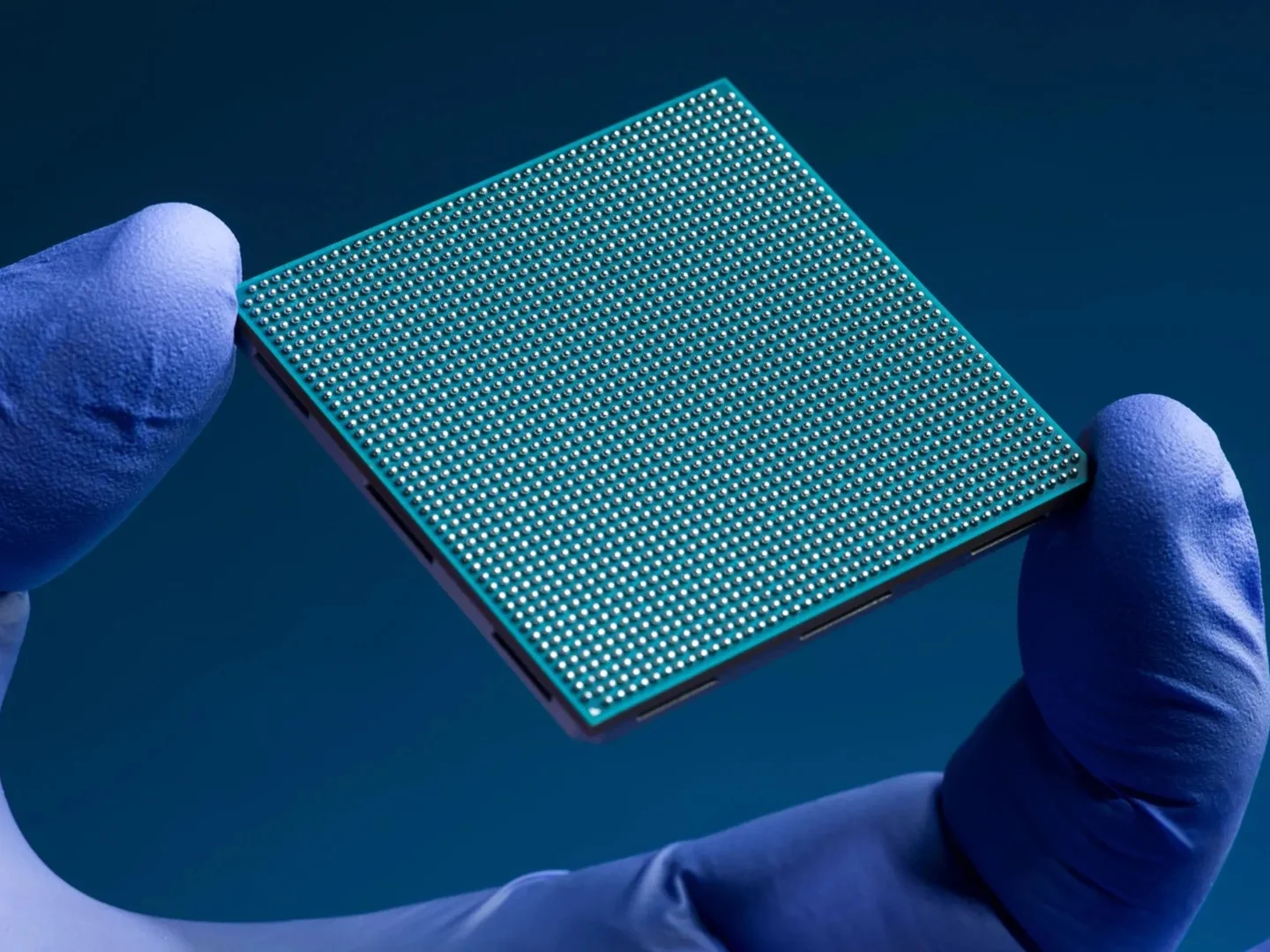
        – HPSC is a fault-tolerant, high-performance chip designed to replace older space-grade semiconductors and enable onboard AI for autonomous deep-space missions.
        – It is engineered to withstand harsh radiation and extreme temperature changes, with tests showing substantial performance gains (NASA claims up to 100x; early results hint at over 500x vs current space chips).
        – The project is a collaboration with Microchip Technology Inc., with sample chips already produced and targeted for rovers, satellites, and deep-space probes.
        – Benefits include better handling of unexpected hazards and improved reliability during delayed Earth Communications, with a focus on challenging planetary landings.

        The new chip is code-named the High Performance Spaceflight Computing (HPSC) project. It is intended to replace older semiconductors used by current space-grade electronics, and to power advanced missions. In plain terms, this is meant to upgrade spacecraft brains so that they can crunch more data with less cooling and fewer downtimes, allowing missions to push farther, faster, and with a bit more margin against the unpredictable conditions of deep space. The language around it reads like promise and practical risk, all in one.

        HPSC Project Overview

        The chip is designed to withstand the extreme conditions of deep space. It will boost spacecraft autonomy by enabling faster scientific analysis through onboard AI. It has been described as fault-tolerant, flexible, and extremely high-performing. NASA claims the chip can perform up to 100 times better than current hardware. The prototypes are passing through tests simulating the harsh radiation-intensive conditions in outer space. The chip must hold its own against intense electromagnetic radiation and extreme temperature changes. For instance, NASA is paying particular attention to how the HPSC chip will behave during challenging planetary landings.

        Tests and Capabilities

        The stress tests are being carried out at the NASA-funded JPL facility. The federal space agency states that early results have been positive, with the processor performance reportedly exceeding 500 times that of current space-focused chips. JPL is collaborating with Microchip Technology Inc., and sample chips have already been produced. The work here hints that this is not a purely experimental exercise but a bridge between government labs and private suppliers, aiming to speed up readiness for future missions.

        Collaborations and Potential Uses

        The finished product will also potentially be used in planet rovers, satellites, and deep-space probes. The benefits of the chip include future spacecraft being able to handle unexpected hazards. They will also function better when communication with Earth-based control stations is delayed. Pricing details are not provided in the source text. The project signals that industry and space agencies are thinking ahead about autonomy, resilience, and data processing when the sun isn’t shining on Earth.

        Sources