Author: GizNews

  • Shark Launches PowerDetect UV Reveal 2-in-1 Robotic Vacuum Mop

    Shark Launches PowerDetect UV Reveal 2-in-1 Robotic Vacuum Mop

    Key Takeaways

    1. Advanced Mapping Technology: The Shark PowerDetect UV Reveal uses Neuronav AI for automatic home mapping, with sensors for precise cleaning and a UV light for stain detection.

    2. Smart Docking and Sanitation: The docking station features a Thermacharged Hygiene Suite that sanitizes the mop head, claiming to eliminate 99.99% of bacteria.

    3. Edge Cleaning and Navigation: The mop extends to clean edges, and the vacuum uses air blasts to clear debris from corners. It can navigate thresholds but cannot climb stairs.

    4. Voice Control and App Features: Users can control the vacuum via voice commands with Amazon Alexa or Google Assistant and manage settings through a smartphone app.

    5. Maintenance Requirements: Regular maintenance includes emptying the grey water tank, refilling the fresh water tank, cleaning filters, and replacing the odor cartridge for optimal performance.


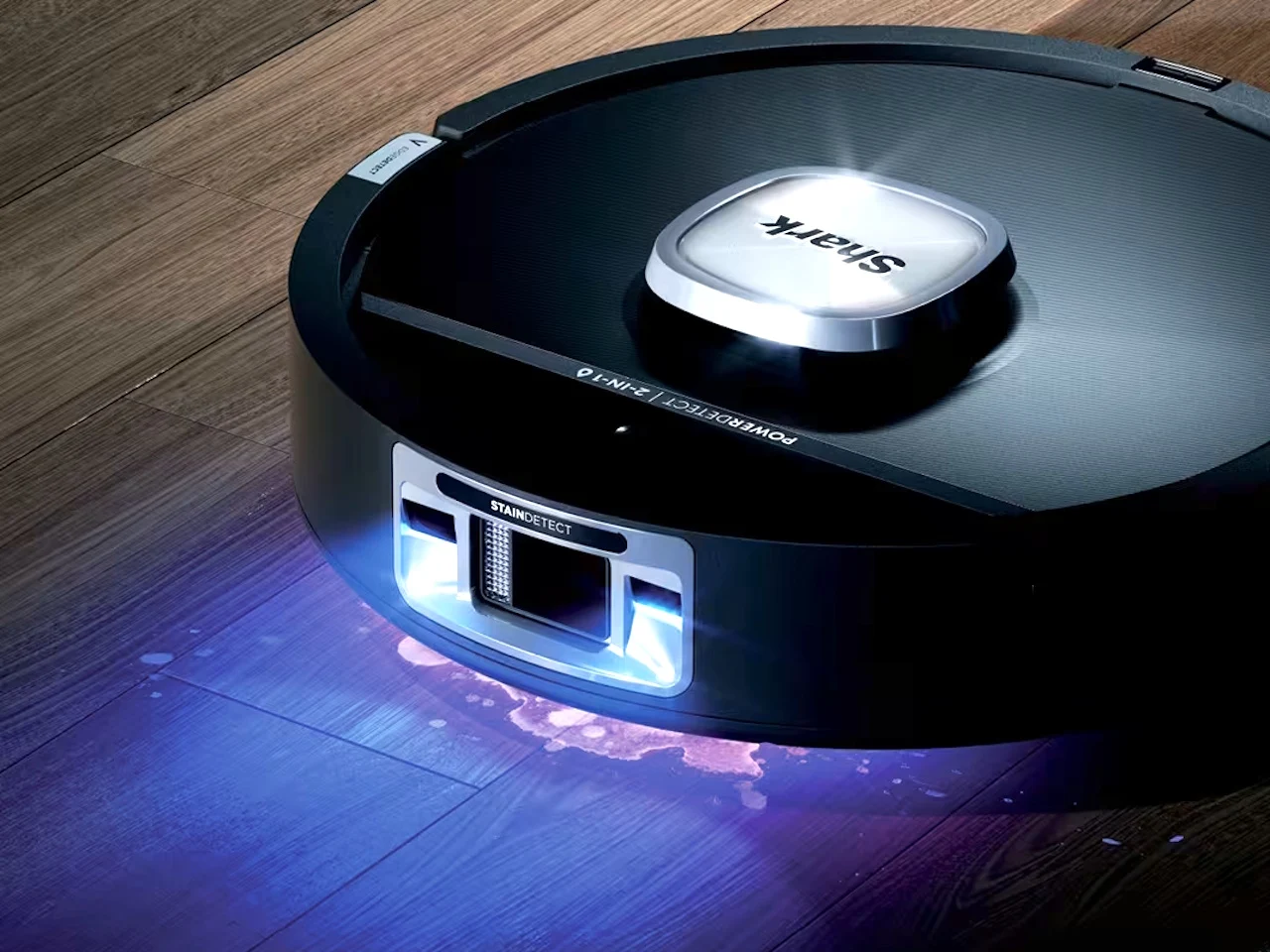
    Shark has introduced the Shark PowerDetect UV Reveal 2-in-1 robotic vacuum and mop (model RV3020XE). Customers can purchase this robotic vacuum from the Shark store on Amazon for $1,299.99 or directly from the Shark website.

    Advanced Mapping Technology

    The PowerDetect UV Reveal features Neuronav AI technology that allows it to create maps of homes automatically. It comes equipped with a variety of sensors, including a camera, lasers, and RGB sensors. A UV light is incorporated to help the vacuum determine how well it has cleaned hard floors, particularly for challenging stains like cat urine. However, Shark has not specified if the device can recognize and avoid mopping up feces. The vacuum employs Hypersonic Mopping technology, which offers more scrubbing power compared to previous Shark models.

    Smart Docking and Sanitation

    The docking station includes a Thermacharged Hygiene Suite designed to sanitize the mop head while the robot is docked, claiming to eliminate 99.99% of bacteria, including Staphylococcus aureus and Escherichia coli, as per Shark’s report.

    The mop is capable of extending to clean edges along walls, while the vacuum employs air blasts to push debris away from corners before suctioning it up. The wheels are designed to lift the robot slightly to navigate over thresholds; however, it cannot ascend stairs, which sets it apart from some competitors like the Roborock.

    Voice Control and Maintenance Needs

    Users can control the PowerDetect UV Reveal through voice commands when it’s connected to a Wi-Fi network that supports Amazon Alexa or Google Assistant. The accompanying smartphone app enables users to establish cleaning schedules, designate off-limits areas, and adjust various settings.

    Despite its advanced features, the robotic vacuum is not entirely maintenance-free. The grey water tank should be emptied and cleaned every 30 days or whenever it gets full, depending on how often it mops. Users also need to refill the fresh water tank, empty the dust bin, clean both pre- and post-motor filters, and regularly replace the odor cartridge to ensure optimal performance.

    Source:
    Link


  • GeForce RTX 5050 Expected to Receive Minor VRAM Upgrade

    GeForce RTX 5050 Expected to Receive Minor VRAM Upgrade

    Key Takeaways

    1. The RTX 50 Super series is delayed until 2026, prompting Nvidia to innovate with the Blackwell series.
    2. The laptop version of the RTX 5070 may get a VRAM boost, and the desktop RTX 5050 might also be upgraded.
    3. The RTX 5050 will feature 9 GB of VRAM on a 96-bit bus, an increase from the previous 8 GB GDDR6.
    4. Potential performance improvements could arise from faster GDDR7 modules, increasing bandwidth from 320 GB/s to 388 GB/s.
    5. Other specifications for the RTX 5050, such as GPU and clock speeds, remain unclear and may be similar to the RTX 5050 8 GB.


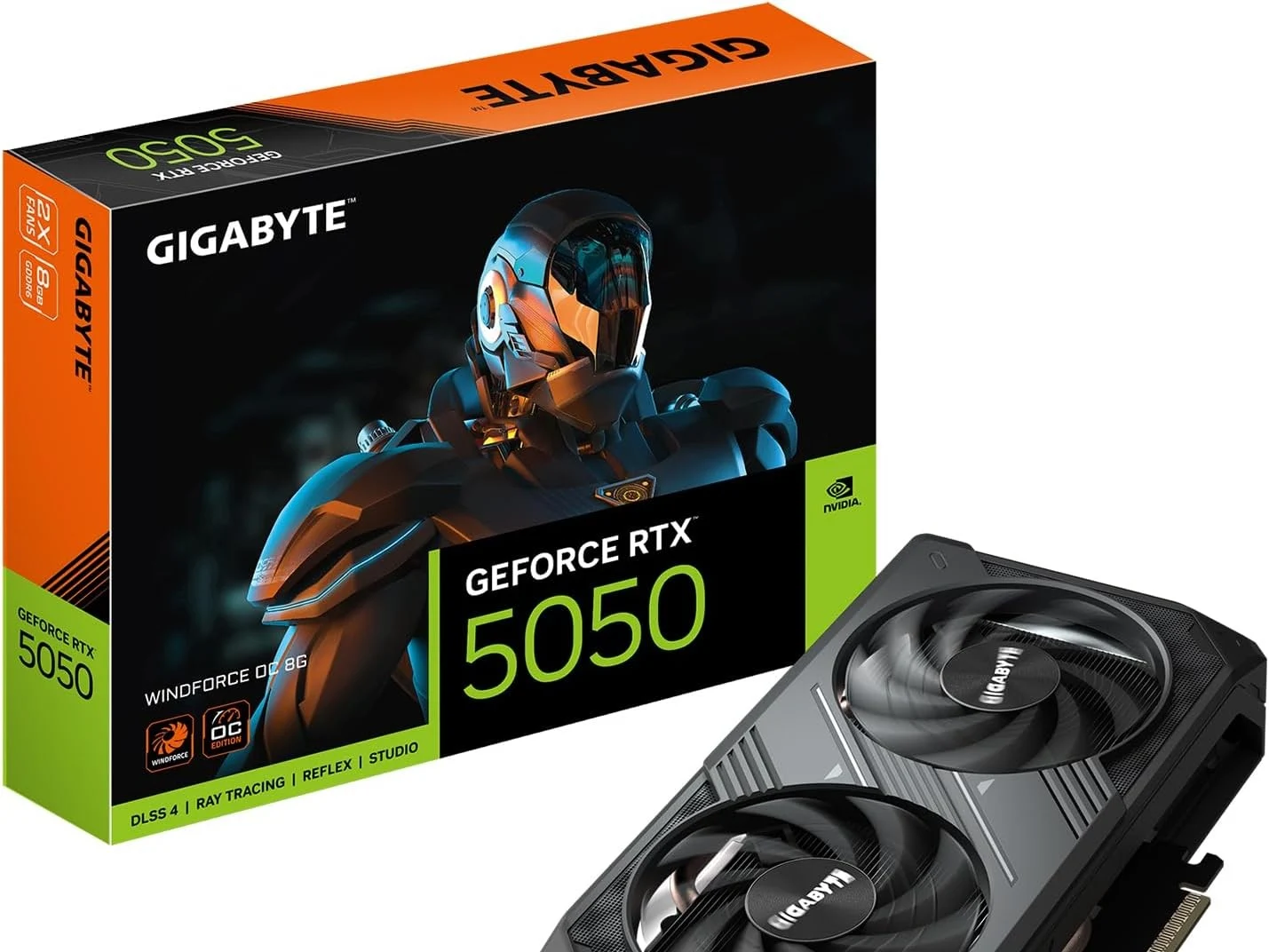
    With the RTX 50 Super series now delayed until 2026, Nvidia needs to get inventive to keep the Blackwell series relevant in gaming. The laptop version of the RTX 5070 may receive a VRAM boost, and according to a recent leak from the reliable source @Zed__Wang, the RTX 5050 desktop might also see a similar upgrade. Supposedly, the entry-level GPU will be redesigned to include 3 GB GDDR7 modules.

    RTX 5050 9 GB Features

    Thus, the RTX 5050 9 GB will feature 9 GB of VRAM on a 96-bit bus. While this is technically an improvement from the previous 8 GB of GDDR6, which runs on a 128-bit bus, the overall memory bandwidth should remain similar. Depending on the GDDR7 modules utilized (either 28 Gbps or 32 Gbps), we could witness a slight enhancement in performance, bumping from 320 GB/s with GDDR6 to 388 GB/s with the faster GDDR7 modules.

    Specs Still Unclear

    At this moment, other specifications for the RTX 5050 9 GB, including its GPU, TGP, and base/boost clocks, are still unknown. It’s likely that these will be nearly the same or identical to those of the RTX 5050 8 GB. In the grand scheme, it appears Nvidia is eager to utilize its 3 GB GDDR7 modules, although it’s hard to understand why they would allocate them to an RTX 5050 when a VRAM boost would have been much more useful for the RTX 5060 lineup.

    @Zed__Wang on X

    Source:
    Link


  • New Lithium Battery Hits 700 Wh/kg Density at -50°C

    New Lithium Battery Hits 700 Wh/kg Density at -50°C

    Key Takeaways

    1. A new hydrofluorocarbon electrolyte enables energy densities over 700 Wh/kg at room temperature and 400 Wh/kg at −50 °C, significantly outperforming standard electric vehicle batteries (270 Wh/kg).

    2. The research team created six monofluorinated hydrofluorocarbon solvents to improve charge transfer and overcome limitations of traditional oxygen- and nitrogen-based electrolytes.

    3. The standout solvent, 1,3-difluoropropane, exhibits low viscosity and excellent oxidation stability, leading to a Coulombic efficiency of 99.7% at low temperatures.

    4. The new electrolyte allows for efficient lithium plating and stripping, enhancing battery performance in low-temperature and rapid charging conditions.

    5. Future adjustments in carbon and fluorine ratios could yield even more stable electrolytes, further increasing power and energy density for various applications, including aerospace and electric transportation.


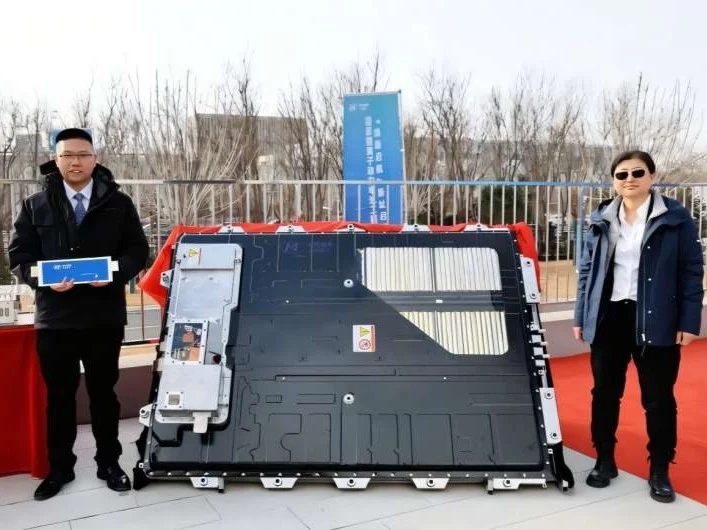
    A research team from China has come up with a new hydrofluorocarbon electrolyte that pushes the boundaries of battery performance. In a study published in the journal Nature, they reveal a solvent that can provide energy densities over 700 Wh/kg at room temperature and around 400 Wh/kg at −50 °C (122 °F). This is a major improvement compared to standard electric vehicle batteries, which usually reach about 270 Wh/kg under regular conditions. This breakthrough opens up new opportunities for aerospace, grid storage, and electric transportation, especially in harsh climates.

    Innovations in Battery Technology

    Traditionally, battery electrolytes have used oxygen- and nitrogen-based ligands to transfer charges between the cathode and anode. These conventional materials create strong bonds that hinder charge movement at the interface of the electrode and electrolyte. This limitation becomes even more significant during low-temperature operations or rapid charging. To tackle this issue, the researchers crafted six monofluorinated hydrofluorocarbon solvents. By carefully designing the fluorine-based ligands with specific steric hindrance and Lewis basicity, they were able to enhance the dissolution of lithium salts, achieving levels greater than 2 mol/L.

    Outstanding Performance of 1,3-Difluoropropane

    The most remarkable solvent, 1,3-difluoropropane, showed impressive features, including a low viscosity of 0.95 centipoise and excellent oxidation stability above 4.9 volts. By adding fluorine atoms to the first solvation shell, the weak coordination allows for very efficient lithium plating and stripping. This process leads to a Coulombic efficiency of 99.7% and an exchange current density that is significantly higher than that of traditional oxygen-based systems at −50 °C (122 °F).

    Testing was successful with lithium-metal pouch cells that used less than 0.5 grams of electrolyte per ampere-hour. The researchers state that this fluorine-coordination chemistry goes beyond the limits of traditional electrochemical design. Adjusting the ratios of carbon and fluorine in the future could result in even more stable variations with high boiling points above 100 °C (212 °F). This could pave the way for further advancements in the power and energy density of future energy storage systems.

    Nature via Tech Xplore

    Source:
    Link


  • RedMagic Launches New Compact Gaming Tablet Release Date Confirmed

    RedMagic Launches New Compact Gaming Tablet Release Date Confirmed

    Key Takeaways

    1. Lenovo launched the Legion Tab Gen 5 at MWC 2026, featuring Qualcomm’s Snapdragon 8 Elite Gen 5 chipset.
    2. The Legion Tab Gen 5 is currently the only tablet with this advanced chipset.
    3. RedMagic is preparing to release the Gaming Tablet 5 Pro, following the Gaming Tablet 3 Pro and RedMagic Astra.
    4. RedMagic has not provided many details about the Gaming Tablet 5 Pro yet.
    5. The Gaming Tablet 5 Pro is expected to be released globally later this year under a different name.


    A fresh trend of luxurious yet small gaming tablets is gearing up to make its debut. Earlier this week, Lenovo unveiled the Legion Tab Gen 5 at MWC 2026 in Barcelona. Leading up to the soon-to-be-launched Legion Y700 Gen 5 in China, the Legion Tab Gen 5 is currently the sole tablet equipped with Qualcomm’s Snapdragon 8 Elite Gen 5 chipset.

    RedMagic’s Upcoming Release

    In the meantime, it appears that RedMagic is not lagging behind with the introduction of a successor to the RedMagic Astra. To provide some context, the company rolled out the Gaming Tablet 3 Pro last June in China. A month later, they started selling the same device worldwide under the name RedMagic Astra. Now, they have released an initial teaser for the Gaming Tablet 5 Pro, which you can see below.

    What’s Next for RedMagic?

    So far, RedMagic has merely hinted that the Gaming Tablet 5 Pro is ‘on its way’. Clearly, this new tablet is another compact creation, instead of a revival of the RedMagic Nova and its Galaxy Tab S11-like design (currently $799 on Amazon). At this moment, additional information about the Gaming Tablet 5 Pro is not available. From past trends, it is likely that the Gaming Tablet 5 Pro will be globally released later this year under a different name.

    RedMagic via Smart Pikachu.

    Source:
    Link


  • LG 2026 OLED evo G6 and C6 TVs Now Available for Preorder

    LG 2026 OLED evo G6 and C6 TVs Now Available for Preorder

    Key Takeaways

    1. Pricing and Model Options: The LG OLED evo AI C6 starts at $1,399.99 for 42 inches and goes up to $5,299.99 for 83 inches, while the G6 starts at $2,499.99 for 55 inches and can reach $24,999.99 for 97 inches.

    2. Premium Features of the G6: The G6 series offers free TV stand setup or wall mounting and discounts on select soundbars until March 29.

    3. Enhanced Brightness and Technology: The G6 models feature the Primary RGB Tandem 2.0 panel, making them up to 20% brighter than the G5 and 3.9 times brighter than the B6, with an anti-reflective coating for improved viewing in bright spaces.

    4. Midrange C6 Series Variants: The C6 Series includes the standard C6 (42-65 inches) and the C6H (77-83 inches), with only the C6H models featuring the advanced Primary RGB Tandem 2.0 panel.

    5. New Processing Power: Both G6 and C6 are equipped with the Alpha 11 Gen 3 processor, offering significant performance improvements and supporting features like webOS 26, 165Hz refresh rates, and 4K120 Nvidia GeForce Now streaming.


    The LG OLED evo G6 and C6 are the newest top-tier OLED TVs from LG, taking over from the G5 and C5 models from 2025. They were officially presented at CES 2026 and are now available for order on LG’s official site.

    Pricing and Model Options

    The entry-level LG OLED evo AI C6 starts at $1,399.99 for the 42-inch version and goes up to an astonishing $5,299.99 for the 83-inch model. It’s worth noting that the 77-inch and 83-inch options feature the new 2nd-Gen 4-layer RGB Tandem OLED panel equipped with Hyper Radiant Color Technology, making them notably brighter compared to the rest of the series, which seem to use the same panel as the previous year’s LG C5.

    Premium Features of the G6

    Conversely, the high-end LG OLED evo AI G6 starts at $2,499.99 for the 55-inch variant and is available in sizes up to an enormous 97 inches, which comes with a hefty price tag of $24,999.99. For the G6 series, LG is offering either a complimentary TV stand setup or free wall mounting, along with discounts of up to $200 on select soundbars. This promotion is valid until March 29.

    Enhanced Brightness and Technology

    The 2026 LG OLED TVs boast even greater brightness owing to advancements in the panels. Specifically, the LG G6 incorporates the new Primary RGB Tandem 2.0 panel, which LG refers to as Hyper Radiant Color Technology. Consequently, LG claims that the new G6 models are up to 20% brighter than the earlier G5 and can reach brightness levels that are up to 3.9 times higher than the LG B6. Additionally, the G6 features a new anti-reflective coating that minimizes reflections in well-lit spaces while ensuring deep blacks and vibrant hues.

    Midrange C6 Series Variants

    This year, the midrange C6 Series comes in two versions: the LG C6 (ranging from 42 to 65 inches) and the LG C6H (available in 77 and 83 inches). Interestingly, only the C6H models are equipped with the enhanced Primary RGB Tandem 2.0 panel, which is the same as that found in the G6, although it won’t be as bright—LG rates it at up to 3.2 times brighter than the LG B6. Nonetheless, the C6H models should provide a touch more brightness than the smaller C6 versions, which seem to utilize the same panel as last year’s C5.

    New Processing Power

    Both the LG G6 and C6 are powered by the new Alpha 11 Gen 3 processor, said to be 50% quicker in CPU performance, 70% faster GPU, and boasting a 5.6 times faster NPU compared to the a8 Processor Gen3 found in the LG B6 series. Other notable features include webOS 26 with fresh AI capabilities, refresh rates climbing to 165Hz, an increase from 144Hz in the C5, and support for 4K120 Nvidia GeForce Now streaming.

    Source:
    Link


  • Nvidia CEO Jensen Huang: No Further Investment in OpenAI, Anthropic

    Nvidia CEO Jensen Huang: No Further Investment in OpenAI, Anthropic

    Key Takeaways

    1. Nvidia CEO Jensen Huang indicates a potential slowdown in aggressive investment strategies, particularly with upcoming IPOs for OpenAI and Anthropic.
    2. Nvidia has hesitated to invest large amounts into single partners, focusing instead on a more cautious approach, exemplified by its commitment of $30 billion to OpenAI.
    3. Anthropic faces controversy and scrutiny related to its AI products and their implications for government use, affecting its market position.
    4. Nvidia reported a 73% revenue increase and significant earnings growth, contributing to a large cash reserve amid a cautious investment environment.
    5. Nvidia’s actions impact the valuations of its partner companies, reinforcing its status as a key player in the AI market and influencing investor confidence.


    NVIDIA Corp (NASDAQ: NVDA) could be slowing down its investment efforts, which have caught the attention of many who view it as the ‘Central Bank of AI.’ This role involves providing funds, investing in, and selling to its customers.

    CEO’s Comments at Conference

    During a recent Technology, Media, and Telecom conference hosted by Morgan Stanley, Jensen Huang, the CEO of Nvidia, hinted that the company might not continue its aggressive investment strategy. This is notable as both OpenAI and Anthropic are preparing to go public this year, with OpenAI reportedly aiming for a staggering $1 Trillion IPO.

    Investment Strategy Changes

    It’s worth noting that Nvidia has made investments in several AI partners and industries, including CoreWeave Inc, which is now public and trades under NASDAQ: CRWV, as well as Lumentum Holdings Inc (NASDAQ: LITE) and Coherent Corp. (NYSE: COHR). However, Nvidia has recently shown hesitance to pour large sums into a single partner.

    This is especially true regarding OpenAI, where Nvidia’s CEO seemed to retract what many believed was a $100 billion investment before finally committing $30 billion to what he calls a “consequential company.”

    Anthropic’s Controversial Position

    Anthropic, which has faced both criticism and acclaim, recently topped Apple’s storefront after a high-profile clash with the U.S. Department of Defense over issues related to fully automated weapons and mass surveillance.

    Though both OpenAI and Anthropic have eased restrictions on their products, with OpenAI even taking ‘safely’ out of its mission statement, Anthropic appears more cautious about certain boundaries, even when facing potential sanctions on the future use of its Claude AI in government settings.

    This situation has made Anthropic a popular topic to support, even as the Pentagon’s request for Claude to be accessible for “all lawful purposes” remains unfulfilled.

    Nvidia’s Financial Performance

    Nvidia reported impressive earnings, boasting a remarkable 73% revenue increase and nearly doubling its earnings per share compared to the previous year. This has led to a significant cash reserve, even as the company approaches investments more carefully in what many believe is an overvalued AI market right now.

    Still, as retail and institutional investors closely monitor Nvidia’s actions—which often lead to major changes in the valuations of the companies it backs—it plays a crucial role in instilling confidence in other operations. This often encourages these companies to cater to Nvidia, recognized as the world’s largest company by market cap.

    Reuters’

    Source:
    Link


  • New IKEA Portable Bluetooth Speaker Launches Early

    New IKEA Portable Bluetooth Speaker Launches Early

    Key Takeaways

    1. The IKEA Kallsup Portable Bluetooth speaker will be released in April 2026 and is part of the Vappeby lineup.
    2. It has a Bluetooth 5.3 connection with a range of 10 meters and features a power switch and play/pause button.
    3. The speaker offers customizable sound quality and can connect multiple units for a larger audio experience.
    4. It has a rechargeable battery lasting around nine hours at 50% volume and is available in Pink, White, and Yellow-Green.
    5. The price is $9.99 in the US and €4.99 or SEK 59 in select European countries, with uncertain availability in the UK.


    The IKEA Kallsup Portable Bluetooth speaker is now available. This small device was showcased at CES 2026 earlier this year, with a planned release date set for April 2026. It’s part of the broader Vappeby Bluetooth speaker lineup from IKEA.

    Ideal for Any Setting

    The Kallsup speaker is designed for both home and travel use, allowing users to enjoy music, podcasts, or audiobooks from their smartphone or laptop. Pairing your device is simple with the Bluetooth button located on top of the speaker, offering a Bluetooth 5.3 connection that works effectively within a range of 10 m (approximately 33 ft) without any interference. Interestingly, the Bluetooth button also acts as a power switch, and there’s an additional button for playing or pausing audio.

    Optimizing Your Sound Experience

    The sound quality of the Kallsup is influenced by the settings on the connected device, so it’s advised to experiment with different configurations to enhance the listening experience. Moreover, multiple units can be connected together to fill a larger area with sound. The speaker comes with a built-in rechargeable battery that lasts around nine hours at a volume level of 50%. Customers can choose from three colors: Pink, White, and Yellow-Green, and the dimensions of the speaker are 2.75 x 2.75 x 2.88 inches (or 7.0 x 7.0 x 7.4 cm).

    Availability and Pricing

    You can purchase the IKEA Kallsup Portable Bluetooth speaker online in the US for just $9.99. Stock checkers indicate that it’s also available at many of IKEA’s physical locations. In European nations, including Germany, Portugal, and Sweden, it can be found for €4.99 or SEK 59 both online and in select stores. However, the timeline for its release in the UK is still uncertain.

    Source:
    Link


  • Crimson Desert PS5 Pro: High Framerate 4K Graphics & PSSR 2 Support

    Crimson Desert PS5 Pro: High Framerate 4K Graphics & PSSR 2 Support

    Key Takeaways

    1. Crimson Desert features an expansive open world, reportedly larger than Red Dead Redemption 2.
    2. The game is expected to support 4K resolutions and higher frame rates on PS5 Pro, with hopes for a 4K/60 fps mode.
    3. Advanced technology, including PSSR 2, improves image clarity and performance, while Geometry Shader Oversubscription and NGC Culling manage polygon influx.
    4. The standard PS5’s SSD may help reduce loading times and stuttering, and DualSense features enhance gameplay with haptic feedback and adaptive triggers.
    5. Concerns about performance on consoles persist, but Pearl Abyss plans to release console footage before the game’s March 19th launch to address these issues.


    Crimson Desert boasts an expansive open world that Pearl Abyss assures is even bigger than Red Dead Redemption 2. Lately, however, worries have emerged regarding the game’s performance on consoles. While the footage available so far is primarily from PC, a new preview has sparked optimism for the smooth performance of Crimson Desert on the PS5 Pro.

    Promising Features

    Hands-on impressions from the PlayStation blog indicate that the console will have support for “4K resolutions at higher frame rates.” Gamers are eager for more details, particularly hoping for a 4K/60 fps mode with maximum detail settings. Additionally, ray-tracing will be available for stunningly realistic lighting effects.

    Advanced Technology

    Similar to Resident Evil Requiem, Crimson Desert will utilize what has been referred to as PSSR 2. This upgraded AI-driven upscaling allows the system to produce clearer images while minimizing artifacts. The High CPU Frequency Mode eases the load on processors when players navigate the Pywel continent. Lastly, Geometry Shader Oversubscription and NGC Culling address the constant influx of polygons.

    Sadly, the preview for Crimson Desert does not offer much detail regarding performance on the standard PS5. Nonetheless, the built-in SSD may help to avoid stuttering or long loading times. The article also highlights DualSense features, such as advanced haptic feedback and adaptive triggers during combat scenarios.

    Anticipation Builds

    Until other outlets are granted access to the PS5 Pro Enhanced version of the game, the blog post is unlikely to silence all critics. Will Powers, the marketing director of Pearl Abyss, has addressed doubts on social media, asserting that the studio will release console footage ahead of the March 19th release of Crimson Desert. As time passes, fans are becoming more anxious.

    If the game encounters issues on the PS5 or Xbox Series X, it might push some players to upgrade to the premium PlayStation hardware. Signs are already showing that the successful Resident Evil Requiem has increased sales for the system. The enhanced PSSR has persuaded some consumers that the PS5 Pro can compete with more expensive gaming PCs.

    Source:
    Link


  • New Detailed Images of Cat’s Eye Nebula from Euclid and Hubble

    New Detailed Images of Cat’s Eye Nebula from Euclid and Hubble

    Key Takeaways

    1. Nebulae, like the Cat’s Eye Nebula, are fascinating cosmic formations linked to the final phases of stars.
    2. The Cat’s Eye Nebula is located about 4,400 light-years from Earth and was first identified in 1864.
    3. Advanced telescopes, including Hubble and Euclid, have provided new images that reveal the intricate structure of the Cat’s Eye Nebula.
    4. Euclid’s images highlight a vibrant halo of gas, while Hubble’s focus on the core shows high-speed jets of gas.
    5. These discoveries enhance our understanding of planetary nebulae and the materials they contain.


    Nebulae are remarkable formations in the cosmos that captivate astronomers due to their unique material. When a star reaches its final phase, it undergoes multiple stages, some of which remain a mystery.

    Cat’s Eye Nebula Exploration

    This is true for the Cat’s Eye Nebula, or NGC 6543, which is situated about 4,400 light-years from our planet. It was first identified in 1864, and early observations provided insights that the rounded shape of these nebulae comes from gas that is expanding around the star. Later, in 1995, the Hubble Space Telescope examined this nebula, enhancing our understanding of planetary nebulae.

    New Discoveries with Advanced Telescopes

    Recently, both the Hubble and Euclid telescopes have captured fresh images of this nebula, showcasing its intricate nature and presenting a stunning display. The first image, taken by Euclid, shows a vibrant halo of gas that appears to be drifting away from the star.

    Hubble, on the other hand, focused on the core of this nebula, uncovering high-speed jets of gas. Observers can almost sense the turmoil present in this area by looking at the star at the center. While these visuals are exceptionally beautiful, the violent nature of the event is just as impressive. These findings will help astronomers gain a deeper understanding of the phenomenon, as well as the materials that make up these planetary nebulae.

    Source:
    Link


  • Glyph Matrix Teaser for Phone (4a) Pro Leaves Fans Disappointed

    Glyph Matrix Teaser for Phone (4a) Pro Leaves Fans Disappointed

    Key Takeaways

    1. The Nothing Phone (4a) and Phone (4a) Pro will be unveiled on March 5, with full details for the Phone (4a) already disclosed.
    2. The Phone (4a) Pro features a smaller LED matrix with 137 micro-LEDs compared to the Phone (3)’s 489 micro-LEDs, raising concerns about its functionality.
    3. User reactions suggest the Pro model will still operate similarly to the Phone (3) despite having fewer LEDs.
    4. The Phone (4a) uses a glyph bar design, offering limited functionality compared to the Pro version’s glyph matrix.
    5. Both models are expected to include a Snapdragon 7s Gen 4 processor, a 5,400 mAh battery, and a 50 MP telephoto camera, with the Pro variant rumored to have additional color options.


    Nothing is all set to unveil its Phone (4a) and Phone (4a) Pro tomorrow, March 5. While the Phone (4a) has been fully disclosed, the details regarding the Phone (4a) Pro remain unclear. The company has teased a glimpse of the Pro version, but fans are not particularly thrilled with the new features.

    Teaser Details

    The teaser presents a completely black screen showcasing an LED matrix, reminiscent of the Nothing Phone (3) (available on Amazon). However, the key difference lies in the size of the matrix; it seems that the number of micro-LEDs is noticeably reduced. The Phone (3) boasts a 489 micro-LED array, while the upcoming Phone (4a) Pro is expected to have a smaller configuration of 137 micro-LEDs. This decision has sparked doubts among fans about whether the Phone (4a) Pro can perform all the functions that the Phone (3) could with its larger LED matrix.

    User Reactions

    User adi on X has posted what appears to be an official animation of the Phone (4a) Pro’s glyph matrix, suggesting it operates similarly to the Phone (3) but with fewer LEDs. It’s still uncertain if the overall dimensions of the device are the same or if they’ve been reduced.

    With the Nothing Phone (4a), the brand opted for a glyph bar instead of a circular array. This means the functionality will be more limited compared to the Pro version. Thus, the glyph matrix at least gives the Pro model a potential edge over the base version, even if the specifications aren’t vastly different. While Nothing hasn’t released precise information regarding both phones, a report from the previous month indicated that both models will include the Snapdragon 7s Gen 4, a 5,400 mAh battery, and a 50 MP telephoto camera. The Pro variant is rumored to offer additional color choices beyond the black, white, blue, and pink options available for the Phone (4a). Naturally, not every color will be exclusive to the Pro model.

    Countdown to Launch

    As previously stated, the official announcement for the phones is set for March 5, leaving only a few hours until we receive confirmed details about the Phone (4a) Pro’s glyph matrix and its features.

    Source:
    Link