
Key Takeaways
1. A new hydrofluorocarbon electrolyte enables energy densities over 700 Wh/kg at room temperature and 400 Wh/kg at −50 °C, significantly outperforming standard electric vehicle batteries (270 Wh/kg).
2. The research team created six monofluorinated hydrofluorocarbon solvents to improve charge transfer and overcome limitations of traditional oxygen- and nitrogen-based electrolytes.
3. The standout solvent, 1,3-difluoropropane, exhibits low viscosity and excellent oxidation stability, leading to a Coulombic efficiency of 99.7% at low temperatures.
4. The new electrolyte allows for efficient lithium plating and stripping, enhancing battery performance in low-temperature and rapid charging conditions.
5. Future adjustments in carbon and fluorine ratios could yield even more stable electrolytes, further increasing power and energy density for various applications, including aerospace and electric transportation.
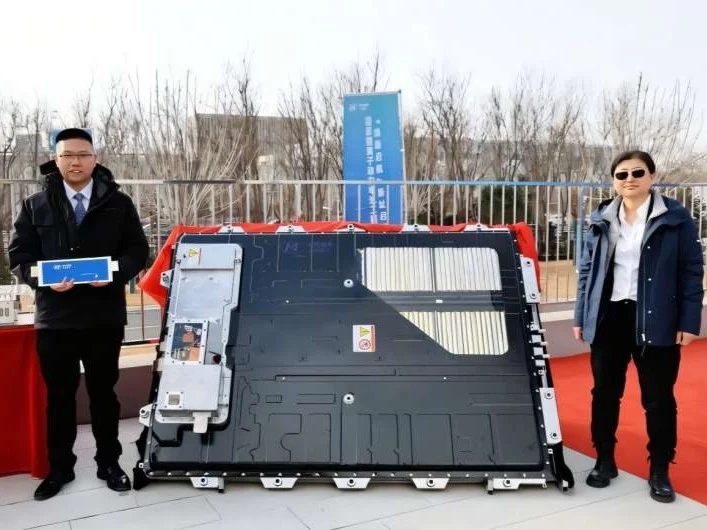
A research team from China has come up with a new hydrofluorocarbon electrolyte that pushes the boundaries of battery performance. In a study published in the journal Nature, they reveal a solvent that can provide energy densities over 700 Wh/kg at room temperature and around 400 Wh/kg at −50 °C (122 °F). This is a major improvement compared to standard electric vehicle batteries, which usually reach about 270 Wh/kg under regular conditions. This breakthrough opens up new opportunities for aerospace, grid storage, and electric transportation, especially in harsh climates.
Innovations in Battery Technology
Traditionally, battery electrolytes have used oxygen- and nitrogen-based ligands to transfer charges between the cathode and anode. These conventional materials create strong bonds that hinder charge movement at the interface of the electrode and electrolyte. This limitation becomes even more significant during low-temperature operations or rapid charging. To tackle this issue, the researchers crafted six monofluorinated hydrofluorocarbon solvents. By carefully designing the fluorine-based ligands with specific steric hindrance and Lewis basicity, they were able to enhance the dissolution of lithium salts, achieving levels greater than 2 mol/L.
Outstanding Performance of 1,3-Difluoropropane
The most remarkable solvent, 1,3-difluoropropane, showed impressive features, including a low viscosity of 0.95 centipoise and excellent oxidation stability above 4.9 volts. By adding fluorine atoms to the first solvation shell, the weak coordination allows for very efficient lithium plating and stripping. This process leads to a Coulombic efficiency of 99.7% and an exchange current density that is significantly higher than that of traditional oxygen-based systems at −50 °C (122 °F).
Testing was successful with lithium-metal pouch cells that used less than 0.5 grams of electrolyte per ampere-hour. The researchers state that this fluorine-coordination chemistry goes beyond the limits of traditional electrochemical design. Adjusting the ratios of carbon and fluorine in the future could result in even more stable variations with high boiling points above 100 °C (212 °F). This could pave the way for further advancements in the power and energy density of future energy storage systems.
Nature via Tech Xplore
Source:
Link

Leave a Reply