Tag: Stellantis

  • Leapmotor B05: Affordable Chinese EV vs VW ID.3, With a Catch

    Leapmotor B05: Affordable Chinese EV vs VW ID.3, With a Catch

    Key Takeaway

    – Aggressive pricing (€27,900) undercuts rivals like VW ID.3 with generous standard equipment
    – Strong performance specs: 215 hp, 0-100 kph in 6.7 seconds, up to 300 miles range, fast charging
    – European-tuned chassis with 50:50 weight distribution for local driving preferences
    – Major software weaknesses: confusing touchscreen, overly nervous driver-assistance systems
    – Practical trade-offs: small trunk (10.4 cu ft), no frunk, but OTA updates promised


    Leapmotor and Stellantis are launching a major push into Europe’s compact segment.

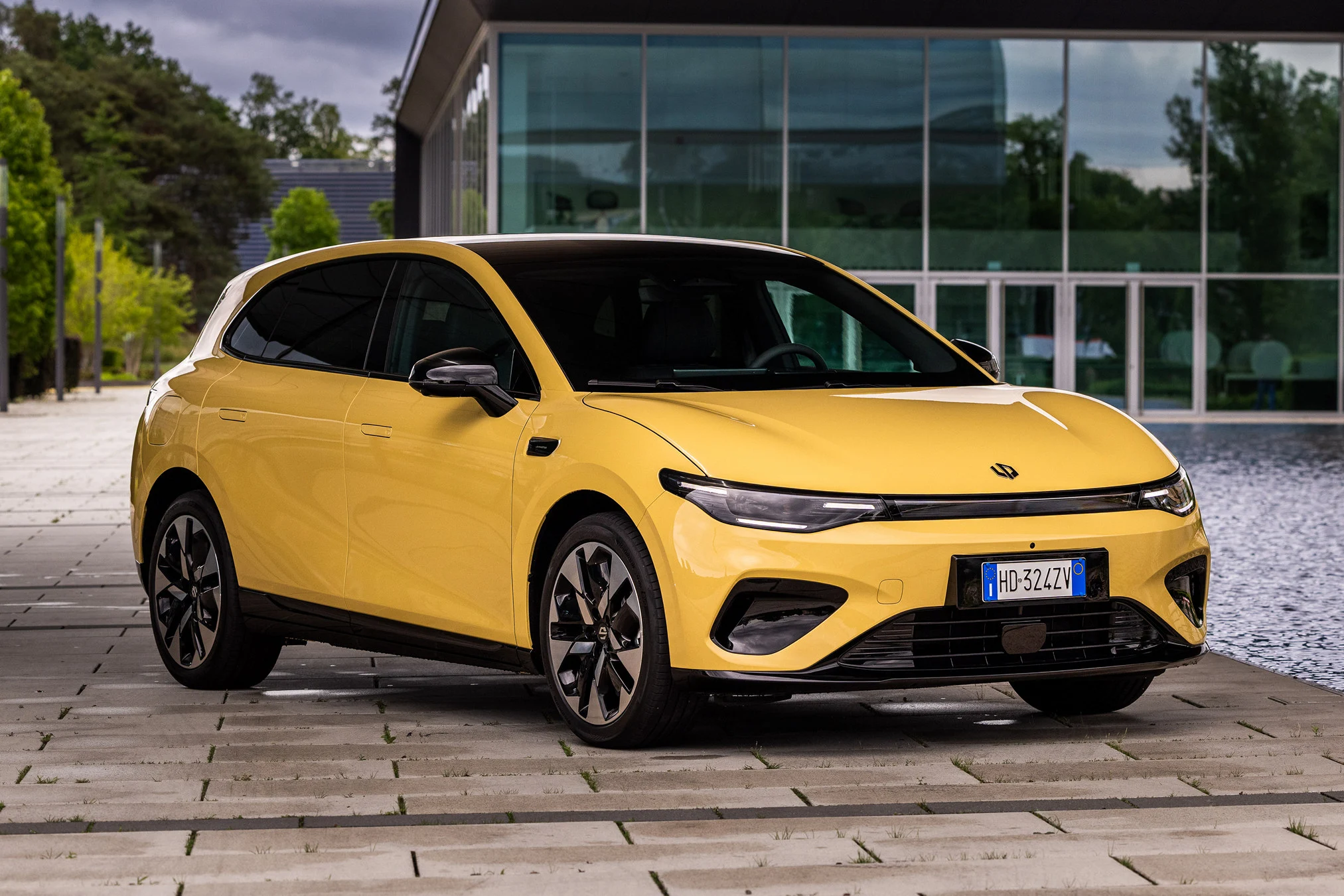
    The Chinese automaker is launching the new all-electric Leapmotor B05 hatchback at prices starting at €27,900 in Europe. Its main rival is the VW ID.3 in the traditional compact segment. For this aggressive price, the Chinese EV offers a notable amount of standard equipment. The B05 comes with a heat pump, a 12-speaker sound system, and Vehicle-to-Load (V2L), among other features.

    Technical specs of the Leapmotor B05 also look promising

    Leapmotor lists output for its rear-wheel-drive B05 at 160 kW (215 hp). That allows the 14.5-foot-long “Chinese electric Golf” to accelerate from 0 to 100 kph in just 6.7 seconds. The Leapmotor B05’s chassis has been specifically tuned for the preferences of European car buyers and offers balanced 50:50 weight distribution. B05 buyers can choose between two battery sizes: 56.2 kWh for up to 249 miles of WLTP range and a larger 67.1 kWh battery. With the latter, the Leapmotor B05 is expected to manage up to 300 miles and charge from 30 to 80% in around 17 minutes.

    Despite the strong first impression, the first international media test drives in Germany’s Rheingau region revealed notable weaknesses in the details.

    While the rear-wheel drive setup’s acceleration and the ride comfort are convincing, the Chinese software causes frustration. Operation via the 14.6-inch touchscreen is confusing, and the driver-assistance systems react extremely nervously. The lane-keeping assist in particular stands out for its rigid interventions and reactivates itself after a short time, which significantly affects everyday comfort. The trunk also shrinks to a meager 10.4 cubic feet, and Leapmotor has completely omitted a practical frunk under the front hood. However, Leapmotor has already promised quick fixes via over-the-air updates.


    Sources

  • New Opel Astra EV: €25k with Chinese tech sparks turnaround

    New Opel Astra EV: €25k with Chinese tech sparks turnaround

    Key Takeaway

    – Opel’s next-generation Astra will remain “Made in Germany” on a new STLA One platform.
    – German plants are severely underutilized (below 60%), with Rüsselsheim running on a single shift.
    – Opel has been reduced to a third-tier Stellantis brand, retaining few core engineering competencies.
    – A partnership with Chinese startup Leapmotor aims to deliver a low-cost electric SUV by 2028.
    – Without Chinese support, Opel’s survival is considered unlikely by industry experts.


    Opel’s future holds a mixed bag of hope and hard truths

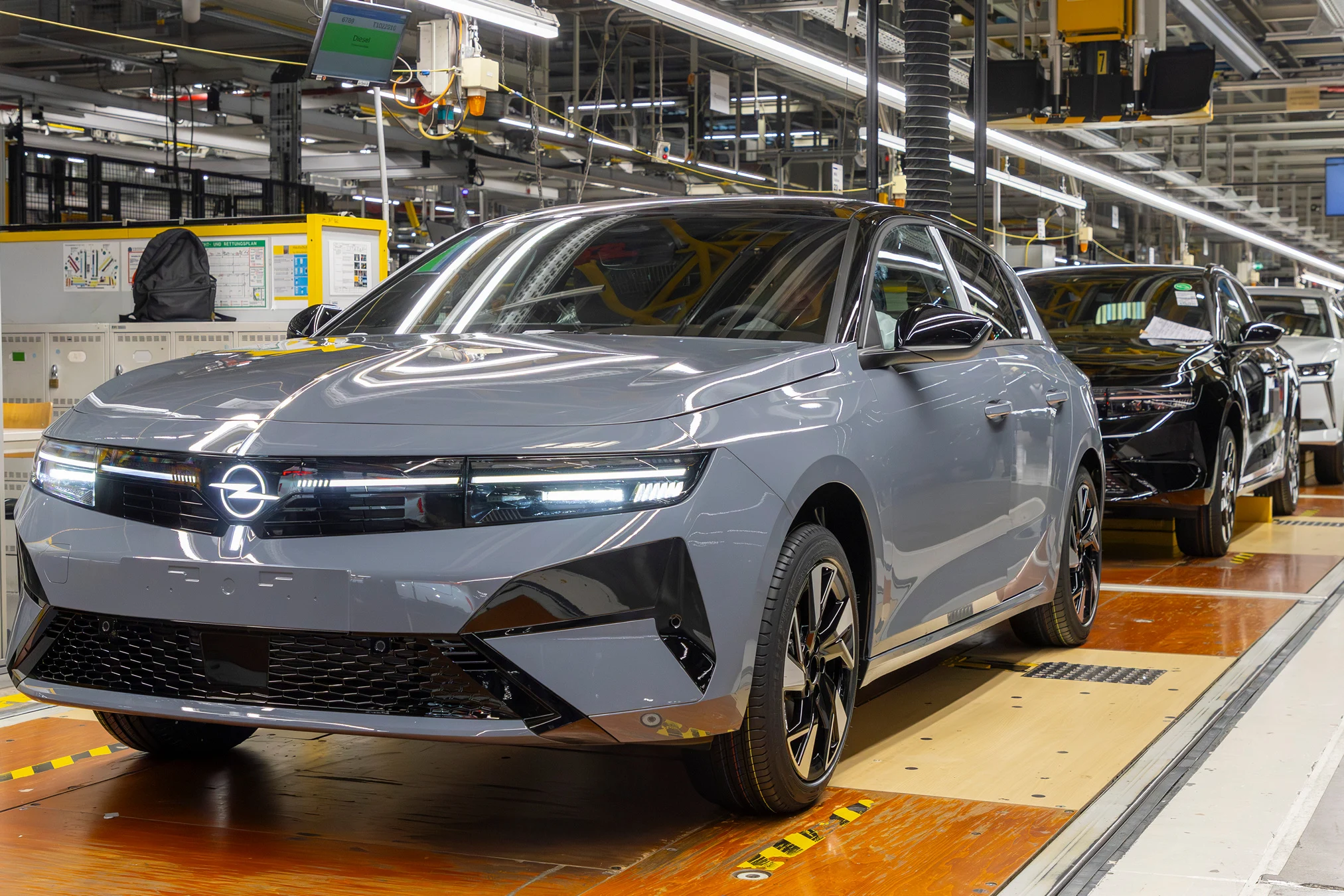
    Officially, a tone of optimism is being maintained at Opel’s headquarters in Rüsselsheim. The company’s parent group, Stellantis, has announced that the next generation of the long-running compact bestseller, the Astra, will continue to be designed, developed and manufactured in Rüsselsheim, ensuring that it remains a true product “Made in Germany”. The vehicle will be based on the new STLA One electric platform. Opel plans to invest more than one billion euros in Germany by 2030 and introduce at least four new models, including the next generation of the Corsa.

    But the factory floors tell a more troubling story

    However, the reality away from the marketing rhetoric is bleak. The German plants in Rüsselsheim and Eisenach are struggling with significant underutilisation, with production historically falling below 60 percent. In Rüsselsheim, production is effectively running on just a single shift. Even more dramatic is the downsizing at the traditional development centre: of the former 7,000 engineers, only 1,650 remain today. Insiders complain that Opel has been relegated to the third tier within the Stellantis Group, leaving developers with few core competencies beyond lighting and seats.

    A rescue plan from the Far East emerges

    The salvation of the struggling car manufacturer, whose European market share has shrunk to a critical 3 percent, therefore comes from the Far East. Opel aims to turn things around through its partnership with the Chinese electric start-up Leapmotor. A new electric family SUV based on affordable Chinese technology is planned for release in 2028. This collaboration is intended to serve as a blueprint for achieving shorter development times and offering more affordable EVs. The upcoming electric Corsa is also expected to break the psychological price barrier of €25,000 in this way.

    Without Chinese support, the brand might not survive

    According to industry experts, without support from China, the survival of the brand would hardly be guaranteed anymore. Opel’s reliance on external partners highlights just how deep the structural problems run within the company. While the official announcements speak of billion-euro investments and new models, the day-to-day reality involves massive job cuts, reduced shifts, and a shrinking market presence. The partnership with Leapmotor might offer a lifeline, but it also raises questions about how much of the Astra’s “Made in Germany” identity will remain genuine.

    Sources
  • Stellantis IBIS Battery: New AC Prototype Enhances Performance

    Stellantis IBIS Battery: New AC Prototype Enhances Performance

    Key Takeaways

    1. Innovative Design: The IBIS battery system delivers alternating current directly, eliminating the need for separate inverters, onboard chargers, or DC converters.

    2. Efficiency Gains: The system saves 17 liters of space, reduces weight by 88 lbs, charges 15% faster, and decreases WLTP consumption and energy losses by 10%.

    3. Simplified Construction: IBIS streamlines vehicle design compared to standard lithium-ion batteries, which require additional charging systems.

    4. Versatile Applications: The IBIS framework is adaptable, with potential uses for rail transport, aerospace, maritime shipping, and data centers.

    5. Future Integration: Stellantis plans to integrate IBIS into production vehicles by 2029 or 2030, aiming for lighter and more efficient electric vehicles.


    IBIS has been in development for more than six years, working alongside Saft, a battery expert that is part of TotalEnergies. As reported by InsideEVs, this system delivers alternating current straight at the output, which means separate inverters, onboard chargers, or DC converters are no longer necessary. The current prototype is built upon the Peugeot E-3008 and is currently undergoing tests on public roads.

    Efficiency and Space Saving

    Stellantis highlights several benefits of the battery system. It saves around 17 liters of space and reduces weight by nearly 88 lbs. Charging with AC becomes 15% quicker, and both WLTP consumption and energy losses are decreased by 10%. Meanwhile, battery power can increase by as much as 15%, reaching 172 kW without changing the size. Maintenance is made easier, and the battery can also be used for second-life applications.

    Simplifying Vehicle Design

    Unlike standard lithium-ion batteries that store direct current and need extra inverters, IBIS greatly streamlines the vehicle’s construction. Companies like Tesla and Volkswagen still rely on separate charging systems. With its compact design, reduced weight, and improved energy efficiency, IBIS offers distinct advantages.

    Future Potential

    The IBIS framework is quite adaptable as well. A stationary version has been in testing since 2022, and it could potentially be utilized for rail transport, aerospace, maritime shipping, or data centers in the future.

    Stellantis’ battery initiative includes a team of 25 engineers from Saft, CNRS, the Sorbonne, the University of Paris-Saclay, and the Lafayette Institute. Stellantis aims to integrate IBIS into production vehicles by 2029 or 2030. This technology could pave the way for lighter, more efficient, and easier-to-maintain electric vehicles.

    Source:
    Link


  • Royal Mail Achieves 7,000 Electric Vehicles, Tops UK EV Fleet

    Royal Mail Achieves 7,000 Electric Vehicles, Tops UK EV Fleet

    Key Takeaways

    1. Royal Mail has added its 7,000th electric vehicle (EV) to its fleet, making it the largest electric fleet operator in the UK.
    2. The company plans to expand its EV fleet by adding 1,800 more vehicles and upgrading its charging infrastructure within the next year.
    3. Royal Mail uses 100% renewable energy to charge its electric vehicles at its delivery centers.
    4. It aims for a 50% reduction in emissions by 2030 and net-zero emissions by 2040 as part of its ‘Steps to Zero’ strategy.
    5. Royal Mail is also trialing heavy-duty electric trucks, enhancing its commitment to sustainability in its delivery operations.


    If you’ve ever wished for a greener way to receive your parcels, Royal Mail is quietly making that wish a reality. The company has recently added the 7,000th electric vehicle (EV) to its fleet, with intentions to expand even further.

    Milestone in London

    This milestone vehicle was delivered to the South Lambeth Delivery Office in London, where there are currently 71 EVs in operation. The 6,000th EV was introduced back in January 2025.

    Royal Mail initiated its journey into electric vehicles by purchasing 100 EVs in late 2017. Since then, it has grown to become the largest operator of electric fleets in the UK. Approximately 25% of its delivery centers rely on electric vehicles for their everyday delivery services. The company enhances its sustainability efforts by utilizing 100% renewable energy to charge its electric vehicles right on-site.

    Future Plans for Expansion

    Not content with its current achievements, Royal Mail is aiming to add another 1,800 EVs over the next year, along with a significant upgrade to its charging infrastructure. Approximately half of these new vans will be manufactured locally by Stellantis, which received this order in 2024.

    In addition to its electric vans, Royal Mail is also moving forward with the introduction of its first heavy-duty electric trucks. Two 19-tonne trucks have been provided by Magtec under an £800,000 grant from Innovate UK and are currently in the trial phase.

    Commitment to Sustainability

    Royal Mail has set ambitious goals, aiming for a 50% reduction in emissions by 2030 and achieving net-zero emissions by 2040 as part of its ‘Steps to Zero’ environmental strategy. Alistair Cochrane, the Chief Operating Officer of Royal Mail, expressed excitement about reaching this significant milestone in their journey towards net-zero by 2040. He stated, “Today, we’ve reached a major milestone in our journey to reach Net-Zero by 2040. We’ve solidified our role as the UK’s largest electric delivery fleet, and our investment in 1,800 more zero-emission vans will help us to keep this position going forward. Royal Mail is putting in the extra effort to decarbonize its fleet, which will bring substantial benefits for our postal workers, our customers, and the environment.”

    Source:
    Link

  • $9.63 Billion Loan to Enhance US Battery Production

    $9.63 Billion Loan to Enhance US Battery Production

    The loan discussed by Notebookcheck in the middle of 2023 is finally starting to take form. This comes as part of a wider effort by the Biden administration to encourage electric vehicle (EV) manufacturing in light of the upcoming presidential change.

    Importance of Domestic Production

    Jigar Shah, who leads the DOE Loan Programs office, pointed out how crucial this initiative is. He mentioned the competitive threats from China in the global manufacturing scene, stressing the need to boost production capabilities within the U.S.:

    “This program is vital for making people prefer the United States of America.”

    BlueOval SK’s Ambitious Plans

    The BlueOval SK partnership has set ambitious targets, which include constructing three massive plants in the continental U.S., each covering an area of 4 million square feet.

    Additional Funding for EV Growth

    In a similar move to enhance EV manufacturing, the DOE plans to offer up to $7.54 billion in affordable financing to Stellantis and Samsung SDI. This funding will support the establishment of two lithium-ion battery factories in Indiana. This new effort adds to previous financial arrangements, including a $2.5 billion loan provided to General Motors and LG Energy Solution for battery production across various states.

    Source: Link

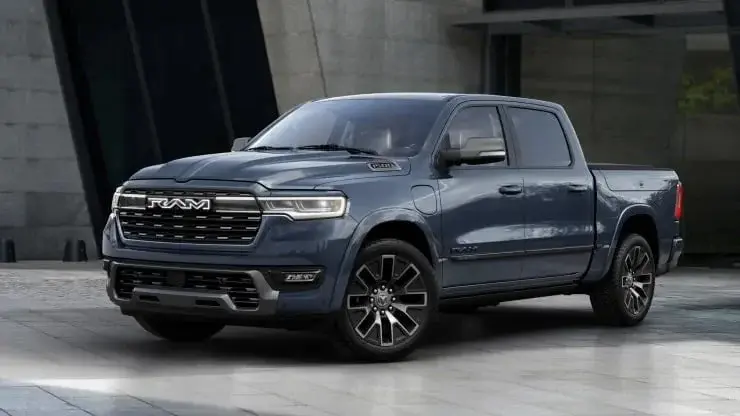
  • Unveiling of Stellantis Ram 1500 Ramcharger EV featuring a V6 engine backup generator

    Unveiling of Stellantis Ram 1500 Ramcharger EV featuring a V6 engine backup generator

    The Stellantis Ram 1500 Ramcharger EV is set to revolutionize the pickup truck industry with its unique combination of electric and gas-powered technology. As the brand’s first electric pickup, the Ramcharger aims to address the challenges of charging infrastructure and range anxiety that currently exist in the electric vehicle (EV) market.

    Features

    The Stellantis Ram 1500 Ramcharger takes inspiration from the Stellantis Ram Trucks and offers a powerful and versatile driving experience. Equipped with a 3.6L V6 gas engine, the Ramcharger features an onboard electric generator that kicks in when the battery runs out. This hybrid technology ensures that the vehicle always has power, making it a reliable option for those concerned about EV range limitations.

    By combining the best aspects of electric and gasoline configurations, the Ram 1500 Ramcharger is truly a game changer in the truck industry. It offers the environmental benefits of an electric vehicle while providing the convenience and reliability of a gas-powered engine.

    Expected to hit the market next year, the Stellantis Ram 1500 Ramcharger EV will be released alongside the all-electric Ram 1500 truck. This demonstrates Stellantis’ commitment to providing a range of options to cater to different consumer needs and preferences.

    Specifications

    The Ram 1500 Ramcharger boasts an impressive estimated range of 690 miles. This range is made possible by its 92kWh battery, which accounts for approximately 145 miles of the total range. The remaining range is achieved through the use of a 130kW electric generator and the gas engine.

    In terms of fuel capacity, the Ramcharger features a 27-gallon tank. This capacity aligns well with the performance of both the all-electric Ram 1500 REV and the traditional gasoline-powered Ram 1500 model.

    Pricing

    Although the pricing details for the Stellantis Ram 1500 Ramcharger EV have not been released yet, Stellantis hopes that this model will serve as a stop-gap solution for those who are not yet ready to fully transition to all-electric vehicles. The challenges surrounding charging infrastructure and range anxiety can be significant barriers to EV adoption, and the Ramcharger’s multiple range-extending features aim to address these concerns.

    As the market for electric trucks continues to grow, the Stellantis Ram 1500 Ramcharger EV stands out with its innovative hybrid technology and impressive range. While pricing information is still pending, it is clear that this model offers a compelling solution for those seeking a versatile and reliable truck option.