Tag: Mini-PC

  • Lenovo Mini PC with Nvidia RTX Rivals Mac, 128GB RAM

    Lenovo Mini PC with Nvidia RTX Rivals Mac, 128GB RAM

    Key Takeaway

    – Lenovo SFF RTX Spark is the first Arm-based mini PC from Lenovo using Nvidia’s new RTX Spark platform.
    – All ports are located on the back of the device, which some users may find inconvenient.
    – Cooling capacity and thermal design vary by manufacturer; Lenovo has not yet disclosed its thermal headroom.
    – Specific configurations, pricing, and availability have not been announced by Lenovo.
    – The mini PC uses the same RTX Spark platform as the Yoga Pro 9n laptop.


    New Lenovo Mini PC Spotted at Computex

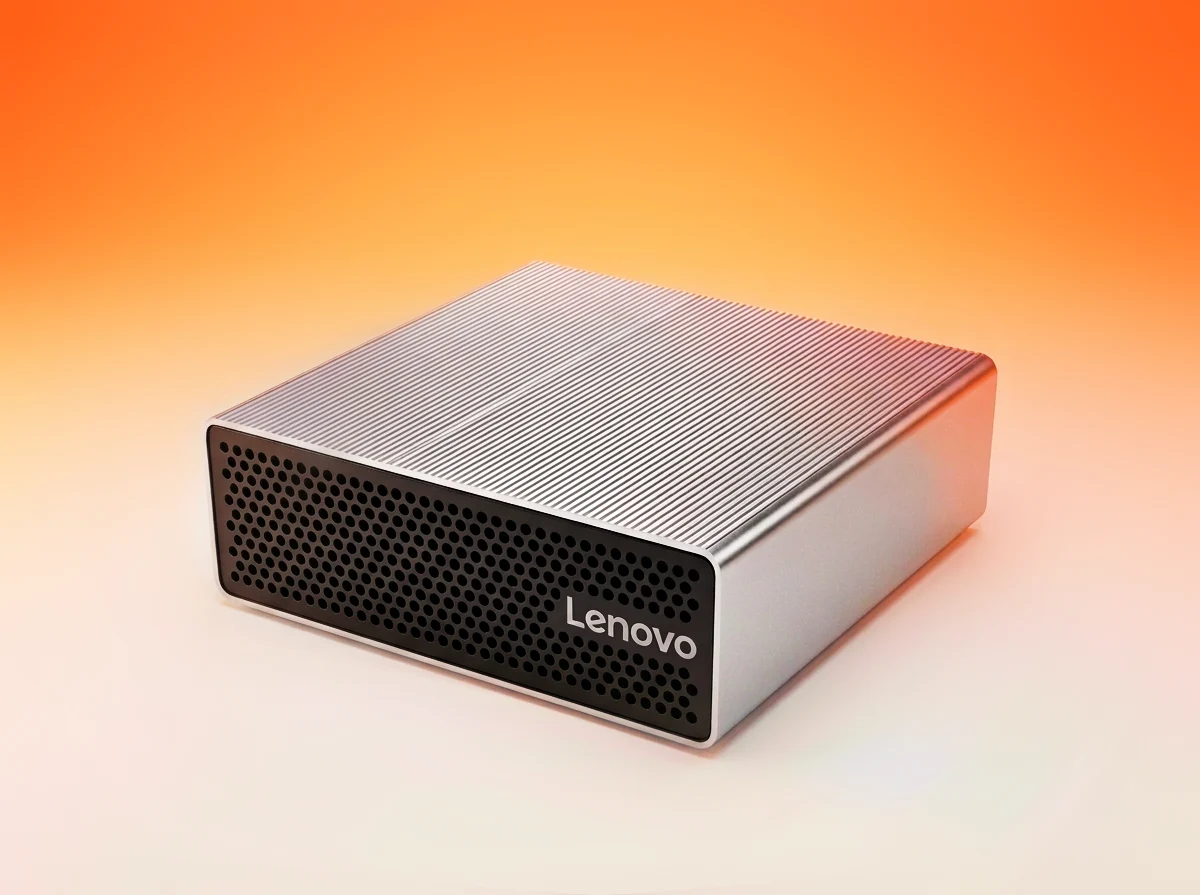
    Although we recently reported on the unveiling of the new Yoga Pro 9n, which is Lenovo’s first laptop powered by Nvidia’s revolutionary RTX Spark platform, Lenovo has proven to be one of the most secretive companys at this year’s Computex trade show. Despite Lenovo’s reluctance to publish press releases for its new hardware, we no longer have to wait to check out the brand-new Lenovo SFF RTX Spark, which (as the name implies) becomes the first Lenovo mini PC to get the Arm-based RTX Spark chips.

    Box Design and Port Layout

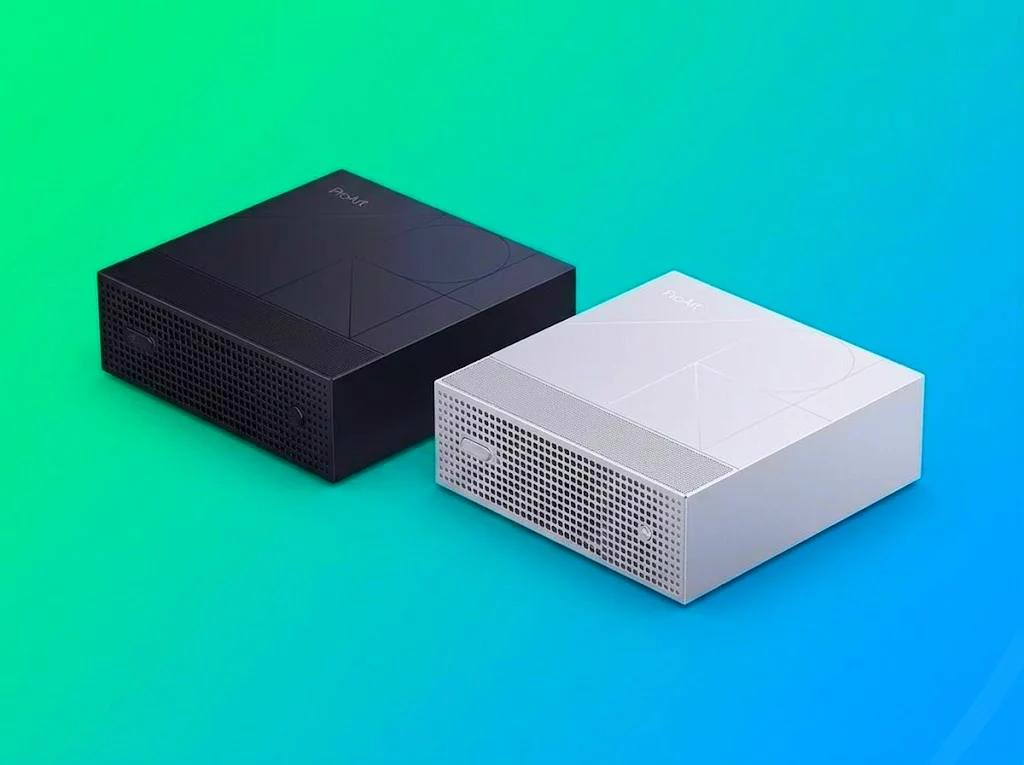
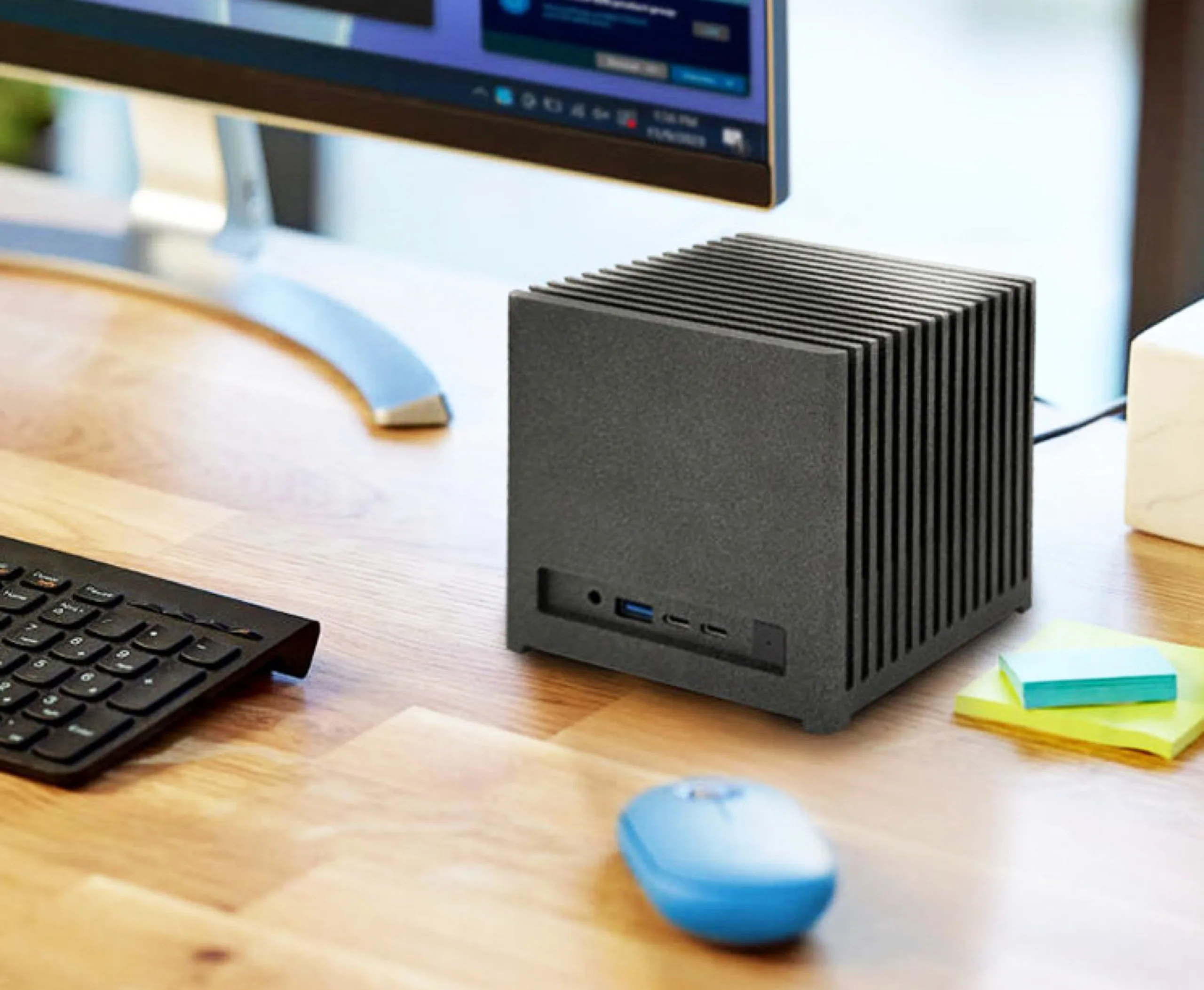
    The Lenovo SFF RTX Spark is one of five RTX Spark mini PCs to be revealed at Computex 2026, and it arrives in a pretty minimalistic dual-tone box in the colors black and silver. Unlike the Dell XPS RTX Spark Desktop, which has two USB-C ports and an SD card reader on the front, Lenovo’s mini PC hides all of its ports in the back (something many PC users find to be inconvenient). The (rear-facing) port selection on the new Lenovo SFF RTX Spark mini PC is as follows:

    • Multiple USB-C ports with variable speeds
    • Standard USB-A connectors for legacy devices
    • HDMI and DisplayPort outputs for monitors
    • Ethernet jack for wired networking
    • Headphone and microphone combo jack

    Cooling Capacity and Platform Details

    So far, only Asus has revealed the thermal headroom of its new RTX Spark mini PC, the Asus ProArt, which is built around 140W of thermal ceiling. Cooling capacity depends on each manufacturer’s specific chassis design and performance priorities, so Lenovo may target lower or higher thermal capacity, depending on the factors it chooses to prioritize for the Lenovo SFF RTX Spark (like noise, portability, or cost). The SFF RTX Spark mini PC uses the same RTX Spark platform as the newly-announced Yoga Pro 9n laptop.

    Chip Variants and Configurations

    The RTX Spark is said to come in two flavors, dubbed as the N1x and N1. Of course, specific configurations and their pricing will vary widely, depending on RAM and SSD size. Just like with all other Nvidia Spark RTX laptops and mini PCs, Lenovo is yet to announce pricing and availability for the Lenovo SFF RTX Spark mini PC. In fact, this early reveal is a collection of official specs and features based on Nvidia’s press release and hands-on previews.

    Manufacturer’s Silence Continues

    Like Dell, Lenovo is one of the few OEMs that hasn’t published press releases for their new RTX Spark mini PCs, even though they were officially revealed at Computex 2026. This lack of official word is frustraiting for enthusiasts who want concrete numbers, but the hardware itself is now out in the wild for viewing. The device remains a tantalizing peek into what could be a very powerful little machine, assuming Lenovo finalizes its thermal and performance targets soon.
    Sources

  • MSI Cubi AI+ 3MG: 60% Faster, But Could Be Better

    Key Takeaway

    – Core Ultra 9 386H is over 60% faster in multi-thread performance than last-gen Lunar Lake.
    – Power consumption only increases by ~8% for a significant performance-per-watt gain.
    – Turbo boost lasts only ~20 seconds before throttling due to the small form factor.
    – The same CPU runs 20-25% faster in larger laptops like the Razer Blade 16.
    – The new Cubi NUC is a major improvement but doesn’t fully utilize the CPU’s potential.


    MSI’s New 2026 Cubi NUC: A Panther Lake Powerhouse in a Tiny Box

    The latest 2026 Cubi NUC from MSI ships with an H-series Panther Lake CPU to replace the Lunar Lake CPU on last year’s model. Panther Lake can run substantially faster than last generation Lunar Lake options as the same CPU in the 2026 Cubi NUC can also be found on gaming laptops like the Razer Blade 16. On the MSI mini PC, however, some compromises have been made for the smaller form factor.

    Raw Performance vs. Last Year: A Massive Leap Forward

    As shown by the comparison graphs below, the Core Ultra 9 386H CPU in the Cubi NUC AI+ 3MG is over 60 percent faster than the Core Ultra 7 258V in the Cubi NUC AI+ 2MG in terms of raw multi-thread performance. Power consumption would be just a few watts more as well and so the significant performance advantage requires just a small 8 percent uptick in power requirements for superior performance-per-watt.

    • CPU: Intel Core Ultra 9 386H (Panther Lake, 6P+8E+2LPE, up to 5.0 GHz)
    • Graphics: Intel Arc integrated (up to 8 Xe cores)
    • Memory: Dual-channel DDR5-6400 (soldered, up to 64 GB)
    • Storage: 1x M.2 2280 PCIe 4.0 x4, 1x M.2 2230
    • Ports: 2x Thunderbolt 4 (USB-C), 2x USB-A 3.2 Gen2, 1x HDMI 2.1, 1x DisplayPort 1.4, 1x 2.5GbE LAN, 3.5mm audio jack
    • Dimensions: 0.88 x 4.6 x 4.4 inches (22.4 x 117 x 112 mm)
    • Base Power: 35W (configurable up to 65W)
    • Pricing: Starting at $879 (barebone), $1,149 (16GB/512GB config)

    Thermal Throttling: The Small Form Factor’s Achilles’ Heel

    The issue arises when comparing the new MSI mini PC to laptops sporting the same Core Ultra 9 386H CPU. The Razer Blade 16, for example, runs 20 to 25 percent faster than the MSI due to its much larger form factor and more capable cooling solution. Meanwhile, the same CPU in the MSI can only sustain Turbo Boost clock rates for about 20 seconds before needing to throttle as exemplified below by the initial spikes in CineBench R15 xT scores and power consumption when running Prime95.

    Performance Ceiling: What Could Have Been

    The 2026 Cubi NUC AI+ 3MG is indubitably a huge improvement over its predecessor, but it could have been even faster given what the Core Ultra 9 386H is capable of on other machines. While the mini PC delivers exceptional single-threaded speed and outpaces any previous Lunar Lake competitor by a wide margain, its sustained multithreaded performance is hamstrung by the chassis’s thermal constraints. For bursty workloads or everyday productivity, the Cubi NUC is a dream; for extended rendering or encoding tasks, you’ll see performance drop off after the first few seconds.

    Owners should also note that the soldered memory means no upgrades later, so choose your configuration wisely from the start. The fan noise under load is moderate but noticable, hovering around 35 dB at head height. Overall, this is a impressive step forward for the Cubi line, but enthusiatsts waiting for a true desktop-class experience in a NUC might still be left wanting a little more ceiling.

    Sources
    • New Asus Mini-PCs: Intel Wildcat Lake, 64GB RAM, Thunderbolt 4

      New Asus Mini-PCs: Intel Wildcat Lake, 64GB RAM, Thunderbolt 4

      Key Takeaway

      – Asus expands NUC 16 series with new entry-level Wildcat Lake processors (Core 3 304, Core 5 320, Core 7 350).
      – Supports up to 64 GB DDR5-6400 RAM and 2 TB PCIe Gen 4 storage.
      – Available as complete mini-PC or self-assembled motherboard kit.
      – Features Bluetooth 6.0, Thunderbolt 4, and Wi-Fi 7 connectivity (except motherboard-only version).
      – Pricing and availability are currently unannounced.


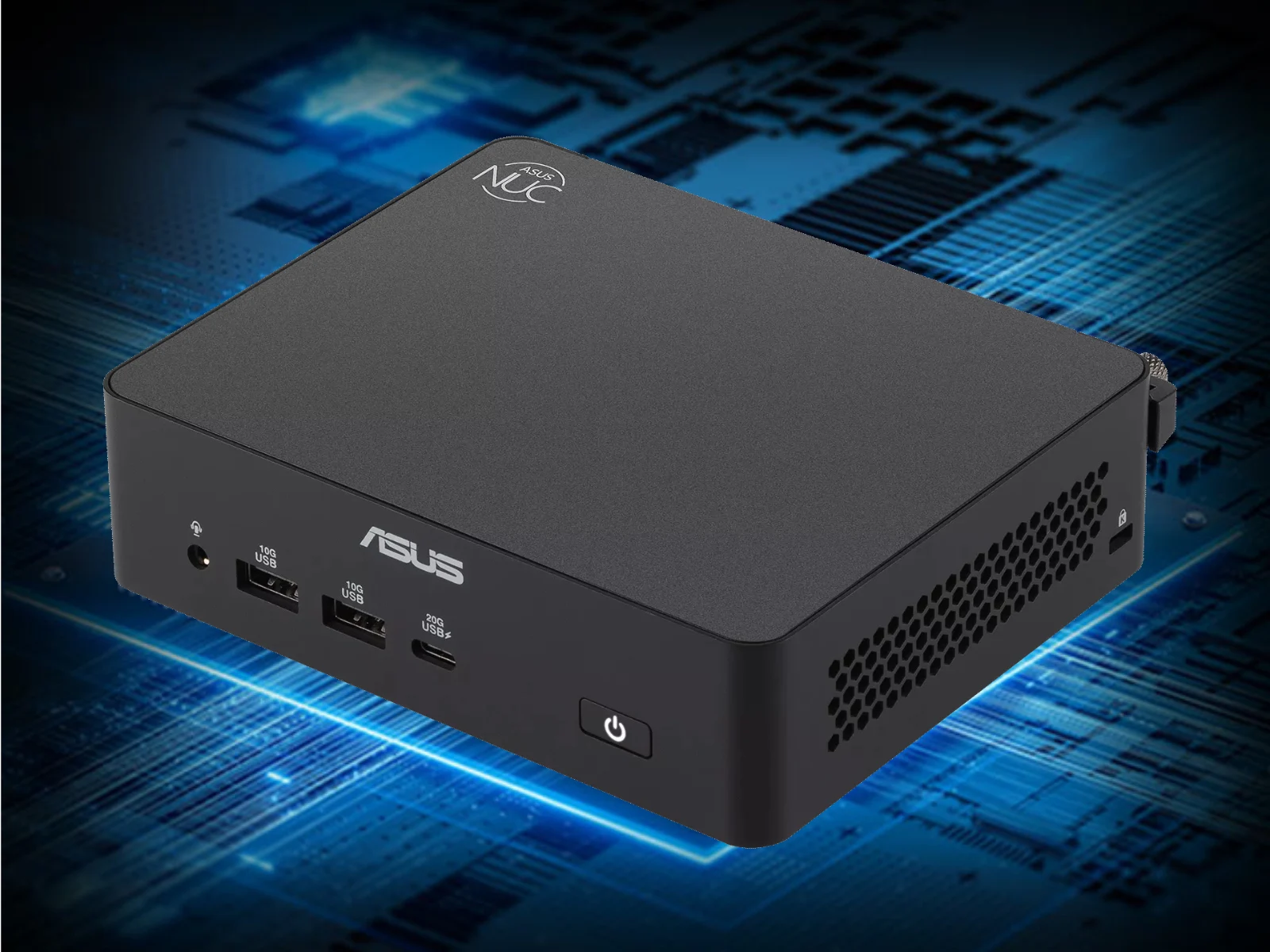
      Asus have expanded the NUC 16 series with a series of new entry-level models. For context, the company unveiled the NUC 16 Pro in January during CES 2026, featuring Intel Pantuh Lake processors. While the mini-PC is available with the Core Ultra X7 358H and Core Ultra X9 388H, Asus also sells it with the less powerful Core Ultra 5 325 (curr. $599 on Amazon).

      New Wildcat Lake Options Announced

      Now, it has updated the series with Wildcat Lake options. Specifically, Asus plans to sell the NUC 16 with up to the Core 7 350. A 6-core processor, the Core 7 350 will be joined by lesser Core 3 304 and Core 5 320 variants too. According to Asus, these processors can be complemented with up to 64 GB of DDR5-6400 RAM and 2 TB of PCIe Gen 4 storage.

      Form Factor and Connectivity Details

      Moreover, the NUC 16 will be available as a complete mini-PC, a self-assembled kit of just the motherboard itself. All variants contain the same ports, though. Likewise, the complement mini-PC and kit measure 144 x 117 x 42 mm. All but the motherboard version will ship with Bluetooth 6.0, Thunderbolt 4 and Wi-Fi 7 connectivity too.

      Pricing and Availability Still Unknown

      Unfortunately, pricing and availability remain unknown for now. Have a look at the images below and Asus’ website for more details if you want find out more information about these devices.


      Sources

    • Asus Pro-Grade Mini PC: RTX Spark, 140W Cooling, 128GB RAM

      Asus Pro-Grade Mini PC: RTX Spark, 140W Cooling, 128GB RAM

      Key Takeaway

      – Powered by Nvidia RTX Spark superchip with 1 petaflop AI performance
      – Fits 128GB unified memory, handling 90GB+ 3D scenes and 120B-parameter LLMs
      – Compact 150x150x51mm chassis with 140W thermal headroom for sustained workloads
      – High-bandwidth connectivity and storage for professional studios and edge AI
      – Part of Asus ProArt ecosystem, compatible with AI tools like Creator Hub, MuseTree, and StoryCube


      Along side the anouncement of the new ProArt P16 and P14 MacBook Pro rivals, Asus has unveiled the new ProArt Mini PC, a direct competitor to the just-announced HP OmniDesk mini PC. Designed to bring workstation-class generative AI and large-scale rendering capabilities for those who don’t have a large desk, Asus’ Mac Studio rival is built entirely around the new Nvidia RTX Spark superchip platform.

      Small Size, Massive AI Power

      Despite measuring only 150x150x51mm, the ProArt Mini PC is engineered to handle intensive AI workloads that typically require much larger hardware. The tiny PC is powered by the Nvidia RTX Spark superchip, which integrates an Nvidia Blackwell-based RTX GPU with 6,144 CUDA cores and a 20-core Nvidia Grace CPU.

      Unified Memory and Insane Performance

      The system utilizes a unified memory architecture supporting up to 128GB of RAM. By allowing dynamic memory allocation between system and graphics resources, the device is optimized to handle massive datasets, such as 90GB+ 3D scenes or 120B-parameter Large Language Models (LLMs) with up to 1 million tokens of context. Asus rates the system at 1 petaflop of AI performance.

      Maintaining performance stability in a chassis this small requires sophisticated thermal management. The ProArt Mini PC features a dedicated thermal architecture designed to provide up to 140W of thermal headroom, ensuring the hardware can sustain long-duration rendering and AI training tasks without performance throttling.

      Connectivity and Storage Options

      To meet the requirements of professional studios and edge AI deployment, the unit includes high-bandwidth connectivity and storage options:

      • High-speed networking for rapid data transfer
      • Expandable storage for large datasets
      • Multiple display outputs for complex workflows

      The ProArt Mini PC is positioned as a foundational device for the broader Asus creative ecosystem. It is fully compatible with the suite of AI-optimized software Asus is rolling out for the ProArt series, including the ProArt Creator Hub for resource management and specialized tools like MuseTree and StoryCube for generative workflows.

      Availibility and Pricing

      The system is designed for professional developers and content creators who need to deploy AI agent-ready infrastructure in small-footprint environments. Asus has confirmed that the ProArt Mini PC will be available starting in the fall of 2026, with further configuration and pricing details to be released closer to the launch date.


      Sources

    • Poco X8 Pro Yellow Edition: Racing Design, High Tech

      Key Takeaway

      – Striking motorsport-inspired design with racing stripes and RGB lighting
      – Powerful MediaTek Dimensity 8500 Ultra chip for strong gaming and daily performance
      – Excellent 6.59-inch AMOLED display with 120 Hz refresh rate and over 3,400 cd/m² peak brightness
      – Large 6,500 mAh silicon-carbon battery with impressive life and fast charging
      – Solid 50 MP main camera with OIS, but USB 2.0 limits data transfer and video output


      The Poco X8 Pro is being released in a new yellow variant that draws heavily on motorsport aesthetics for its visual design. Its defining features include racing stripes on the back panel, integrated RGB lighting within the camera module, and a premium build quality featuring a metal frame and a glass back. At the same time, the smartphone remains firmly focused on high performance and gaming capabilities.

      Performance and Processing Core

      In our review, the Poco X8 Pro positions itself as a powerful mid-range smartphone with a strong emphasis on performance, display quality, and efficiency. At its core lies the modern MediaTek Dimensity 8500 Ultra SoC, built on a 4nm process. This chip ensures brisk everyday speeds, short loading times, and robust gaming performance, all while maintaining moderate power consumption. Although slight thermal throttling occurs under sustained heavy load, overall performance remains consistently high.

      Display and Visuals

      The 6.59-inch AMOLED display is a particular standout feature. With a 120 Hz refresh rate, high resolution, and peak brightness levels exceeding 3,400 cd/m², it delivers excellent visuals – even outdoors. Its high PWM dimming frequency of 3,840 Hz minimizes visible flickering and enhances viewing comfort.

      Hardware Specifications and Connectivity

      In terms of hardware specifications, the device utilizes fast LPDDR5x RAM and UFS 4.1 storage. It supports Wi-Fi 6, Bluetooth 6.0, NFC, and 5G dual-SIM functionality. However, there are limitations regarding the USB 2.0 port, which supports neither high-speed data transfer nor video output. The 50 MPix main camera, featuring optical image stabilization, captures good photos in daylight and records solid 4K video. The ultra-wide-angle and front-facing cameras, however, perform at a more average level. The 6,500 mAh battery employs modern silicon-carbon technology, delivering impressive battery life alongside fast charging capabilities. The Poco X8 Pro in the yellow variant is available in 8/256 GB, 8/512 GB, and 12/512 GB storage configurations, starting at $369.


    • Geekom A9 Max Upgradeability: Is It Worth Buying?

      Key Takeaway

      – High-end mini PC with AMD Ryzen AI 9 HX 470 (12 cores, 24 threads) and Radeon 890M iGPU.
      – Comes with 32 GB DDR5 RAM and 2 TB SSD, but uses a single RAM module, limiting memory bandwidth.
      – Single-channel RAM cripples iGPU performance, impacting 3D benchmarks.
      – Adding a second RAM module significantly boosts performance, especially for the integrated graphics.
      – Good build quality, low power consumption, quiet operation, but lacks modern ports like OCuLink or USB4 v2.


      Geekom Rolls Out a New High-End Mini PC

      With the A9 Max, Geekom is launching a new high-end mini PC in the 2026 edition, which is based on AMDs current Gorgon Point platform. The AMD Ryzen AI 9 HX 470 with 12 cores and 24 threads works inside, combined with the integrated Radeon 890M built on the RDNA 3.5 architecture. The equipment is complemented by 32 GB DDR5 RAM and a 2 TB SSD, making the compact computer primarily aimed at demanding users who are looking for alot of performance in a tiny space.

      Build Quality and Connectivity Insights

      In the detailed test, the Geekom A9 Max turns out to be a powerfull and high-quality mini PC with extensive connectivity. In addition to the good CPU performance, the comparatively low power consumption and the pleasant noise level under load are particularly positive. The familiar aluminum housing looks high-quality but still dosent offer any modern connections like OCuLink or USB4 v2.

      Memory Configuration Under Fire

      The memory configuration of the test device is especially open to critisism. Geekom only uses a single RAM module ex works, which limits the memory bandwidth. This not only affects the general system performance but also the integrated Radeon 890M in particular. As a result, the iGPU cannot fully develop its high potential and falls short of expectations in some 3D benchmarks. The recently tested Minisforum AI X1 Pro also had different memory.

      How to Unlock Full Performance

      The performance can be significantly improved by retrofitting a second RAM module (32 GB at Amazon), whereby the integrated graphics unit in particular benifits from the higher memory bandwidth. Despite this limitation, the Geekom A9 Max leaves a good impression overall and is currently one of the more powerful mini PCs in its segment with the AMD Ryzen AI 9 HX 470 chip.

      Final Review Details

      All details about the Geekom A9 Max including benchmarks, measured values, and detailed comparisons can be found in the full evaluation document.

      • Processor: AMD Ryzen AI 9 HX 470 (12 cores, 24 threads)
      • Graphics: Integrated Radeon 890M (RDNA 3.5)
      • Memory: 32 GB DDR5 RAM (single module)
      • Storage: 2 TB SSD
      • Case: Aluminum housing
      • Connectivity: lacks OCuLink and USB4 v2


      Sources

      • Europe Mini PC with Intel Panther Lake and Arc B390 silent

        Europe Mini PC with Intel Panther Lake and Arc B390 silent

        Key Takeaway

        – Upgraded to Intel Core Ultra X7 358H with integrated Arc B390 iGPU for significantly better CPU and gaming performance while remaining fanless.
        – Aluminum cube chassis with circumferential cooling fins doubles as a heat sink for silent operation; dimensions: 12 cm edge length.
        – Dual M.2 slots and versatile I/O: 2 USB-A, 2 Ethernet, 2 HDMI 2.1 on rear; front USB-A and 2 USB-C (one with Thunderbolt 4) for expandability.
        – Target price €1,850 (config: 16 GB RAM, 1 TB SSD), positioning as a premium fanless mini PC with strong gaming potential at 1080p.


        Kubb updates its popular mini PC by moving to Intel Panther Lake, promising beefier core performance and stronger graphics thanks to the integrated Arc iGPU.

        New processor and graphics boost

        The Kubb Fanless replaces the Intel Core Ultra 5 225H with the Intel Core Ultra X7 358H, aiming for notably higher CPU power. The built-in Intel Arc B390 iGPU is also said to enhance gaming performance, allowing smoother experiences in lightweight titles at 1080p with mid settings.

        Gaming and pricing

        Intel’s top integrated graphics in this setup are advertised to handle games like Anno 117: Pax Romana, Forza Horizon 6, and The Outer Worlds 2 at 1080p on medium details. The price is listed at €1,850, placing it above several laptops with comparable CPUs, yet the vendor emphasizes silent operation as a key selling point by cooling the chip passively.

        To achieve silent cooling, the case is built from aluminum to act as a large heat sink, with circumferential cooling fins increasing surface area for more efficient thermal management. The compact square form keeps the dimensions small, while still housing two M.2 SSD slots. Back I/O includes two USB-A ports, two Ethernet connectors, and two HDMI 2.1 outputs; the front adds another USB-A and two USB-C ports, one of which supports Thunderbolt 4.

        Availability and configuration

        The Kubb Fanless with Intel Panther Lake is now on sale through Kubb’s online store. A configuration featuring the Intel Core Ultra X7 358H, 16 GB RAM, and 1 TB SSD is priced at €1,850 (about $2,150) not including shipping, continuing the brand’s emphasis on noiseless operation.

        • Two M.2 SSD slots for drives
        • Thunderbolt 4-capable USB-C on the front
        • Passive cooling via a large aluminum chassis

        The compact cube measures roughly 12 cm per side, balancing performance, cooling, and space efficiency in a fanless design.

        Overall, Kubb retains its focus on silent operation and compact size while upgrading to Panther Lake, appealing to buyers seeking a quiet, space-saving mini PC with reasonable gaming capability at 1080p. The €1,850 price tag reflects the premium for passive cooling and improved CPU/GPU performance in a small form factor.


        Sources

      • GMKtec AMD-Powered Gaming Mini PC with OCuLink Port

        GMKtec AMD-Powered Gaming Mini PC with OCuLink Port

        Key Takeaway

        – EVO-X3 is teased as an upgraded version of EVO-X2 with a larger chassis and new I/O, including an OCuLink port, high-speed USB4 ports, and WiFi 7.
        – Likely powered by Ryzen AI Max+ 495 (rumored), suggesting a noticeable performance boost over the EVO-X2’s Ryzen AI Max+ 395.
        – Dual PCIe 4.0 slots for expanded storage and overall emphasis on high-end connectivity and expansion at a premium price.


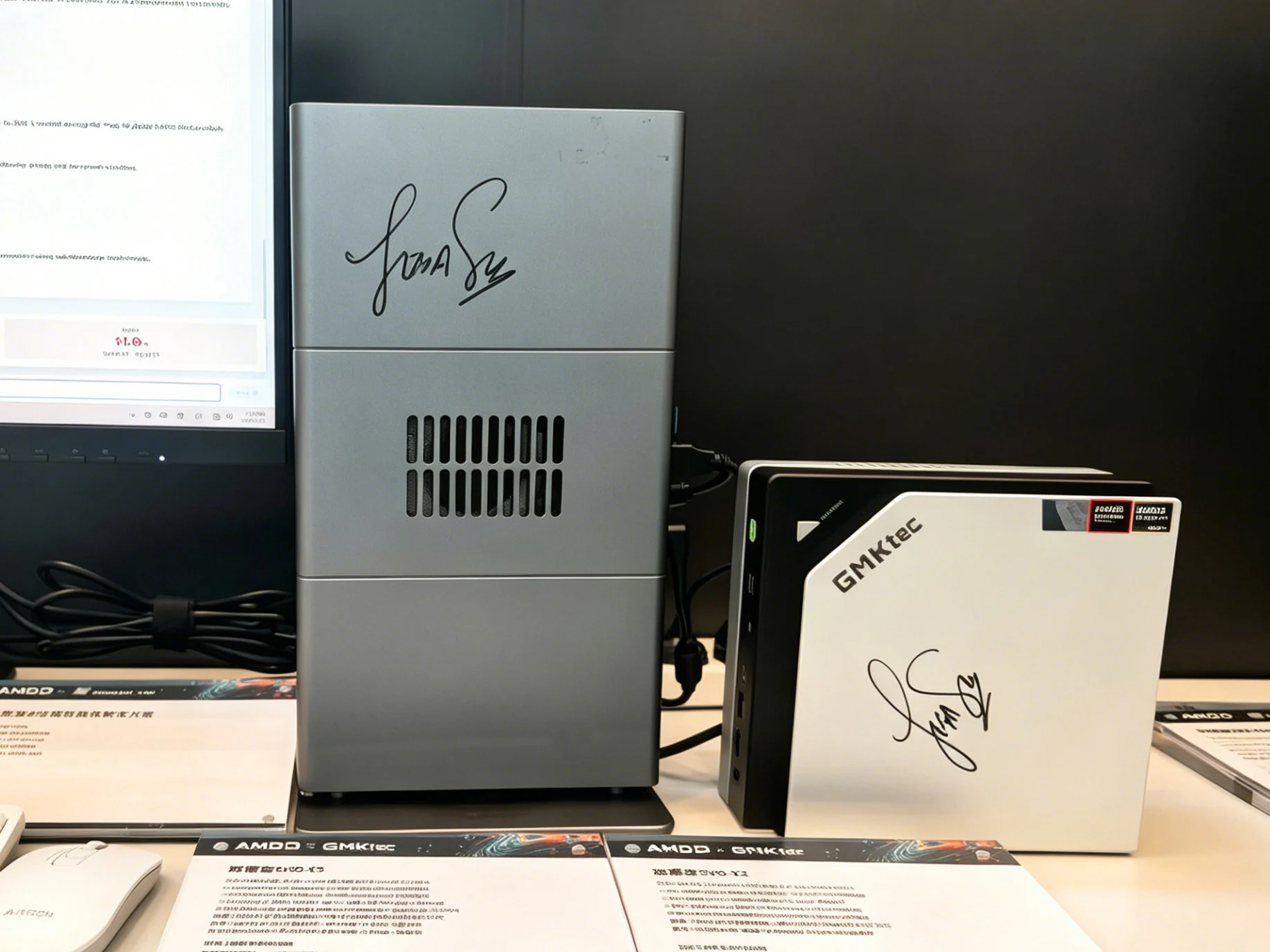
        GMKtec has shown off a new mini PC named EVO-X3 during the AMD AI Developer Day 2026 in China, with only one image released and limited details shared. The official blog hinted that it would be an upgraded version of the EVO-X2, suggesting improvements on the previous model rather than a complete rebuild.

        Overview and teased upgrade

        GMK EVO-X2 previously arrived as one of the early mini PCs to feature the top-end Ryzen AI Max+ 395 APU, which included the Radeon 8060S iGPU. This integrated graphics solution was reported to rival the gaming performance of Nvidia RTX 4070 Laptop GPU in certain scenarios, a claim that impressed enthusiasts seeking compact power. The EVO-X3 is expected to continue that tradition by offering an enhanced processing unit, with speculation pointing toward the Ryzen AI Max+ 495 as a possible core.

        Possible specs and features

        In official communications, GMKtec confirmed the EVO-X3 will include an OCuLink port, a feature missing from the current EVO-X2. Additionally, the device is promised to come with high-speed USB4 ports, WiFi 7, and dual PCIe 4.0 expansion slots to support extra storage. The existence of these elements signals a focus on connectivity and expansion, aligning with expectations for a future-proof mini PC.

        The photographed render shows a larger chassis for the EVO-X3 relative to the EVO-X2, implying improved cooling, space for higher-end components, or both. Pricing remains undisclosed, but it’s noted that the EVO-X2 launched at a higher price due to its premium internals, and GMKtec has previously increased the EVO-X2 price after global availability.

        Design and positioning

        The single image teased by GMKtec depicts a design shift toward a more substantial enclosure, which could reflect enhanced thermals and potential performance headroom. While it’s common for mini PCs to trade compactness for greater cooling, the EVO-X3’s prospective upgrades suggest GMKtec is targeting power users who demand sustained performance from a compact form factor.

        • OCuLink port inclusion signals an emphasis on fast external connections.
        • WiFi 7 readiness points to better wireless performance in dense environments.
        • Dual PCIe 4.0 slots offer expandable storage options for demanding workloads.

        Market expectations

        The EVO-X3’s arrival comes amid a crowded field of compact workstations and gaming mini PCs. If the EVO-X3 pairs the rumored Ryzen AI Max+ 495 with robust cooling and enhanced IO, it could appeal to professionals and enthusiasts who want a capable box for content creation, AI workloads, or portable game streaming. Pricing remains a key variable that will influence its reception among buyers who already saw the EVO-X2 fluctuate in cost after introduction.

        Sources
      • Geekom A9 Max 2026 Launch: Global Release, New AMD Processor & Discounts

        Geekom A9 Max 2026 Launch: Global Release, New AMD Processor & Discounts

        Key Takeaway

        1. The Geekom A9 Max has been updated with AMD’s Gorgon Point APU, offering a modest performance boost over the previous Ryzen AI 9 HX 370 model.
        2. The new A9 Max 2026 features the third-generation IceBlast cooling system, claimed to be 52% more efficient.
        3. Priced at $1,799 in the US with 32 GB RAM and 2 TB storage, the updated mini-PC is offered at a discounted rate from its original MSRP.

        Introduction to the New A9 Max Mini-PC

        Recently, Geekom has launched a new version of its A9 Max mini-PC with some upgrades, but kept the basic design and features similar. The previous model was introduced around August 2025 featuring AMD’s Ryzen AI 9 HX 370 chipset, which was priced at approximately $1,259. That earlier model was noted for its impressive performance, making it one of the most powerful mini-PCs in Geekom’s lineup.

        Upgrades and Performance

        The latest model now incorporates AMD’s new Gorgon Point APU, specifically the Ryzen AI 9 HX 470. This helps slightly boost the overall power of the system, although it still doesn’t quite match the performance offered by the more robust A9 Mega, which uses AMD’s Strix Halo processor. Nonetheless, the new A9 Max is expected to deliver some performance gains over the previous edition, promising better handling of demanding tasks.

        Cooling System Improvements

        In addition to processor upgrades, Geekom states that they’ve implemented the third generation of their IceBlast cooling system, calling it IceBlast 3.0. They claim this version is ‘52% more efficient’, although no specific details or comparison metrics were provided to see exactly what that means. This enhancement aims to better manage heat and maintain performance under load.

        Ports and Connectivity

        From an external perspective, the new A9 Max 2026 keeps the same number and types of ports as its predecessor—this includes dual USB4 ports, a 2.5 Gigabit LAN port, and five USB 3.2 Gen 2 Type-A ports. Such connectivity options ensure compatibility with a wide range of peripherals and network standards, making it a versatile mini-PC for various setups.

        Pricing and Availability

        For the US market, the A9 Max 2026 with 32 GB of RAM and 2 TB of storage is selling for $1,799, which is a discount from the original MSRP of $2,299. The same configuration is available in the UK for £1,599, and in the Eurozone for €1,699. The mini-PC is currently available through Amazon platforms in Germany, Spain, and the UK, making it accessible to customers across Europe and North America.


      • TOPC Launches AMD Mini PC Featuring Advanced MCIO Port

        TOPC Launches AMD Mini PC Featuring Advanced MCIO Port

        Key Takeaway

        1. TOPC’s new AMD mini PC features an MCIO interface, offering doubled bandwidth (128Gbps) for eGPU connections compared to traditional OCuLink ports.
        2. The mini PC is equipped with the AMD Ryzen 7 H 255 processor and Radeon 780M iGPU, capable of handling 1080p gaming with adjusted settings.
        3. The system includes up to 24GB LPDDR5 RAM, two M.2 slots, and supports WiFi 6E and Bluetooth 5.3, with options for different RAM configurations at competitive prices.
        4. The MCIO port’s full potential is limited by the CPU’s PCIe 4.0 support; an upgraded model with PCIe 5.0 compatible CPU is anticipated.

        Introduction of TOPC’s AMD-powered Mini PC with MCIO Interface

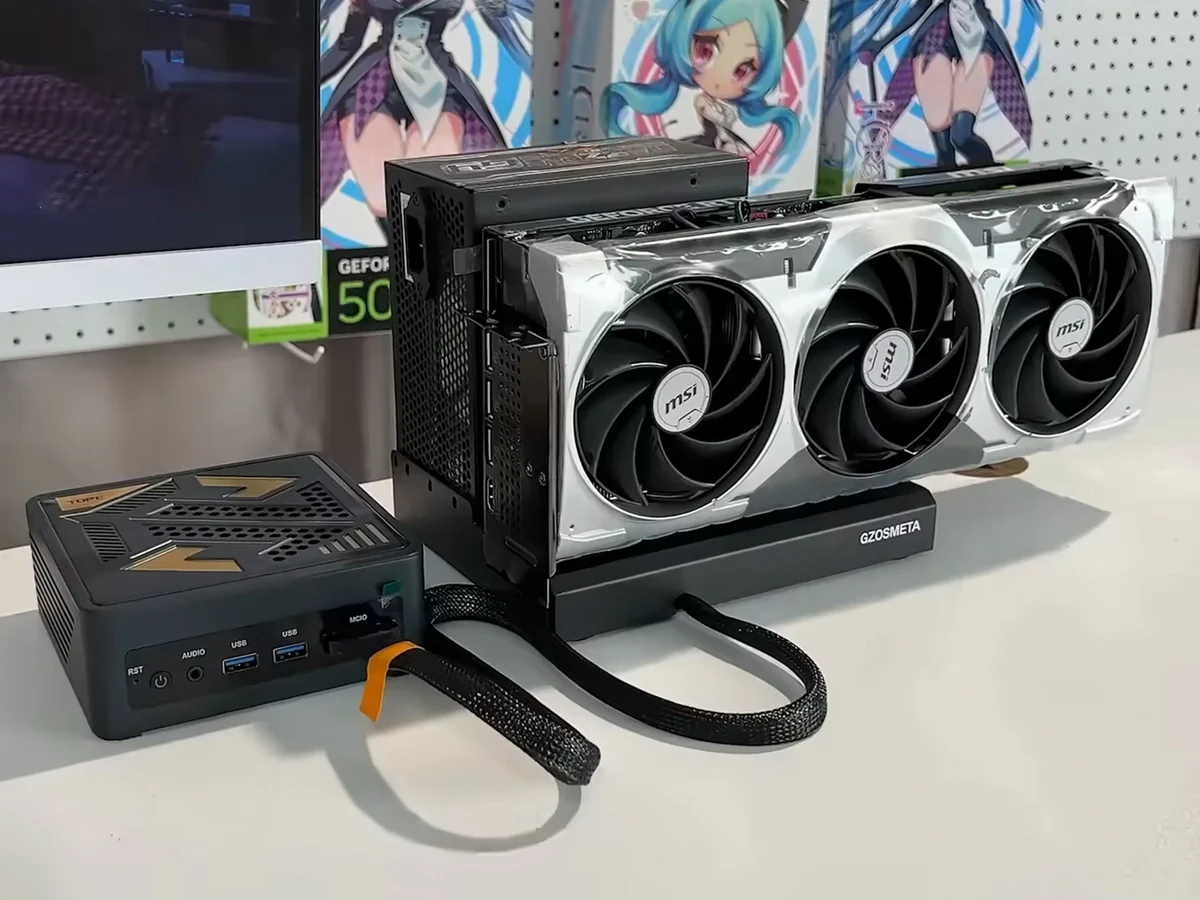
        TOPC has recently announced their latest mini PC that runs on AMD’s processor in China. The cool thing about this system is that it features an MCIO interface, a new technology designed for connecting eGPUs. Though GPD has announced something similar called the Box, which uses PCIe 5.0 x8, it still hasn’t been released to market yet. The MCIO connection stands out as it serves as a more effective replacement to the usual OCuLink port usually seen on mini PCs and handheld gadgets, which usually relies on PCIe 4.0 x4 connections that can handle 64Gbps bandwidth.

        Comparison of Bandwidth and Performance

        The MCIO PCIe 4.0 x8 interface that the TOPC mini PC adopts is capable of delivering 128Gbps bandwidth, doubling the usual bandwidth of traditional OCuLink connections. This increase should notably reduce performance loss when paired with compatible eGPU, making gaming and graphics-intensive activities more smoother. Users who need better external GPU performance might find this feature quite appealing, especially for high-quality video editing or 3D rendering tasks.

        Details about the Mini PC’s Hardware

        The mini desktop dubbed TOPC TA255 is powered by the AMD Ryzen 7 H 255 CPU, a refreshed processor from AMD’s Hawk Point series. It also incorporates the Radeon 780M integrated GPU, which can comfortably run many games at 1080p resolution with lower visual settings. The system offers up to 24GB of LPDDR5 RAM and has two M.2 slots that support SSDs for storage expansion. However, TOPC pointed out that this particular CPU doesn’t support PCIe 5.0, limiting the full potential of the MCIO port. There are rumors about newer versions possibly featuring upgraded CPUs that can fully exploit MCIO 5.0 capabilities.

        Connectivity Options and Pricing in China

        • Wireless connection includes WiFi 6E and Bluetooth 5.3, ensuring modern and fast connectivity.
        • In Chinese markets, the mini PC is offered with 16GB of RAM at package price of CNY 2,699 (~$395), and a 24GB version for CNY 2,999 (~$438).
        • These prices do not include storage, and it isn’t clear if TOPC plans to release this model globally or keep it confined to China for now.

        The detailed specifications and future plans for this AMD mini PC show that it aims to balance compactness with powerful connectivity options, though some limitations due to CPU choice are evident. Whether or not it will reach a broader market remains to be seen, but it certainly poses interesting opportunities for mini-PC enthusiasts and tech lovers alike.


        Sources