Tag: Google Pixel

  • Google Expands Gemini AI Features Across Android Devices

    Google Expands Gemini AI Features Across Android Devices

    Key Takeaway

    1. Google announced the expansion of Gemini Intelligence AI in Android OS, enhancing automation and integration with Google products.
    2. The AI will access personal data, including passports, to autofill forms and facilitate various tasks through user permission.
    3. New features include multilingual transcription, custom widgets, and voice dictation capabilities, with ongoing concerns about accuracy and safety.
    4. The implementation raises questions about error rates, safeguards against AI mistakes, and handling of potential prompt injection hacks.

    Google Unveils New AI Features During Android Show

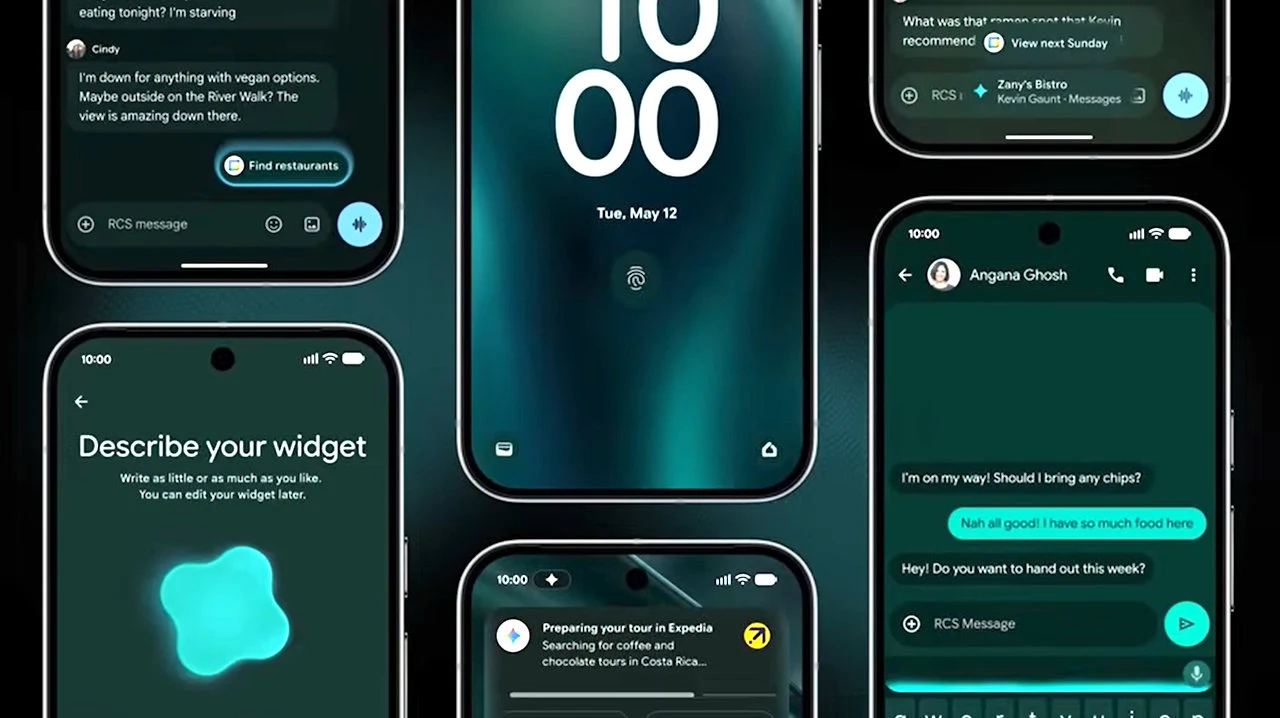
    During the recent Android Show: I/O Edition 2026, Google announced some exciting new updates for Android OS that focus on AI integration. They plan to expand the capabilities of their Gemini Intelligence AI, aiming to make daily tech tasks easier and more efficient for users.

    Enhanced Personal Data Access and Automation

    The AI will have the ability to access all personal info stored on your device, like passports, and use it across various Google services including Gmail, Photos, and Wallet. This means forms can be filled out automatically, saving users lots of time. However, this level of access raises questions about privacy and security.

    Speech Recognition and Text Editing Improvements

    The Gboard keyboard will now feature a new Rambler tool that transcribes multiple languages spoken aloud. It will help remove filler words such as “um” and rewrite longer, complex sentences for clearer communication. Google didn’t share how often its rewriting might get things wrong, though.

    Voice Commands and Widget Customization

    Users will be able to give voice commands to Gemini, like ordering food or planning trips. The AI should ask for permission before taking actions like sharing personal photos publicly, but specifics about safeguards remain unclear. Besides, users can create custom widgets displaying current weather conditions or other data, for their phone and smartwatch, but details on costs for data access or widget creation aren’t available yet.

    Potential Benefits and Concerns of AI Integration

    Introducing AI wide into Android could help users overcome daily digital challenges, potentially boost productivity, but concerns about its error rate and security remain. No info was given on how well Gemini understands tasks or resists hacks like prompt injections. That’s worrying because AI systems can sometimes make serious mistakes, like deleting important data or misposting content.

    Mitigating Risks and Future Implementation

    Mindy Brooks, VP of Android Platform, stated that Gemini will only work when instructed and stops once tasks are completed. Still, there are unanswered questions about how swiftly problematic AI behavior can be halted or who is accountable for damages caused by AI errors. The new AI features are expected to begin rolling out during summer 2026, starting with Google Pixel and Samsung Galaxy devices.

  • February 2026 Google Update Excludes Pixel 6 and 7 Devices

    February 2026 Google Update Excludes Pixel 6 and 7 Devices

    Key Takeaways

    1. The February 2026 update for Pixel devices focuses mainly on security, with a key fix for a serious flaw in the VPU driver (CVE-2026-0106).

    2. Users are advised to upgrade their Pixel devices to the 2026-02-05 patch level to address security issues.

    3. The February update is being rolled out for Pixel 7a and newer models, including the Pixel Tablet and original Pixel Fold.

    4. The Pixel 6 and Pixel 7 series are not included in this update, raising speculation about a possible shift to a quarterly update schedule for older models.

    5. Updates for Pixel 6 and Pixel 7 devices may arrive later due to Google’s staggered rollout process and carrier approvals.


    Google’s February 2026 update for Pixel devices is mostly focused on security, with the Pixel Update Bulletin highlighting a single Pixel-specific fix: a serious elevation-of-privilege flaw in the VPU driver (CVE-2026-0106).

    Patch Level Update

    The bulletin indicates that users should upgrade their Pixel devices to the 2026-02-05 patch level to resolve the issues mentioned, as well as those found in the wider Android Security Bulletin for February 2026.

    Rollout Details

    As per the rollout notes, the February 2026 build family (BP4A.260205) is being released for the Pixel 7a and newer models, including the Pixel Tablet and the original Pixel Fold. There are several build variations based on the device model and region.

    Missing Devices

    However, it’s worth noting that the Pixel 6 and Pixel 7 series are not included in this update. Devices such as the Pixel 6, 6 Pro, 6a, 7, and 7 Pro are conspicuously absent from the February rollout, even though they are still part of Google’s support timeframe.

    This absence has led to new theories that Google might be shifting older Pixel models away from a regular monthly update schedule, possibly moving towards quarterly or risk-based releases. Although Google hasn’t officially confirmed any changes in the update schedule, they did inform the media that Pixel phones will stay “security compliant” throughout their support periods by means of Pixel-specific fixes, Google Play system updates, and Android Security Bulletin updates.

    Key Takeaway

    Currently, the main point to note is that the list of Pixel-specific changes for February is notably brief, and some older devices are excluded from the official February update coverage.

    If you own a Pixel 6 or Pixel 7 and haven’t received an OTA update yet, it may arrive later due to Google’s staggered rollout and carrier approvals. Google’s guidance suggests that updates might be distributed gradually, which could take some time before reaching every single device.

  • Google Pixel 10 Pro Users Report Major Problems After Update

    Google Pixel 10 Pro Users Report Major Problems After Update

    Key Takeaways

    1. Recent software updates for Google Pixel smartphones, particularly the Pixel 10 and 10 Pro, have caused significant user issues.
    2. Affected users report problems with WiFi, Bluetooth, cameras, and LED flashlight functionality.
    3. Common troubleshooting methods, such as restarting or factory resetting, have not resolved the issues.
    4. A temporary fix involves disabling Google Play Services and the Fitbit app, but this limits access to Google apps and the Play Store.
    5. Google is aware of the issues but has not provided a timeline for a permanent fix.


    Software updates are generally meant to resolve issues, but sometimes they can create new ones. Recently, there has been a notable problem with an update for certain Google Pixel smartphones. Users have been expressing their frustrations on Reddit and in the Google Support Forum. The most affected models seem to be the Google Pixel 10 and the Google Pixel 10 Pro (XL), although some owners of older Pixel devices have also reported experiencing similar faults.

    Issues Caused by the Update

    The problematic software update is said to lead to four main issues. Users are finding that their WiFi and Bluetooth connections are failing to work, the cameras are inoperable, and they cannot turn on the LED flashlight since the system claims it is already on. Not every affected Pixel phone experiences all these problems, however. In any case, restarting the device or using safe mode does not appear to resolve these issues. At least one user attempted to reset their affected Pixel phone to factory settings, yet this also did not fix the problems.

    Temporary Fixes and Google’s Response

    A member of the Google community named Julas23 has found that the trouble may be linked to Google Play Services. They discovered that removing or disabling Google Play Services as well as the Fitbit app seemed to fix the issues. Nonetheless, without Google Play Services, users cannot access Google apps or the Google Play Store, which makes this solution impractical for the long-term. Google has acknowledged the issue and is aware of it, but there has been no announcement regarding when a fix will be available.

    Source:
    Link


  • Google Pixel Feature Drop: Maps Power-Saving Mode & AI Updates

    Google Pixel Feature Drop: Maps Power-Saving Mode & AI Updates

    Key Takeaways

    1. The November 2025 Google Pixel Feature Drop is available for compatible Pixel smartphones, including the Pixel 10 Pro priced at $964 on Amazon.
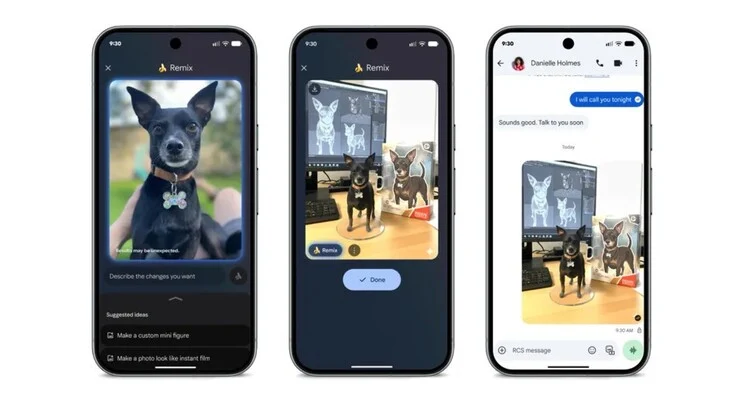
    2. Users can now “remix” photos in Google Messages by describing desired edits, utilizing AI for photo editing.
    3. Google Photos’ AI features become more personalized, allowing users in the US to edit group photos by naming individuals for changes.
    4. Enhanced scam detection and VIP message display are currently limited to US users, with AI summarizing incoming messages on Pixel 9 and newer devices.
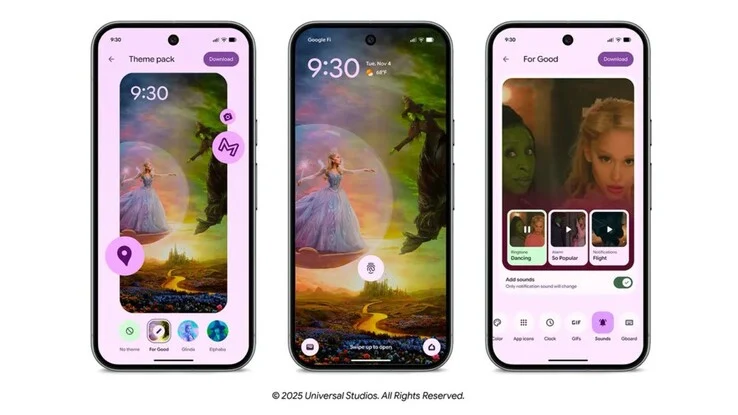
    5. The update introduces new customization options, including the “Wicked: For Good” theme package, allowing users to change system colors, wallpapers, app icons, and sound effects.


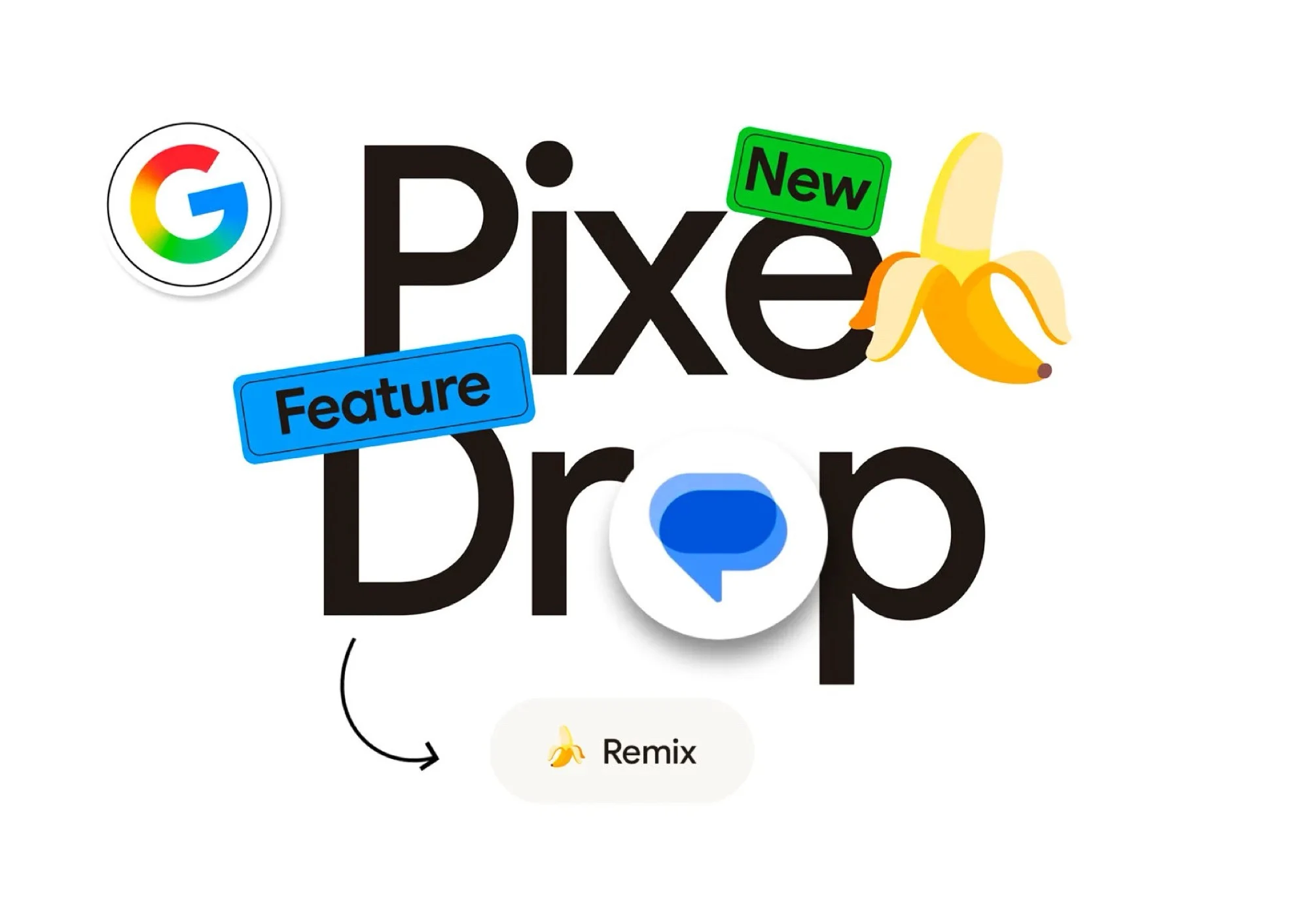
    The newest Google Pixel Feature Drop for November 2025 has arrived and will be ready for download for all users with compatible Pixel smartphones in the coming days. This update includes the Pixel 10 Pro, which is priced at $964 on Amazon. One of the highlights of the new software is the ability to “remix” photos directly in Google Messages, enabling users to edit images using AI by simply describing what changes they wish to see.

    Personalized AI Features

    After this update, Google Photos has made its AI features more personalized. Users can now tell the AI the name of a person in a group picture that needs editing. For instance, users can remove sunglasses, open closed eyes, or alter facial expressions. However, it’s worth noting that this specific feature is currently accessible only to users located in the US.

    Enhanced Scam Detection

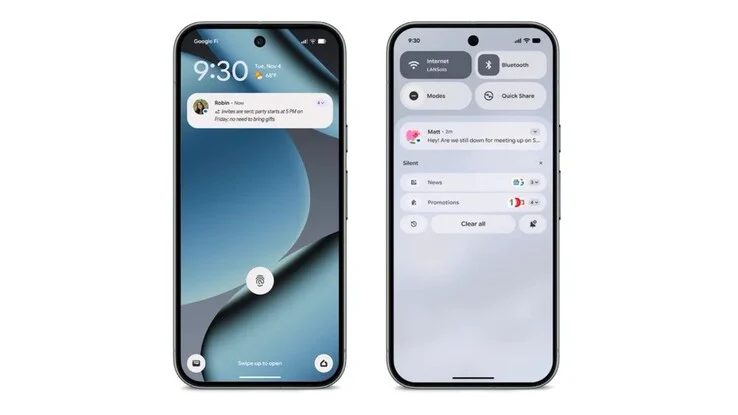
    Similarly, scam detection for incoming texts is also limited to US users, as Google is providing warnings only to them regarding possible fraud attempts. Moreover, messages from contacts designated as “VIPs” are now more prominently shown, reducing the chances of them being overlooked. The Feature Drop introduces a new option for Pixel 9 and newer devices, which leverages AI to summarize incoming messages right in the push notification.

    Starting in December, users will also have the ability to identify less important messages using AI and hide their notifications. Additionally, Pixel 10 series users can benefit from a new power-saving mode in Google Maps that can increase battery life by up to four hours by concealing non-essential information.

    New Customization Options

    Finally, the November 2025 Feature Drop brings a “Wicked: For Good” theme package that allows users to customize system colors, wallpapers, app icons, and even sound effects. Users can choose from three new themes, giving them a chance to personalize their device further.

    Source:
    Link


  • Fitbit Tests Unique Trends Feature for Wearable Users

    Fitbit Tests Unique Trends Feature for Wearable Users

    Key Takeaways

    1. The Unusual trends feature helps identify irregularities in health metrics that may indicate potential health issues.
    2. It analyzes data points such as heart rate variability, average heart rate during non-REM sleep, and average respiration rate.
    3. Users receive notifications to log symptoms when unusual trends are detected, but it is not a substitute for medical advice.
    4. To access the feature, users must navigate to the Fitbit app and agree to share data for research purposes.
    5. The feature is expected to be available on multiple devices, including the Fitbit Charge 6, but the rollout timeline for all users is unclear.


    A new feature called Unusual trends has been introduced in Fitbit Labs for certain users of Fitbit and Google Pixel devices. This tool aims to identify irregularities in health metrics that may signal a potential health issue.

    How It Works

    The Unusual trends tool uses various data points, including heart rate variability (HRV), the average heart rate during non-REM sleep, and the average respiration rate while you sleep. By comparing these metrics to your historical data, it can identify changes that may suggest physical or emotional stress. Google notes that factors like recent travel, alcohol intake, or respiratory illnesses might trigger these changes.

    Notifications and Warnings

    When an unusual trend is identified, users will get a notification prompting them to log any symptoms they may be experiencing. However, it’s important to note that this tool is not a substitute for medical advice, and Google advises users to consult a healthcare professional for any concerns.

    How to Access the Feature

    To see if you can sign up for the Unusual trends feature, open the Fitbit app and navigate to the You tab > Fitbit Labs > See all. Users who participate in the program must agree to share their data for research and development. This feature is expected to be available for a variety of devices, including the Fitbit Charge 6, which currently retails for $130 on Amazon. It remains unclear when this Unusual trends feature will be rolled out to all users.

    Source:
    Link


  • Google Pixel 10a Specs Leak Reveals Disappointing Details

    Google Pixel 10a Specs Leak Reveals Disappointing Details

    Key Takeaways

    1. The Google Pixel 10a may reuse older hardware to reduce costs, including the Tensor G4 chip from the Pixel 9 series.
    2. It is expected to retain UFS 3.1 storage, which is older technology compared to the newer UFS 4.0 found in many mid-range devices.
    3. The Pixel 10a will likely not include a dedicated telephoto camera, unlike the standard Pixel 10.
    4. The device may launch without Google’s new AI feature, Magic Cue, but the screen brightness could improve to 2,200 nits.
    5. The strategy shift aims to maintain price competitiveness for the “Pixel a” series, with a potential release in 2026.


    For a long time, Google’s “Pixel a” smartphones have been attractive choices for people who want the benefits of Pixel devices—like great camera quality—and ongoing support without spending too much. However, the soon-to-be-released Google Pixel 10a might take a more traditional route with its specifications, reusing more older hardware than before.

    Hardware Reuse

    A recent leak about tech specs indicates that the Google Pixel 10a could share some hardware elements with previous models to keep costs low. It’s expected to feature the Tensor G4 chip, which was also used in the Pixel 9 series, including the Pixel 9a. It looks like the company is moving away from its previous plan of using the same chip from the main lineup. This choice might be due to the anticipated price rise from shifting the production of the Pixel 10’s Tensor G5 chip to TSMC.

    Storage and Camera Features

    The Pixel 10a might retain UFS 3.1 storage. While this is a somewhat older technology, it is still commonly found in many mid-range devices. In contrast, newer smartphones frequently utilize UFS 4.0, which provides quicker read and write speeds as well as improved power efficiency. Similarly, it seems that the Pixel 10a will not include a dedicated telephoto camera, a feature that the standard Pixel 10 has this year.

    Software Expectations

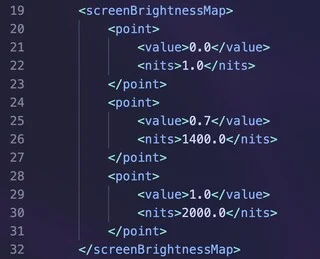
    In terms of software, the new device is likely to launch without Magic Cue, which is Google’s latest AI feature that gives real-time contextual help during calls and chats. On a brighter note, the screen is rumored to get a slight boost in brightness, hitting 2,200 nits compared to the 9a’s 2,000 nits.

    This potential shift in strategy might be aimed at keeping the same price point for its “Pixel a” phones. However, the Pixel 10a is projected to be released in 2026, and by then, it may be wiser to choose a “non-a” Pixel 9 model instead.

    Source:
    Link


  • Google Reviews Old Designs: Pixel 10, Tablet, Ring, Flip

    Google Reviews Old Designs: Pixel 10, Tablet, Ring, Flip

    Key Takeaways

    1. The Google Pixel 10 series features fresh colors but maintains a similar design to previous models.
    2. Google plans to introduce a new smartphone design every two to three years, with a revamped look expected by 2027.
    3. Future advancements in Pixel devices are anticipated to focus more on software and artificial intelligence rather than hardware design.
    4. Google holds a modest 3% market share in the US smartphone market and does not aim to dominate it but hopes for growth in Pixel smartphone sales.
    5. Google currently has no plans for a competitor to the Samsung Galaxy Z Flip7, a smart ring, or further progress on the next-gen Pixel tablet.


    While the Google Pixel 10 series comes in a variety of fresh colors, the design of the Pixel 10, Pixel 10 Pro, and Pixel 10 Pro Fold has not significantly changed from the previous models. In a talk with Bloomberg, Rick Osterloh, who leads hardware at Google, along with Ivy Ross, the head of design, shared insights about the recognizable design. They mentioned that Google aims to introduce a new design every two to three years.

    Future Design Plans

    As a result, we can expect Pixel smartphones with a revamped look to hit the market by 2027 at the latest. Reports say that the design for next year’s models is nearly finished, and work is already in progress for the 2027 versions. However, the real advancements in the future are likely to come from software rather than hardware, since users will mainly engage with their devices through artificial intelligence like Gemini, which will consequently have an impact on hardware aesthetics.

    Market Position and Future Devices

    In its home turf of the US, Google only captured a modest 3% of the market share in the second quarter. Osterloh currently doesn’t think that Google will ever dominate the smartphone market, but he is optimistic about the company’s growth and continued sales of Pixel smartphones. On the downside for flip phone enthusiasts, Google presently has no plans to create a competitor to the Samsung Galaxy Z Flip7. Additionally, there are no intentions to develop a smart ring, and work on the next-gen Pixel tablet has been “paused.”

    Source:
    Link


  • Google Pixel Watch 4 Leak: Prices for Two Sizes Revealed

    Google Pixel Watch 4 Leak: Prices for Two Sizes Revealed

    Key Takeaways

    1. Google will unveil its new Pixel devices on August 20, ending speculation about the release dates for Pixel 9 and Pixel Watch 3.
    2. Pre-orders for the new gadgets are expected to start shipping on August 28.
    3. The starting price for the Pixel Watch 4 (41 mm, Bluetooth/Wi-Fi) is €399, while the LTE version will cost €499.
    4. The 45 mm Pixel Watch 4 will start at €449 for the Wi-Fi only version and €549 for the LTE version.
    5. Pricing for the new Pixel Watch models is expected to be similar to the previous Pixel Watch 3, which retailed at $349.99.


    Google has officially announced that it will unveil its upcoming Pixel devices on August 20, putting an end to the rumors about when the Pixel 9, Pixel Watch 3, and other current Pixel devices will be updated. Pre-orders for these new gadgets are expected to start shipping on August 28. Adding to the excitement, leaker billbil-kun has disclosed the launch prices for Google’s new smartwatches ahead of time.

    Pricing Details Revealed

    In a prior update, Roland Quandt provided similar insights regarding the Pixel 10 series just a week ago. According to information from billbil-kun, the Pixel Watch 4 series will have a starting price of €399 for its 41 mm model that features Bluetooth and Wi-Fi capabilities. If you want the LTE version, which includes cellular connectivity through an eSIM, it will cost €499 while still keeping the same 41 mm size.

    Variants and Their Costs

    Moreover, there is said to be a €100 difference between the Wi-Fi only and LTE versions of the 45 mm model. This means that the larger Pixel Watch 4 will retail for at least €449 in France, and it will go up to €549 when you choose the LTE option. Essentially, all versions of the Pixel Watch 4 will likely have the same prices as their predecessors, the Pixel Watch 3 (currently priced at $309.99 on Amazon). This pricing strategy is expected to extend to other significant markets such as North America and the UK, where the Pixel Watch 3 debuted last year at $349.99 and £349.99, respectively. For further details, check our previous article that discusses the rumored specifications for Google’s upcoming Pixel Watch smartwatches.

    Conclusion

    In summary, Google’s new Pixel devices and smartwatches are set to make their debut soon, with confirmed launch dates and pricing details now available. As anticipation builds, fans of the Pixel lineup are eager to see what new features and improvements will be included in these next-generation gadgets.

    Source:
    Link

  • Google Now Playing May Soon Display Album Artwork

    Google Now Playing May Soon Display Album Artwork

    Key Takeaways

    1. The Google Pixel’s Now Playing feature identifies songs playing nearby and displays the title and artist on the lock screen.
    2. A future update may allow the display of album artwork alongside song information on the lock screen.
    3. Users can tap on the song title to unlock their phone and view more details, including a history of previously identified songs.
    4. An upcoming feature includes a heart-shaped button for favoriting or removing songs from the favorites list.
    5. The release date for the updated Now Playing feature is still uncertain.


    The Google Pixel’s Now Playing feature may soon include album artwork. Right now, when a Pixel phone detects music playing nearby, this feature smartly identifies the song, displaying the title and artist on the lock screen. Users can tap the song title and unlock their phone to see more details. Additionally, the Now Playing history can be found in the phone’s settings, allowing users to favorite songs.

    Update on Album Artwork

    A recent report from Android Authority states that Google is developing the option to show the corresponding album artwork on the lock screen. This potential update to the Now Playing feature was found in a recent Android System Intelligence update. It appears that while the main layout will stay the same, users of Pixel phones will have the ability to tap on the song to expand the notification and see the album art displayed on the lock screen.

    New Features Coming Soon

    Moreover, it looks like tapping on the track will also show a heart-shaped favorite button, which can be used to add or remove a song from your favorites list. Users are expected to double-tap to view their Now Playing history. It is still unclear when or if Google will roll out this updated version of the Now Playing feature to Pixel phone users. Back in July 2025, Google surprised everyone with a Pixel Drop that introduced new Circle to Search features for the US and India, along with a complimentary one-year subscription to Google AI Pro for owners of the Pixel 9 Pro (Obsidian, 128 GB, unlocked, curr. $999 at Amazon).

    Source:
    Link


  • Catalan Police Connect Google Pixel Phones to Organized Crime

    Catalan Police Connect Google Pixel Phones to Organized Crime

    Key Takeaways

    1. Catalan police are wary of Google Pixel phones, especially those with GrapheneOS, due to their popularity among organized crime groups.

    2. GrapheneOS is a custom mobile operating system focused on security and privacy, offering features like full disk encryption and enhanced security on Google Pixel devices.

    3. The Find My Device feature on Android phones is attractive to criminals, allowing them to remotely lock or wipe devices if lost.

    4. To counteract privacy features, law enforcement often uses malware to access data from suspects’ phones, despite GrapheneOS’s security measures.

    5. Google Pixel phones and GrapheneOS are not inherently bad; concerns arise from how criminal organizations exploit their security features.


    Cops in Catalonia, Spain, are reportedly staying vigilant when they see someone using a Google Pixel phone. According to local authorities, these smartphones from Google are popular among organized crime groups, especially when they have GrapheneOS installed.

    Security Concerns with GrapheneOS

    GrapheneOS is noted by the Catalan police for its focus on security and privacy as a custom mobile operating system. It can be set up on any Android phone that has an unlocked bootloader, but the developers of this ROM highly suggest using a Google Pixel for “enhanced security.”

    The latest models, like the Pixel 9, come equipped with hardware memory tagging support, bringing significant security improvements when GrapheneOS is used. Another crucial feature of this custom mobile operating system is its ability to encrypt full disks and metadata. This encryption helps to shield the personal information of crime members from law enforcement to a certain extent.

    The Appeal of Android’s Find My Device

    Catalan police also highlight that the Find My Device function on Android phones is highly sought after by criminal groups. This feature enables users to remotely wipe or lock their devices, making it quite useful if the phone gets lost.

    To combat these privacy-oriented features, Catalan law enforcement frequently resorts to infecting the phones of suspects with malware. This strategy allows them to access apps, documents, and other data stored on the devices, and although GrapheneOS has numerous security measures, it is not immune to such attacks.

    The Misconception About Google Pixel Phones

    While Catalan law enforcement flags Google Pixel phones running GrapheneOS, it’s vital to understand that these smartphones and the custom OS are not inherently bad. The concern mainly lies in how criminal organizations are taking advantage of the devices’ mod-friendly attributes and the security-oriented features of GrapheneOS. You can find out more about this custom ROM in the video linked below.

    Source:
    Link