Tag: Tensor G4

  • Snag this $399 Pixel 9a deal for nearly Pixel 10a specs

    Snag this $399 Pixel 9a deal for nearly Pixel 10a specs

    Key Takeaway

    – Pixel 9a is $100 off on Amazon, bringing the 128GB model to $399 (down from $499).
    – The deal is limited to the Peony pink colorway; other colors cost $25–$70 more.
    – Pixel 9a is nearly identical to the Pixel 10a, offering similar hardware for less money.
    – It features a bright 6.3-inch OLED display, Tensor G4 chipset, 120Hz refresh rate, and a 5,100mAh battery.
    – Key trade-offs vs. Pixel 10a: no satellite connectivity, weaker screen glass, fewer AI features, and one year less software support.


    A Closer Look at the Pixel 9a Deal

    The Pixel 10a might be Google’s newest affordable offering, but its strikingly similar to its predecessor, the Pixel 9a. This means you can pick up the last-generation model at a great price without missing out on much. Case in point: the Google Pixel 9a is currently $100 off for a limited time, turning this excellent mid-ranger into an even more tempting option for buyers who don’t mind a few missing perks.

    Pricing and Specifications Breakdown

    Normally fetching $499, the Google Pixel 9a base variant with 128GB is currently $100 off on Amazon, bringing its price down to just $399. This doesn’t quite match its all-time low price of $349 we saw during last year’s Prime Big Deals Day, but its still a pretty solid deal considering your getting pretty much the same hardware as the newer Pixel 10a for $100 less. The only catch is that this deal is exclusive to the Peony pink colorway. If this is a deal-breaker (you can always put on a case, though), you’ll have to shell out more for other colors: $25 extra for Porcelain, $50 for Iris, and, in the case of Obsidian, a good $70.

    Reviewing the Pixel 9a’s Display and Performance

    We extensively reviewed the Pixel 9a here at Notebookcheck and found it to be one of the best compact Android smartphones on the market. It ticks most of the boxes for a capable, well-rounded midranger without any glaring compromises. The Pixel 9a’s 6.3-inch OLED panel is not only colorful and sharp, but it also gets plenty bright outdoors, registering a max full-screen brightness of 1,775 nits and a peak brightness of 2,653 nits (APL 18) in our testing.

    Performance is handled by Google’s Tensor G4 chipset, paired with a 120Hz refresh rate display. While it won’t rival flagship phones, everyday tasks and even demanding games run just fine. The Pixel 9a also packs a generous 5,100mAh battery, supports 23W wired and 7.5W wireless charging, and carries an IP68 rating for dust and water resistance.

    Camera Features and Photography

    We were impressed with the phone’s primary 48MP shooter, which preserves a good amount of detail —you can count on it to produce impressive photos under most lighting conditions. The 13MP ultra-wide camera is serviceable for landscapes and group shots, though it doesn’t quite match the quality of the main shooter and struggles with macro shots. Both cameras support 4K video recording, but only the primary sensor can shoot 4K at 60fps.

    Comparing the Pixel 9a and Pixel 10a

    Compared to the Pixel 10a, the older model misses out on a few perks, such as satellite connectivity, slightly tougher screen glass (Gorilla Glass 7i vs. Gorilla Glass 3 on the 9a), new AI features like Camera Coach, and an extra year of software support. However, with Google already promising seven years of updates for the Pixel 9a through 2032, those differences may not be enough to justify spending more.

    • Normally $499, now $399 for 128GB
    • Peony pink colorway only at this price
    • Other colors cost $25-$70 extra
    • Tensor G4 chipset with 120Hz display
    • 5,100mAh battery, 23W wired charging
    • IP68 rating, 48MP main camera
    Sources
    • Google’s New Smartphone Launches Globally with Tensor G4 Chip

      Google’s New Smartphone Launches Globally with Tensor G4 Chip

      Key Takeaways

      1. The Pixel 10a will be launched tomorrow, replacing the Pixel 9a.
      2. It features a 6.3-inch Actua display with a 120 Hz refresh rate.
      3. The Pixel 10a will use the Tensor G4 chip, unlike other Pixel 10 series devices which will have the newer Tensor G5 chip.
      4. The phone will come in Blue, Grey, and Obsidian colors, with prices starting at €549 (around $650) for 128 GB storage.
      5. A 256 GB variant will be available for €649 (approximately $769).


      Google is set to launch the Pixel 10a tomorrow. To summarize, the tech giant revealed about two weeks ago that the Pixel 9a would be replaced on February 18 (currently priced at $399 on Amazon). However, European retailer Vanden Borre has jumped the gun and disclosed several details regarding the Pixel 10a ahead of schedule.

      Display and Chipset Details

      Roland Quandt spotted that the retailer confirms the Pixel 10a will feature a 6.3-inch Actua display with a refresh rate of 120 Hz. Furthermore, the new phone will continue using last year’s Tensor G4 chip. In contrast, the other devices in the Pixel 10 series will run on the newer Tensor G5 chipset. This year’s Pixel A series smartphone will also have the same camera hardware as its predecessor, even though Google is highlighting its new flat camera design in its advertising.

      Pricing and Availability

      Additionally, Vanden Borre has also disclosed the launch prices. The retailer plans to offer the Pixel 10a in Blue, Grey, and Obsidian colors. As shown in the screenshot below, these color options will be available for €549 (around $650) with 128 GB of storage. Vanden Borre also confirms that Google will set the price at €649 (approximately $769) for the 256 GB variant. The Pixel 10a is expected to be available in more than just the Obsidian finish shown below, including the 256 GB storage option.

      Source:
      Link


    • Pixel 10a Upgrade Matches Pixel 10 Pro XL but Has Major Downgrade

      Pixel 10a Upgrade Matches Pixel 10 Pro XL but Has Major Downgrade

      Key Takeaways

      1. Pre-orders for the Pixel 10a will start on February 18, with an official launch date still to be announced.
      2. The Pixel 10a features improved 45W wired fast charging compared to its predecessor, the Pixel 9a.
      3. The device maintains the same battery capacity as the Pixel 9a, despite the charging speed enhancement.
      4. The Pixel 10a will use the Tensor G4 processor, disappointing some fans who expected the newer Tensor G5.
      5. Other specs, such as display size (6.3 inches) and resolution (2,424 x 1,080 pixels), remain unchanged from the Pixel 9a, with some minor updates like Bluetooth 6.0.


      The Pixel 10a is set to launch soon, with pre-orders kicking off on February 18. In anticipation of its official debut, numerous leaks and rumors have surfaced, revealing nearly all details about the device unofficially. A comprehensive spec list has emerged, indicating a significant improvement in the battery area that aligns it with the top-tier Pixel 10 Pro XL (available on Amazon), but it also features a downgrade that could influence buyers’ choices.

      Charging Speed Improvements

      This information comes from Roland Quandt of Winfuture, who has put together a detailed list of the Pixel 10a’s specifications. While many of these specs were previously disclosed, the charging speed stands out as a key highlight. The Pixel 10a is expected to support 45W wired fast charging, which is a notable increase compared to the Pixel 9a and even the Pixel 10 Pro, making it comparable to the 10 Pro XL. Although the battery capacity remains unchanged from the Pixel 9a, the quicker charging is a welcome enhancement.

      Processor Disappointment

      Sadly, most of the other specifications mirror those of the Pixel 9a, with the most disappointing aspect being the Tensor G4 processor instead of the Tensor G5. There had been speculation that Google might skip the latest processor for the budget model, and it appears that this speculation has turned out to be true. The display size and resolution are still at 6.3 inches and 2,424 x 1,080 pixels, respectively. However, Bluetooth has been updated to version 6.0, and the weight has decreased slightly to 183 grams (compared to 186 grams for the Pixel 9a).

      Awaiting Further Details

      Google has announced the pre-order date for the Pixel 10a but hasn’t provided information on when it will be available to the public. More updates are expected to be released next week.

      Source:
      Link


    • Google Pixel 10a: Key Features and Major Changes Before Release

      Google Pixel 10a: Key Features and Major Changes Before Release

      Key Takeaways

      1. Google has released the Pixel 10, Pixel 10 Pro, and Pixel 10 Pro XL, alongside the Pixel 10 Pro Fold.
      2. Anticipation builds for the mid-range Pixel 10a, with rumors dating back to January 2025.
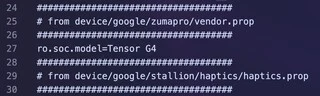
      3. The Pixel 10a will feature the Tensor G4 chipset, similar to the Pixel 9a.
      4. The new model is expected to be slightly shorter and narrower while keeping the same 6.3-inch display size.
      5. The design of the Pixel 10a will resemble the Pixel 9a, with a flat camera housing and gently curved body.


      Google seems to have wrapped up its main Pixel 10 smartphone lineup after the simultaneous release of the Pixel 10, Pixel 10 Pro, and Pixel 10 Pro XL on August 28. While these three models were accompanied by the Pixel 10 Pro Fold, which was introduced during an event on August 20, it took Google around six weeks to start sending out pre-orders for this latest foldable device (currently priced at $1,799 on Amazon).

      Anticipation for the Next Model

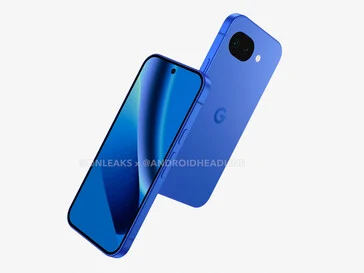
      Now, all eyes are on what Google will do next in its smartphone lineup. It’s not surprising that the tech giant is likely to return to the mid-range segment with the Pixel 10a. Android Headlines has recently shared multiple CAD renderings of this new model. To provide some background, rumors about the Pixel 10a first came to light as early as January 2025.

      Specs and Features Leaked

      In more recent leaks, it has been confirmed that the Pixel 10a will feature the same Tensor G4 chipset as the existing Pixel 9a. It seems that next year’s mid-range Pixel will be slightly shorter and narrower than its predecessor, all while maintaining the same 6.3-inch display size. If the dimensions reported by Android Headlines of 153.9 x 72.9 x 9 mm are correct, the Pixel 10a might offer a better screen-to-body ratio than the Pixel 9a.

      Similar Design Elements

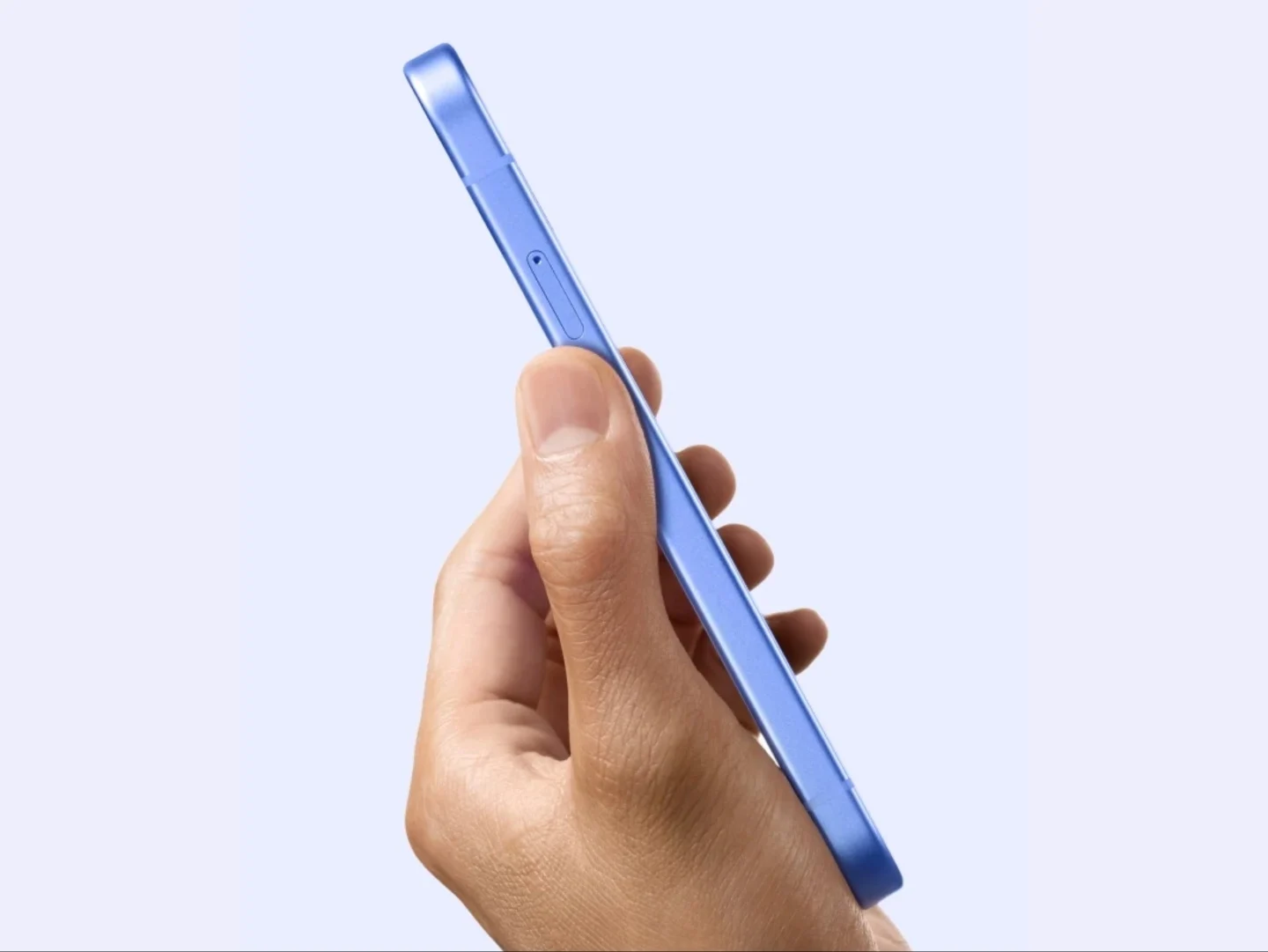
      Aside from these changes, the Pixel 10a looks very much like its predecessor, with a nearly flat camera housing, a gently curved body, and a flat display. Google is expected to replace the Pixel 9a in the spring of 2026. However, specific launch dates and complete specifications are still a mystery at this point.

      Source:
      Link


    • Google Pixel 10a Specs Leak Reveals Disappointing Details

      Google Pixel 10a Specs Leak Reveals Disappointing Details

      Key Takeaways

      1. The Google Pixel 10a may reuse older hardware to reduce costs, including the Tensor G4 chip from the Pixel 9 series.
      2. It is expected to retain UFS 3.1 storage, which is older technology compared to the newer UFS 4.0 found in many mid-range devices.
      3. The Pixel 10a will likely not include a dedicated telephoto camera, unlike the standard Pixel 10.
      4. The device may launch without Google’s new AI feature, Magic Cue, but the screen brightness could improve to 2,200 nits.
      5. The strategy shift aims to maintain price competitiveness for the “Pixel a” series, with a potential release in 2026.


      For a long time, Google’s “Pixel a” smartphones have been attractive choices for people who want the benefits of Pixel devices—like great camera quality—and ongoing support without spending too much. However, the soon-to-be-released Google Pixel 10a might take a more traditional route with its specifications, reusing more older hardware than before.

      Hardware Reuse

      A recent leak about tech specs indicates that the Google Pixel 10a could share some hardware elements with previous models to keep costs low. It’s expected to feature the Tensor G4 chip, which was also used in the Pixel 9 series, including the Pixel 9a. It looks like the company is moving away from its previous plan of using the same chip from the main lineup. This choice might be due to the anticipated price rise from shifting the production of the Pixel 10’s Tensor G5 chip to TSMC.

      Storage and Camera Features

      The Pixel 10a might retain UFS 3.1 storage. While this is a somewhat older technology, it is still commonly found in many mid-range devices. In contrast, newer smartphones frequently utilize UFS 4.0, which provides quicker read and write speeds as well as improved power efficiency. Similarly, it seems that the Pixel 10a will not include a dedicated telephoto camera, a feature that the standard Pixel 10 has this year.

      Software Expectations

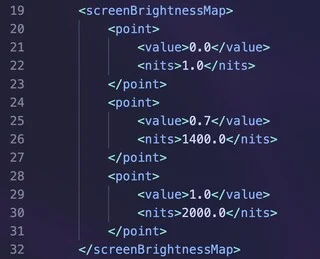
      In terms of software, the new device is likely to launch without Magic Cue, which is Google’s latest AI feature that gives real-time contextual help during calls and chats. On a brighter note, the screen is rumored to get a slight boost in brightness, hitting 2,200 nits compared to the 9a’s 2,000 nits.

      This potential shift in strategy might be aimed at keeping the same price point for its “Pixel a” phones. However, the Pixel 10a is projected to be released in 2026, and by then, it may be wiser to choose a “non-a” Pixel 9 model instead.

      Source:
      Link


    • Google Pixel Update Boosts Performance, Fixes Key Pixel 9 Issue

      Google Pixel Update Boosts Performance, Fixes Key Pixel 9 Issue

      Key Takeaways

      1. The Tensor G4 chip in the Pixel 9 Pro XL is slower than competitors like Snapdragon 8 Gen 3 and Apple A18 Pro, and it tends to throttle under heavy usage.
      2. A new update for Pixel devices promises speed improvements in synthetic benchmarks, but practical performance varies across different tasks.
      3. Gaming performance remains unchanged after the update, with the Pixel 9 Pro XL struggling compared to rivals like Xiaomi 15 Ultra.
      4. Video editing in Google Photos shows significant improvement, with the Pixel 9 Pro XL completing tasks faster, while other video editing apps show no gains or declines.
      5. Overall, the update leads to mixed results, with some performance gains and reduced throttling, indicating a focus on consistent performance rather than peak power.


      We observed in our analysis of the Pixel 9 Pro XL that the Tensor G4, the chip that powers the Pixel 9 series, is not as fast as its rivals. It struggles to keep up with the Snapdragon 8 Gen 3 and the Apple A18 Pro. To make things worse, the smartphone tends to throttle when under heavy usage, which lowers its performance even more.

      New Update Promises Speed Boost

      Google has released a fresh update for the Pixel devices that seems to enhance the phone’s speed. This update is said to improve performance in synthetic benchmarks, such as Geekbench. But what about practical situations, like when editing photos?

      Respected smartphone reviewer Juan Bagnell has evaluated both the Pixel 9 Pro XL and the Pixel 7 Pro across various tests to gauge the update’s impact. Unfortunately, the overall effect of the update is quite mixed.

      Gaming Performance Stays the Same

      Beginning with Wilderless, a graphically demanding mobile game, the graphics performance appears unchanged. The Pixel smartphone runs the game at around 40 FPS with all settings maxed out. In contrast, the Xiaomi 15 Ultra reportedly runs Wilderless “at more than double the resolution” with a more stable frame rate. This shows a notable performance gap between the Tensor G4 and the Snapdragon 8 Elite.

      When it comes to video editing applications, the Pixel 9 Pro XL shows no improvement in LumaFusion, both before and after the update. The device takes roughly 32 seconds to render a one-minute UHD video. Interestingly, the updated Pixel 7 Pro actually shows a decline in this test, lagging 7% behind the previous version.

      Video Editing in Google Photos Improves

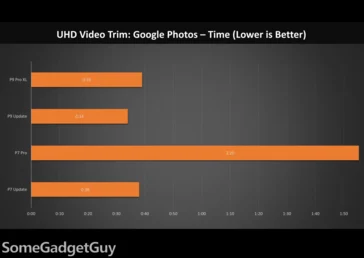
      On a brighter note, both the Pixel 9 Pro XL and Pixel 7 Pro see considerable enhancements in video editing performance within Google Photos after the latest update. The Pixel 9 Pro XL takes 34 seconds to trim a 3-minute video down to 2 minutes, marking an 11% improvement. The Pixel 7 Pro completes the same task in 38 seconds.

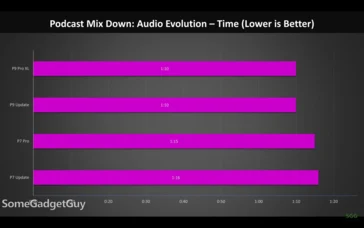
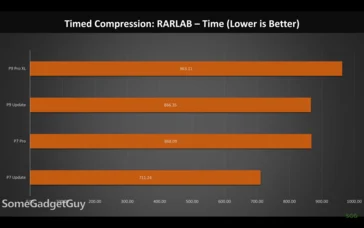
      In the audio mixing assessment, the performance of both Pixel devices remains almost the same. This contrasts with file compression tests, where the update makes the Pixel 9 Pro XL about 11% quicker than its previous version. However, the standout result comes from the Pixel 7 Pro.

      In the RARLAB file compression test, the older Pixel 7 Pro performs almost equally to the updated Pixel 9 Pro XL. After the update, the Pixel 7 Pro’s performance improved significantly, becoming 17% faster than even the updated Pixel 9 Pro XL. The lack of noticeable performance gain for the Tensor G4 compared to the Tensor G2 of the Pixel 7 Pro is also evident in a “Synthetic Compression” test, where both chips performed similarly.

      Mixed Results from the Update

      Looking closely at the findings, it’s evident that performance improvements are not consistent across the board. While some apps do experience speed gains, real-world tasks like video editing yield uncertain outcomes. Nonetheless, this Pixel update may help reduce throttling, leading to more stable performance and, in theory, better battery life.

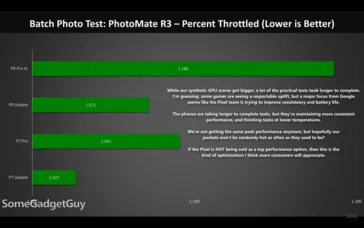
      In a batch photo test done by Juan Bagnell using PhotoMate R3, the Pixel 9 Pro XL only throttled by 7% after the update, compared to a significant 19% before. The Pixel 7 Pro also showed a similar pattern, throttling only 3% with the update, down from 9%.

      In summary, it appears that Google has opted for a consistent performance strategy over peak power, aiming to enhance efficiency and limit throttling.

      Source:
      Link


    • Pixel 9a Lacks Key Hardware Upgrade of Other Pixel 9 Models

      Pixel 9a Lacks Key Hardware Upgrade of Other Pixel 9 Models

      Key Takeaways

      1. The Google Pixel 9a is a budget smartphone priced at $499, powered by the same Tensor G4 chip as other Pixel models.
      2. The Pixel 9a uses the Exynos Modem 5300, which is older and has previously led to connectivity issues in the Pixel 7 series.
      3. The Exynos Modem 5400, used in higher-end Pixel models, offers improved battery life, better cellular reception, and supports newer connectivity standards.
      4. Google’s decision to use the older modem in the Pixel 9a may be to keep costs down and maintain the same launch price as the Pixel 8a.
      5. There are concerns about the Pixel 9a’s performance regarding network connectivity, battery longevity, and thermal management due to its modem choice.


      Google has just revealed the Pixel 9a, which is their new budget smartphone starting at $499. This phone runs on the same Tensor G4 chip as the other Pixel models, but it does have a significant drop in connectivity. Specifically, it features the Exynos Modem 5300, unlike the Modem 5400 that powers the other smartphones in the lineup.

      Modem Concerns

      It’s worth noting that this modem was also used in the Pixel 7 series, which struggled with weak cellular signals. The older modem is also tied to the poor battery performance and overheating issues found in the Pixel 7 devices. With the switch to the Exynos Modem 5400, Google improved many issues, and the other Pixel 9 models (512 GB Pixel 9 Pro currently listed at $919 on Amazon) seem to be performing better than their earlier versions.

      Enhancements in Connectivity

      Besides better battery life and cellular reception, the Exynos Modem 5400 comes with additional upgrades. It supports the latest 3GPP Release 17 standard, allowing for satellite connectivity, and it offers significantly higher peak download speeds than its predecessor.

      Samsung asserts that the Exynos Modem 5400 provides enhanced stability and greater efficiency compared to the previous model. However, it’s uncertain how the newly launched Pixel 9a will perform in terms of network connectivity, battery longevity, and thermal management due to these changes.

      Pricing Decisions

      As for why Google might have chosen to stick with an older modem, it likely relates to maintaining the Pixel 9a’s launch price at the same level as the Pixel 8a. To give you a bit more context, the Exynos Modem 5400 uses Fan-out Panel Level Packaging (FOPLP), which is thinner and more efficient than the previous version but also comes with a higher price tag.

      Source:
      Link

    • Google Pixel 9a Launching Next Month with Extended Software Support

      Google Pixel 9a Launching Next Month with Extended Software Support

      Key Takeaways

      1. Google has launched the Pixel 9a, seven months after the Pixel 9 series, featuring a streamlined design.
      2. The Pixel 9a includes a 48 MP main camera and a 13 MP ultra-wide camera, with a nearly flush camera setup.
      3. It offers advanced AI camera features like ‘Best Shot’ and ‘Add Me’, powered by the Google Tensor G4 chipset.
      4. The device has a 6.3-inch 120 Hz OLED display with a resolution of 1080p and high peak brightness.
      5. The Pixel 9a starts at $499 for 128 GB storage, includes a 5,100 mAh battery, and promises 7 OS upgrades starting with Android 15.


      Google has at last introduced the Pixel 9a, seven months after launching the Pixel 9 series with flagship models like the Pixel 9 Pro (currently priced at $849 on Amazon). As anticipated, the fresh Pixel A device features a more streamlined design when compared to the Pixel 8a, which is still quite new.

      Camera Innovations

      With the Pixel 9a, Google has opted for a nearly flush camera setup. To achieve this sleek look, the company has equipped the phone with a 48 MP main camera that has a 1/2-inch optical format and an f/1.7 aperture, falling short in specs compared to the one found in the Pixel 9. This is also true for the ultra-wide camera, which delivers 13 MP resolution with a 1/1.31-inch optical format and an f/2.2 aperture.

      AI Features and Display

      Despite these differences, Google maintains its commitment to offering a range of AI camera functionalities, including ‘Best Shot’ and ‘Add Me’, which combines several photos into one group image. The Pixel 9a is powered by Google’s Tensor G4 chipset and boasts a 120 Hz OLED screen that spans 6.3 inches, providing a resolution of 1080p and a peak brightness of 1,800 nits, or 2,700 nits for HDR content.

      Battery and Pricing Details

      On top of that, Google has incorporated a 5,100 mAh battery that is capable of both wireless charging and 30 W wired charging through a USB 3.2 Type-C port. The starting price for the Pixel 9a is $499 for 128 GB of storage, but it goes up to $599 for double the storage while maintaining the same 8 GB of RAM. Google plans to start selling the Pixel 9a next month, with a promise of 7 OS upgrades beginning from Android 15.


    • Google Pixel 9a Benchmarks Show It Outperforms Galaxy A56

      Google Pixel 9a Benchmarks Show It Outperforms Galaxy A56

      Key Takeaways

      1. The Google Pixel 9a shows strong performance on Geekbench and AnTuTu, surpassing the Galaxy A56 in benchmarks.
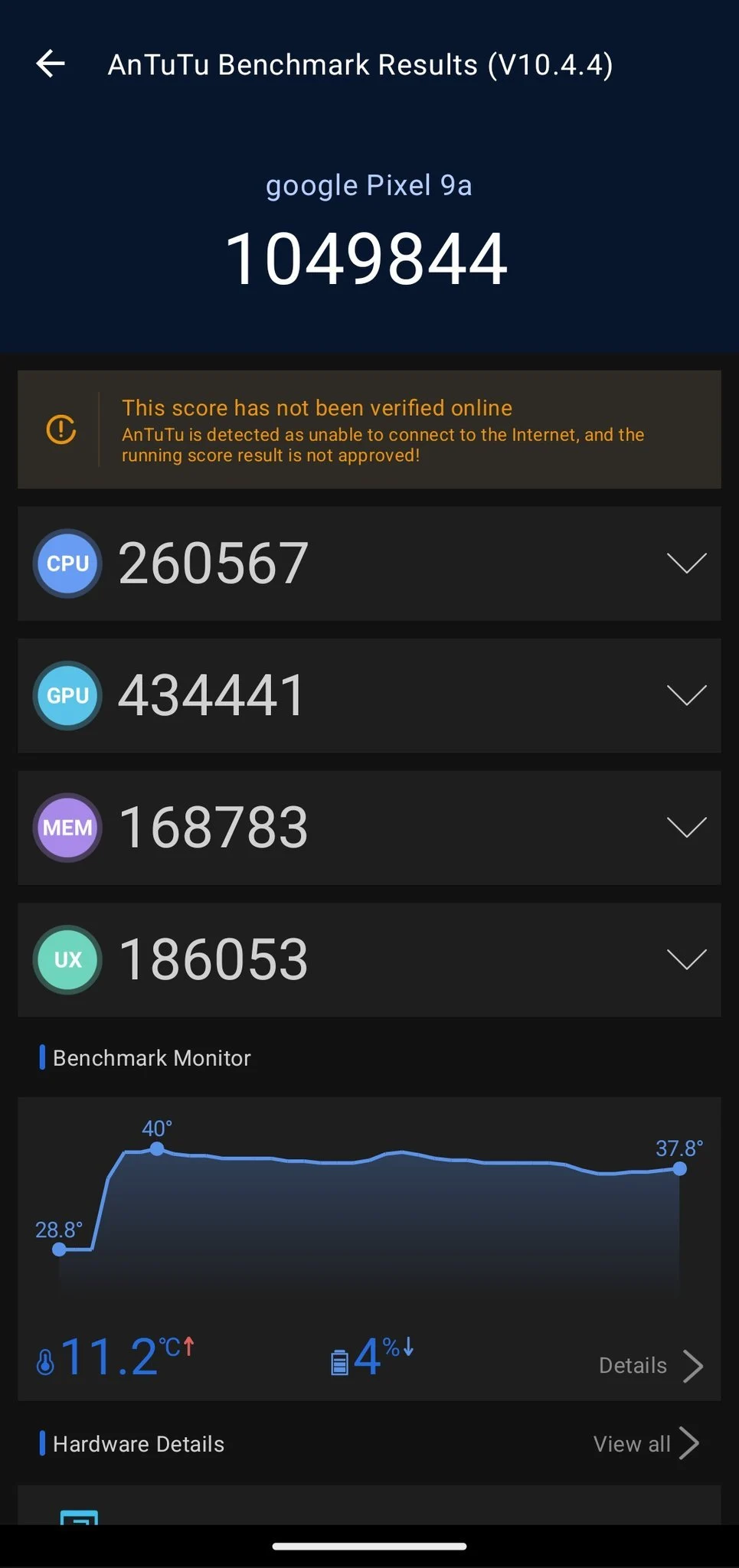
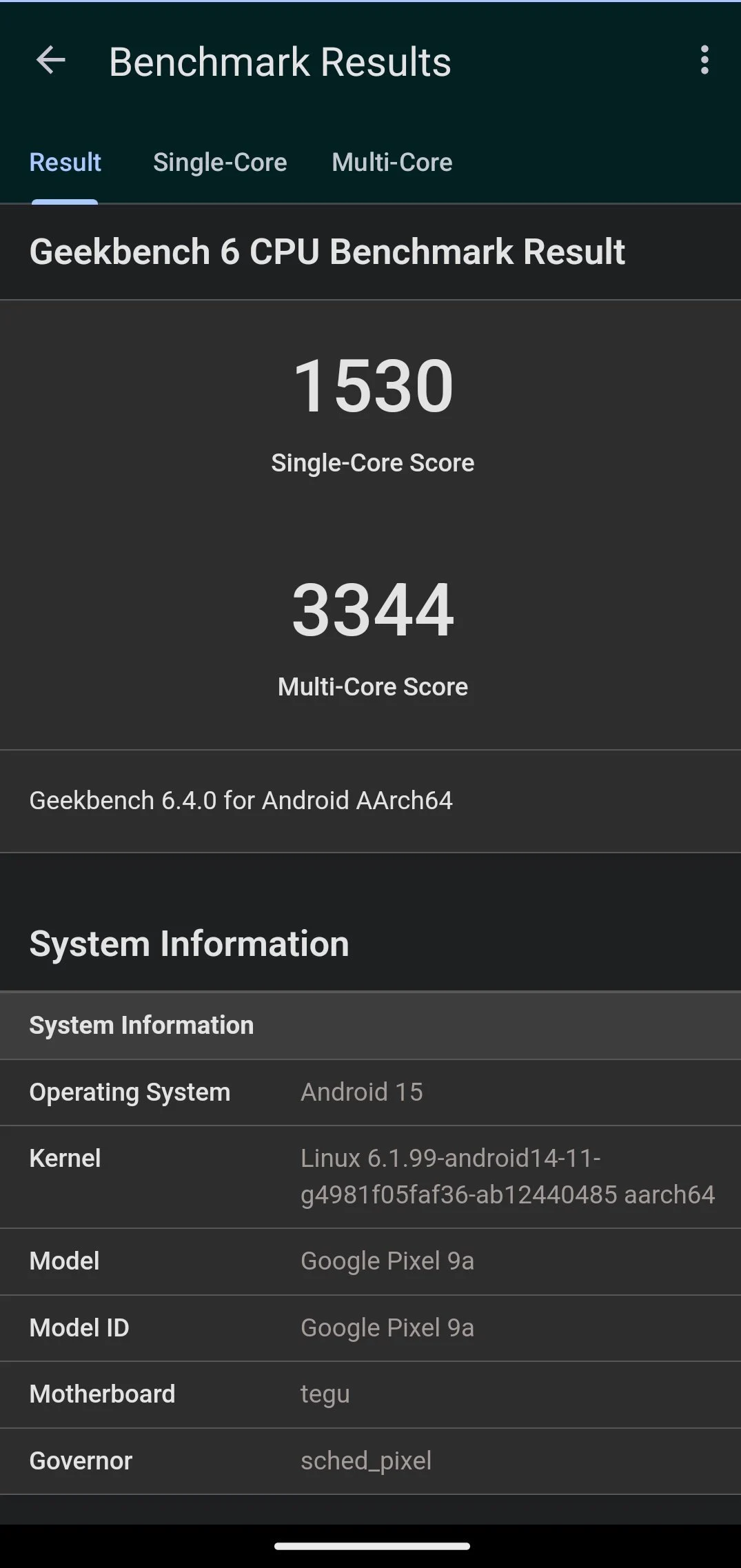
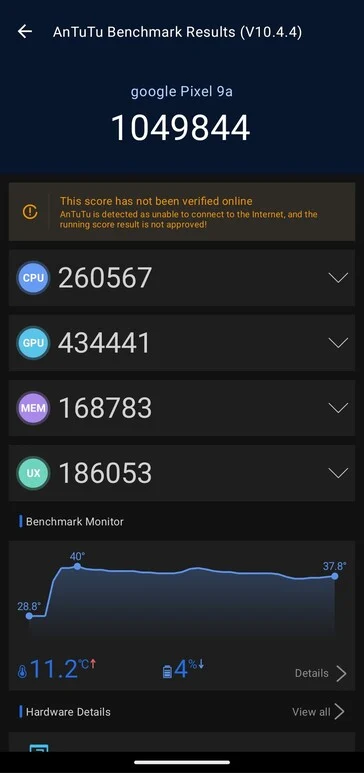
      2. It scores 1,530 in single-core and 3,344 in multi-core tests on Geekbench, with an AnTuTu score of 1,049,844.
      3. The Pixel 9a’s performance may improve before launch due to pre-launch software and potential cooling system limitations.
      4. While it performs well for a mid-range device, Google’s Tensor chips typically lag behind Qualcomm in performance and efficiency.
      5. Future updates will be important to assess the Pixel 9a’s thermal management and everyday performance capabilities.


      The Google Pixel 9a has recently been spotted on Geekbench and AnTuTu ahead of its official release. The performance results indicate that this mid-range device stands strong against its flagship counterparts in the Pixel 9 series. In fact, it even surpasses its rival, the Galaxy A56.

      Performance Insights

      As per information shared by Sahil Karoul, the Google Pixel 9a, which runs on Google’s Tensor G4 chipset, scored 1,530 in single-core and 3,344 in multi-core tests on Geekbench 6. Additionally, on AnTuTu, it achieved a composite score of 1,049,844, breaking down into a CPU score of 260,567 and a GPU score of 434,441.

      Understanding Benchmark Limitations

      Although these scores are somewhat lower than those of the pricier Pixel 9 model (with averages of 1,925 single-core and 5,674 multi-core), it’s crucial to remember that the Pixel 9a was using pre-launch software during testing. It probably also has a less efficient cooling system, which might account for the performance gap.

      To put this into perspective, the Galaxy A56, another mid-range competitor, scored 1,364 and 3,899 on Geekbench for single and multi-core tests, respectively. Its AnTuTu score of 908,689 does not match the Pixel 9a’s, indicating that the Pixel 9a not only offers robust performance but also benefits from a clean and lightweight user interface.

      Considerations on Performance

      However, we should keep in mind that Google’s Tensor chips have generally lagged behind Qualcomm’s offerings in both performance and power efficiency. Benchmarks do not fully capture sustained performance, which is crucial for prolonged use—especially if you plan to game for an extended period or record in 4K 60 fps for more than just a few minutes.

      While the initial benchmark results look encouraging, we still need to see if the thermal management and performance optimization can support everyday tasks effectively. More updates should come to light as we move closer to the launch date.

      Source:
      Link


    • Google Pixel 9a Beats Samsung Galaxy A56 in Benchmark Tests

      Google Pixel 9a Beats Samsung Galaxy A56 in Benchmark Tests

      Key Takeaways

      1. The Pixel 9a is launching soon and has been benchmarked on AnTuTu and Geekbench, showing strong performance.
      2. It is expected to feature the Tensor G4 chip, achieving significant scores: 1,530 (single-core) and 3,344 (multi-core) on Geekbench, and 1,049,844 on AnTuTu.
      3. The benchmark results for the Pixel 9a align with those of the Pixel 9 series, despite the Geekbench scores being lower than previous models.
      4. The Pixel 9a reportedly outperforms the Galaxy A56, making it a competitive option in the mid-range smartphone market.
      5. The Tensor chipsets have faced criticism for flagship models, but the Pixel 9a’s performance suggests it holds its own against similarly priced competitors.


      Google is reportedly preparing to launch its mid-range smartphone, the Pixel 9a, in just a few days. Recently, the device was seen in real life and has undergone tests on well-known benchmarking platforms AnTuTu and Geekbench, showing performance that surpasses a close competitor, the Galaxy A56.

      Performance Insights

      As noted by Sahil Karoul, the Pixel 9a is likely to feature the same Tensor G4 chip found in the Pixel 9 (buy on Amazon) series. It achieved a score of 1,530 in the single-core test and 3,344 in the multi-core test on Geekbench 6. On AnTuTu, the phone finished with an impressive total score of 1,049,844, which includes a CPU score of 260,567 and a GPU score of 434,441.

      Benchmark Comparisons

      Interestingly, while the AnTuTu results for the Pixel 9a align with the performance we observed for the Pixel 9 series, the Geekbench scores seem to be lower than expected. In previous evaluations of the Pixel 9, Pixel 9 Pro, and Pixel 9 Pro Fold, the Tensor G4 consistently scored around 1,925 and 5,674 on the single-core and multi-core tests, respectively. It’s important to mention, though, that the Pixel 9a was tested with pre-release software, making it difficult to draw firm conclusions.

      Competition Analysis

      The Tensor chipsets from Google often face criticism for not performing as well as their MediaTek and Qualcomm rivals; but this seems to be a concern primarily for the Pixel flagship models. In the case of the Pixel 9a, the benchmark scores suggest it outperforms a similarly priced competitor like the Galaxy A56. According to reviews from GSMArena, the Samsung mid-range device scored 1,364 and 3,899 on Geekbench 6, with an overall AnTuTu score of 908,689.

      Source:
      Link