Tag: Fitbit

  • Perplexity AI: Your AI Doctor for Medical Advice Today

    Perplexity AI: Your AI Doctor for Medical Advice Today

    Key Takeaways

    1. Introduction of Perplexity Health: Perplexity Health uses AI to analyze personal medical data and provide customized health recommendations, changing the traditional approach of tech firms avoiding medical guidance.

    2. AI Training Data: The AI is trained using data from hospital records, lab tests, and electronic records from 1.7 million healthcare providers to deliver accurate health insights.

    3. Personalized Responses: The AI offers tailored answers based on individual health metrics, such as incorporating recent physical activity and lab results when responding to health queries.

    4. Expert Review and Guidelines: To reduce errors, Perplexity’s system references medical literature and clinical guidelines, and includes a team of physicians to review the AI’s outputs.

    5. Privacy Assurance: Perplexity emphasizes data encryption and assures that personal health data will not be used to improve AI models, while cautioning that the feature should not replace a real physician.


    For many years, technology firms have avoided providing medical guidance. The potential legal issues are significant, and incorrect health advice can lead to severe consequences or even death.

    Introduction of Perplexity Health

    Nonetheless, Perplexity is shifting this paradigm by introducing Perplexity Health, a new feature that utilizes AI to examine your individual medical data and provide health recommendations.

    According to Perplexity, the AI can connect with your personal health information. This encompasses data collected from fitness devices like Fitbit, Withings, and Apple Health through the Apple Watch.

    Training the AI

    To develop the AI, the organization is utilizing data from “hospital records,” lab tests, and electronic records from 1.7 million healthcare providers.

    “Perplexity Health monitors metrics and trends over time across various biomarkers and activity data through a customized dashboard. When you ask a health-related question, the answer is derived from your medical records, lab results, and wearable device data simultaneously. For instance, a query about your resting heart rate can incorporate your recent physical activity, cardiac history, and latest blood tests.”

    Personalized Responses

    The concept is that if you inquire about your heart rate, the AI won’t simply provide a generic answer. It will assess your actual exercise record and recent blood tests to deliver a tailored reply.

    To minimize errors, Perplexity claims the system will also reference professional medical literature and clinical guidelines. Additionally, a team of actual physicians has been established to review the AI’s output. That said, offering medical advice is a significant move for a smartphone application, even if it is driven by AI informed by medical experts. Current telehealth apps typically depend on licensed doctors with genuine medical qualifications.

    Privacy Concerns

    Regarding health, privacy is another potential issue. Perplexity assures that your data is encrypted and will not be utilized to enhance their AI models.

    While the technology is impressive, it shouldn’t substitute for an actual physician. Time will tell whether this becomes a useful tool or a legal headache for the company.

    Currently, this feature is available only for “Pro” and “Max” Perplexity users in the United States.

    Source:
    Link


  • Google Unveils New Health Coach Features for Fitbit Users

    Google Unveils New Health Coach Features for Fitbit Users

    Key Takeaways

    1. Enhanced sleep tracking accuracy improved by 15%, now recognizing naps and sleep interruptions.
    2. New research study “Get care now” launched to evaluate conversational AI in virtual health consultations.
    3. Upcoming feature to link continuous glucose monitors (CGM) for blood sugar insights, available in April 2026.
    4. Users can soon connect medical records to the Fitbit app with secure verification methods.
    5. Personal health coach feature made available to Premium users in several countries, with broader rollout details pending.


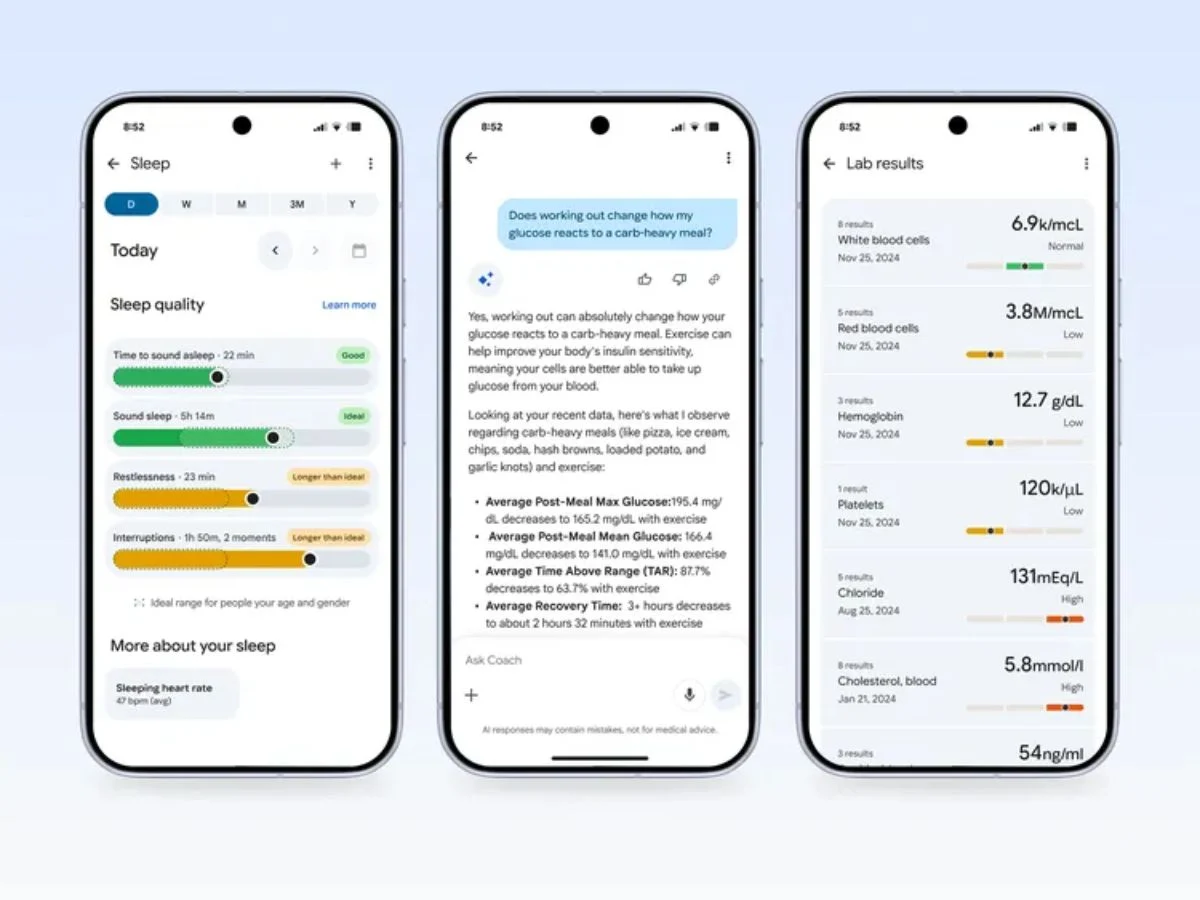
    New updates are coming for some users of the Fitbit app. During the yearly event called The Check Up, organized by Google, the company shared a variety of “significant” upgrades for its personal health coach feature. This tool was introduced in late 2025 as part of a Public Preview for Fitbit Premium users in the United States.

    Enhanced Sleep Tracking

    The newest edition of the Fitbit personal health coach offers better accuracy in tracking sleep stages. Google states that this accuracy has improved by 15%, allowing your device to more effectively monitor when you are awake or asleep. It can now also recognize naps and sleep interruptions. This information is utilized to generate a Sleep Score, along with suggestions on how to enhance your sleep quality. Users in the US who are part of the Public Preview can expect to see these sleep-related features in the upcoming weeks.

    New Research Study and Features

    Moreover, Google announced a new research study called “Get care now” in collaboration with Included Health, a healthcare provider. The goal of the study is to assess how effective conversational AI is during virtual health consultations. In addition, users will soon have the ability to link a continuous glucose monitor (CGM) through Health Connect to gain insights about their blood sugar levels. This feature will be available in Public Preview in the US starting April 2026.

    Linking Medical Records

    Lastly, Google disclosed that users in the US who are part of the Public Preview will soon be able to connect their medical records to the Fitbit app. This service will work with partners such as b. well and CLEAR, and it is designed to be secure, requiring selfie and ID verification. This new feature is also set to launch in April 2026. In mid-February 2026, the personal health coach from Fitbit was made accessible to Premium users in the UK, Canada, Australia, New Zealand, and Singapore. However, it remains unclear when these updates will be available to a broader audience.

    Source:
    Link


  • Fitbit App Update: New Sleep Metrics Coming Soon

    Fitbit App Update: New Sleep Metrics Coming Soon

    Key Takeaways

    1. Introduction of New Sleep Metrics: The upcoming Fitbit app update will include new sleep metrics, such as Sleep Need, which provides a detailed breakdown of individual sleep requirements.

    2. Understanding Sleep Debt: Another new metric, Sleep Debt, will help users assess their energy levels based on sleep history, indicating if they need to rest more.

    3. Changes in Tab Organization: The app may revert to a tab structure that includes dedicated Fitness and Sleep tabs, moving away from the current three-tab layout.

    4. Beta Testing of Features: Both new sleep metrics were previously tested in the Fitbit Personalized Sleep Schedule Lab, indicating readiness for wider release.

    5. Uncertain Release Timeline: The release date for the updated app version remains unknown, with the current version only mentioning bug fixes and performance improvements.


    A significant update seems to be coming soon for the Fitbit application. Recently, two new sleep metrics and a revamp of the tab organization were found in the code of the Fitbit app version 4.60, which was released in early January 2026.

    New Sleep Metrics

    According to Gadgets and Wearables, users of Fitbit devices may soon have access to extra sleep metrics in an upcoming update. For instance, owners of devices like the Fitbit Charge 6 (curr. $99.95 at Amazon) can already monitor their sleep duration, stages, and schedule, along with a calculated Sleep score. It appears that a new feature called Sleep Need is being developed. Lines in the app’s code suggest that this metric will provide “a detailed breakdown to explain how your sleep need was calculated”.

    Understanding Sleep Debt

    Another new sleep metric is Sleep Debt. The code for the Fitbit app includes phrases such as “Less than usual may mean you’ve built up some ‘sleep debt’, and you may want to take it easy”. This indicates that this score will help users understand their current energy levels based on their sleep history. Both of these features were beta tested in the Fitbit Personalized Sleep Schedule Lab last year.

    Potential Tab Structure Changes

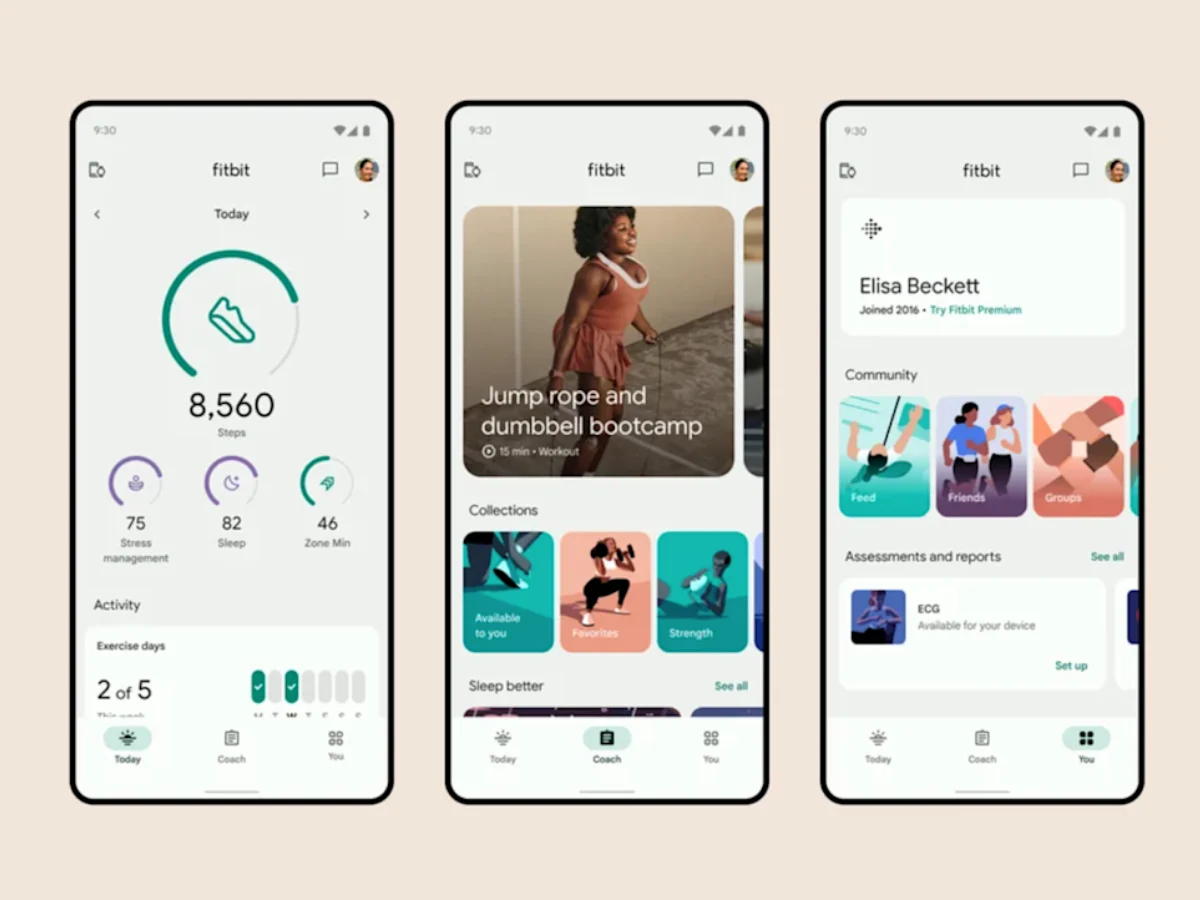
    In addition to these metrics, the app’s tab structure may be getting an update. Right now, the app consists of three tabs: Today, Coach, and You. This layout was introduced in an August 2023 redesign. According to another report from Gadgets and Wearables, the app’s code shows signs that dedicated Fitness and Sleep tabs could be brought back. Just to remind you, before the 2023 update, there were four tabs: Today, Fitness, Sleep, and Health. How these tabs will be organized in the future remains uncertain. Additional clues pointing to a design change include onboarding messages like “Ready to explore your new redesigned app?”.

    It’s still unknown when Fitbit will release this new version of its app for iOS and Android users. The change log for version 4.60 on both platforms simply mentioned that it included “bug fixes and performance improvements”.

    Gadgets & Wearables (1, 2)

    Source:
    Link


  • Fitbit Tests Unique Trends Feature for Wearable Users

    Fitbit Tests Unique Trends Feature for Wearable Users

    Key Takeaways

    1. The Unusual trends feature helps identify irregularities in health metrics that may indicate potential health issues.
    2. It analyzes data points such as heart rate variability, average heart rate during non-REM sleep, and average respiration rate.
    3. Users receive notifications to log symptoms when unusual trends are detected, but it is not a substitute for medical advice.
    4. To access the feature, users must navigate to the Fitbit app and agree to share data for research purposes.
    5. The feature is expected to be available on multiple devices, including the Fitbit Charge 6, but the rollout timeline for all users is unclear.


    A new feature called Unusual trends has been introduced in Fitbit Labs for certain users of Fitbit and Google Pixel devices. This tool aims to identify irregularities in health metrics that may signal a potential health issue.

    How It Works

    The Unusual trends tool uses various data points, including heart rate variability (HRV), the average heart rate during non-REM sleep, and the average respiration rate while you sleep. By comparing these metrics to your historical data, it can identify changes that may suggest physical or emotional stress. Google notes that factors like recent travel, alcohol intake, or respiratory illnesses might trigger these changes.

    Notifications and Warnings

    When an unusual trend is identified, users will get a notification prompting them to log any symptoms they may be experiencing. However, it’s important to note that this tool is not a substitute for medical advice, and Google advises users to consult a healthcare professional for any concerns.

    How to Access the Feature

    To see if you can sign up for the Unusual trends feature, open the Fitbit app and navigate to the You tab > Fitbit Labs > See all. Users who participate in the program must agree to share their data for research and development. This feature is expected to be available for a variety of devices, including the Fitbit Charge 6, which currently retails for $130 on Amazon. It remains unclear when this Unusual trends feature will be rolled out to all users.

    Source:
    Link


  • Google Launches High Blood Pressure Study for Smartwatch Users

    Google Launches High Blood Pressure Study for Smartwatch Users

    Key Takeaways

    1. Google is recruiting participants for a new Hypertension Study Lab focused on early symptoms of high blood pressure.
    2. Eligibility includes being a US resident, owning a Google Pixel Watch 3, and being at least 22 years old.
    3. The study aims to recruit 10,000 volunteers and some participants will receive a 24-hour ambulatory blood pressure monitoring cuff.
    4. Participants will not receive health analysis or feedback during the study, and may experience temporary battery life reduction on their devices.
    5. Interested users can sign up through the Fitbit app, but responses from Google regarding acceptance are currently unclear.


    Google is on the lookout for participants in a new Hypertension Study Lab. The research is open to a select group of Pixel Watch users and aims to assist users in identifying early symptoms of hypertension, which is commonly referred to as high blood pressure. According to the company, this research “could one day help users take proactive steps toward better heart health.”

    Eligibility Requirements

    Users in the US who own a Google Pixel Watch 3 (45mm LTE currently priced at $349.99 on Amazon) and are at least 22 years old can take part in the study. Google aims to recruit 10,000 volunteers for this six-month research initiative. Certain participants will receive an ambulatory blood pressure monitoring (ABPM) cuff to wear for 24 hours during the study.

    What to Expect

    It’s important to note that during the Hypertension Study, participants will not receive any analysis or feedback regarding their health status. Additionally, Google has mentioned that users might notice a temporary reduction in the battery life of their smartwatches. If you’re interested in joining the Fitbit Hypertension Study Lab, you can sign up through the Fitbit app. Simply navigate to You > Fitbit Labs > See all; be aware that the Fitbit Hypertension Study Lab questionnaire might not be visible if it hasn’t been made available to your account yet. Only those who are accepted will receive a response from Google, although the timeline for this is currently unclear, as well as when the study itself will kick off.

    Conclusion

    In summary, Google is taking steps to enhance heart health awareness through its new Hypertension Study Lab. This initiative is an opportunity for Pixel Watch users to contribute to research that may lead to better health outcomes. If you meet the criteria, consider signing up and being part of this important study.

    Source:
    Link


  • Fitbit Unveils Redesigned App with New Health Coach Feature

    Fitbit Unveils Redesigned App with New Health Coach Feature

    Key Takeaways

    1. Google launched the Public Preview Program for its Personal Health Coach feature in the Fitbit app for select users.
    2. The health coach offers personalized fitness plans, sleep improvement tips, and answers to general health inquiries.
    3. The program is available to US Fitbit Premium users with Android devices, with iOS access coming soon.
    4. Users may encounter issues during the preview and are encouraged to provide feedback; some features are not yet available.
    5. The rollout of the revamped Fitbit app and new devices is planned for 2026, but the timeline for additional markets is still unclear.


    Google has kicked off the Public Preview Program for its Personal Health Coach aimed at select Fitbit users. This innovative feature was first revealed in August 2025, coinciding with the introduction of a new Dark Mode for the app. The health coach is powered by Gemini and is part of a larger redesign effort for the Fitbit application.

    Enhancing Health and Fitness

    The Fitbit personal health coach aims to boost your workout routines, enhance your sleep quality, and respond to a variety of health and wellness inquiries. This tool can create a customized fitness plan based on your personal objectives or offer workouts tailored to the equipment you have and how much time you can dedicate. For sleep-related issues, the coach can examine data from your Fitbit device to provide tips on improving your rest. Additionally, users can pose questions regarding general health topics, including nutrition, menopause, or specific illnesses. You can also inquire about your health statistics and any noticeable patterns.

    Program Details

    The Public Preview Program began on October 28th for Fitbit users residing in the US who have a Fitbit Premium subscription and an Android device. Soon, it will also be accessible to iOS Fitbit Premium users in the same region. Upon joining the program, participants have the option for an onboarding discussion, where they answer questions related to their fitness level and aspirations. The company estimates that this onboarding process should only take between five to ten minutes.

    Feedback and Features

    Google has cautioned users that since this is a preview, they may encounter some “rough edges” during their experience. The company encourages participants to provide feedback through thumbs up and thumbs down icons available in the app. Certain features, like blood glucose monitoring, body temperature tracking, and Cardio Fitness Score, are not yet operational in the app; a full list of these unavailable features can be found on the Fitbit blog. It remains uncertain when these functionalities will be added. However, Google has made it simple for users to revert back to the standard app version whenever they choose using a “Switch app version” button.

    It is still unknown when the revamped Fitbit app, including the personal health coach feature, will roll out in additional markets. Google also recently announced plans to release new Fitbit devices in 2026; the last product launch was the Ace LTE kids smartwatch, which is currently priced at $129.95 on Amazon and was released in July 2024.

    Source:
    Link


  • Fitbit App for WearOS Updates with New Icons and Tiles

    Fitbit App for WearOS Updates with New Icons and Tiles

    Key Takeaways

    1. Google has redesigned the Fitbit app for Wear OS with a new Material Design 3 style.
    2. Updated icons for Fitbit features include new designs with white backgrounds and rounded, gradient-colored illustrations.
    3. New Tiles such as Body responses, Exercise quick launch, and Daily heart rate have been introduced in the Pixel Watch app.
    4. The updated Tiles feature a lighter gray background with larger action buttons and a revised color theme.
    5. Some users with Pixel Watch models have already received these updates.


    Google has made some changes to the Fitbit app for Wear OS. Users of the brand’s Pixel watches can now see the new Material Design 3 style in various parts of the app. This full redesign is anticipated to be launched with the September Pixel Feature Drop.

    Icons Get a Refresh

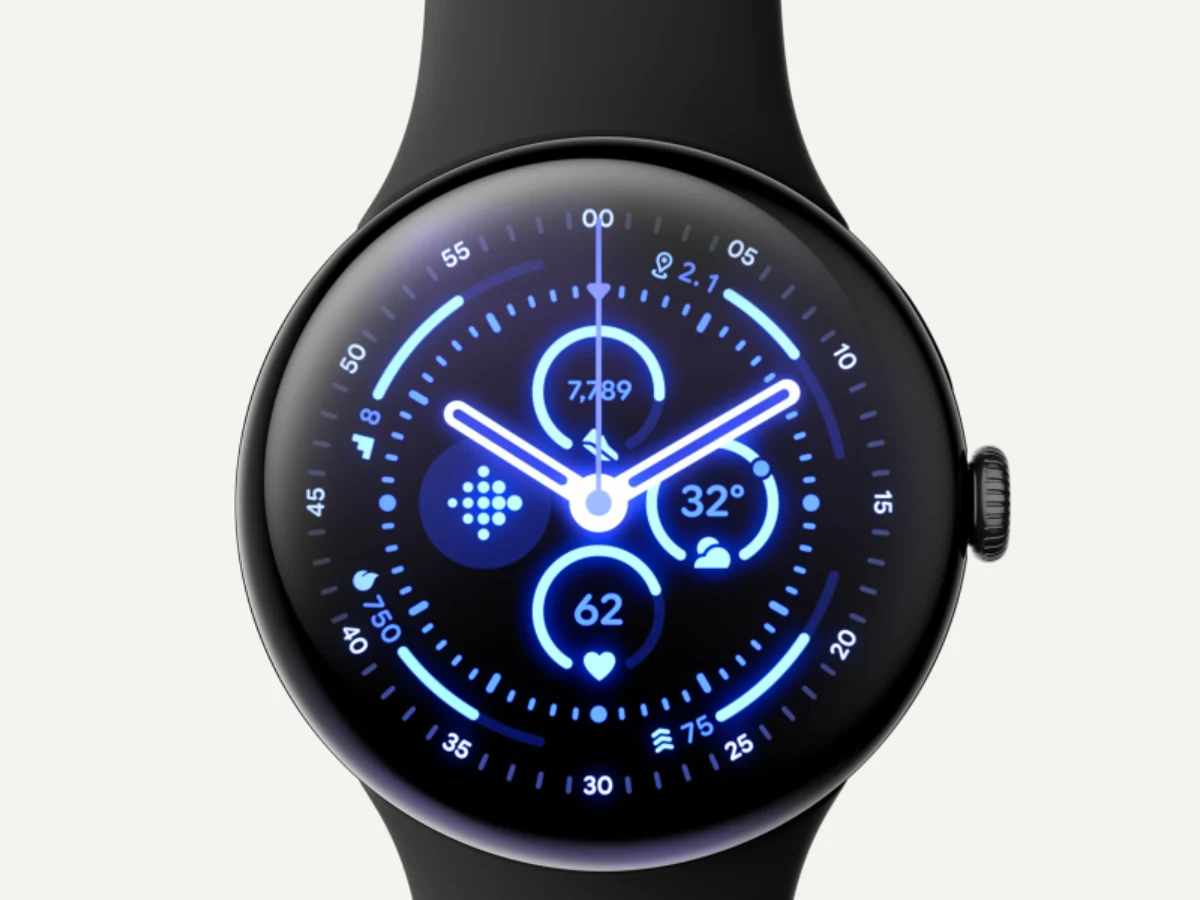
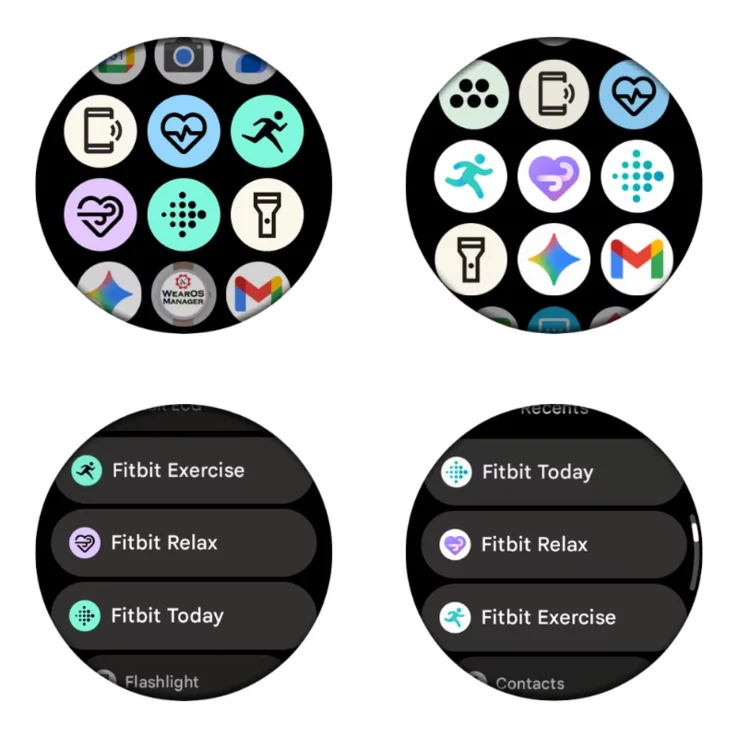
    As reported by Android Police, the shortcuts for Fitbit Exercise (running figure), Fitbit Relax (heart with breathing icon), and Fitbit Today (Fitbit emblem) have been updated to fit the new design. The icons now feature a white background and include rounded, gradient-colored illustrations. These updates can be seen in both the list and grid view with the Fitbit app (Wear OS) version 3.40.

    New Tiles and Features

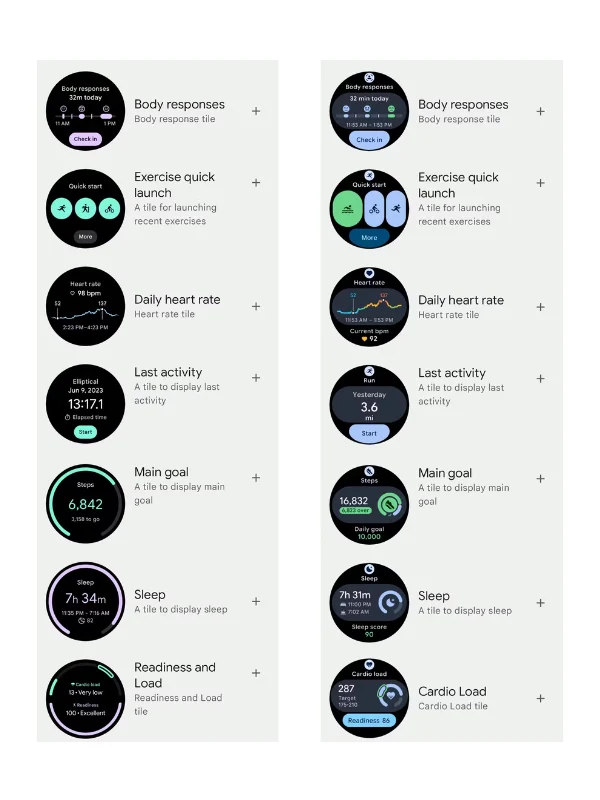
    Additionally, new Tiles like Body responses, Exercise quick launch, and Daily heart rate have been spotted in the Pixel Watch app. The latest versions typically showcase a lighter gray bubble in the middle of the background, featuring bigger action buttons and the revised color theme. These updated tiles were found in the Pixel Watch app version 3.5.0. Reports from users on Reddit suggest that these changes have already been rolled out to some customers using the Pixel Watch, Pixel Watch 2, and Pixel Watch 3 (currently $299.99 on Amazon).

    Source:
    Link


  • AI-Enhanced Fitbit Health Coach Coming Soon in Redesigned App

    AI-Enhanced Fitbit Health Coach Coming Soon in Redesigned App

    Key Takeaways

    1. Personalized Training Plans: Users can create custom workout plans based on fitness goals and preferences, which will evolve with data from their devices.

    2. Enhanced Sleep Insights: New algorithms will provide more accurate sleep tracking and coaching, helping users improve their sleep habits.

    3. Integration with Health Connect and HealthKit: The health coach can utilize data from smart scales and glucose monitors for a comprehensive health overview.

    4. User-Friendly App Improvements: The revamped Fitbit app features intuitive data visualization, enhanced syncing, and a dark mode option.

    5. Availability and Compatibility: The health coach launches in October 2025 for U.S. Fitbit Premium subscribers and is compatible with the latest Fitbit devices and Pixel Watches.


    The Fitbit app is introducing a new health coach feature, powered by Google’s Gemini. Google, the owner of the Fitbit brand, claims that this AI assistant can assist users in training, enhance sleep, and provide overall advice for health and wellbeing.

    Personalised Training Plans

    In a recent blog entry, Google mentioned that Fitbit users will have the ability to converse with the assistant about their fitness objectives and exercise likes, leading to a custom workout plan. This plan will evolve over time using data from the wearable device. Additionally, the new sleep algorithms promise more precise insights into sleep duration and stages. The sleep coach will highlight weekly patterns, helping users refine their sleep habits and even recommend an earlier bedtime if they notice changes in activity levels.

    Enhanced Connectivity Features

    Furthermore, the health coach will integrate with Health Connect and HealthKit, enabling it to make use of information from smart scales and glucose monitors. In brief, the Fitbit health coach will play a key role in the revamped Fitbit app, which is designed to be user-friendly with “more intuitive data visualization.” Other improvements include better syncing capabilities and a dark mode feature.

    Availability and Compatibility

    The rollout for the Fitbit health coach is set to begin in October 2025, specifically for Fitbit Premium subscribers in the U.S. It is compatible with “the latest” Fitbit fitness trackers, Fitbit smartwatches, and Pixel Watches, including the upcoming Pixel Watch 4 (available for pre-order at $499.99 on Amazon). It remains uncertain when this feature will reach users in additional countries or if it will eventually be available to non-subscribers.

    Source:
    Link


  • Fitbit App Redesigns Page with Latest Updates Released

    Fitbit App Redesigns Page with Latest Updates Released

    Key Takeaways

    1. Fitbit has redesigned its Device page in the app, aligning it more closely with the Google Pixel Watch app.
    2. The updated Device page features a larger device image, connection status, last sync time, and battery life at the top.
    3. Users can navigate through three tabs for Watch faces, Apps, and Tiles, with additional Settings organized into groups.
    4. The latest iOS app update (version 4.45) includes a new layout for Menstrual Health Onboarding and fixes for GPS exercise map issues and notification adjustments.
    5. The Android app has also been updated to version 4.45, focusing on bug fixes and performance improvements.


    Fitbit has given its Device page a new look in the app. Over the past year, Google has been updating the design of the Fitbit apps for both iOS and Android, with a recent focus on the Health Metrics part.

    New Design Features

    The Device page in the Fitbit app, where users can modify different settings or select a new watch face, has now been revamped. This section now looks a lot like the corresponding page in the Google Pixel Watch app. At the top, there’s a bigger picture of your device, along with information about its connection status, last sync time, and battery life. Below that, you will find three tabs for Watch faces, Apps, and Tiles. Further down, there’s a list of additional Settings organized into groups such as Notifications, Device preferences, and Fitbit reminders & alerts.

    Recent Update Details

    It seems that this updated Device section, which can be found from the Today tab, has been gradually reaching users over the past few weeks. The latest update for the iOS app, version 4.45, also features a new layout for Menstrual Health Onboarding. There are fixes for issues related to distances displayed on GPS exercise maps and the inability to adjust times for “Reminders to Move” notifications. Additionally, Google has addressed a bug that caused the Fitbit app to freeze when users clicked on exercise details.

    Android Update

    The Fitbit app for Android has also been upgraded to version 4.45, but the change log here only mentions that there are “Bug fixes and performance improvements.” You can grab the latest version of the Fitbit app from either the Google Play Store or the Apple App Store.

    Source:
    Link

  • Fitbit Launches New Health Tracking Tools for Users

    Fitbit Launches New Health Tracking Tools for Users

    Key Takeaways

    1. Fitbit Labs introduces three new features: Medical Record Navigator, Symptom Checker, and Unusual Trends.
    2. Medical Record Navigator helps users understand lab results by summarizing reports in simple language.
    3. Symptom Checker allows users to input symptoms and receive additional questions to gain insights into their health.
    4. Unusual Trends feature alerts users to health metrics that fall below their normal levels, like resting heart rate and sleep patterns.
    5. Access to Fitbit Labs is limited to eligible users who agree to share their data for research and development.


    Fitbit recently introduced three new features available through Fitbit Labs, an app-based testing program for certain users. This program allows participants to experience and provide feedback on upcoming functionalities.

    Medical Record Navigator

    The first feature is called the Medical record navigator, which aims to assist users in understanding complicated lab records, like blood test results. Users can upload a photo or PDF of their report to the Fitbit app, and the Gemini system will generate a summary in simple language. Another new tool is the Symptom checker, enabling users to describe their feelings. The blog post gives examples like “my head hurts” and “I feel tired.” After inputting these symptoms, users may receive additional questions, with the tool offering insight into their symptoms.

    Unusual Trends and Health Tracking

    Finally, there’s the Unusual trends feature, which helps users identify when their health metrics fall below their normal levels. It examines various metrics, including resting heart rate, heart rate variability (HRV), and sleep patterns. Fitbit emphasizes that these tools are not meant to diagnose or prevent any medical issues and advises users to consult a healthcare professional if anything unusual is detected.

    Access to Fitbit Labs

    If you qualify, you’ll find Fitbit Labs in the ‘You’ and ‘Today’ sections of the Fitbit app or via a ‘Now’ card. Eligible users can either begin testing right away or sign up for a waiting list. Keep in mind that by enrolling, you agree to share your data for research and development. If you can’t find the Fitbit Labs section, you may not be eligible at this time. However, Fitbit mentions that these trials might expand to more users in the future. It’s still unclear when the new Medical record navigator, Symptom checker, and Unusual trends tools will be released for everyone.

    Source:
    Link