Key Takeaways
1. The iPhone 17 series features LTPO OLED screens with a 120 Hz refresh rate and impressive brightness levels (1,600 nits full-screen, 3,000 nits peak HDR).
2. All models in the iPhone 17 lineup have similar display quality, with precise color accuracy and excellent readability, despite their different price points.
3. The average touch response time for the iPhone 17 is 35 ms, making it faster than the Galaxy S25.
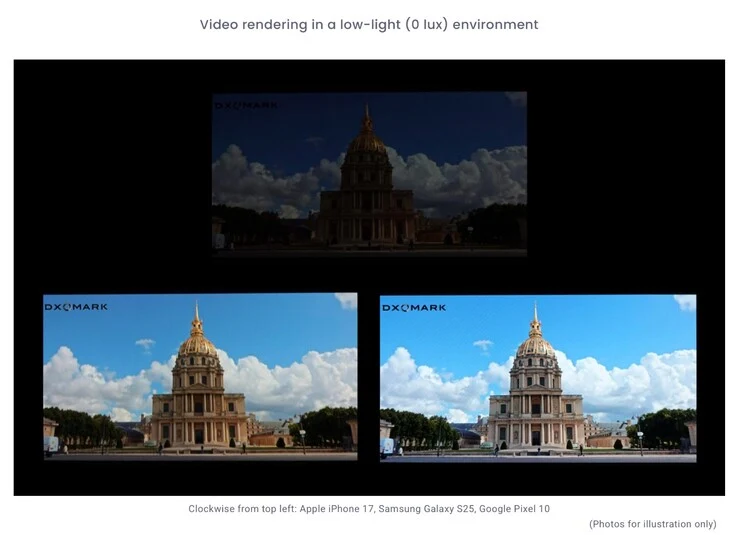
4. Some drawbacks include low contrast at 1 nit brightness, which can hinder readability in dark settings and make videos appear overly dark in low light.
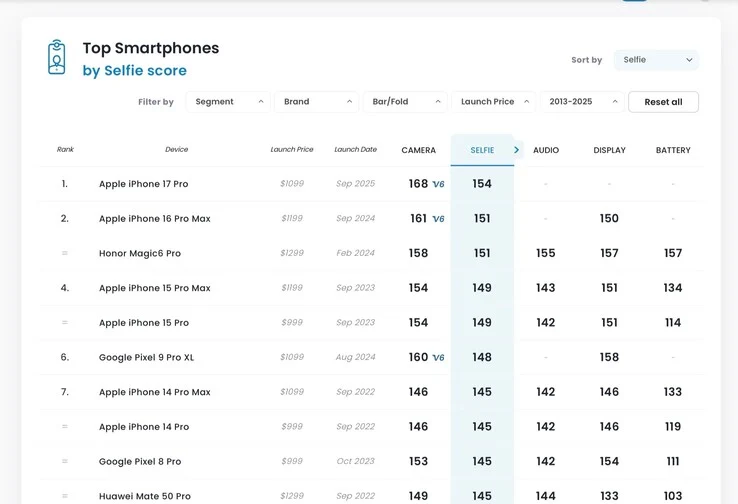
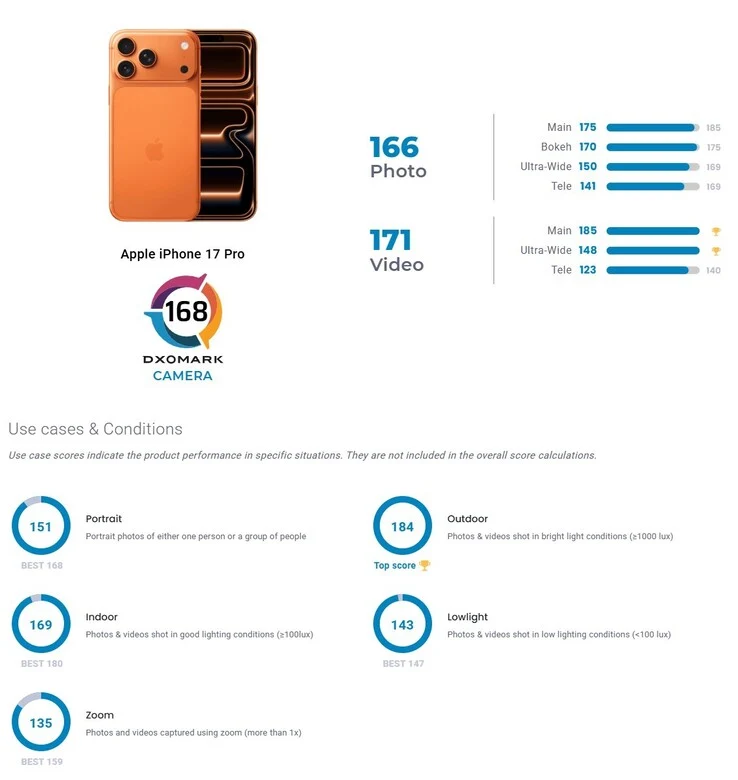
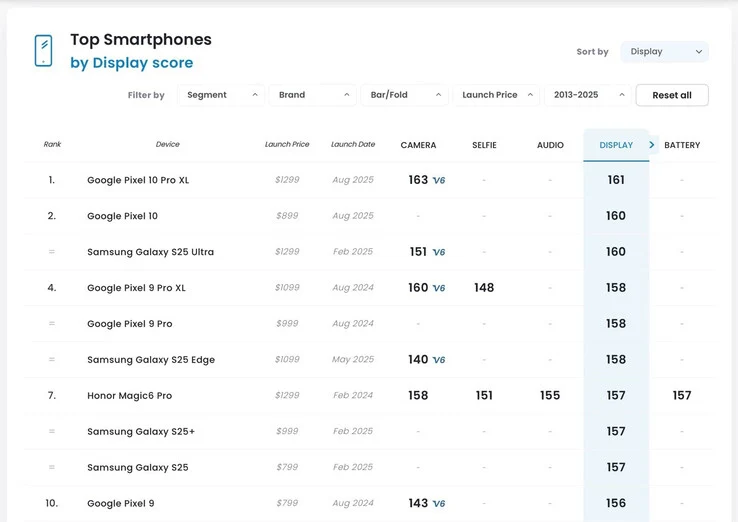
5. The iPhone 17 series scores 151 in DxOMark’s rankings, placing it 25th, significantly behind competitors like the Google Pixel 10 Pro XL and Samsung Galaxy S25 Ultra.
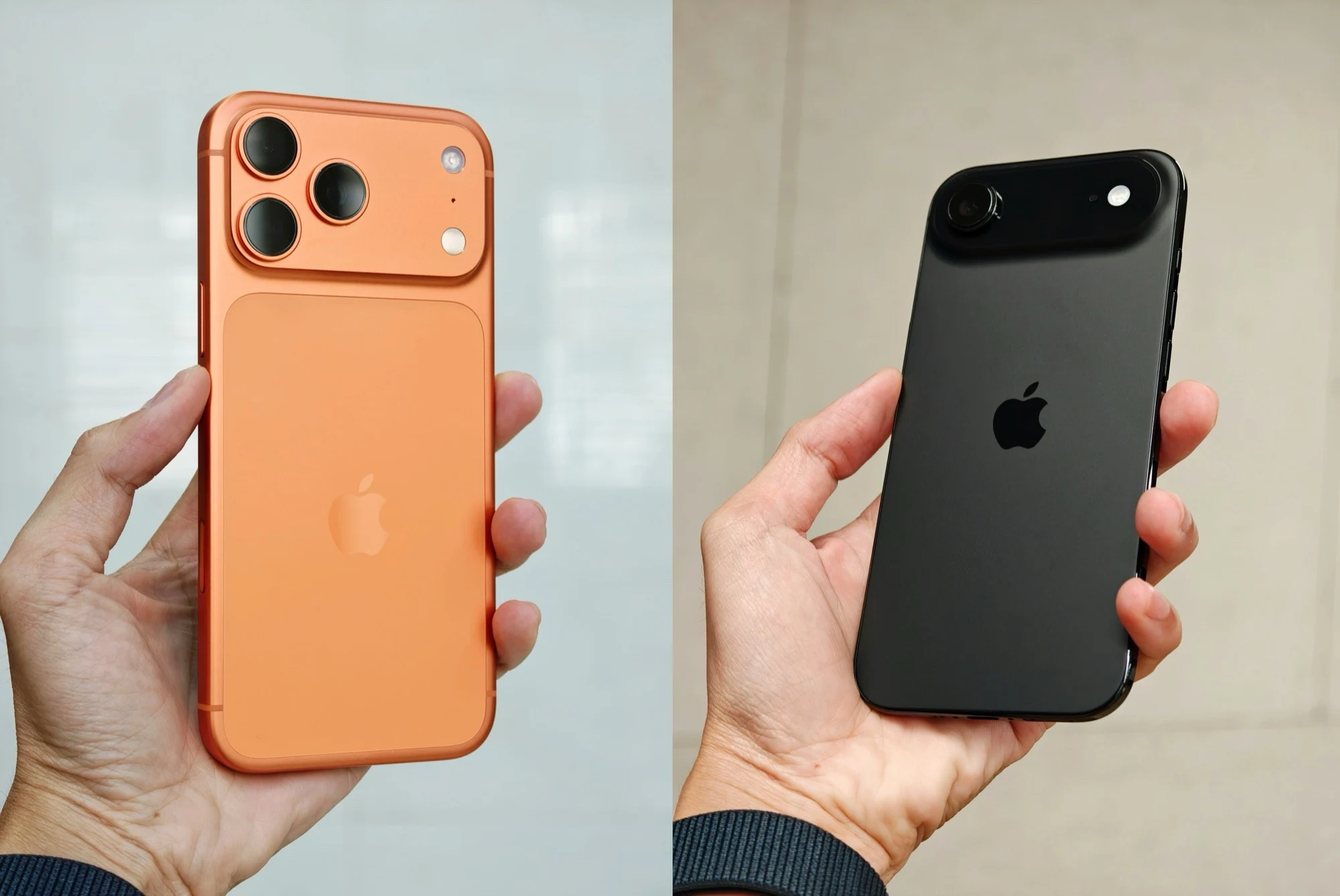
The Apple iPhone 17, iPhone Air, and iPhone 17 Pro Max come equipped with LTPO OLED screens that boast a refresh rate of 120 Hz. They also achieve a full-screen brightness of 1,600 nits and peak HDR brightness reaching 3,000 nits. A detailed analysis by DxOMark reveals that there is no significant difference in display quality among the entire iPhone 17 series, no matter the price.
Display Quality Insights
The evaluation of the iPhone 17, iPhone Air, and iPhone 17 Pro Max confirmed that all three devices provide precise color accuracy, even at elevated brightness levels. They also deliver excellent readability, thanks in part to an enhanced display surface that minimizes distracting reflections. Additionally, DxOMark found a PWM frequency of 480 Hz, which is generally not expected to create problems for most users.
Performance Comparison
The average response time for touch inputs on the iPhone 17 is 35 ms, enabling it to respond to touches twice as quickly as the Galaxy S25. However, the displays in the iPhone 17 series do have some drawbacks. DxOMark pointed out that content can be displayed at just 1 nit, resulting in low contrast in darker settings, which makes reading difficult unless brightness is adjusted manually. Moreover, videos can seem overly dark in low-light situations.
Rankings and Scores
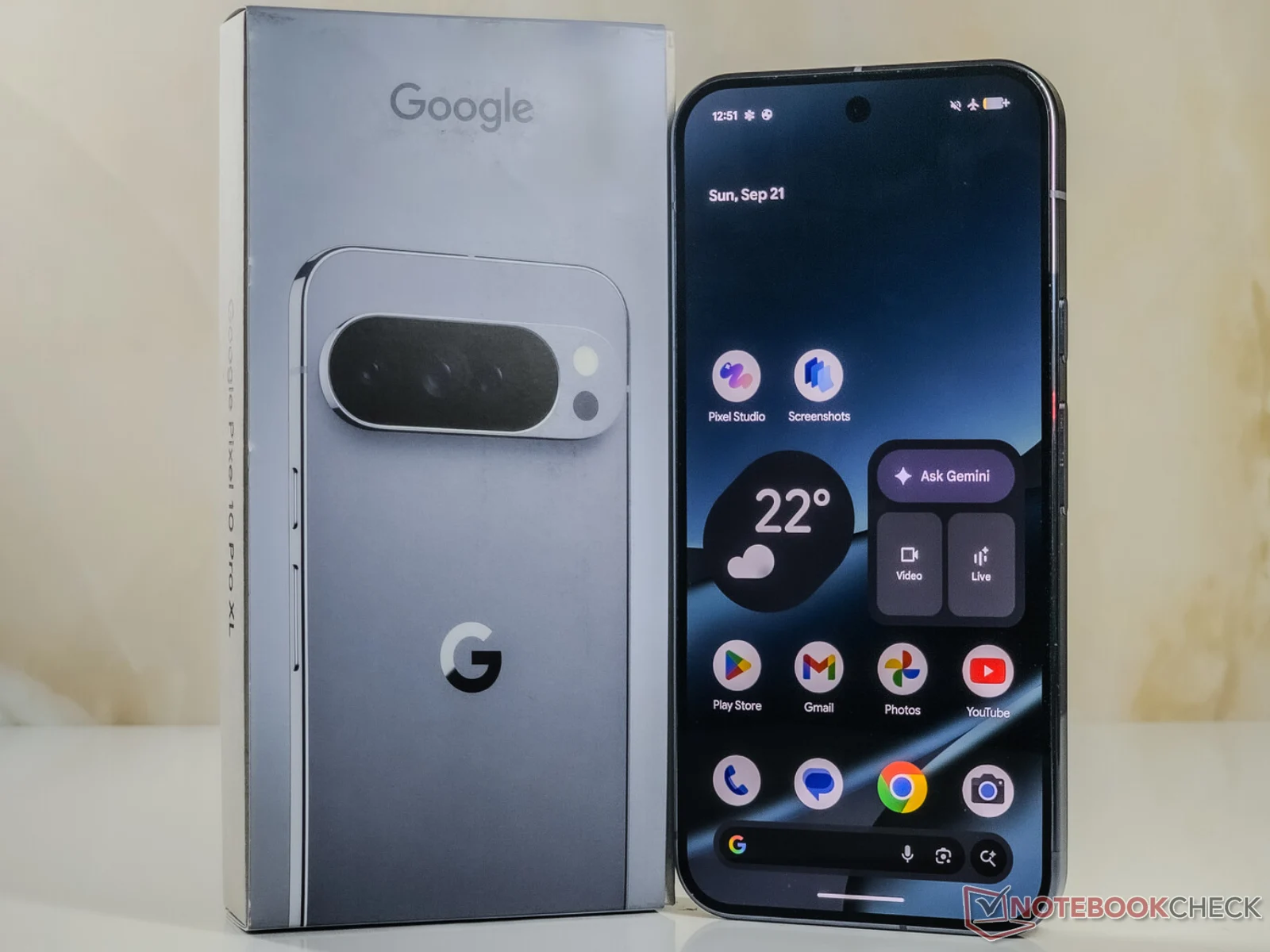
With an overall score of 151, the trio of devices ranks 25th in DxOMark’s listings. This places Apple’s latest smartphones significantly behind other high-performing models like the Google Pixel 10 Pro XL (161 points), Pixel 10, Samsung Galaxy S25 Ultra, Pixel 9 Pro XL, and Galaxy S25 Edge.
Source:
Link