Tag: Leica M11

  • Leica M12 Heritage Edition: 7 Retro Features You Need to Know

    Leica M12 Heritage Edition: 7 Retro Features You Need to Know

    Key Takeaway

    1. The Heritage Edition may feature classic design elements, such as a return to the original rangefinder with 0.92x magnification and a film-like appearance.
    2. Design adjustments could include a retro touch like a film advance lever, a fold-out crank for ISO settings, or a small round display mimicking film counter.
    3. The camera might come with a retracted, pocketable version of a classic Leitz Elmar lens, emphasizing portability and vintage style.

    Leica’s potential Heritage Edition camera could be a real game-changer for classic camera lovers

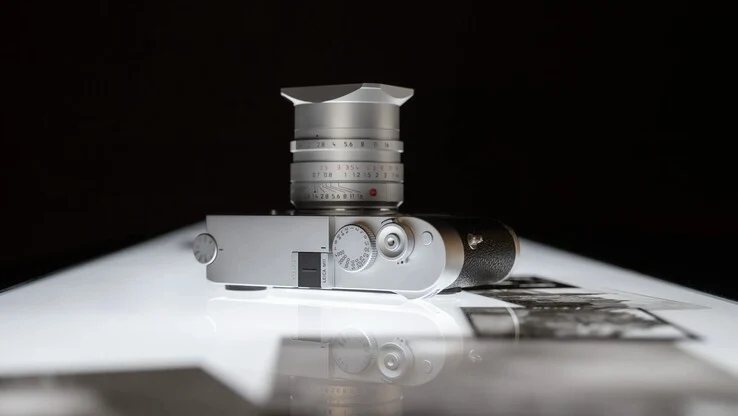
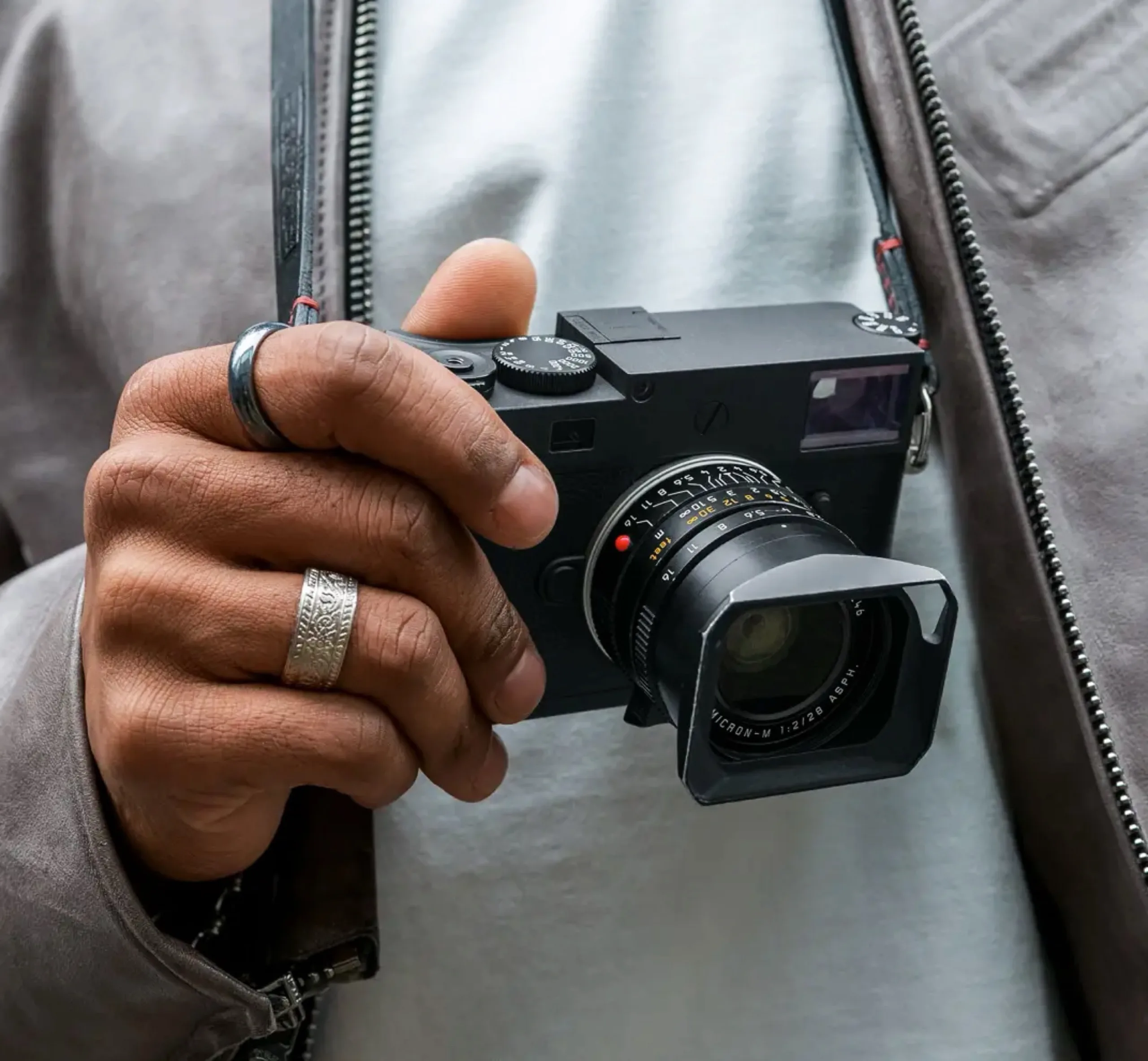
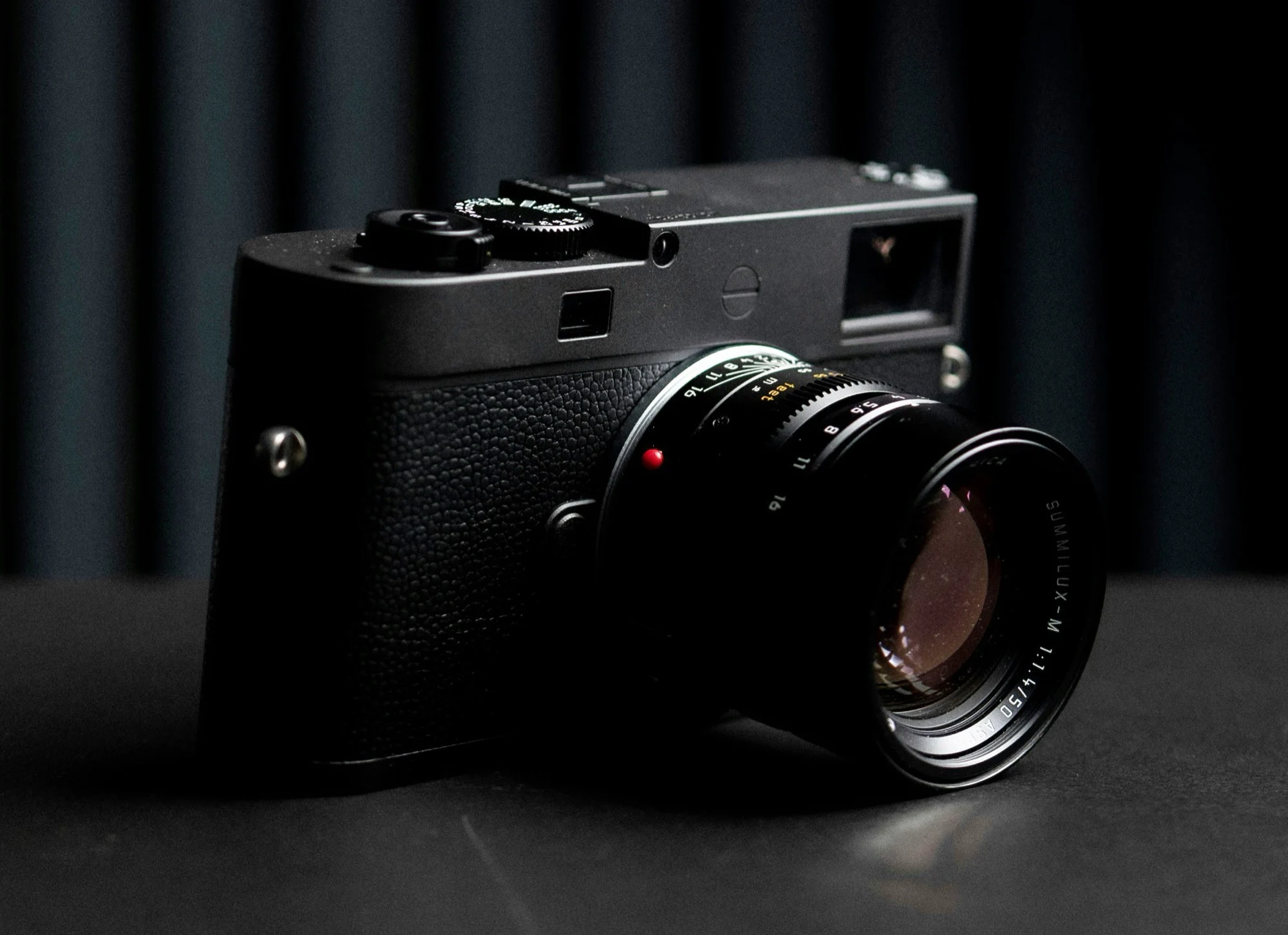
    Imaginably, Leica migh be planning to launch a special edition of their next camera that especially appeals to nostalgic audiance. According to a survey conductd in February, Leica hint at a possible Heritage version of the Leica M11. This seem to be a strategy to give the digital camera a splash spooky retro style and to differentiate it even more from other digital models with some famous classical designs.

    Design unconventionalities and user access improvements

    Leica even pointed out a possible design change in their survey, hinting at accesibility improvements. The Leica M11 moves away from the older models like the M10, which had a basic plate that users needed removed to swap batteries or memory cards. Now, the M11 introduces a more modern approach where the battery is easier to reach. But the downside is it not looks as minimalistic or carries the same nostalgic feel of the older Leica M camera models, and handling also be different from the classic ones.

    Retaining or reviving classic rangefinder features

    If Leica want to truly excite the classic camera fans, they might go back to a rangefinder resembling the Leica M3, with a 0.92x magnification and frame lines for various focal lengths like 50mm, 90mm, and 135mm. contrast this with the M11, which has a 0.73x viewfinder and supports frame lines for 28mm, 35mm, and 75mm focal lengths, meaning only two focal length frames show at once, which makes focusing a bit trickier especially with long lenses.

    Possible design retrofits for authenticity and charm

    For a Heritage Edition, Leica could reintroduce this original rangefinder style, perhaps as an optional feature. Additional vintage touches might include elements like a film advance lever, a typical feature from film cameras, now purely aesthetic since digital cameras don’t need it. Such a feature could also double as a thumb rest, as seen on the Leica M10-D model.

    Possible features to enhance the retro look

    Similar to the Leica M11-D, the Heritage Edition might exclude a digital display for a more authentic feel. Alternatively, a fold-out crank on the ISO dial could replace digital controls, offering a tactile experience reminiscent of old cameras. Another innovative option could be a tiny round screen mimicking film exposure counters, which shows how many photos have been taken during the day.

    Lens options and classic design elements

    The lens is equally signifcant as the camera body in making the heritage edition special. A reissue of the classic Leitz Elmar lens would be fitting, especially one that retracts into the camera body for easy pocketability. When folded in, only a few millimeters protrude from the casing, making it highly portable. There is speculation whether Leica will release an M12 Heritage edition, but such a model would be something vintage camera fans might treasure.

    Sources

    • Leica M12 Upgrades and Heritage Edition for New Full-Frame Camera

      Leica M12 Upgrades and Heritage Edition for New Full-Frame Camera

      Key Takeaways

      1. The Leica M12 is expected to launch between late 2026 and early 2027, featuring image stabilization for the first time.
      2. The new sensor for the M12 is rumored to be developed and manufactured by Leica in Europe, differing from the M11’s Sony-sourced sensor.
      3. A user survey has been conducted by Leica to gather feedback on design changes, particularly regarding the camera’s baseplate and battery access.
      4. The redesigned battery access in the M11 allows for a larger battery and easier removal compared to the M10’s complete baseplate removal.
      5. Leica is considering a limited “Heritage Edition” of the M12 that may include a traditional baseplate, indicating a potential return of this feature in a special edition.


      Rumors have been circulating about the anticipated release of the Leica M12, which is expected to launch sometime between the latter half of 2026 and the early half of 2027. This compact full-frame rangefinder camera is rumored to include image stabilization for the first time. Additionally, the new sensor is thought to be developed by Leica itself and manufactured within Europe. For context, the Leica M11 features a custom sensor sourced from Sony.

      Changes and Upgrades

      Recently, Leica has given more insight into possible updates and modifications through a survey designed for current users, consisting of 17 inquiries specifically about the bottom of the camera. Unlike the Leica M10, which required complete removal of the baseplate to access the battery or memory card, the Leica M11 has been redesigned to include a battery that can be slid out from the body without the need for any doors or covers.

      This new approach saves space and, as per Leica’s claims, allows for a slightly bigger battery. The initial design shift faced some backlash at its launch, as it diverged from the classic analog style of earlier Leica M cameras. Through this survey, Leica aims to gauge customer preferences regarding design choices. It’s quite notable that the illustration of the bottom intended to showcase the new design does not originate from the Leica M11. Instead, it merges elements from both the Leica M11 and the Leica Q3.

      Design Advantages

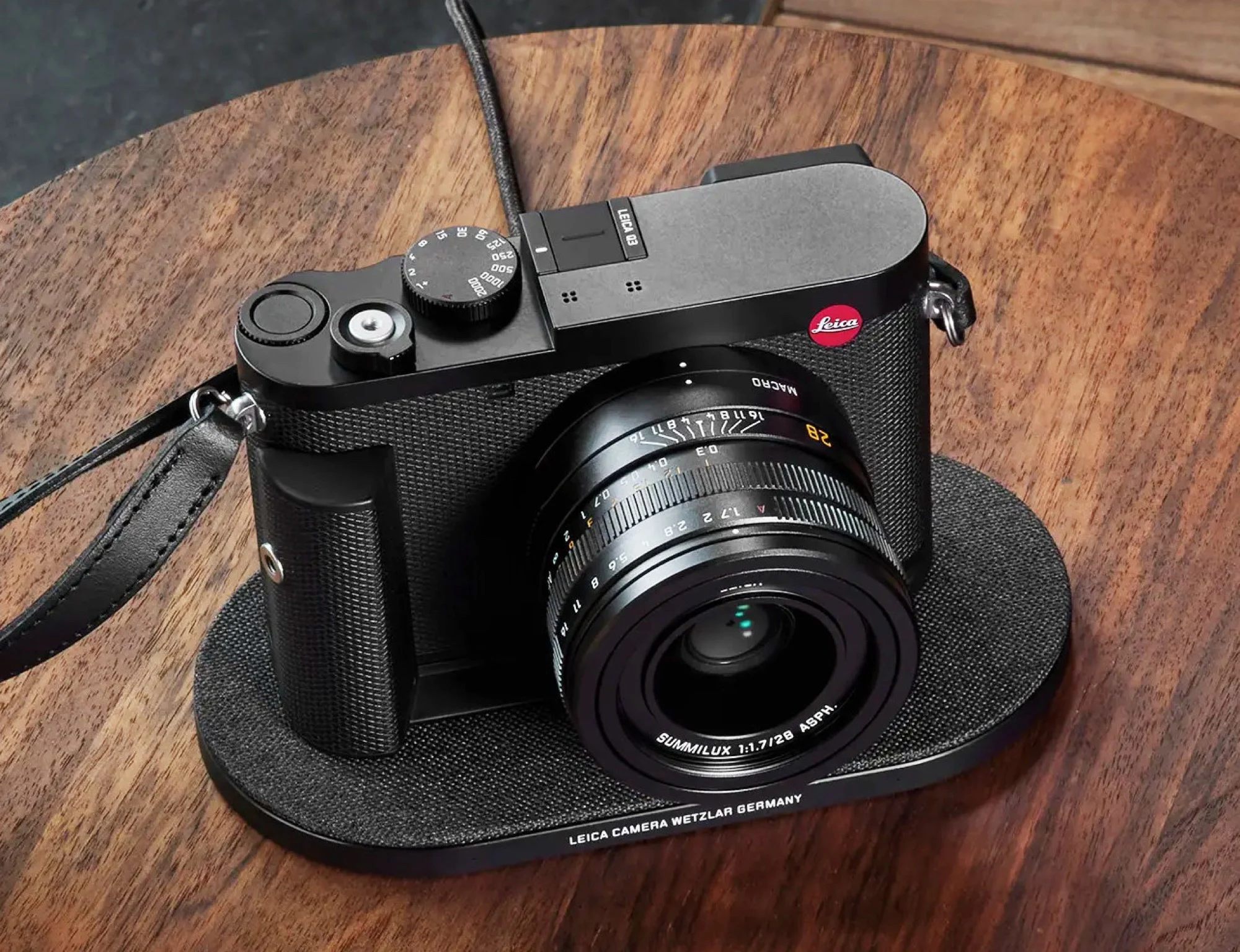
      The depicted design in this image offers two main benefits compared to the Leica M11. Firstly, the battery release slider is positioned for easier access even when a quick-release plate is attached. Secondly, Leica has incorporated three metal contacts for accessories. On the Leica Q3, these contacts are utilized for a handgrip that allows for wireless charging via a Qi pad.

      Leica is also curious to learn if customers would be interested in a limited “Heritage Edition” that would come with a traditional baseplate. This indicates that the baseplate might return, though only in a special edition and not as a standard feature of the Leica M12. The survey implies that such a design might lead to a smaller battery being used as well.


    • Leica M12 to Feature New German Full-Frame Sensor, Not Sony

      Leica M12 to Feature New German Full-Frame Sensor, Not Sony

      Key Takeaways

      1. The Leica M series has traditionally sourced its components from Europe, including sensors, until the M11, which uses a 60 MP sensor from Sony.
      2. Leica is developing its own proprietary sensor, with the project starting around the time of the M11’s release in early 2022.
      3. The new sensor aims to enhance the uniqueness of the M series and justify its premium pricing.
      4. The proprietary sensor will be tailored to the M series’ specific needs, focusing on image quality rather than features like autofocus or video recording.
      5. Dr. Andreas Kaufmann noted significant advancements in the sensor project, though details remain undisclosed.


      The Leica M series has always been designed and produced in Germany, with a majority of its parts coming from European sources. This was also the case for the full-frame sensor until the Leica M10, which was created by AMS Osram in Graz, Austria, and built in France. However, the latest Leica M11 features a 60 MP sensor from Sony, which closely resembles the sensor found in the much cheaper Sony A7R IV, though it has modified microlenses to enhance the image quality when using Leica M lenses.

      Future Developments

      Dr. Andreas Kaufmann, who is the owner and chairman of the supervisory board of Leica Camera AG, shared in a recent episode of the Leica Enthusiast Podcast that Leica is currently in the process of creating its own sensor. Development of this sensor began around the Leica M11’s release in early 2022, making it about four years into the project, with an anticipated completion time of roughly five years. Since kicking off this endeavor, Leica has made notable advancements, although Kaufmann chose not to provide further details on the matter.

      Distinctive Features

      Creating a proprietary sensor would enable Leica to set the M series apart from competitors, helping to justify its high price. Additionally, Leica might tailor the sensor to meet the unique needs of the M series, as unlike many cameras available, the Leica M does not feature autofocus or video recording capabilities and therefore doesn’t need PDAF pixels or a sensor that reads data particularly fast. Instead, the focus remains on achieving superior image quality within the M system.

      Source:
      Link


    • Leica M EV1 Rumors: Compact Full-Frame Camera Details Before Launch

      Leica M EV1 Rumors: Compact Full-Frame Camera Details Before Launch

      Key Takeaways

      1. The Leica M EV1 will be officially revealed on October 23 and resembles a Leica Q3 with interchangeable lenses, functioning similarly to a Leica M11 with an electronic viewfinder.
      2. It uses the older Leica Maestro III processor and has only 3 GB of buffer memory, with limited features like no wireless charging and a smaller battery capacity of 1,800 mAh.
      3. Weighing 485 grams with the battery, the M EV1 is one of the lightest full-frame cameras available, though it lacks autofocus and image stabilization.
      4. The camera features a 60 MP full-frame sensor and a 0.5-inch OLED viewfinder with 5.76 million pixels, but will not support autofocus lenses due to its M-mount.
      5. The price in Hong Kong is listed at $75,000 HKD (around $9,600), with expectations for the U.S. price to exceed $10,000 due to tariffs.


      The Leica M EV1 is set to be officially revealed on October 23. This camera is a response to many customers’ requests, resembling a Leica Q3 that features interchangeable lenses on the outside. However, technically, it can be more accurately seen as a Leica M11, but with an electronic viewfinder instead of a traditional rangefinder. Reportedly, the electronic components are the same as those found in the Leica M11.

      Older Technology

      This is somewhat disappointing, as it means that the Leica M EV1 operates on the older Leica Maestro III processor, which has only 3 GB of buffer memory. The likelihood of having wireless charging is also slim. Furthermore, the battery is expected to be a bit smaller, with Leica using the BP-SCL7, which has a capacity of 1,800 mAh at 7.4 volts. On a positive note, the camera is relatively lightweight; according to the latest updates from LeicaRumors, the Leica M EV1 weighs just 410 grams without the battery and 485 grams with it.

      Compact and Lightweight

      For comparison, the Leica M11 comes in at 530 grams with a battery, while the Sony A7r IV is heavier at 662 grams. Even the very compact Panasonic Lumix S9 weighs slightly more at 486 grams. This makes the Leica M EV1 one of the most compact and light full-frame cameras currently available, although it seems Leica is still not including autofocus or image stabilization. This is quite unfortunate, because if it had an L-mount instead of the M-mount, it could have supported autofocus lenses and also used Leica M lenses with an adapter.

      The slider located next to the lens mount, which is used to choose the frame lines on the Leica M11, will instead activate focus peaking and magnification in the viewfinder on the M EV1. In Hong Kong, the Leica M EV1 is listed at $75,000 HKD (approximately $9,600), which suggests that its price in the United States might exceed $10,000 due to the new Trump tariffs. It will feature a 60 MP full-frame sensor, a 0.5-inch OLED viewfinder with 5.76 million pixels, and will support Content Credentials.

      Source:
      Link


    • Leica M12 with IBIS: Major Upgrades for Full-Frame Rangefinder

      Leica M12 with IBIS: Major Upgrades for Full-Frame Rangefinder

      Key Takeaways

      1. The Leica M11, launched in January 2022, features upgrades like a 60MP sensor, optional electronic shutter, and 64GB internal storage.
      2. The upcoming Leica M12 may include In-Body Image Stabilization (IBIS) for longer handheld exposure times, but this feature is uncertain due to space limitations in compact M bodies.
      3. The M12 might have a larger 3.9-inch touchscreen, potentially removing some physical buttons.
      4. The dedicated ISO dial could be replaced by a second programmable thumb dial in the M12 design.
      5. Speculation about the M12 should be approached cautiously as it’s based on early rumors.


      The Leica M11, available from $10,120 on Amazon, was launched in January 2022. This camera features many notable upgrades over the Leica M10, such as a 60MP full-frame sensor, an optional electronic shutter, 64GB of internal storage, and a Leica Visoflex 2 attachable EVF with improved resolution.

      Potential Upgrades in the Leica M12

      The upcoming Leica M12 may represent a major leap forward. As per the latest updates from LeicaRumors, the company is reportedly testing a prototype that includes IBIS (In-Body Image Stabilization). This would allow for longer handheld exposure times without the risk of blurriness. Current IBIS technology, similar to that found in the new Hasselblad X2D II, can enable exposure times lasting several seconds without needing a tripod. However, Leica has previously indicated that their compact M bodies lack the space to accommodate a stabilized sensor. Thus, it remains uncertain if the Leica M12 will indeed feature this technology.

      Design Changes to Expect

      Earlier speculation suggests that the Leica M12 could include a significantly larger 3.9-inch touchscreen, potentially eliminating some buttons on the camera’s rear. The dedicated ISO dial might vanish in favor of a second programmable thumb dial. This change could be necessitated by the need for extra space for a hybrid viewfinder, which would convert the traditional rangefinder into an electronic viewfinder with a simple button press. As always, such early rumors should be viewed with caution.

      Source:
      Link


    • Leica M11-V Leak: Full-Frame Sensor, EVF, Compact & Affordable

      Leica M11-V Leak: Full-Frame Sensor, EVF, Compact & Affordable

      Key Takeaways

      1. Leica is set to introduce the M11-V with an electronic viewfinder, moving away from the traditional rangefinder design.
      2. The new electronic viewfinder features a 0.5-inch screen and upgraded resolution of 5.76 million pixels.
      3. The M11-V retains the 60 MP full-frame sensor from the standard M11 and is produced in Germany.
      4. The camera is expected to be more affordable due to the removal of the costly rangefinder and the inclusion of 64 GB of flash storage.
      5. It will use the Leica Maestro III processor and is aimed at appealing to a broader audience while maintaining Leica’s quality and craftsmanship.


      Rumors have been floating around for quite some time that the German camera maker Leica is set to introduce the Leica M11-V, marking a shift to an electronic viewfinder from the traditional rangefinder in its M series. The official announcement is expected in October. Recently, LeicaRumors has shared some promotional materials that outline several important specifications for the new camera.

      Key Specs Revealed

      The electronic viewfinder is equipped with a 0.5-inch screen and features integrated diopter correction, similar to the Visoflex 2 that can be attached to the standard Leica M11. However, the resolution has seen an upgrade from 3.68 million to 5.76 million pixels. The camera retains the same 60 MP full-frame sensor found in the standard Leica M11 and is set to be produced in Germany. A newly added function button is rumored to allow for the display of digital frame lines within the viewfinder, and the overall design is said to be more streamlined now that the optical viewfinder has been removed.

      Changes in Design Features

      According to earlier speculations, the dedicated ISO dial has been left out, likely to save space since it would be positioned right next to the viewfinder. By swapping the rangefinder, which is the most costly component, for an electronic viewfinder, Leica is likely to cut down on production expenses significantly. The positioning of the Leica M11-V as an entry-level model is suggested by its inclusion of 64 GB of flash storage, in contrast to the 256 GB storage found in the Leica M11-P. Nonetheless, it will still support Content Credentials. The Leica Maestro III processor will be the same as that used in the Leica M11.

      Conclusion

      So, as we anticipate the official unveiling of the Leica M11-V, it’s clear that Leica is making some notable changes to its camera lineup. With its new features and specifications, it aims to appeal to a broader audience while maintaining the quality and craftsmanship that the brand is known for.

      Source:
      Link


    • Pixii Max vs Leica M10 and M11: DxOMark Sensor Analysis

      Pixii Max vs Leica M10 and M11: DxOMark Sensor Analysis

      Key Takeaways

      1. The Pixii Max is a digital rangefinder camera from France, featuring a 24MP full-frame sensor, and is priced at €4,799.
      2. It is significantly cheaper than the Leica M11, which costs €8,750, but does not match the Leica’s performance.
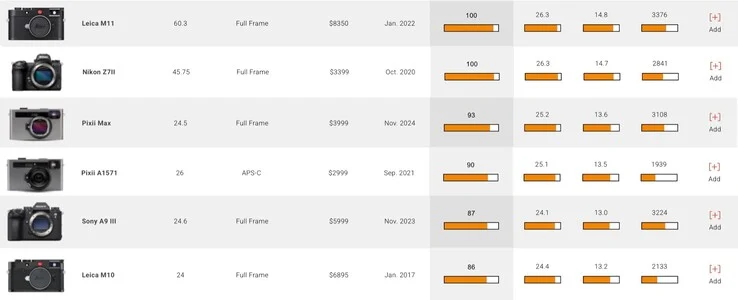
      3. The Pixii Max received a DxOMark rating of 93 points, while the Leica M11 scored 100 points, making the Pixii Max a solid option for its price range.
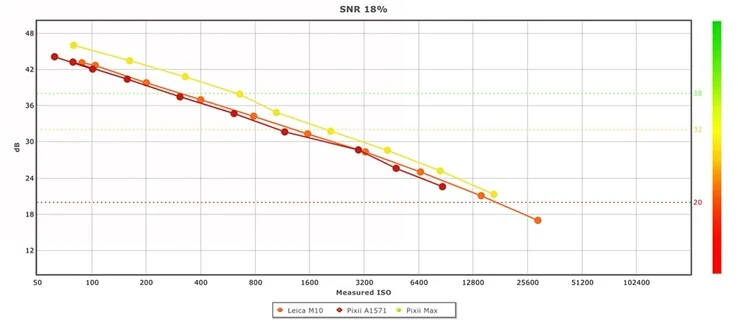
      4. The Pixii Max has better low-light performance compared to the Leica M10, which has a similar sensor but a lower score of 86 points.
      5. Overall, the Pixii Max is considered a competitively priced alternative to the Leica M10, with no significant weaknesses in its sensor performance.


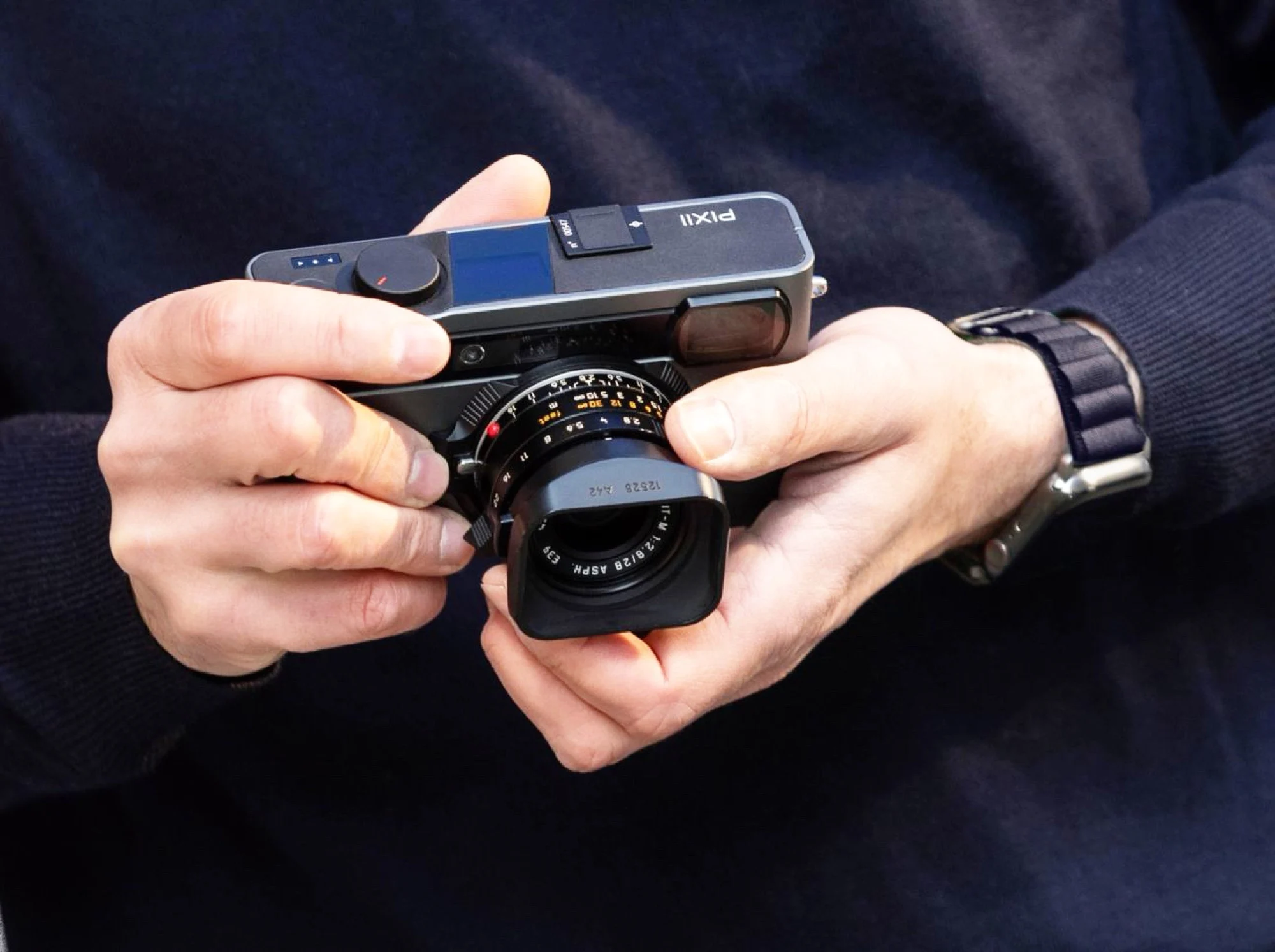
      Anyone interested in purchasing a digital rangefinder camera currently has just one option apart from the Leica M-Series, and that is the Pixii from France. Initially, this camera was launched featuring a 26MP APS-C sensor, but now the company offers the Pixii Max, which comes equipped with a 24MP full-frame sensor.

      Pricing and Comparison

      The starting price for the base model, which includes 32GB of internal storage, is €4,799. While this isn’t exactly budget-friendly, it’s still nearly €4,000 cheaper than the Leica M11, whose official price stands at €8,750. A fresh analysis from DxOMark indicates that the Pixii Max does not match the performance of the 60MP full-frame sensor found in the Leica M11, which has been rated as the top sensor of its class by DxOMark up to now.

      Performance Insights

      The Leica M11 achieved a DxOMark rating of 100 points, while the Pixii Max was rated at 93 points. This score puts it slightly ahead of the Pixii Plus with its APS-C sensor, but seven points behind the more affordable Nikon Z7 II. For those who are passionate about rangefinder cameras, the Leica M10 serves as a relevant reference; it also has a 24MP full-frame sensor but scores lower at 86 points. Interestingly, a used Leica M10 in decent condition is priced similarly to a new Pixii Max.

      Advantages of the Pixii Max

      One of the key benefits of the Pixii Max compared to both the Pixii Plus and the Leica M10 is its low-light performance, as it maintains a comparable image quality at an ISO that’s half a stop higher. Overall, the sensor in the Pixii Max displayed no significant weaknesses, leading DxOMark to conclude that it is a competitively priced alternative to the Leica M10.

      Source:
      Link


    • New Leica M Camera: Compact Design, EVF, Full-Frame Sensor Launch

      New Leica M Camera: Compact Design, EVF, Full-Frame Sensor Launch

      Key Takeaways

      1. Leica is reportedly developing a new M-series camera with an electronic viewfinder, but it will not replace the Leica M11.
      2. The new camera may feature a hybrid viewfinder option, combining electronic and optical elements, as suggested by customer feedback.
      3. The upcoming model will have a new design, including a larger 3.9-inch touchscreen replacing rear buttons and a smaller overall size compared to the M11.
      4. The introduction of an electronic viewfinder could improve focusing capabilities, especially for subjects closer than 27 inches and with long telephoto lenses.
      5. Changes in design and features may lower costs and maintenance but could compromise the unique characteristics of the M series.


      For several years now, there have been some unclear whispers about Leica working on a new M-series camera that would feature an electronic viewfinder. These whispers may actually hold some truth, as LeicaRumors has reported that this new camera could be released later this year. However, it will not directly replace the Leica M11 but will instead be an additional model within the Leica M series.

      Features and Unique Selling Points

      This news isn’t overly shocking because the rangefinder has always been a key characteristic of the Leica M series and a major draw for buyers. At the moment, besides the Leica M series and the Pixii, there are no other digital rangefinder cameras available. It’s still uncertain if Leica plans to completely remove the rangefinder, or if they will create a hybrid viewfinder like the one found in the Fujifilm X100 VI. Such a hybrid would combine an electronic and optical viewfinder by showing EVF information within the user’s sight. Insights from a customer survey conducted by Leica indicate that they might have looked into both a full EVF and a hybrid option during the development phase.

      New Design and Specifications

      LeicaRumors also mentioned that this upcoming camera will showcase an entirely new design, featuring a larger 3.9-inch touchscreen that will take the place of all the buttons on the rear. The new model is expected to be somewhat smaller than the Leica M11 and will swap out the ISO dial for an extra programmable dial. The introduction of an electronic viewfinder could help overcome some limitations of a rangefinder, particularly when trying to focus on subjects closer than 27 inches or while using long telephoto lenses. Additionally, the EVF could simplify the camera’s design, potentially lowering both its cost and maintenance requirements. Nonetheless, in making these changes, Leica could also sacrifice the most crucial and distinctive feature of the M series.

      Source:
      Link


    • Leica LUX 1.4 Update Brings Leica I Simulation to iPhone

      Leica LUX 1.4 Update Brings Leica I Simulation to iPhone

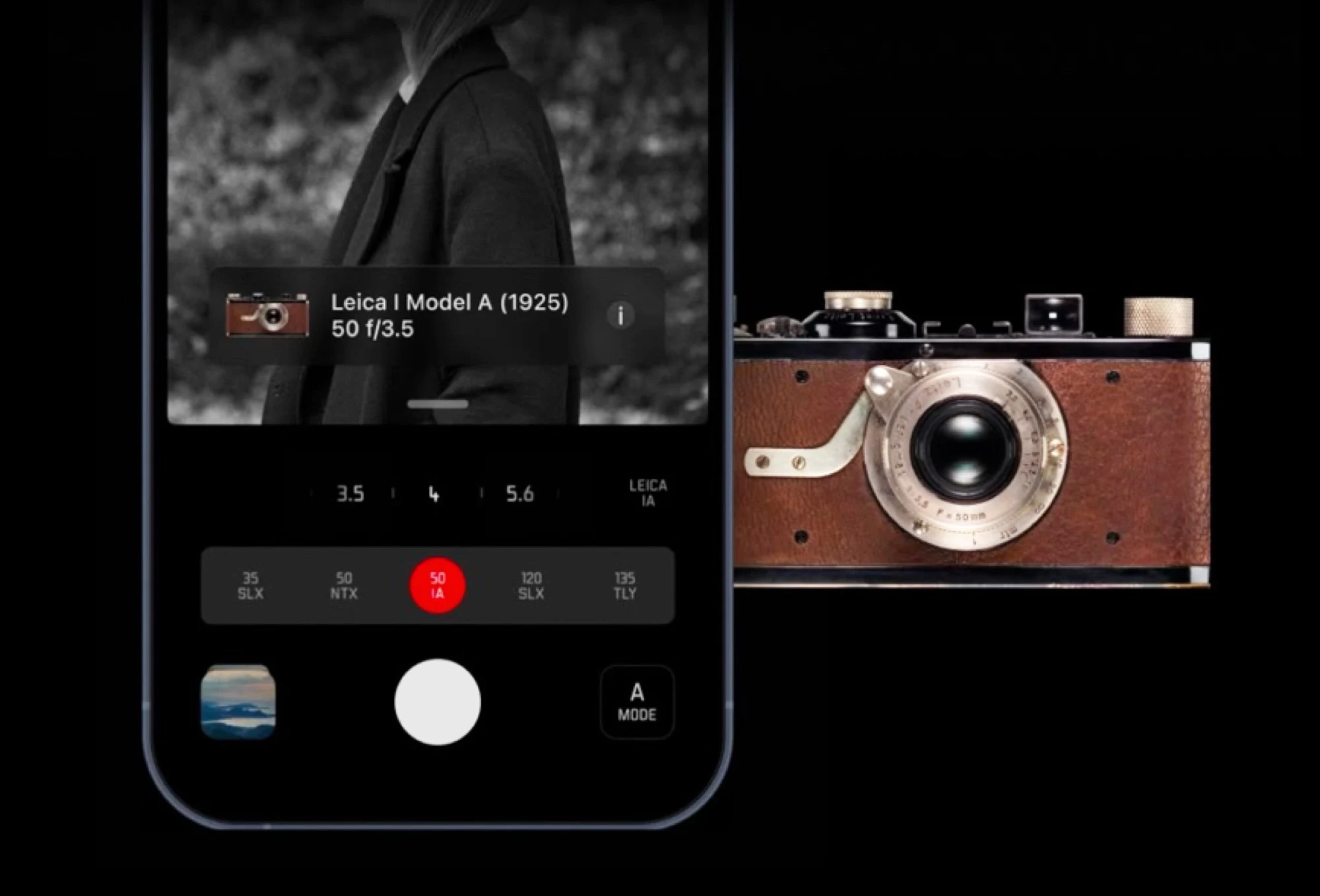
      To celebrate the centennial of the Leica I, Leica has launched a special edition of the Leica M11 along with several accessories. They’ve also refreshed their LUX app for iPhone, introducing a filter that mimics the appearance of a Leica I along with a Leica Elmar 50 mm f/3.5 lens.

      New Features of the LUX App

      This fresh simulation can be accessed with the Leica LUX app starting from version 1.4, which is available for download at no cost on the App Store. Nevertheless, users will need to pay for a subscription to unlock all the features. The cost for the subscription is $6.99 each month or $69.99 for a year. It’s worth noting that Leica LUX is exclusively for iOS, meaning Android users cannot use it.

      Details About the New Simulation

      Leica has shared just a few insights about the app’s new film simulation. Notably, it captures images in black and white, reflecting the fact that color film was not widely used in the 1920s. Users can tweak the virtual aperture anywhere from f/3.5 to f/5.6 to achieve their preferred bokeh effect. Additionally, the filter aims to recreate the distinctive grainy texture and soft contrast that characterized photography from that era.

      Performance of the Simulated Lens

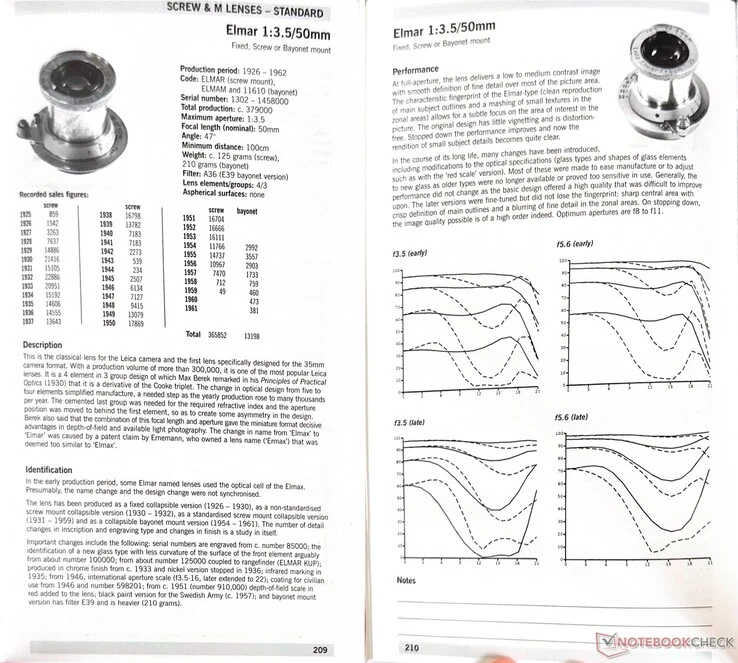
      The simulated Leica Elmar 50 mm f/3.5 is known for its good performance in the center of the image, but the edges tend to reveal fewer details. Thanks to its collapsible design, the Leica I paired with the Elmar lens was small enough to fit into a large pocket, whether in trousers or a coat.

      Source:
      Link


    • Leica M11 Special Edition Camera Limited to 100 Units Leaked

      Leica M11 Special Edition Camera Limited to 100 Units Leaked

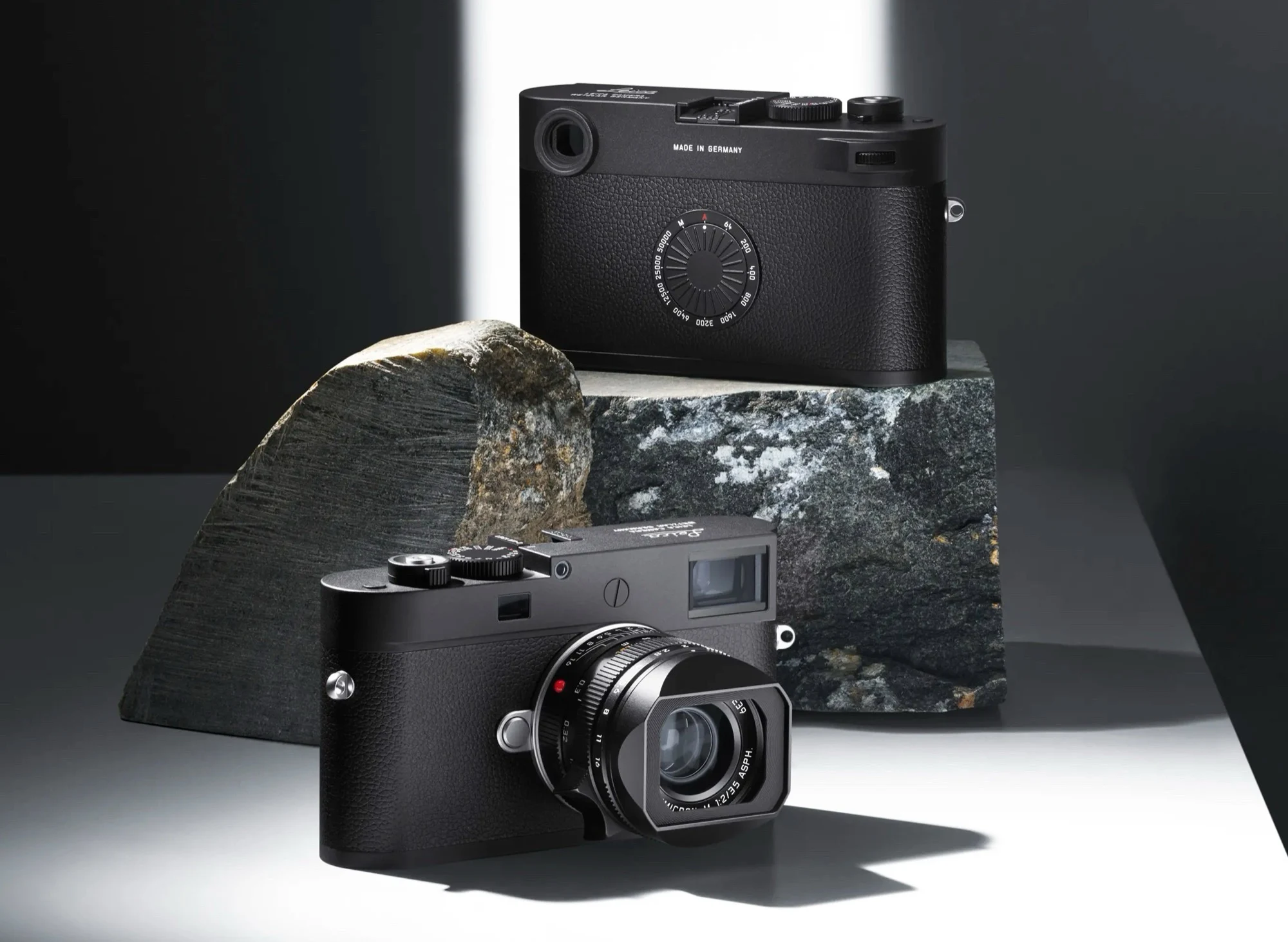
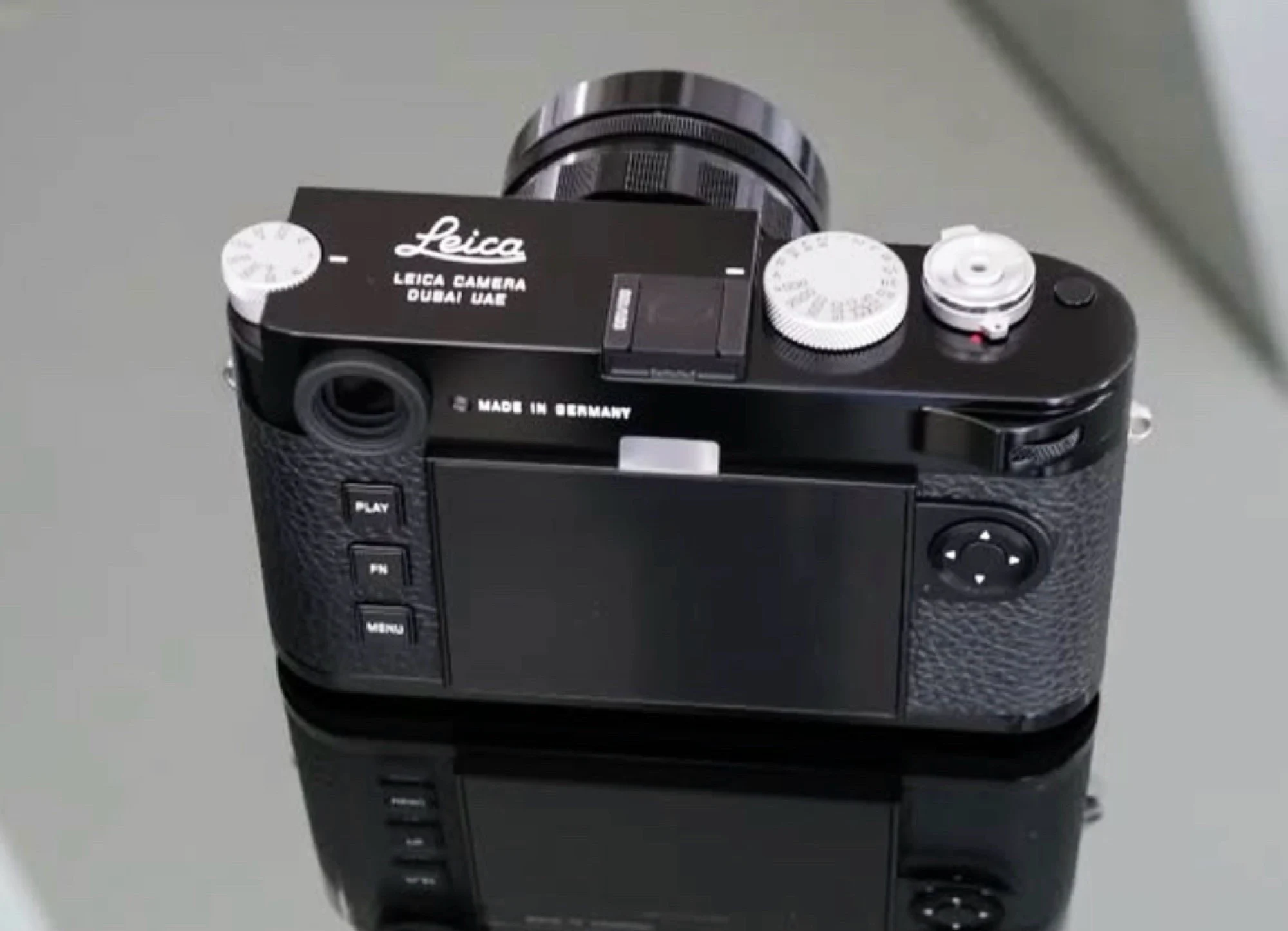
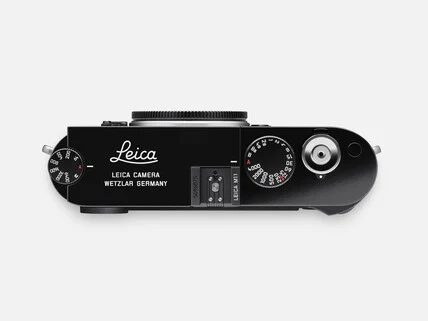
      According to the recent news from LeicaRumors, Leica is set to reveal a new limited-edition Leica M11 as soon as tomorrow, January 22nd. This unique release marks the 100th anniversary of Leica’s first 35mm camera and is limited to just 100 pieces. Leaked images hint that the camera is similar to the shiny black Leica M11, showcasing a “Dubai UAE” marking on the top, along with silver buttons and dials instead of the usual black ones.

      Limited Serial Numbers

      The serial numbers will range from 001 to 100 and will be etched on the hot shoe. Reportedly, this is just the first of multiple limited editions planned for 2025, with special cameras targeted for both the Chinese and American markets. LeicaRumors asserts that the technical specs match those of the standard glossy black Leica M11, which is priced at $8,955. Thus, this limited edition will miss the upgrades found in the Leica M11-P, meaning it won’t have Adobe Content Credentials support or the larger 256GB flash storage. Even with these missing features, the limited edition is likely to be more expensive.

      Unique Camera Features

      The Leica M11 stands as one of the few rangefinder cameras currently offered. Besides Leica, the only other manufacturer making digital rangefinder cameras is the French startup Pixii. The Leica M11 comes with a 60-megapixel full-frame sensor capable of shooting at 4.5 frames per second, utilizing either a mechanical or electronic shutter. It has a 2.95-inch touchscreen with a resolution of 2.3 million pixels. Photos can be stored on its internal 64GB storage or an SD card. Unfortunately, the Leica M11 does not have video recording capabilities. For further detailed specifications, check the camera’s official product page.

      Source:
      Link