
Key Takeaways
1. The Pixel 10 Pro XL includes an optional 480 Hz PWM setting to reduce eyestrain.
2. It can dim to 4 nits in darkness and reach 2,200 nits for HDR peak brightness.
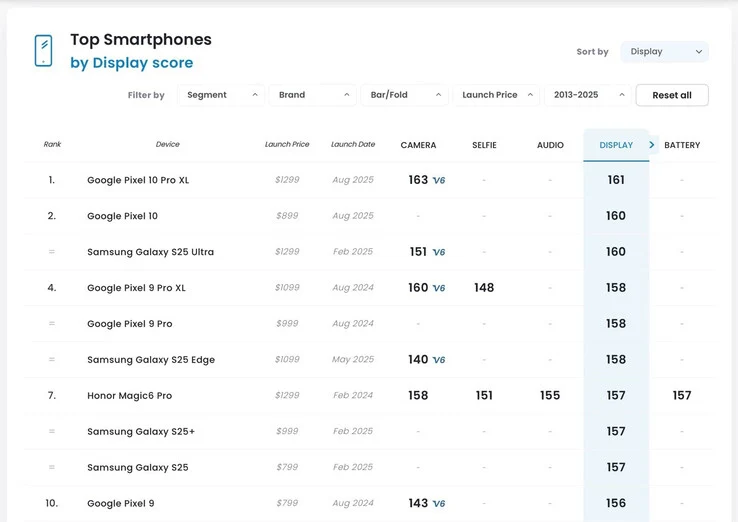
3. The Pixel 10 Pro XL scores slightly higher than the Pixel 10 on DxOMark, both praised for color accuracy and HDR performance.
4. Touchscreen performance is precise and responsive, but the Pixel 10 Pro XL has color distortion at certain angles, while the Pixel 10 struggles with palm rejection.
5. The Pixel 10 series leads on DxOMark’s leaderboard, setting a high standard for future smartphone competitors.
However, the Pixel 10 Pro XL comes with a unique optional 480 Hz PWM setting that helps to lessen eyestrain. Additionally, Google’s newest flagship can dim down to just 4 nits in complete darkness, while reaching an impressive 2,200 nits for full-panel HDR peak brightness. As reported by DxOMark, the Pixel 10 Pro XL has a slight edge over the more affordable Pixel 10, scoring just one point higher. Both phones are praised for their ability to display colors accurately, adapt well to varying brightness, and handle HDR10 videos smoothly, regardless of the lighting situation.
Touchscreen Performance
Furthermore, both models feature touchscreens that are both precise and quick to respond. However, they do have their drawbacks. For example, the Pixel 10 Pro XL experiences some color distortion when viewed from certain angles. On the other hand, the Pixel 10 occasionally struggles with palm rejection. Despite these minor issues, the Pixel 10 series currently holds the top position on DxOMark’s leaderboard, likely until the results for the iPhone 17 series are released.
Future Competitors
In summary, both devices showcase impressive technology and performance, making them standout choices in the smartphone market. As consumers await the next round of testing from DxOMark, the Pixel 10 line continues to impress with its capabilities, setting a high standard for future devices in the competitive smartphone arena.
Source:
Link


Leave a Reply