Tag: DxOMark

  • Samsung Galaxy S25 Ultra Falls Short in DxOMark Camera Ranking

    Samsung Galaxy S25 Ultra Falls Short in DxOMark Camera Ranking

    Key Takeaways

    1. The Galaxy S25 Ultra received a DxOMark score of 146, ranking it 24th in camera performance, just two points higher than its predecessor.
    2. It scored lower than competitors like the Google Pixel 8 (148), Apple iPhone 16 (147), and Huawei P60 Pro (156), with Huawei Pura 70 Ultra leading at 163.
    3. The camera system shows versatility, capturing detailed images at long zoom, natural skin tones in good lighting, and vibrant videos with good dynamic range.
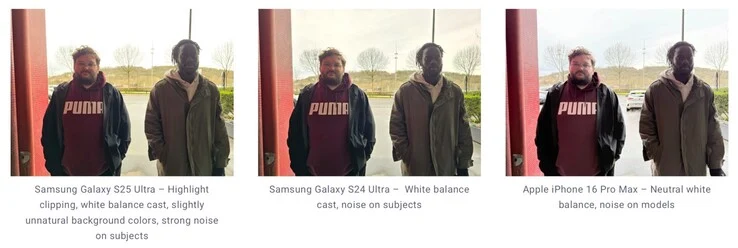
    4. Issues include overexposed highlights even with HDR on, unnatural skin tones in low light, and significant noise in dim lighting videos.
    5. The portrait mode and video autofocus/exposure adjustments can be inconsistent, leading to minor issues that affect overall performance compared to competing smartphones.


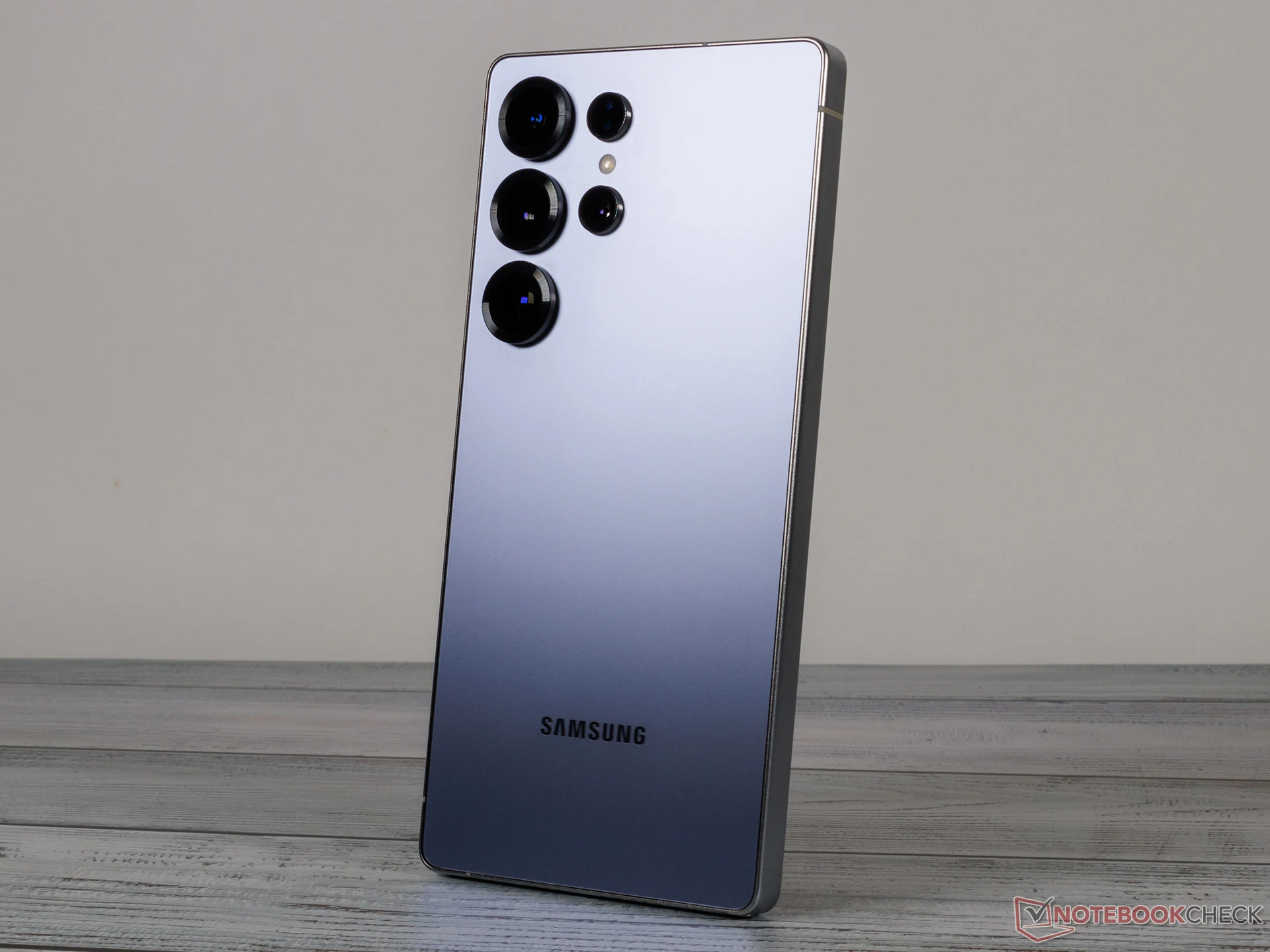
    DxOMark has recently evaluated the quad-camera system on the Galaxy S25 Ultra, which is priced at about $1,219 on Amazon, giving it a score of 146. This score places the latest Samsung flagship only two points higher than its predecessor. The result is not particularly impressive for a current-generation flagship, especially since the Galaxy S25 Ultra is ranked 24th in DxOMark’s camera score list, sharing this position with the Apple iPhone 14 Pro.

    Comparisons with Competitors

    Interestingly, the S25 Ultra scored lower than several older or more affordable rivals, including the Google Pixel 8 at 148 points, the Apple iPhone 16 at 147 points, and the Huawei P60 Pro at 156 points. The Huawei Pura 70 Ultra leads the pack with an impressive 163 points. However, during our review, the camera system of the Galaxy S25 Ultra showed versatility, impressing us with the details it captured even at longer zoom distances, as well as its natural skin tones in easier lighting conditions and videos that featured vibrant colors and a good dynamic range.

    Room for Improvement

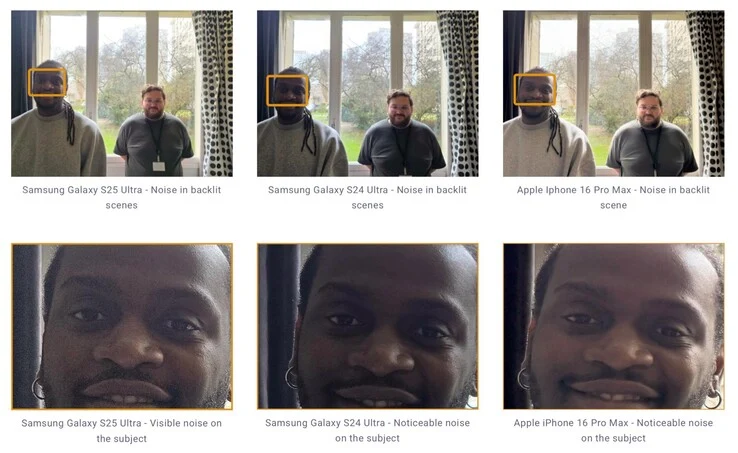
    Despite its strengths, the Galaxy S25 Ultra has more issues than one might expect from a top-tier device. For instance, highlights can sometimes be overexposed, even when HDR is turned on, and skin tones may appear unnatural in low-light settings. Additionally, videos shot in dim lighting often display a significant amount of noise.

    The portrait mode, which mimics bokeh effects, doesn’t always engage properly. When shooting videos, both exposure adjustments and autofocus can be shaky at times. The analysis indicates that while the Galaxy S25 Ultra’s camera does not have any glaring shortcomings, it does possess several minor issues that accumulate, allowing some competing smartphones to outperform it in terms of still and video quality under certain circumstances.

    Source:
    Link


  • Samsung Galaxy S25 Ultra Takes 24th in DxOMark Camera Test

    Samsung Galaxy S25 Ultra Takes 24th in DxOMark Camera Test

    Key Takeaways

    1. The Samsung Galaxy S25 Ultra ranks first in DxOMark’s display rankings but is only 24th in camera performance with a score of 146.
    2. The device excels in zoom capabilities, exposure management, and natural skin tones in bright lighting, producing well-balanced images and videos.
    3. Key issues include autofocus stability, inconsistent exposure in video mode, and noticeable noise in low-light conditions.
    4. Samsung upgraded only the ultrawide camera this year, while competitors are implementing new imaging technologies in their flagship models.
    5. The Galaxy S25 Ultra uses an older 10MP telephoto lens, contributing to noise issues, and there is hope for future adoption of Samsung’s ALOP lens technology to improve camera performance.


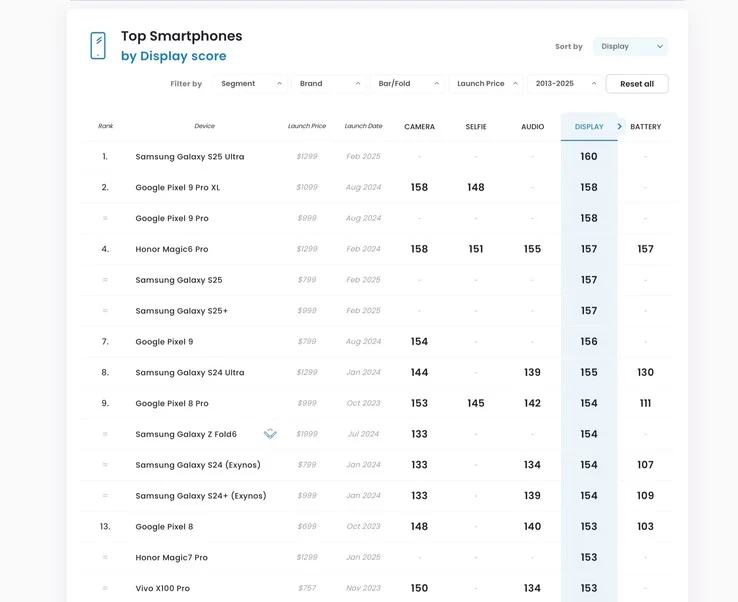
    The Samsung Galaxy S25 Ultra has achieved the top spot in DxOMark’s display rankings, but it’s only 24th in the camera test with a score of 146. This flagship model from Samsung is trailing behind competitors such as the Huawei Pura 70 Ultra, which scored 163 points, and both the Google Pixel 9 Pro XL and Honor Magic 6 Pro, each earning 158 points.

    Camera Performance Overview

    DxOMark highlighted the Galaxy S25 Ultra for its impressive zoom abilities, maintaining a fair amount of detail. The device shines in managing exposure and dynamic range under bright lighting, which results in well-balanced images and videos. In straightforward scenarios, skin tones appear natural, and the color rendering in videos remains true-to-life, with a neutral white balance both indoors and outdoors.

    Areas for Improvement

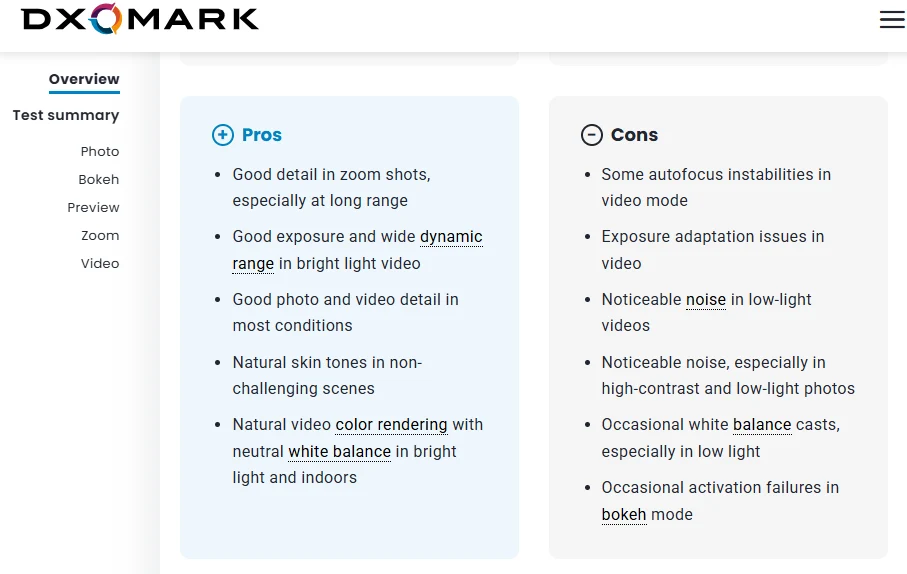
    However, there are several areas where the camera did not meet expectations. It appears that the device faces challenges with autofocus stability and adapting exposure in video mode, which leads to an inconsistent experience. Additionally, noise becomes apparent in low-light situations for both images and video content. High-contrast scenes in dim lighting exacerbate the issue, sometimes resulting in odd white balance casts. The bokeh mode can also fail to engage at times, making the camera system less dependable compared to many rival devices. You can see all the pros and cons illustrated in the image below.

    Upgrades and Innovations

    This year, Samsung only upgraded the ultrawide camera, while many smartphone brands from Chima have been incorporating the latest imaging technologies into their flagship models. On the contrary, Samsung continues to use an older 10MP, 1/3.52″ sensor for its 3x telephoto lens. The newer 5x telephoto and main sensors are also relatively small compared to those found in Chinese flagship phones, which likely contributes to the noise issues.

    Last year, Samsung unveiled its ALOP lens technology, which reportedly allows larger sensors to fit within the phone without increasing the camera module’s protrusion. It remains to be seen when Samsung’s smartphone division will adopt this technology for its Galaxy flagships. We hope this occurs soon, as it would not only enhance the Galaxy line but also amp up competition among all brands in the market.

    Source:
    Link


  • Samsung Galaxy S25 Ultra Tops DxOMark Display but Has Issues

    Samsung Galaxy S25 Ultra Tops DxOMark Display but Has Issues

    Key Takeaways

    1. The Samsung Galaxy S25 Ultra achieved a top score of 160 points in display evaluation by DxOMark, outperforming the Google Pixel 9 Pro XL, which scored 158 points.
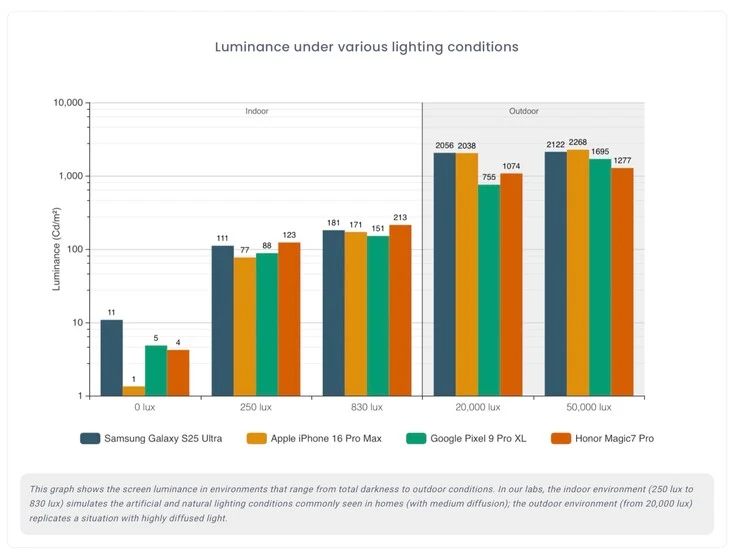
    2. The display features an anti-reflective coating that reflects only 1.5% of surrounding light, significantly reducing reflections compared to competitors like the iPhone 16 Pro Max.
    3. The display maintains a brightness level of 2,122 nits in direct sunlight, similar to the iPhone 16 Pro Max, while improved contrast ratios enhance visibility in bright conditions.
    4. Color accuracy has improved over the Galaxy S24 Ultra, with better color representation and less impact from viewing angles, though HDR brightness has decreased in dark environments.
    5. Critiques include excessive brightness in low-light situations and occasional unintentional touches on the touchscreen, along with slower responsiveness compared to other smartphones in its class.


    DxOMark has recently conducted a thorough evaluation of the Samsung Galaxy S25 Ultra’s display. Scoring an impressive 160 points, it secures the top spot, leaving the Google Pixel 9 Pro XL in second place with 158 points. This high rating can be attributed to the anti-reflective coating on the Corning Gorilla Armor 2 glass, which reportedly reflects just 1.5% of surrounding light, significantly less than the iPhone 16 Pro Max or Google Pixel 9 Pro XL, which reflects more than three times that amount.

    Brightness & Contrast

    The brightness level remains unchanged from the Galaxy S24 Ultra, with the display still capable of reaching 2,122 nits in direct sunlight, making it nearly equivalent to the Apple iPhone 16 Pro Max. However, the reduced reflection levels lead to increased contrast ratios in bright conditions, which enhances the overall display quality. DxOMark recorded a PWM frequency of 480 Hz, which should not pose issues for most users.

    Color Accuracy Improvements

    In comparison to the Galaxy S24 Ultra, the Galaxy S25 Ultra shows notable improvements in color accuracy, offering more precise color representation. Additionally, the display is less affected by viewing angles, maintaining consistent color fidelity. However, peak HDR brightness has seen a decline from 80 nits down to just 24 nits in dark environments, reducing the screen’s glare at night.

    Critiques of the Display

    Nonetheless, the DxOMark analysis is not without its faults. While there are advancements in HDR content display, the screen remains excessively bright in low-light situations. Furthermore, the touchscreen, similar to its predecessor, still experiences occasional unintentional touches and does not respond as swiftly as other smartphones in the same category.

    Source:
    Link


  • iPhone 16 Falls Behind Samsung Galaxy A35, Google Pixel 8a Display

    iPhone 16 Falls Behind Samsung Galaxy A35, Google Pixel 8a Display

    The Apple iPhone 16 scored only 142 points in a thorough display evaluation by DxOMark. This score is not particularly impressive for a modern smartphone within its price category. For instance, the Samsung Galaxy A35 5G and Google Pixel 8a achieved slightly higher scores of 143 and 145 points, while the Pixel 9 Pro XL leads the pack at 158 points.

    Display Specs

    Similar to its predecessor, the iPhone 15, the iPhone 16 features a 6.1-inch OLED screen with a 60 Hz refresh rate, delivering a resolution of 2,556 x 1,179 pixels. It’s claimed to reach a peak brightness of 2,000 nits in bright sunlight. However, DxOMark recorded a brightness level of 1,969 nits, which is still significantly lower than the Samsung Galaxy S24’s impressive 2,548 nits. Nonetheless, DxOMark states that this level of brightness is adequate for good visibility outdoors.

    Performance Issues

    DxOMark pointed out that SDR content can appear excessively dark and lacking in contrast under low light conditions. For HDR10 content, the brightness can vary greatly, which may affect the viewing experience. The touchscreen is generally responsive and reliable, although there are some issues when using the new capture button, which may not always work as intended.

    DxOMark | Bram Van Oost (teaser image)


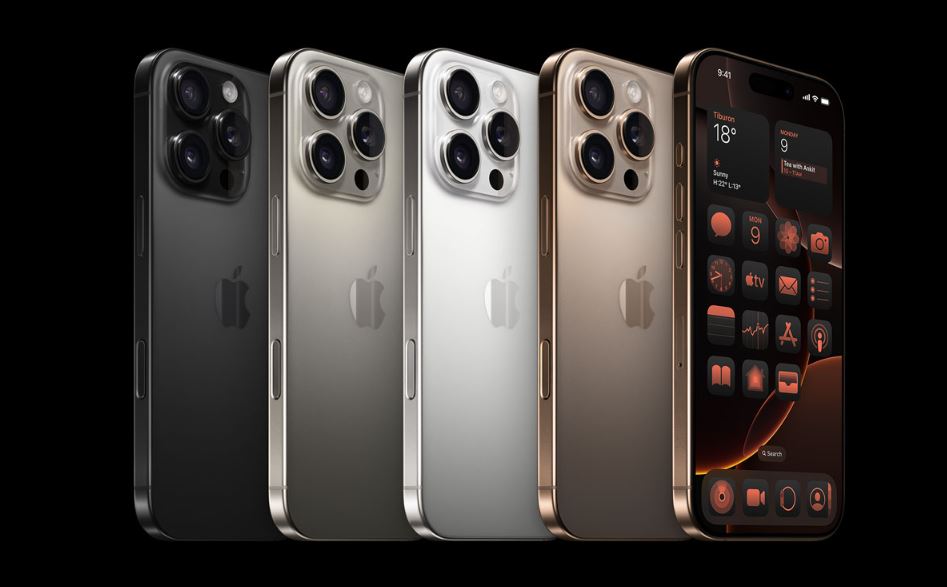
  • iPhone 16 Pro Max Lags Behind Android Flagships in Camera Test

    iPhone 16 Pro Max Lags Behind Android Flagships in Camera Test

    The iPhone 16 Pro Max has recently undergone camera evaluations by DxOMark following its release in September. Currently, it ranks fourth in the global DxOMark smartphone camera ratings. This time, the benchmarking company has focused on comparing the Apple flagship with its Chinese counterparts, specifically regarding the performance of its telephoto camera.

    Performance Comparison

    According to DxOMark, the iPhone 16 Pro Max does provide improved telephoto images compared to its earlier models. However, the firm notes that the Apple device still cannot "catch up" to leading Chinese smartphones. In their comparison of portrait images, the iPhone shows less detail in the eyes and lower smoothness of facial skin compared to its rivals.

    iPhones are not typically recognized for their aggressive skin smoothing in photos, which is a common feature found in many Chinese Android devices. Nevertheless, as DxOMark suggests, users might be less inclined to favor the images produced by the iPhone 16 Pro Max.

    Telephoto Quality Insights

    To illustrate the quality of its telephoto images, DxOMark has included a chart that displays detail preservation across various focal lengths. This chart contrasts the iPhone 16 Pro Max with models like the Vivo X100 Pro, Huawei Pura 70 Ultra, and Xiaomi 14 Ultra.

    The data indicates that the telephoto camera of the iPhone 16 Pro Max retains noticeably less detail than its competitors. While it performs comparably at 80 mm and 160 mm focal lengths, it lags behind in other areas. DxOMark also highlights that the details in landscape photos are not impressive either.

    Conclusion on Overall Performance

    In contrast, Chinese Android competitors excel at producing more refined images. However, as DxOMark mentioned in its earlier analysis, the iPhone 16 Pro Max excels in video mode, dynamic range throughout the zoom spectrum, color accuracy, stabilization, and autofocus. Thus, the only aspect holding it back from being a versatile camera phone is its periscope telephoto performance.

    DxOMark shared this information on Weibo (translated from Chinese).


    Image 1
    Image 1
    Image 1
    Image 1
  • Xiaomi 14T vs 14T Pro: DxOMark Says Pro Upgrade Not Worth It

    Xiaomi 14T vs 14T Pro: DxOMark Says Pro Upgrade Not Worth It

    The Xiaomi 14T and Xiaomi 14T Pro were launched last week and are now available for purchase in Germany. The Xiaomi 14T is priced at EUR 649, while the Xiaomi 14T Pro starts at EUR 799. Customers can upgrade from the MediaTek Dimensity 8300-Ultra to the Dimensity 9300+ for an additional EUR 150. This upgrade also includes faster charging capabilities, with 120 watts instead of 67 watts, 50 watts of wireless fast charging, and enhancements to the camera system.

    Camera Specifications

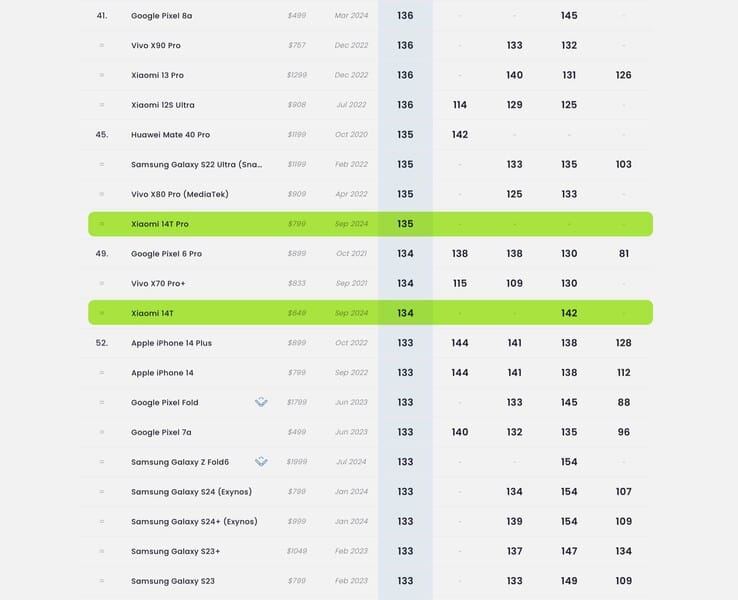
    The Xiaomi 14T features a 50 MP f/1.7 main camera with a 1/1.56-inch sensor and a 50 MP f/1.9 telephoto camera that has a focal length of 50 mm. In contrast, the Xiaomi 14T Pro comes equipped with a 50 MP f/1.6 main camera featuring a larger 1/1.31-inch sensor, along with a 50 MP telephoto camera that has a 60 mm f/2.0 lens. Both models share a 12 MP f/2.2 ultra-wide-angle camera. According to a detailed review by DxOMark, the Xiaomi 14T received a score of 134, while the Pro version scored slightly higher at 135. These scores place them at 45th and 49th on the list of best-performing smartphones.

    Comparison with Competitors

    These scores place the Xiaomi 14T series on par with notable competitors like the Apple iPhone 14, Google Pixel 6 Pro, and Samsung Galaxy S22 Ultra. However, the Leica cameras in the Xiaomi 14T series struggle to match the performance of more recent flagship devices. The Xiaomi 14T is praised for its natural color reproduction, accurate skin tones, impressive depth of field, precise white balance, and sharp photos and videos in well-lit conditions.

    Low Light Performance

    In low-light situations, though, the devices exhibit significant image noise despite strong noise reduction efforts that can compromise detail. The dynamic range is relatively limited, and a color cast may appear in dim lighting. Additionally, highlights in the background can appear unnaturally rendered in portrait mode. For video recording, DxOMark points out issues with inconsistent skin tones and fluctuations in exposure and white balance from frame to frame under certain conditions.

    DxOMark (Xiaomi 14T | Xiaomi 14T Pro)


    Image 1
    Image 1
  • iPhone 16 Pro Max vs Pixel 9 Pro XL: Photography Ratings Showdown

    iPhone 16 Pro Max vs Pixel 9 Pro XL: Photography Ratings Showdown

    DxOMark has released its comprehensive camera review for the iPhone 16 Pro Max, and the findings are quite revealing. For Apple enthusiasts anticipating a significant leap in camera capabilities, the results provide a mix of commendation and a reality check.

    Positive Highlights

    To begin with, there is good news. The iPhone 16 Pro Max achieved an unprecedented score for video recording quality, surpassing all competitors in the market. While this is an impressive feat, it’s not entirely surprising, as the iPhone has consistently garnered acclaim for its video capabilities with each release.

    Photography Results

    However, the situation becomes less favorable when examining the photography scores for the iPhone 16 Pro Max. Unlike its predecessor, the iPhone 15 Pro Max, which secured second place in DxOMark’s evaluations, this year’s model has fallen to fourth place with a score of 157 points.

    The newly launched Google Pixel 9 Pro XL, currently priced at $1,099 on Amazon, narrowly outperformed the iPhone 16 Pro Max, earning 158 points to share second place with the Honor Magic6 Pro. At the top of the rankings is Huawei’s Pura 70 Ultra, boasting an impressive 163 points.

    In-Depth Analysis

    DxOMark’s detailed analysis, which can be found here, explores the iPhone 16 Pro Max’s camera features extensively. Among the praised elements are its remarkable color accuracy, sharp detail in bright conditions, and quick autofocus. Conversely, some shortcomings noted by DxOMark include the presence of unwanted artifacts, noticeable flaring, and inconsistencies in ultra-wide shots, despite the enhancements in hardware.


    Image 1
  • DxOMark Test Names Huawei Mate 60 Pro+ as the Supreme Leader of Camera Phones

    DxOMark Test Names Huawei Mate 60 Pro+ as the Supreme Leader of Camera Phones

    Huawei Mate 60 Pro+: A Strong Contender in Camera Quality

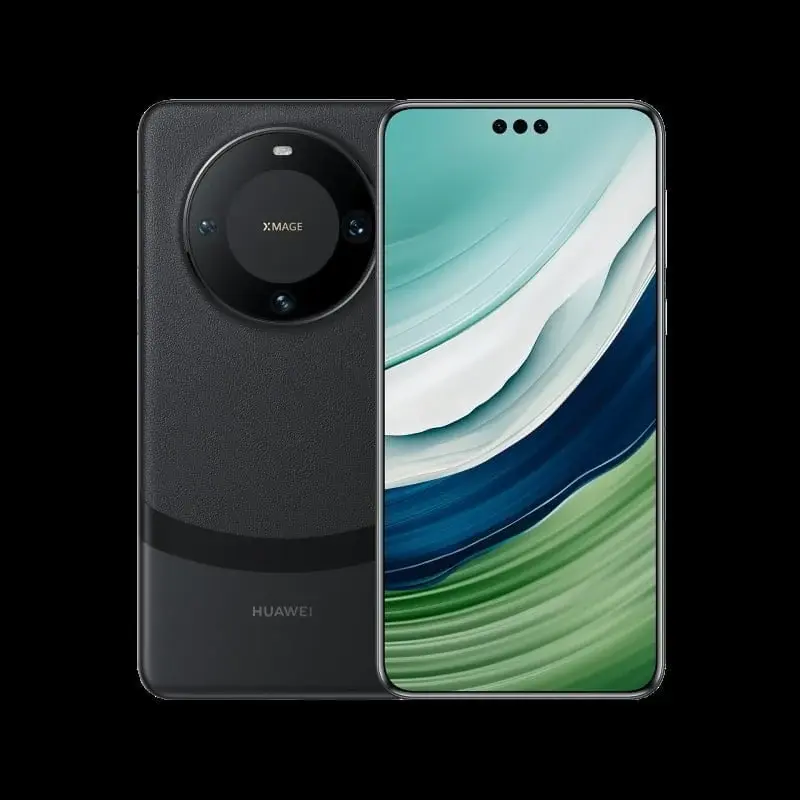
    Despite facing sanctions from the US, Huawei, the popular Chinese smartphone company, is making a comeback in the market. While it has encountered challenges in performance due to restrictions on certain chips, it has managed to excel in camera quality. The Huawei Mate 60 Pro+ recently secured the top position in DxOMark rankings, following the success of the Huawei P60 Pro, demonstrating its strong performance in flagship smartphones.

    Dominating the Ultra-Premium Segment

    The Huawei Mate 60 Pro+ has emerged as the leader in the ultra-premium segment, surpassing competitors like the iPhone 15 Pro Max, Pixel 8 Pro, and the Oppo Find X6 Pro. With a score of 157 points on the DxOMark camera test, it outshines the Huawei P60 Pro by just 1 point. Notably, it has claimed the throne for the best Bokeh and Photos (Main camera performance for capturing still images in various light environments) categories. Let’s delve into a more comprehensive breakdown of its overall performance.

    DxOMark Test Overview

    In the DxOMark camera review, the Huawei Mate 60 Pro+ impresses with its outstanding performance in various lighting conditions, making it an excellent choice for all kinds of photos and videos. One notable feature is its ability to deliver exceptional results for Friends & Family photos, capturing moments with precision and accurately rendering skin tones, even in challenging situations.

    The camera’s variable aperture is another noteworthy aspect, automatically adjusting to the number of people in the scene, ensuring everyone remains in focus. The ultrawide camera excels in capturing expansive scenes while maintaining a high level of detail. Furthermore, the camera performs admirably across all zoom distances, providing a commendable level of detail. However, it does have slight limitations when it comes to capturing videos in challenging low-light conditions, exhibiting some visible constraints in such scenarios.

    Conclusion

    Despite the obstacles faced by Huawei due to the US sanctions, the Huawei Mate 60 Pro+ proves to be a strong contender in terms of camera quality. With its impressive performance in the DxOMark rankings and its ability to capture moments with precision, this flagship smartphone showcases Huawei’s commitment to delivering exceptional camera capabilities. As Huawei continues to innovate and overcome challenges, it is clear that they remain a force to be reckoned with in the smartphone market.